
GREAT PORTUGUESE HISTORICAL EMIGRATION AND IMMIGRATION MOMENTS 20
- Slides: 25
GREAT PORTUGUESE HISTORICAL EMIGRATION AND IMMIGRATION MOMENTS 20 th Century
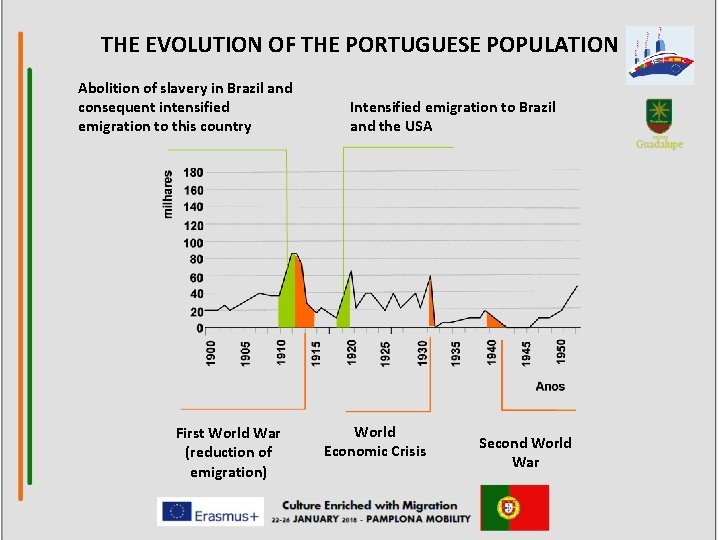
THE EVOLUTION OF THE PORTUGUESE POPULATION Abolition of slavery in Brazil and consequent intensified emigration to this country First World War (reduction of emigration) Intensified emigration to Brazil and the USA World Economic Crisis Second World War
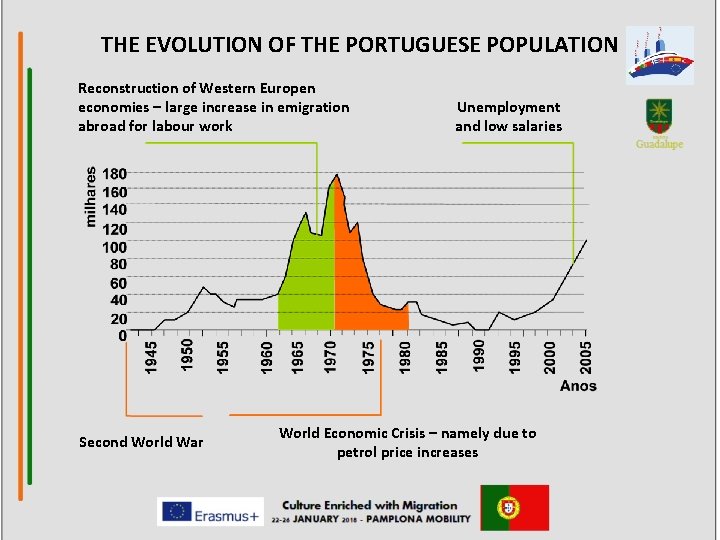
THE EVOLUTION OF THE PORTUGUESE POPULATION Reconstruction of Western Europen economies – large increase in emigration abroad for labour work Second World War Unemployment and low salaries World Economic Crisis – namely due to petrol price increases
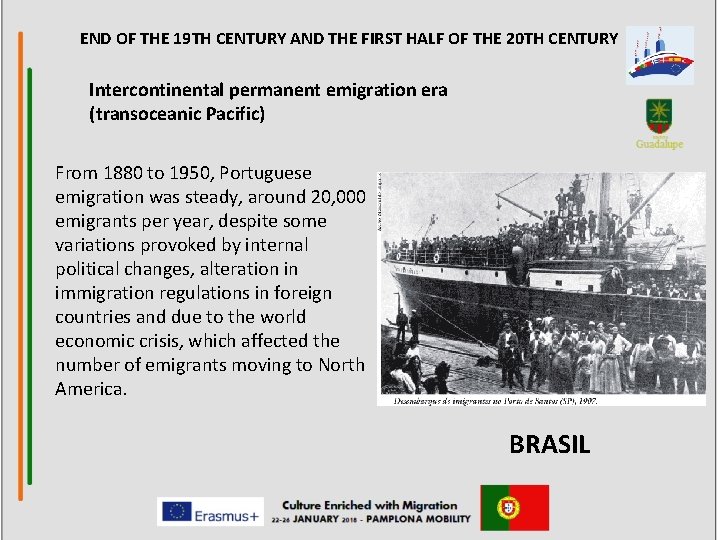
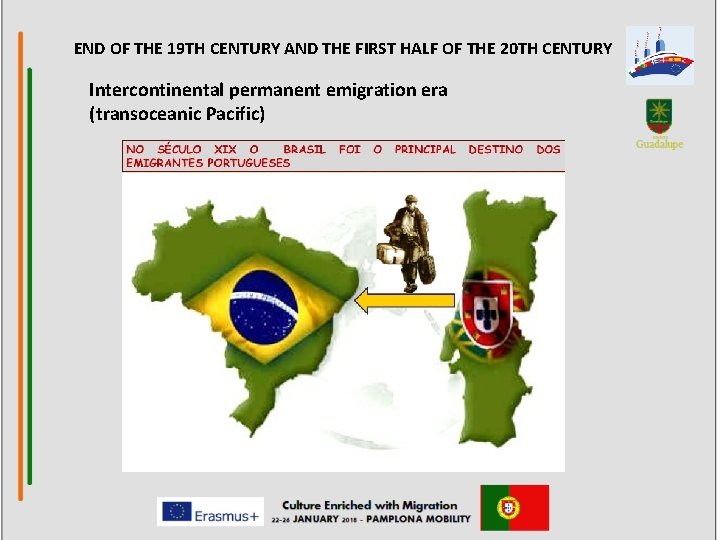
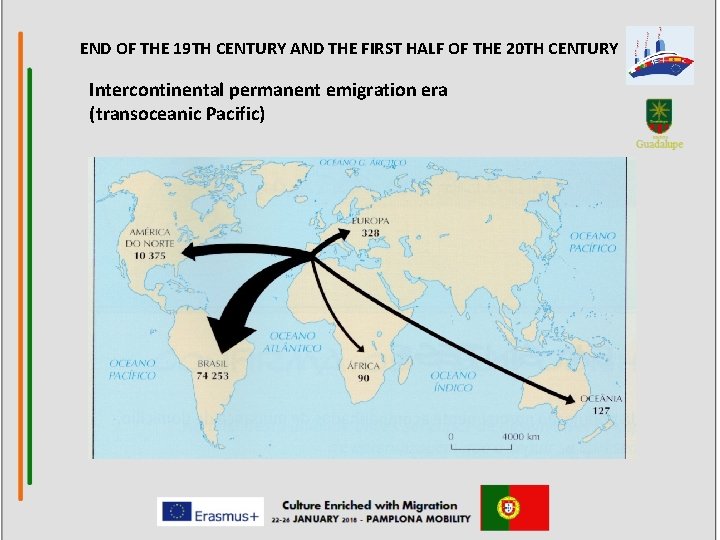
END OF THE 19 TH CENTURY AND THE FIRST HALF OF THE 20 TH CENTURY Intercontinental permanent emigration era (transoceanic Pacific) From 1880 to 1950, Portuguese emigration was steady, around 20, 000 emigrants per year, despite some variations provoked by internal political changes, alteration in immigration regulations in foreign countries and due to the world economic crisis, which affected the number of emigrants moving to North America. BRASIL
END OF THE 19 TH CENTURY AND THE FIRST HALF OF THE 20 TH CENTURY Intercontinental permanent emigration era (transoceanic Pacific)
END OF THE 19 TH CENTURY AND THE FIRST HALF OF THE 20 TH CENTURY Intercontinental permanent emigration era (transoceanic Pacific)
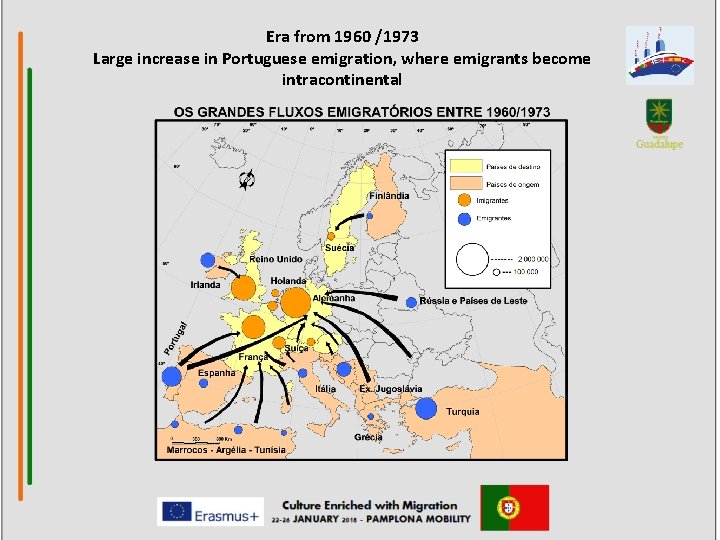
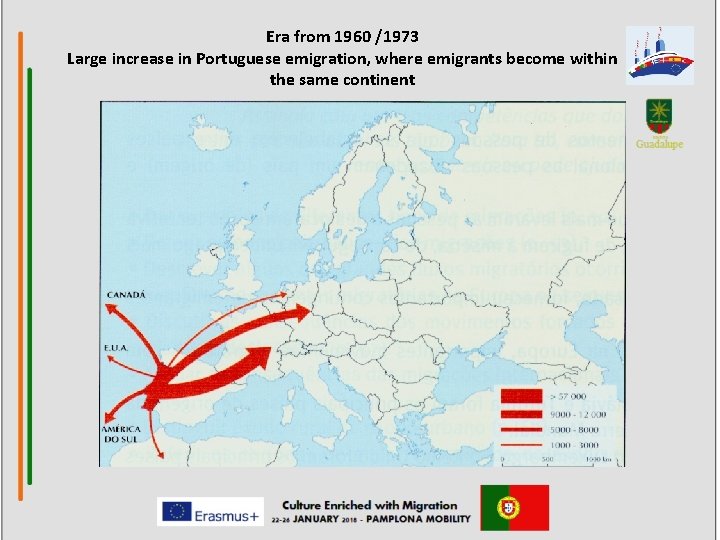
Era from 1960 /1973 Large increase in Portuguese emigration, where immigrants become intracontinental Between 1960 and 1973, there was a boom in national emigration, contrary to what had been verified until that time, almost all emigrants became temporarily intercontinental, given that most Portuguese emigrants preferred closer geographical destinations, or industrialised countries in western Europe. At this time, the main destinations were France, Germany, Luxembourg, the United Kingdom, Switzerland Holland. North America (USA and Canada) continued to receive our emigrants, mainly from the Azores, although South America (Venezuela and Brazil) and South Africa continued to be sought after by Madeirans.
Era from 1960 /1973 Large increase in Portuguese emigration, where emigrants become intracontinental
Era from 1960 /1973 Large increase in Portuguese emigration, where emigrants become within the same continent
Era from 1960/1973 Causes of the emigration movement Its origins were based on a combination of factors (internal and external) INTERNAL - a younger population without support structures or family support and socio-cultural activities; - an economy primarily based upon traditional agriculture, low salaries, high levels of unemployment and low quality of life; - a population entangled in a colonial civil war and a dictatorial political regime
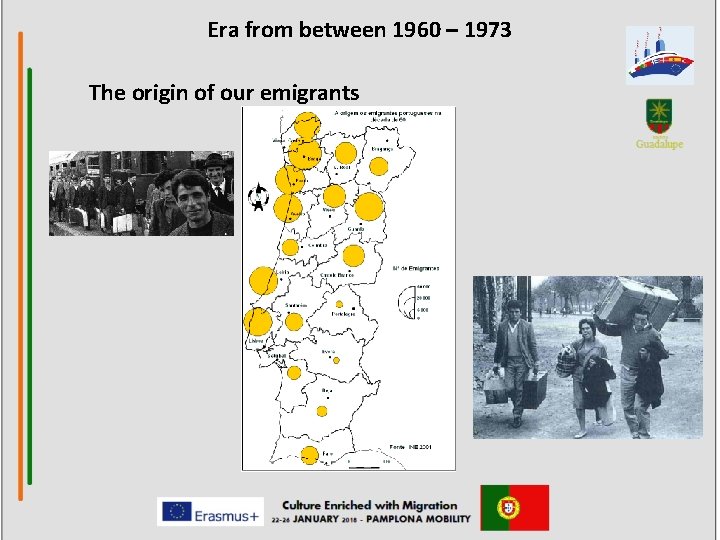
Era from between 1960 – 1973 The origin of our emigrants
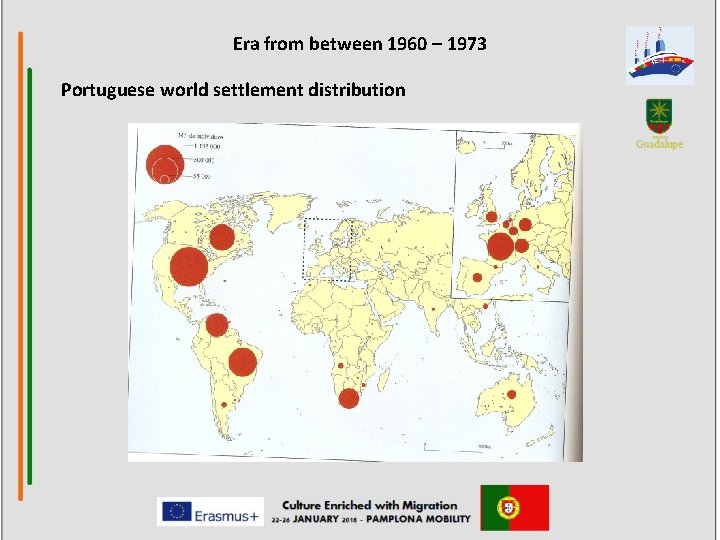
Era from between 1960 – 1973 Portuguese world settlement distribution
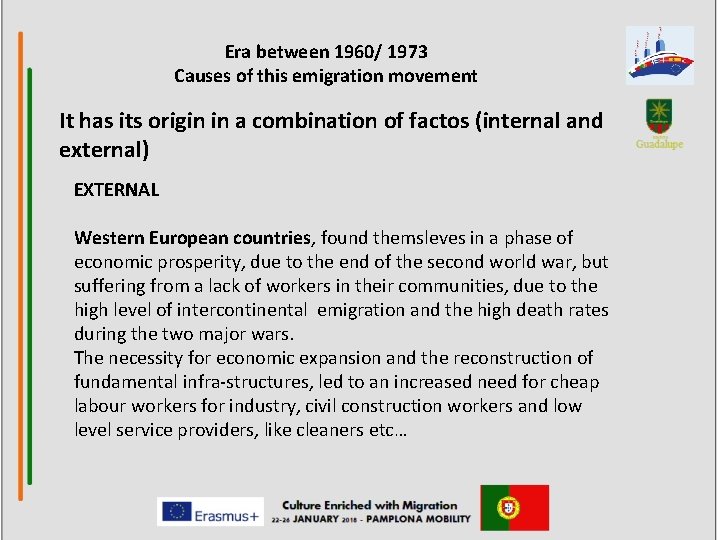
Era between 1960/ 1973 Causes of this emigration movement It has its origin in a combination of factos (internal and external) EXTERNAL Western European countries, found themsleves in a phase of economic prosperity, due to the end of the second world war, but suffering from a lack of workers in their communities, due to the high level of intercontinental emigration and the high death rates during the two major wars. The necessity for economic expansion and the reconstruction of fundamental infra-structures, led to an increased need for cheap labour workers for industry, civil construction workers and low level service providers, like cleaners etc…
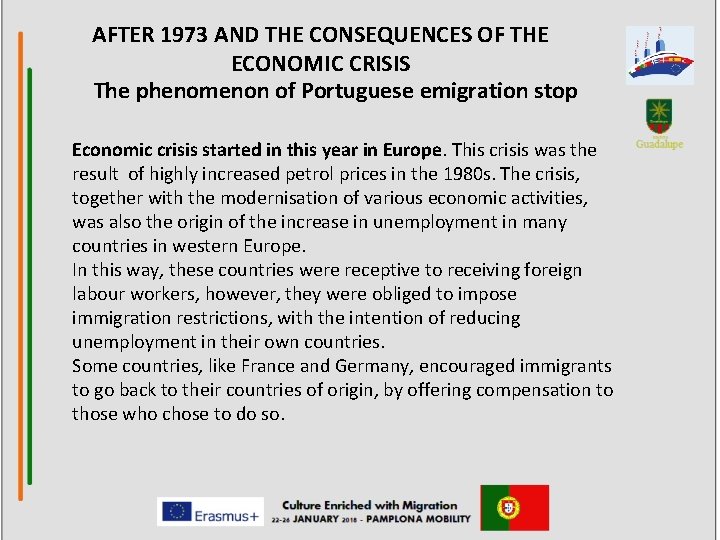
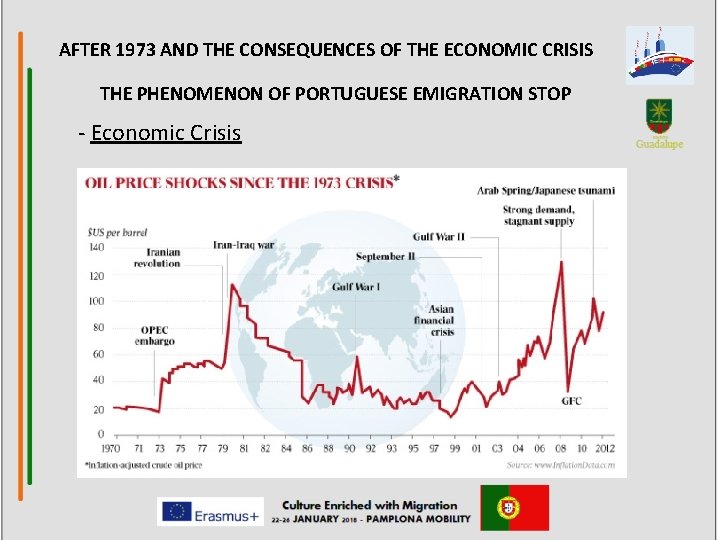
AFTER 1973 AND THE CONSEQUENCES OF THE ECONOMIC CRISIS The phenomenon of Portuguese emigration stop Economic crisis started in this year in Europe. This crisis was the result of highly increased petrol prices in the 1980 s. The crisis, together with the modernisation of various economic activities, was also the origin of the increase in unemployment in many countries in western Europe. In this way, these countries were receptive to receiving foreign labour workers, however, they were obliged to impose immigration restrictions, with the intention of reducing unemployment in their own countries. Some countries, like France and Germany, encouraged immigrants to go back to their countries of origin, by offering compensation to those who chose to do so.
AFTER 1973 AND THE CONSEQUENCES OF THE ECONOMIC CRISIS THE PHENOMENON OF PORTUGUESE EMIGRATION STOP - Economic Crisis
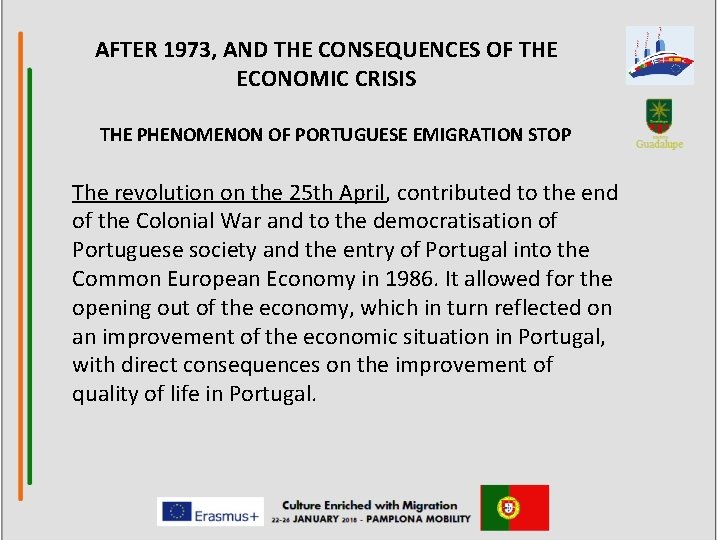
AFTER 1973, AND THE CONSEQUENCES OF THE ECONOMIC CRISIS THE PHENOMENON OF PORTUGUESE EMIGRATION STOP The revolution on the 25 th April, contributed to the end of the Colonial War and to the democratisation of Portuguese society and the entry of Portugal into the Common European Economy in 1986. It allowed for the opening out of the economy, which in turn reflected on an improvement of the economic situation in Portugal, with direct consequences on the improvement of quality of life in Portugal.
AFTER 1973, THE AFTERMATH OF THE ECONOMIC CRISIS The phenomenon of Portuguese immigration increases - from the de-colonisation and the return of the Portuguese from the ex-colonies; - the regression of the immigrants, particularly those that had found themselves in a difficult situation, before the 25 th April, and their return to Portugal
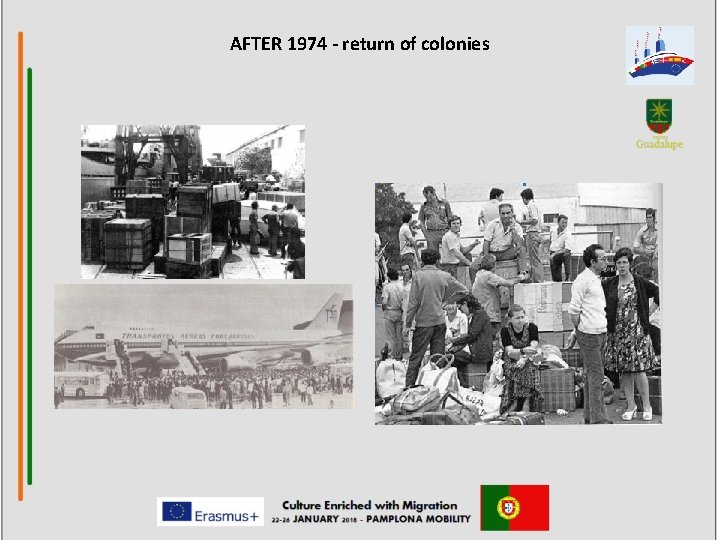
AFTER 1974 - return of colonies
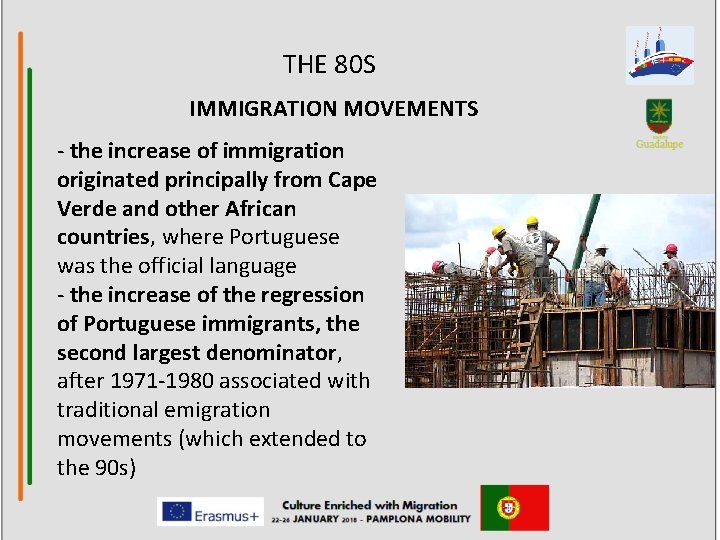
THE 80 S IMMIGRATION MOVEMENTS - the increase of immigration originated principally from Cape Verde and other African countries, where Portuguese was the official language - the increase of the regression of Portuguese immigrants, the second largest denominator, after 1971 -1980 associated with traditional emigration movements (which extended to the 90 s)
THE 90 s Portugal, a traditional country of emigration, sees immigration coming into place at the end of the 20 th Century, having assisted during the last century, in general terms, a diversification and recomposition of its destinations, alterations in the profile of its immigrants and emigrants, (structure, age, sex and qualifications)
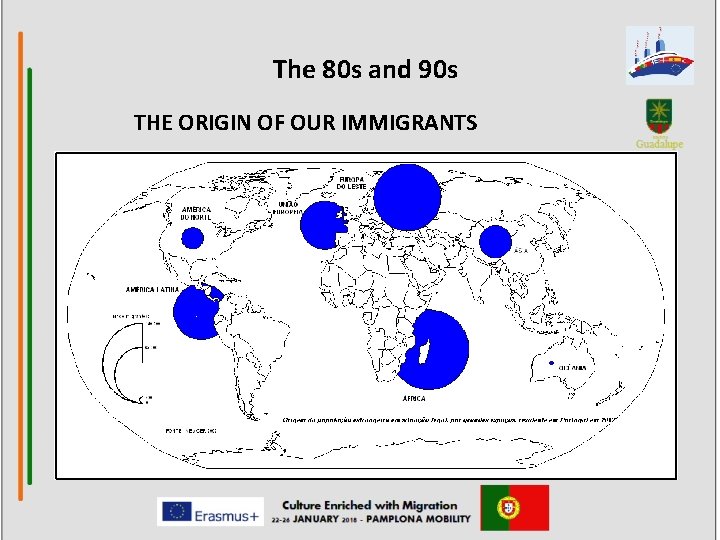
THE 90 s Like this, we become a country of immigrants, that represent 3, 7% of the total population in 2011, surrounded not only by people from countries where Portuguese is the official language (with particular emphasis on Brazil and Cape Verde) but also from Eastern Europe (Ukrania, Romania, Ex USSR and Bulgaria and also western Europe (United Kingdom – older immigrants) and from Asia.
The 80 s and 90 s THE ORIGIN OF OUR IMMIGRANTS
FROM THE 90 S UNTIL TODAY A country of emigrants but from destinations and a differentiated profile from the 60 s. Alongside, intercontinental immigrants, the intercontinental emigrants return, from Angola, Mozambique and Brazil. Emigration temporarily increases and dominates. A large increase in qualified youth emigrating abroad.
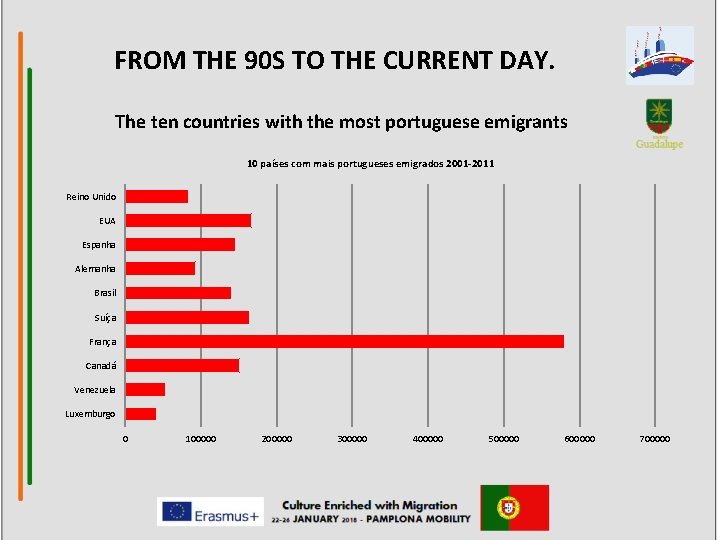
FROM THE 90 S TO THE CURRENT DAY. The ten countries with the most portuguese emigrants 10 países com mais portugueses emigrados 2001 -2011 Reino Unido EUA Espanha Alemanha Brasil Suíça França Canadá Venezuela Luxemburgo 0 100000 200000 300000 400000 500000 600000 700000
FROM THE 90 S TO THE CURRENT DAY - individual emigration substitutes family emigration - female emigration increases despite masculine dominating emigration numbers - increase in the level of qualifications of our emigrants