
GREAT MIGRATION c 400 550 CE CELTIC c
- Slides: 48
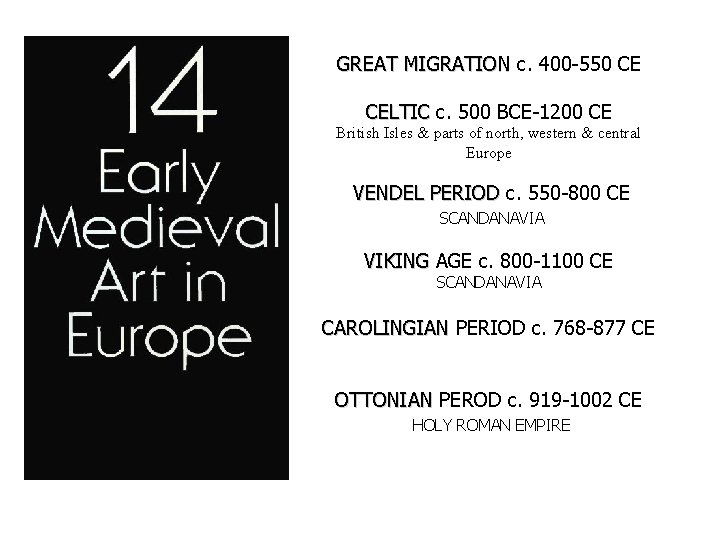
GREAT MIGRATION c. 400 -550 CE CELTIC c. 500 BCE-1200 CE British Isles & parts of north, western & central Europe VENDEL PERIOD c. 550 -800 CE SCANDANAVIA VIKING AGE c. 800 -1100 CE SCANDANAVIA CAROLINGIAN PERIOD c. 768 -877 CE OTTONIAN PEROD c. 919 -1002 CE HOLY ROMAN EMPIRE
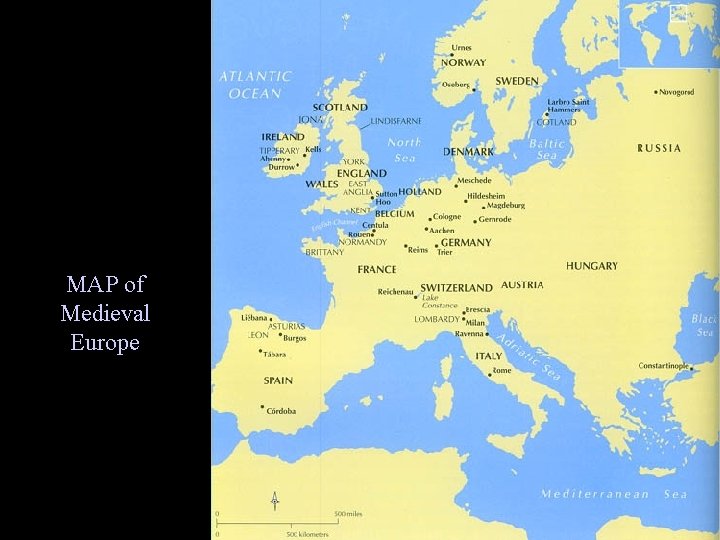
MAP of Medieval Europe
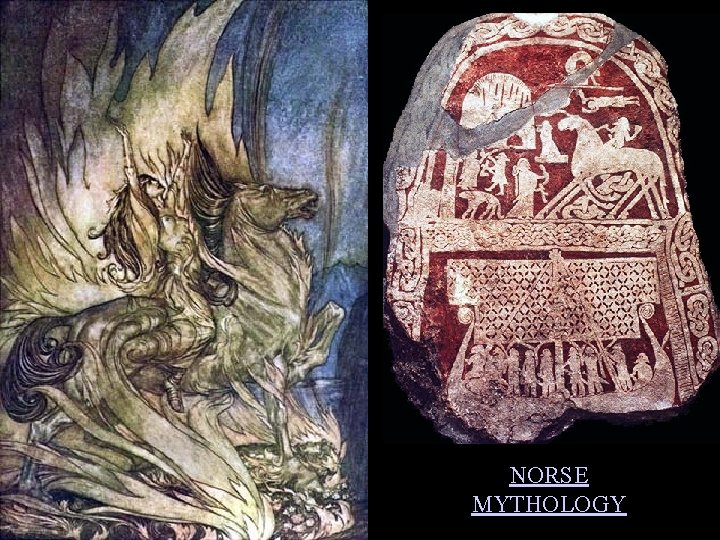
NORSE MYTHOLOGY
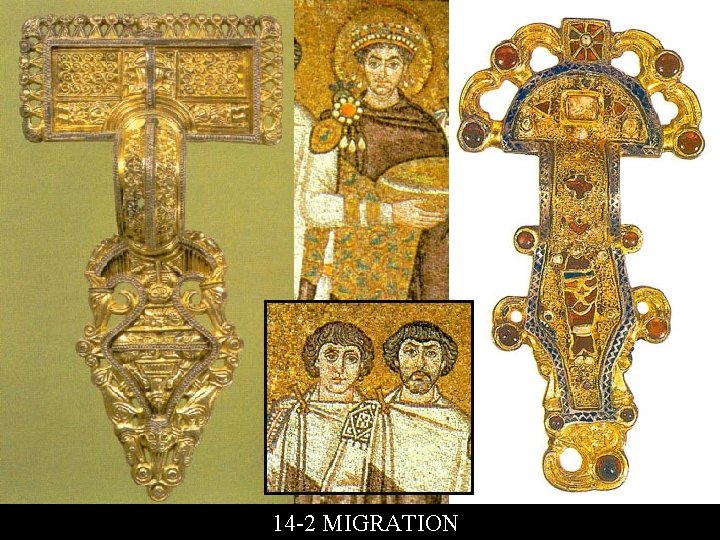
14 -2 MIGRATION
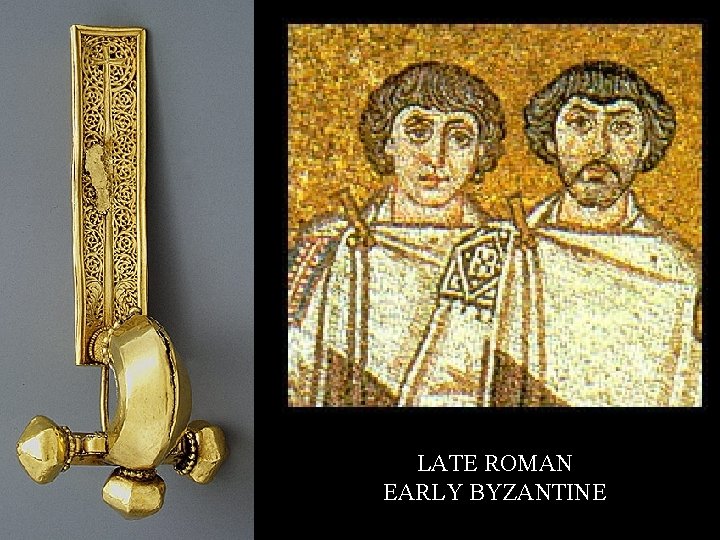
LATE ROMAN EARLY BYZANTINE
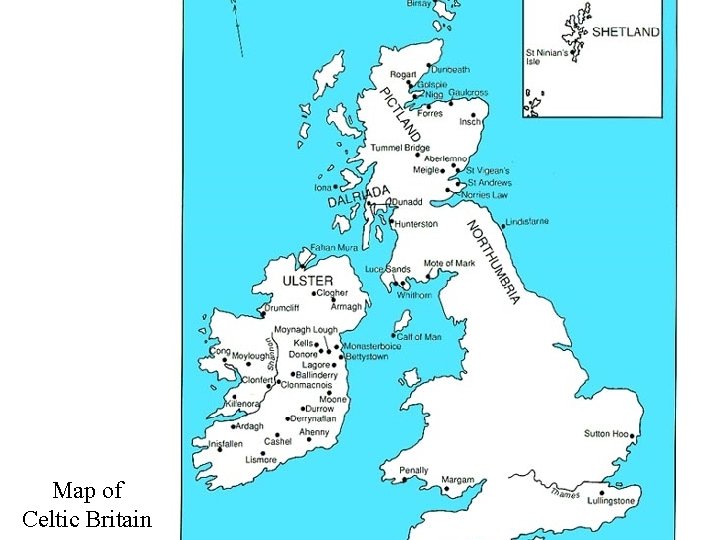
Map of Celtic Britain
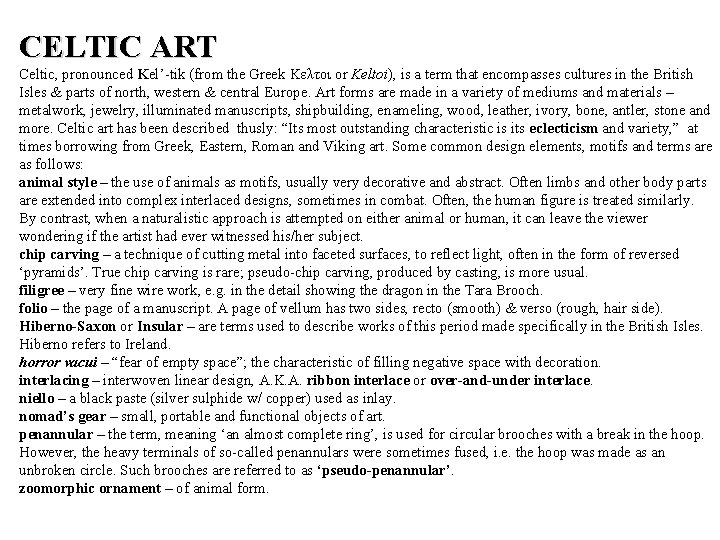
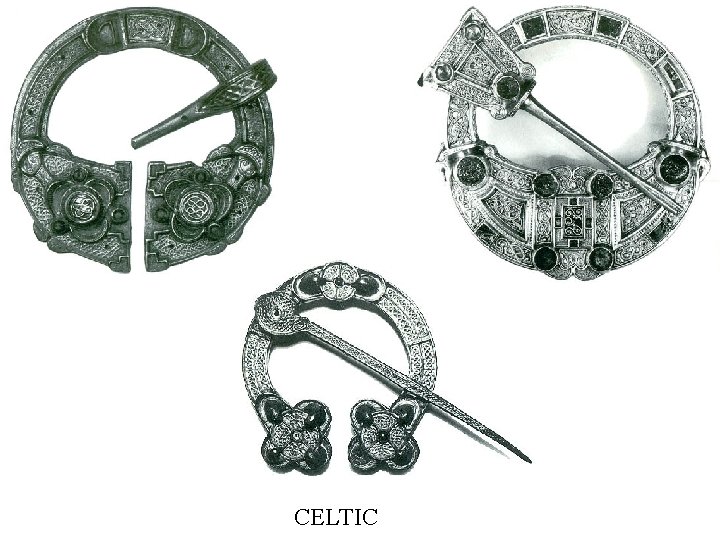
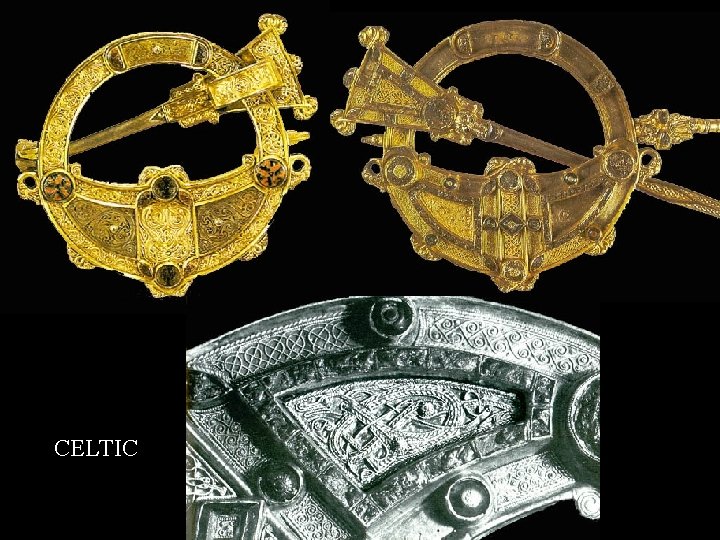
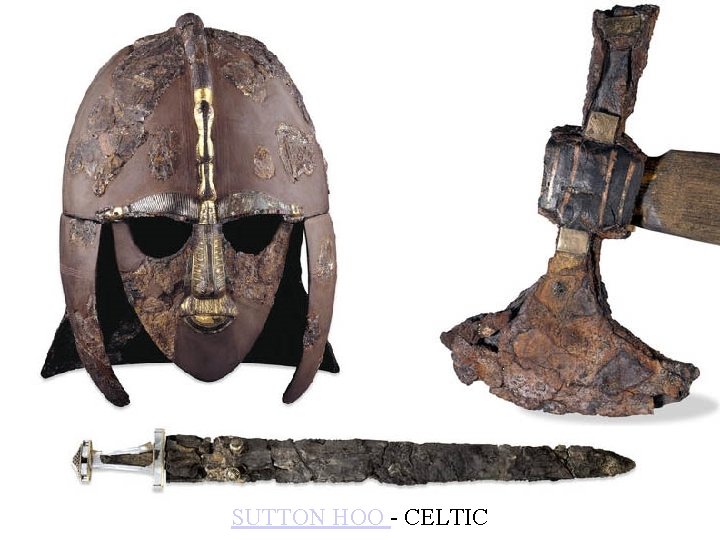
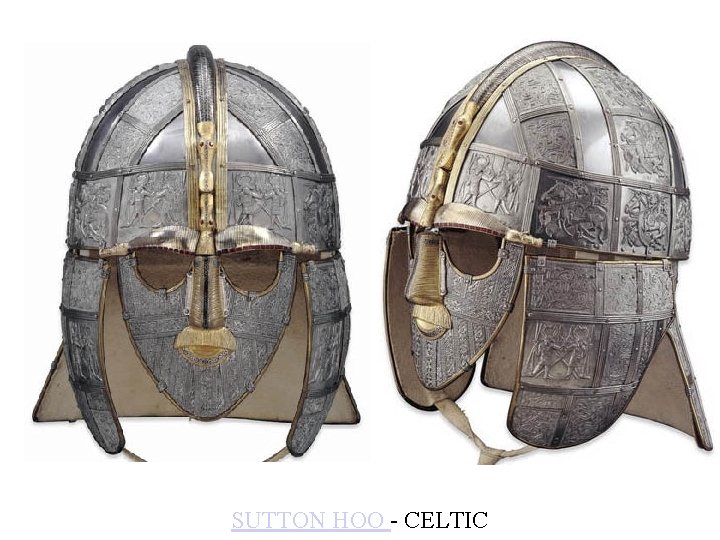
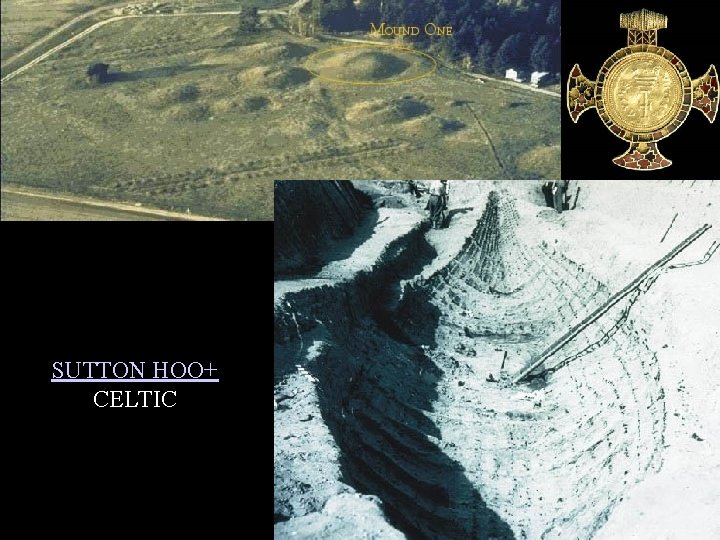
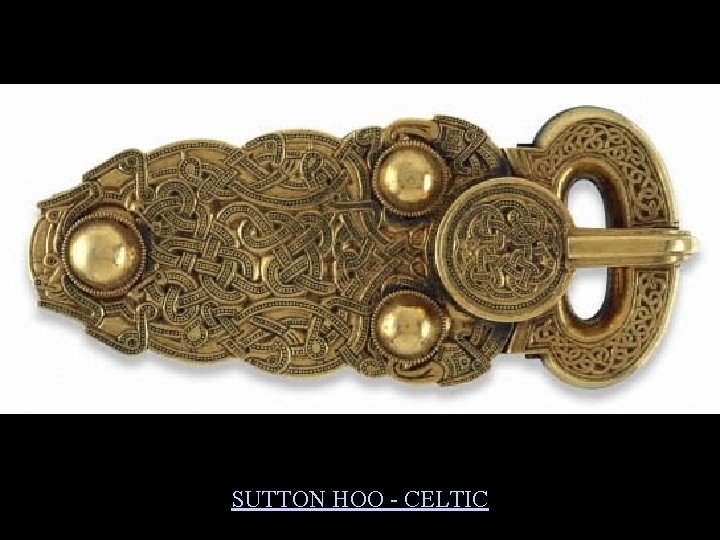
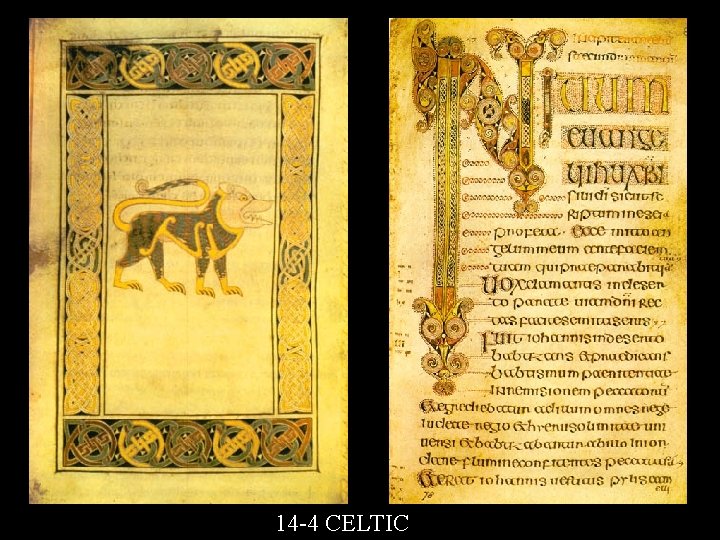
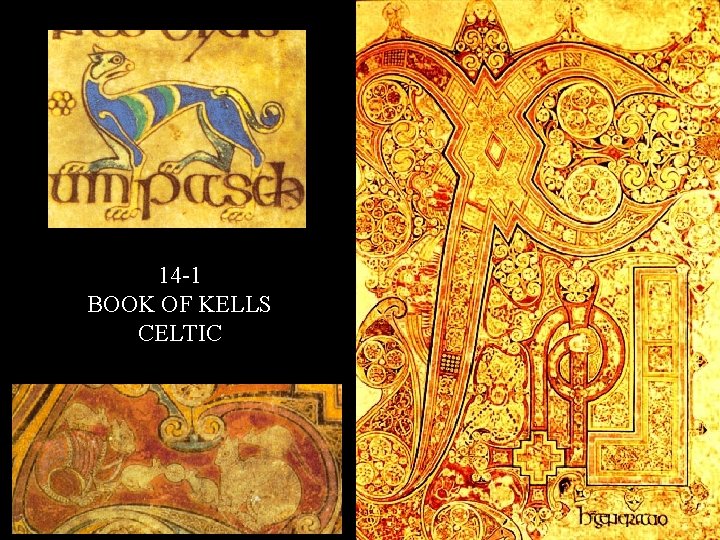
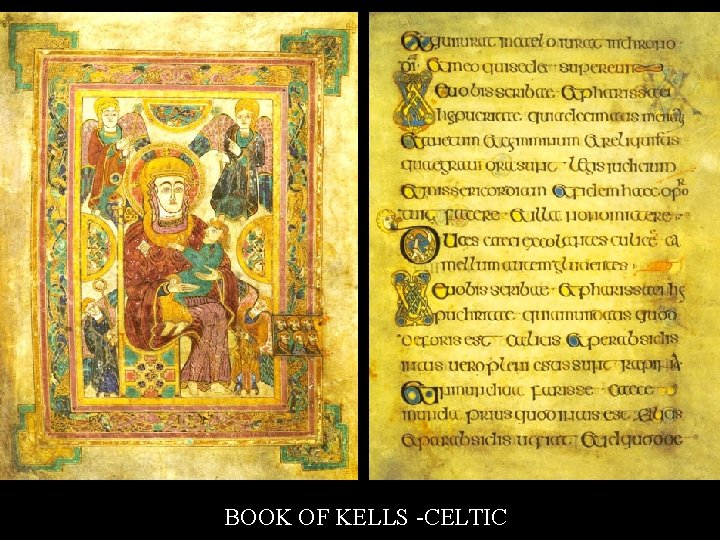
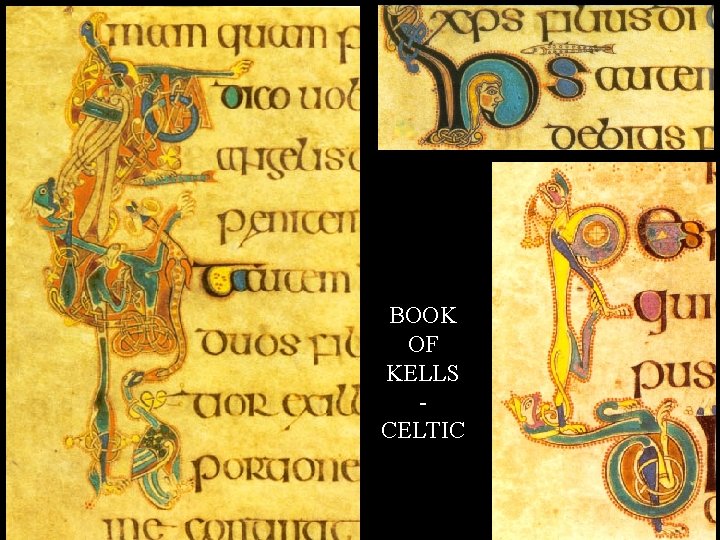
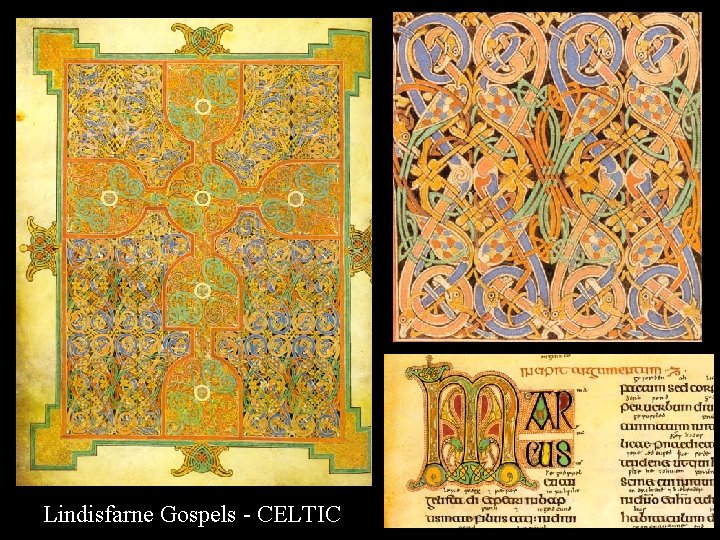
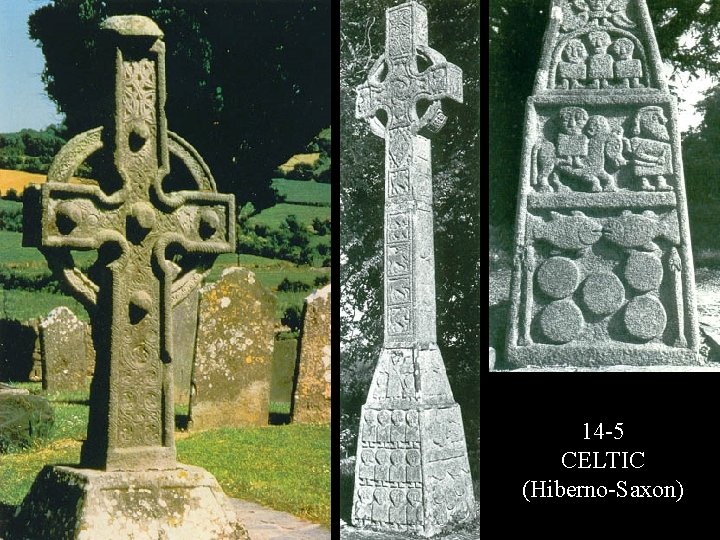
CELTIC ART Celtic, pronounced Kel’-tik (from the Greek Κελτοι or Keltoi), is a term that encompasses cultures in the British Isles & parts of north, western & central Europe. Art forms are made in a variety of mediums and materials – metalwork, jewelry, illuminated manuscripts, shipbuilding, enameling, wood, leather, ivory, bone, antler, stone and more. Celtic art has been described thusly: “Its most outstanding characteristic is its eclecticism and variety, ” at times borrowing from Greek, Eastern, Roman and Viking art. Some common design elements, motifs and terms are as follows: animal style – the use of animals as motifs, usually very decorative and abstract. Often limbs and other body parts are extended into complex interlaced designs, sometimes in combat. Often, the human figure is treated similarly. By contrast, when a naturalistic approach is attempted on either animal or human, it can leave the viewer wondering if the artist had ever witnessed his/her subject. chip carving – a technique of cutting metal into faceted surfaces, to reflect light, often in the form of reversed ‘pyramids’. True chip carving is rare; pseudo-chip carving, produced by casting, is more usual. filigree – very fine wire work, e. g. in the detail showing the dragon in the Tara Brooch. folio – the page of a manuscript. A page of vellum has two sides, recto (smooth) & verso (rough, hair side). Hiberno-Saxon or Insular – are terms used to describe works of this period made specifically in the British Isles. Hiberno refers to Ireland. horror vacui – “fear of empty space”; the characteristic of filling negative space with decoration. interlacing – interwoven linear design, A. K. A. ribbon interlace or over-and-under interlace. niello – a black paste (silver sulphide w/ copper) used as inlay. nomad’s gear – small, portable and functional objects of art. penannular – the term, meaning ‘an almost complete ring’, is used for circular brooches with a break in the hoop. However, the heavy terminals of so-called penannulars were sometimes fused, i. e. the hoop was made as an unbroken circle. Such brooches are referred to as ‘pseudo-penannular’. zoomorphic ornament – of animal form.
CELTIC
CELTIC
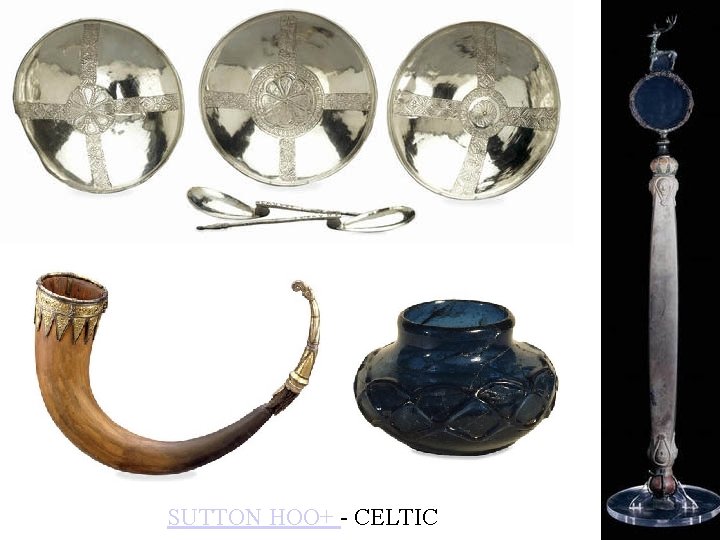
SUTTON HOO - CELTIC
SUTTON HOO - CELTIC
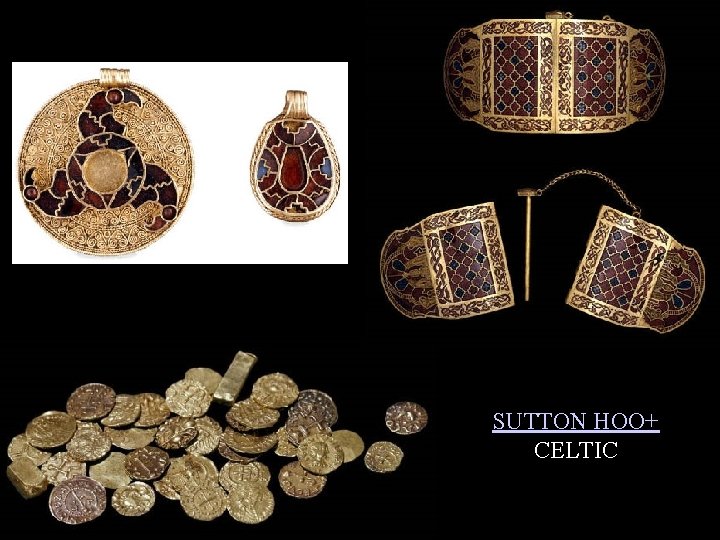
SUTTON HOO+ CELTIC
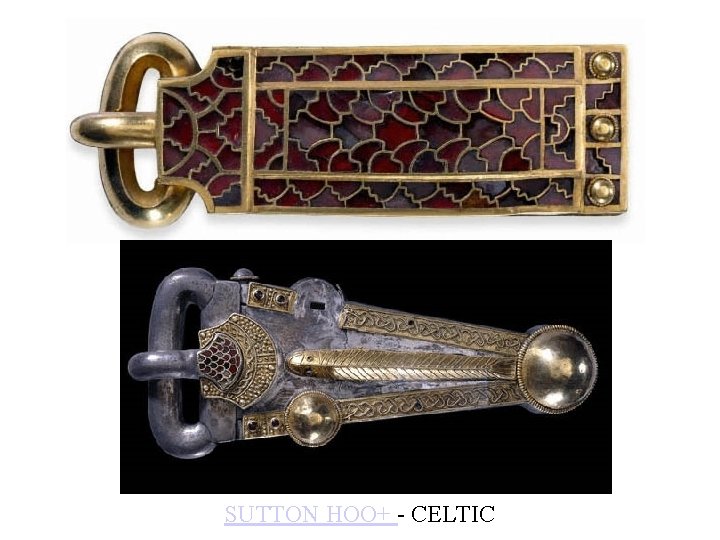
SUTTON HOO+ - CELTIC
SUTTON HOO+ CELTIC
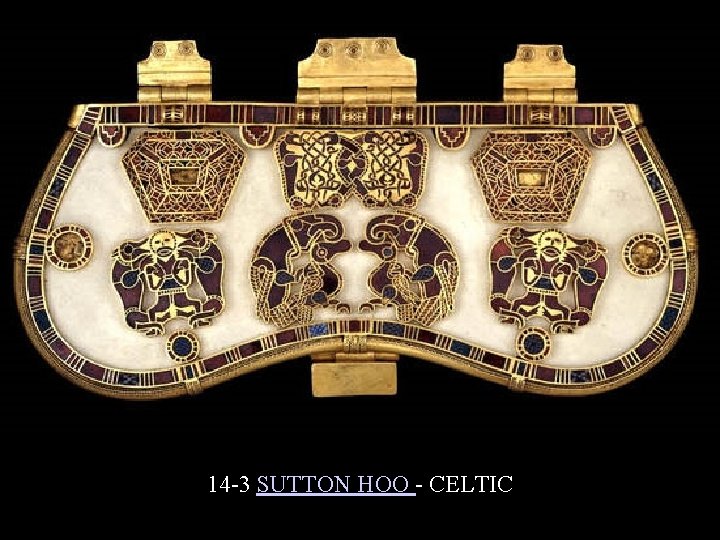
14 -3 SUTTON HOO - CELTIC
SUTTON HOO+ - CELTIC
SUTTON HOO - CELTIC
14 -4 CELTIC
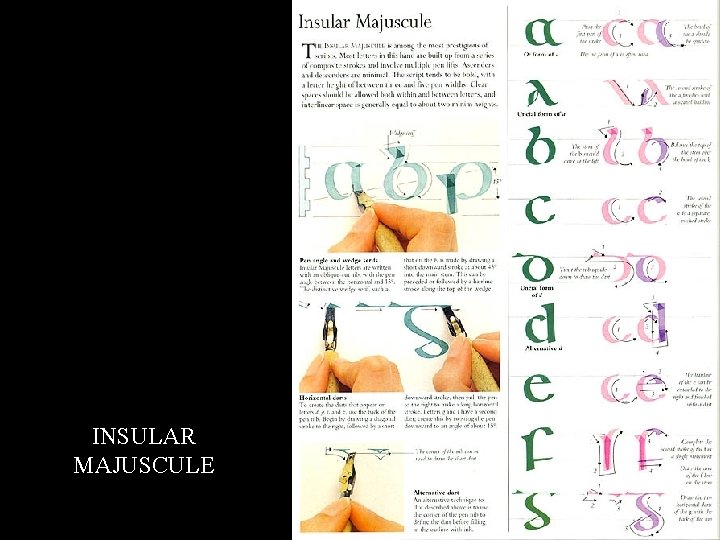
INSULAR MAJUSCULE
14 -1 BOOK OF KELLS CELTIC
BOOK OF KELLS -CELTIC
BOOK OF KELLS CELTIC
Lindisfarne Gospels - CELTIC
14 -5 CELTIC (Hiberno-Saxon)
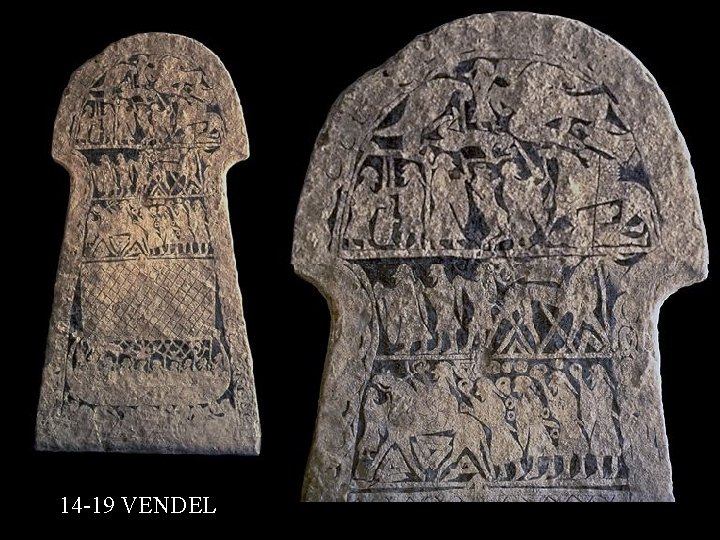
14 -19 VENDEL
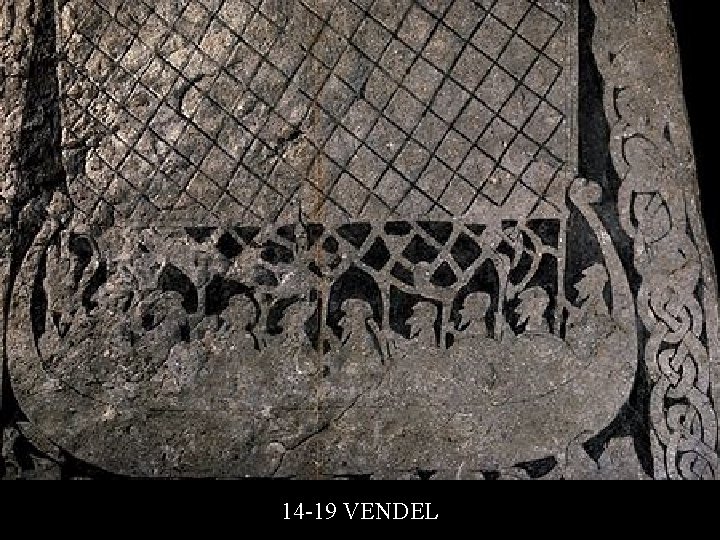
14 -19 VENDEL
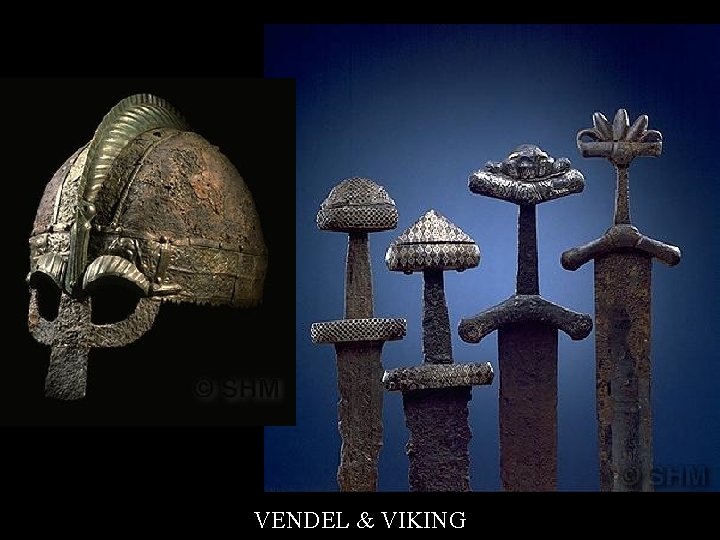
VENDEL & VIKING
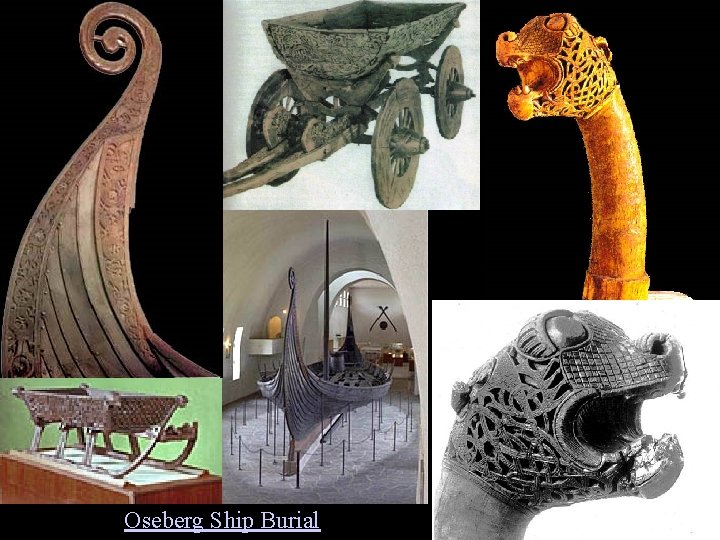
14 -20, 21 Oseberg Ship Burial VIKING
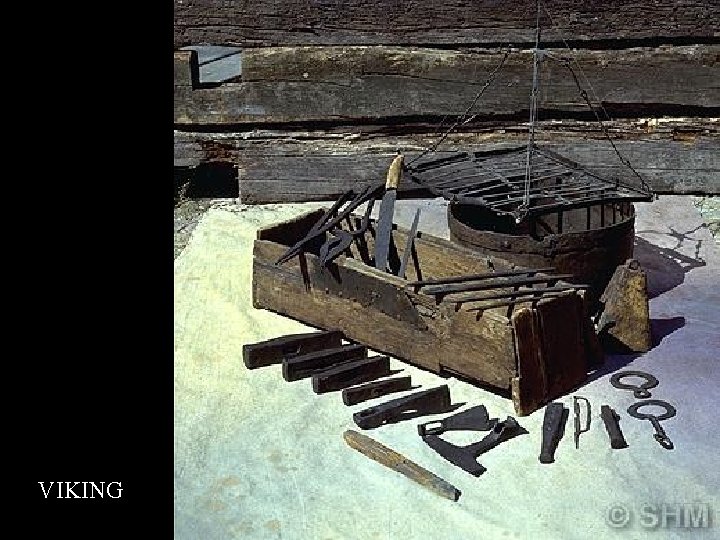
VIKING
THE VIKINGS 1958
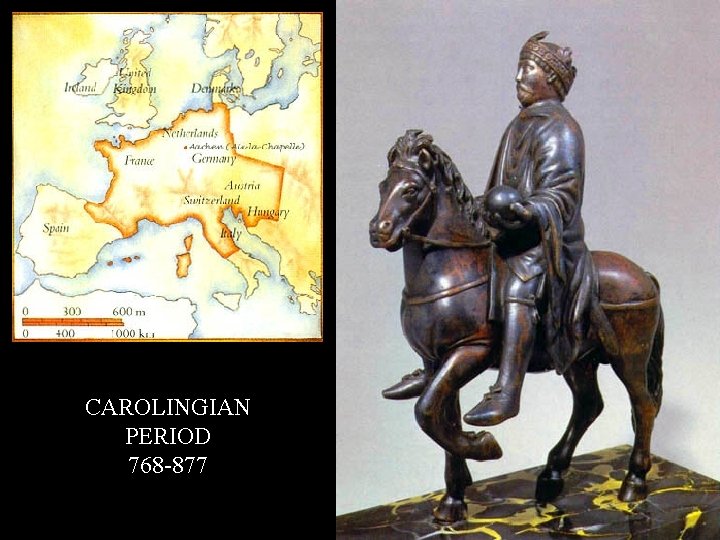
CAROLINGIAN PERIOD 768 -877
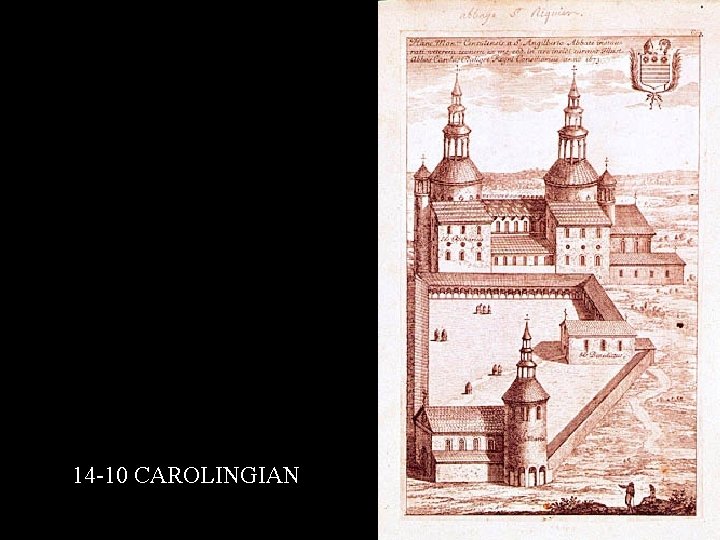
14 -10 CAROLINGIAN
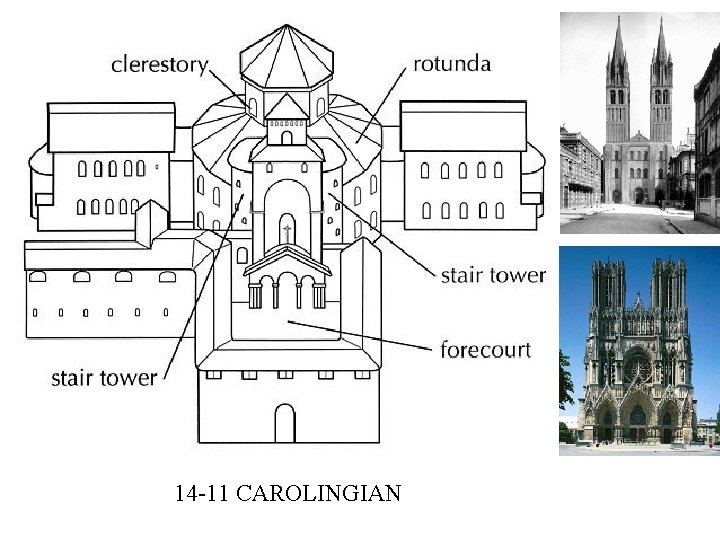
14 -11 CAROLINGIAN
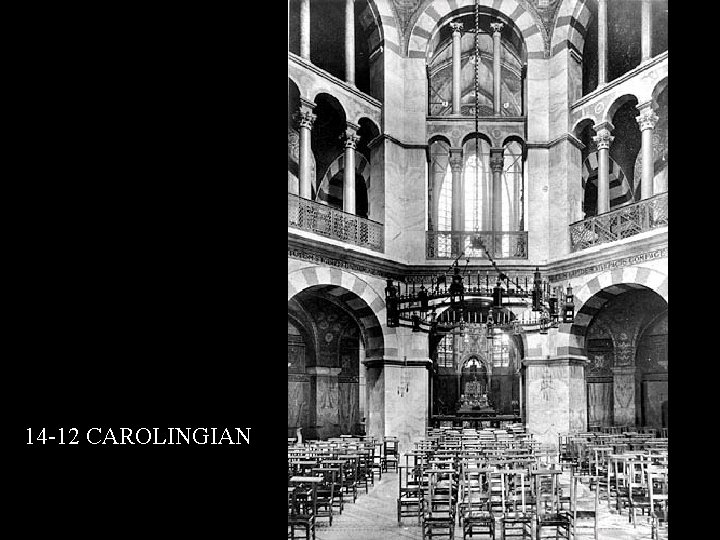
14 -12 CAROLINGIAN
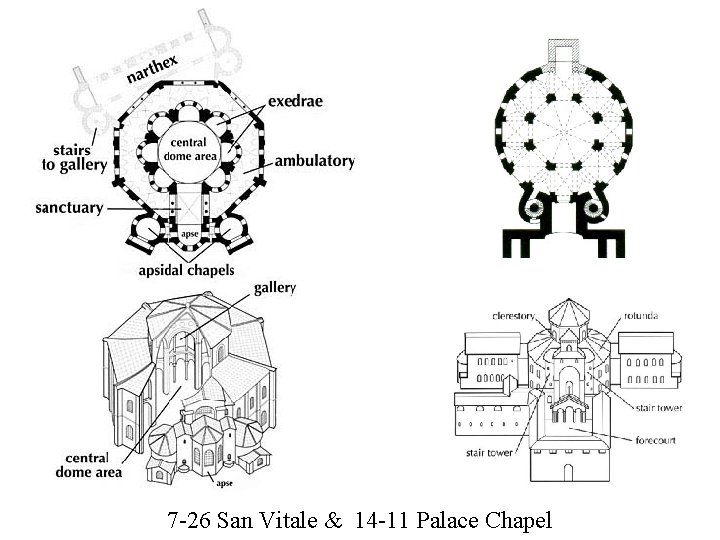
7 -26 San Vitale & 14 -11 Palace Chapel
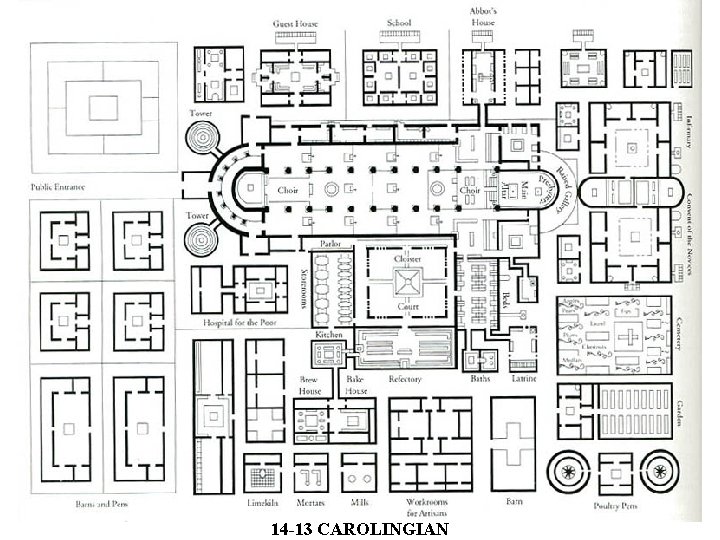
14 -13 CAROLINGIAN
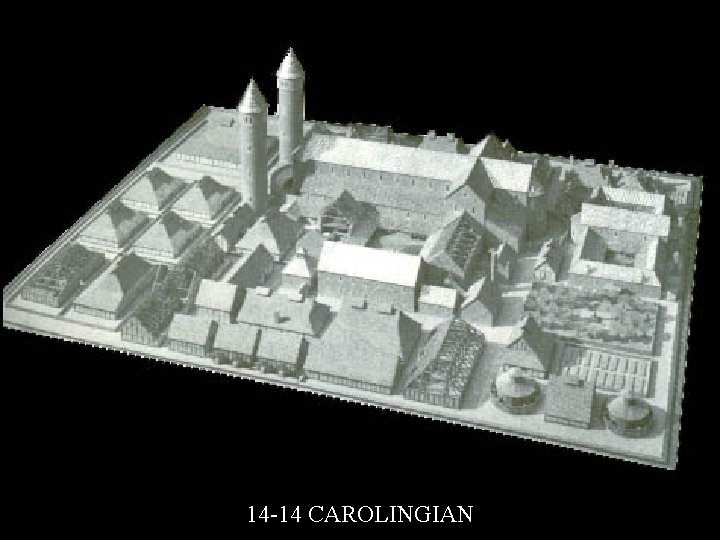
14 -14 CAROLINGIAN
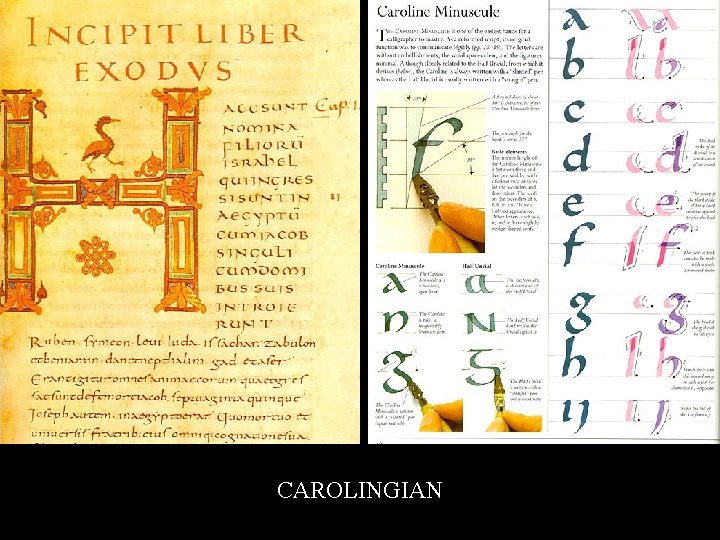
CAROLINGIAN
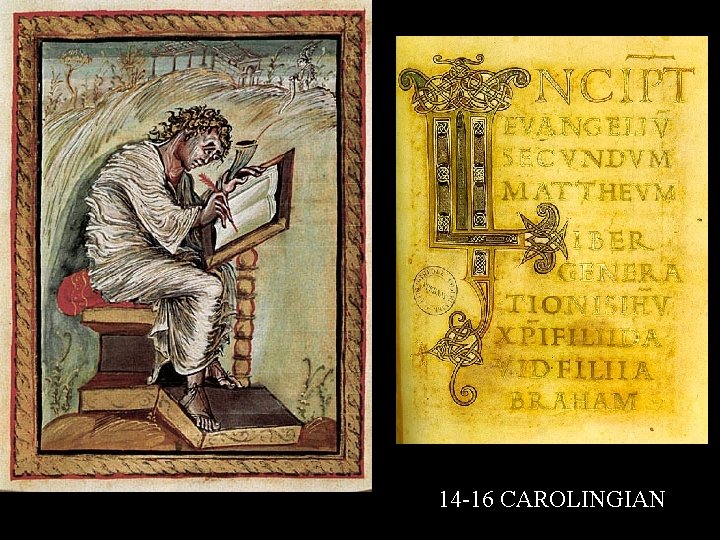
14 -16 CAROLINGIAN
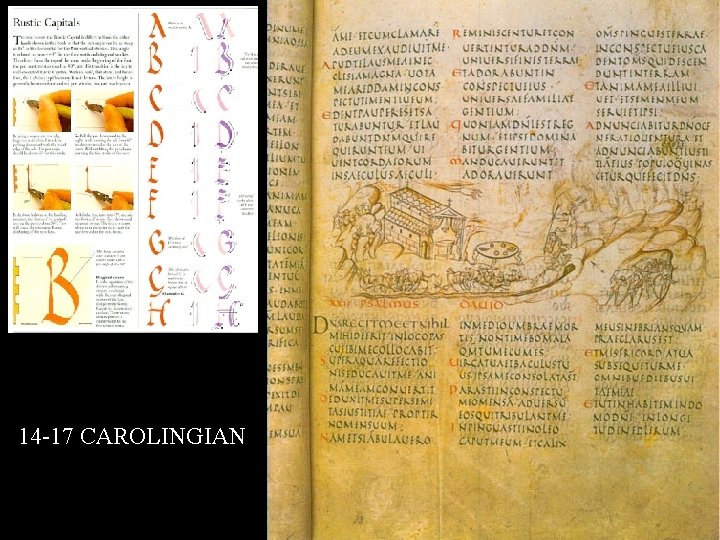
14 -17 CAROLINGIAN
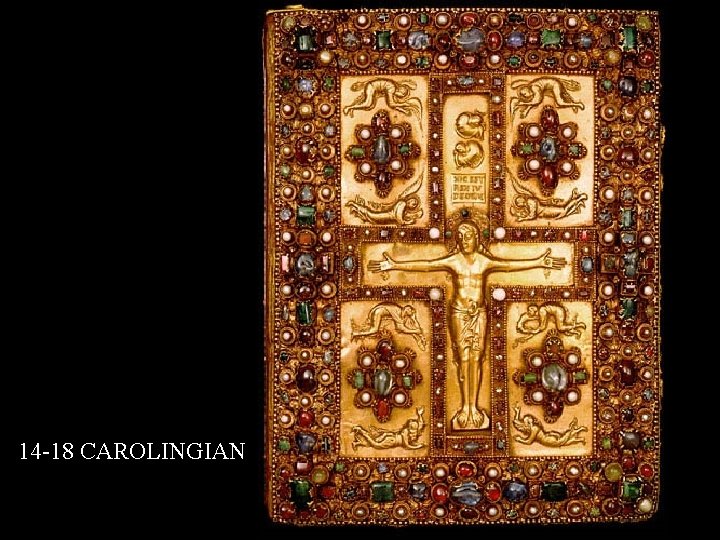
14 -18 CAROLINGIAN
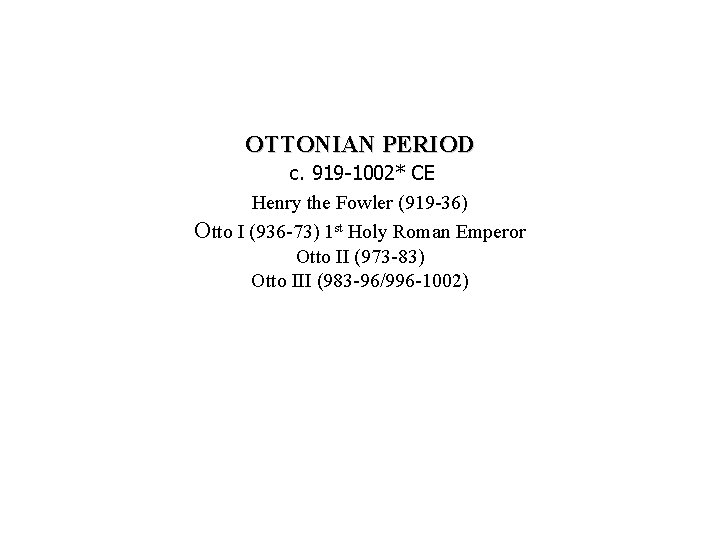
OTTONIAN PERIOD c. 919 -1002* CE Henry the Fowler (919 -36) Otto I (936 -73) 1 st Holy Roman Emperor Otto II (973 -83) Otto III (983 -96/996 -1002)
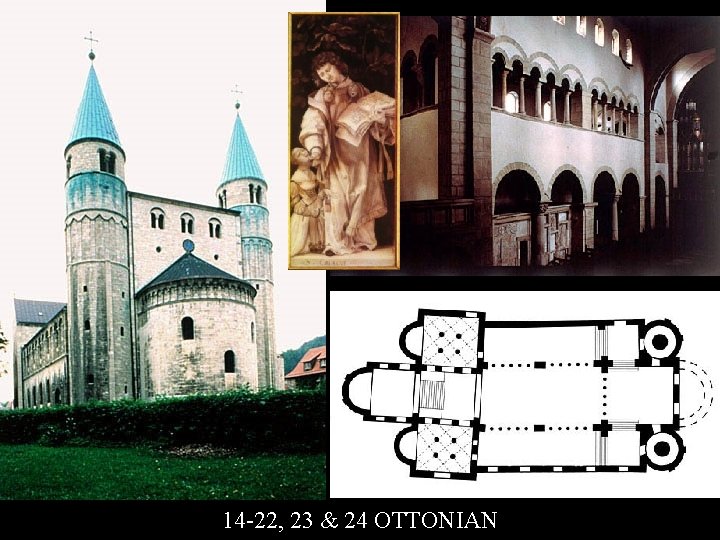
14 -22, 23 & 24 OTTONIAN
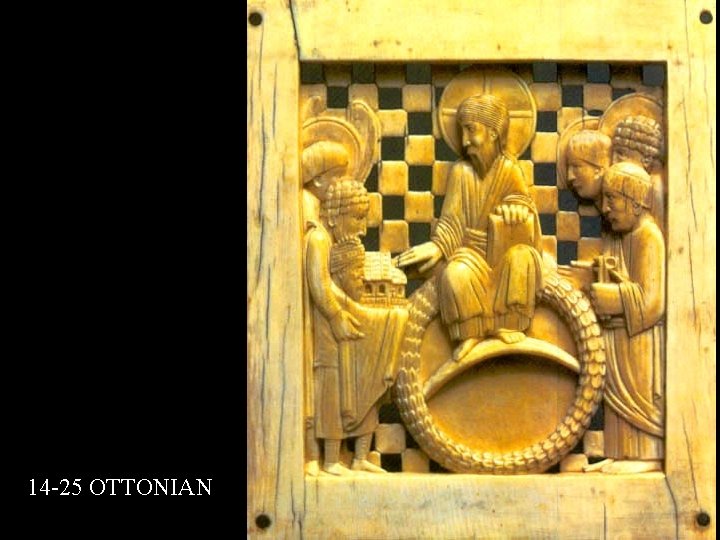
14 -25 OTTONIAN
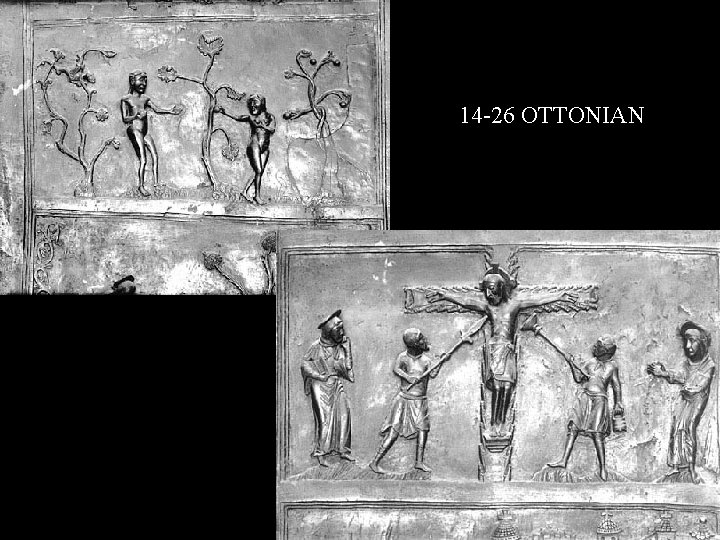
14 -26 OTTONIAN
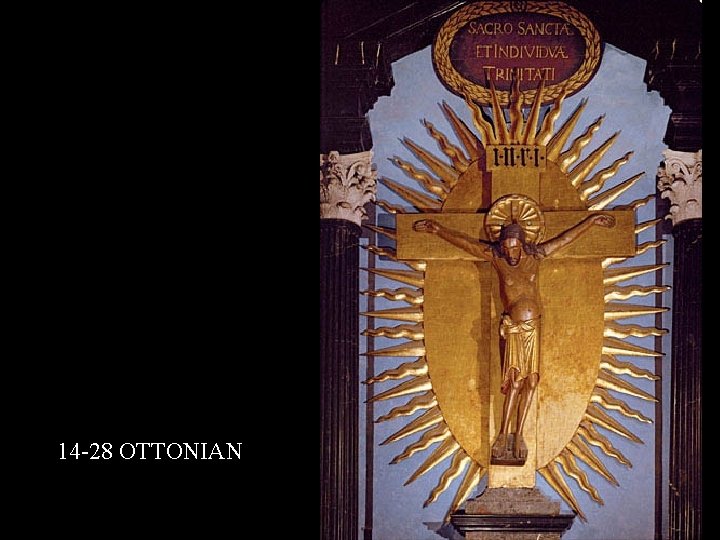
14 -28 OTTONIAN
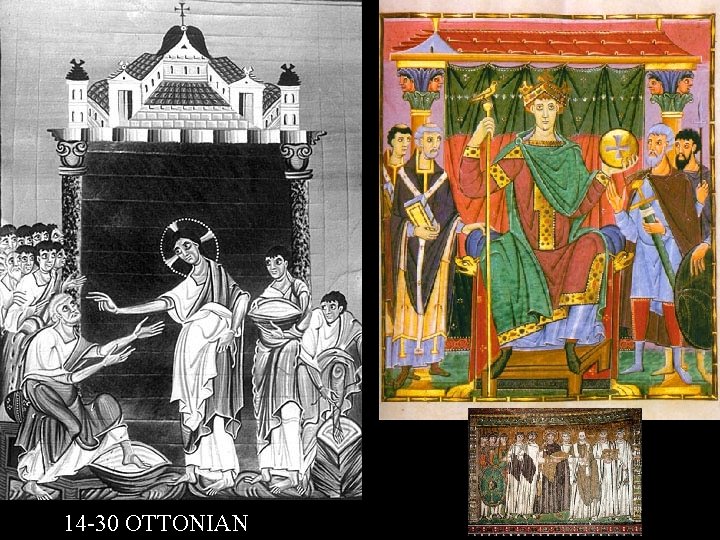
14 -30 OTTONIAN
LINKS AND SOURCES NORSE MYTHOLOGY CELTIC MYTHOLOGY SUTTON HOO SITE SUTTON HOO SOCIETY SUTTON HOO LINKS BRITISH MUSEUM (click compass, continue compass, type sutton hoo in search) THE MUSEUM OF NATIONAL ANTIQUITIES (Sweden) OSEBERG SHIP BURIAL Backhouse, Janet. The Lindisfarne Gospels. London: Phaidon, 1981. Harris, David. The Art of Calligraphy. New York: Dorling Kindersley, 1995. Kleiner, et al. Gardner’s Art Through The Ages. New York: Harcourt, 2001. Laing, J. & L. Art of the Celts. New York: Thames & Hudson, 1994. Meehan, Bernard. The Book of Kells. New York: Thames & Hudson, 1994. Mutherich & Gaehde. Carolingian Painting. New York: G. Braziller, 1976. Nordenfalk, Carl. Celtic and Anglo-Saxon Painting. New York: G. Braziller, 1977. Stokstad, Marilyn. Art History. New Jersey: Prentice-Hall, 2002. Suggested Movie: The Vikings, Kirk Douglas, 1958. (available at Blockbuster)