
GREAT LAKES ENERGY TAILBOARD Important Elements of Conducting
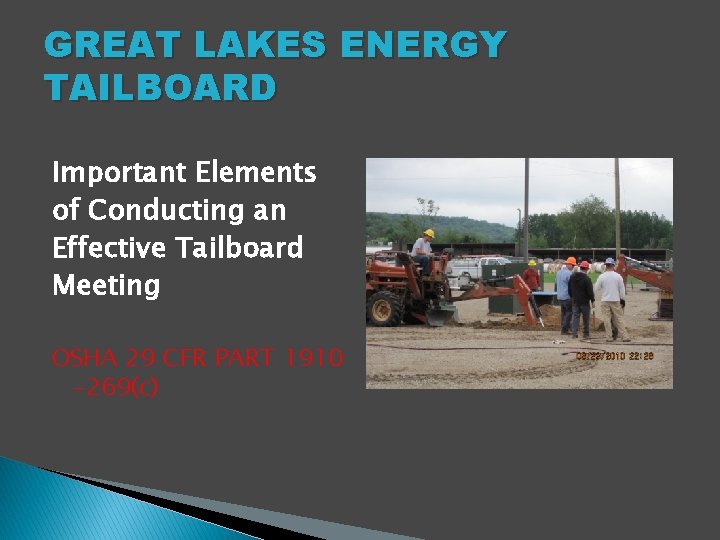
GREAT LAKES ENERGY TAILBOARD Important Elements of Conducting an Effective Tailboard Meeting OSHA 29 CFR PART 1910 -269(c)
This training will cover: Ø Ø Ø OSHA Requirements Employer Responsibilities Employee Responsibilities Tailboard subjects to Cover Practical Application of Tailboards at the Work Site
OSHA Requirements: The Regulation � OSHA � The 29 CFR PART 1910 -269(c) employer shall ensure that the employee in charge conducts a job briefing with the employees involved before they start each job. The briefing shall cover at least the following subjects:
Job Briefing Elements Ø Hazards Ø Work associated with the job procedures involved Ø Special precautions Ø Energy source controls Ø(Lock-out/Tag-out) Ø Personal protective equipment requirements (PPE)
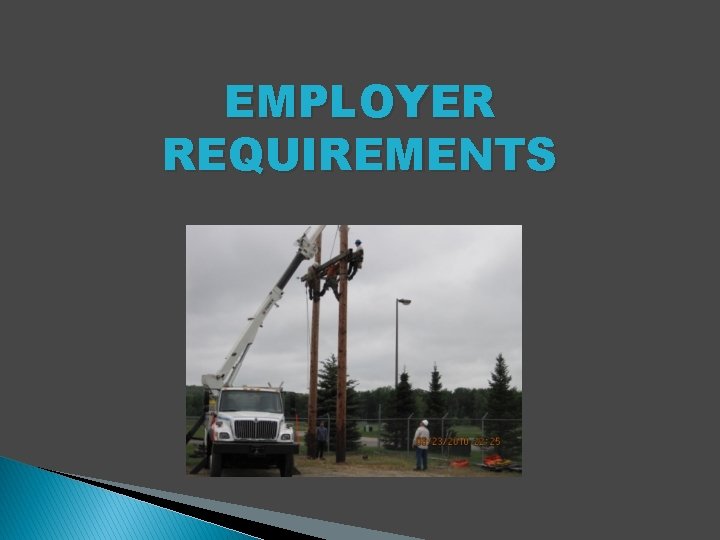
EMPLOYER REQUIREMENTS
NUMBER OF BRIEFINGS Ø At least one before the start of the first job if work or operations performed during the work day are repetitive and similar.
NUMBER OF BRIEFINGS Ø Additional briefings are required if significant changes, which might affect the safety of the employees, occur during the course of the work.
EXTENT OF BRIEFING Brief discussion if work is routine however More extensive if: Ø Work is complicated or particularly hazardous Ø And/or employee cannot be expected to recognize and avoid the hazards involved in the job
ADDITIONAL BRIEFING TOPICS Ø Work to be completed and associated work practices Ø Jobsite Ø Work hazards area limits Ø Emergency Ø Personal action plan protective equipment (PPE)
ADDITIONAL BRIEFING TOPICS Cont. Ø Crew members responsibilities Ø Voltage of line being worked Ø Minimum approach distance (MAD) that must be maintained Ø Any controls in place to reduce overvoltages, i. e. , reclosing features, cut-out, use of PPE, etc.
ADDITIONAL BRIEFING TOPICS Cont. � Minimum number of insulation devises (rubber gut’s, blankets, stick’s) needed to safely perform the work

ADDITIONAL BRIEFING TOPICS TO BE CONCIDERED: Pertinent measurements of the structure being worked: Ø Distance from conductor to structure Ø Ø Type of construction Span Length Ø Phase separation
KEEP IN MIND Ø Types used of live line work method that will be Ø Rigging Ø loads that will be encountered Line feed direction/nearest open point Ø Site safety, public safety, isolation
Don't Forget Ø Identify Ø Work worksite hazards rule compliance Ø Minimum number of insulators (rubber hose, blankets, sticks) to perform the job Ø CPR/First Aid- Rescue techniques
And finally………. Ø Automatic Ø Crew External Defibrillators (AEDs) member responsibilities Ø Documenting the job briefing
Question? ? On a Three Man Crew Who is the safety observer trained and proficient in the work being performed with the right to stop any job when an unsafe act is observed ?
OSHA’s View on Tailboards Ø Employer runs risk of citation if compliance officer finds, through questioning, that crew members do not agree on what was covered
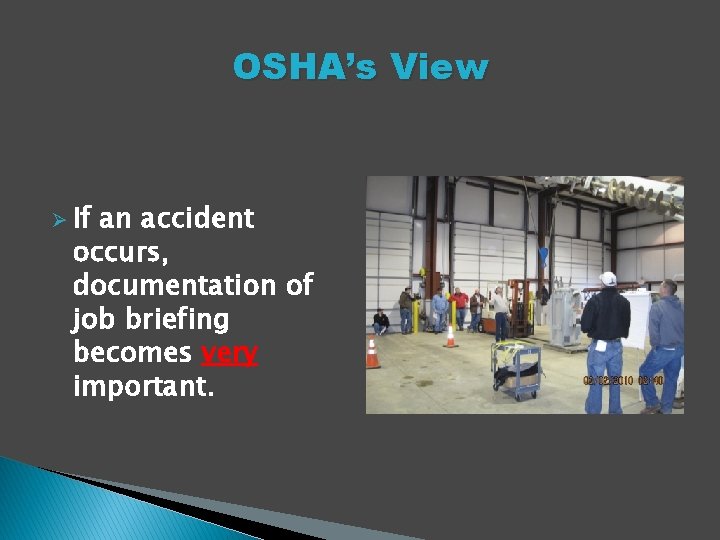
OSHA’s View Ø If an accident occurs, documentation of job briefing becomes very important.
OSHA’s View Ø Job briefing documents are not required to be kept and may be destroyed upon completion of job at hand, BUT……
WORKING ALONE Ø An employee working alone need not conduct a job briefing. Ø Employer shall ensure that the tasks to be performed are planned as if a briefing were required.
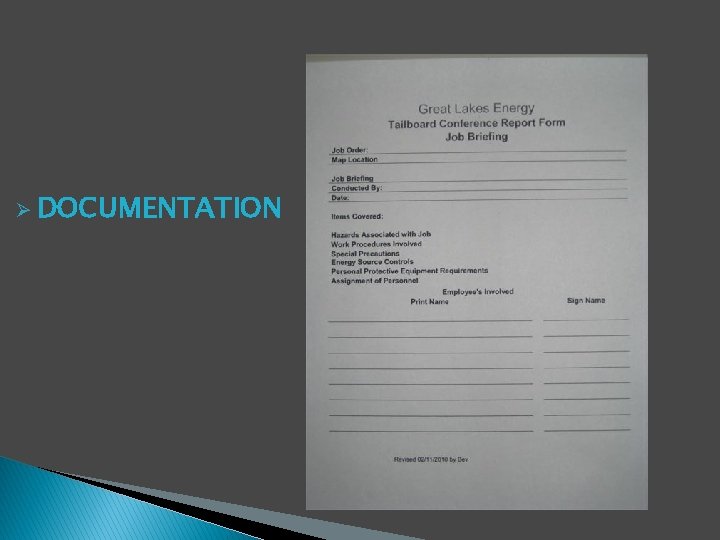
Ø DOCUMENTATION
SUMMARY Ø REMEMBER TO COVER THE FIVE SUBJECTS OUTLINED BY OSHA PRIOR TO THE START OF EVERY JOB
Tailboards: Ø Hazards Ø Work associated with the job procedures involved Ø Special precautions Ø Energy source controls (Lock-out/Tag-out) Ø Personal protective equipment requirements
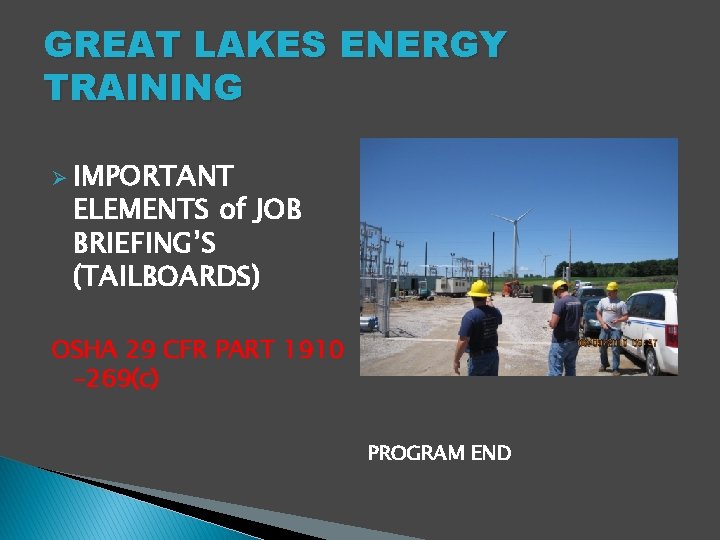
GREAT LAKES ENERGY TRAINING Ø IMPORTANT ELEMENTS of JOB BRIEFING’S (TAILBOARDS) OSHA 29 CFR PART 1910 -269(c) PROGRAM END
- Slides: 24