
Great Ideas in Computer Architecture Machine Structures ThreadLevel


![Building Block: for loop for (i=0; i<max; i++) zero[i] = 0; • Break for](https://slidetodoc.com/presentation_image_h2/6ca1f2be504d2d124f7ad22536630b26/image-43.jpg "Building Block: for loop for (i=0; i<max; i++) zero[i] = 0; • Break for")
![Parallel for pragma #pragma omp parallel for (i=0; i<max; i++) zero[i] = 0; •](https://slidetodoc.com/presentation_image_h2/6ca1f2be504d2d124f7ad22536630b26/image-44.jpg "Parallel for pragma #pragma omp parallel for (i=0; i<max; i++) zero[i] = 0; •")
- Slides: 48
Great Ideas in Computer Architecture (Machine Structures) Thread-Level Parallelism (TLP) and Open. MP Intro Instructors: Yuanqing Cheng http: //www. cadetlab. cn/sp 18. html
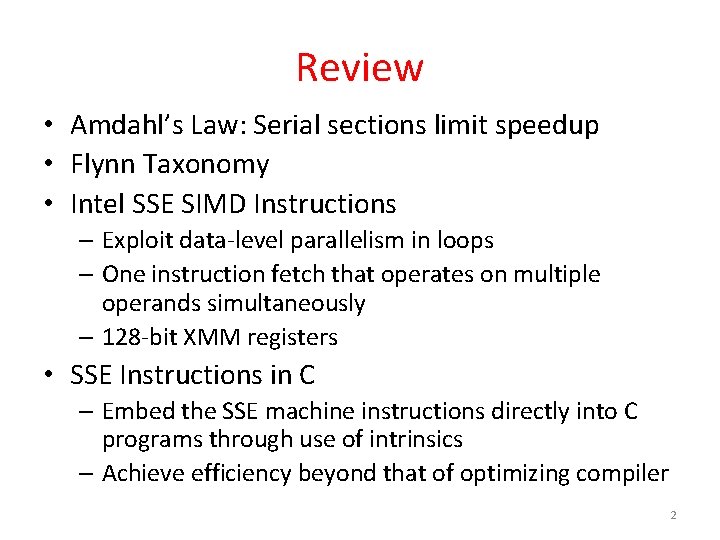
Review • Amdahl’s Law: Serial sections limit speedup • Flynn Taxonomy • Intel SSE SIMD Instructions – Exploit data-level parallelism in loops – One instruction fetch that operates on multiple operands simultaneously – 128 -bit XMM registers • SSE Instructions in C – Embed the SSE machine instructions directly into C programs through use of intrinsics – Achieve efficiency beyond that of optimizing compiler 2
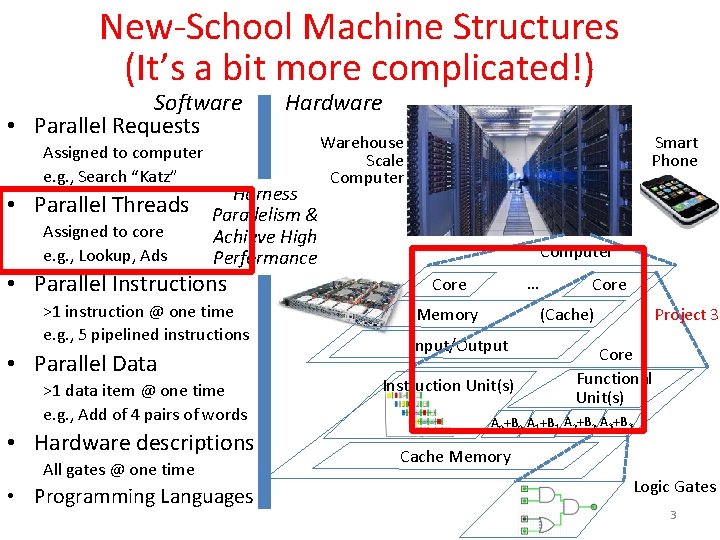
New-School Machine Structures (It’s a bit more complicated!) Software • Parallel Requests Assigned to computer e. g. , Search “Katz” • Parallel Threads Assigned to core e. g. , Lookup, Ads Hardware Harness Parallelism & Achieve High Performance • Parallel Instructions >1 instruction @ one time e. g. , 5 pipelined instructions • Parallel Data >1 data item @ one time e. g. , Add of 4 pairs of words • Hardware descriptions All gates @ one time • Programming Languages Smart Phone Warehouse Scale Computer … Core Memory Core (Cache) Input/Output Instruction Unit(s) Project 3 Core Functional Unit(s) A 0+B 0 A 1+B 1 A 2+B 2 A 3+B 3 Cache Memory Logic Gates 3
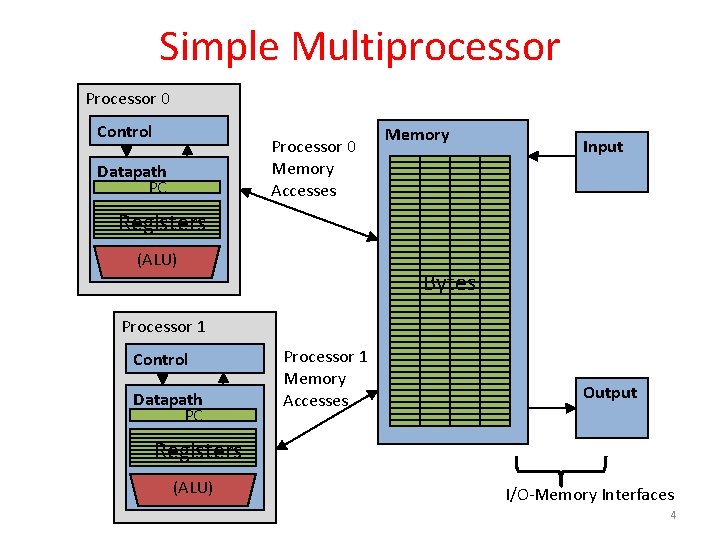
Simple Multiprocessor Processor 0 Control Processor 0 Memory Accesses Datapath PC Memory Input Registers (ALU) Bytes Processor 1 Control Datapath PC Processor 1 Memory Accesses Output Registers (ALU) I/O-Memory Interfaces 4
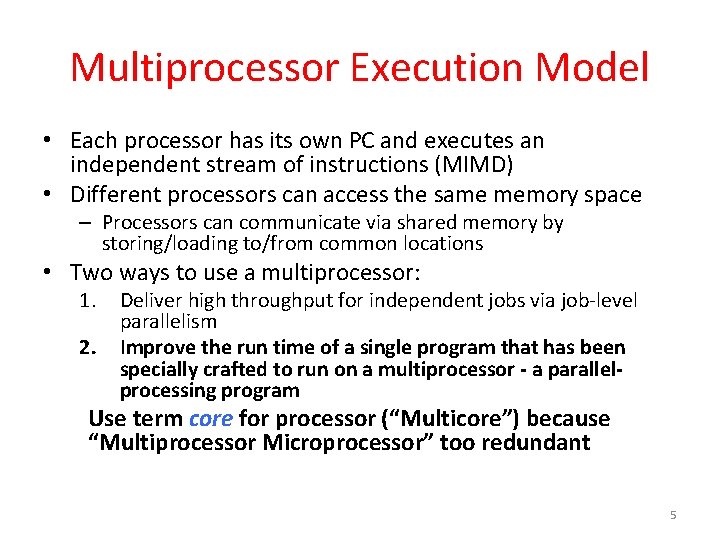
Multiprocessor Execution Model • Each processor has its own PC and executes an independent stream of instructions (MIMD) • Different processors can access the same memory space – Processors can communicate via shared memory by storing/loading to/from common locations • Two ways to use a multiprocessor: 1. 2. Deliver high throughput for independent jobs via job-level parallelism Improve the run time of a single program that has been specially crafted to run on a multiprocessor - a parallelprocessing program Use term core for processor (“Multicore”) because “Multiprocessor Microprocessor” too redundant 5
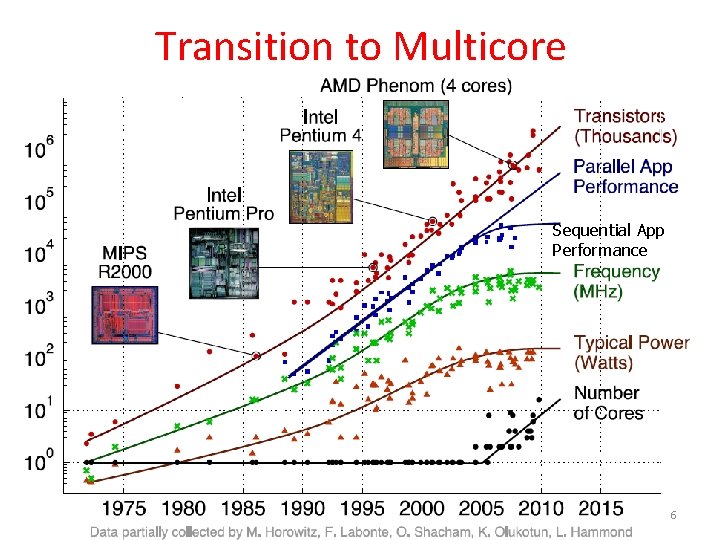
Transition to Multicore Sequential App Performance 6
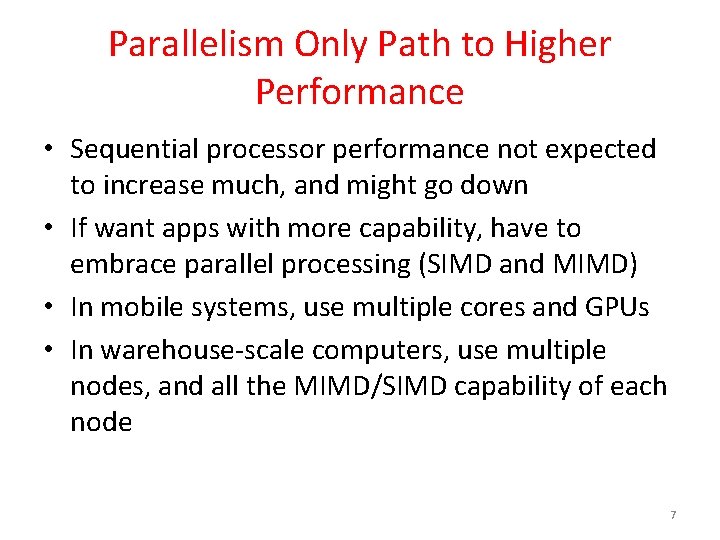
Parallelism Only Path to Higher Performance • Sequential processor performance not expected to increase much, and might go down • If want apps with more capability, have to embrace parallel processing (SIMD and MIMD) • In mobile systems, use multiple cores and GPUs • In warehouse-scale computers, use multiple nodes, and all the MIMD/SIMD capability of each node 7
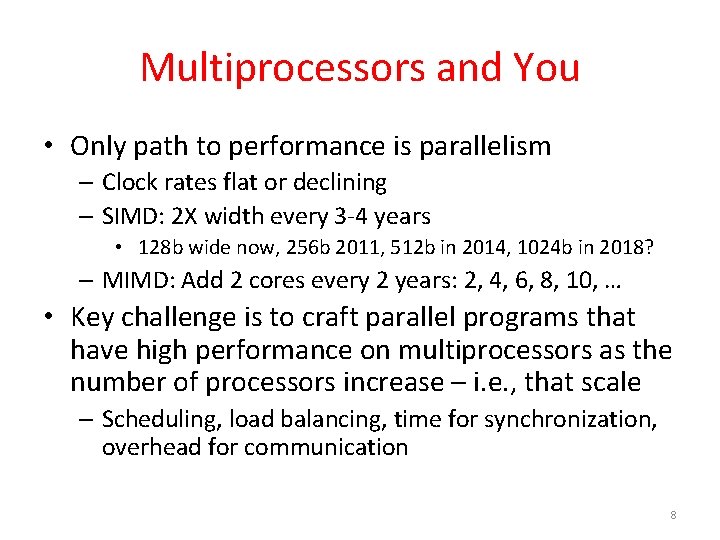
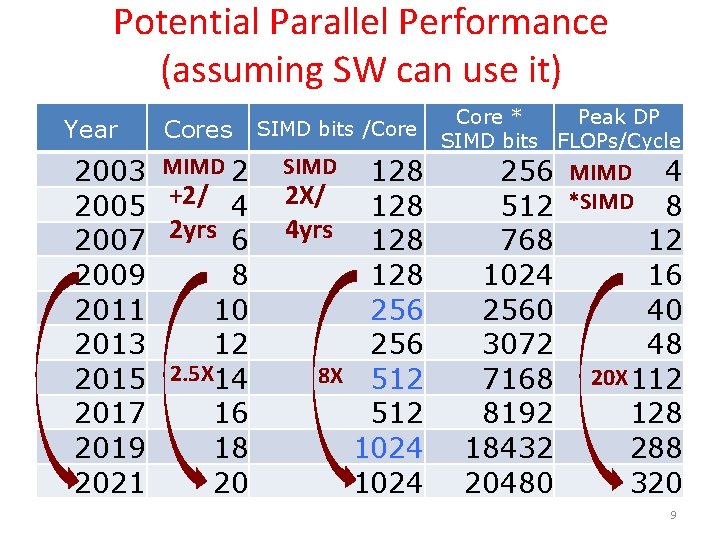
Multiprocessors and You • Only path to performance is parallelism – Clock rates flat or declining – SIMD: 2 X width every 3 -4 years • 128 b wide now, 256 b 2011, 512 b in 2014, 1024 b in 2018? – MIMD: Add 2 cores every 2 years: 2, 4, 6, 8, 10, … • Key challenge is to craft parallel programs that have high performance on multiprocessors as the number of processors increase – i. e. , that scale – Scheduling, load balancing, time for synchronization, overhead for communication 8
Potential Parallel Performance (assuming SW can use it) Core * Peak DP Cores SIMD bits /Core SIMD bits FLOPs/Cycle 2003 MIMD 2 SIMD 128 256 MIMD 4 2005 +2/ 4 2 X/ 128 512 *SIMD 8 Year 2007 2 yrs 6 2009 8 2011 10 2013 12 2015 2. 5 X 14 2017 16 2019 18 2021 20 4 yrs 128 256 8 X 512 1024 768 1024 2560 3072 7168 8192 18432 20480 12 16 40 48 20 X 112 128 288 320 9
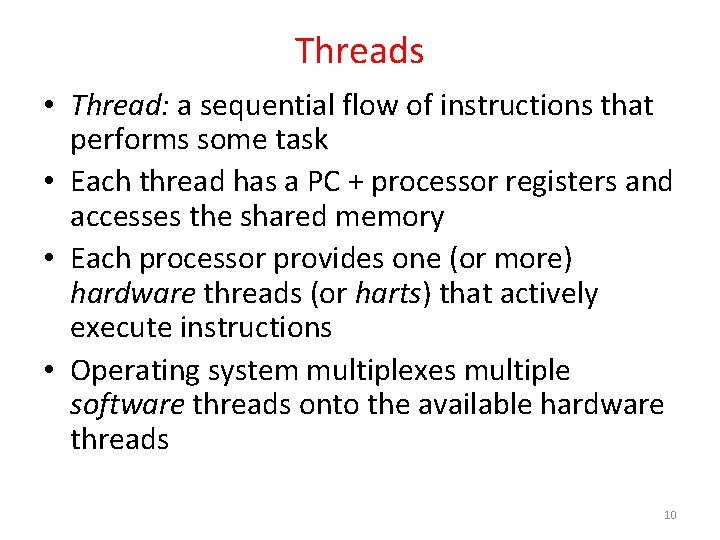
Threads • Thread: a sequential flow of instructions that performs some task • Each thread has a PC + processor registers and accesses the shared memory • Each processor provides one (or more) hardware threads (or harts) that actively execute instructions • Operating system multiplexes multiple software threads onto the available hardware threads 10
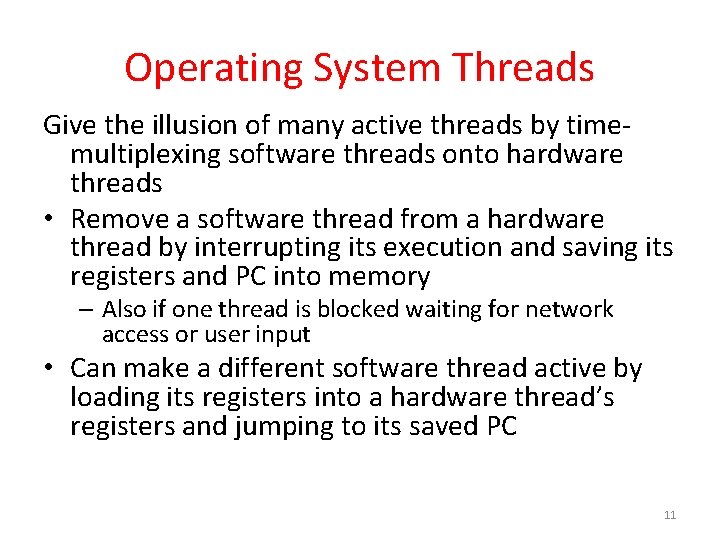
Operating System Threads Give the illusion of many active threads by timemultiplexing software threads onto hardware threads • Remove a software thread from a hardware thread by interrupting its execution and saving its registers and PC into memory – Also if one thread is blocked waiting for network access or user input • Can make a different software thread active by loading its registers into a hardware thread’s registers and jumping to its saved PC 11
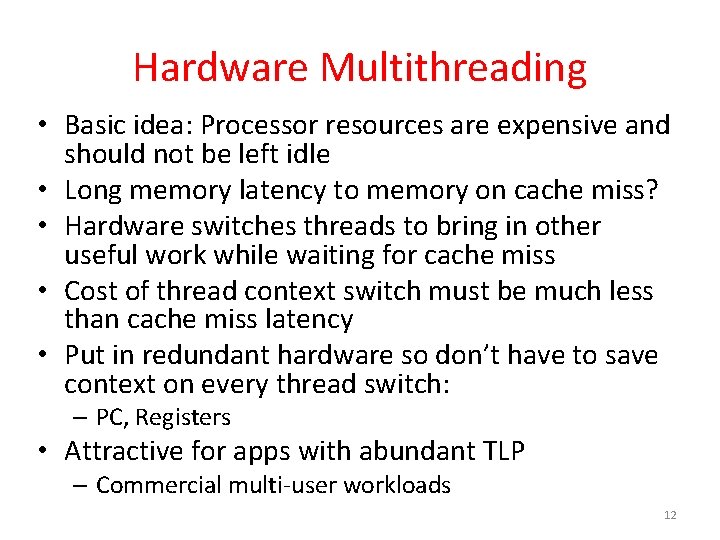
Hardware Multithreading • Basic idea: Processor resources are expensive and should not be left idle • Long memory latency to memory on cache miss? • Hardware switches threads to bring in other useful work while waiting for cache miss • Cost of thread context switch must be much less than cache miss latency • Put in redundant hardware so don’t have to save context on every thread switch: – PC, Registers • Attractive for apps with abundant TLP – Commercial multi-user workloads 12
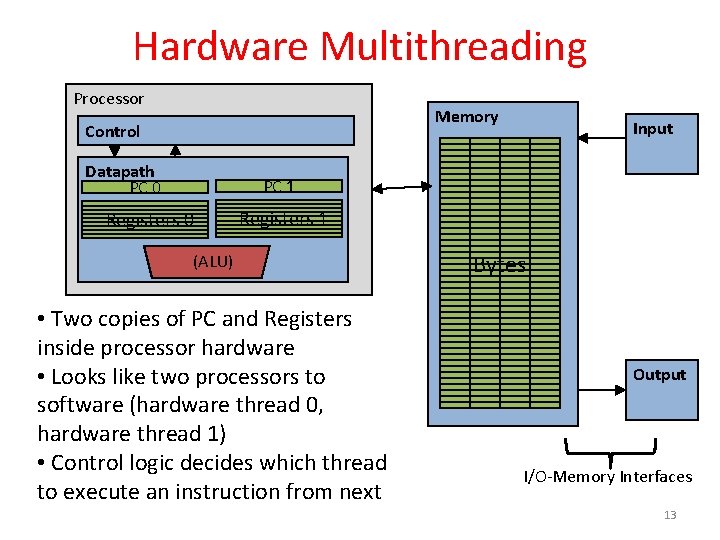
Hardware Multithreading Processor Memory Control Datapath PC 0 Input PC 1 Registers 0 Registers 1 (ALU) • Two copies of PC and Registers inside processor hardware • Looks like two processors to software (hardware thread 0, hardware thread 1) • Control logic decides which thread to execute an instruction from next Bytes Output I/O-Memory Interfaces 13
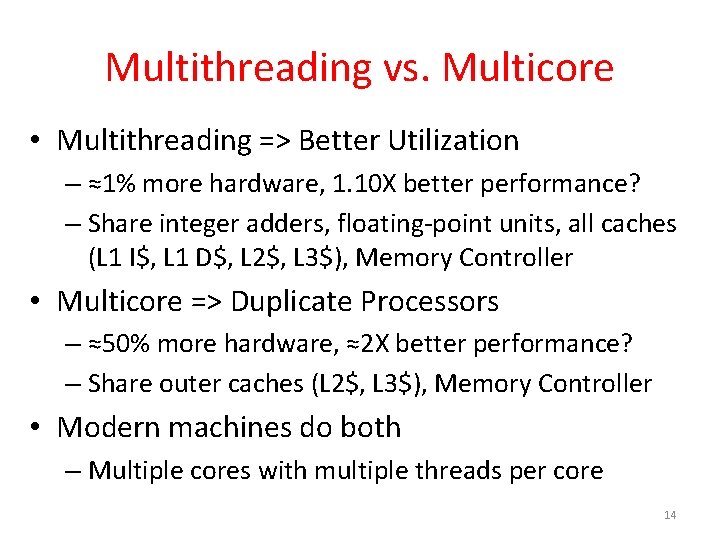
Multithreading vs. Multicore • Multithreading => Better Utilization – ≈1% more hardware, 1. 10 X better performance? – Share integer adders, floating-point units, all caches (L 1 I$, L 1 D$, L 2$, L 3$), Memory Controller • Multicore => Duplicate Processors – ≈50% more hardware, ≈2 X better performance? – Share outer caches (L 2$, L 3$), Memory Controller • Modern machines do both – Multiple cores with multiple threads per core 14
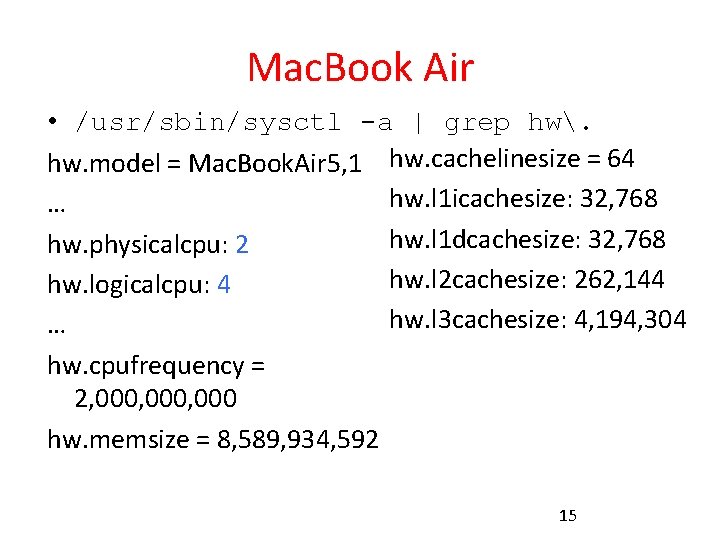
Mac. Book Air • /usr/sbin/sysctl -a | grep hw. hw. model = Mac. Book. Air 5, 1 hw. cachelinesize = 64 hw. l 1 icachesize: 32, 768 … hw. l 1 dcachesize: 32, 768 hw. physicalcpu: 2 hw. l 2 cachesize: 262, 144 hw. logicalcpu: 4 hw. l 3 cachesize: 4, 194, 304 … hw. cpufrequency = 2, 000, 000 hw. memsize = 8, 589, 934, 592 15
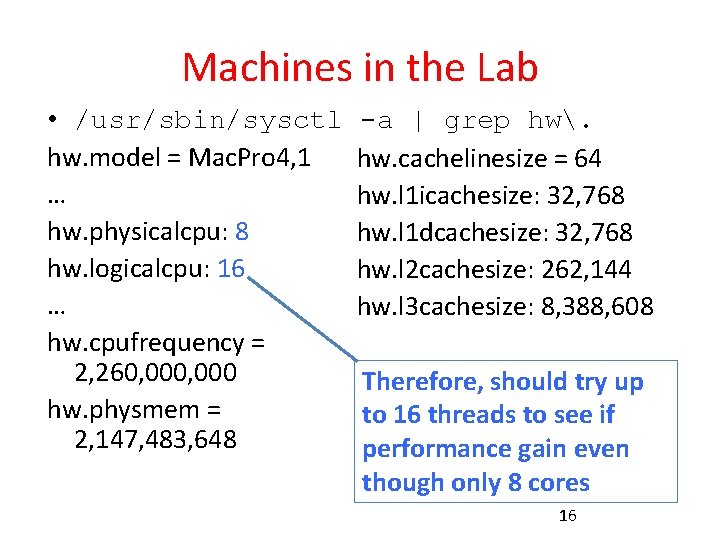
Machines in the Lab • /usr/sbin/sysctl hw. model = Mac. Pro 4, 1 … hw. physicalcpu: 8 hw. logicalcpu: 16 … hw. cpufrequency = 2, 260, 000 hw. physmem = 2, 147, 483, 648 -a | grep hw. hw. cachelinesize = 64 hw. l 1 icachesize: 32, 768 hw. l 1 dcachesize: 32, 768 hw. l 2 cachesize: 262, 144 hw. l 3 cachesize: 8, 388, 608 Therefore, should try up to 16 threads to see if performance gain even though only 8 cores 16
Administrivia 17
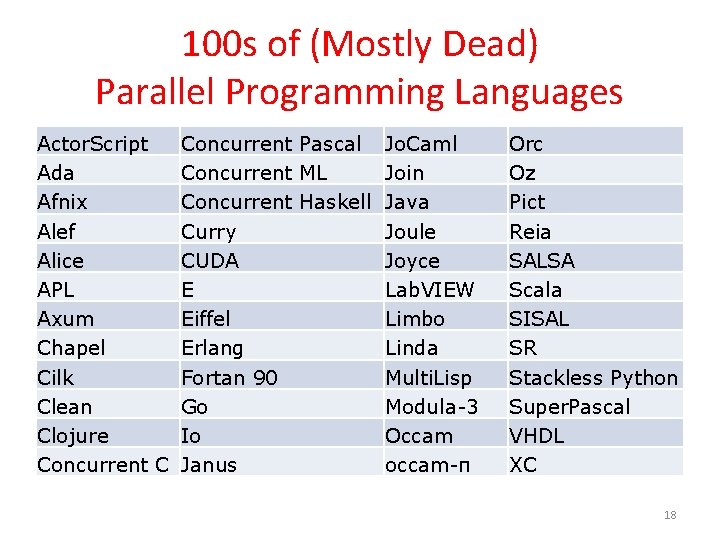
100 s of (Mostly Dead) Parallel Programming Languages Actor. Script Ada Afnix Alef Alice APL Axum Chapel Cilk Clean Clojure Concurrent C Concurrent Pascal Concurrent ML Concurrent Haskell Curry CUDA E Eiffel Erlang Fortan 90 Go Io Janus Jo. Caml Join Java Joule Joyce Lab. VIEW Limbo Linda Multi. Lisp Modula-3 Occam occam-π Orc Oz Pict Reia SALSA Scala SISAL SR Stackless Python Super. Pascal VHDL XC 18
Open. MP • Open. MP is a language extension used for multi-threaded, shared-memory parallelism – Compiler Directives (inserted into source code) – Runtime Library Routines (called from your code) – Environment Variables (set in your shell) • Portable • Standardized • Easy to compile: cc –fopenmp name. c 19
Shared Memory Model with Explicit Thread-based Parallelism • Multiple threads in a shared memory environment, explicit programming model with full programmer control over parallelization • Pros: – Takes advantage of shared memory, programmer need not worry (that much) about data placement – Compiler directives are simple and easy to use – Legacy serial code does not need to be rewritten • Cons: – Code can only be run in shared memory environments – Compiler must support Open. MP (e. g. gcc 4. 2) 20
Open. MP • Open. MP is built on top of C, so you don’t have to learn a whole new programming language – Make sure to add #include <omp. h> – Compile with flag: gcc -fopenmp – Mostly just a few lines of code to learn • You will NOT become experts at Open. MP – Use slides as reference, will learn to use in lab • Key ideas: – Shared vs. Private variables – Open. MP directives for parallelization, work sharing, synchronization 21
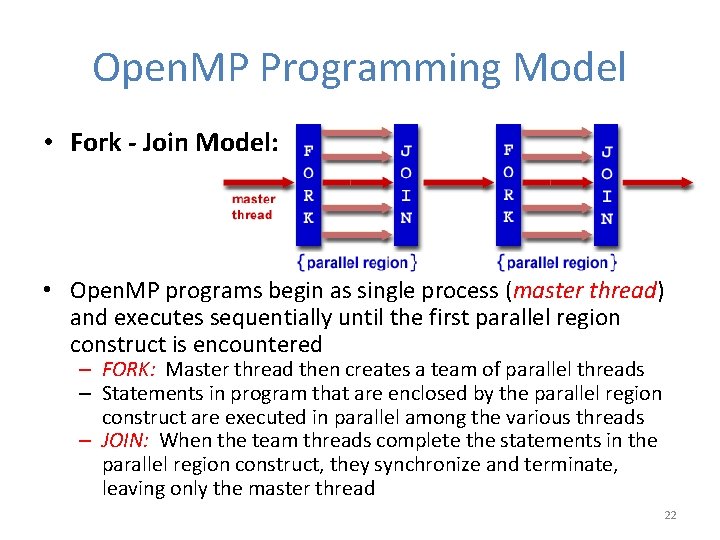
Open. MP Programming Model • Fork - Join Model: • Open. MP programs begin as single process (master thread) and executes sequentially until the first parallel region construct is encountered – FORK: Master thread then creates a team of parallel threads – Statements in program that are enclosed by the parallel region construct are executed in parallel among the various threads – JOIN: When the team threads complete the statements in the parallel region construct, they synchronize and terminate, leaving only the master thread 22
Open. MP Extends C with Pragmas • Pragmas are a preprocessor mechanism C provides for language extensions • Commonly implemented pragmas: structure packing, symbol aliasing, floating point exception modes (not covered in this course) • Good mechanism for Open. MP because compilers that don't recognize a pragma are supposed to ignore them – Runs on sequential computer even with embedded pragmas 23
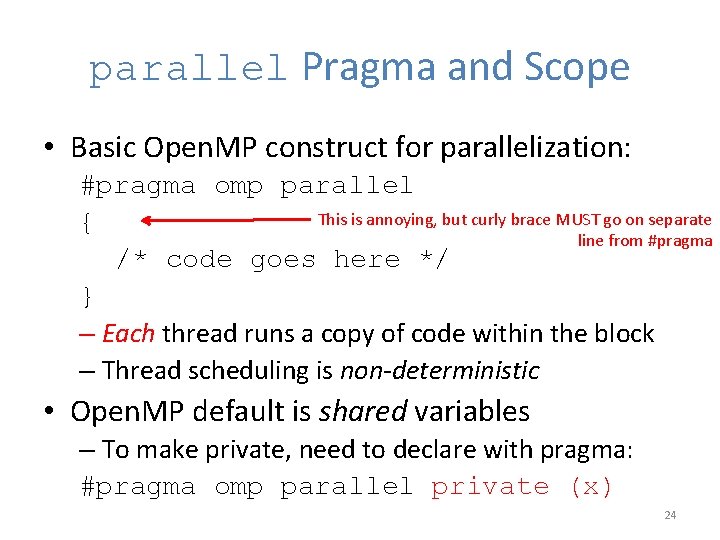
parallel Pragma and Scope • Basic Open. MP construct for parallelization: #pragma omp parallel This is annoying, but curly brace MUST go on separate { line from #pragma /* code goes here */ } – Each thread runs a copy of code within the block – Thread scheduling is non-deterministic • Open. MP default is shared variables – To make private, need to declare with pragma: #pragma omp parallel private (x) 24
Thread Creation • How many threads will Open. MP create? • Defined by OMP_NUM_THREADS environment variable (or code procedure call) – Set this variable to the maximum number of threads you want Open. MP to use – Usually equals the number of cores in the underlying hardware on which the program is run 25
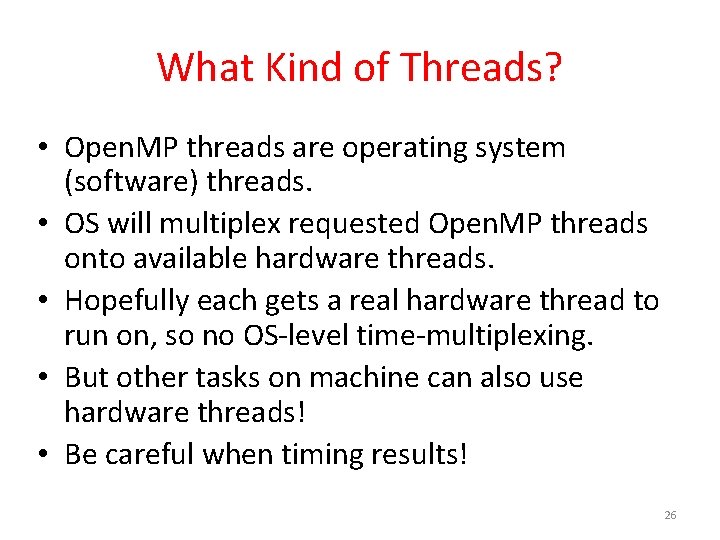
What Kind of Threads? • Open. MP threads are operating system (software) threads. • OS will multiplex requested Open. MP threads onto available hardware threads. • Hopefully each gets a real hardware thread to run on, so no OS-level time-multiplexing. • But other tasks on machine can also use hardware threads! • Be careful when timing results! 26
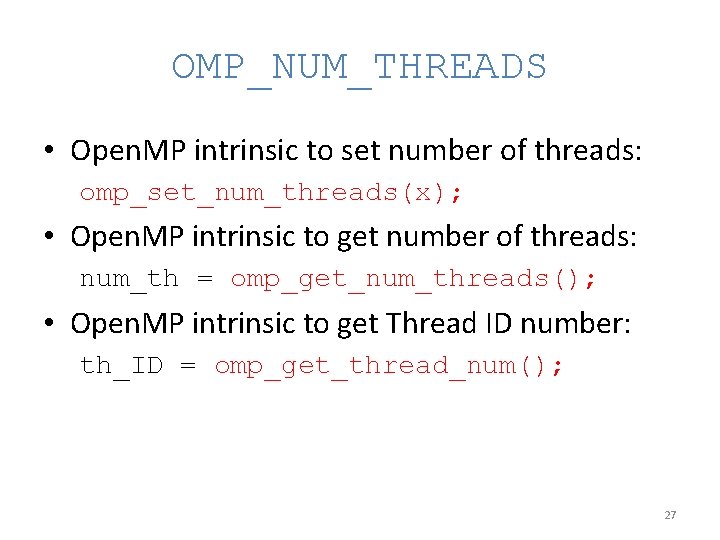
OMP_NUM_THREADS • Open. MP intrinsic to set number of threads: omp_set_num_threads(x); • Open. MP intrinsic to get number of threads: num_th = omp_get_num_threads(); • Open. MP intrinsic to get Thread ID number: th_ID = omp_get_thread_num(); 27
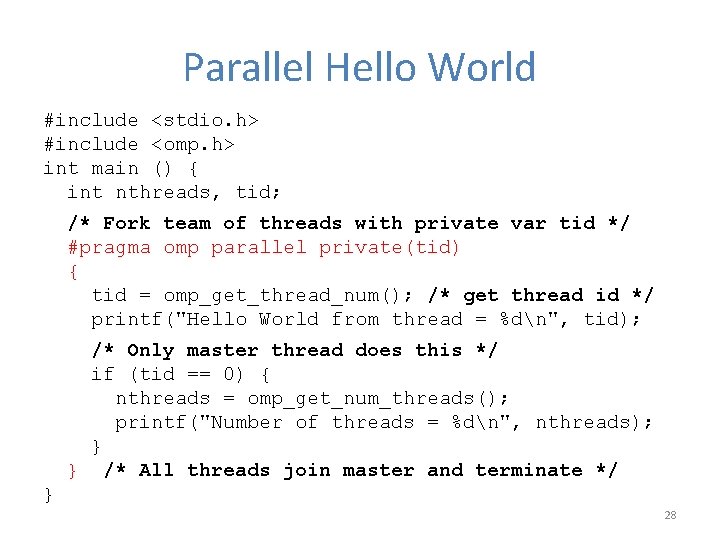
Parallel Hello World #include <stdio. h> #include <omp. h> int main () { int nthreads, tid; /* Fork team of threads with private var tid */ #pragma omp parallel private(tid) { tid = omp_get_thread_num(); /* get thread id */ printf("Hello World from thread = %dn", tid); /* Only master thread does this */ if (tid == 0) { nthreads = omp_get_num_threads(); printf("Number of threads = %dn", nthreads); } } /* All threads join master and terminate */ } 28
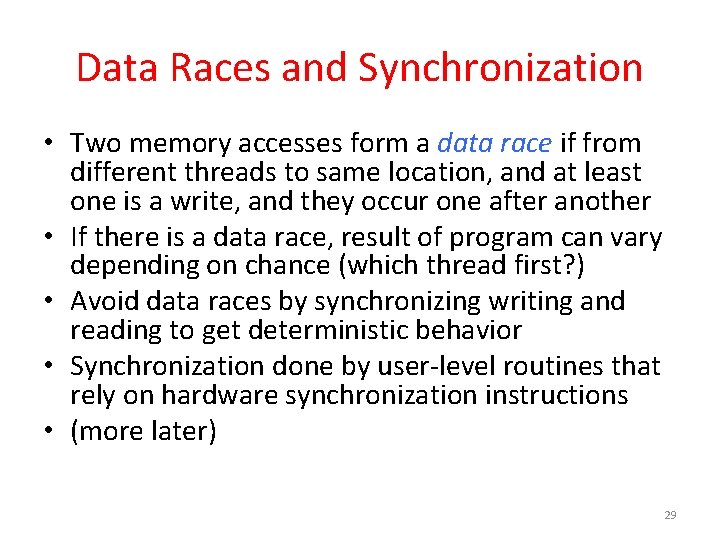
Data Races and Synchronization • Two memory accesses form a data race if from different threads to same location, and at least one is a write, and they occur one after another • If there is a data race, result of program can vary depending on chance (which thread first? ) • Avoid data races by synchronizing writing and reading to get deterministic behavior • Synchronization done by user-level routines that rely on hardware synchronization instructions • (more later) 29
Analogy: Buying Milk • Your fridge has no milk. You and your roommate will return from classes at some point and check the fridge • Whoever gets home first will check the fridge, go and buy milk, and return • What if the other person gets back while the first person is buying milk? – You’ve just bought twice as much milk as you need! • It would’ve helped to have left a note… 30
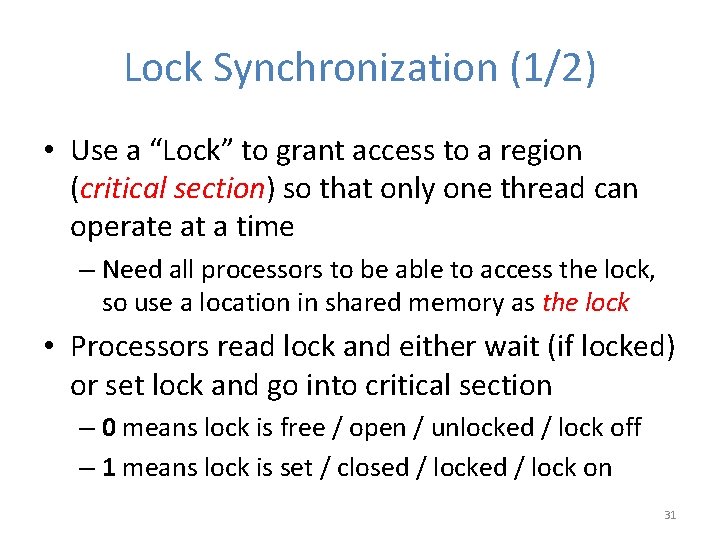
Lock Synchronization (1/2) • Use a “Lock” to grant access to a region (critical section) so that only one thread can operate at a time – Need all processors to be able to access the lock, so use a location in shared memory as the lock • Processors read lock and either wait (if locked) or set lock and go into critical section – 0 means lock is free / open / unlocked / lock off – 1 means lock is set / closed / lock on 31
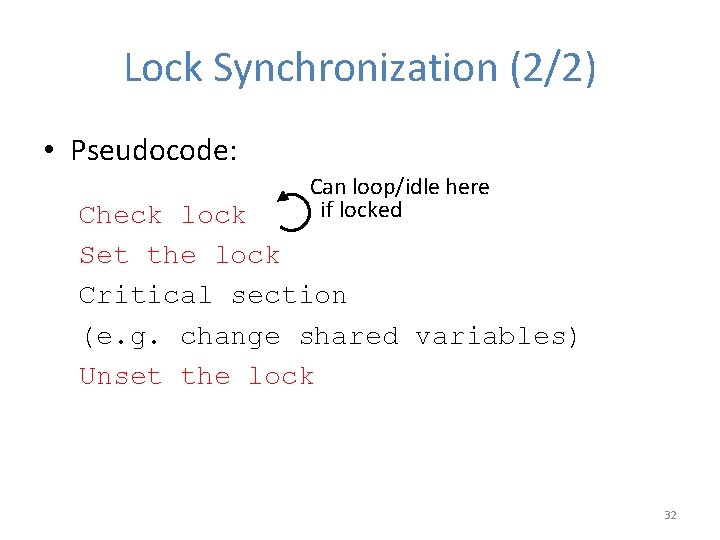
Lock Synchronization (2/2) • Pseudocode: Can loop/idle here if locked Check lock Set the lock Critical section (e. g. change shared variables) Unset the lock 32
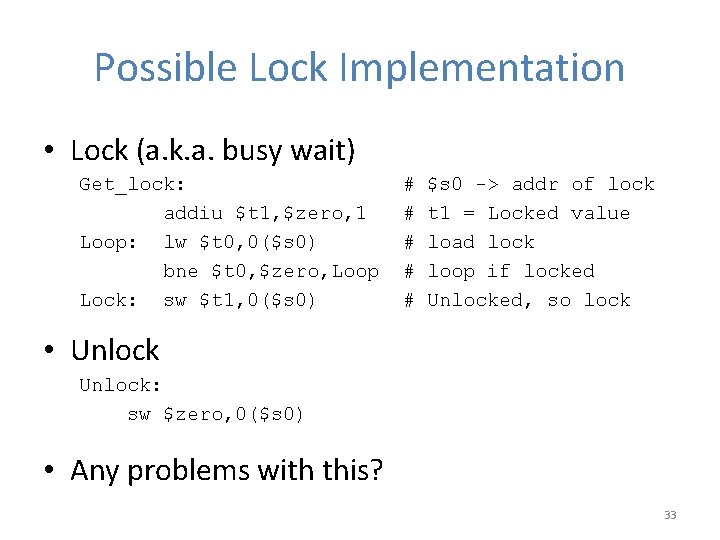
Possible Lock Implementation • Lock (a. k. a. busy wait) Get_lock: addiu $t 1, $zero, 1 Loop: lw $t 0, 0($s 0) bne $t 0, $zero, Loop Lock: sw $t 1, 0($s 0) # # # $s 0 -> addr of lock t 1 = Locked value load lock loop if locked Unlocked, so lock • Unlock: sw $zero, 0($s 0) • Any problems with this? 33
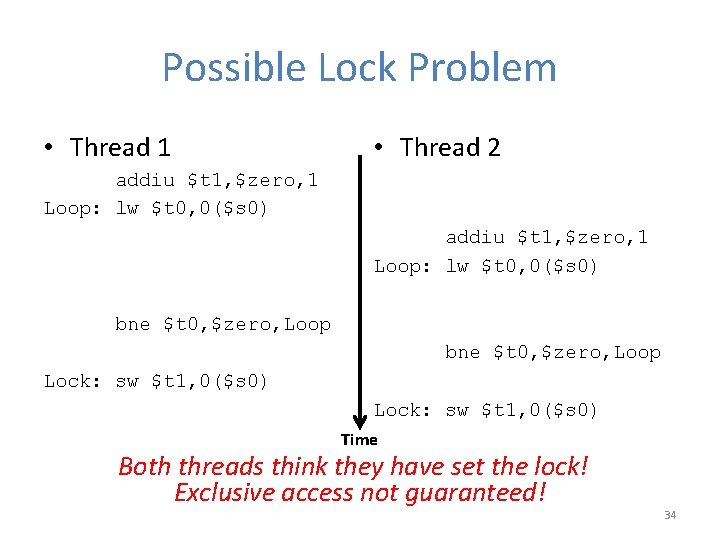
Possible Lock Problem • Thread 1 • Thread 2 addiu $t 1, $zero, 1 Loop: lw $t 0, 0($s 0) bne $t 0, $zero, Loop Lock: sw $t 1, 0($s 0) Time Both threads think they have set the lock! Exclusive access not guaranteed! 34
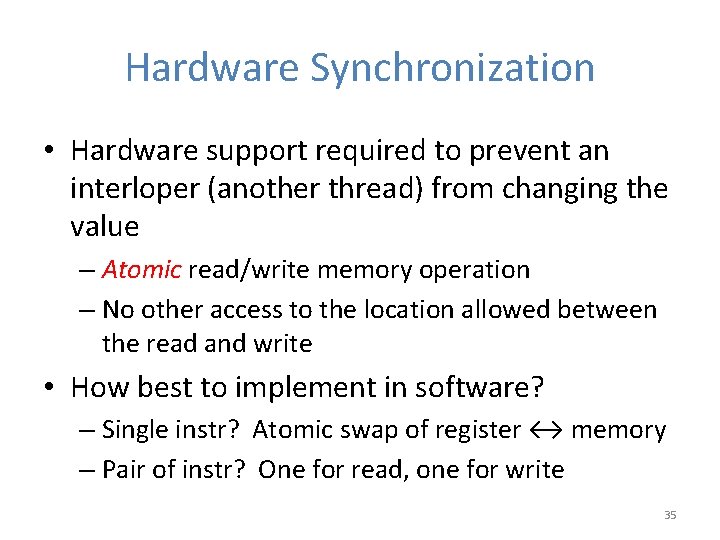
Hardware Synchronization • Hardware support required to prevent an interloper (another thread) from changing the value – Atomic read/write memory operation – No other access to the location allowed between the read and write • How best to implement in software? – Single instr? Atomic swap of register ↔ memory – Pair of instr? One for read, one for write 35
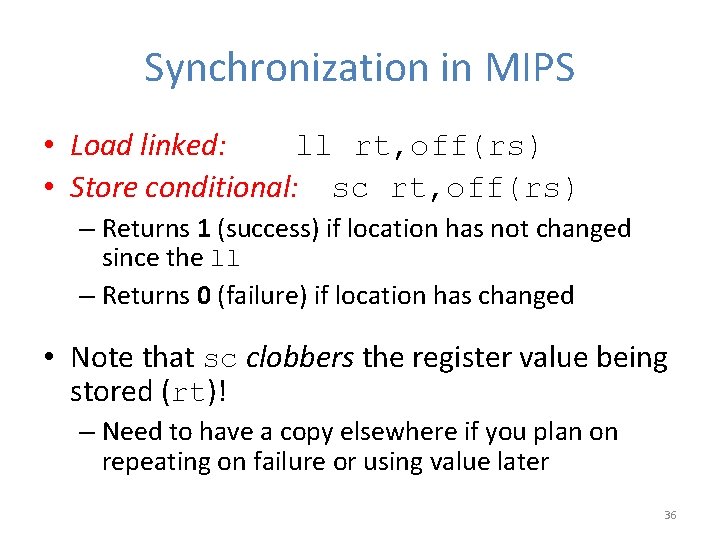
Synchronization in MIPS • Load linked: ll rt, off(rs) • Store conditional: sc rt, off(rs) – Returns 1 (success) if location has not changed since the ll – Returns 0 (failure) if location has changed • Note that sc clobbers the register value being stored (rt)! – Need to have a copy elsewhere if you plan on repeating on failure or using value later 36
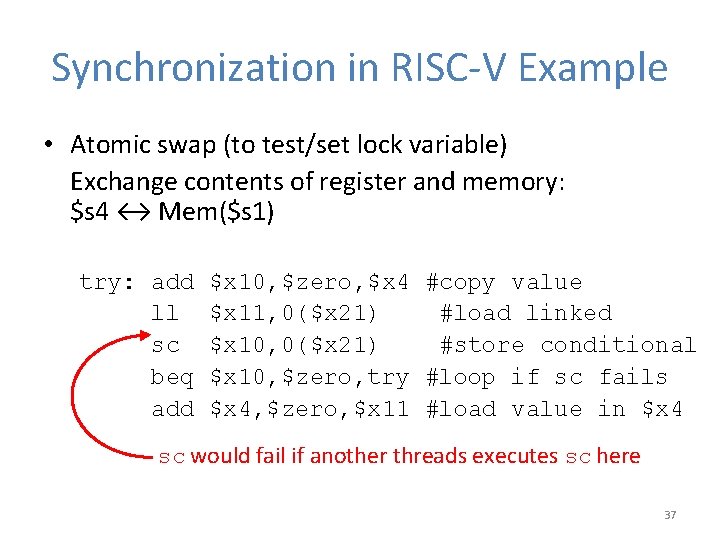
Synchronization in RISC-V Example • Atomic swap (to test/set lock variable) Exchange contents of register and memory: $s 4 ↔ Mem($s 1) try: add ll sc beq add $x 10, $zero, $x 4 #copy value $x 11, 0($x 21) #load linked $x 10, 0($x 21) #store conditional $x 10, $zero, try #loop if sc fails $x 4, $zero, $x 11 #load value in $x 4 sc would fail if another threads executes sc here 37
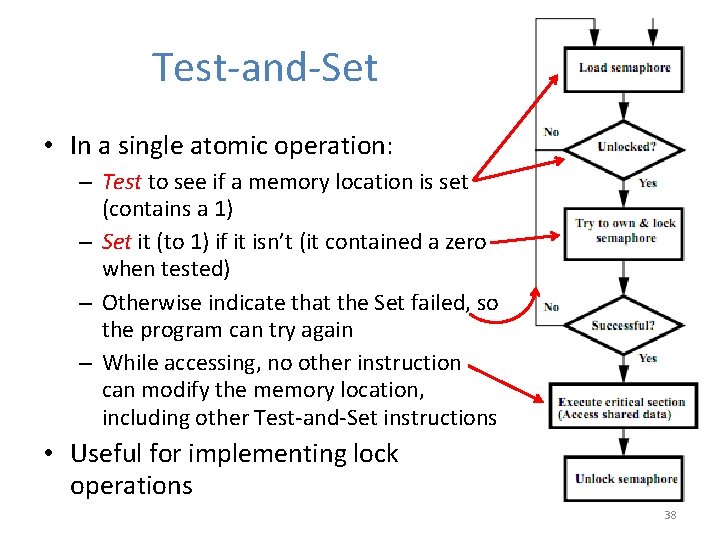
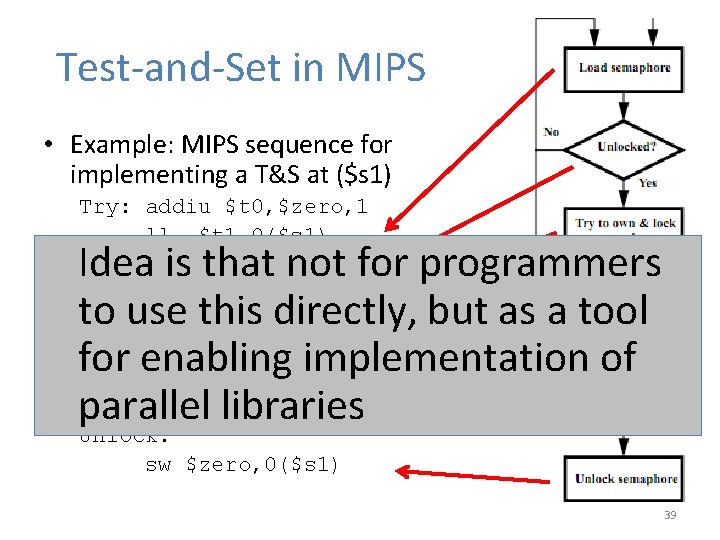
Test-and-Set • In a single atomic operation: – Test to see if a memory location is set (contains a 1) – Set it (to 1) if it isn’t (it contained a zero when tested) – Otherwise indicate that the Set failed, so the program can try again – While accessing, no other instruction can modify the memory location, including other Test-and-Set instructions • Useful for implementing lock operations 38
Test-and-Set in MIPS • Example: MIPS sequence for implementing a T&S at ($s 1) Try: addiu $t 0, $zero, 1 ll $t 1, 0($s 1) bne $t 1, $zero, Try sc $t 0, 0($s 1) beq $t 0, $zero, try Locked: Idea is that not for programmers to use this directly, but as a tool for enabling implementation of # critical section parallel libraries Unlock: sw $zero, 0($s 1) 39
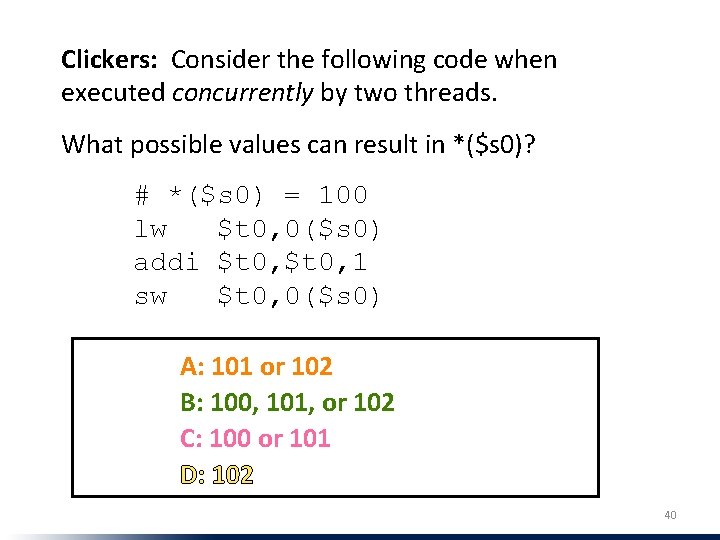
Clickers: Consider the following code when executed concurrently by two threads. What possible values can result in *($s 0)? # *($s 0) = 100 lw $t 0, 0($s 0) addi $t 0, 1 sw $t 0, 0($s 0) A: 101 or 102 B: 100, 101, or 102 C: 100 or 101 D: 102 40
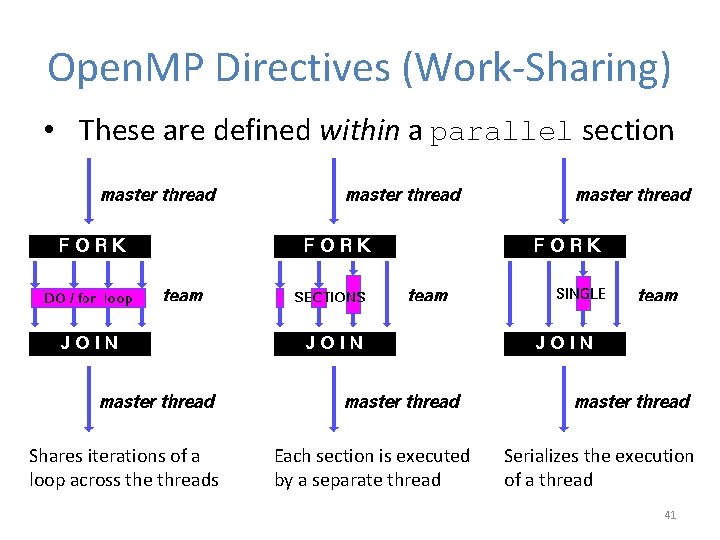
Open. MP Directives (Work-Sharing) • These are defined within a parallel section Shares iterations of a loop across the threads Each section is executed by a separate thread Serializes the execution of a thread 41
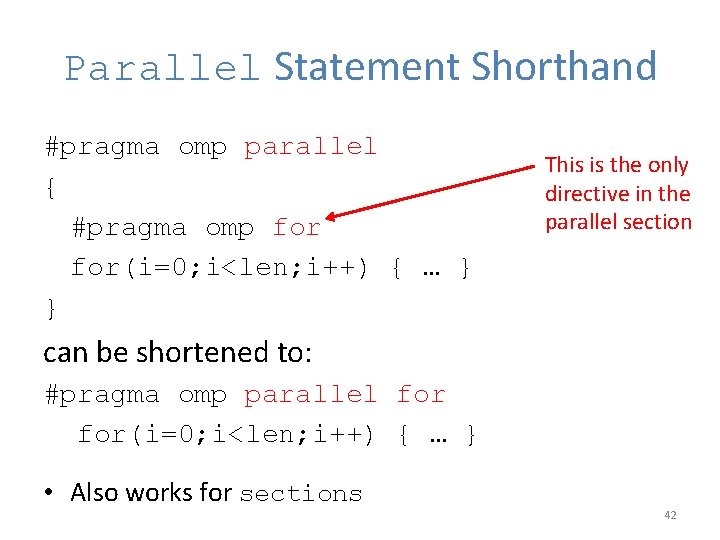
Parallel Statement Shorthand #pragma omp parallel { #pragma omp for(i=0; i<len; i++) { … } } This is the only directive in the parallel section can be shortened to: #pragma omp parallel for(i=0; i<len; i++) { … } • Also works for sections 42
Building Block: for loop for (i=0; i<max; i++) zero[i] = 0; • Break for loop into chunks, and allocate each to a separate thread – e. g. if max = 100 with 2 threads: assign 0 -49 to thread 0, and 50 -99 to thread 1 • Must have relatively simple “shape” for an Open. MPaware compiler to be able to parallelize it – Necessary for the run-time system to be able to determine how many of the loop iterations to assign to each thread • No premature exits from the loop allowed – i. e. No break, return, exit, goto statements In general, don’t jump outside of any pragma block 43
Parallel for pragma #pragma omp parallel for (i=0; i<max; i++) zero[i] = 0; • Master thread creates additional threads, each with a separate execution context • All variables declared outside for loop are shared by default, except for loop index which is private per thread (Why? ) • Implicit synchronization at end of for loop • Divide index regions sequentially per thread – Thread 0 gets 0, 1, …, (max/n)-1; – Thread 1 gets max/n, max/n+1, …, 2*(max/n)-1 – Why? 44
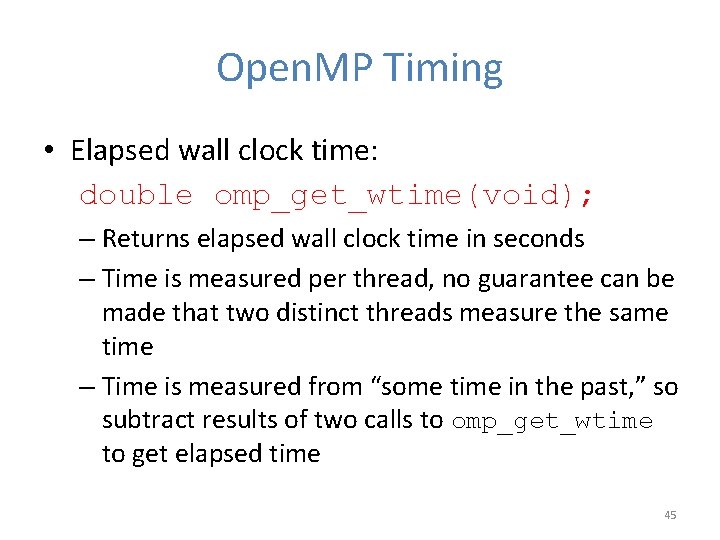
Open. MP Timing • Elapsed wall clock time: double omp_get_wtime(void); – Returns elapsed wall clock time in seconds – Time is measured per thread, no guarantee can be made that two distinct threads measure the same time – Time is measured from “some time in the past, ” so subtract results of two calls to omp_get_wtime to get elapsed time 45
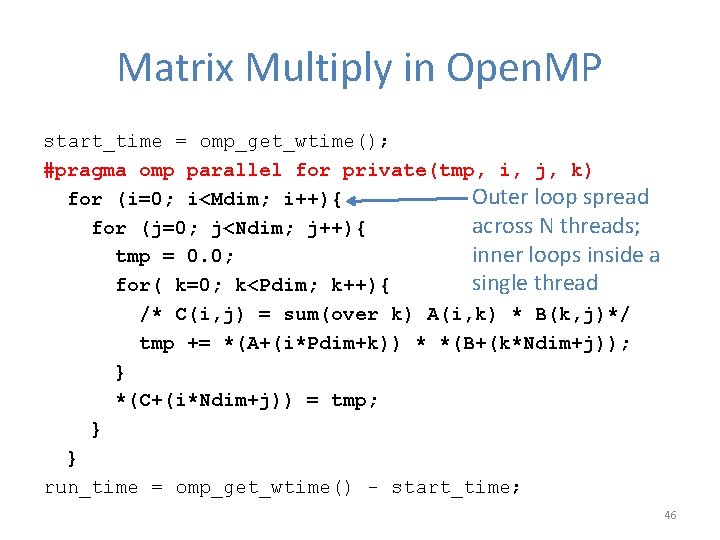
Matrix Multiply in Open. MP start_time = omp_get_wtime(); #pragma omp parallel for private(tmp, i, j, k) Outer loop spread for (i=0; i<Mdim; i++){ across N threads; for (j=0; j<Ndim; j++){ inner loops inside a tmp = 0. 0; single thread for( k=0; k<Pdim; k++){ /* C(i, j) = sum(over k) A(i, k) * B(k, j)*/ tmp += *(A+(i*Pdim+k)) * *(B+(k*Ndim+j)); } *(C+(i*Ndim+j)) = tmp; } } run_time = omp_get_wtime() - start_time; 46
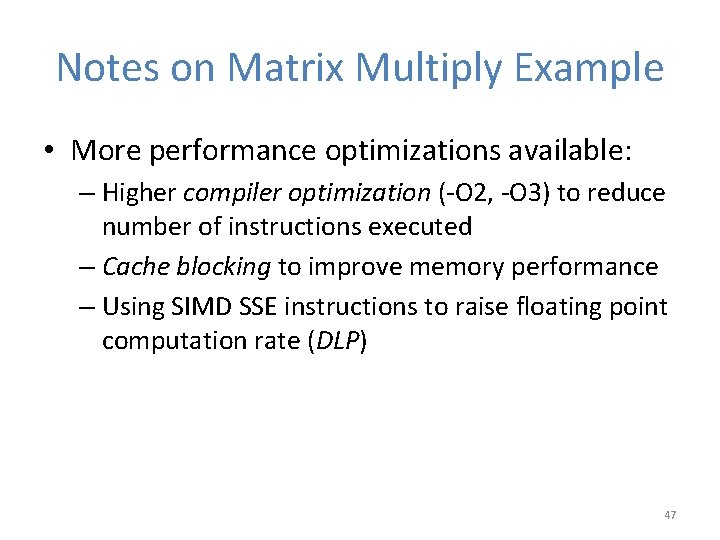
Notes on Matrix Multiply Example • More performance optimizations available: – Higher compiler optimization (-O 2, -O 3) to reduce number of instructions executed – Cache blocking to improve memory performance – Using SIMD SSE instructions to raise floating point computation rate (DLP) 47
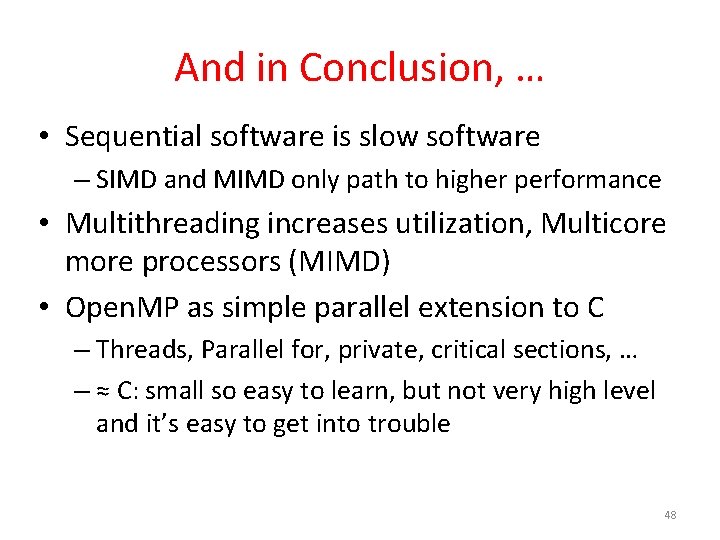
And in Conclusion, … • Sequential software is slow software – SIMD and MIMD only path to higher performance • Multithreading increases utilization, Multicore more processors (MIMD) • Open. MP as simple parallel extension to C – Threads, Parallel for, private, critical sections, … – ≈ C: small so easy to learn, but not very high level and it’s easy to get into trouble 48