
Great Famine Black Death Great Schism Babylonian Captivity
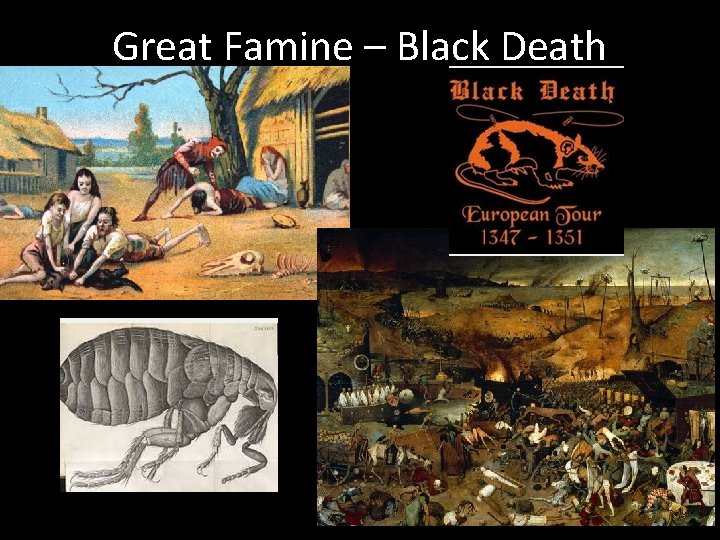
Great Famine – Black Death
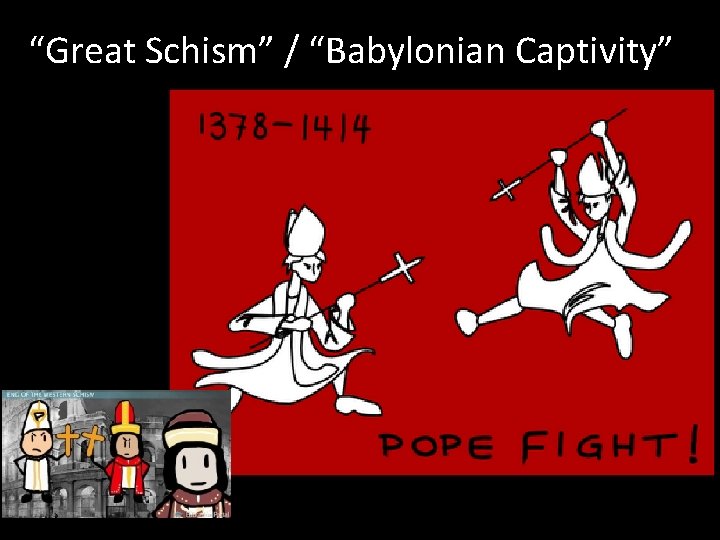
“Great Schism” / “Babylonian Captivity”
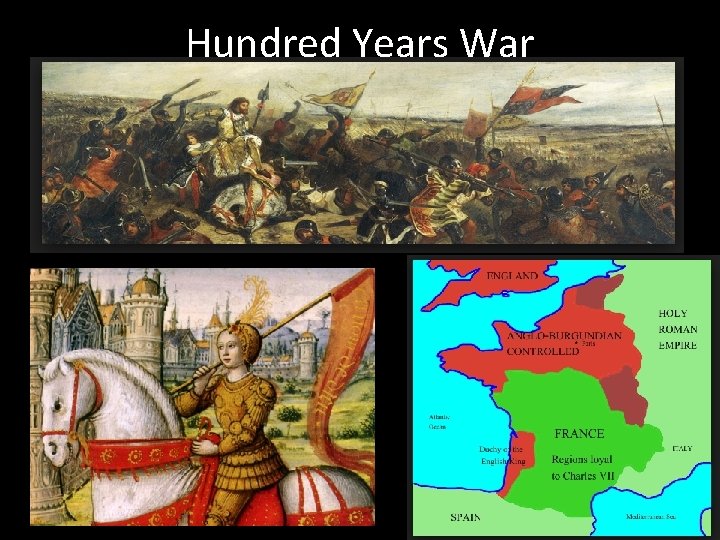
Hundred Years War
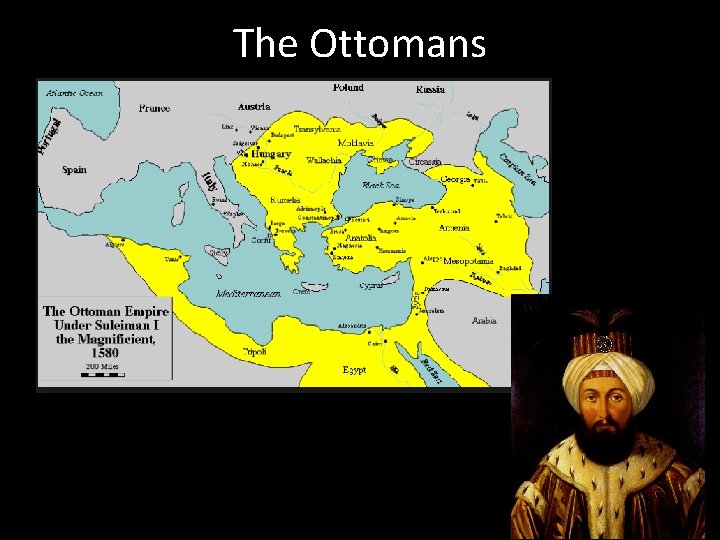
The Ottomans
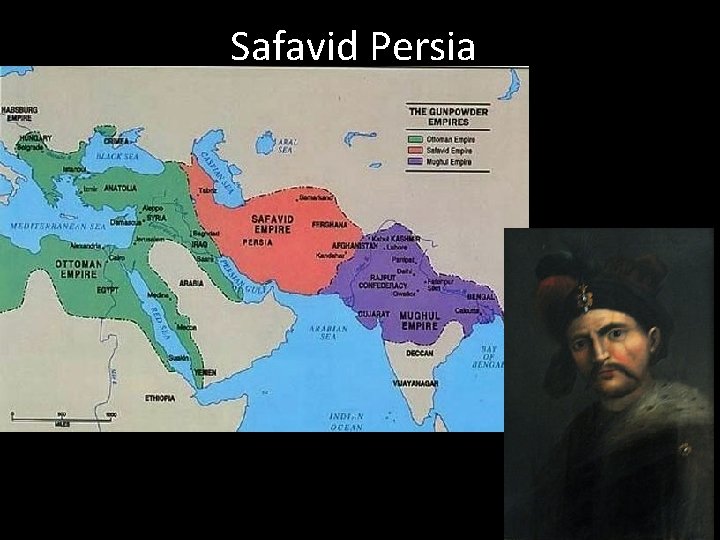
Safavid Persia
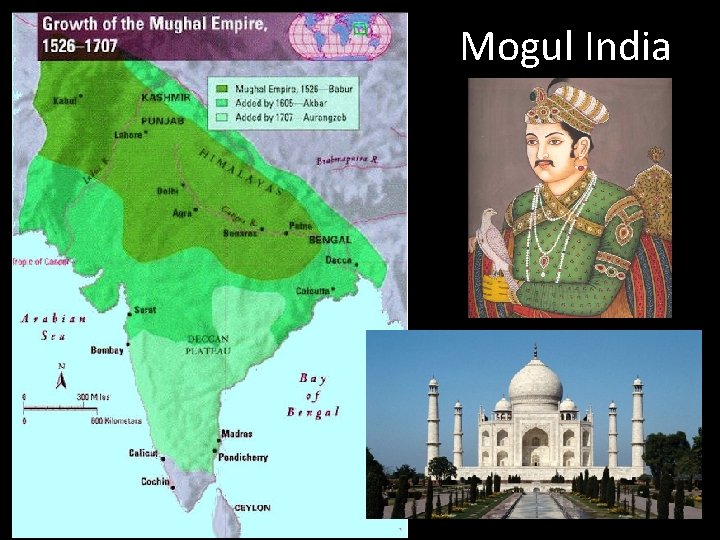
Mogul India
Renaissance – social / cultural movement in Europe from 1350 – 1600 that stresses “classical” beliefs and styles (ancient Greek and Roman) with innovation and forward -thinking of late medieval period * The Renaissance is considered to mark the beginning of early modern history * sources of influence for the Renaissance include: A. Crusades - cultural diffusion from contact with more advanced Byzantine and Islamic cultures; exposed to classical works and science / math / medicine advances B. Commercial Revolution - the rise of towns and cities - more people and money economy; as people get more settled and comfortable, their interests move to art, culture, society and politics (social issues) C. decline of feudalism and rise of strong monarchies that fund and foster artists, writers, painters and others
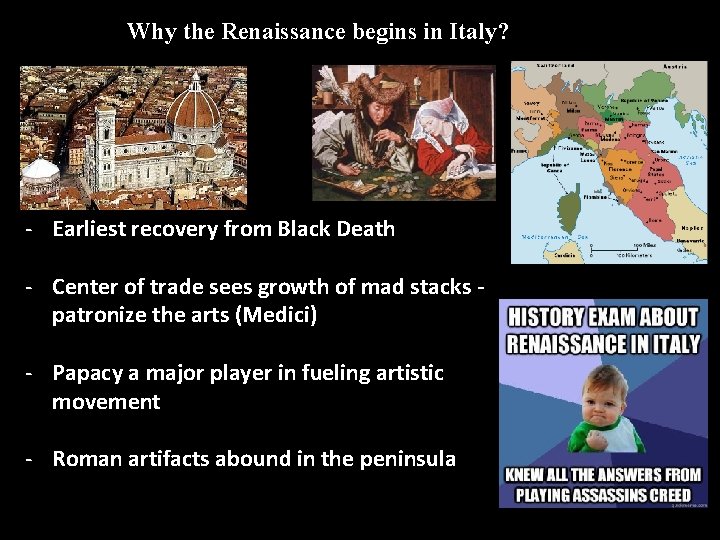
Why the Renaissance begins in Italy? - Earliest recovery from Black Death - Center of trade sees growth of mad stacks patronize the arts (Medici) - Papacy a major player in fueling artistic movement - Roman artifacts abound in the peninsula
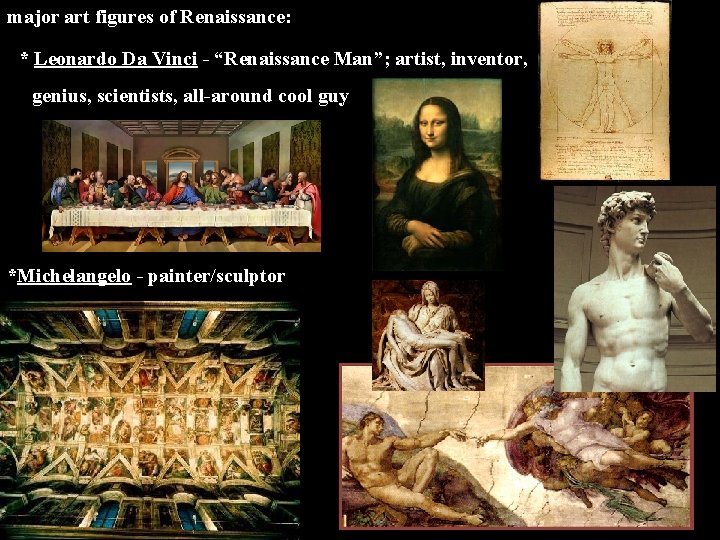
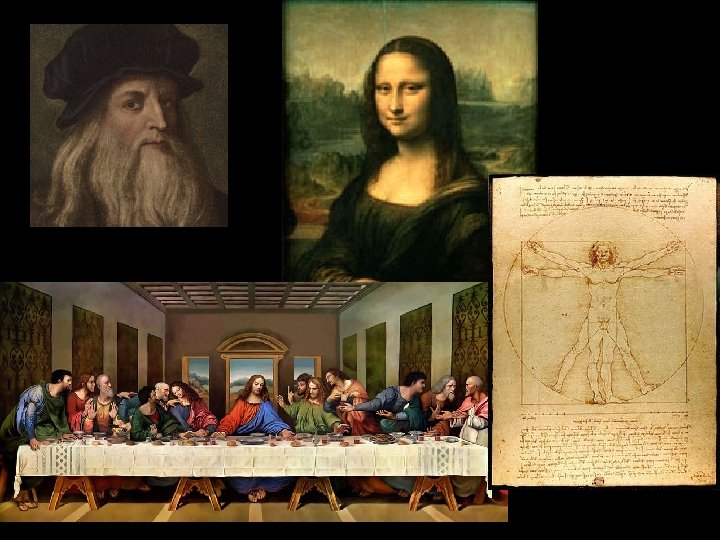
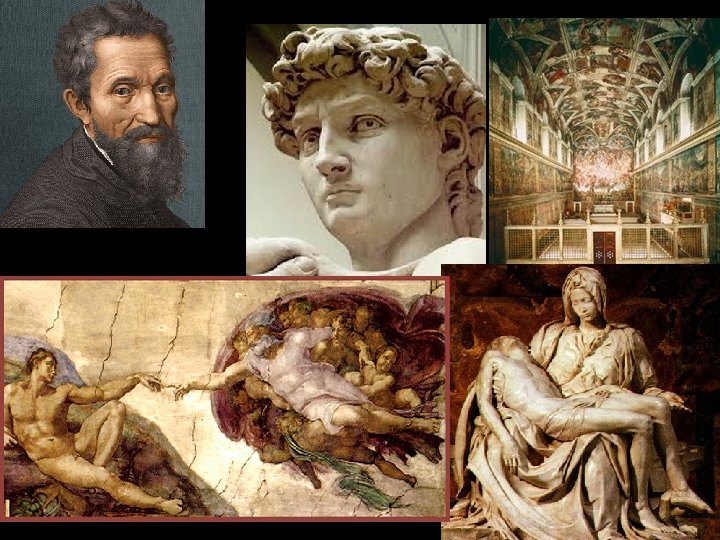
major art figures of Renaissance: * Leonardo Da Vinci - “Renaissance Man”; artist, inventor, genius, scientists, all-around cool guy *Michelangelo - painter/sculptor
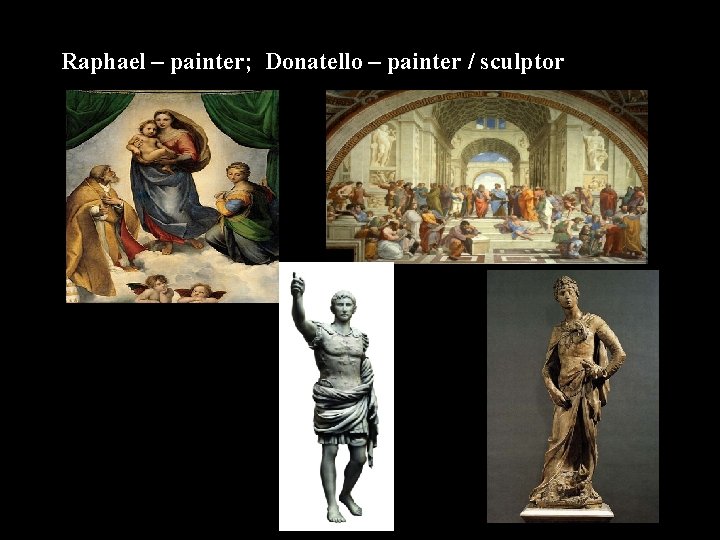
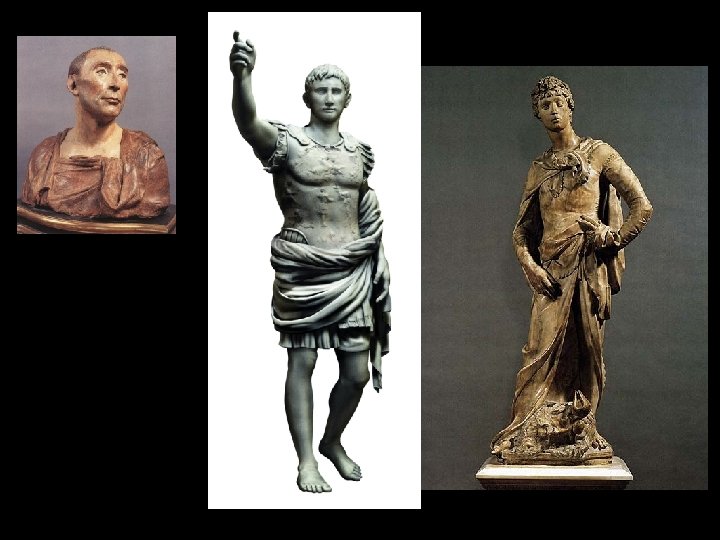
Raphael – painter; Donatello – painter / sculptor
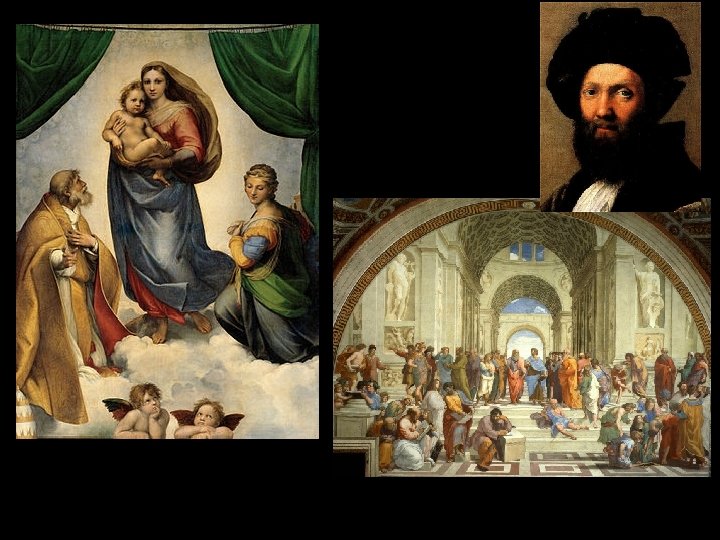
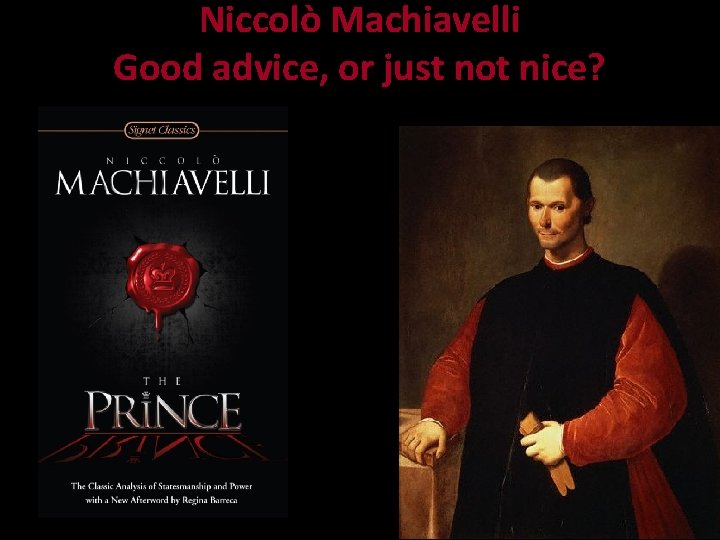
Niccolò Machiavelli Good advice, or just not nice?
A wise prince. . . must never take things easy in times of peace, but rather use the latter assiduously, in order to be able to reap the profit in times of adversity. Then, when his fortunes change, he will be found ready to resist adversity.
![He [the prince] must not flinch from being blamed for vices which are necessary](http://slidetodoc.com/presentation_image_h2/d1073f3073ad8855d43f6b517519c0ca/image-18.jpg "He [the prince] must not flinch from being blamed for vices which are necessary")
He [the prince] must not flinch from being blamed for vices which are necessary for safeguarding the state. This is because, taking everything into account, he will find that some of the things that appear to be virtues will, if he practices them, ruin him, and some of the things that appear to be vices will bring his security and prosperity.
The prince must none the less make himself feared in such a way that, if he is not loved, at least he escapes being hated. For fear is quite compatible with an absence of hatred; and the prince can always avoid hatred if he abstains from the property of his subjects and citizens and from their women. But above all a prince must abstain from the property of others; because men sooner forget the death of their father than the loss of their patrimony.
Princes cannot help arousing hatred in some quarters; so first they must strive not to be hated by all and every class of subject; and when this proves impossible, they should strive assiduously to escape the hated of the most powerful classes.
I conclude, therefore, that as fortune is changeable whereas men are obstinate in their ways, men prosper so long as fortune and policy are in accord, and when there is a clash they fail. I hold strongly to this: that it is better to be impetuous than circumspect; because fortune is a woman and if she is to be submissive it is necessary to beat and coerce her.
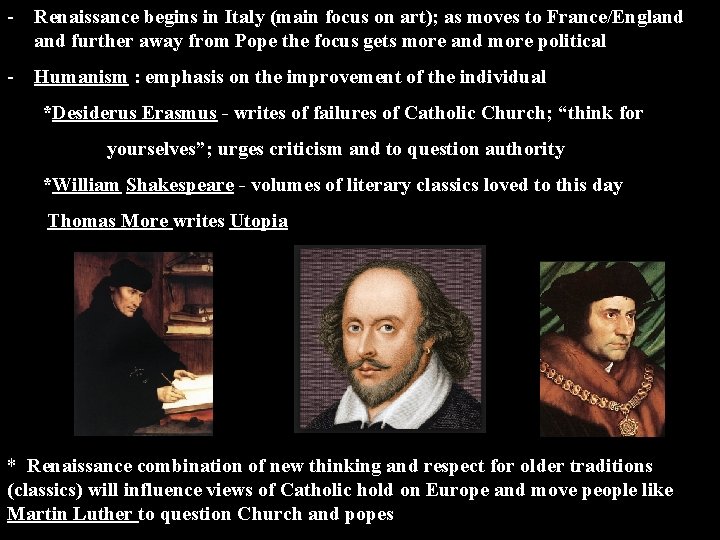
- Renaissance begins in Italy (main focus on art); as moves to France/England further away from Pope the focus gets more and more political - Humanism : emphasis on the improvement of the individual *Desiderus Erasmus - writes of failures of Catholic Church; “think for yourselves”; urges criticism and to question authority *William Shakespeare - volumes of literary classics loved to this day Thomas More writes Utopia * Renaissance combination of new thinking and respect for older traditions (classics) will influence views of Catholic hold on Europe and move people like Martin Luther to question Church and popes
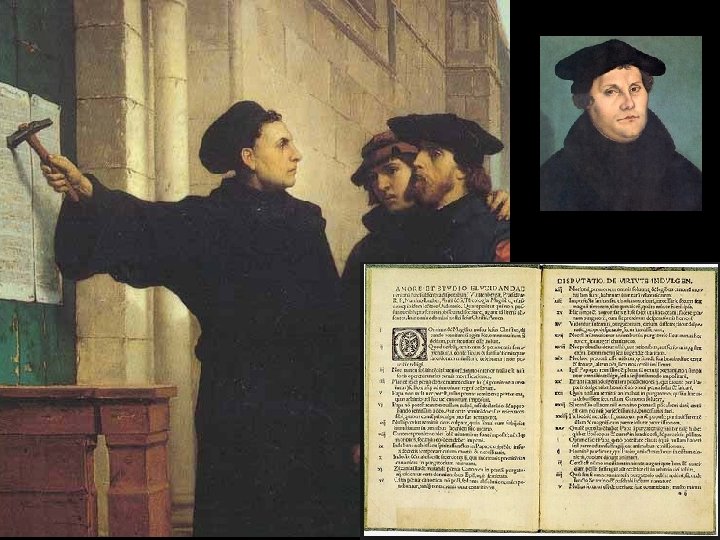
Protestant Reformation - movement led by Martin Luther that criticizes some of the practices of the Catholic Church; initial calls for reforms will develop into an establishment of new Christian sects *Martin Luther is a Catholic monk born in 1483 in Saxony (today western Germany) -after long periods of studying Bible he comes to conclusion that the good works people do will not save them (rejects sacraments) - says “faith alone” will save people; and that anyone can interpret and understand the Bible *by 1500’s Luther will openly speak out against many Church practices like indulgences (payments to Church to get off from sins or be appointed to positions) but sees self as reformer (does not want break) *Luther surprised by popularity of his words; his writings spread fast by printing press across German states; many nobles, lords and some kings look forward to break from pope (political reason affect religious debate) *with protection of German princes, Luther prints Bible in German and posts 95 Theses on church door in 1517
*Pope Leo X excommunicates Luther; Luther’s ideas of a simpler, more democratic form of Christianity appeal to so many that Lutheranism, Calvinism and other Protestant sects grow out of the debates -Anglican Church in England breaks with Rome during rule of Henry VIII (personal and political reasons) *Catholic Church will later enact Catholic Counter-Reformation to reform Church practices and strengthen Catholic influence *Inquisition - efforts to squash dissent among heretics and fanatical groups; yet all attempts to squash Protestant sects will fail *Council of Trent - meets in 1545 and reforms some bad practices of Church (indulgences gone but still stresses good works and traditional practices; says Protestants are wrong!) - going into 17 th century we see Europe split into Protestant north and Catholic south; what do you think will happen?

WAR!
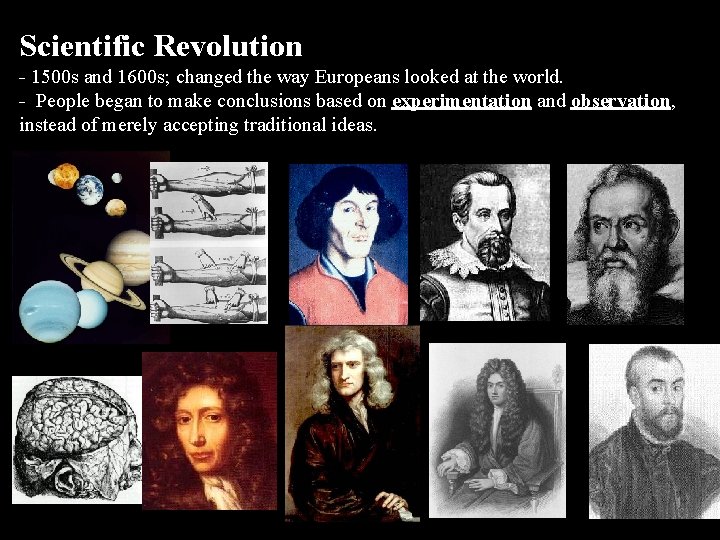
Scientific Revolution - 1500 s and 1600 s; changed the way Europeans looked at the world. - People began to make conclusions based on experimentation and observation, instead of merely accepting traditional ideas.
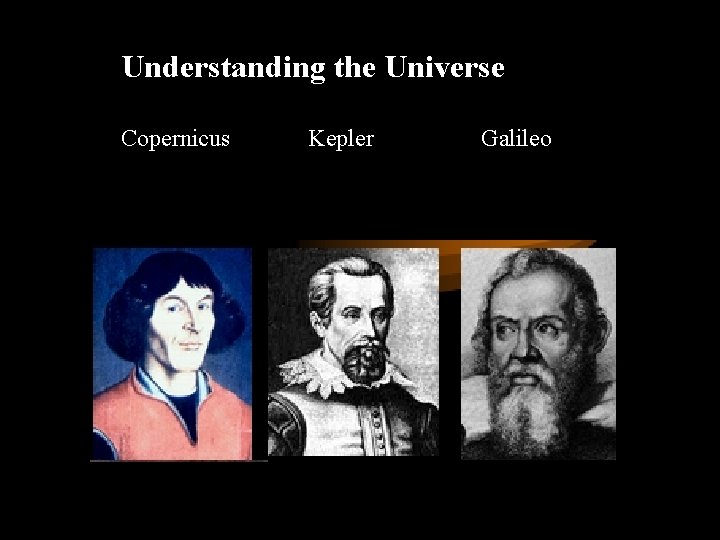
Understanding the Universe Copernicus Kepler Galileo
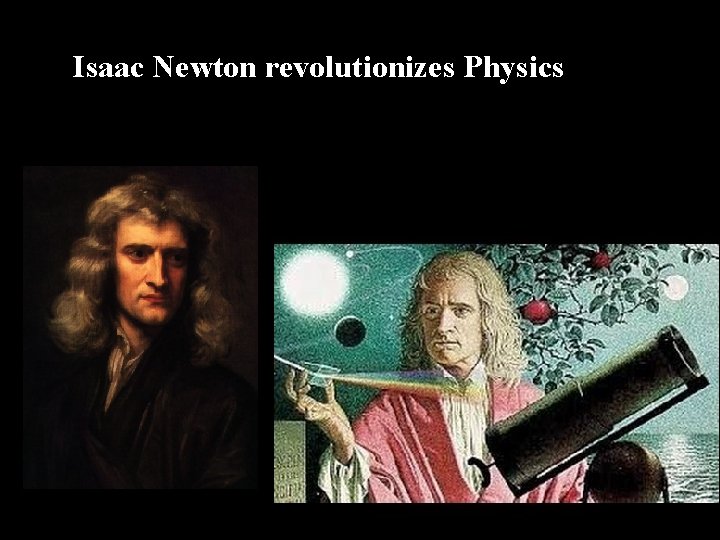
Isaac Newton revolutionizes Physics
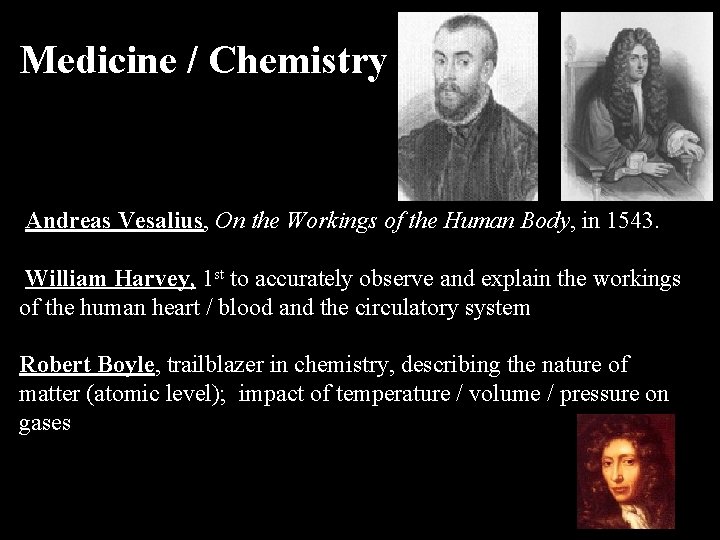
Medicine / Chemistry Andreas Vesalius, On the Workings of the Human Body, in 1543. William Harvey, 1 st to accurately observe and explain the workings of the human heart / blood and the circulatory system Robert Boyle, trailblazer in chemistry, describing the nature of matter (atomic level); impact of temperature / volume / pressure on gases

- Slides: 31