
Great Depression Business Cycle Prosperity Recovery Inflation Trough

Great Depression
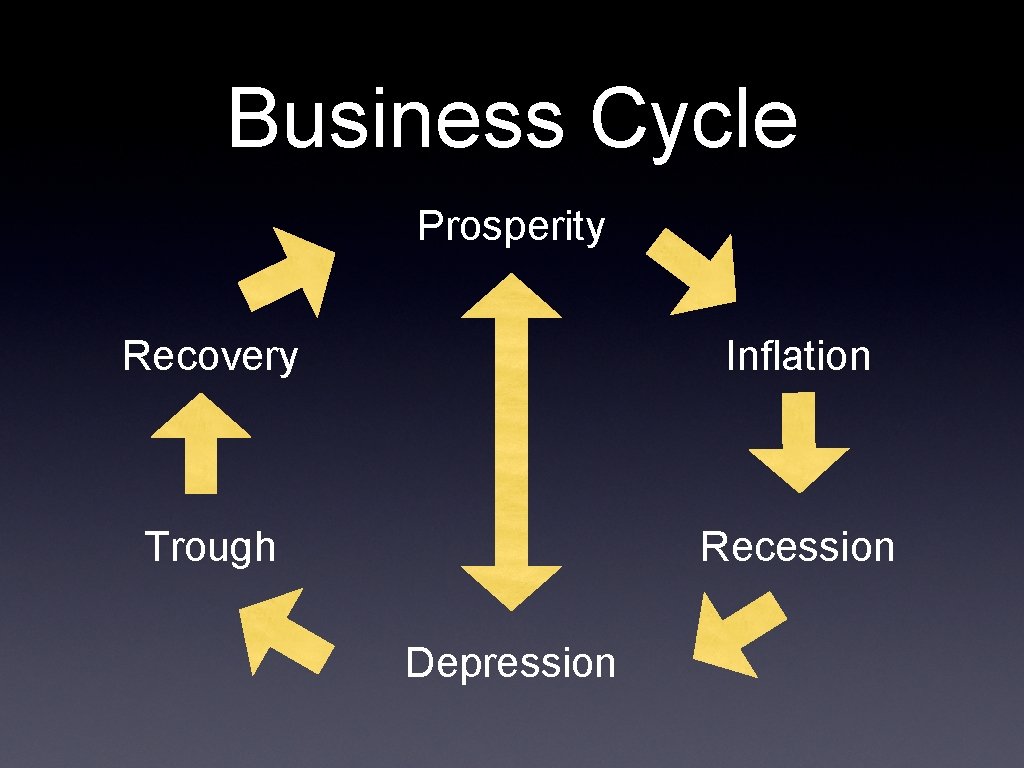
Business Cycle Prosperity Recovery Inflation Trough Recession Depression
Peak Stage • goods are sold and inventories run out • skills become specialized and workers demand higher pay • higher wages mean increase prices, inflation • consumers reluctant to borrow money or to buy expensive items • products left unsold and profits decline
Recession Stage • high inventories + lower profits = reduced productions • manufactures layoff workers or decrease in hiring • unemployed cannot spend much money • fear losing jobs and save for future, less spending means fewer sales • higher interest rates, people discourage from starting new business
Trough Stage • decline sales + surplus of workers = cannot raise prices • workers cannot demand raise fear of losing jobs • prices remain and/or decrease, deflation • interest rates go down • consumers who have saved money eventually begin to spend since prices are cheap
Recovery Stage • manufacturers respond to demands • increase sales and shrinking inventories • unemployment still high, wages stay constant and inflation remains low • stage lasts until the economic output of the peak of the previous expansion is reached • growth continues, business cycle starts again
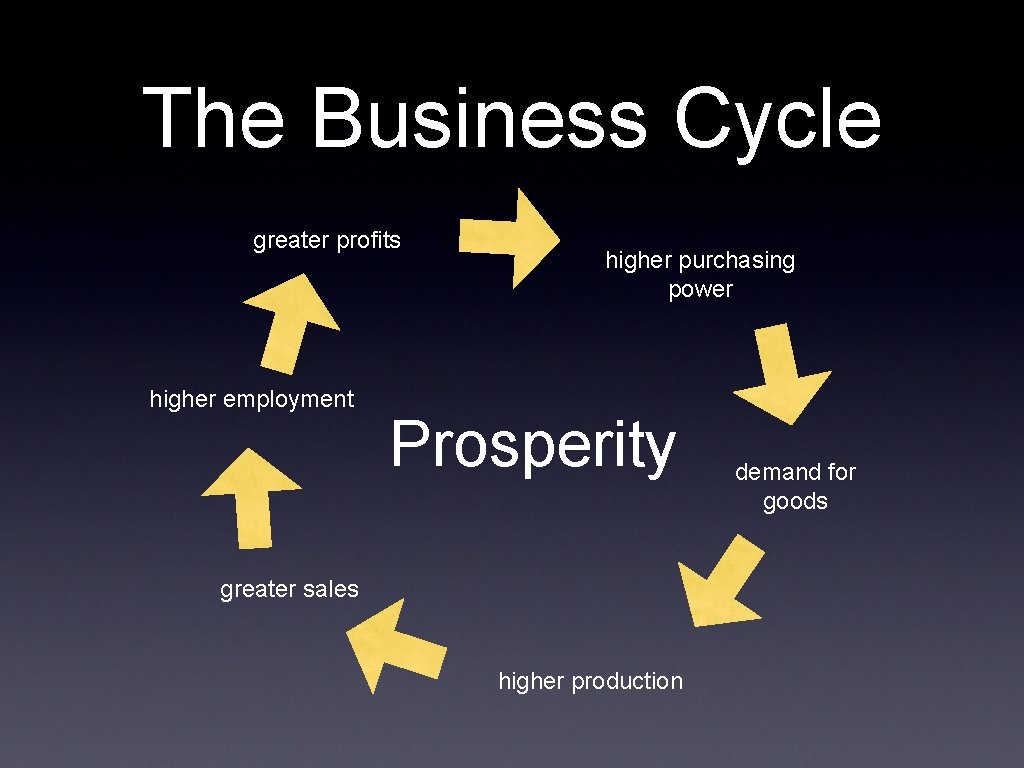
The Business Cycle greater profits higher employment higher purchasing power Prosperity greater sales higher production demand for goods
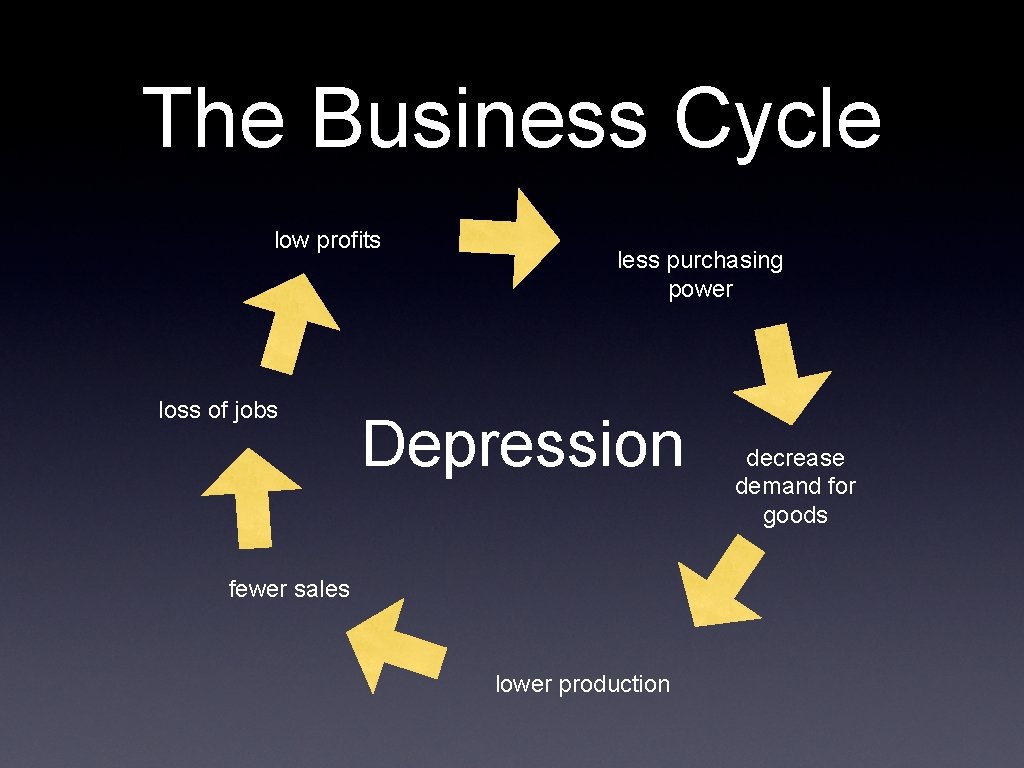
The Business Cycle low profits loss of jobs less purchasing power Depression fewer sales lower production decrease demand for goods

1929 Stock Market Crash
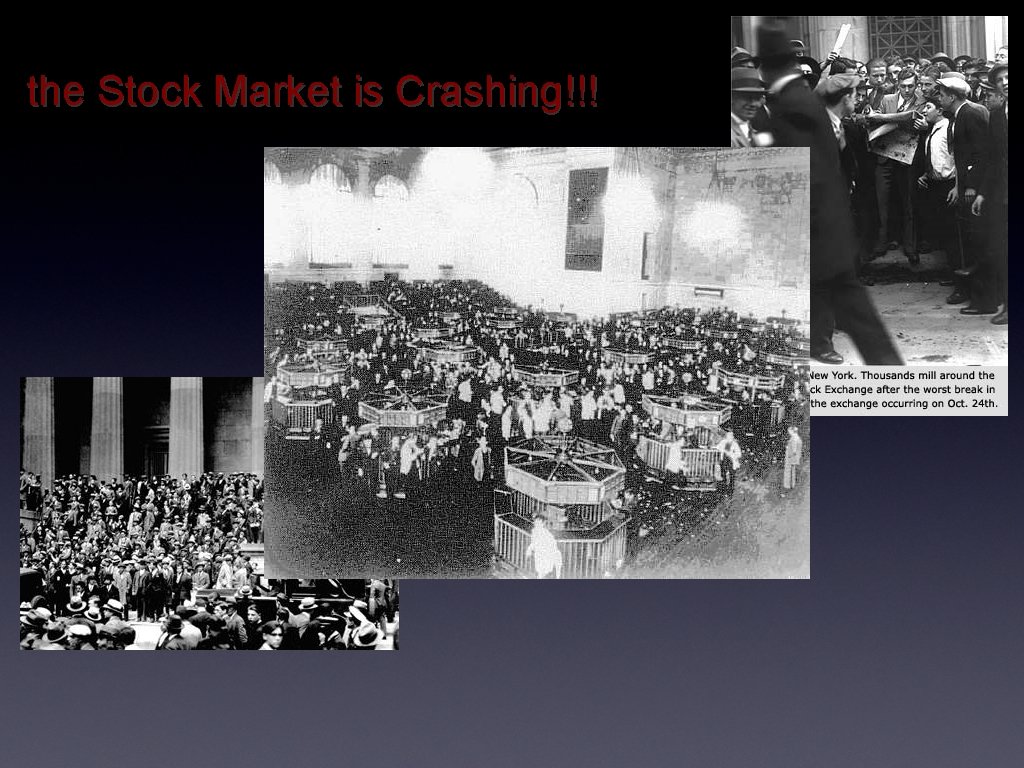
the Stock Market is Crashing!!!
The American economy had been growing robustly for most of the 1920 s “Roaring Twenties”. It was a technological golden age as innovations such as radio, automobiles, aviation and telephone sprung up. People were spending money on easy Credit. They acquired funds by going into debt, either by borrowing from banks, selling bonds or by offering shares on stock markets. They were so confident that share prices would keep rising that they even borrowed money to purchase shares. Buying on Margin became popular in the 1920 s. This proved to be unfavorable during and after the crash.
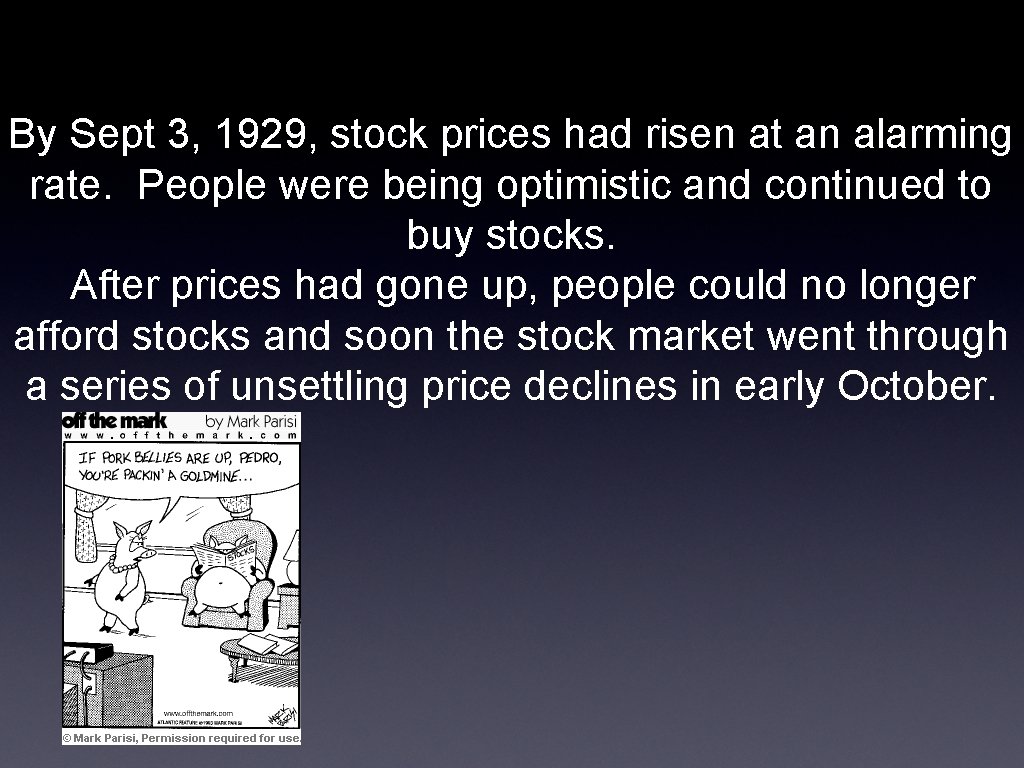
By Sept 3, 1929, stock prices had risen at an alarming rate. People were being optimistic and continued to buy stocks. After prices had gone up, people could no longer afford stocks and soon the stock market went through a series of unsettling price declines in early October.
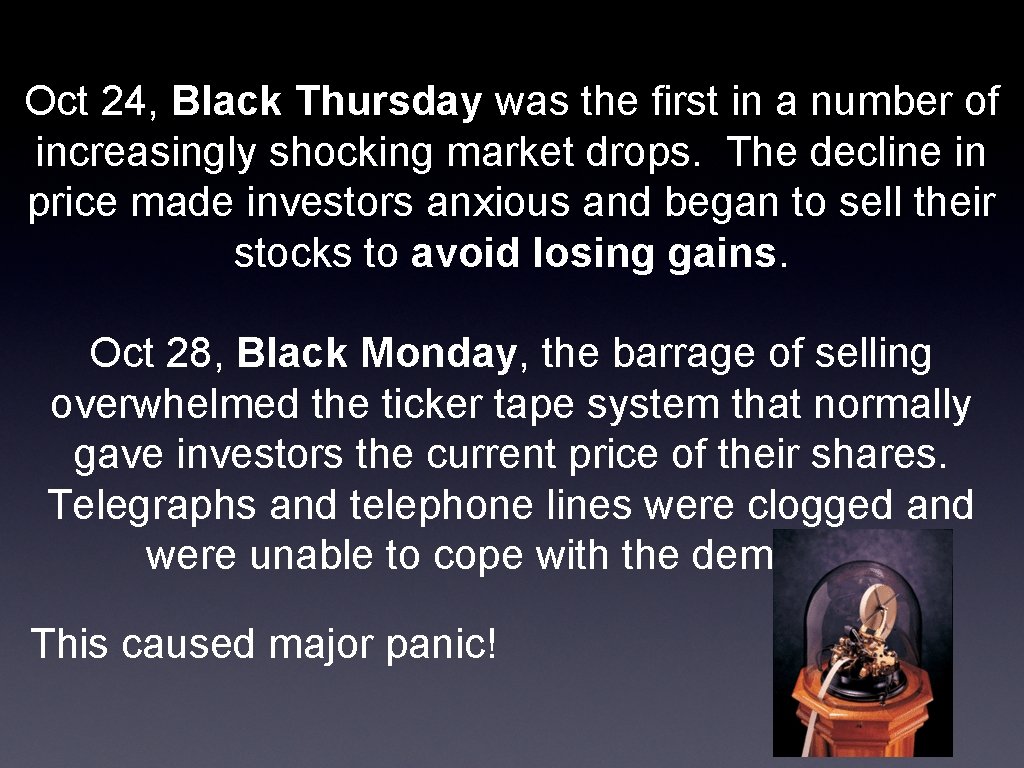
Oct 24, Black Thursday was the first in a number of increasingly shocking market drops. The decline in price made investors anxious and began to sell their stocks to avoid losing gains. Oct 28, Black Monday, the barrage of selling overwhelmed the ticker tape system that normally gave investors the current price of their shares. Telegraphs and telephone lines were clogged and were unable to cope with the demands. This caused major panic!
Oct 29, 1929, Black Tuesday was a day of chaos. Forced to liquidate their stocks, investors flooded the stock market with sell orders. Stock values plummet. Companies and consumers had borrowed heavily to pay for high-priced items. Any reduction in sales or income made it difficult to keep up payments on borrowed money, and it meant that people stopped buying goods. On Black Tuesday, lenders demanded that loans be repaid; people went broke and investments stopped.
Lack of Financial Regulation Many American banks had purchased stocks with depositor’s money for investments. When the stock prices plunged, the people worried that banks had lost so much on stocks. People rushed to the banks and took out their savings. The efforts of people were counterproductive. The rush itself emptied bank cash reserves, bankrupting hundreds of American banks in the process.
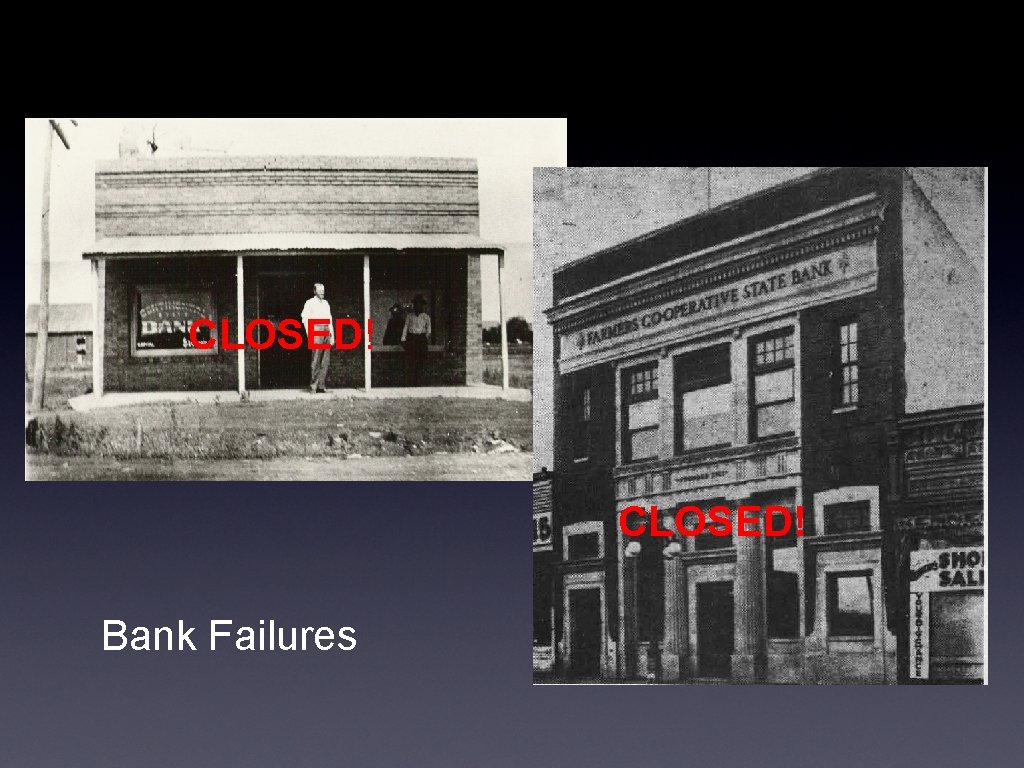
CLOSED! Bank Failures
Few Canadians lost their savings through bank failures. Fewer Canadian banks closed since they were better regulated. Nationwide branching protected Canadian banks unlike its neighboring American unit banking. Unit Banking is a system in several states that prohibits branching or operating of more than one fullservice banking office. Unit Banks operated mainly in the Midwest and the Southwest.
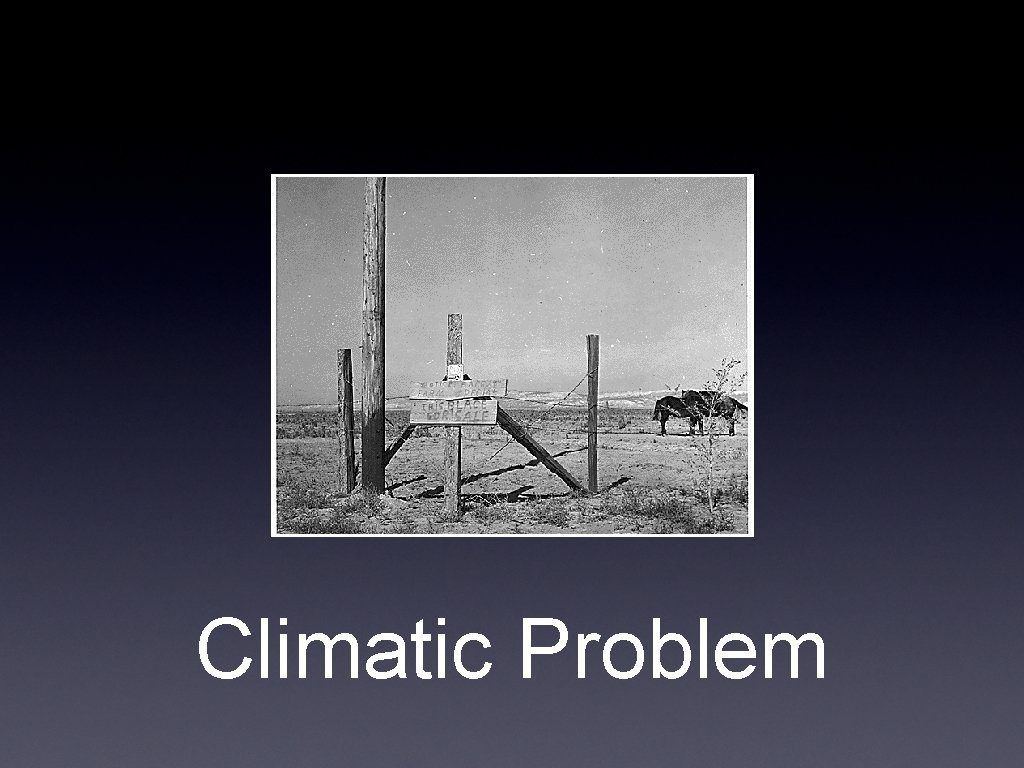
Climatic Problem

Drought, Dust and Destruction • drifting soil (dust bowl) • plagues of grasshoppers • plant rust • crop failure
Canadian Economy
Canadian Economy Canada’s economy was susceptible to the plunge. It was linked to the health of the American economy and depended highly on export to the U. S. Faced with declining consumer demand, American companies cut back or closed Canadian branches.
Canadian Export The economy was geared to the exports of minerals, lumber, newsprint, fish and especially wheat. In the 1920 s, 33% of Canada’s gross income came from its exports to the U. S. and Europe. However, international trade by 1933 decreased by 50%! Massive unemployment spread through out Canada.
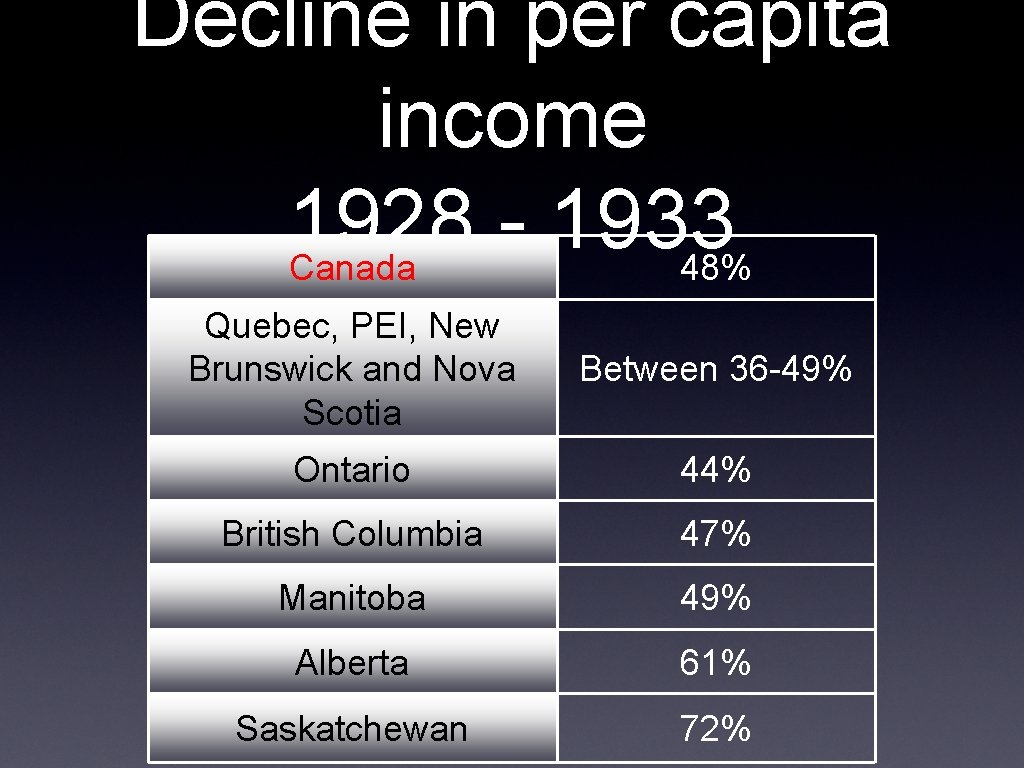
Decline in per capita income 1928 1933 Canada 48% Quebec, PEI, New Brunswick and Nova Scotia Between 36 -49% Ontario 44% British Columbia 47% Manitoba 49% Alberta 61% Saskatchewan 72%
Tariffs & Trade Many countries dealt with the economic crisis by imposing tariffs on imports.
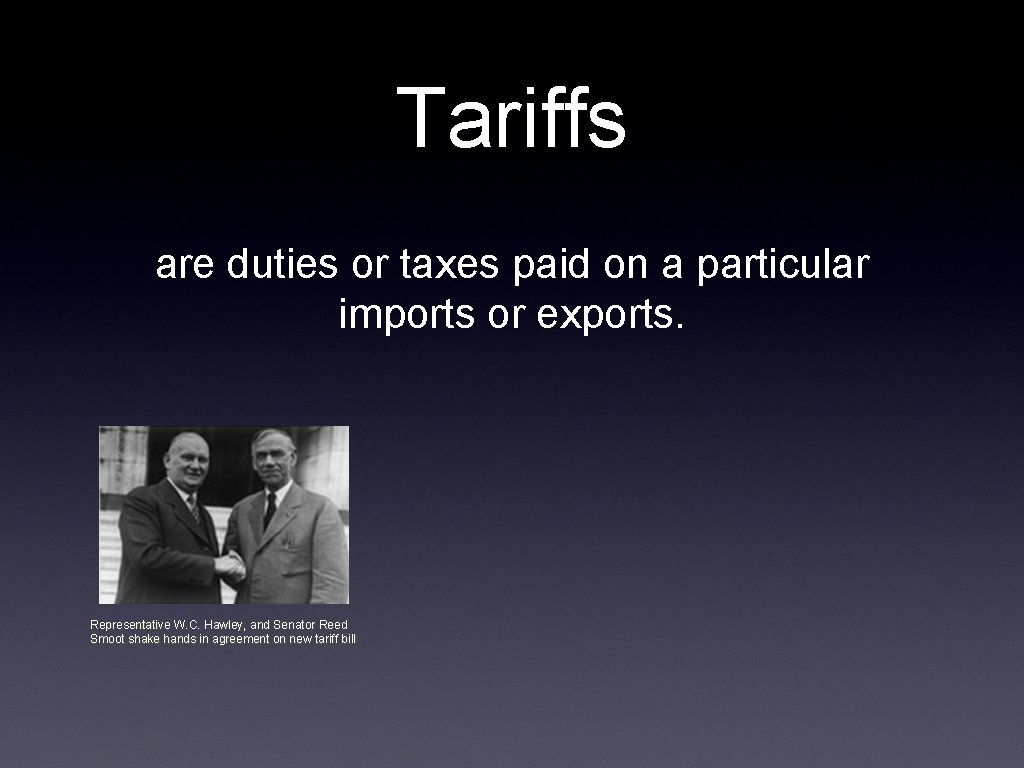
Tariffs are duties or taxes paid on a particular imports or exports. Representative W. C. Hawley, and Senator Reed Smoot shake hands in agreement on new tariff bill
Tariffs & Trade Many countries dealt with the economic crisis by imposing tariffs on imports. This proved to be catastrophic to a major exporting country like Canada. The American market was soon closed off by tariffs such as the 1930 Smoot-Hawley Tariff, which was designed to protect American agricultural producers. Canada soon made the same move.
Canadian Export Demands for Canadian exports, most notably wheat, decreased significantly. European countries were also competing against Canada in the world market, and like the U. S. , increased tariffs to protect their farmers.
Canadian Export Bennett strongly urged preferential tariffs for members of the British Commonwealth. It was agreed that within the Commonwealth a number of tariffs would be lowered in order to continue international trade. It did increase trade within Commonwealth members, but not enough to make up for reduced trade with the U. S.
Politics In the 1930 election between prime minister Mackenzie King and Richard B. Bennett, the Conservative party of Bennett won. During election campaign, issues of unemployment and tariff were debated.
- Slides: 29