
Great crested newt district level licensing Nicola George
- Slides: 13
Great crested newt district level licensing Nicola George 17 March 2017 www. gov. uk/natural-england
Contents • • Organisational context District level licensing The Woking Pilot Benefits District level licensing stages National roll out of district licensing GCN new licence applications Budget forecast
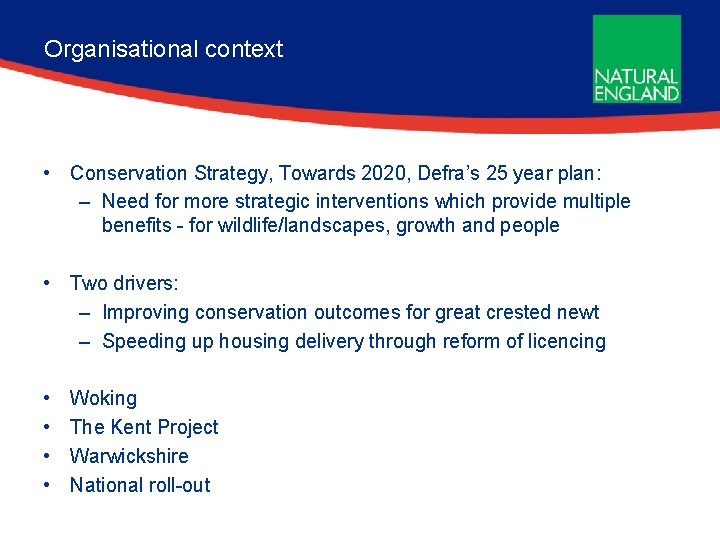
Organisational context • Conservation Strategy, Towards 2020, Defra’s 25 year plan: – Need for more strategic interventions which provide multiple benefits - for wildlife/landscapes, growth and people • Two drivers: – Improving conservation outcomes for great crested newt – Speeding up housing delivery through reform of licencing • • Woking The Kent Project Warwickshire National roll-out
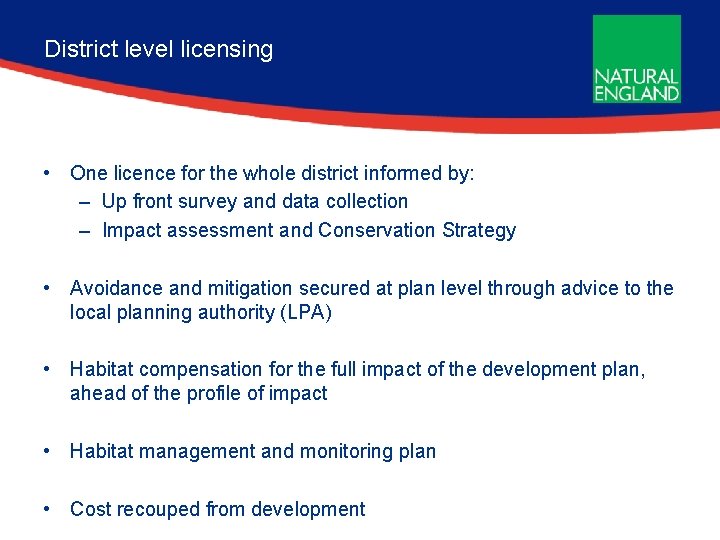
District level licensing • One licence for the whole district informed by: – Up front survey and data collection – Impact assessment and Conservation Strategy • Avoidance and mitigation secured at plan level through advice to the local planning authority (LPA) • Habitat compensation for the full impact of the development plan, ahead of the profile of impact • Habitat management and monitoring plan • Cost recouped from development
The Woking Pilot • http: //www. woking. gov. uk/environment/greeninf/naturalwoking/nwsu ppinfo • Page 118 onwards, including guidance for developers • Page 135 the Conservation Strategy
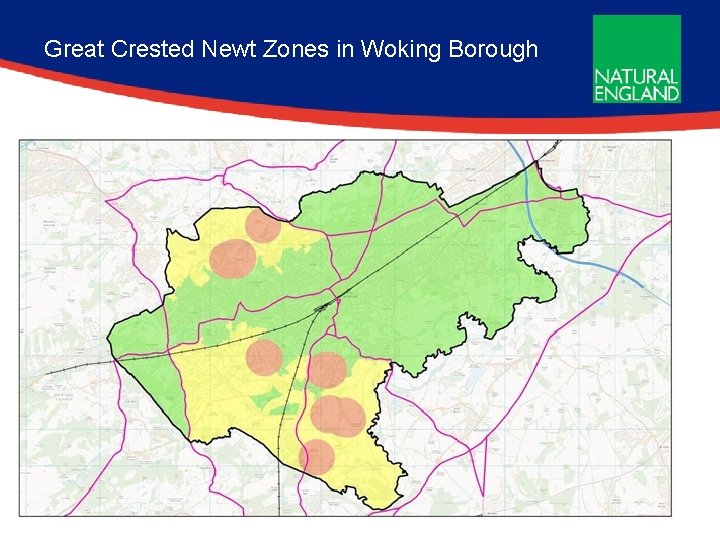
Great Crested Newt Zones in Woking Borough
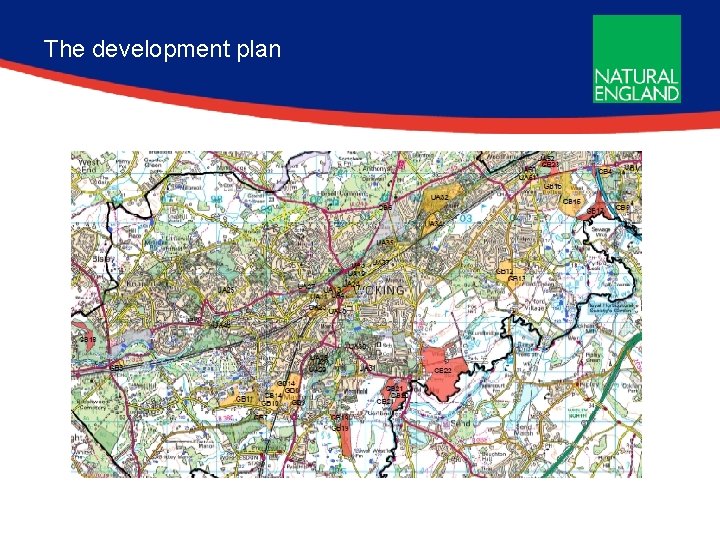
The development plan
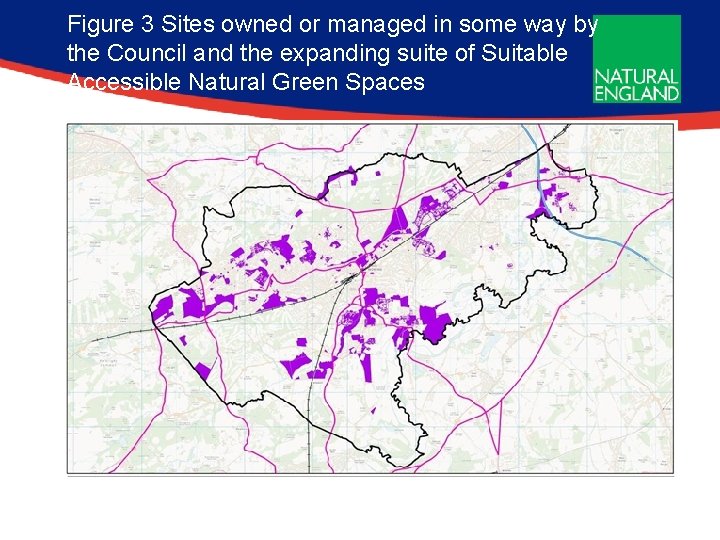
Figure 3 Sites owned or managed in some way by the Council and the expanding suite of Suitable Accessible Natural Green Spaces
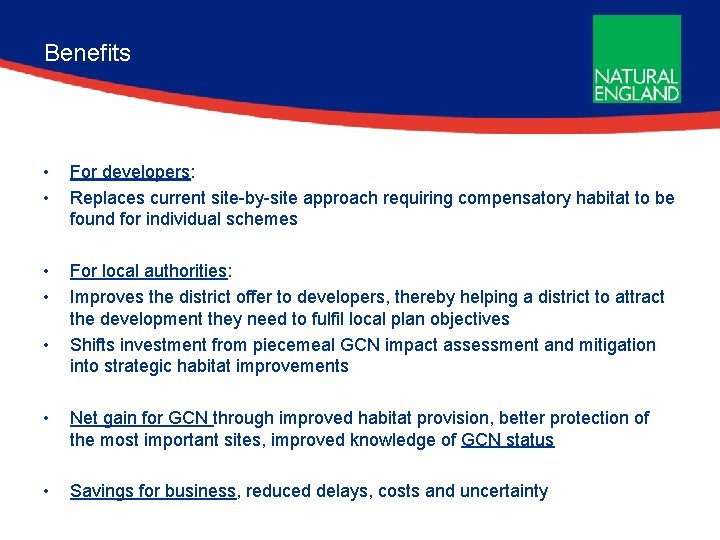
Benefits • • For developers: Replaces current site-by-site approach requiring compensatory habitat to be found for individual schemes • • For local authorities: Improves the district offer to developers, thereby helping a district to attract the development they need to fulfil local plan objectives Shifts investment from piecemeal GCN impact assessment and mitigation into strategic habitat improvements • • Net gain for GCN through improved habitat provision, better protection of the most important sites, improved knowledge of GCN status • Savings for business, reduced delays, costs and uncertainty
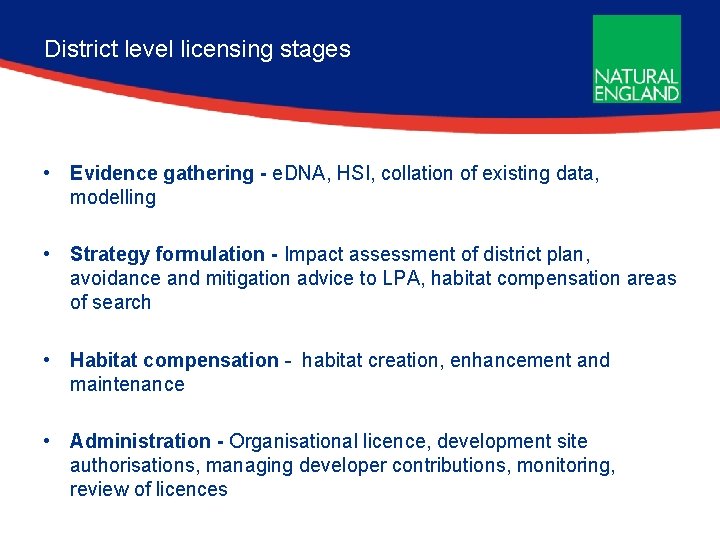
District level licensing stages • Evidence gathering - e. DNA, HSI, collation of existing data, modelling • Strategy formulation - Impact assessment of district plan, avoidance and mitigation advice to LPA, habitat compensation areas of search • Habitat compensation - habitat creation, enhancement and maintenance • Administration - Organisational licence, development site authorisations, managing developer contributions, monitoring, review of licences
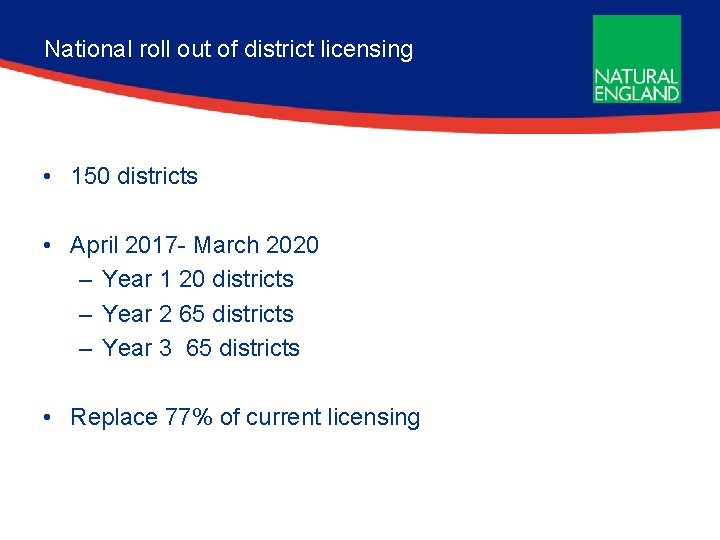
National roll out of district licensing • 150 districts • April 2017 - March 2020 – Year 1 20 districts – Year 2 65 districts – Year 3 65 districts • Replace 77% of current licensing
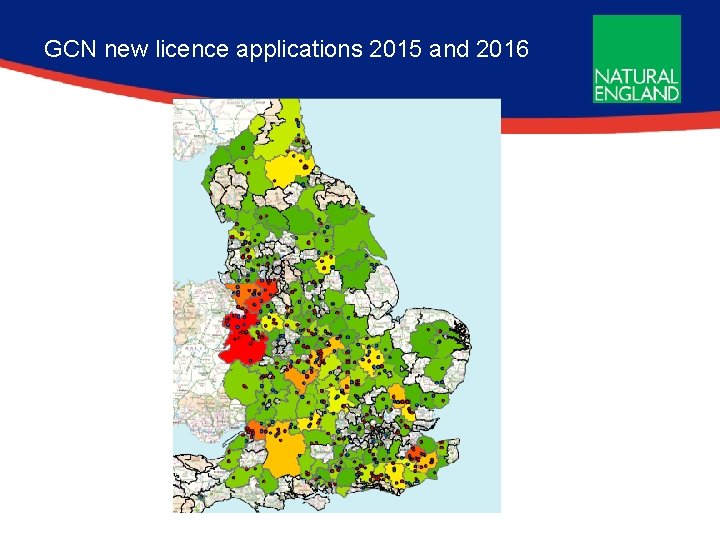
GCN new licence applications 2015 and 2016
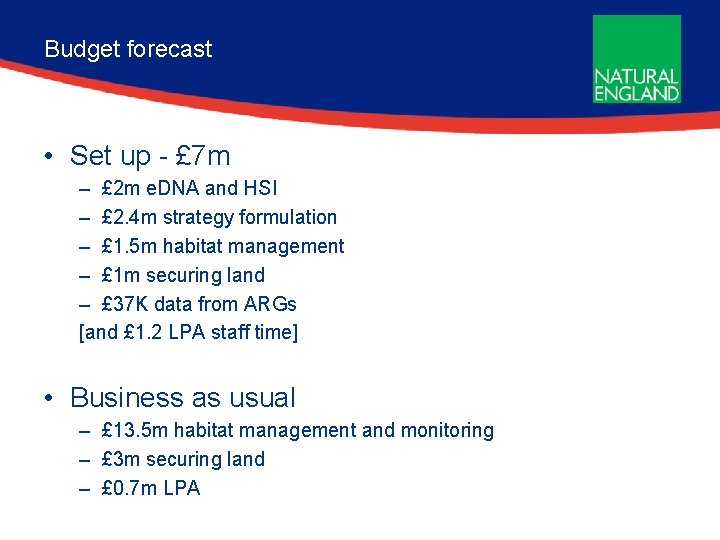
Budget forecast • Set up - £ 7 m – £ 2 m e. DNA and HSI – £ 2. 4 m strategy formulation – £ 1. 5 m habitat management – £ 1 m securing land – £ 37 K data from ARGs [and £ 1. 2 LPA staff time] • Business as usual – £ 13. 5 m habitat management and monitoring – £ 3 m securing land – £ 0. 7 m LPA