
GRE 5220 Greek Exegesis Acts 10 34 48
- Slides: 13
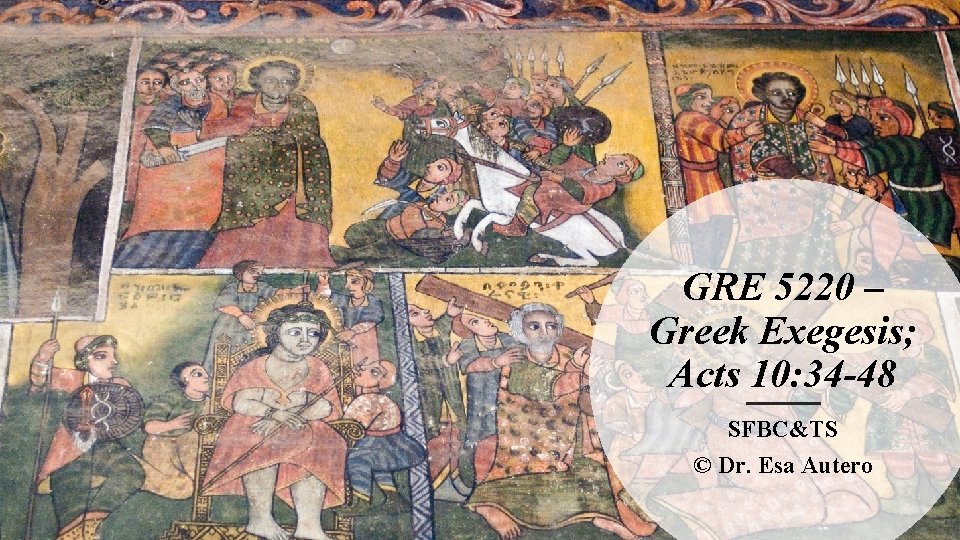
GRE 5220 – Greek Exegesis; Acts 10: 34 -48 SFBC&TS © Dr. Esa Autero
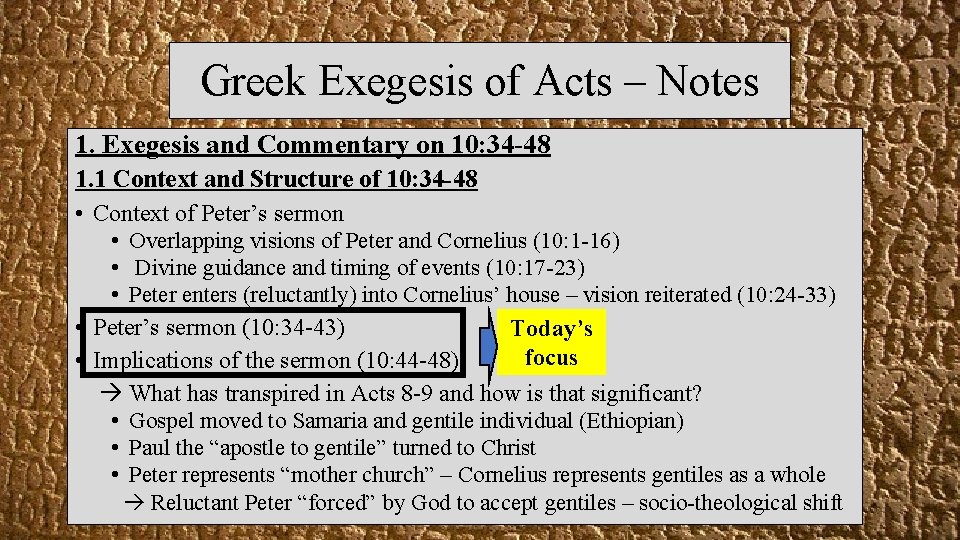
Greek Exegesis of Acts – Notes 1. Exegesis and Commentary on 10: 34 -48 1. 1 Context and Structure of 10: 34 -48 • Context of Peter’s sermon • Overlapping visions of Peter and Cornelius (10: 1 -16) • Divine guidance and timing of events (10: 17 -23) • Peter enters (reluctantly) into Cornelius’ house – vision reiterated (10: 24 -33) • Peter’s sermon (10: 34 -43) Today’s focus • Implications of the sermon (10: 44 -48) What has transpired in Acts 8 -9 and how is that significant? • Gospel moved to Samaria and gentile individual (Ethiopian) • Paul the “apostle to gentile” turned to Christ • Peter represents “mother church” – Cornelius represents gentiles as a whole Reluctant Peter “forced” by God to accept gentiles – socio-theological shift
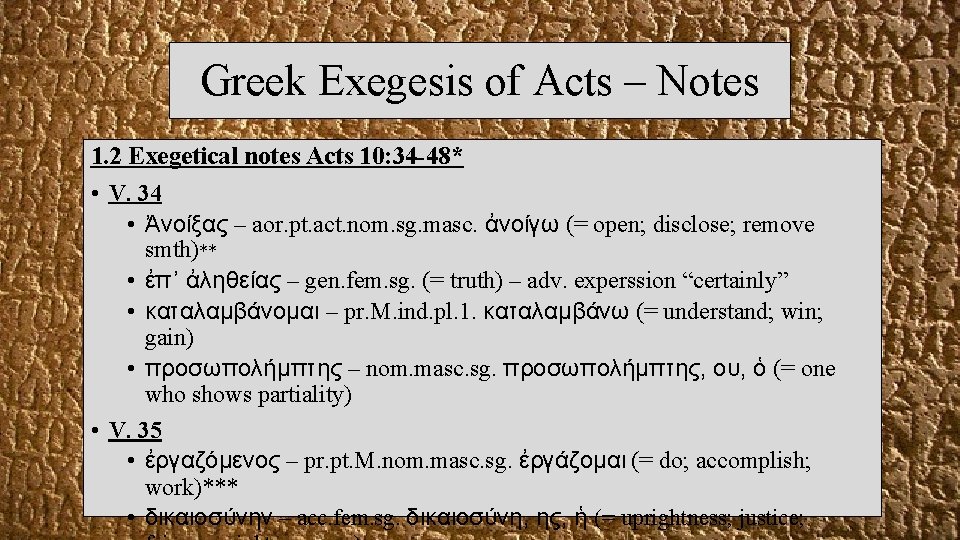
Greek Exegesis of Acts – Notes 1. 2 Exegetical notes Acts 10: 34 -48* • V. 34 • Ἀνοίξας – aor. pt. act. nom. sg. masc. ἀνοίγω (= open; disclose; remove smth)** • ἐπ᾽ ἀληθείας – gen. fem. sg. (= truth) – adv. experssion “certainly” • καταλαμβάνομαι – pr. M. ind. pl. 1. καταλαμβάνω (= understand; win; gain) • προσωπολήμπτης – nom. masc. sg. προσωπολήμπτης, ου, ὁ (= one who shows partiality) • V. 35 • ἐργαζόμενος – pr. pt. M. nom. masc. sg. ἐργάζομαι (= do; accomplish; work)*** • δικαιοσύνην – acc. fem. sg. δικαιοσύνη, ης, ἡ (= uprightness; justice;
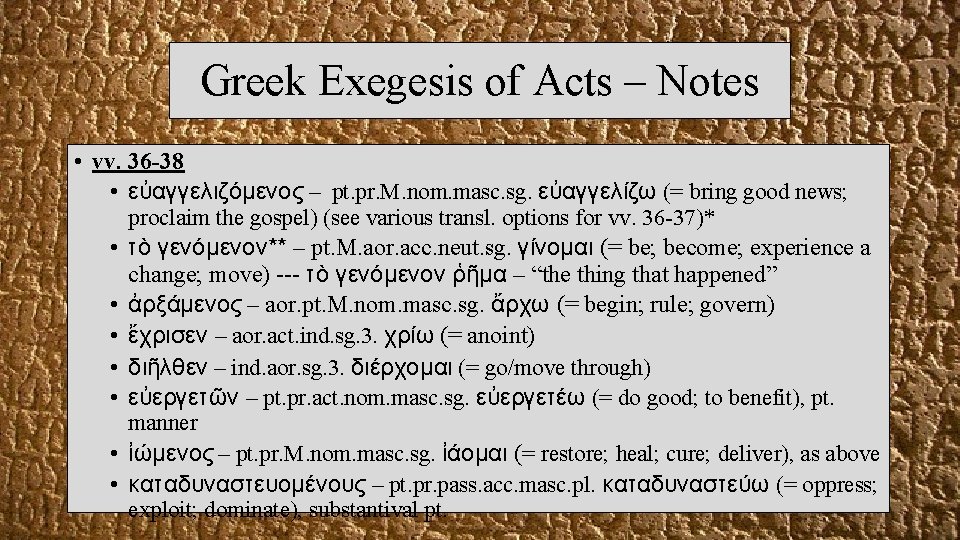
Greek Exegesis of Acts – Notes • vv. 36 -38 • εὐαγγελιζόμενος – pt. pr. M. nom. masc. sg. εὐαγγελίζω (= bring good news; • • proclaim the gospel) (see various transl. options for vv. 36 -37)* τὸ γενόμενον** – pt. M. aor. acc. neut. sg. γίνομαι (= be; become; experience a change; move) --- τὸ γενόμενον ῥῆμα – “the thing that happened” ἀρξάμενος – aor. pt. M. nom. masc. sg. ἄρχω (= begin; rule; govern) ἔχρισεν – aor. act. ind. sg. 3. χρίω (= anoint) διῆλθεν – ind. aor. sg. 3. διέρχομαι (= go/move through) εὐεργετῶν – pt. pr. act. nom. masc. sg. εὐεργετέω (= do good; to benefit), pt. manner ἰώμενος – pt. pr. M. nom. masc. sg. ἰάομαι (= restore; heal; cure; deliver), as above καταδυναστευομένους – pt. pr. pass. acc. masc. pl. καταδυναστεύω (= oppress; exploit; dominate), substantival pt.
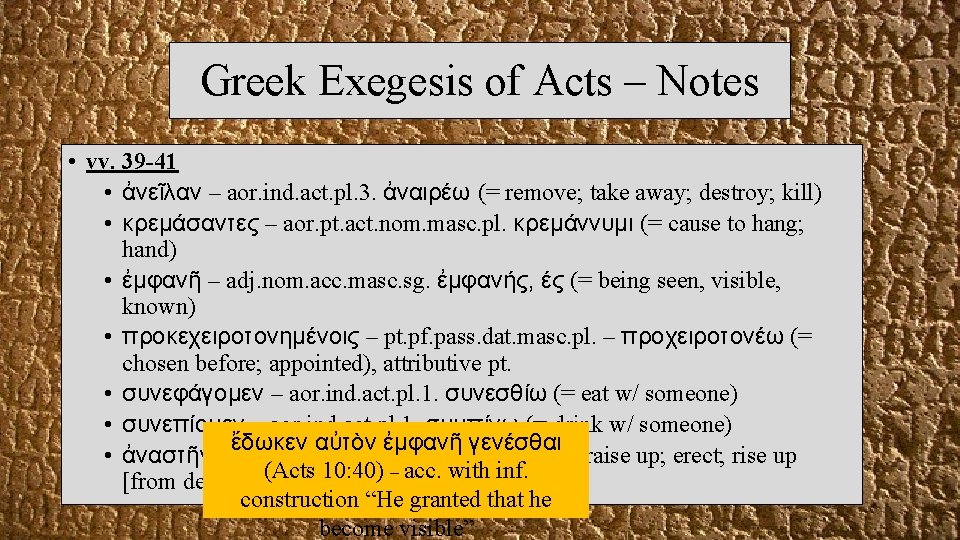
Greek Exegesis of Acts – Notes • vv. 39 -41 • ἀνεῖλαν – aor. ind. act. pl. 3. ἀναιρέω (= remove; take away; destroy; kill) • κρεμάσαντες – aor. pt. act. nom. masc. pl. κρεμάννυμι (= cause to hang; hand) • ἐμφανῆ – adj. nom. acc. masc. sg. ἐμφανής, ές (= being seen, visible, known) • προκεχειροτονημένοις – pt. pf. pass. dat. masc. pl. – προχειροτονέω (= chosen before; appointed), attributive pt. • συνεφάγομεν – aor. ind. act. pl. 1. συνεσθίω (= eat w/ someone) • συνεπίομεν – aor. ind. act. pl. 1. συμπίνω (= drink w/ someone) ἔδωκεν αὐτὸν ἐμφανῆ γενέσθαι • ἀναστῆναι – inf. aor. act. ἀνίστημι (= [cause] to raise up; erect; rise up [from dead]) (Acts 10: 40) – acc. with inf. construction “He granted that he become visible”
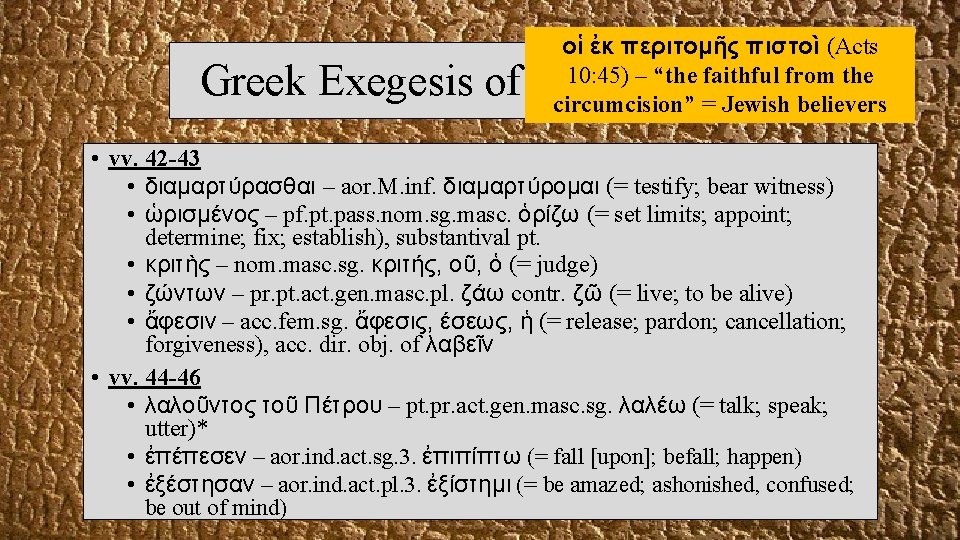
οἱ ἐκ περιτομῆς πιστοὶ (Acts 10: 45) – “the faithful from the circumcision” = Jewish believers Greek Exegesis of Acts – Notes • vv. 42 -43 • διαμαρτύρασθαι – aor. M. inf. διαμαρτύρομαι (= testify; bear witness) • ὡρισμένος – pf. pt. pass. nom. sg. masc. ὁρίζω (= set limits; appoint; determine; fix; establish), substantival pt. • κριτὴς – nom. masc. sg. κριτής, οῦ, ὁ (= judge) • ζώντων – pr. pt. act. gen. masc. pl. ζάω contr. ζῶ (= live; to be alive) • ἄφεσιν – acc. fem. sg. ἄφεσις, έσεως, ἡ (= release; pardon; cancellation; forgiveness), acc. dir. obj. of λαβεῖν • vv. 44 -46 • λαλοῦντος τοῦ Πέτρου – pt. pr. act. gen. masc. sg. λαλέω (= talk; speak; utter)* • ἐπέπεσεν – aor. ind. act. sg. 3. ἐπιπίπτω (= fall [upon]; befall; happen) • ἐξέστησαν – aor. ind. act. pl. 3. ἐξίστημι (= be amazed; ashonished, confused; be out of mind)
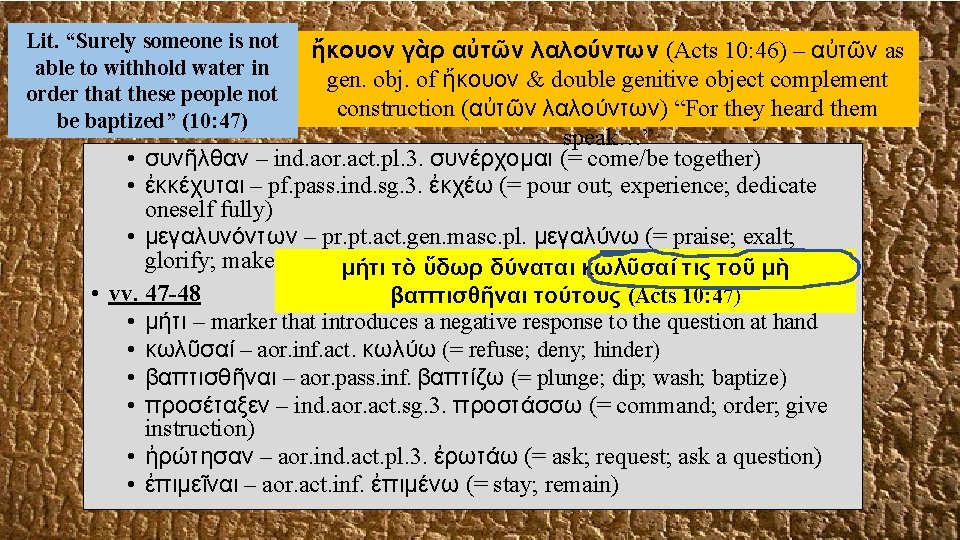
Lit. “Surely someone is not able to withhold water in order that these people not be baptized” (10: 47) ἤκουον γὰρ αὐτῶν λαλούντων (Acts 10: 46) – αὐτῶν as gen. obj. of ἤκουον & double genitive object complement construction (αὐτῶν λαλούντων) “For they heard them speak…” • συνῆλθαν – ind. aor. act. pl. 3. συνέρχομαι (= come/be together) • ἐκκέχυται – pf. pass. ind. sg. 3. ἐκχέω (= pour out; experience; dedicate oneself fully) • μεγαλυνόντων – pr. pt. act. gen. masc. pl. μεγαλύνω (= praise; exalt; glorify; make great) μήτι τὸ ὕδωρ δύναται κωλῦσαί τις τοῦ μὴ • vv. 47 -48 βαπτισθῆναι τούτους (Acts 10: 47) • μήτι – marker that introduces a negative response to the question at hand • κωλῦσαί – aor. inf. act. κωλύω (= refuse; deny; hinder) • βαπτισθῆναι – aor. pass. inf. βαπτίζω (= plunge; dip; wash; baptize) • προσέταξεν – ind. aor. act. sg. 3. προστάσσω (= command; order; give instruction) • ἠρώτησαν – aor. ind. act. pl. 3. ἐρωτάω (= ask; request; ask a question) • ἐπιμεῖναι – aor. act. inf. ἐπιμένω (= stay; remain) Greek Exegesis of Acts – Notes
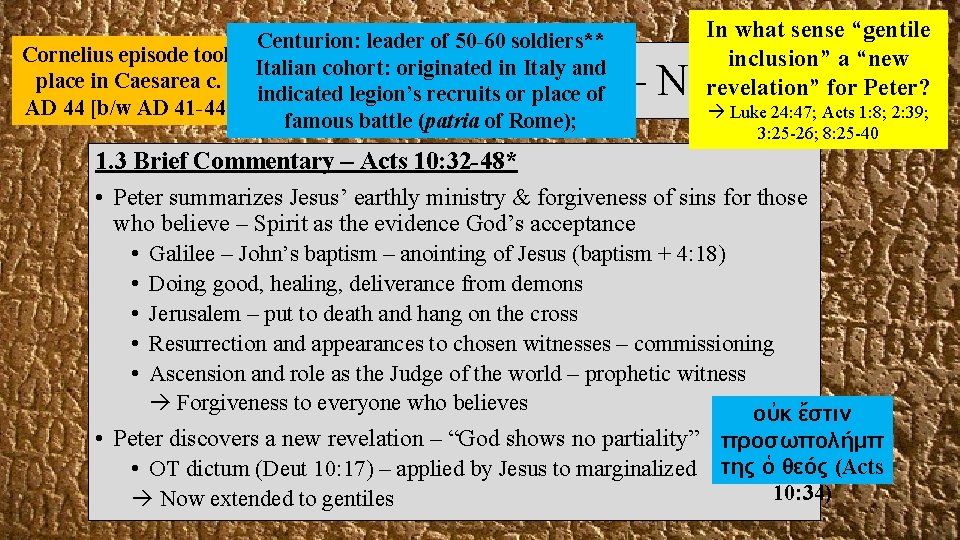
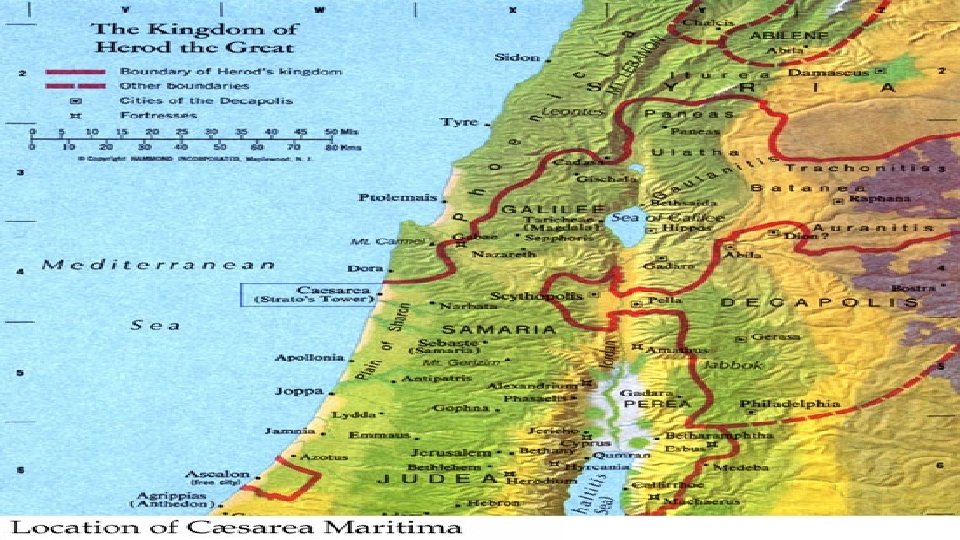
Centurion: leader of 50 -60 soldiers** Cornelius episode took Italian cohort: originated in Italy and place in Caesarea c. indicated legion’s recruits or place of AD 44 [b/w AD 41 -44] famous battle (patria of Rome); In what sense “gentile inclusion” a “new revelation” for Peter? Greek Exegesis of Acts – Notes Luke 24: 47; Acts 1: 8; 2: 39; 3: 25 -26; 8: 25 -40 1. 3 Brief Commentary – Acts 10: 32 -48* • Peter summarizes Jesus’ earthly ministry & forgiveness of sins for those who believe – Spirit as the evidence God’s acceptance • • • Galilee – John’s baptism – anointing of Jesus (baptism + 4: 18) Doing good, healing, deliverance from demons Jerusalem – put to death and hang on the cross Resurrection and appearances to chosen witnesses – commissioning Ascension and role as the Judge of the world – prophetic witness Forgiveness to everyone who believes οὐκ ἔστιν • Peter discovers a new revelation – “God shows no partiality” προσωπολήμπ • OT dictum (Deut 10: 17) – applied by Jesus to marginalized της ὁ θεός (Acts Now extended to gentiles 10: 34)
Cornelius episode took place in Caesarea c. AD 44 [b/w AD 41 -44] In what sense “gentile inclusion” a “new revelation” for Peter? Greek Exegesis of Acts Notes Luke– 24: 47; Acts 1: 8; 2: 39; 3: 25 -26; 8: 25 -40 1. 3 Brief Commentary – Acts 10: 32 -48* • Peter summarizes Jesus’ earthly ministry & forgiveness of sins for those who believe – Spirit as the evidence God’s acceptance • • • Galilee – John’s baptism – anointing of Jesus (baptism + 4: 18) Doing good, healing, deliverance from demons Jerusalem – put to death and hang on the cross Resurrection and appearances to chosen witnesses – commissioning Ascension and role as the Judge of the world – prophetic witness Forgiveness to everyone who believes οὐκ ἔστιν • Peter discovers a new revelation – “God shows no partiality” προσωπολήμπ • OT dictum (Deut 10: 17) – applied by Jesus to marginalized της ὁ θεός (Acts Now extended to gentiles 10: 34)
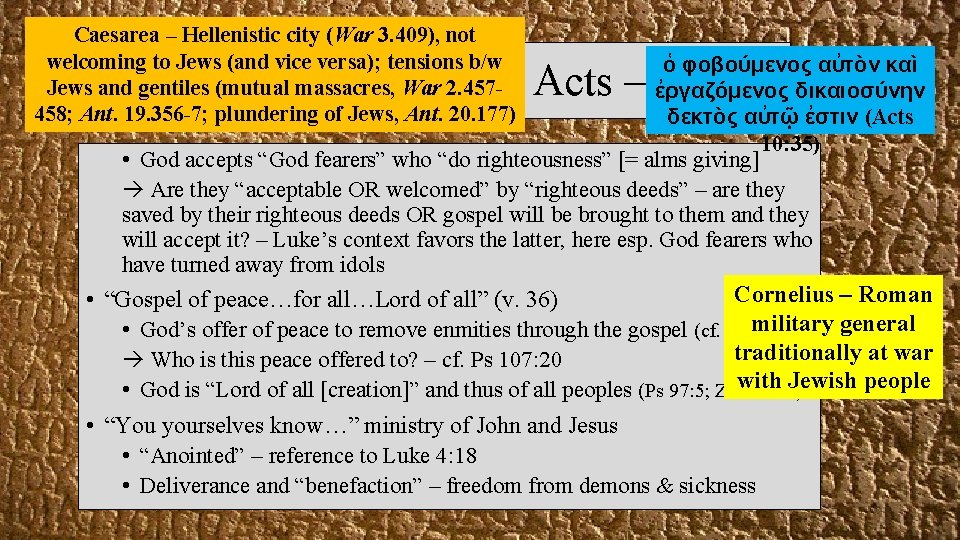
Caesarea – Hellenistic city (War 3. 409), not welcoming to Jews (and vice versa); tensions b/w Jews and gentiles (mutual massacres, War 2. 457458; Ant. 19. 356 -7; plundering of Jews, Ant. 20. 177) ὁ φοβούμενος αὐτὸν καὶ ἐργαζόμενος δικαιοσύνην δεκτὸς αὐτῷ ἐστιν (Acts 10: 35) • God accepts “God fearers” who “do righteousness” [= alms giving] Are they “acceptable OR welcomed” by “righteous deeds” – are they saved by their righteous deeds OR gospel will be brought to them and they will accept it? – Luke’s context favors the latter, here esp. God fearers who have turned away from idols Greek Exegesis of Acts – Notes Cornelius – Roman • “Gospel of peace…for all…Lord of all” (v. 36) general • God’s offer of peace to remove enmities through the gospel (cf. Isa military 52: 7)* traditionally at war Who is this peace offered to? – cf. Ps 107: 20 with Jewish people • God is “Lord of all [creation]” and thus of all peoples (Ps 97: 5; Zech 4: 14) • “You yourselves know…” ministry of John and Jesus • “Anointed” – reference to Luke 4: 18 • Deliverance and “benefaction” – freedom from demons & sickness
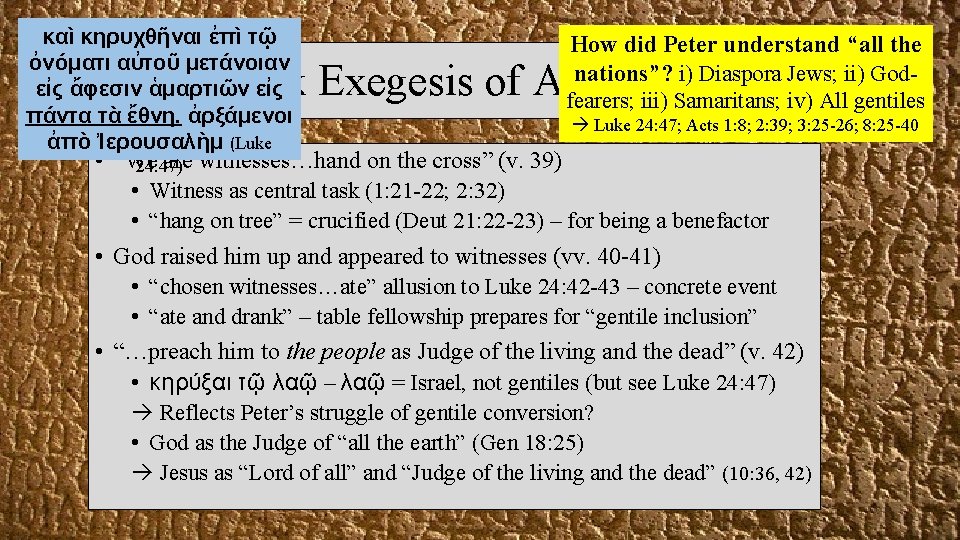
καὶ κηρυχθῆναι ἐπὶ τῷ ὀνόματι αὐτοῦ μετάνοιαν εἰς ἄφεσιν ἁμαρτιῶν εἰς πάντα τὰ ἔθνη. ἀρξάμενοι ἀπὸ Ἰερουσαλὴμ (Luke How did Peter understand “all the nations”? i) Diaspora Jews; ii) Godfearers; iii) Samaritans; iv) All gentiles Greek Exegesis of Acts – Notes Luke 24: 47; Acts 1: 8; 2: 39; 3: 25 -26; 8: 25 -40 • “We are witnesses…hand on the cross” (v. 39) 24: 47) • Witness as central task (1: 21 -22; 2: 32) • “hang on tree” = crucified (Deut 21: 22 -23) – for being a benefactor • God raised him up and appeared to witnesses (vv. 40 -41) • “chosen witnesses…ate” allusion to Luke 24: 42 -43 – concrete event • “ate and drank” – table fellowship prepares for “gentile inclusion” • “…preach him to the people as Judge of the living and the dead” (v. 42) • κηρύξαι τῷ λαῷ – λαῷ = Israel, not gentiles (but see Luke 24: 47) Reflects Peter’s struggle of gentile conversion? • God as the Judge of “all the earth” (Gen 18: 25) Jesus as “Lord of all” and “Judge of the living and the dead” (10: 36, 42)
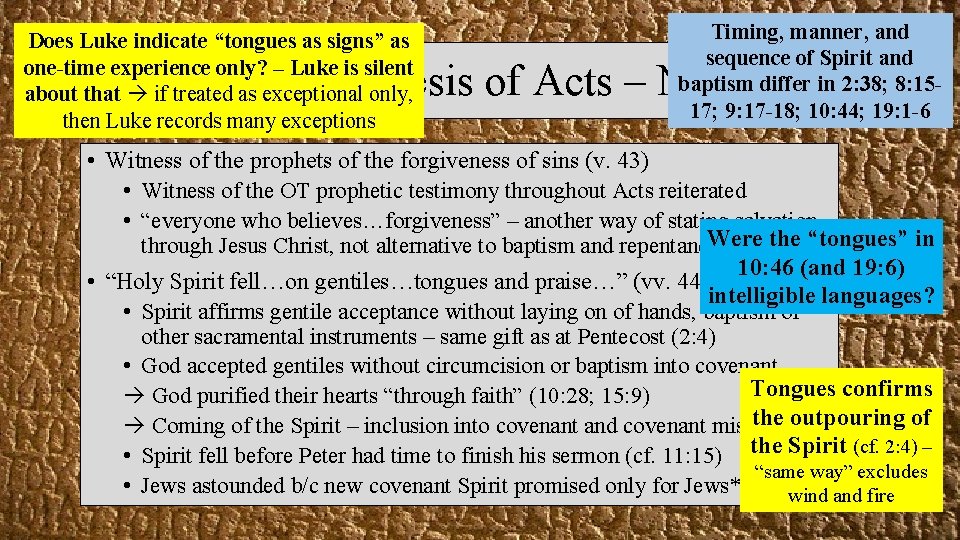
Does Luke indicate “tongues as signs” as one-time experience only? – Luke is silent about that if treated as exceptional only, then Luke records many exceptions Timing, manner, and sequence of Spirit and baptism differ in 2: 38; 8: 1517; 9: 17 -18; 10: 44; 19: 1 -6 Greek Exegesis of Acts – Notes • Witness of the prophets of the forgiveness of sins (v. 43) • Witness of the OT prophetic testimony throughout Acts reiterated • “everyone who believes…forgiveness” – another way of stating salvation Were the “tongues” in through Jesus Christ, not alternative to baptism and repentance 10: 46 (and 19: 6) • “Holy Spirit fell…on gentiles…tongues and praise…” (vv. 44 -46) intelligible languages? • Spirit affirms gentile acceptance without laying on of hands, baptism or other sacramental instruments – same gift as at Pentecost (2: 4) • God accepted gentiles without circumcision or baptism into covenant Tongues confirms God purified their hearts “through faith” (10: 28; 15: 9) the outpouring of Coming of the Spirit – inclusion into covenant and covenant mission • Spirit fell before Peter had time to finish his sermon (cf. 11: 15) the Spirit (cf. 2: 4) – “same way” excludes • Jews astounded b/c new covenant Spirit promised only for Jews* wind and fire
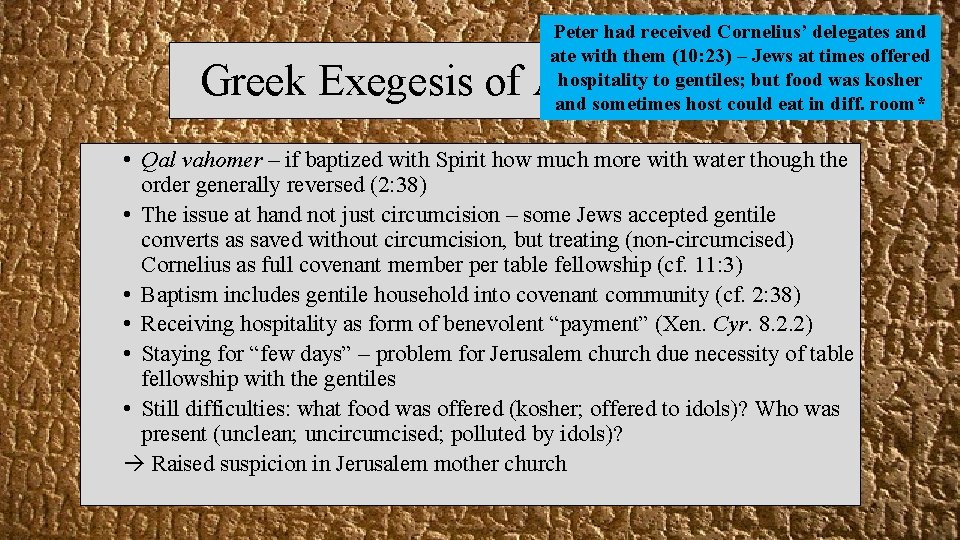
Peter had received Cornelius’ delegates and ate with them (10: 23) – Jews at times offered hospitality to gentiles; but food was kosher and sometimes host could eat in diff. room* Greek Exegesis of Acts – Notes • Qal vahomer – if baptized with Spirit how much more with water though the order generally reversed (2: 38) • The issue at hand not just circumcision – some Jews accepted gentile converts as saved without circumcision, but treating (non-circumcised) Cornelius as full covenant member per table fellowship (cf. 11: 3) • Baptism includes gentile household into covenant community (cf. 2: 38) • Receiving hospitality as form of benevolent “payment” (Xen. Cyr. 8. 2. 2) • Staying for “few days” – problem for Jerusalem church due necessity of table fellowship with the gentiles • Still difficulties: what food was offered (kosher; offered to idols)? Who was present (unclean; uncircumcised; polluted by idols)? Raised suspicion in Jerusalem mother church