
GrayScale Morphology 2 Z 3 and Z set
![A function f and its Umbra U[f] • top surface of A: Umbra are](https://slidetodoc.com/presentation_image_h/943519d36e1e9f5289c6ad62737285a1/image-6.jpg "A function f and its Umbra U[f] • top surface of A: Umbra are")





- Slides: 73
Gray-Scale Morphology
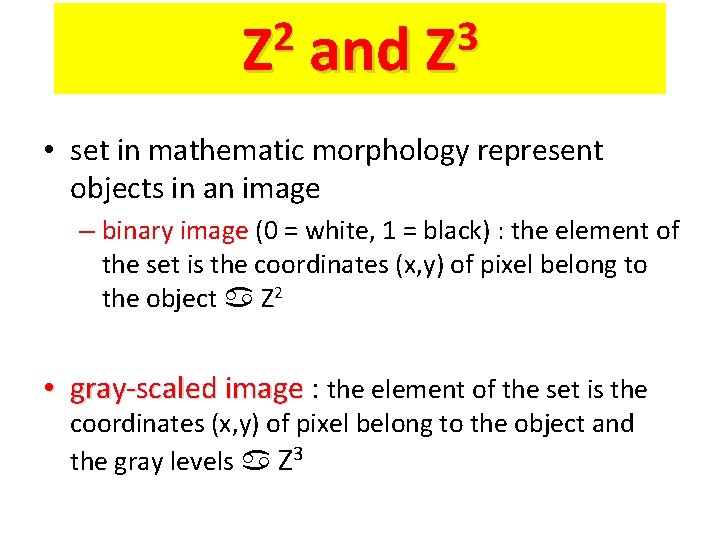
2 Z 3 and Z • set in mathematic morphology represent objects in an image – binary image (0 = white, 1 = black) : the element of the set is the coordinates (x, y) of pixel belong to the object Z 2 • gray-scaled image : the element of the set is the coordinates (x, y) of pixel belong to the object and the gray levels Z 3
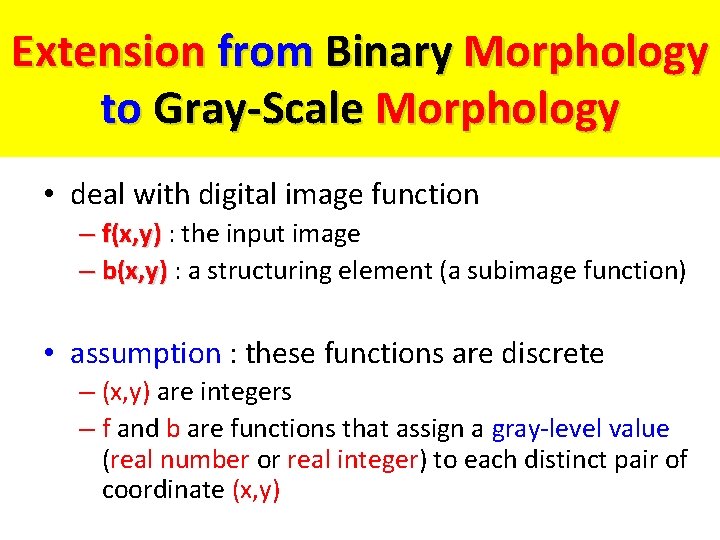
Extension from Binary Morphology to Gray-Scale Morphology • deal with digital image function – f(x, y) : the input image – b(x, y) : a structuring element (a subimage function) • assumption : these functions are discrete – (x, y) are integers – f and b are functions that assign a gray-level value (real number or real integer) to each distinct pair of coordinate (x, y)
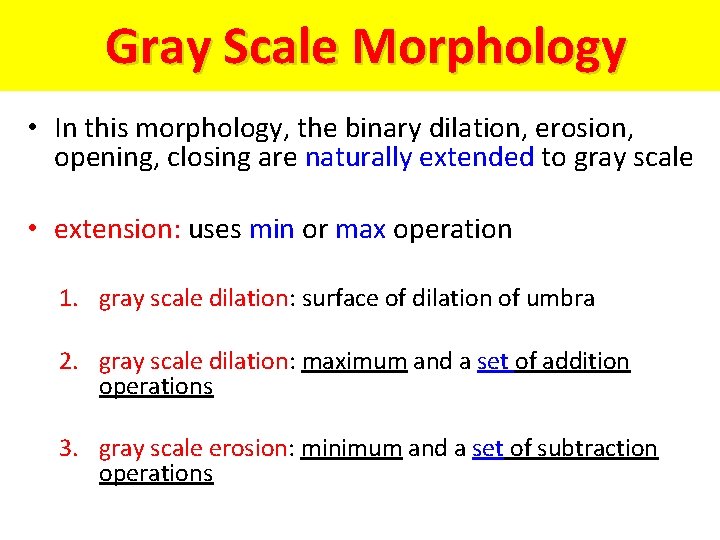
Gray Scale Morphology • In this morphology, the binary dilation, erosion, opening, closing are naturally extended to gray scale • extension: uses min or max operation 1. gray scale dilation: surface of dilation of umbra 2. gray scale dilation: maximum and a set of addition operations 3. gray scale erosion: minimum and a set of subtraction operations
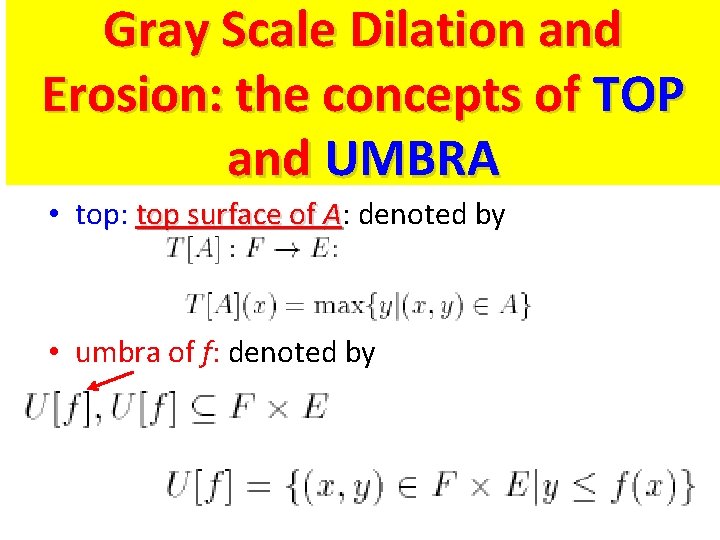
Gray Scale Dilation and Erosion: the concepts of TOP and UMBRA • top: top surface of A: denoted by • umbra of f: denoted by
A function f and its Umbra U[f] • top surface of A: Umbra are all points that are smaller or equal than the top surface
Gray-Scale Dilation
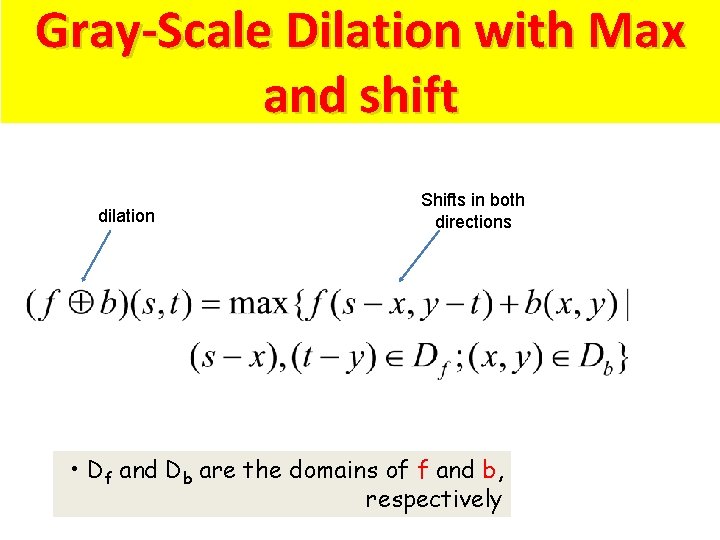
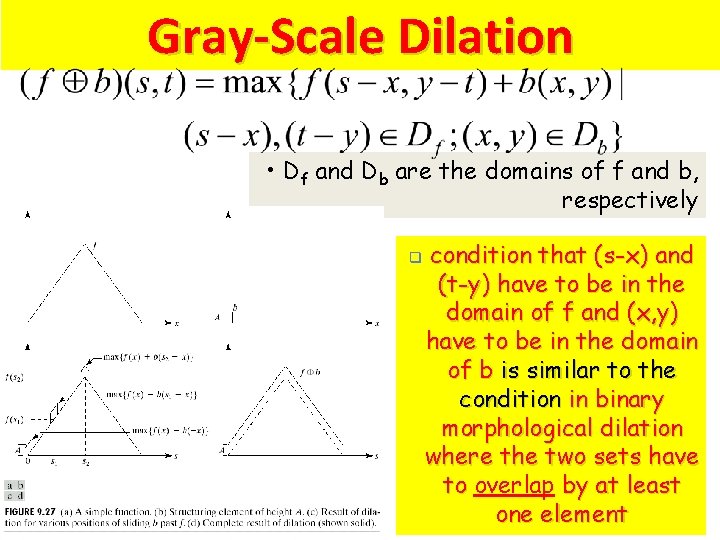
Gray-Scale Dilation with Max and shift dilation Shifts in both directions • Df and Db are the domains of f and b, respectively
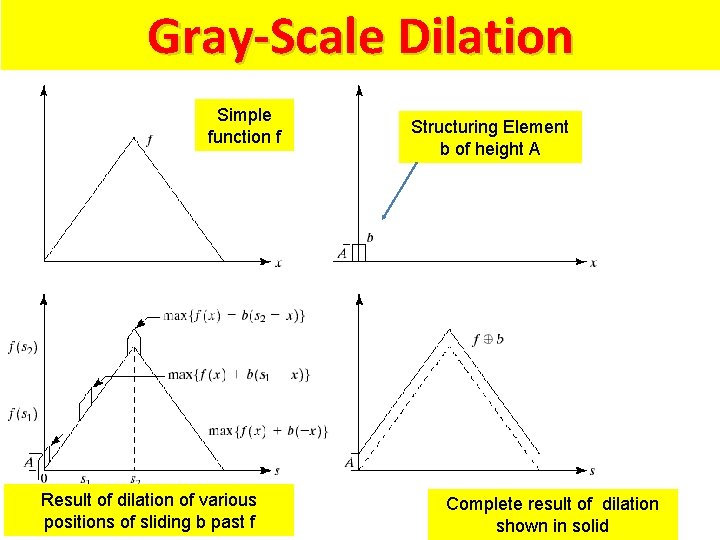
Gray-Scale Dilation Simple function f Result of dilation of various positions of sliding b past f Structuring Element b of height A Complete result of dilation shown in solid
Gray-Scale Dilation • Df and Db are the domains of f and b, respectively q condition that (s-x) and (t-y) have to be in the domain of f and (x, y) have to be in the domain of b is similar to the condition in binary morphological dilation where the two sets have to overlap by at least one element
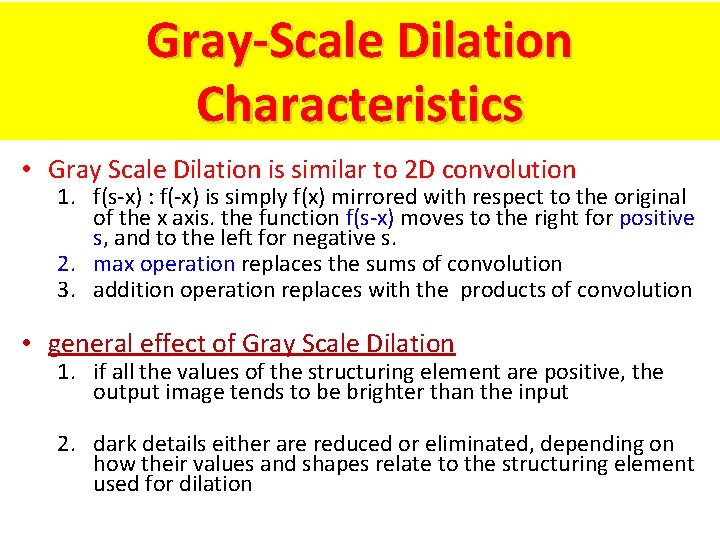
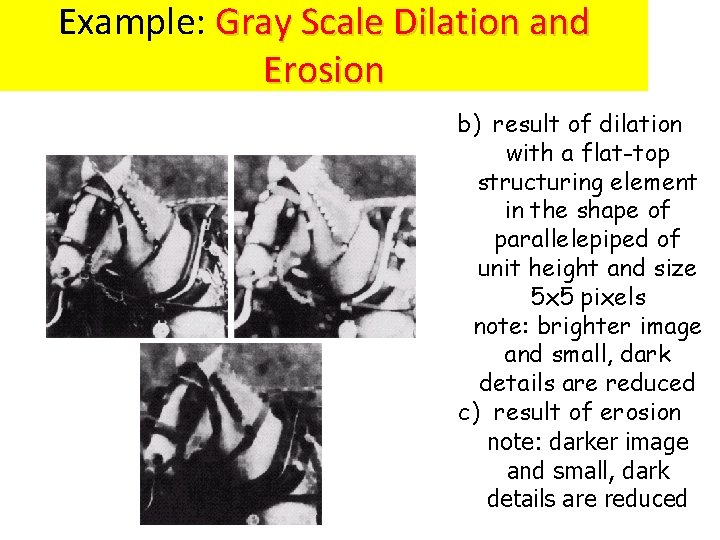
Gray-Scale Dilation Characteristics • Gray Scale Dilation is similar to 2 D convolution 1. f(s-x) : f(-x) is simply f(x) mirrored with respect to the original of the x axis. the function f(s-x) moves to the right for positive s, and to the left for negative s. 2. max operation replaces the sums of convolution 3. addition operation replaces with the products of convolution • general effect of Gray Scale Dilation 1. if all the values of the structuring element are positive, the output image tends to be brighter than the input 2. dark details either are reduced or eliminated, depending on how their values and shapes relate to the structuring element used for dilation
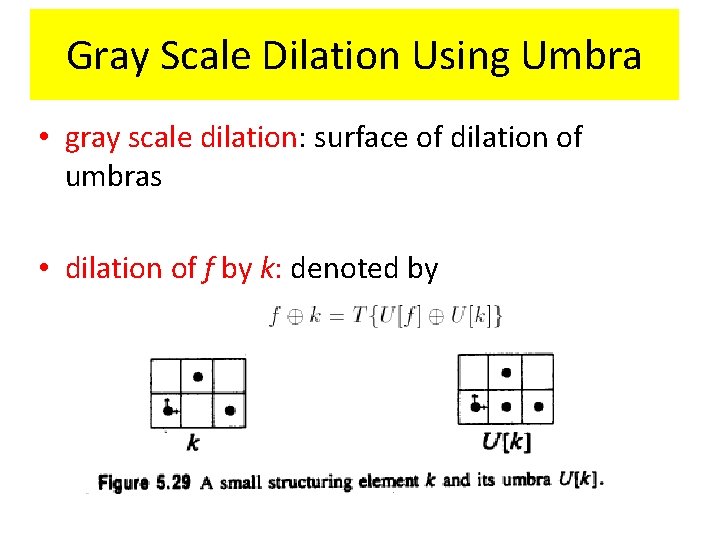
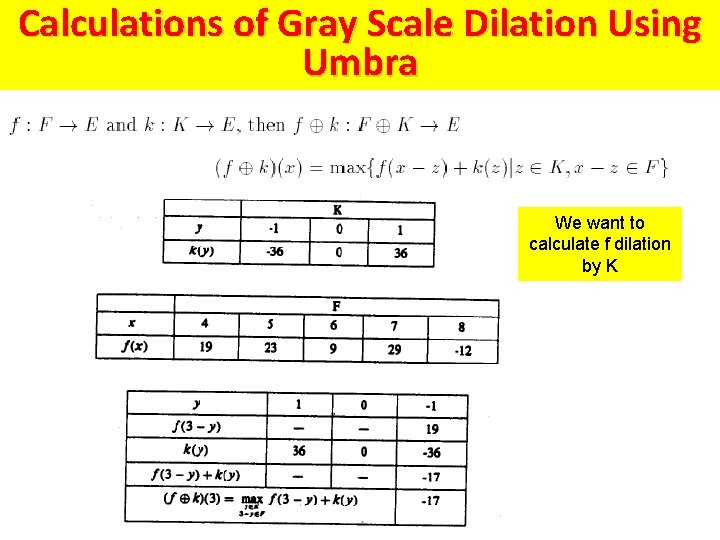
Gray Scale Dilation Using Umbra • gray scale dilation: surface of dilation of umbras • dilation of f by k: denoted by
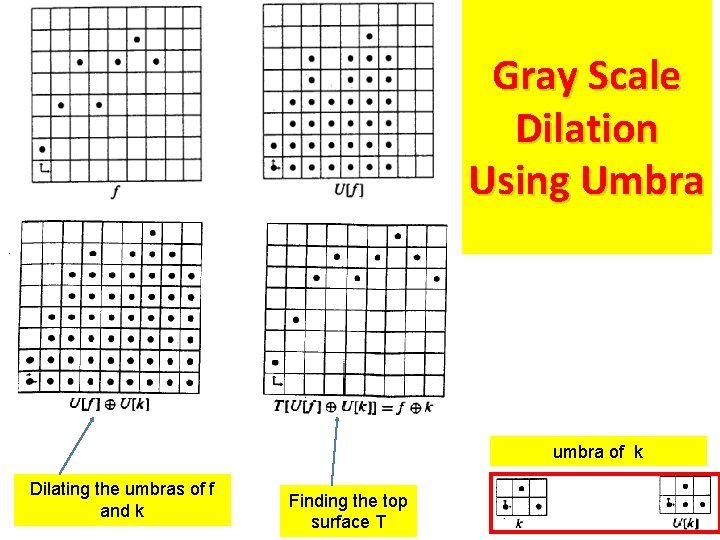
Gray Scale Dilation Using Umbra umbra of k Dilating the umbras of f and k Finding the top surface T
Gray Scale Dilation with Umbra
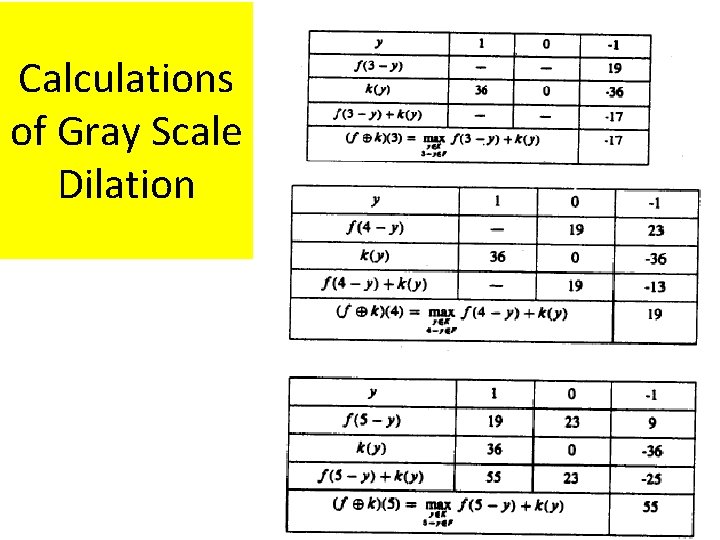
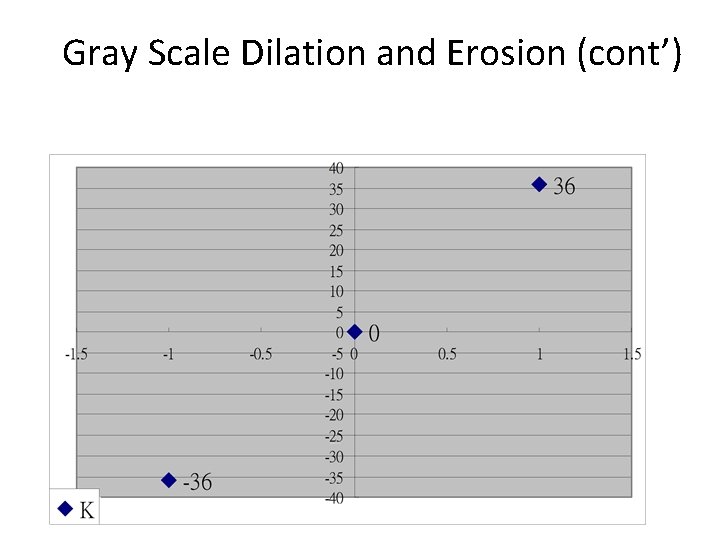
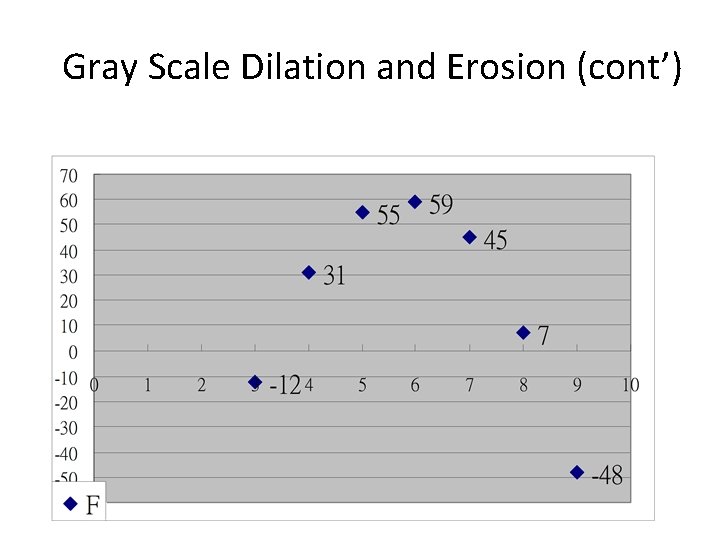
Calculations of Gray Scale Dilation Using Umbra We want to calculate f dilation by K DC & CV Lab. CSIE NTU
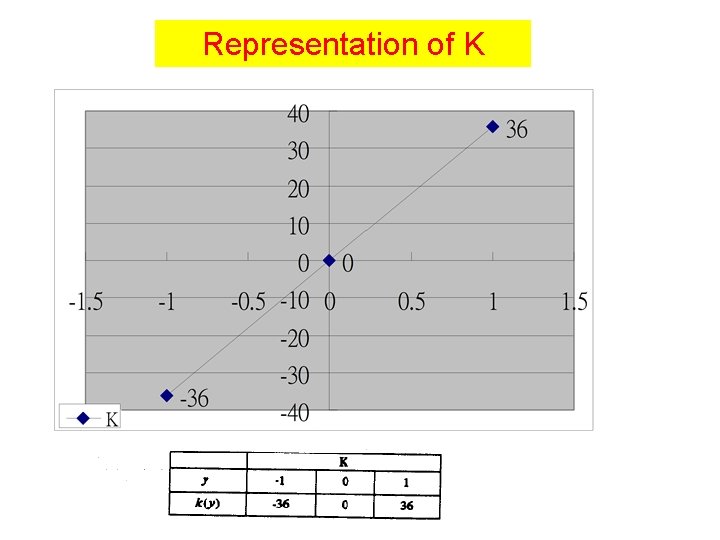
Representation of K
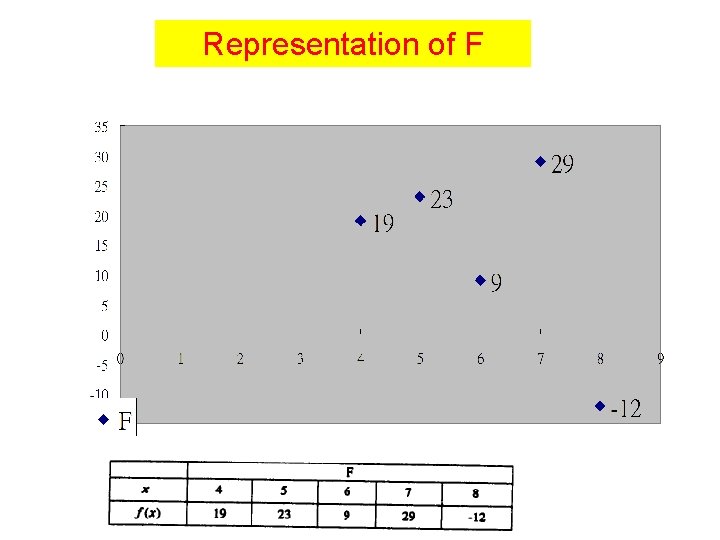
Representation of F
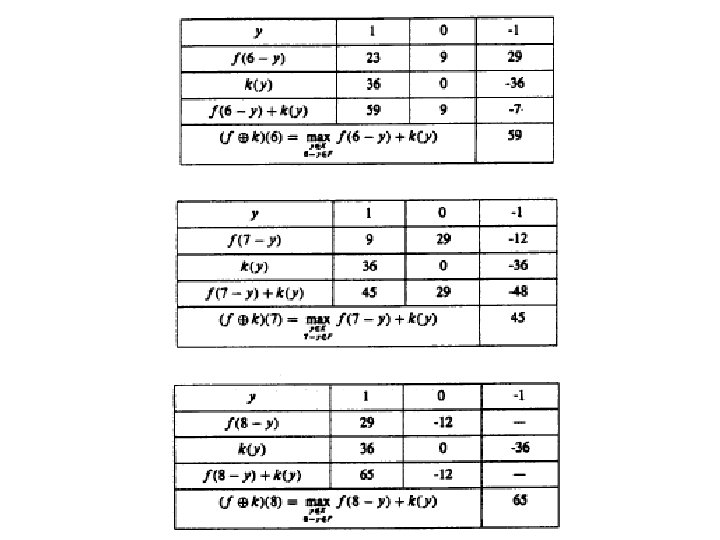
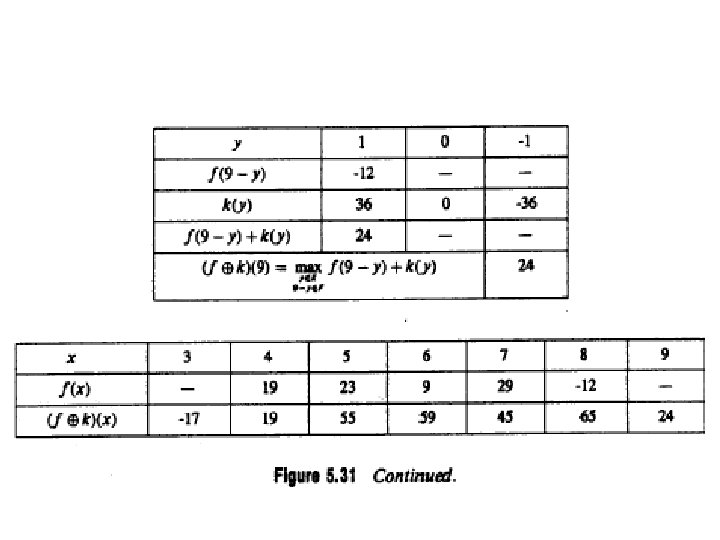
Calculations of Gray Scale Dilation
DC & CV Lab. CSIE NTU
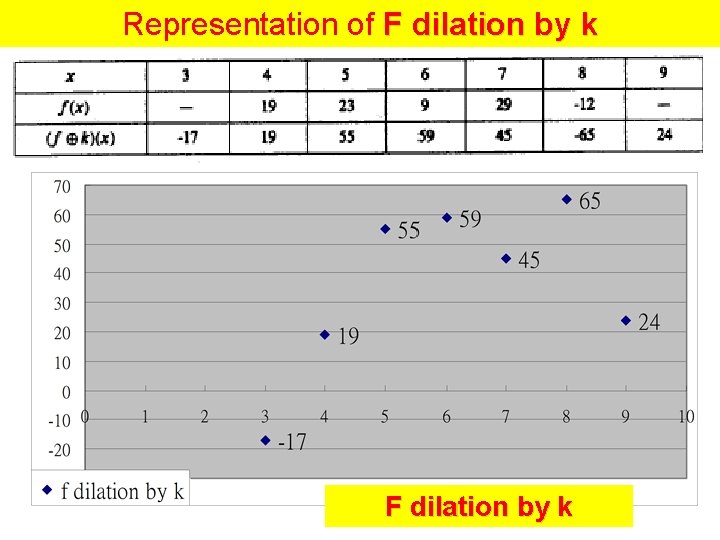
Representation of F dilation by k
Gray Scale Erosion
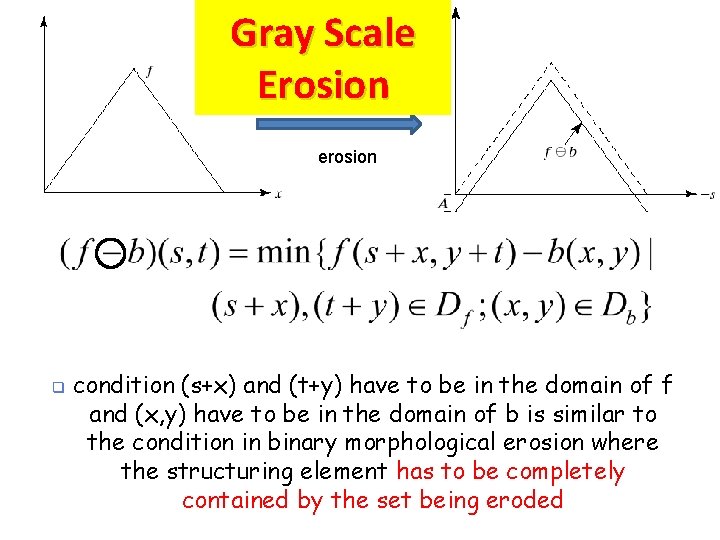
Gray Scale Erosion erosion q condition (s+x) and (t+y) have to be in the domain of f and (x, y) have to be in the domain of b is similar to the condition in binary morphological erosion where the structuring element has to be completely contained by the set being eroded
Gray Scale Erosion • similar to 2 D correlation – f(s+x) moves to the left for positive s and to the right for negative s. • general effect 1. if all the elements of the structuring element are positive, the output image tends to be darker than the input 2. the effect of bright details in the input image that are smaller in area than the structuring element is reduced, with the degree of reduction being determined by the gray -level values surrounding the bright detail and by the shape and amplitude values of the structuring element itself
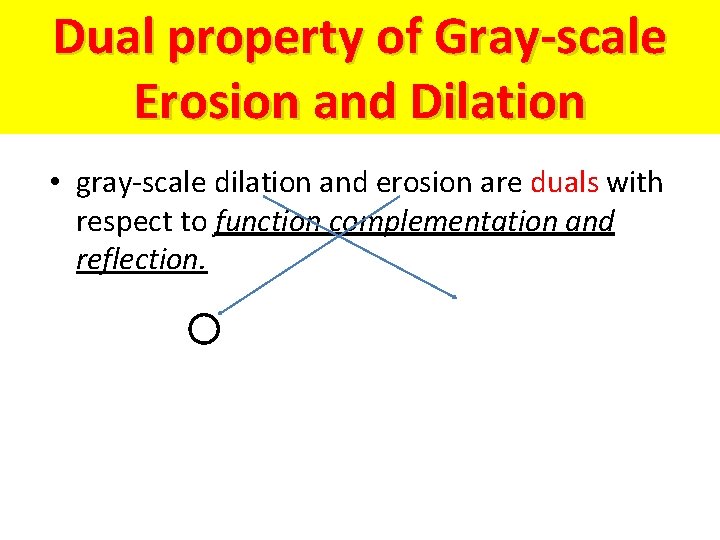
Dual property of Gray-scale Erosion and Dilation • gray-scale dilation and erosion are duals with respect to function complementation and reflection.
Example: Gray Scale Dilation and Erosion b) result of dilation with a flat-top structuring element in the shape of parallelepiped of unit height and size 5 x 5 pixels note: brighter image and small, dark details are reduced c) result of erosion note: darker image and small, dark details are reduced
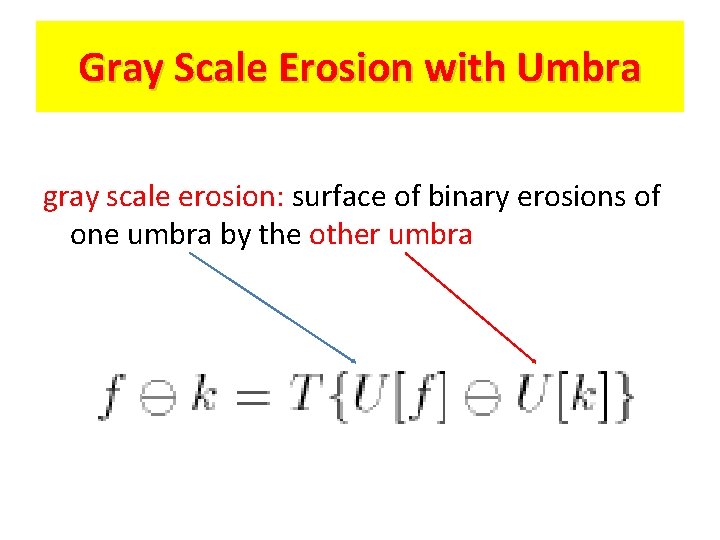
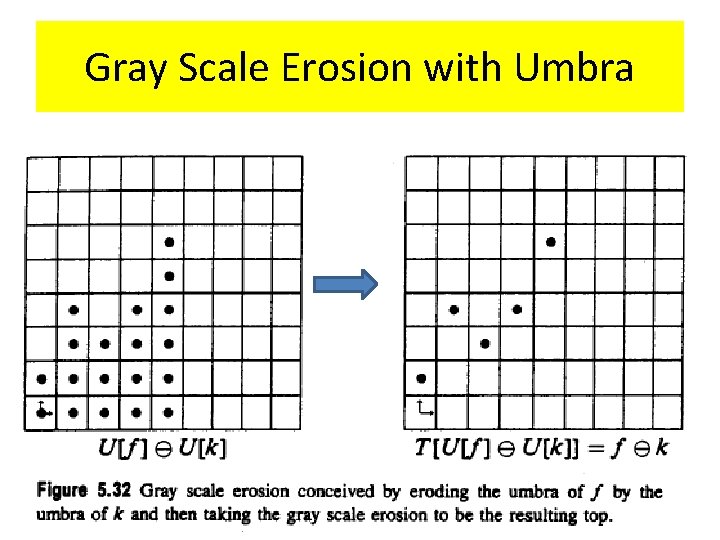
Gray Scale Erosion with Umbra gray scale erosion: surface of binary erosions of one umbra by the other umbra
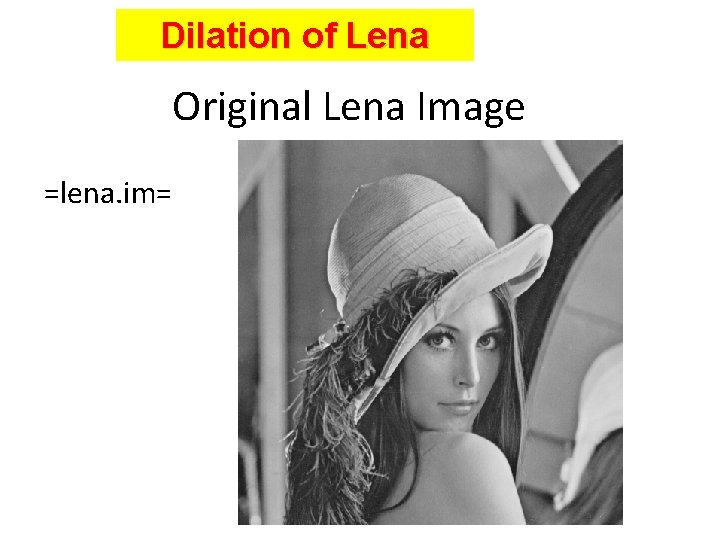
Dilation of Lena Original Lena Image =lena. im=
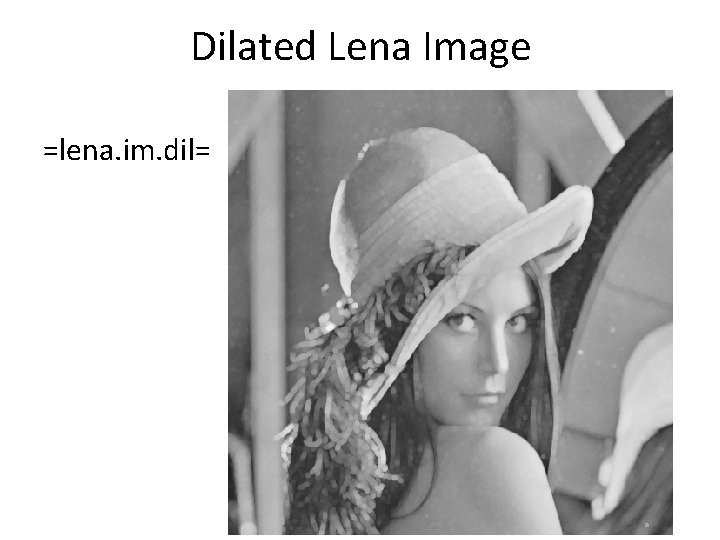
Dilated Lena Image =lena. im. dil=
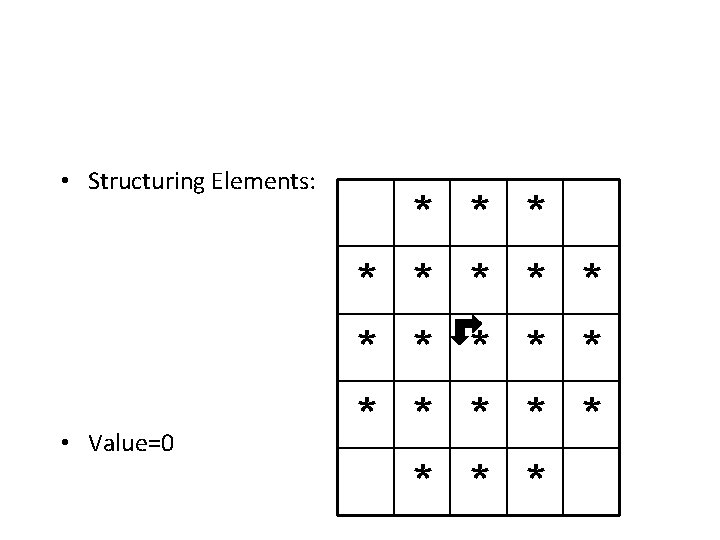
• Structuring Elements: • Value=0 * * * * * *
Gray Scale Erosion with Umbra
Gray Scale Erosion with Umbra
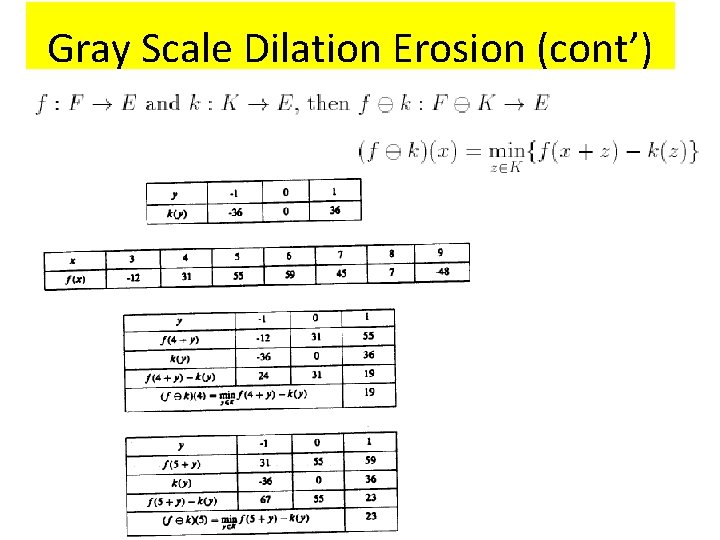
Gray Scale Dilation Erosion (cont’) DC & CV Lab. CSIE NTU
Gray Scale Dilation and Erosion (cont’)
Gray Scale Dilation and Erosion (cont’)
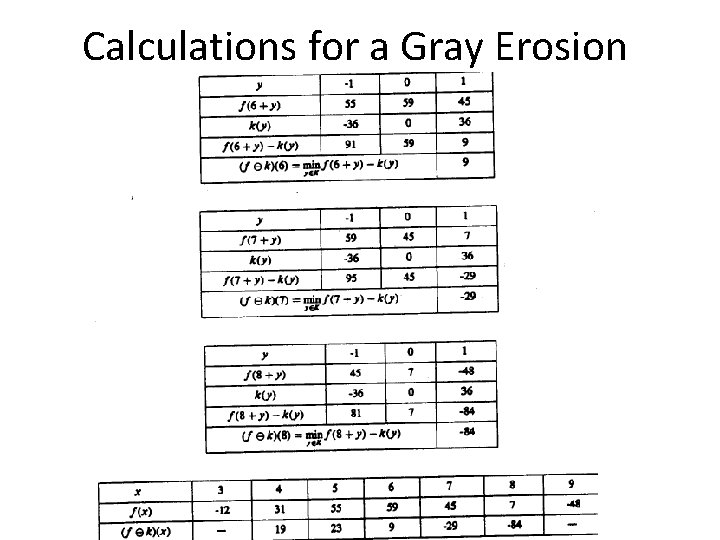
Calculations for a Gray Erosion
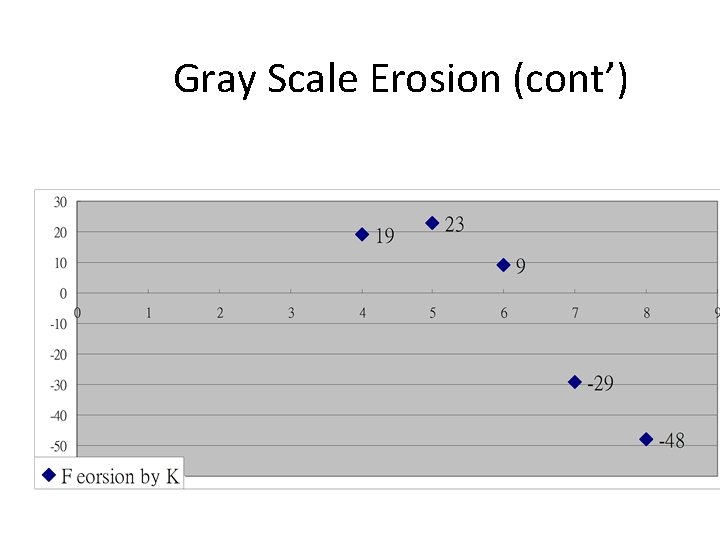
Gray Scale Erosion (cont’)
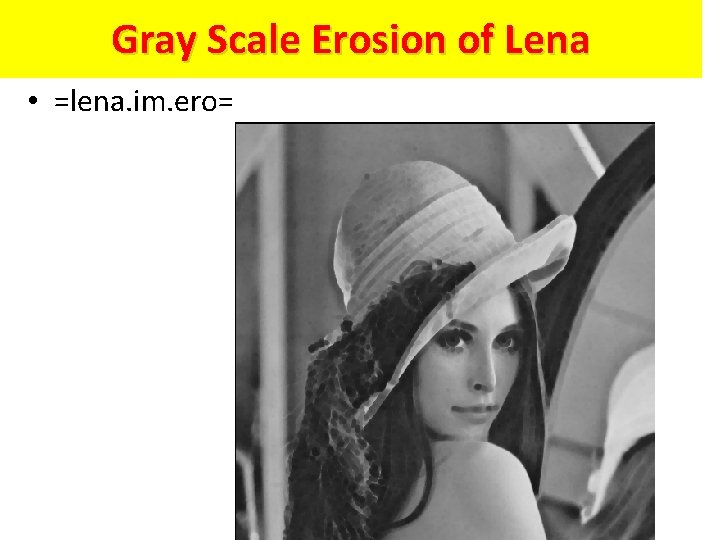
Gray Scale Erosion of Lena • =lena. im. ero=
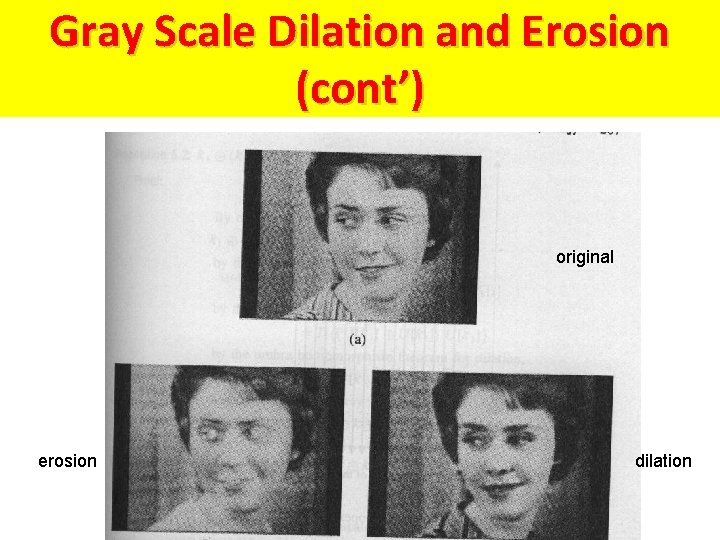
Gray Scale Dilation and Erosion (cont’) original erosion dilation
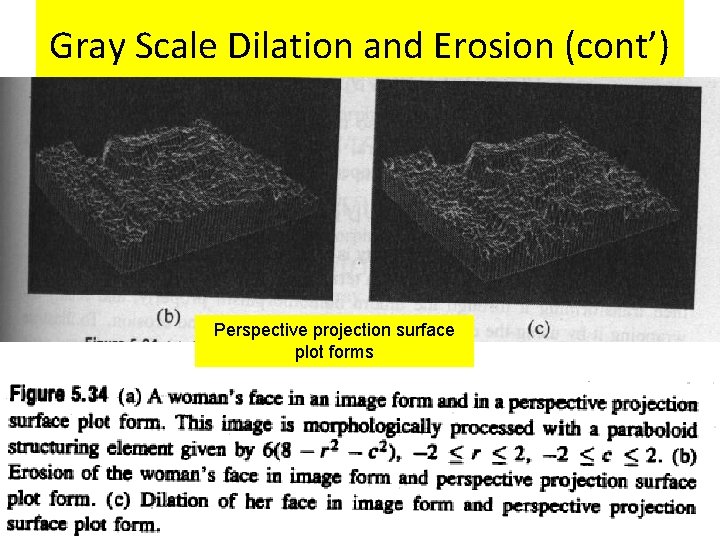
Gray Scale Dilation and Erosion (cont’) Perspective projection surface plot forms
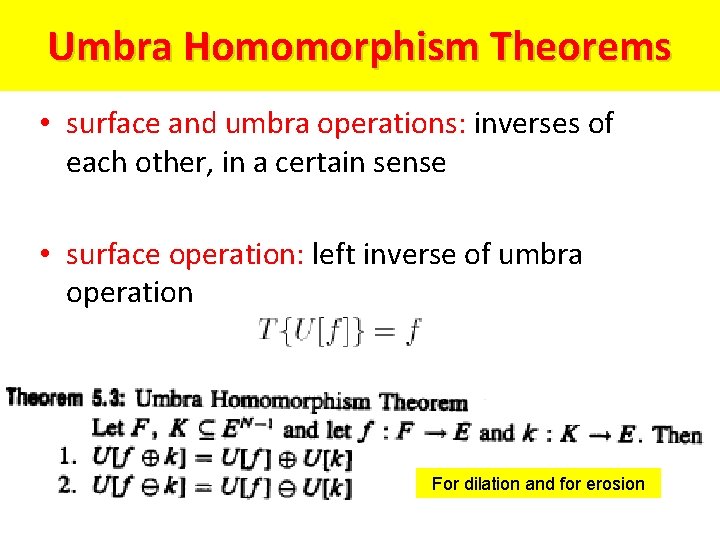
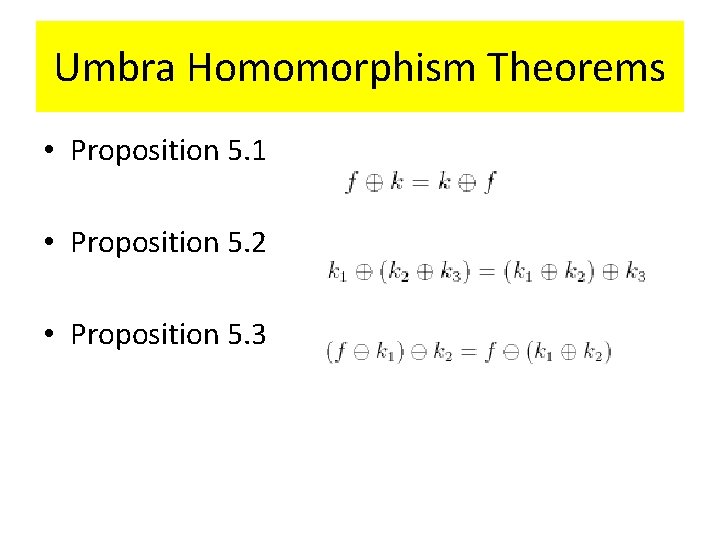
Umbra Homomorphism Theorems • surface and umbra operations: inverses of each other, in a certain sense • surface operation: left inverse of umbra operation For dilation and for erosion
Umbra Homomorphism Theorems • Proposition 5. 1 • Proposition 5. 2 • Proposition 5. 3
Gray Scale Opening and Closing
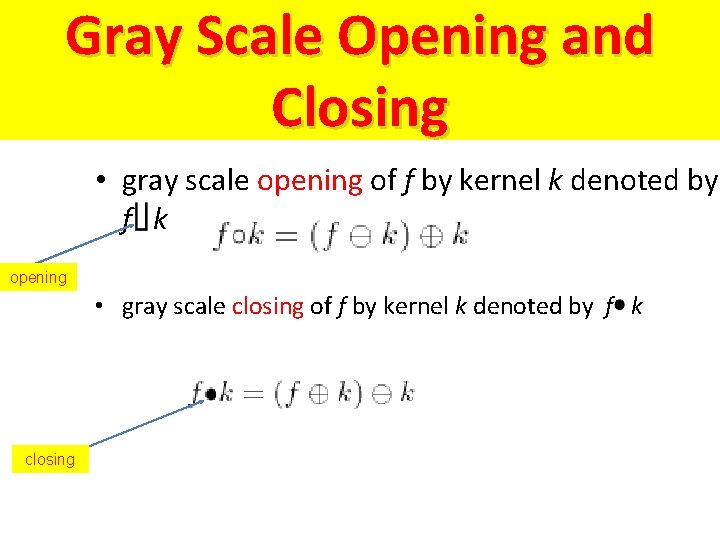
Gray Scale Opening and Closing • gray scale opening of f by kernel k denoted by f k opening • gray scale closing of f by kernel k denoted by f k closing
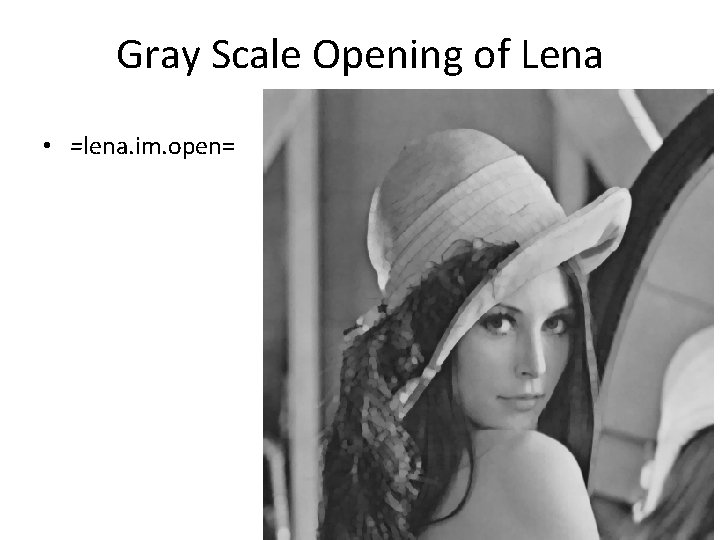
Gray Scale Opening of Lena • =lena. im. open=
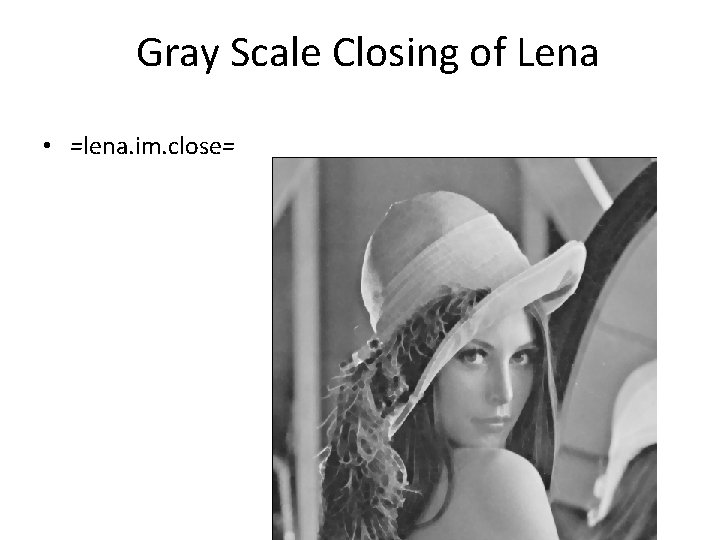
Gray Scale Closing of Lena • =lena. im. close=
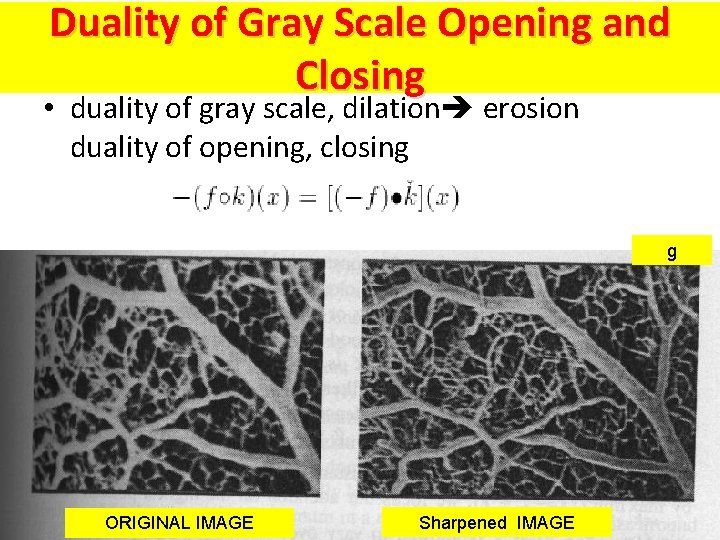
Duality of Gray Scale Opening and Closing • duality of gray scale, dilation erosion duality of opening, closing g ORIGINAL IMAGE Sharpened IMAGE
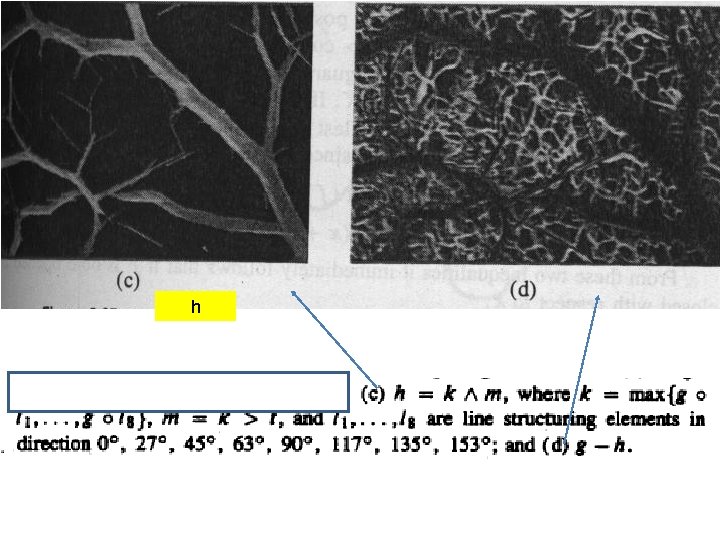
h
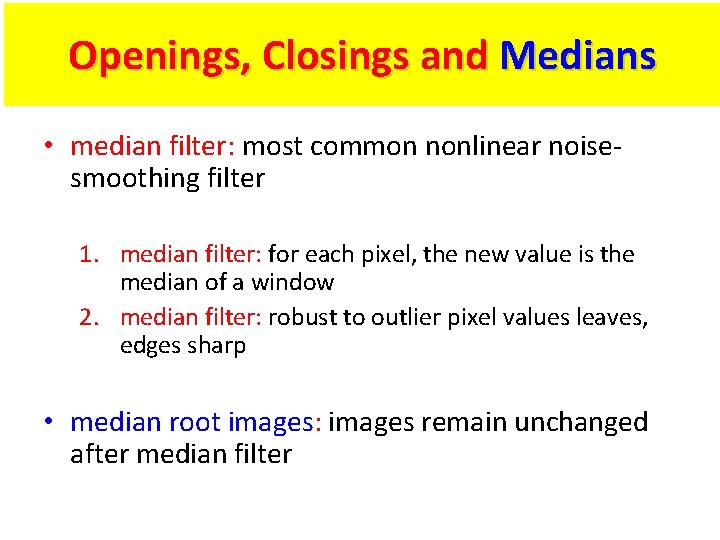
Openings, Closings and Medians • median filter: most common nonlinear noisesmoothing filter 1. median filter: for each pixel, the new value is the median of a window 2. median filter: robust to outlier pixel values leaves, edges sharp • median root images: images remain unchanged after median filter
Discuss hardware design of median filter and sorting
Gray Scale Opening
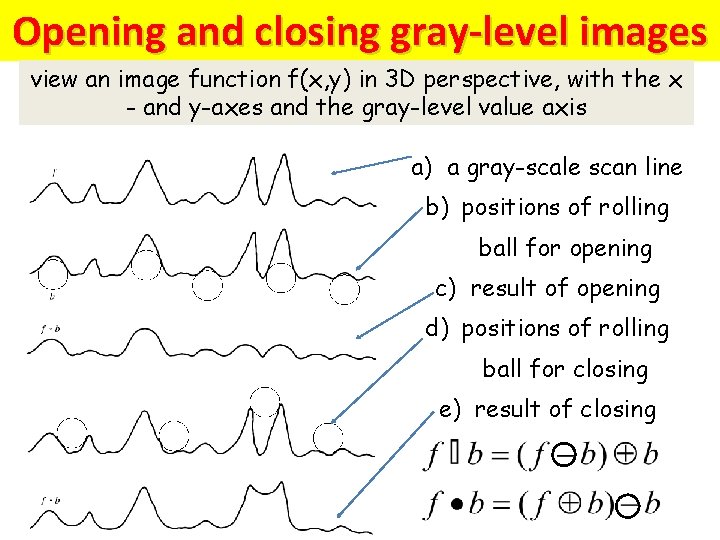
Opening and closing gray-level images view an image function f(x, y) in 3 D perspective, with the x - and y-axes and the gray-level value axis a) a gray-scale scan line b) positions of rolling ball for opening c) result of opening d) positions of rolling ball for closing e) result of closing
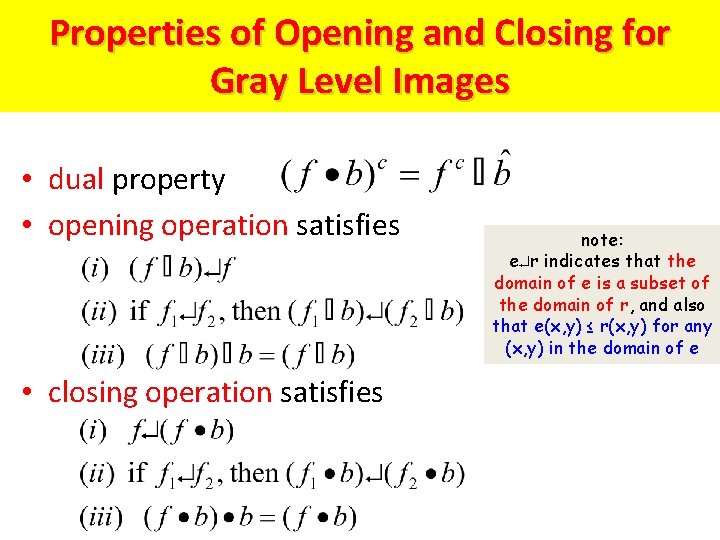
Properties of Opening and Closing for Gray Level Images • dual property • opening operation satisfies • closing operation satisfies note: e r indicates that the domain of e is a subset of the domain of r, and also that e(x, y) ≤ r(x, y) for any (x, y) in the domain of e
Effects of opening 1. the structuring element is rolled underside the surface of f 2. all the peaks that are narrow with respect to the diameter of the structuring element will be reduced in amplitude and sharpness 3. so, opening is used to remove small light details, • while leaving the overall gray levels and larger bright features relatively undisturbed. 4. the initial erosion removes the details, but it also darkens the image. 5. the subsequent dilation again increases the overall intensity of the image without reintroducing the details totally removed by erosion
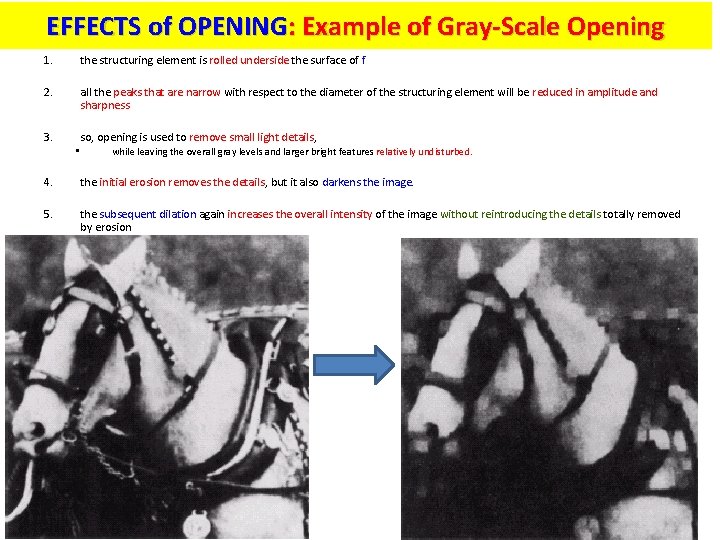
EFFECTS of OPENING: Example of Gray-Scale Opening 1. the structuring element is rolled underside the surface of f 2. all the peaks that are narrow with respect to the diameter of the structuring element will be reduced in amplitude and sharpness 3. so, opening is used to remove small light details, • while leaving the overall gray levels and larger bright features relatively undisturbed. 4. the initial erosion removes the details, but it also darkens the image. 5. the subsequent dilation again increases the overall intensity of the image without reintroducing the details totally removed by erosion
Gray Scale Closing
Effect of closing
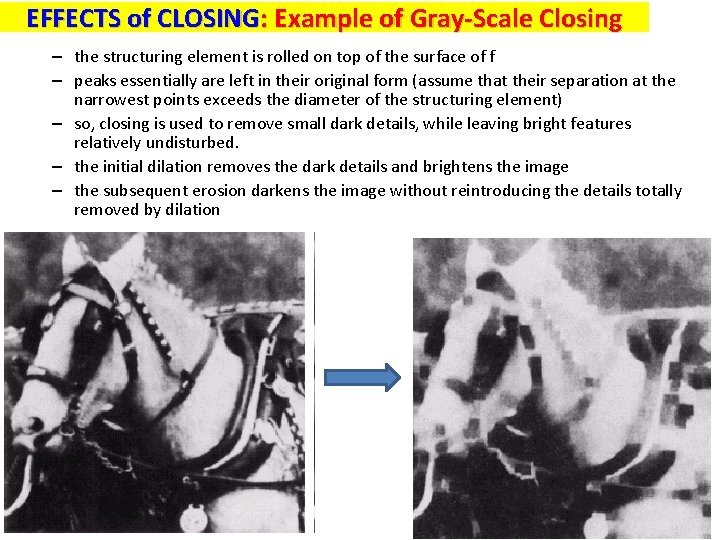
EFFECTS of CLOSING: Example of Gray-Scale Closing – the structuring element is rolled on top of the surface of f – peaks essentially are left in their original form (assume that their separation at the narrowest points exceeds the diameter of the structuring element) – so, closing is used to remove small dark details, while leaving bright features relatively undisturbed. – the initial dilation removes the dark details and brightens the image – the subsequent erosion darkens the image without reintroducing the details totally removed by dilation
Some Applications of Gray-scale Morphology • • • Morphological smoothing Morphological gradient Top-hat transformation Textural segmentation Granulometry • Note: the examples shown in this topic are of size 512 x 512 and processed by using the structuring element in the shape of parallelepiped of unit height and size 5 x 5 pixels
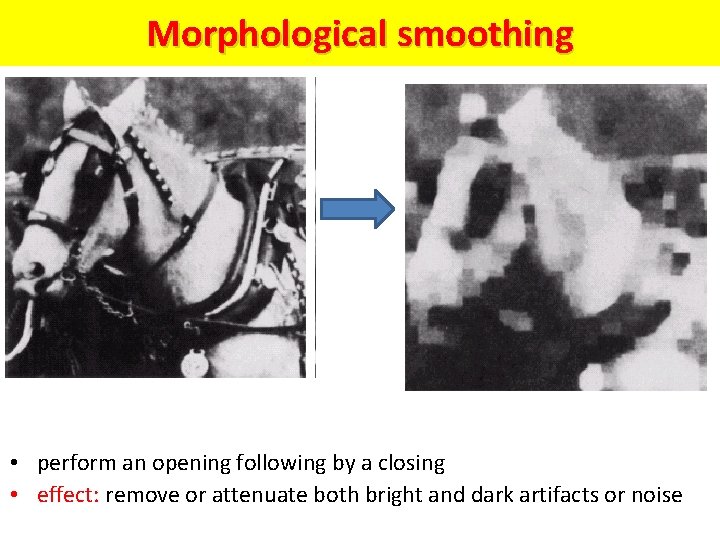
Gray Scale Morphological smoothing
Morphological smoothing • perform an opening following by a closing • effect: remove or attenuate both bright and dark artifacts or noise
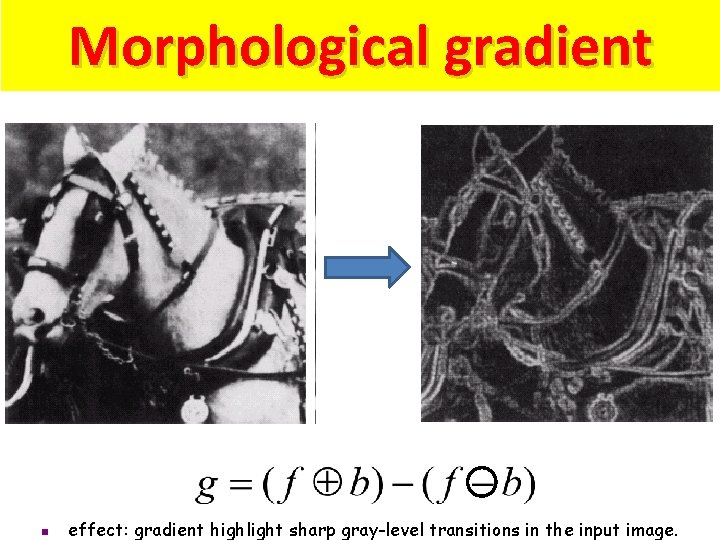
Morphological gradient n effect: gradient highlight sharp gray-level transitions in the input image.
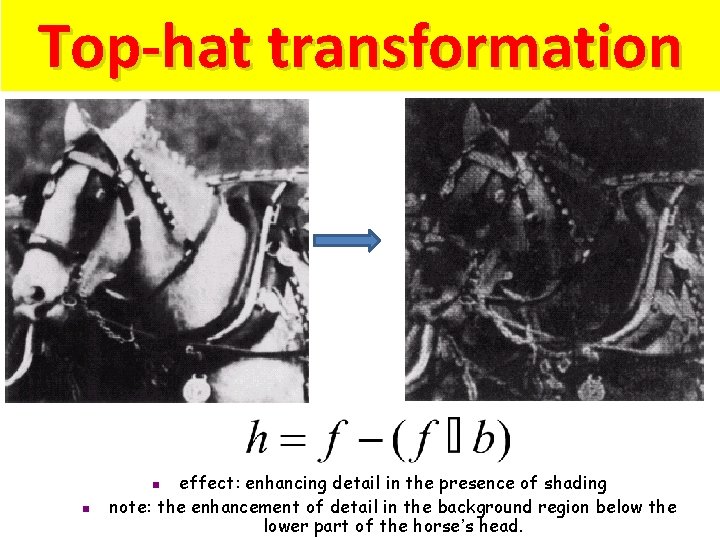
Top-hat transformation effect: enhancing detail in the presence of shading note: the enhancement of detail in the background region below the lower part of the horse’s head. n n
Textural segmentation
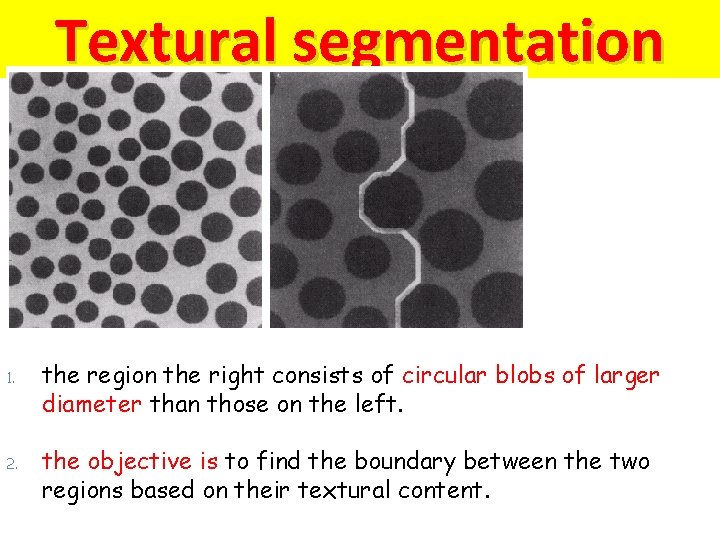
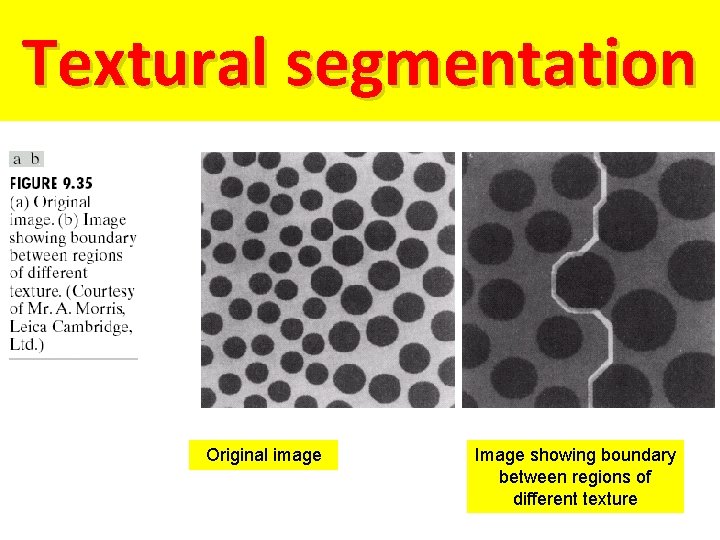
Textural segmentation 1. 2. the region the right consists of circular blobs of larger diameter than those on the left. the objective is to find the boundary between the two regions based on their textural content.
Textural segmentation Original image Image showing boundary between regions of different texture
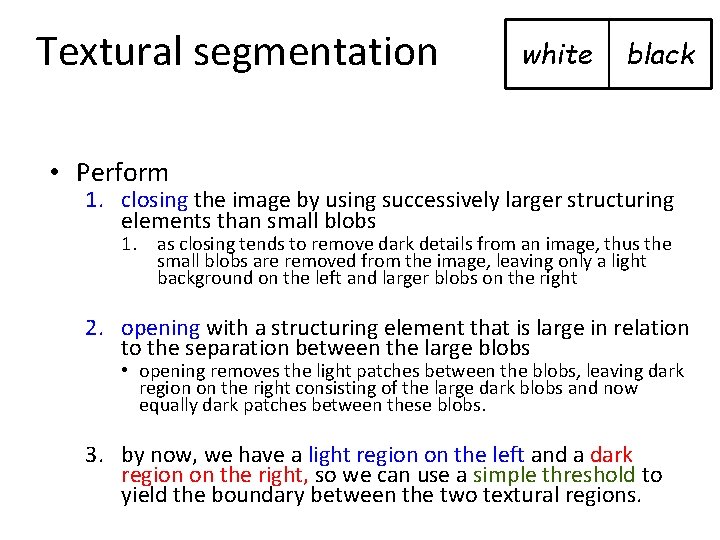
Textural segmentation white black • Perform 1. closing the image by using successively larger structuring elements than small blobs 1. as closing tends to remove dark details from an image, thus the small blobs are removed from the image, leaving only a light background on the left and larger blobs on the right 2. opening with a structuring element that is large in relation to the separation between the large blobs • opening removes the light patches between the blobs, leaving dark region on the right consisting of the large dark blobs and now equally dark patches between these blobs. 3. by now, we have a light region on the left and a dark region on the right, so we can use a simple threshold to yield the boundary between the two textural regions.
Gray Scale Granulometry
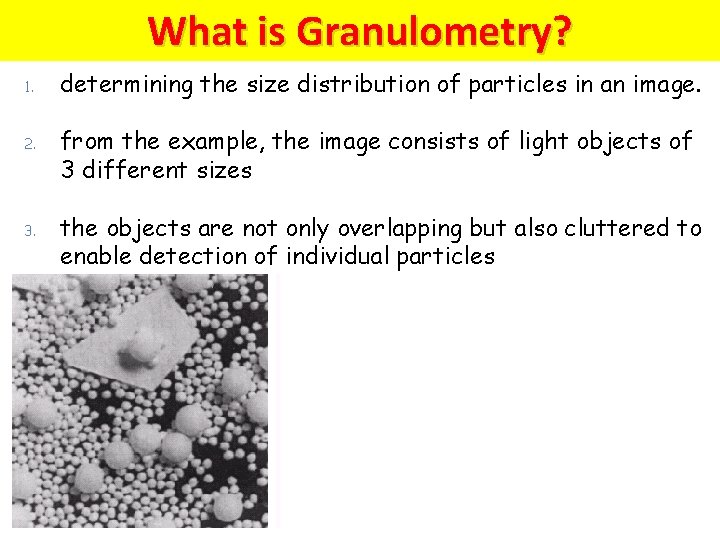
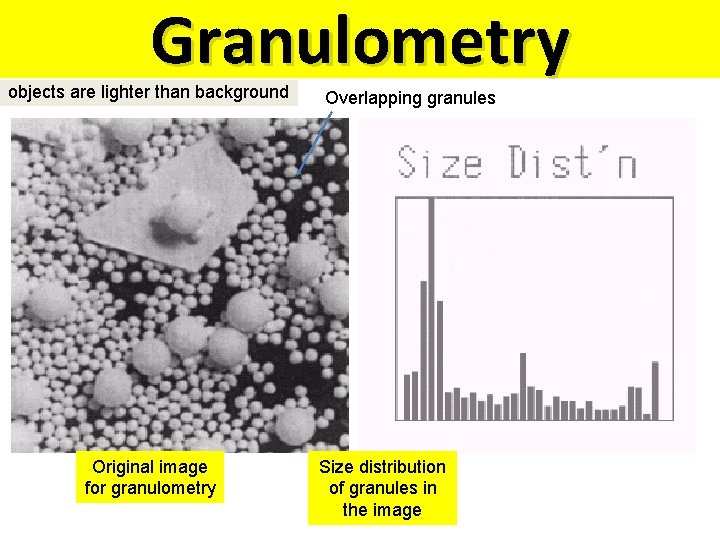
What is Granulometry? 1. 2. 3. determining the size distribution of particles in an image. from the example, the image consists of light objects of 3 different sizes the objects are not only overlapping but also cluttered to enable detection of individual particles
Granulometry objects are lighter than background Original image for granulometry Overlapping granules Size distribution of granules in the image
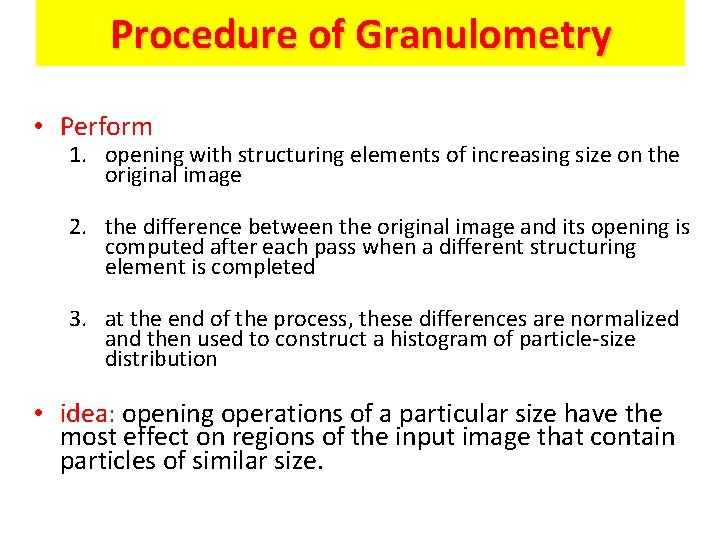
Procedure of Granulometry • Perform 1. opening with structuring elements of increasing size on the original image 2. the difference between the original image and its opening is computed after each pass when a different structuring element is completed 3. at the end of the process, these differences are normalized and then used to construct a histogram of particle-size distribution • idea: opening operations of a particular size have the most effect on regions of the input image that contain particles of similar size.
Sources 1. 傅楸善 & 王林農 2. r 94922081@ntu. edu. tw 3. Morris