
Gray Matter White Matter Gyri Lobes Gray matter
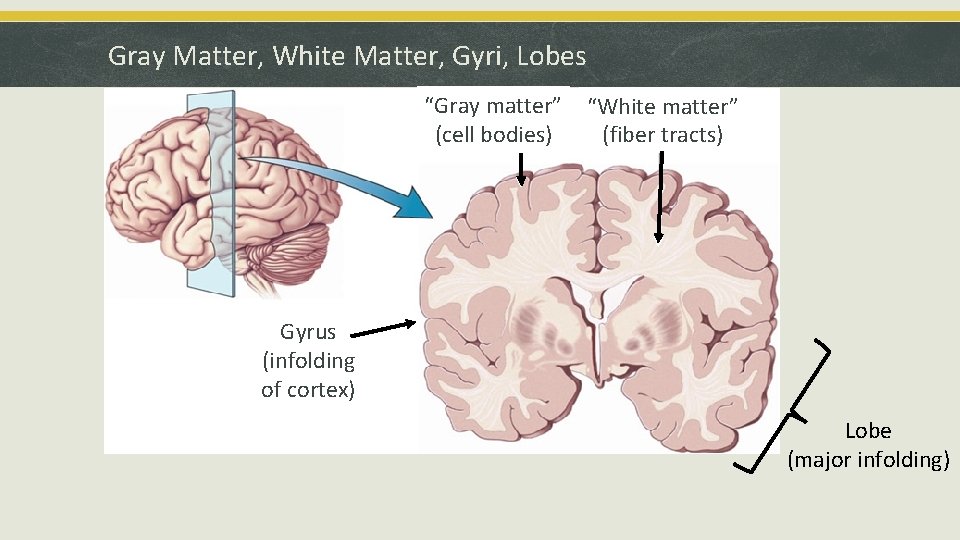
Gray Matter, White Matter, Gyri, Lobes “Gray matter” (cell bodies) “White matter” (fiber tracts) Gyrus (infolding of cortex) Lobe (major infolding)
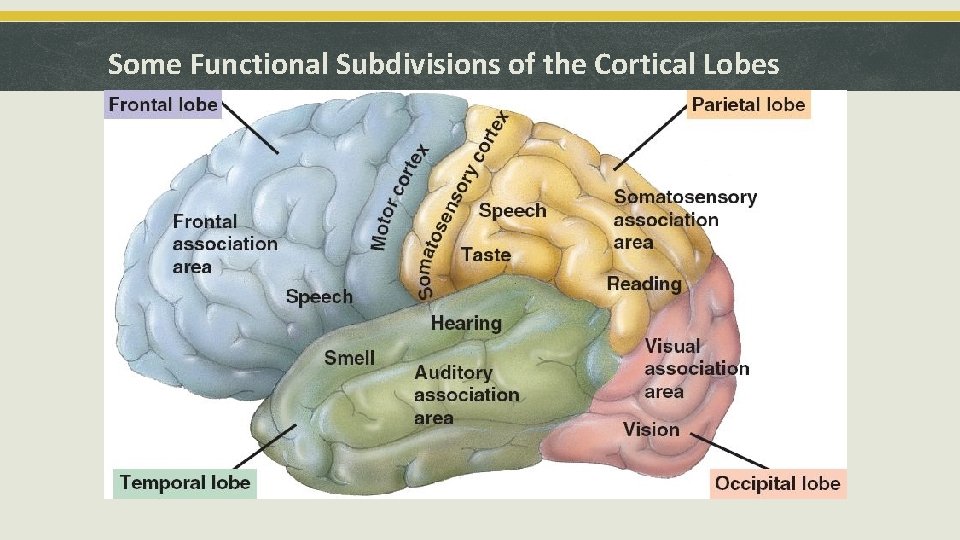
Some Functional Subdivisions of the Cortical Lobes
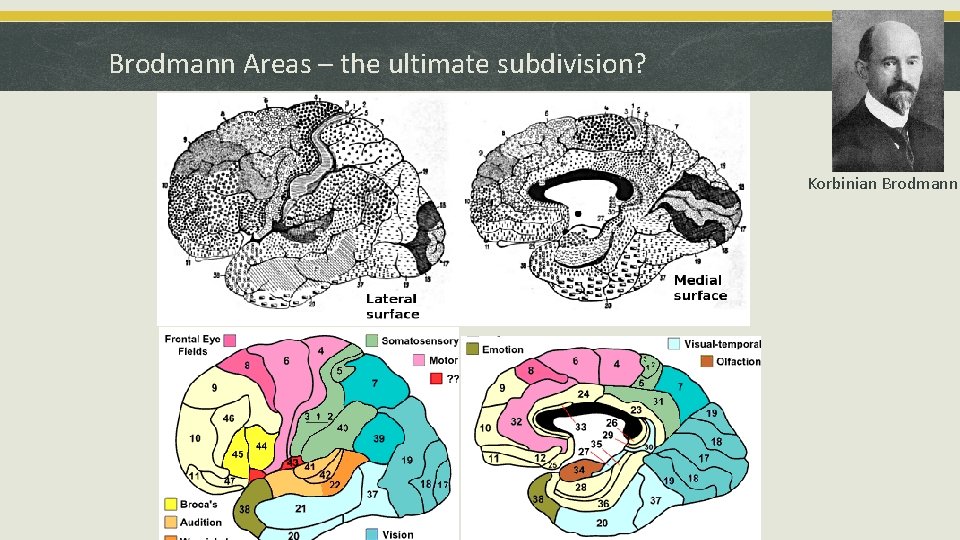
Brodmann Areas – the ultimate subdivision? Korbinian Brodmann
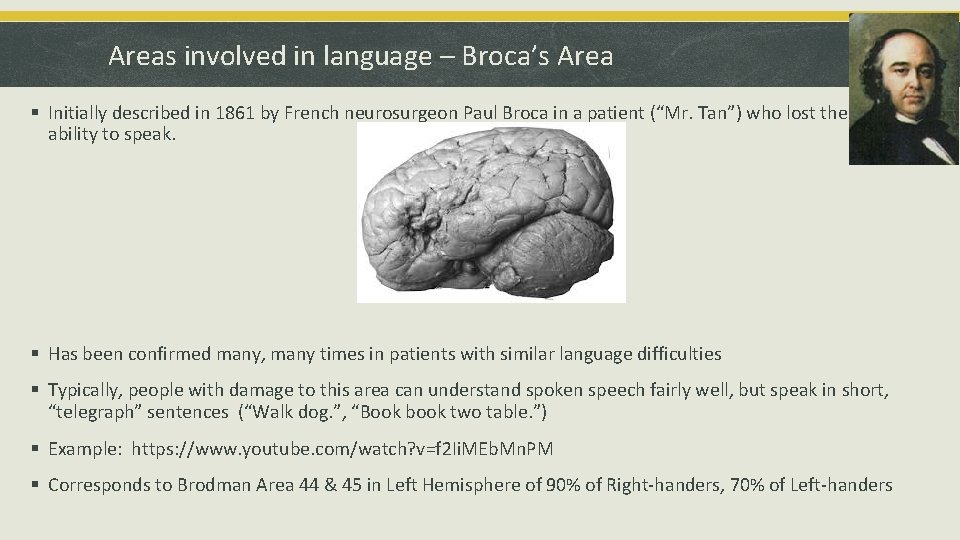
Areas involved in language – Broca’s Area § Initially described in 1861 by French neurosurgeon Paul Broca in a patient (“Mr. Tan”) who lost the ability to speak. § Has been confirmed many, many times in patients with similar language difficulties § Typically, people with damage to this area can understand spoken speech fairly well, but speak in short, “telegraph” sentences (“Walk dog. ”, “Book book two table. ”) § Example: https: //www. youtube. com/watch? v=f 2 Ii. MEb. Mn. PM § Corresponds to Brodman Area 44 & 45 in Left Hemisphere of 90% of Right-handers, 70% of Left-handers
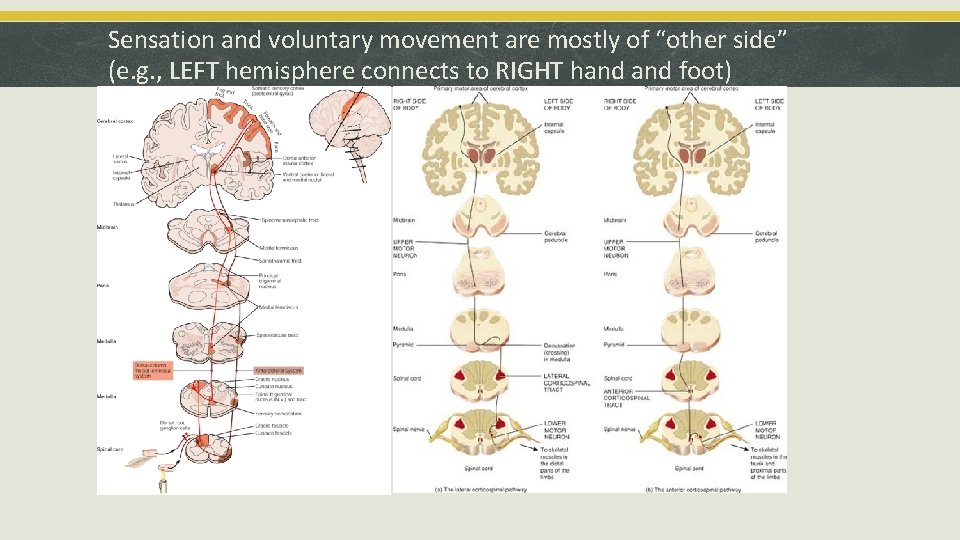
Sensation and voluntary movement are mostly of “other side” (e. g. , LEFT hemisphere connects to RIGHT hand foot)
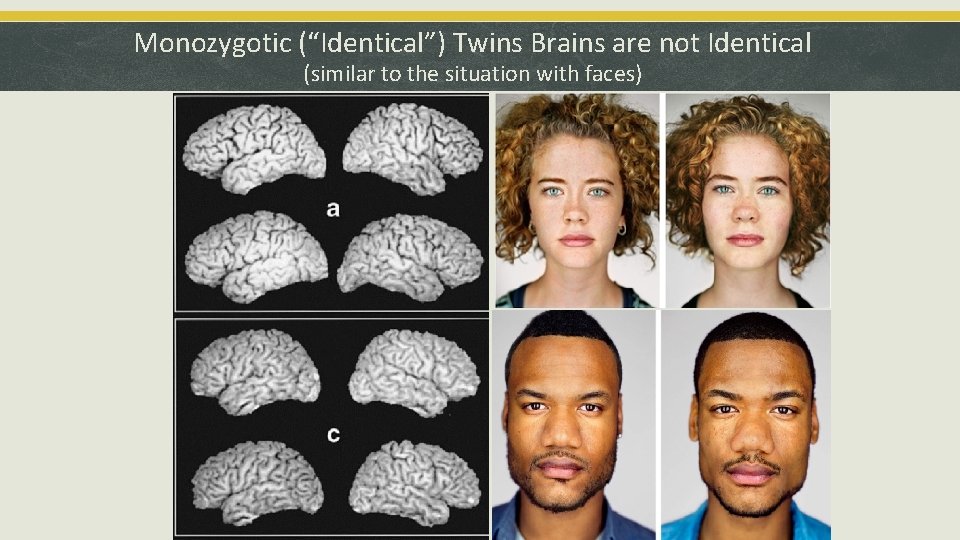
Monozygotic (“Identical”) Twins Brains are not Identical (similar to the situation with faces)
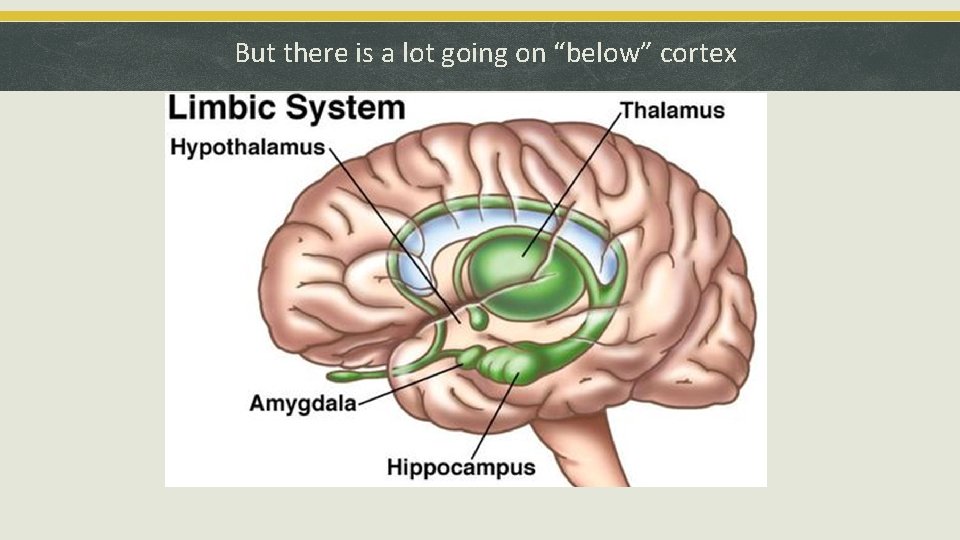
But there is a lot going on “below” cortex
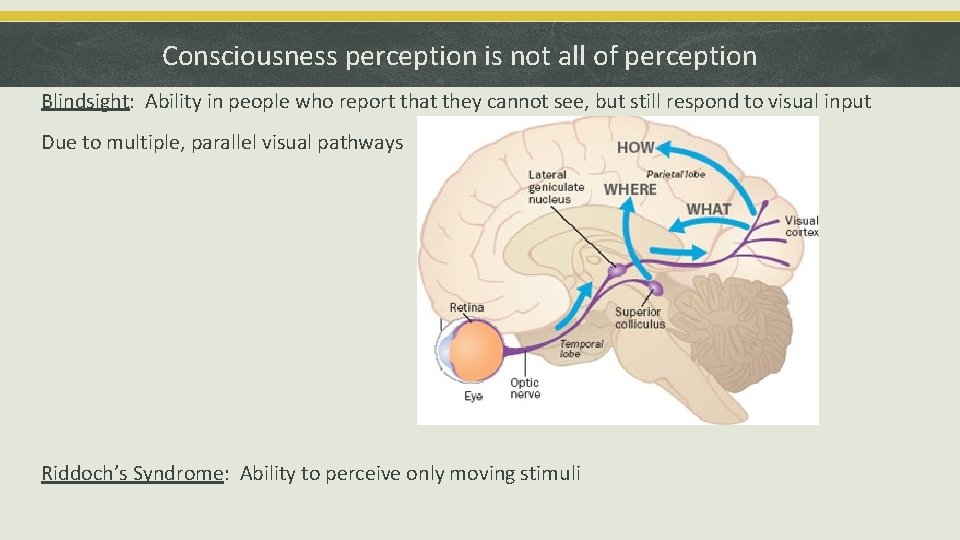
Consciousness perception is not all of perception Blindsight: Ability in people who report that they cannot see, but still respond to visual input Due to multiple, parallel visual pathways Riddoch’s Syndrome: Ability to perceive only moving stimuli
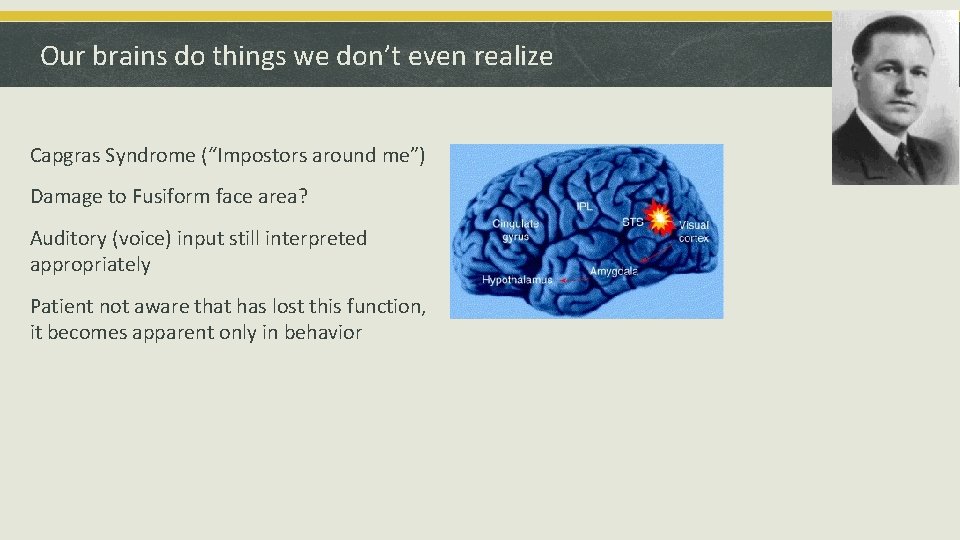
Our brains do things we don’t even realize Capgras Syndrome (“Impostors around me”) Damage to Fusiform face area? Auditory (voice) input still interpreted appropriately Patient not aware that has lost this function, it becomes apparent only in behavior
Basic anatomy and function of selected brain structures – Comments §The brain is part of your body, an organ like your heart or lungs. §With rare exceptions, all human brains have the same overall features, but each brain is unique due to genetics, environment, experience. §Different brain areas serve different functions, but there is a lot of “crosstalk” and “hierarchical processing” and functions are “distributed”. §Much of what goes on in our brains is “subconscious” §Our brains are constantly changing in response to environment and use
- Slides: 10