
GRAVITY THE MOON SIR ISAAC NEWTON THE UNIVERSAL

- Slides: 18
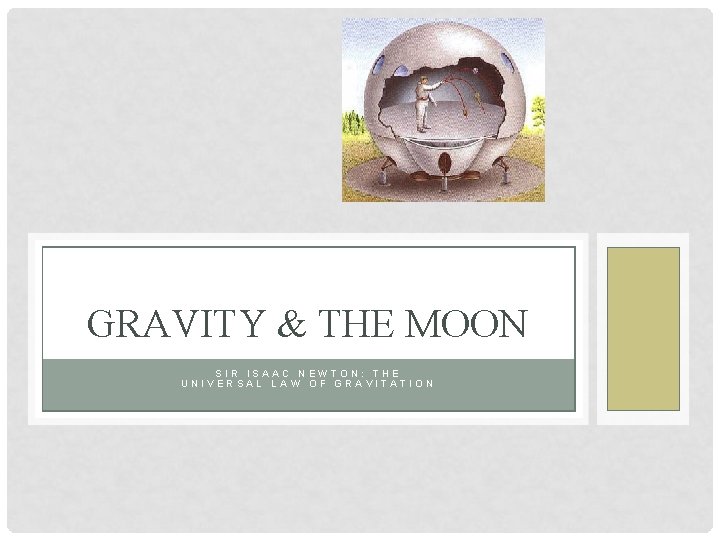
GRAVITY & THE MOON SIR ISAAC NEWTON: THE UNIVERSAL LAW OF GRAVITATION
THE FALLING APPLE • Newton reasoned the moon is falling for the same reason the apple falls – they are both pulled by the Earth’s gravity.
THE FALLING MOON • The Moon orbits around the Earth and is actually falling towards the Earth but has great enough velocity to avoid hitting it.
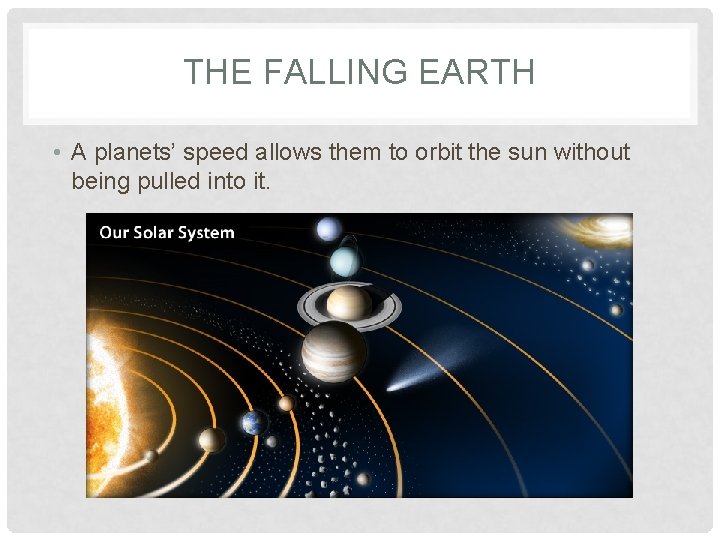
THE FALLING EARTH • A planets’ speed allows them to orbit the sun without being pulled into it.
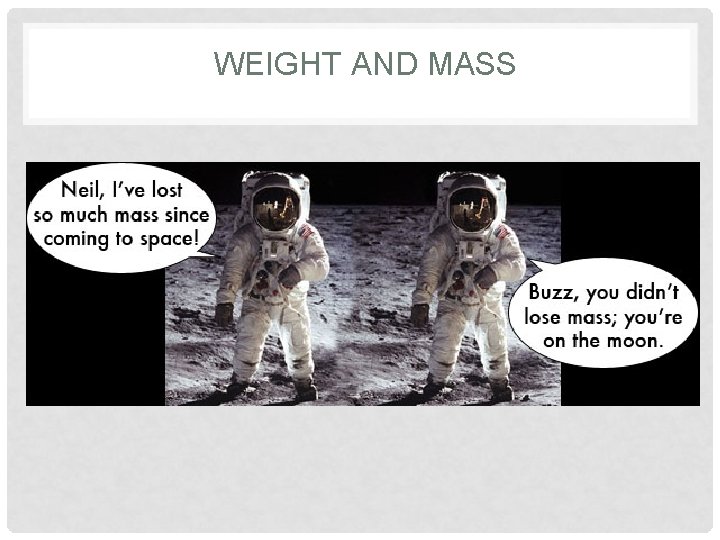
WEIGHT AND MASS
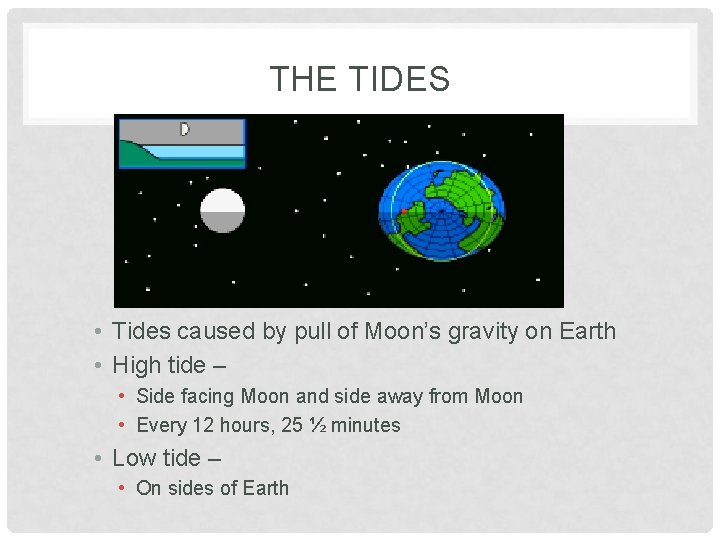
THE TIDES • Tides caused by pull of Moon’s gravity on Earth • High tide – • Side facing Moon and side away from Moon • Every 12 hours, 25 ½ minutes • Low tide – • On sides of Earth
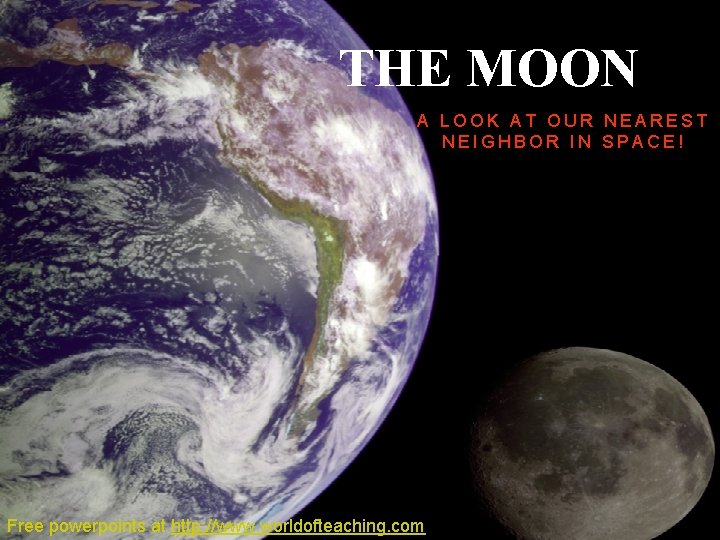
THE MOON A LOOK AT OUR NEAREST NEIGHBOR IN SPACE! Free powerpoints at http: //www. worldofteaching. com
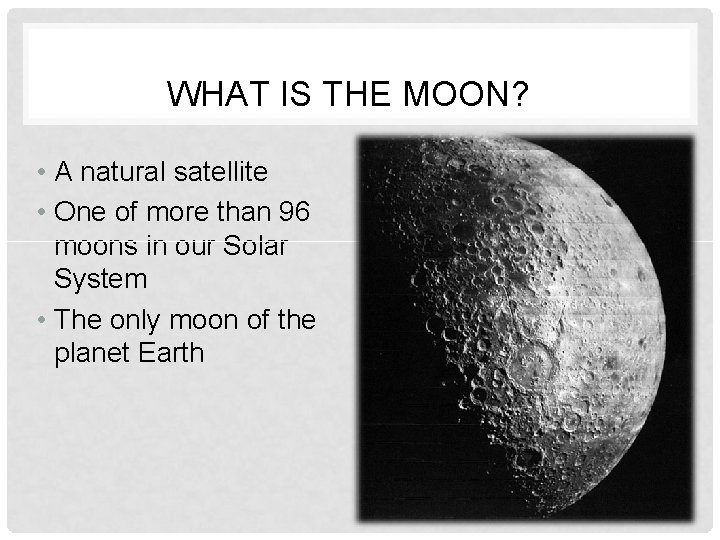
WHAT IS THE MOON? • A natural satellite • One of more than 96 moons in our Solar System • The only moon of the planet Earth
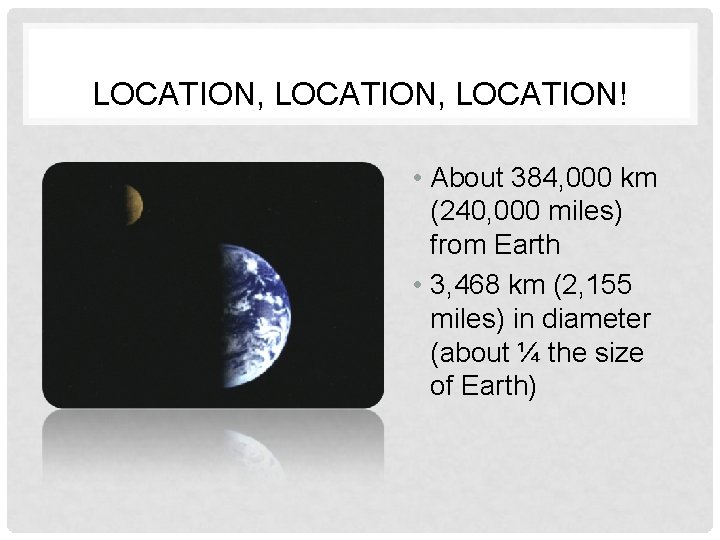
LOCATION, LOCATION! • About 384, 000 km (240, 000 miles) from Earth • 3, 468 km (2, 155 miles) in diameter (about ¼ the size of Earth)
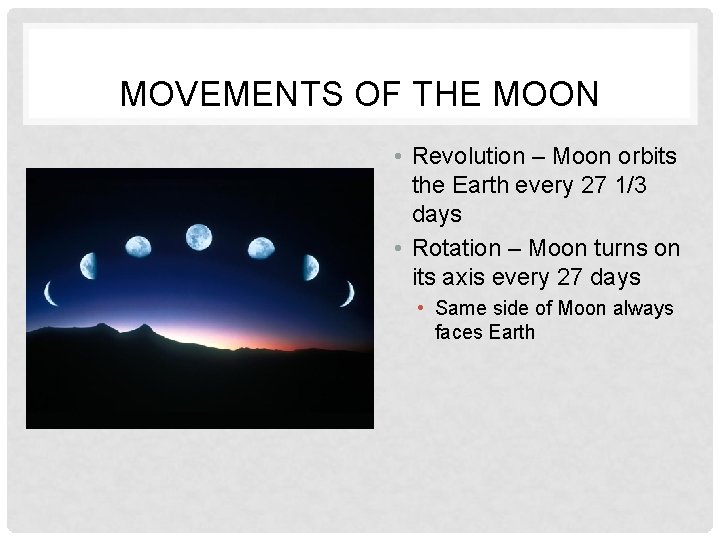
MOVEMENTS OF THE MOON • Revolution – Moon orbits the Earth every 27 1/3 days • Rotation – Moon turns on its axis every 27 days • Same side of Moon always faces Earth
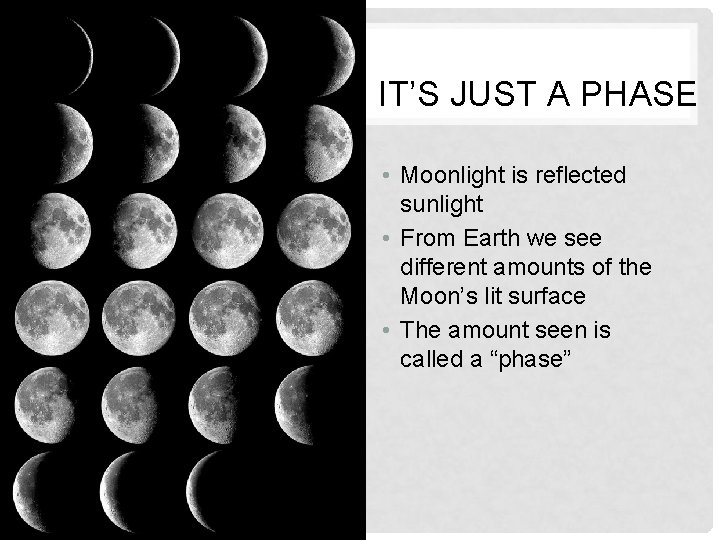
IT’S JUST A PHASE • Moonlight is reflected sunlight • From Earth we see different amounts of the Moon’s lit surface • The amount seen is called a “phase”
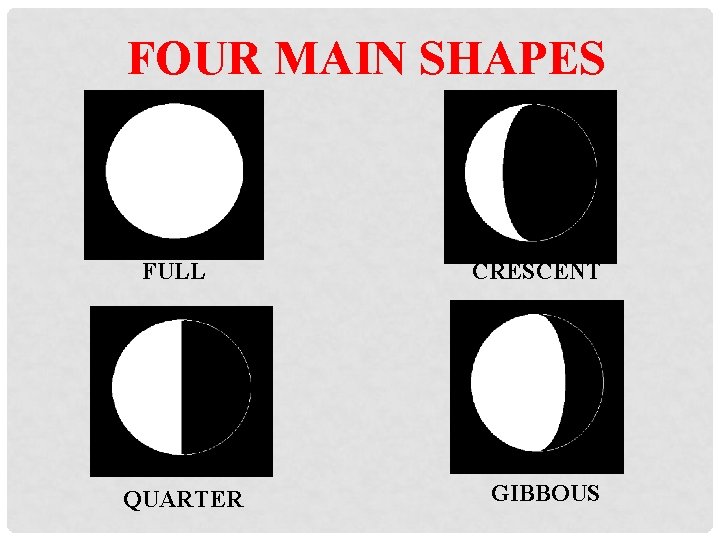
FOUR MAIN SHAPES FULL QUARTER CRESCENT GIBBOUS
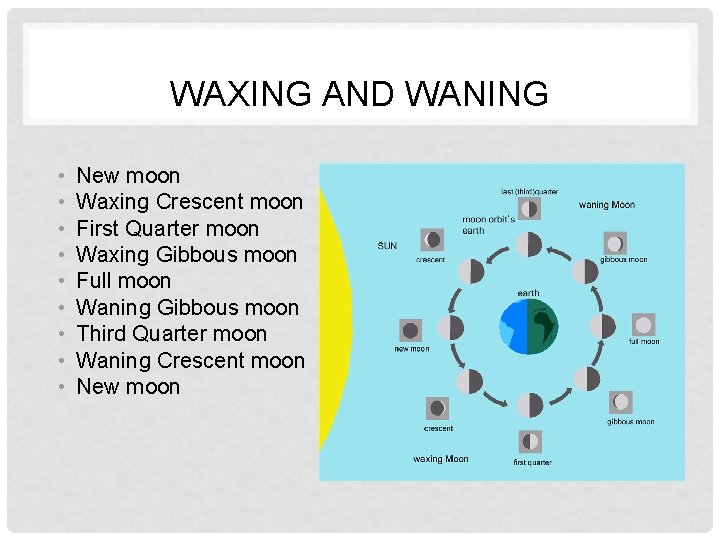
WAXING AND WANING • • • New moon Waxing Crescent moon First Quarter moon Waxing Gibbous moon Full moon Waning Gibbous moon Third Quarter moon Waning Crescent moon New moon
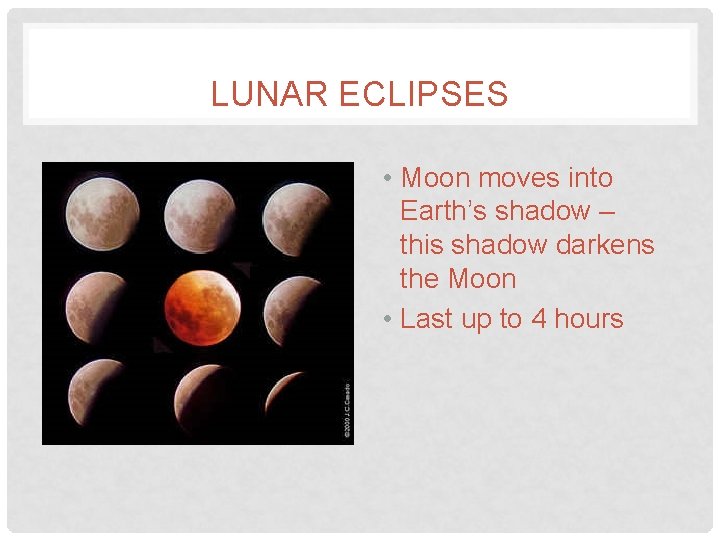
LUNAR ECLIPSES • Moon moves into Earth’s shadow – this shadow darkens the Moon • Last up to 4 hours
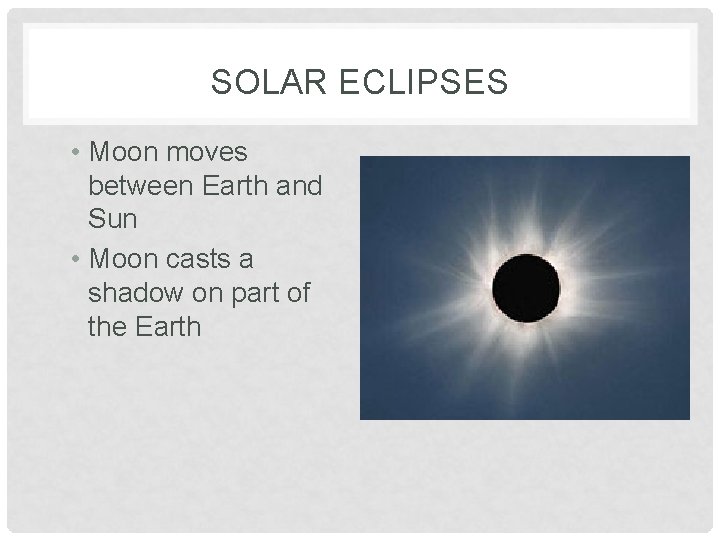
SOLAR ECLIPSES • Moon moves between Earth and Sun • Moon casts a shadow on part of the Earth
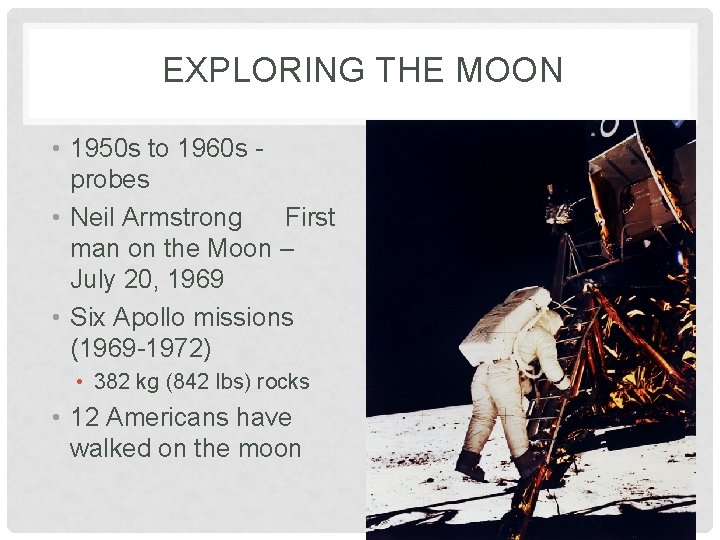
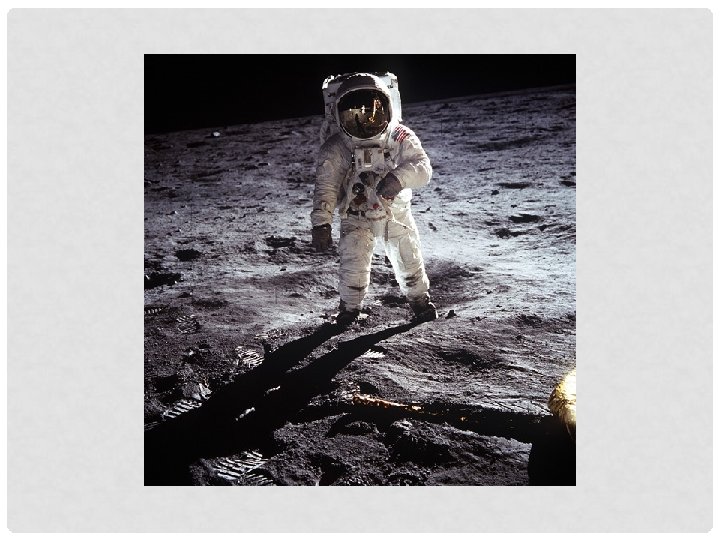
EXPLORING THE MOON • 1950 s to 1960 s probes • Neil Armstrong First man on the Moon – July 20, 1969 • Six Apollo missions (1969 -1972) • 382 kg (842 lbs) rocks • 12 Americans have walked on the moon
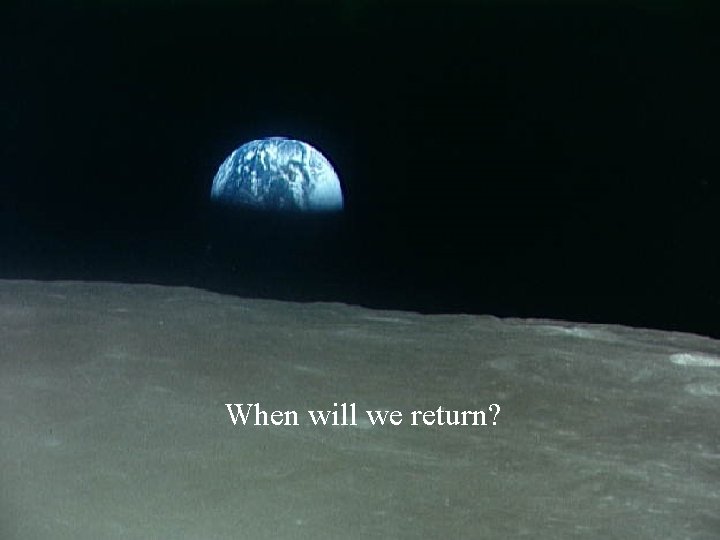
When will we return?