
GRAVITY PROBE B Examining Einsteins Spacetime with Gyroscopes
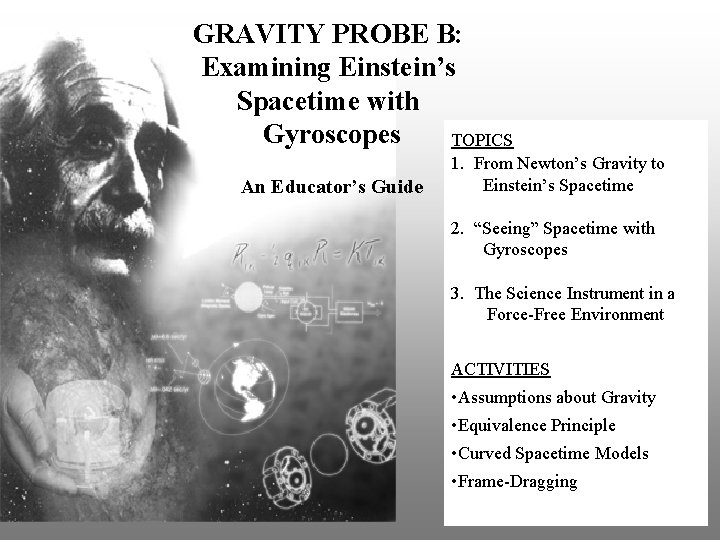
GRAVITY PROBE B: Examining Einstein’s Spacetime with Gyroscopes TOPICS An Educator’s Guide 1. From Newton’s Gravity to Einstein’s Spacetime 2. “Seeing” Spacetime with Gyroscopes 3. The Science Instrument in a Force-Free Environment ACTIVITIES • Assumptions about Gravity • Equivalence Principle • Curved Spacetime Models • Frame-Dragging
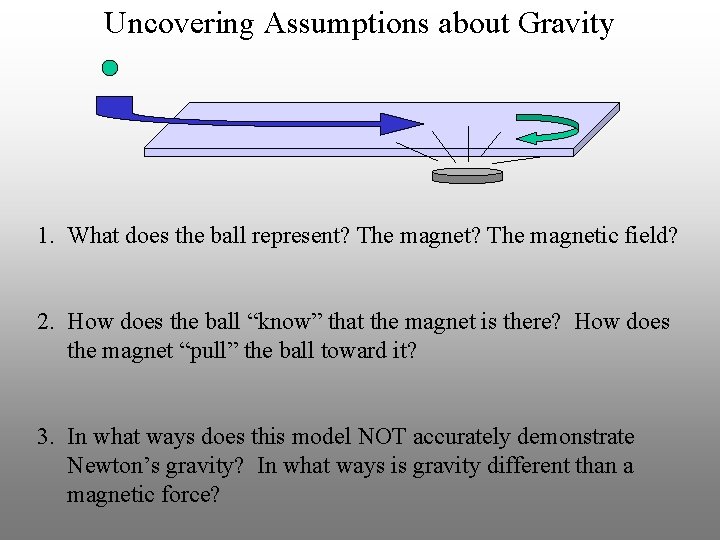
Uncovering Assumptions about Gravity 1. What does the ball represent? The magnetic field? 2. How does the ball “know” that the magnet is there? How does the magnet “pull” the ball toward it? 3. In what ways does this model NOT accurately demonstrate Newton’s gravity? In what ways is gravity different than a magnetic force?
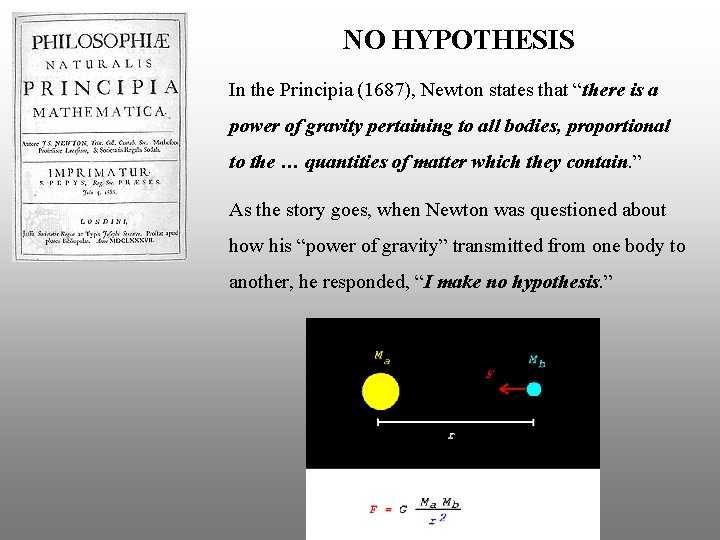
NO HYPOTHESIS In the Principia (1687), Newton states that “there is a power of gravity pertaining to all bodies, proportional to the … quantities of matter which they contain. ” As the story goes, when Newton was questioned about how his “power of gravity” transmitted from one body to another, he responded, “I make no hypothesis. ”
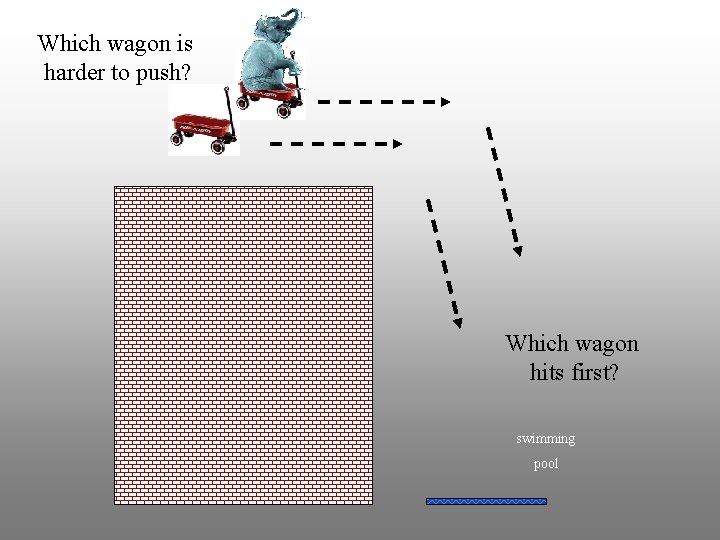
Which wagon is harder to push? Which wagon hits first? swimming pool
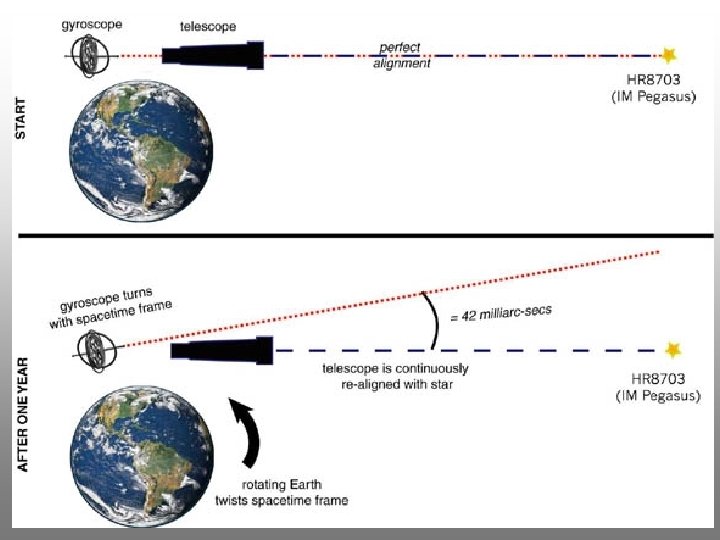
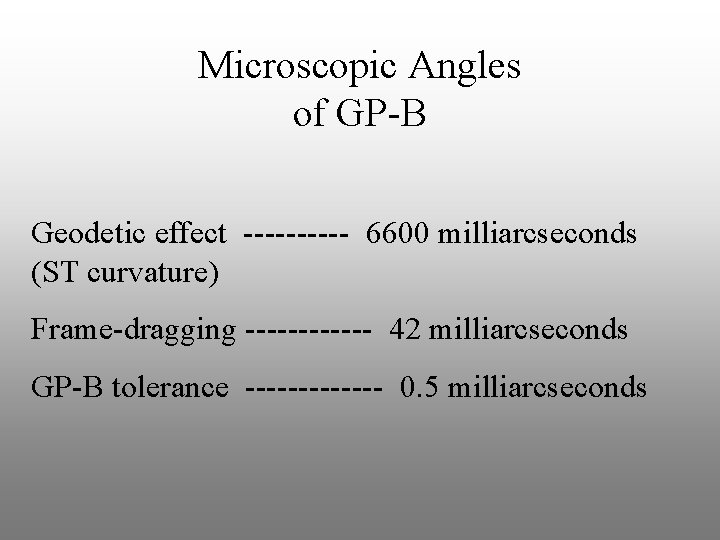
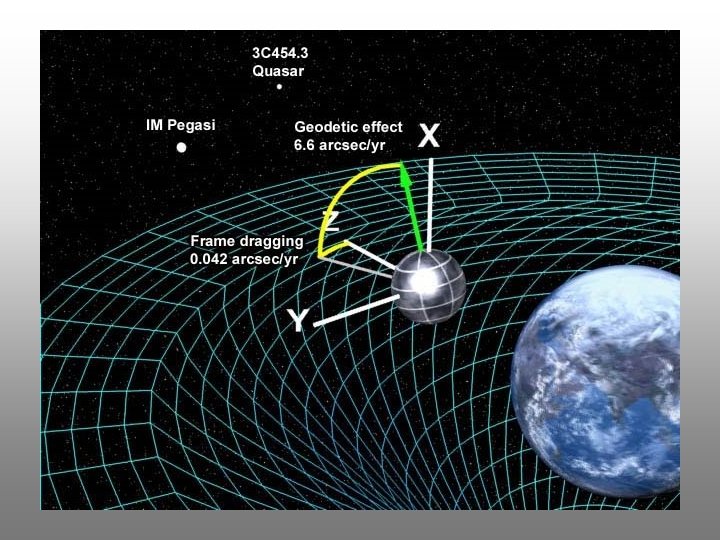
Microscopic Angles of GP-B Geodetic effect ----- 6600 milliarcseconds (ST curvature) Frame-dragging ------ 42 milliarcseconds GP-B tolerance ------- 0. 5 milliarcseconds
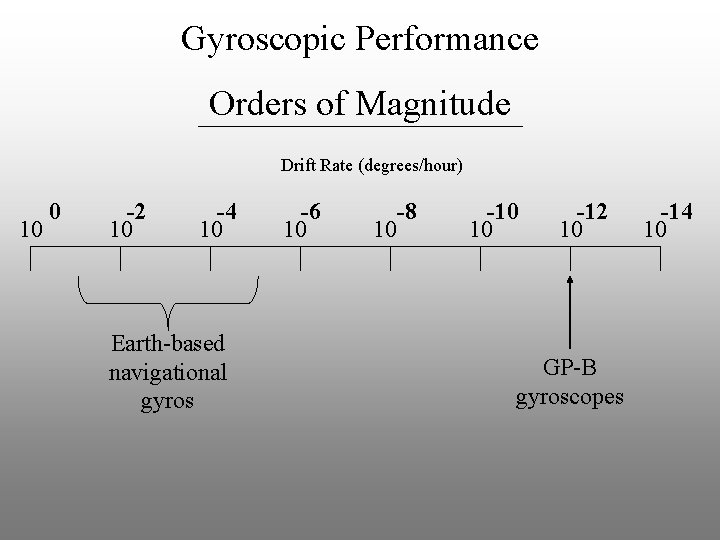
Gyroscopic Performance Orders of Magnitude Drift Rate (degrees/hour) 10 0 -2 10 -4 10 Earth-based navigational gyros -6 10 10 -8 -10 10 -12 10 GP-B gyroscopes -14 10
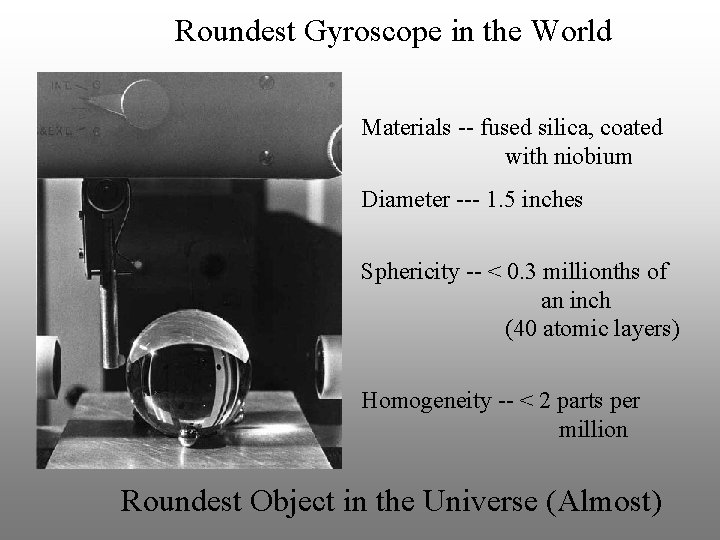
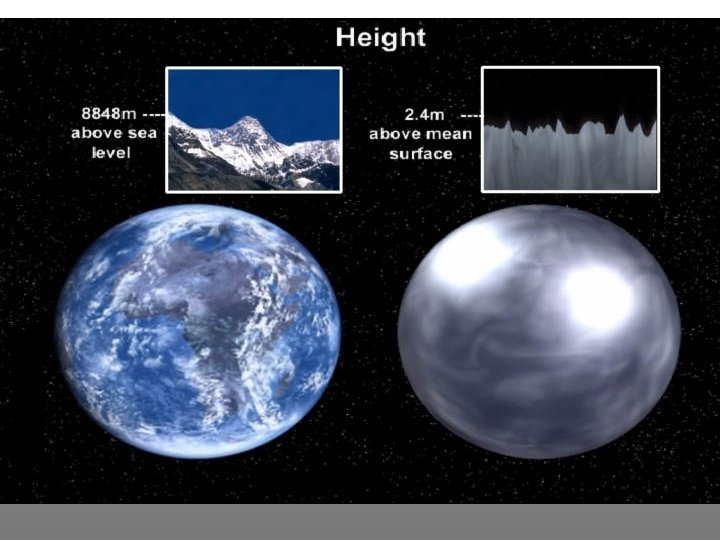
Roundest Gyroscope in the World Materials -- fused silica, coated with niobium Diameter --- 1. 5 inches Sphericity -- < 0. 3 millionths of an inch (40 atomic layers) Homogeneity -- < 2 parts per million Roundest Object in the Universe (Almost)
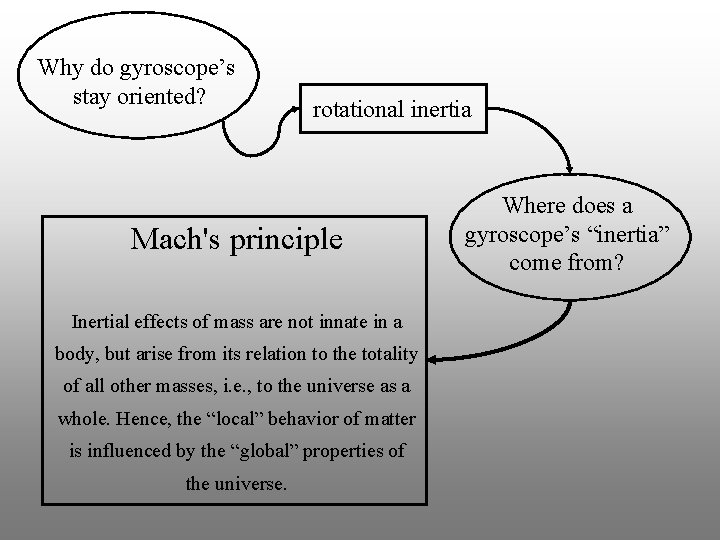
Why do gyroscope’s stay oriented? rotational inertia Mach's principle Inertial effects of mass are not innate in a body, but arise from its relation to the totality of all other masses, i. e. , to the universe as a whole. Hence, the “local” behavior of matter is influenced by the “global” properties of the universe. Where does a gyroscope’s “inertia” come from?
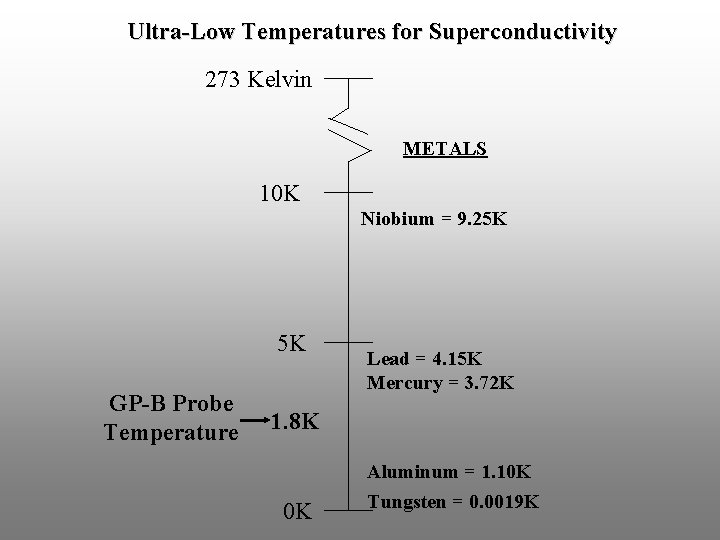
Ultra-Low Temperatures for Superconductivity 273 Kelvin METALS 10 K Niobium = 9. 25 K 5 K GP-B Probe Temperature Lead = 4. 15 K Mercury = 3. 72 K 1. 8 K 0 K Aluminum = 1. 10 K Tungsten = 0. 0019 K
- Slides: 16