
Gravity Gradient Boom Sponsor John Hines In Collaboration
Gravity Gradient Boom Sponsor: John Hines In Collaboration with: Design Team: Arthur Inglot, Jack Rafalowski, Gene Rossov, Steve Souza, Jason Stricker Advisor: Gregory Kowalski
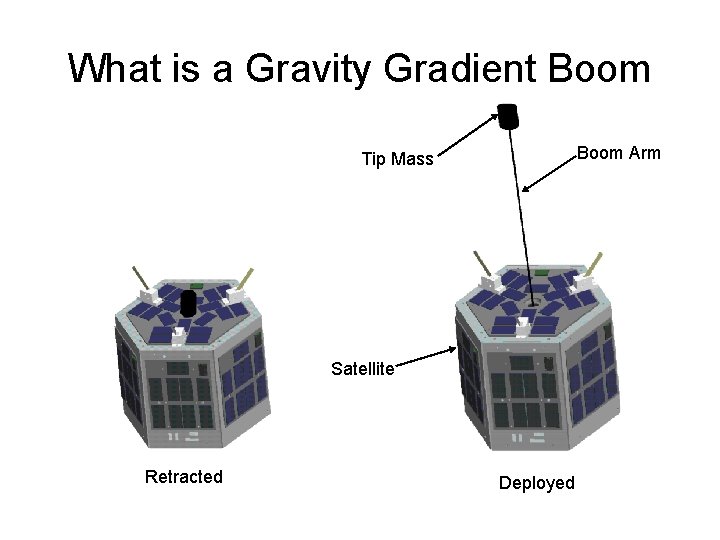
What is a Gravity Gradient Boom Arm Tip Mass Satellite Retracted Deployed
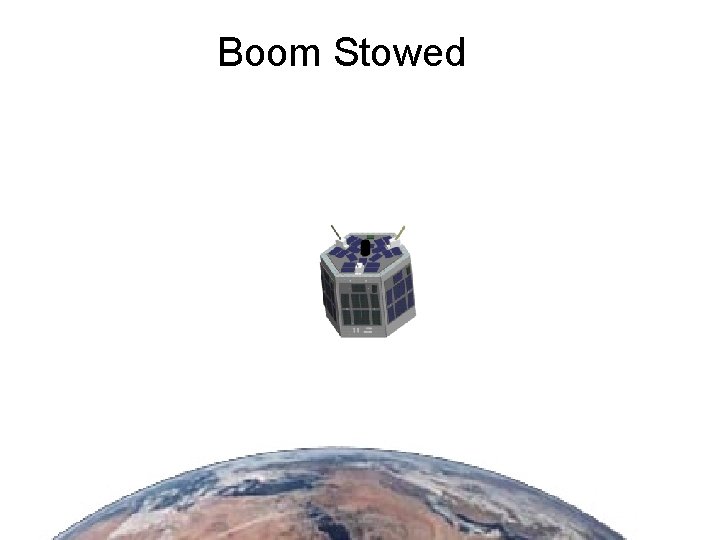
Boom Stowed
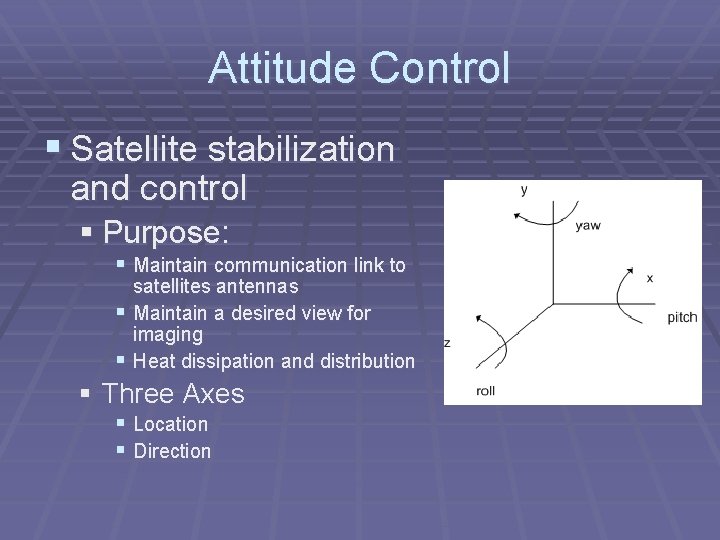
Attitude Control § Satellite stabilization and control § Purpose: § Maintain communication link to § § satellites antennas Maintain a desired view for imaging Heat dissipation and distribution § Three Axes § Location § Direction
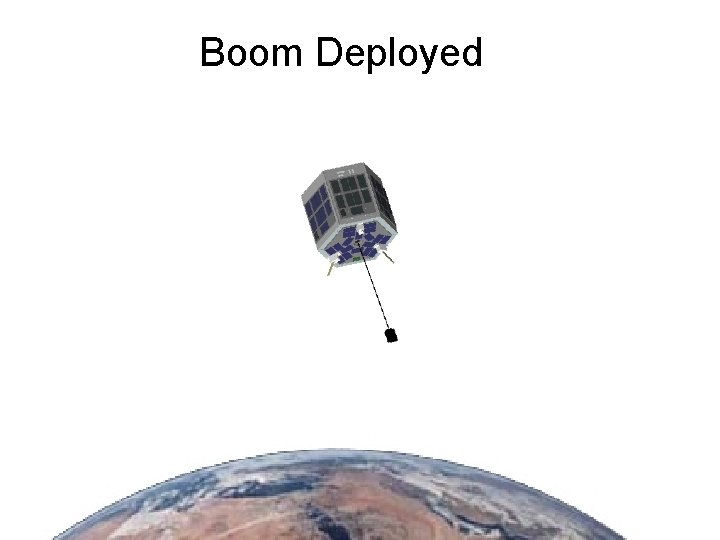
Boom Deployed
Problem Statement § Design and develop a Gravity Gradient Boom as a stand alone Passive Attitude Control for a small satellite, conforming to the requirements put forth by NASA.
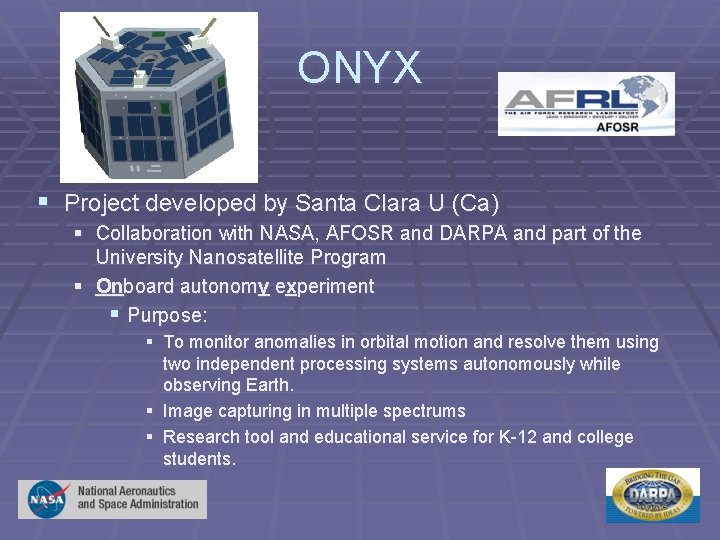
ONYX § Project developed by Santa Clara U (Ca) § Collaboration with NASA, AFOSR and DARPA and part of the University Nanosatellite Program § Onboard autonomy experiment § Purpose: § To monitor anomalies in orbital motion and resolve them using two independent processing systems autonomously while observing Earth. § Image capturing in multiple spectrums § Research tool and educational service for K-12 and college students.
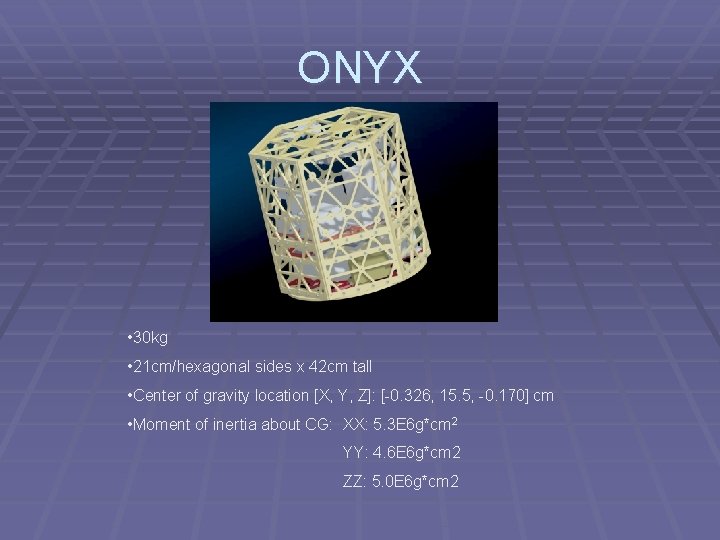
ONYX • 30 kg • 21 cm/hexagonal sides x 42 cm tall • Center of gravity location [X, Y, Z]: [-0. 326, 15. 5, -0. 170] cm • Moment of inertia about CG: XX: 5. 3 E 6 g*cm 2 YY: 4. 6 E 6 g*cm 2 ZZ: 5. 0 E 6 g*cm 2
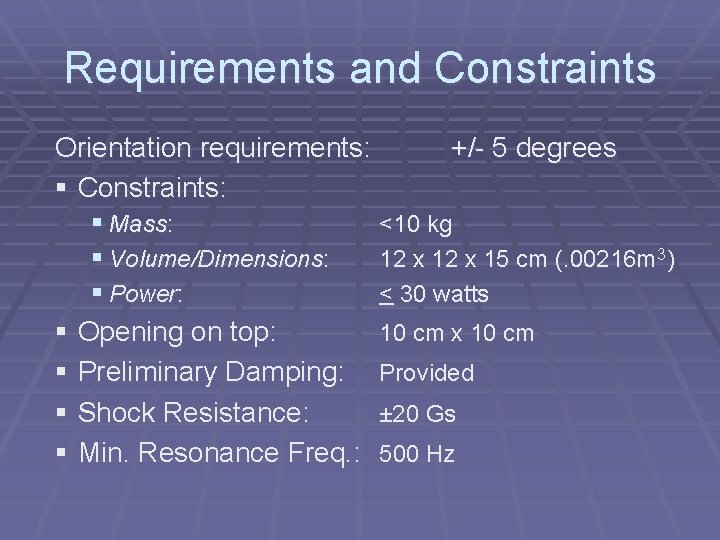
Requirements and Constraints Orientation requirements: +/- 5 degrees § Constraints: § Mass: <10 kg § Volume/Dimensions: 12 x 15 cm (. 00216 m 3 ) § Power: < 30 watts § Opening on top: 10 cm x 10 cm § Preliminary Damping: Provided § Shock Resistance: ± 20 Gs § Min. Resonance Freq. : 500 Hz
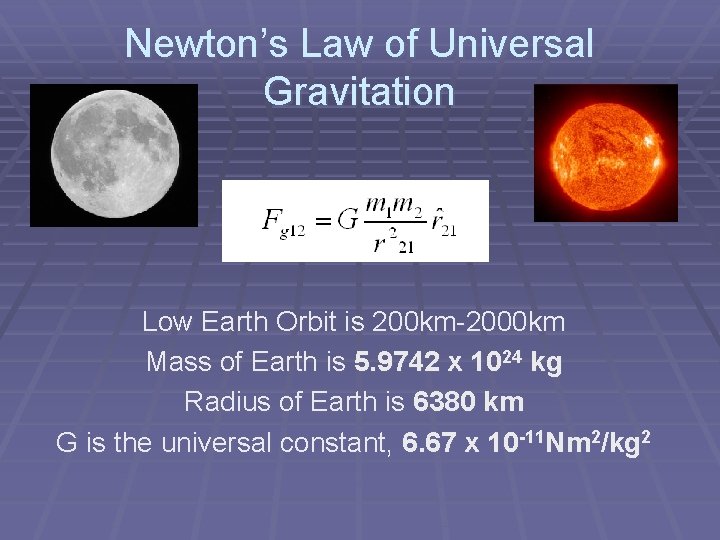
Newton’s Law of Universal Gravitation Low Earth Orbit is 200 km-2000 km Mass of Earth is 5. 9742 x 1024 kg Radius of Earth is 6380 km G is the universal constant, 6. 67 x 10 -11 Nm 2/kg 2
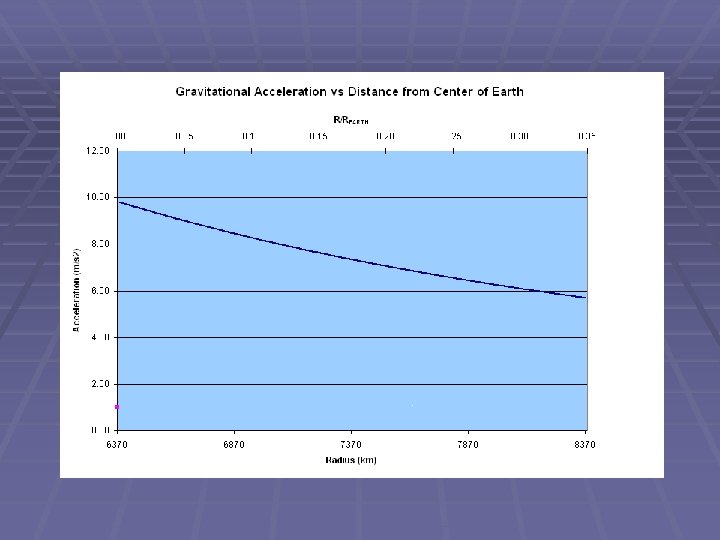
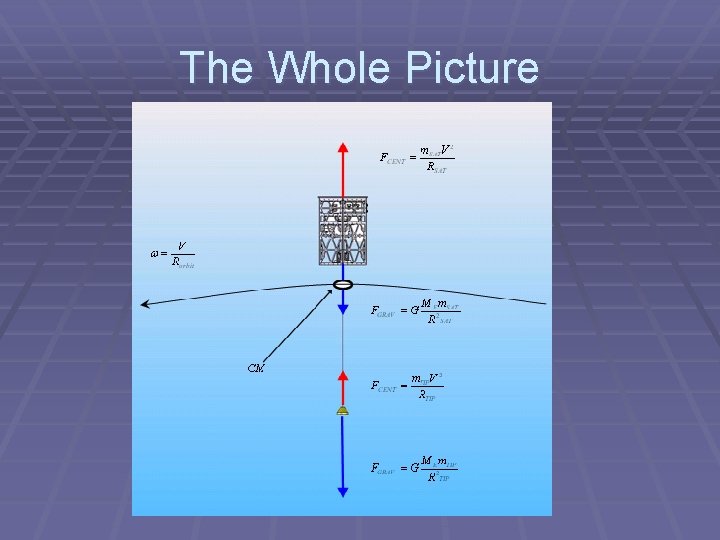
The Whole Picture
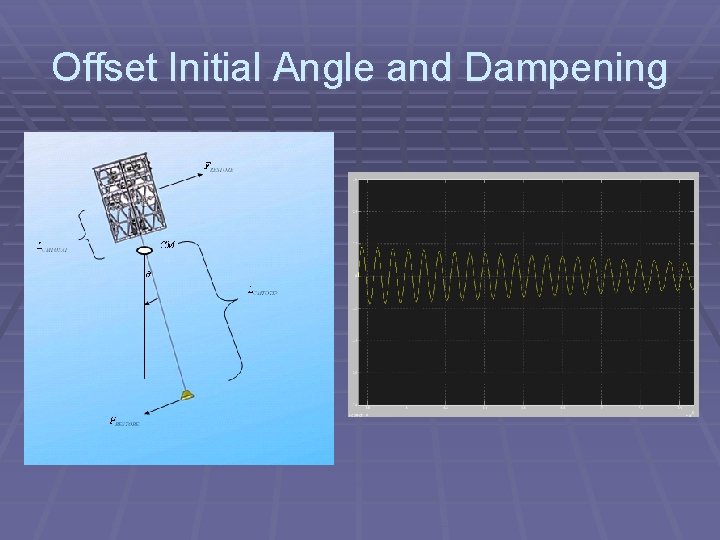
Offset Initial Angle and Dampening
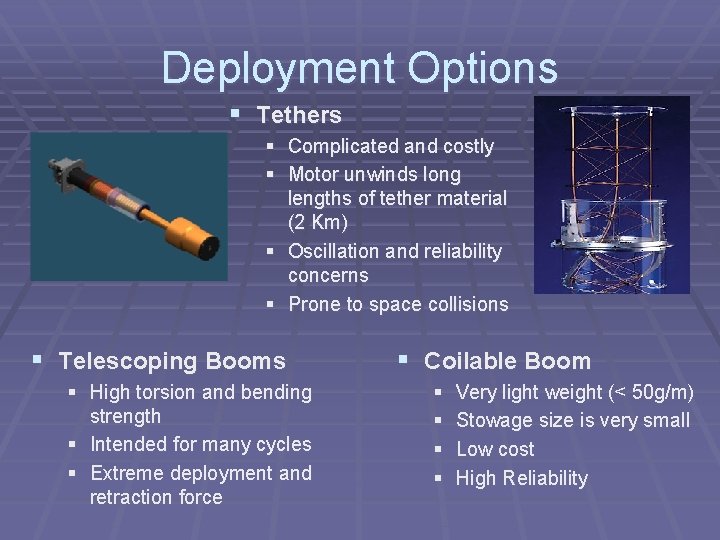
Deployment Options § Tethers § Complicated and costly § Motor unwinds long lengths of tether material (2 Km) § Oscillation and reliability concerns § Prone to space collisions § Telescoping Booms § High torsion and bending strength § Intended for many cycles § Extreme deployment and retraction force § Coilable Boom § § Very light weight (< 50 g/m) Stowage size is very small Low cost High Reliability
Wire Drum Deployer § § § § Copper-Beryllium Wire wound on a drum Proven Technology with industry backing Copper-Beryllium provides sufficient tension Can be deployed using an electric motor or a passive spring assembly Low weight, low cost, and space saving packaging Due to low weight of overall wire deployer a heavier tip mass may be used to provide more stabilization Have to account for physical and thermal oscillations, additional hardware such as dampers may have to be implemented
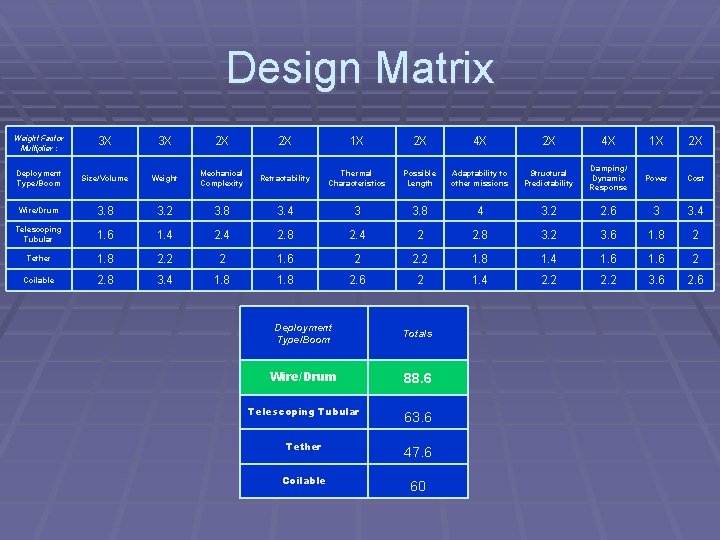
Design Matrix Weight Factor Multiplier : 3 X 3 X 2 X 2 X 1 X 2 X 4 X 1 X 2 X Deployment Type/Boom Size/Volume Weight Mechanical Complexity Retractability Thermal Characteristics Possible Length Adaptability to other missions Structural Predictability Damping/ Dynamic Response Power Cost Wire/Drum 3. 8 3. 2 3. 8 3. 4 3 3. 8 4 3. 2 2. 6 3 3. 4 Telescoping Tubular 1. 6 1. 4 2. 8 2. 4 2 2. 8 3. 2 3. 6 1. 8 2 Tether 1. 8 2. 2 2 1. 6 2 2. 2 1. 8 1. 4 1. 6 2 Coilable 2. 8 3. 4 1. 8 2. 6 2 1. 4 2. 2 3. 6 2. 6 Deployment Type/Boom Totals Wire/Drum 88. 6 Telescoping Tubular Tether Coilable 63. 6 47. 6 60
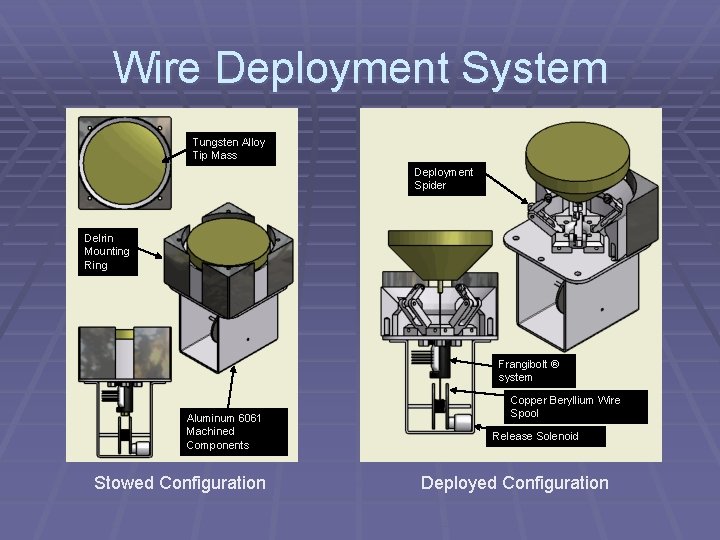
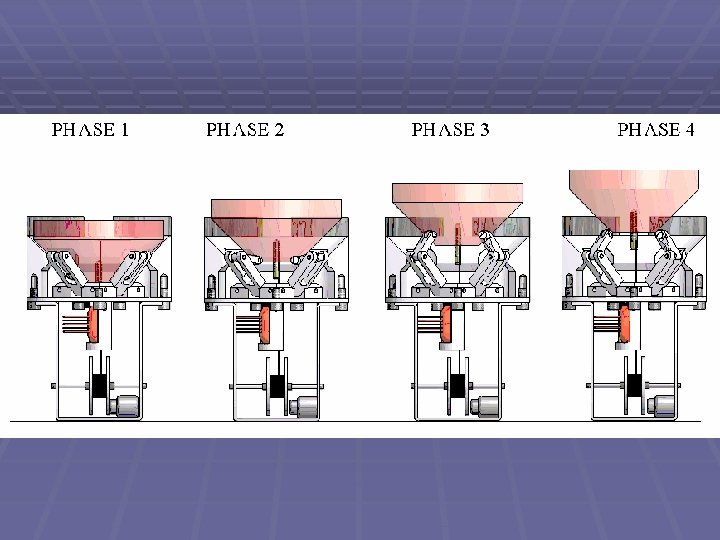
Wire Deployment System Tungsten Alloy Tip Mass Deployment Spider Delrin Mounting Ring Frangibolt ® system Aluminum 6061 Machined Components Stowed Configuration Copper Beryllium Wire Spool Release Solenoid Deployed Configuration
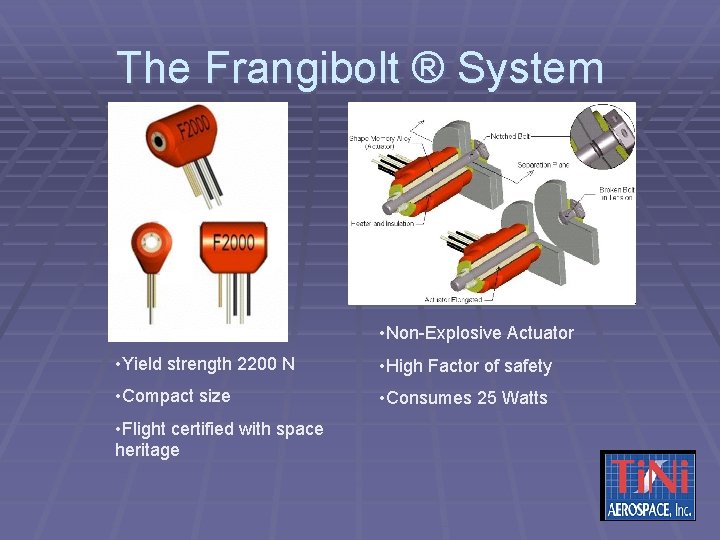
The Frangibolt ® System • Non-Explosive Actuator • Yield strength 2200 N • High Factor of safety • Compact size • Consumes 25 Watts • Flight certified with space heritage
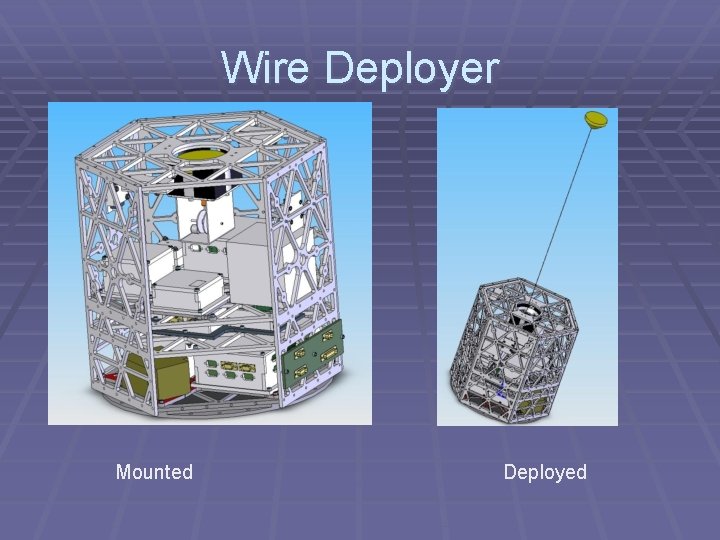
Wire Deployer Mounted Deployed
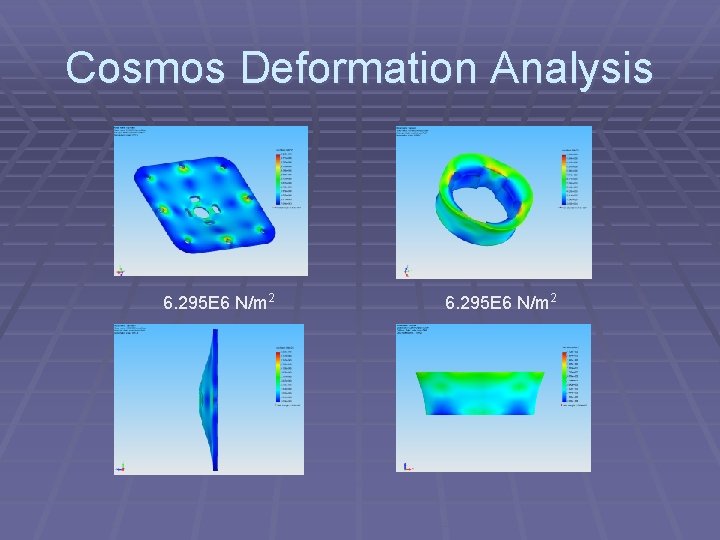
Cosmos Deformation Analysis 6. 295 E 6 N/m 2
Final Optimized Decisions for MATLAB Input § Length of wire: 20. 0 m § Tip Mass: 3. 00 kg § Orbit: Circular § Altitude: 500 km § Inputing the parameters into the MATLAB program created from ONYX’s data show resulted for stabilization.
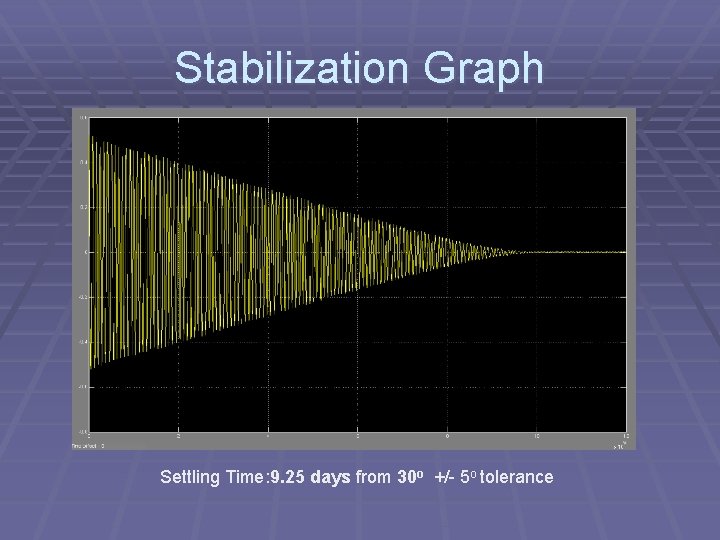
Stabilization Graph Settling Time: 9. 25 days from 30 o +/- 5 o tolerance

Proper Stabilization § Gravity Gradient Boom must overcome all disturbance torques in space Aero Dynamic Torque 1. 1 x 10 -8 N-m Solar Radiation Torque 2. 6 x 10 -6 N-m Magnetic Field Torque 8. 6 x 10 -4 N-m Torque Developed by GGB 3. 2 x 10 -3 N-m
Final Optimized Constraints § System Mass of 3. 76 kg, (6. 24 kg Under Max) § Center of Mass and Moment of Inertia do not hinder physical properties of the ONYX § High degree of accuracy with initial accuracy of 5 degrees stabilizing to as low as 2 degrees § Low Estimated cost of $4, 000 § Highly adaptable to other satellites of similar size
Improvements § Improve modeling for FEA Vibration analysis § Improve metal on metal contact § Integrate the use of a DC motor for more control

Any questions?
- Slides: 27