
Gravitational Wave Observations with Pulsar Timing Arrays Andrea
Gravitational Wave Observations with Pulsar Timing Arrays Andrea Lommen Franklin and Marshall College Lancaster, PA
Pulsar Timing Array: the GW detector handed to us by the universe Gravitational wave detectors and the wave periods to which they are tuned. CMB polarization experiments – Hubble times PTA (pulsar timing array) - years LISA – hours/seconds? LIGO/TAMA/GEO/VIRGO – seconds/milliseconds?
Collaborators • • Don Backer, UC Berkeley David Nice, Princeton University Andrew Jaffe, Imperial College, London Ingrid Stairs, University of British Columbia • Rick Jenet, JPL/Cal Tech
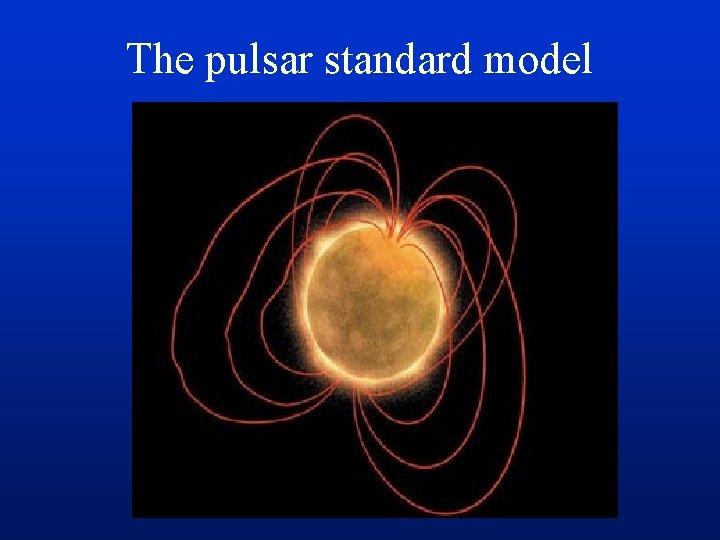
The pulsar standard model
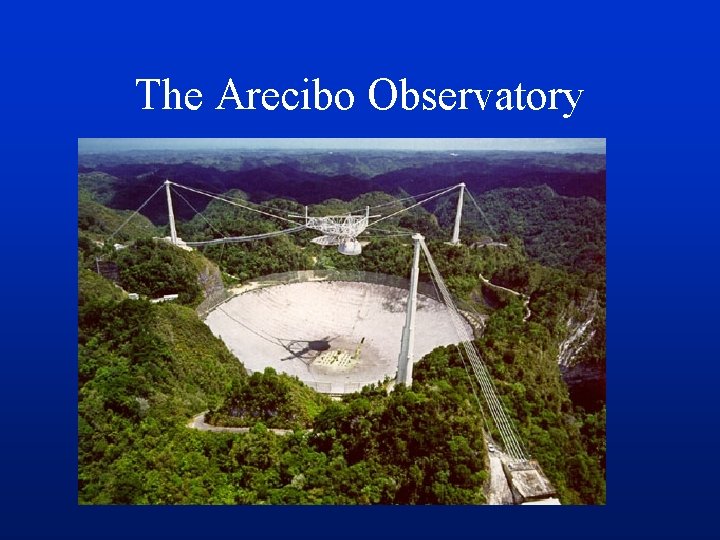
The Arecibo Observatory
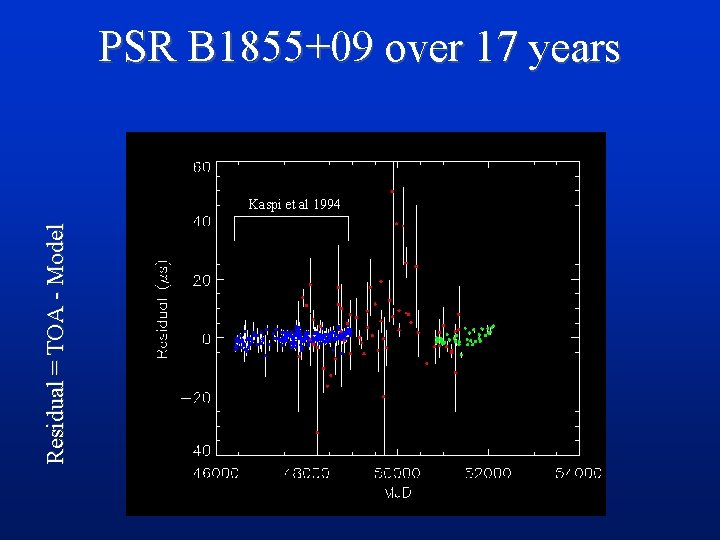
PSR B 1855+09 over 17 years Residual = TOA - Model Kaspi et al 1994
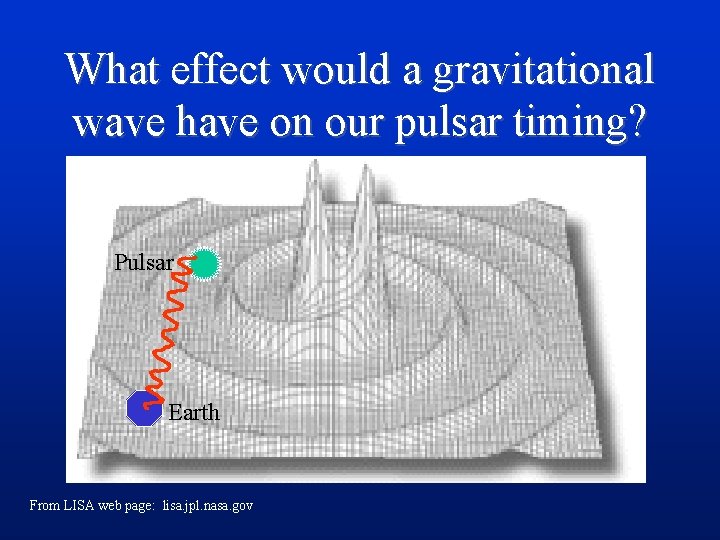
What effect would a gravitational wave have on our pulsar timing? Pulsar Earth From LISA web page: lisa. jpl. nasa. gov
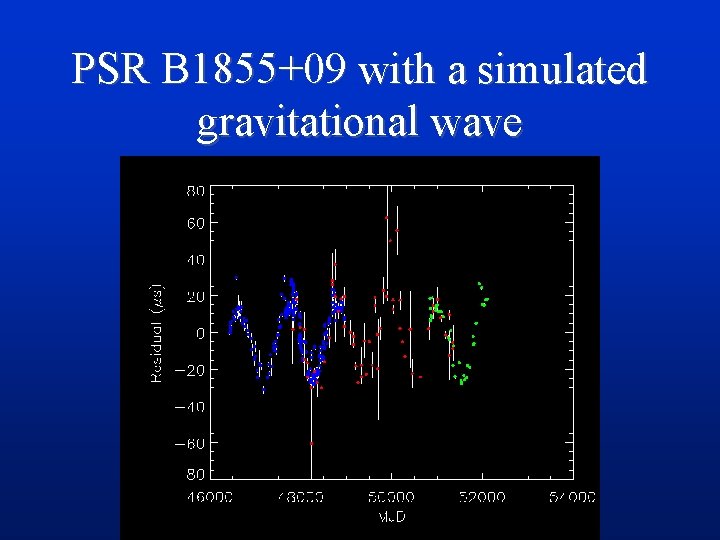
PSR B 1855+09 with a simulated gravitational wave
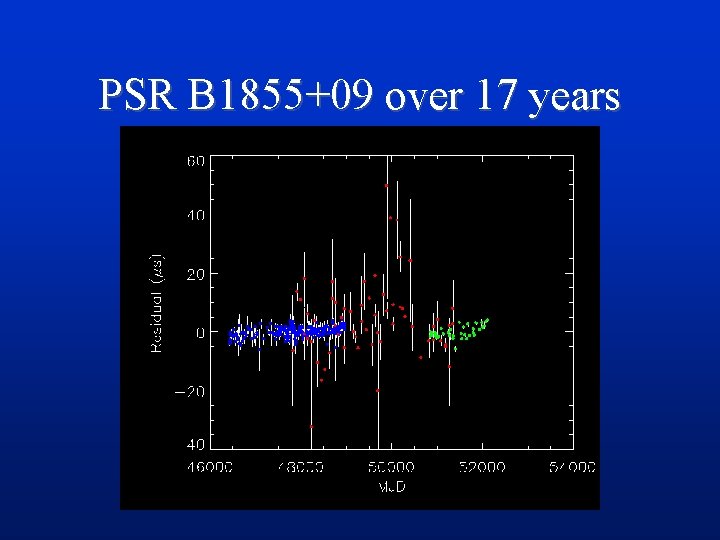
PSR B 1855+09 over 17 years
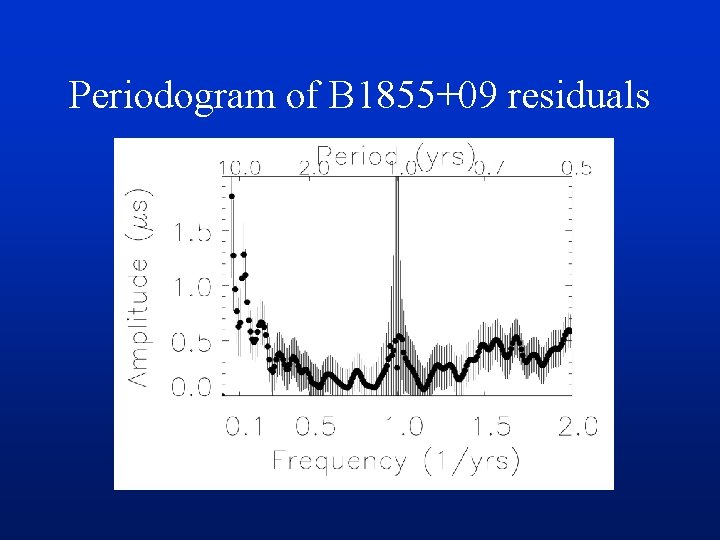
Periodogram of B 1855+09 residuals
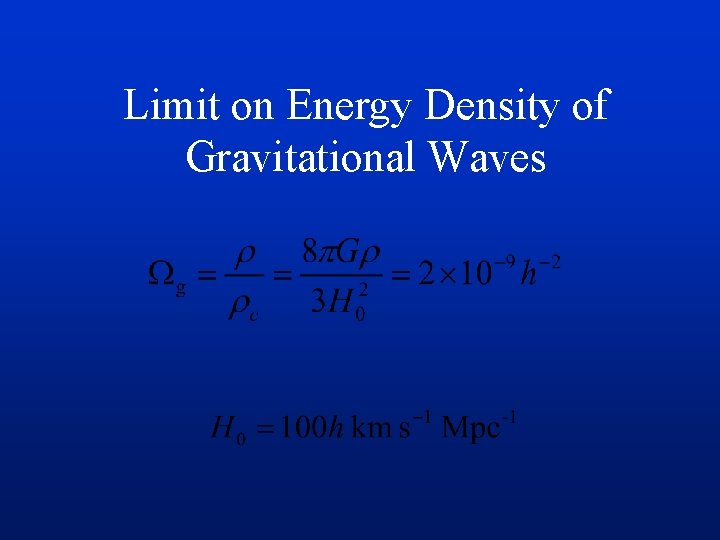
Limit on Energy Density of Gravitational Waves
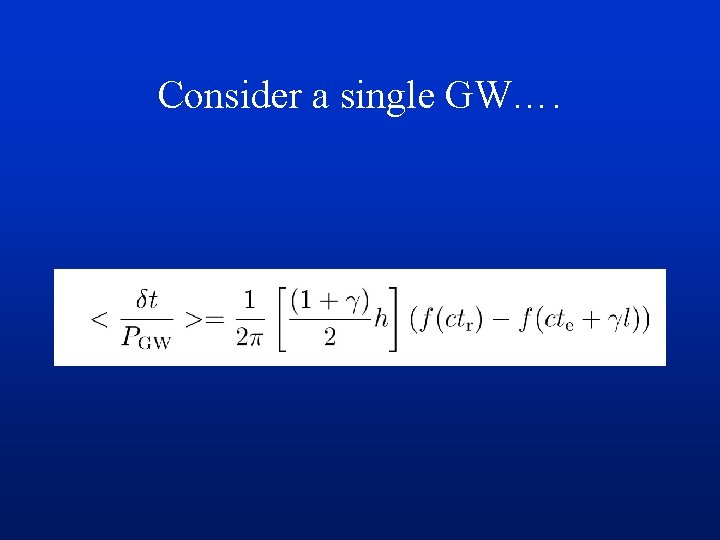
Consider a single GW….
Jaffe and Backer 2002 • Ingredients of new estimate of GW background – Observed population of MBH’s by Merritt and Ferrarese (2001) – Assume the population is constant with redshift – Use Merger rate estimated by Patton et al. (2002) – Look at two different possibilities for the evolution of the merger rate with red shift
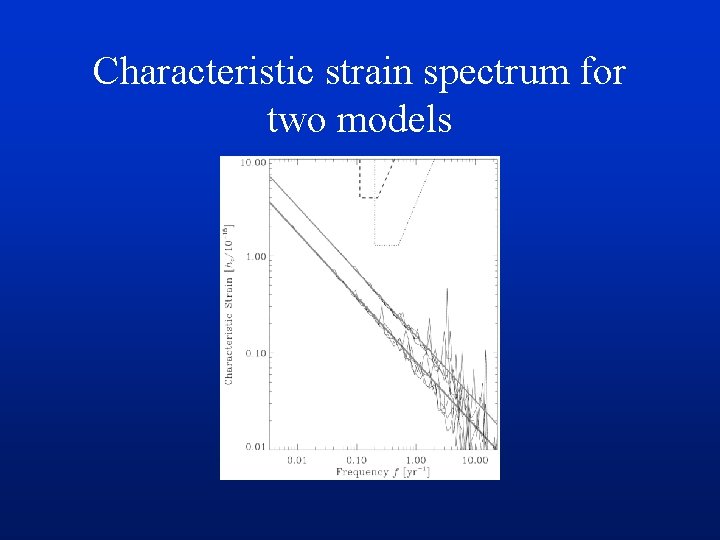
Characteristic strain spectrum for two models Need plot from Don here.
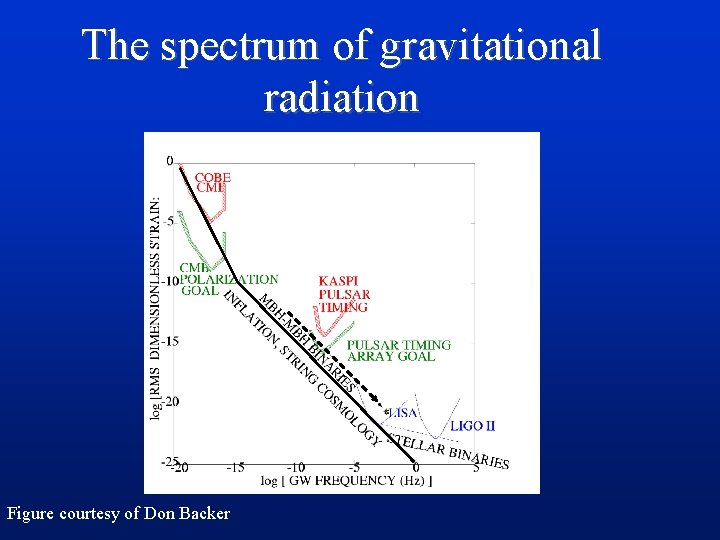
The spectrum of gravitational radiation Figure courtesy of Don Backer
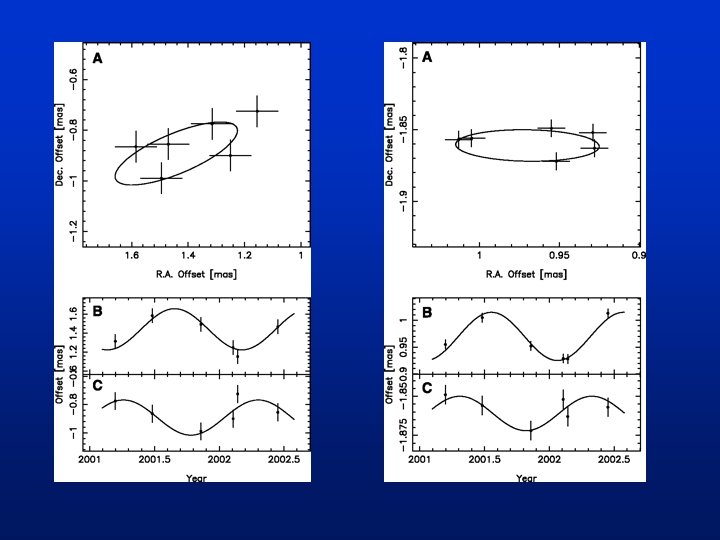
Orbital Motion in the Radio Galaxy 3 C 66 B: Evidence for a Supermassive Black Hole Binary Hiroshi Sudou, 1* Satoru Iguchi, 2 Yasuhiro Murata, 3 Yoshiaki Taniguchi 1 Supermassive black hole binaries may exist in the centers of active galactic nuclei such as quasars and radio galaxies, and mergers between galaxies may result in the formation of supermassive binaries during the course of galactic evolution. Using the very-long-baseline interferometer, we imaged the radio galaxy 3 C 66 B at radio frequencies and found that the unresolved radio core of 3 C 66 B shows well-defined elliptical motions with a period of 1. 05 ± 0. 03 years, which provides a direct detection of a supermassive black hole binary. Volume 300, Number 5623, Issue of 23 May 2003, pp. 1263 -1265. Copyright © 2003 by The American Association for the Advancement of Science. All rights reserved.
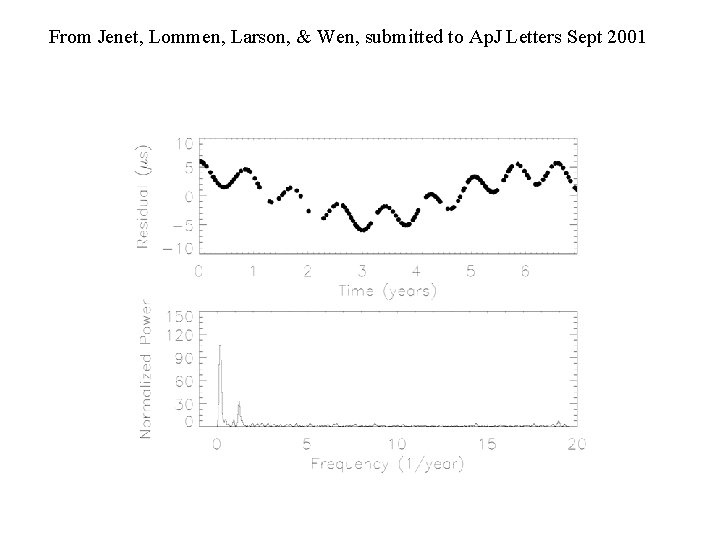
From Jenet, Lommen, Larson, & Wen, submitted to Ap. J Letters Sept 2001
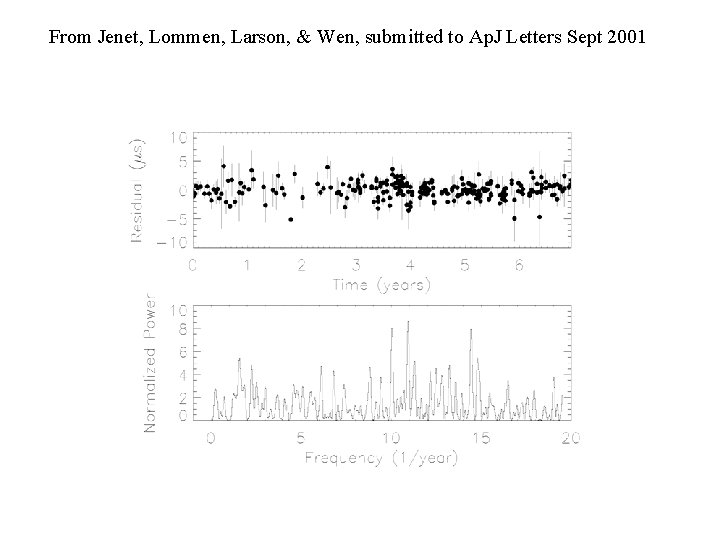
From Jenet, Lommen, Larson, & Wen, submitted to Ap. J Letters Sept 2001
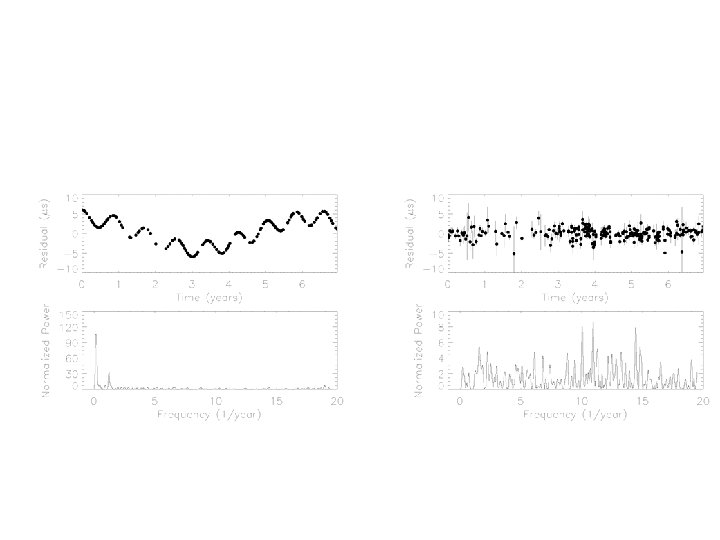
Summary • Pulsars make a gravitational wave detector that complements LISA, LIGO/TAMA/GEO, and CMB polarization experiment • Our new limit on the energy density in gravitational radiation begins to put constraints on the merger rate of galaxies • There are cute things you can do with individual sources too
- Slides: 21