
Gravitational Wave Data Analysis Probability and Statistics Junwei
Gravitational Wave Data Analysis Probability and Statistics Junwei Cao (曹军威) and Junwei Li (李俊伟) Tsinghua University Gravitational Wave Summer School Kunming, China, July 2009
Drawback of Matched Filtering v Two premises of matched filtering § Premise 1: A given signal is present in data stream § Premise 2: The form of h(t) is known v Premises are impractical v Repeat matched filtering with many different filters v A number of “events” are extracted § “events” indicate that in the detector happened something, which deserves further scrutiny
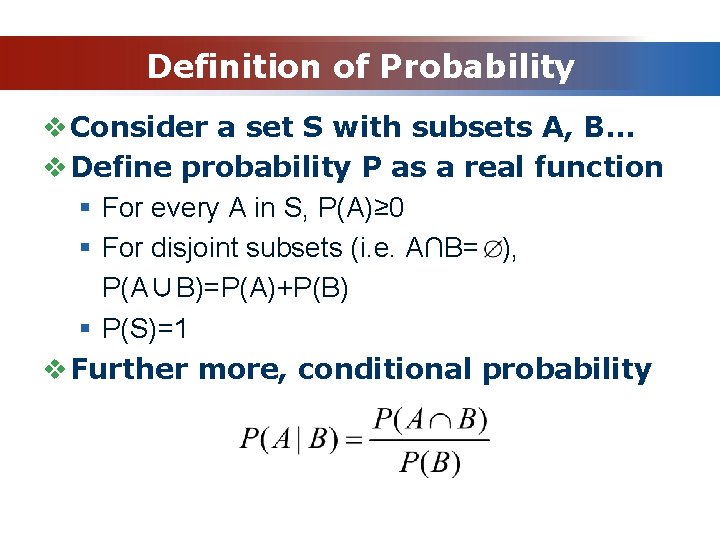
Definition of Probability v Consider a set S with subsets A, B… v Define probability P as a real function § For every A in S, P(A)≥ 0 § For disjoint subsets (i. e. A∩B= ), P(A∪B)=P(A)+P(B) § P(S)=1 v Further more, conditional probability
Two Approaches of Probability v Frequentist (also called classical) § A, B, … are the outcome of a repeatable experiment, and P(A) is defined as the frequency of occurrence of A § In considering the conditional probability, such as P(data | hypothesis), one is never allowed to think about the probability that the parameters take a given a value, nor of the probability that a hypothesis is correct
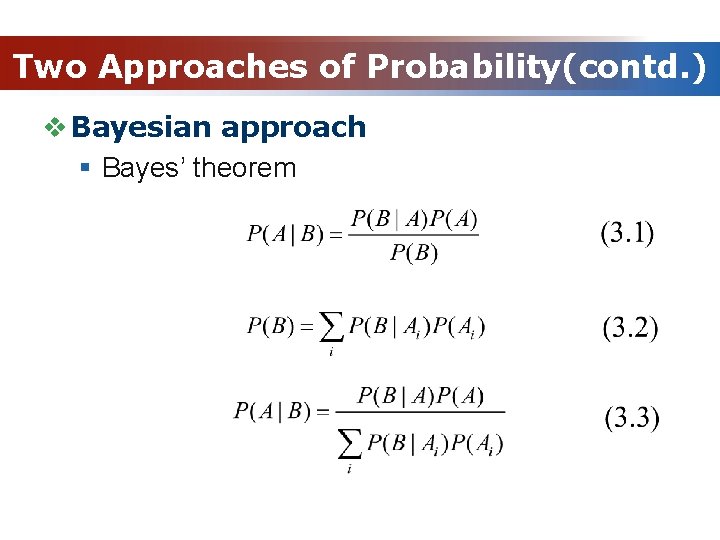
Two Approaches of Probability(contd. ) v Bayesian approach § Bayes’ theorem
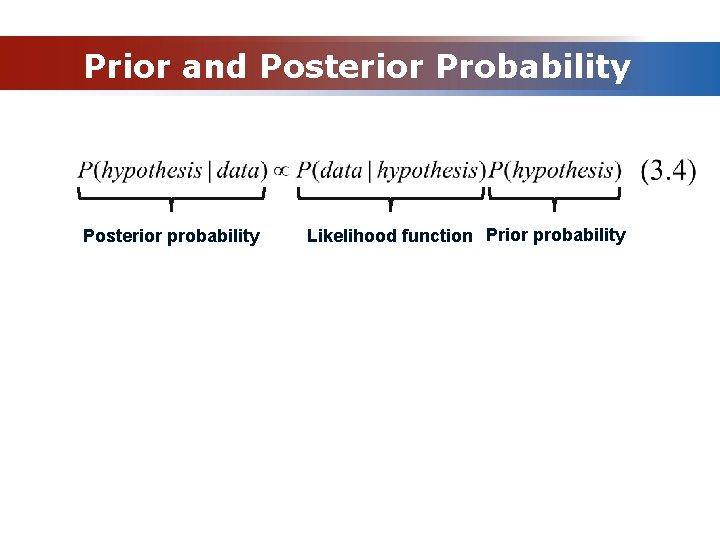
Prior and Posterior Probability Posterior probability Likelihood function Prior probability
Which One to be Chosen v Depend on the type of experiment § Elementary particle physics is suited for the classical approach since it is the physicist that controls the parameters of the experiment § In astrophysics, the sources can be rare, and each one is very interesting individually, e. g. a single BH-BH binary coalesces
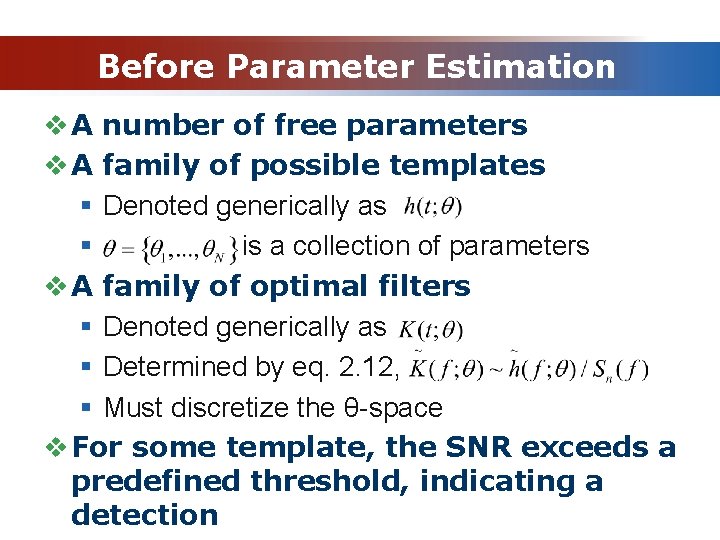
Before Parameter Estimation v A number of free parameters v A family of possible templates § Denoted generically as § is a collection of parameters v A family of optimal filters § Denoted generically as § Determined by eq. 2. 12, § Must discretize the θ-space v For some template, the SNR exceeds a predefined threshold, indicating a detection
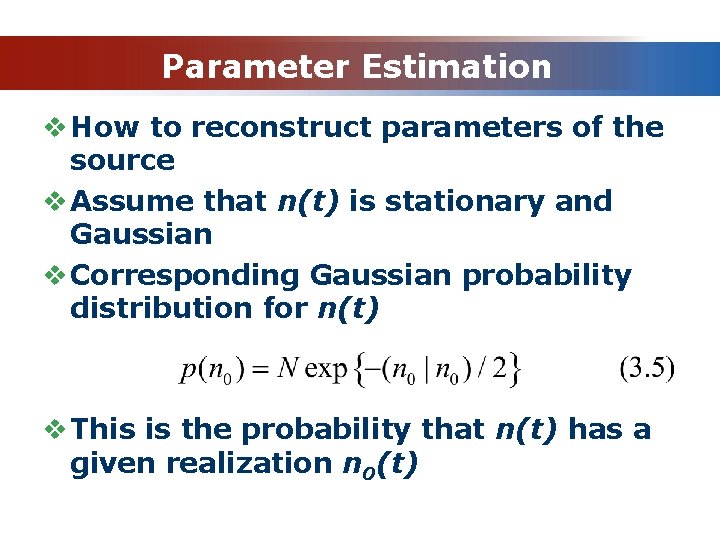
Parameter Estimation v How to reconstruct parameters of the source v Assume that n(t) is stationary and Gaussian v Corresponding Gaussian probability distribution for n(t) v This is the probability that n(t) has a given realization n 0(t)
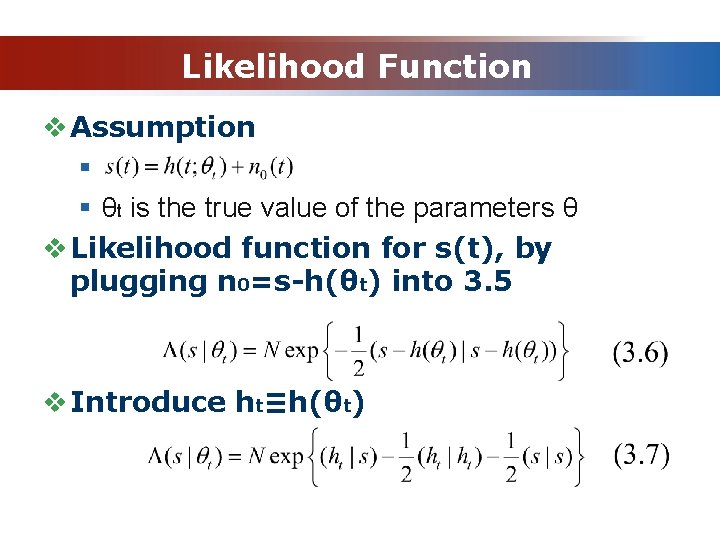
Likelihood Function v Assumption § § θt is the true value of the parameters θ v Likelihood function for s(t), by plugging n 0=s-h(θt) into 3. 5 v Introduce ht≡h(θt)
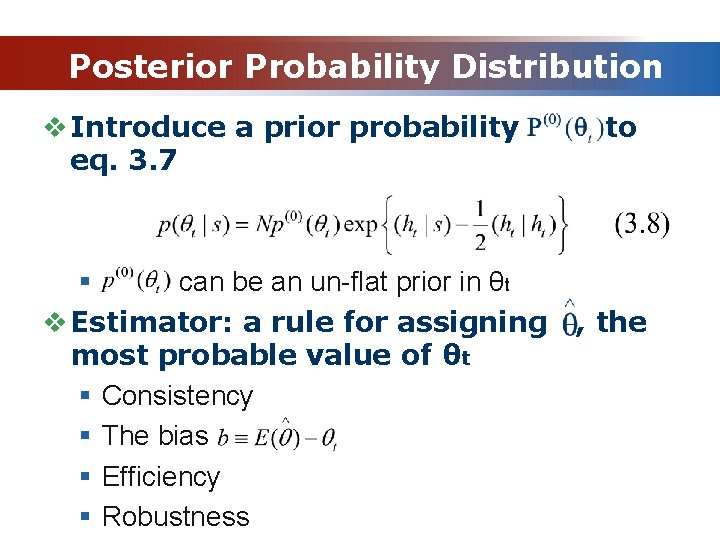
Posterior Probability Distribution v Introduce a prior probability eq. 3. 7 § can be an un-flat prior in θt v Estimator: a rule for assigning most probable value of θt § Consistency § The bias § Efficiency § Robustness to , the
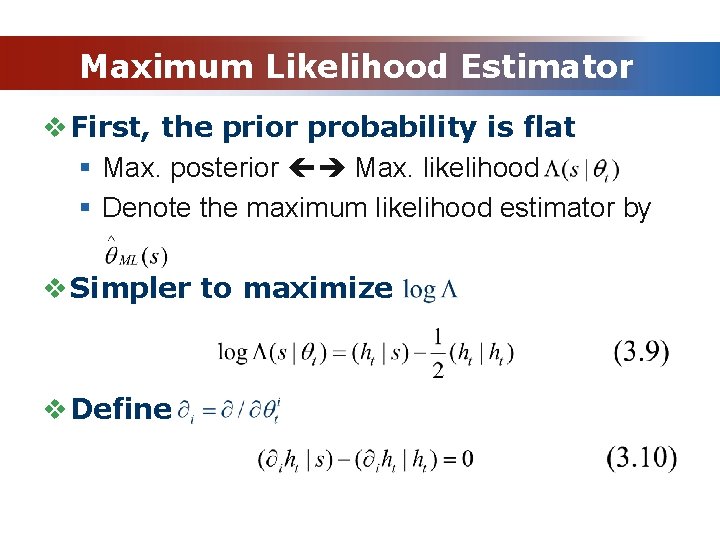
Maximum Likelihood Estimator v First, the prior probability is flat § Max. posterior Max. likelihood § Denote the maximum likelihood estimator by v Simpler to maximize v Define
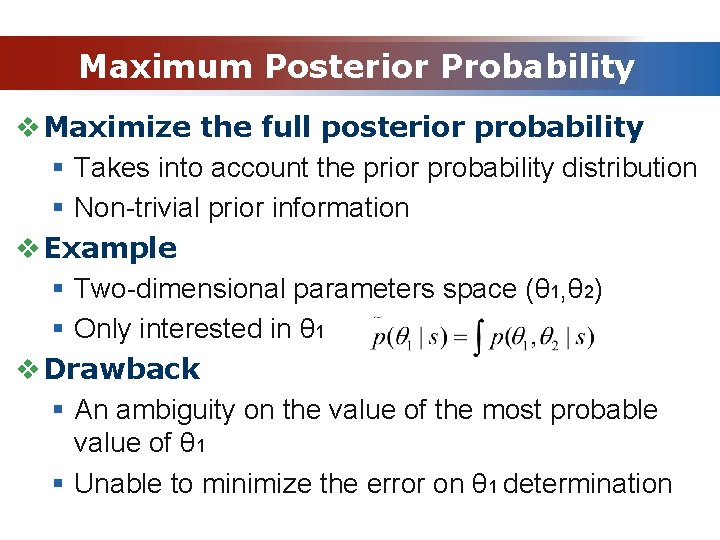
Maximum Posterior Probability v Maximize the full posterior probability § Takes into account the prior probability distribution § Non-trivial prior information v Example § Two-dimensional parameters space (θ 1, θ 2) § Only interested in θ 1 v Drawback § An ambiguity on the value of the most probable value of θ 1 § Unable to minimize the error on θ 1 determination
Bayes Estimator v Most probable value of parameters v Errors v The “operational” meaning § Is the value of , averaged over an ensemble of same outputs v Drawback: computational costs
Gravitational Wave Data Analysis Junwei Cao jcao@tsinghua. edu. cn http: //ligo. org. cn
- Slides: 15