
GRAVITATION FORCES IN THE UNIVERSE Kinds of Forces






- Slides: 74
GRAVITATION
FORCES IN THE UNIVERSE
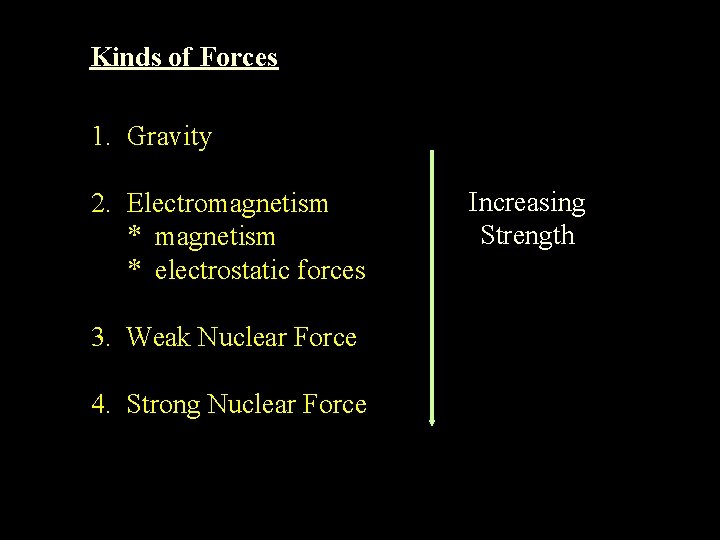
Kinds of Forces 1. Gravity 2. Electromagnetism * electrostatic forces 3. Weak Nuclear Force 4. Strong Nuclear Force Increasing Strength
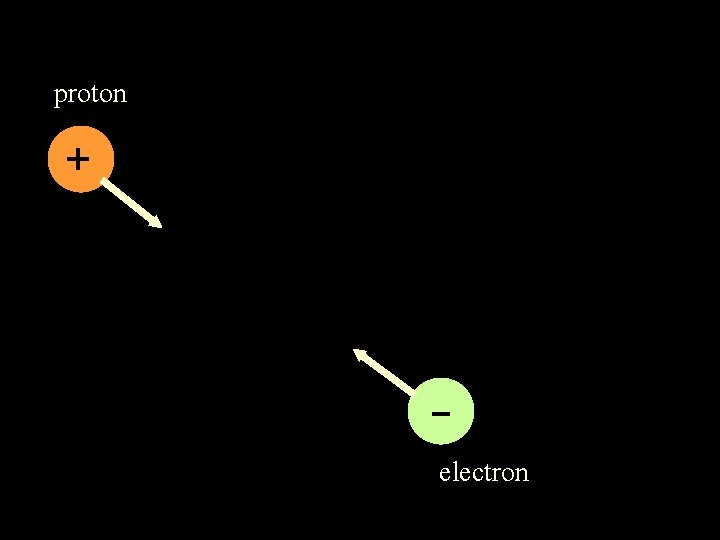
proton + electron
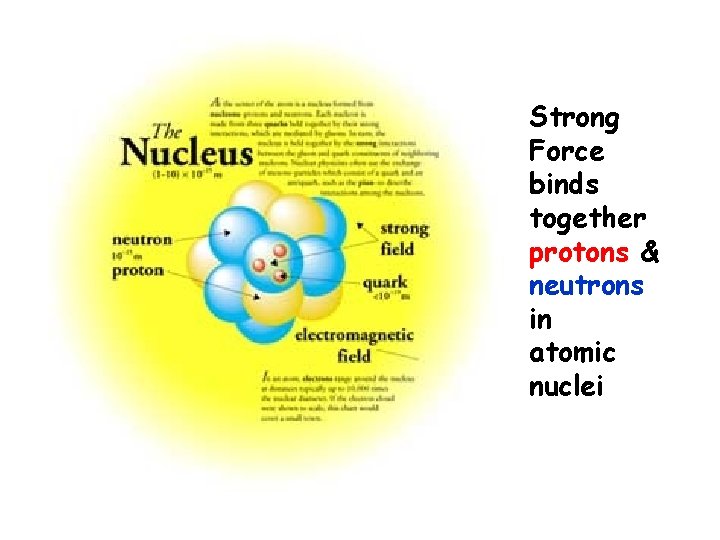
Strong Force binds together protons & neutrons in atomic nuclei
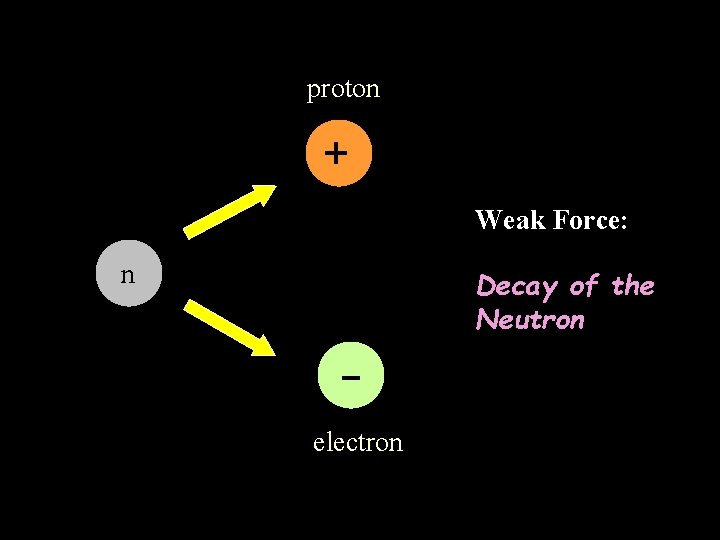
proton + Weak Force: n Decay of the Neutron electron
GRAVITATION
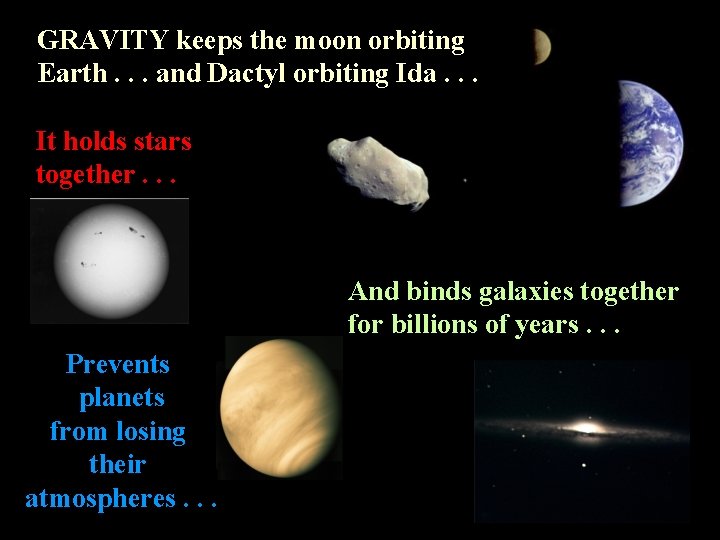
GRAVITY keeps the moon orbiting Earth. . . and Dactyl orbiting Ida. . . It holds stars together. . . And binds galaxies together for billions of years. . . Prevents planets from losing their atmospheres. . .
FALLING BODIES
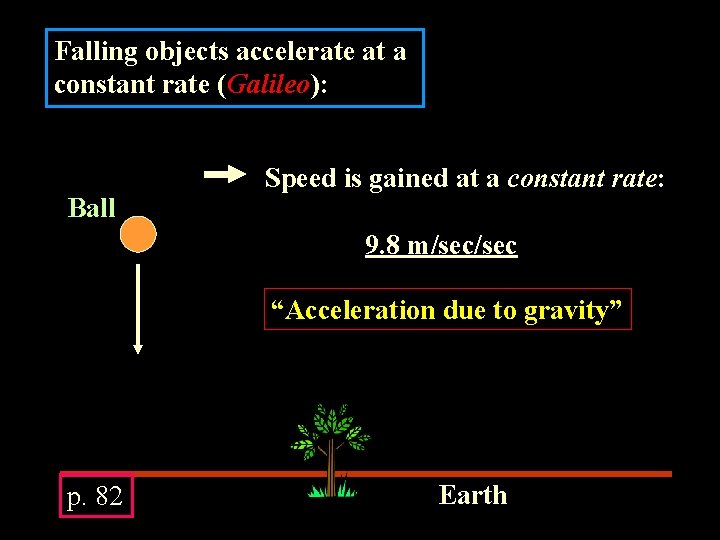
Falling objects accelerate at a constant rate (Galileo): Ball Speed is gained at a constant rate: 9. 8 m/sec “Acceleration due to gravity” p. 82 Earth
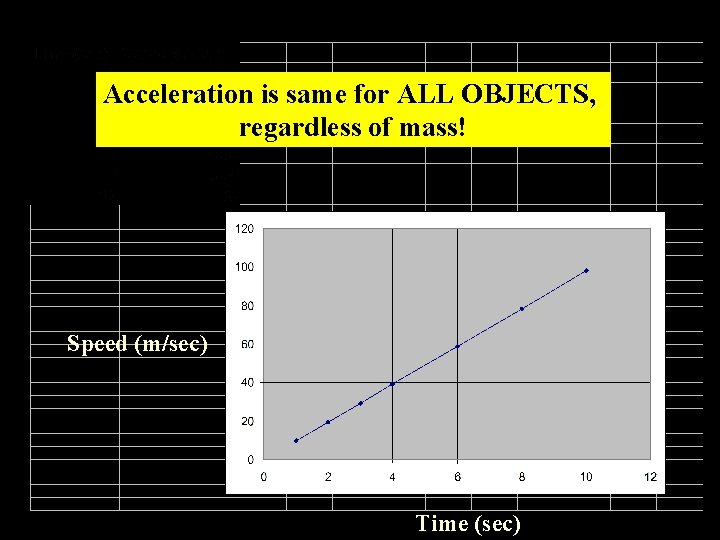
Acceleration is same for ALL OBJECTS, regardless of mass! Speed (m/sec) Time (sec)
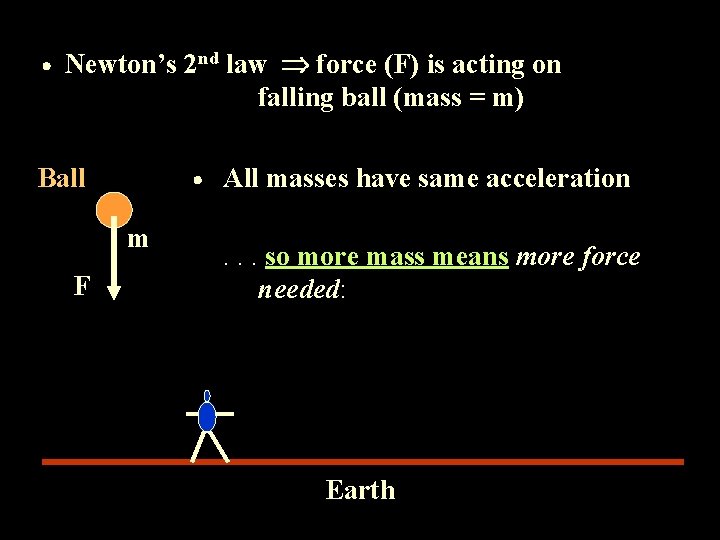
Newton’s 2 nd law force (F) is acting on falling ball (mass = m) Ball m F All masses have same acceleration. . . so more mass means more force needed: Earth
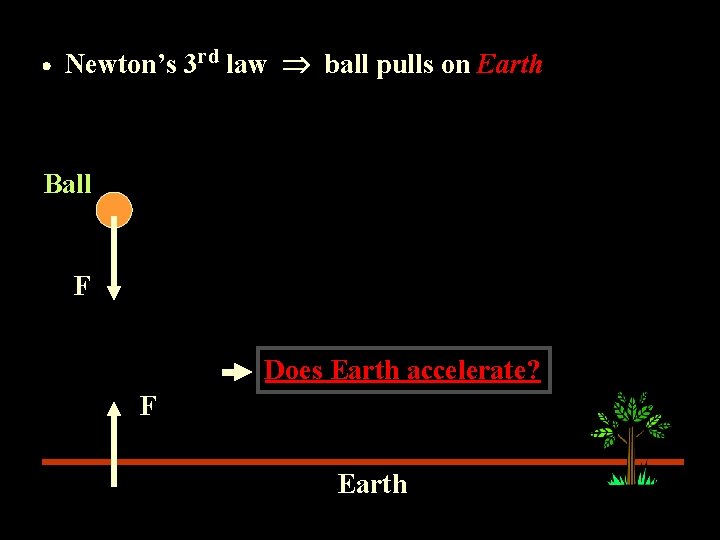
Newton’s 3 rd law ball pulls on Earth Ball F Does Earth accelerate? F Earth
UNIVERSAL GRAVITATION
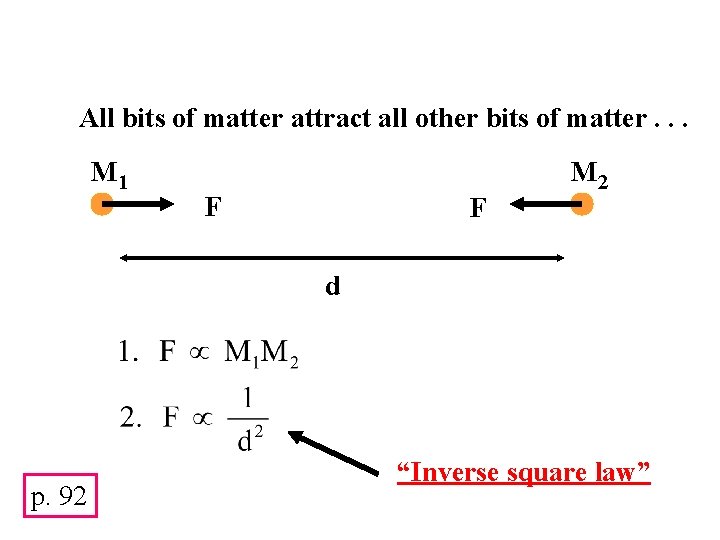
All bits of matter attract all other bits of matter. . . M 1 F F M 2 d p. 92 “Inverse square law”
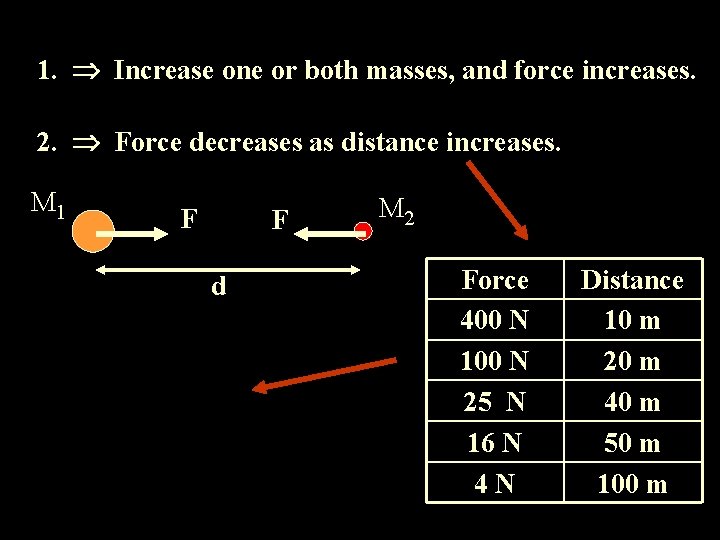
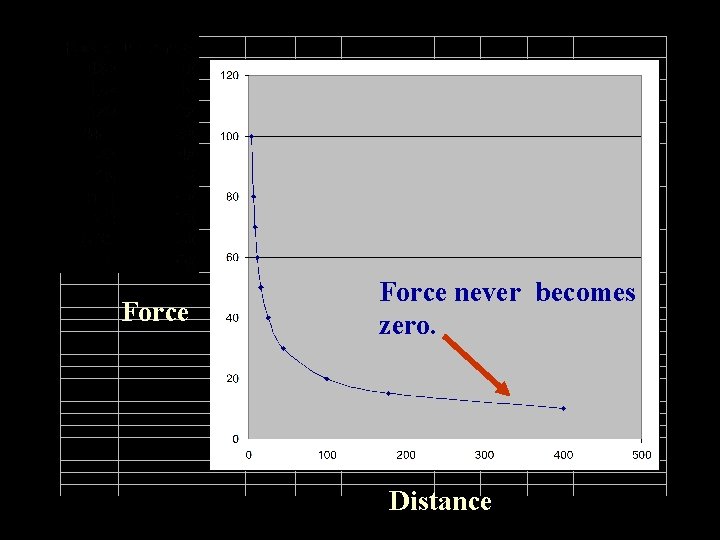
1. Increase one or both masses, and force increases. 2. Force decreases as distance increases. M 1 F F d M 2 Force 400 N 100 N 25 N 16 N 4 N Distance 10 m 20 m 40 m 50 m 100 m
Force never becomes zero. Distance
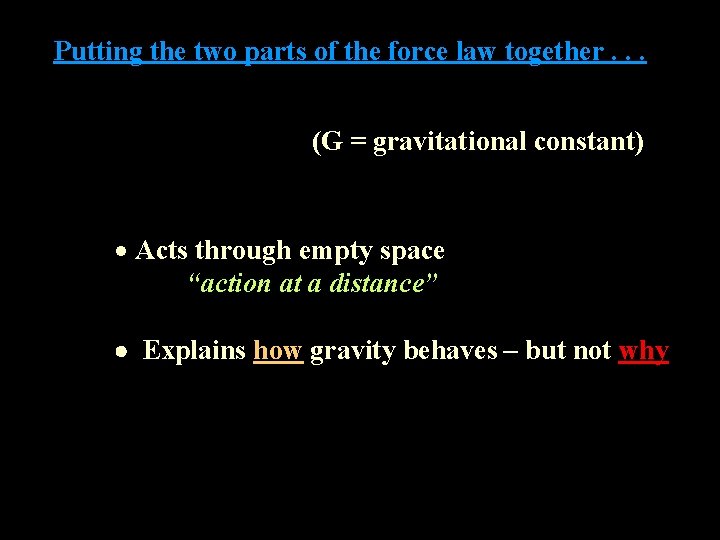
Putting the two parts of the force law together. . . (G = gravitational constant) Acts through empty space “action at a distance” Explains how gravity behaves – but not why
WEIGHT
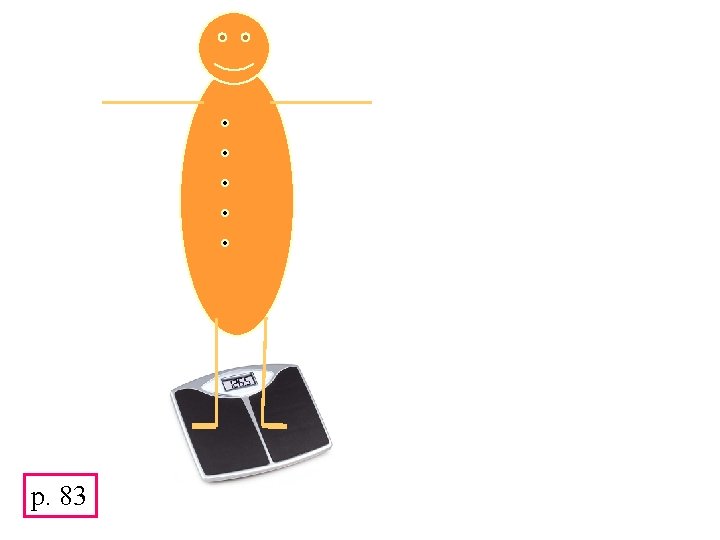
p. 83
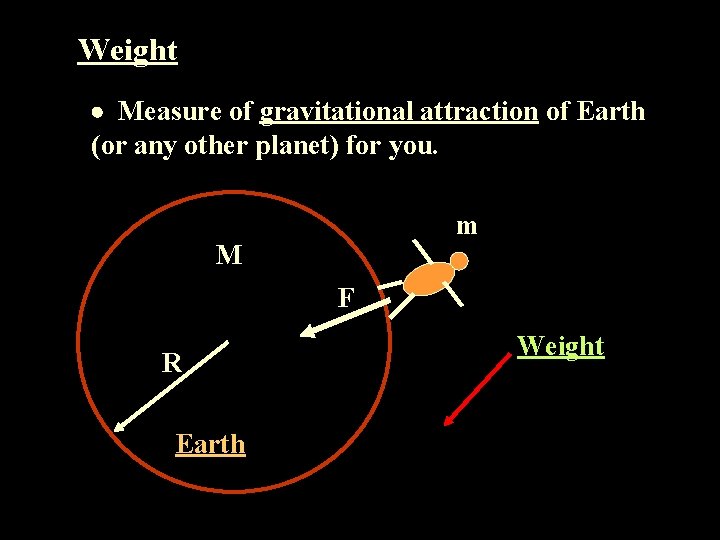
Weight Measure of gravitational attraction of Earth (or any other planet) for you. m M F R Earth Weight
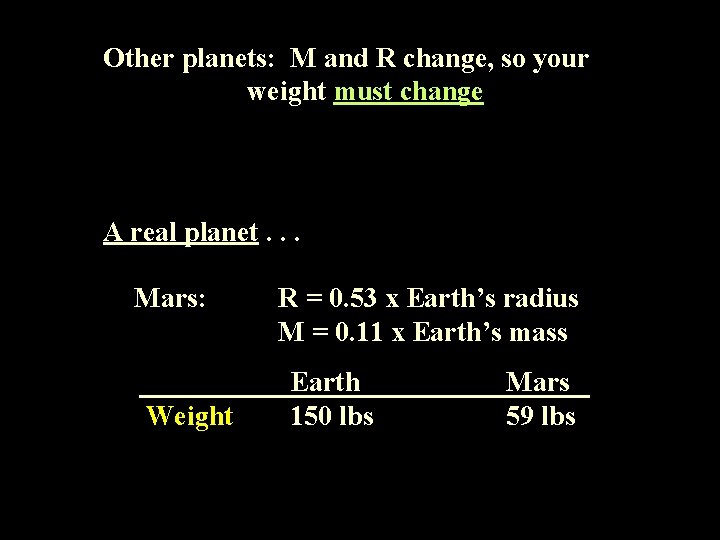
Other planets: M and R change, so your weight must change A real planet. . . Mars: Weight R = 0. 53 x Earth’s radius M = 0. 11 x Earth’s mass Earth 150 lbs Mars 59 lbs
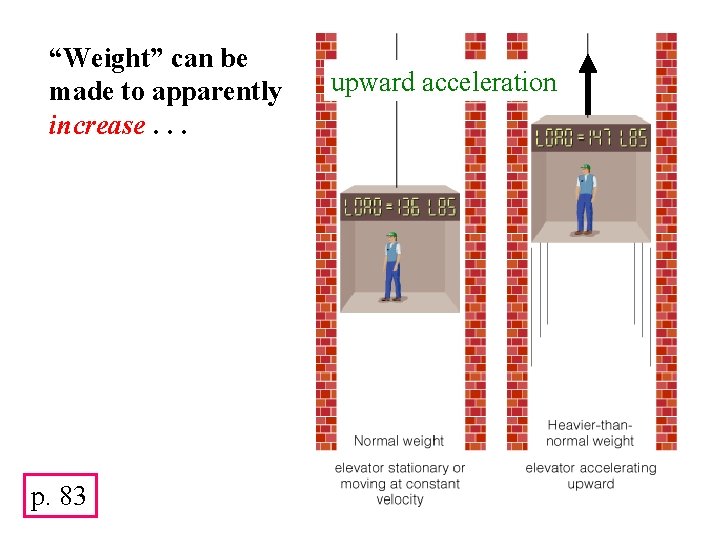
“Weight” can be made to apparently increase. . . p. 83 upward acceleration
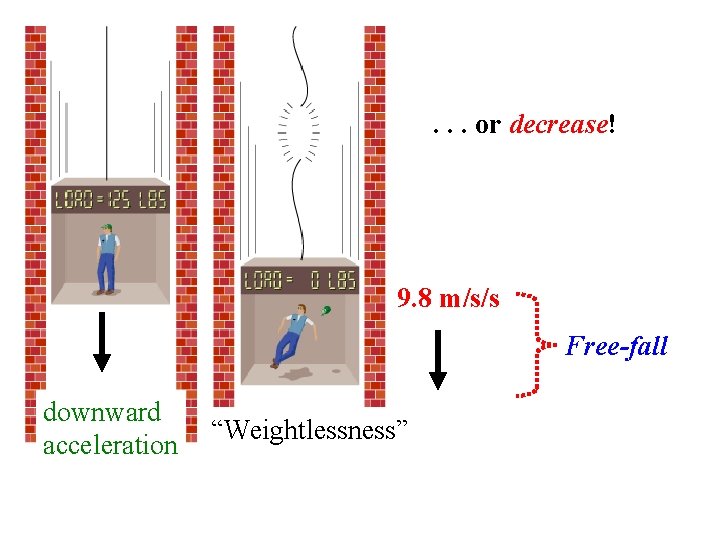
. . . or decrease! 9. 8 m/s/s Free-fall downward acceleration “Weightlessness”
EARTH’S MASS
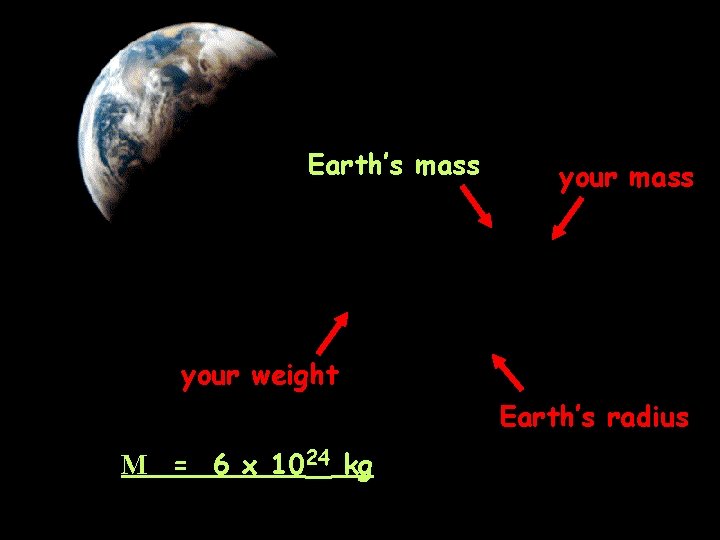
Earth’s mass your weight Earth’s radius M = 6 x 1024 kg
HOW DO THE PLANETS GO?
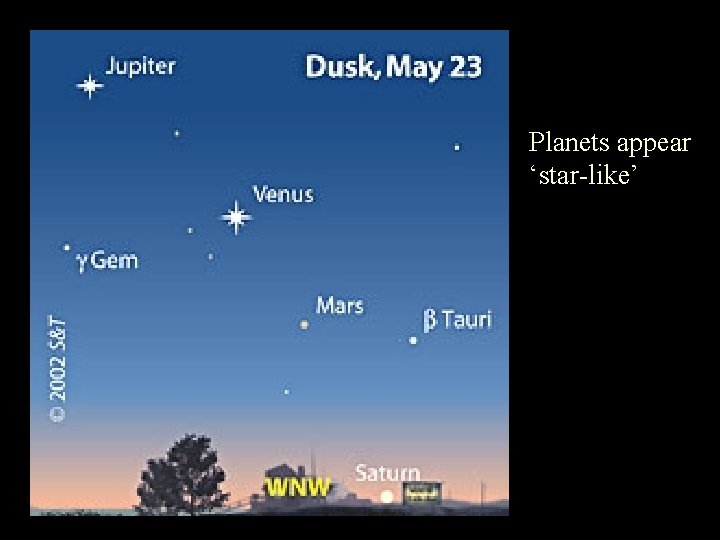
Planets appear ‘star-like’
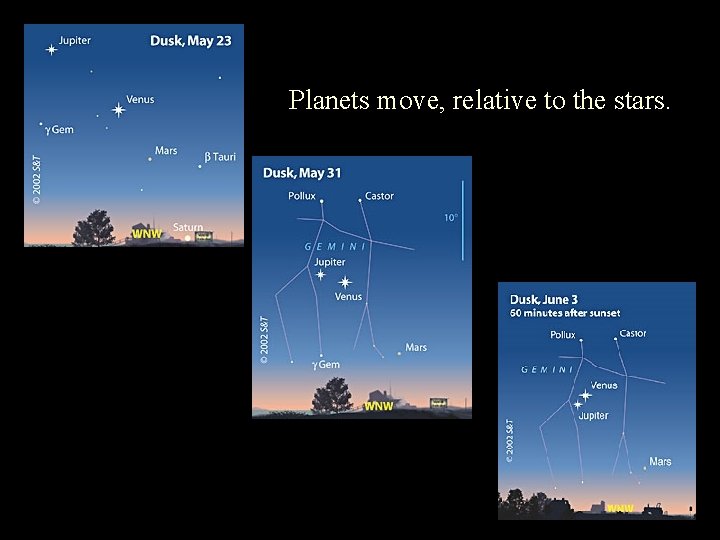
Planets move, relative to the stars.
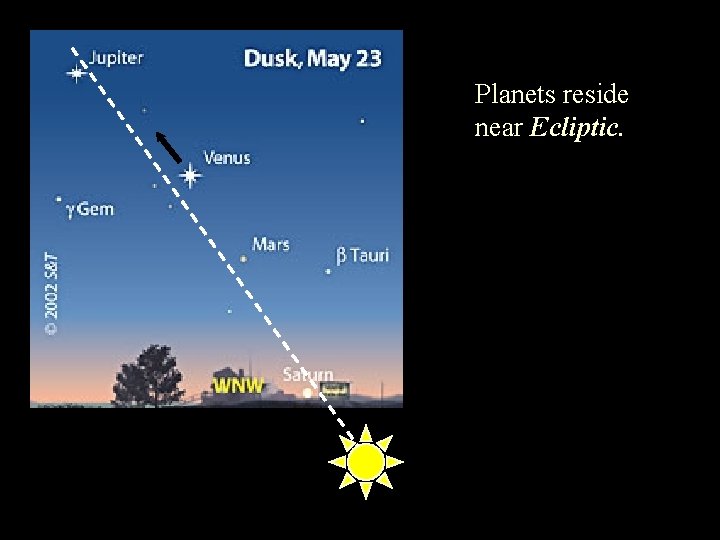
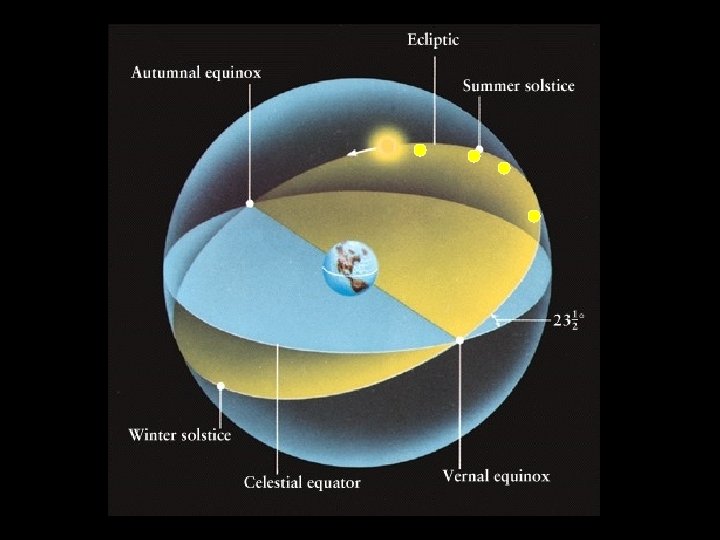
Planets reside near Ecliptic.
[Sky. Globe]
Alien’s eye view. . . Venus Sun Earth Mars Complicated!
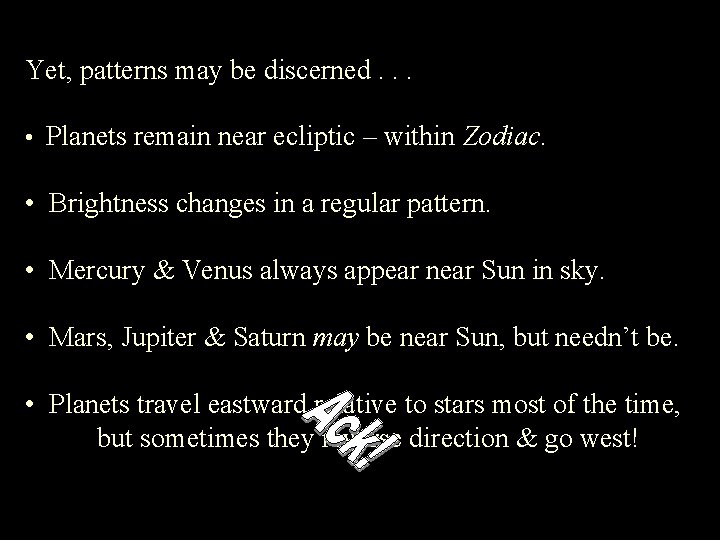
Yet, patterns may be discerned. . . • Planets remain near ecliptic – within Zodiac. • Brightness changes in a regular pattern. • Mercury & Venus always appear near Sun in sky. • Mars, Jupiter & Saturn may be near Sun, but needn’t be. • Planets travel eastward relative to stars most of the time, but sometimes they reverse direction & go west!
Jupiter & Venus are currently “in” Gemini.
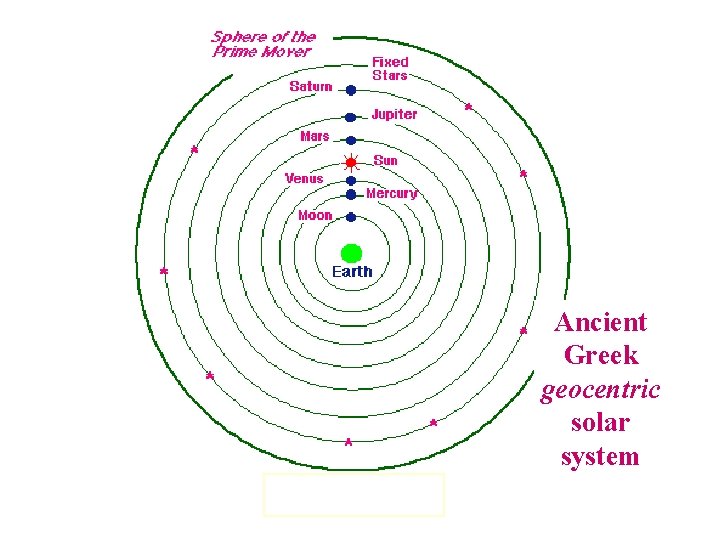
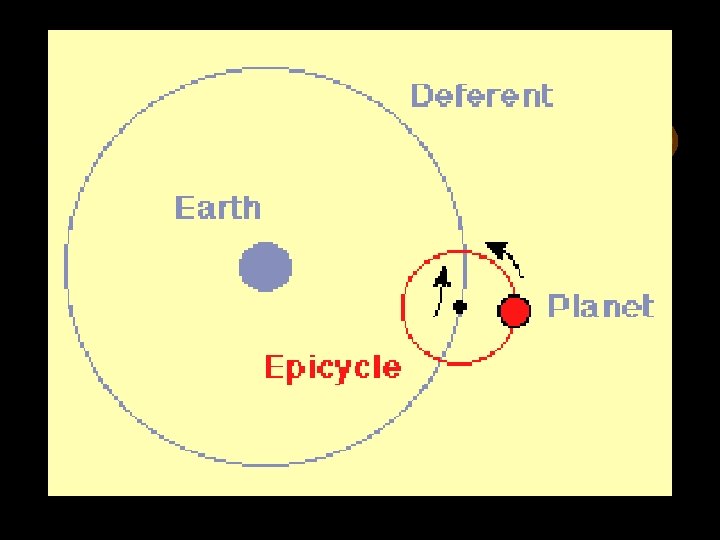
Ancient Greek geocentric solar system
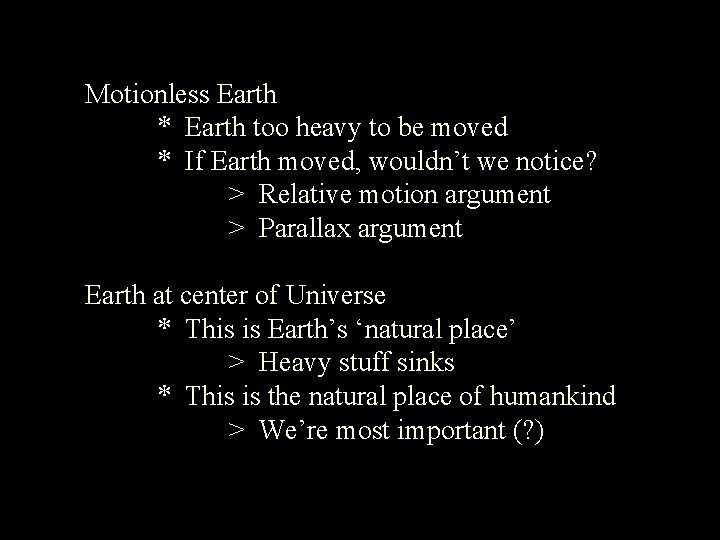
Motionless Earth * Earth too heavy to be moved * If Earth moved, wouldn’t we notice? > Relative motion argument > Parallax argument Earth at center of Universe * This is Earth’s ‘natural place’ > Heavy stuff sinks * This is the natural place of humankind > We’re most important (? )
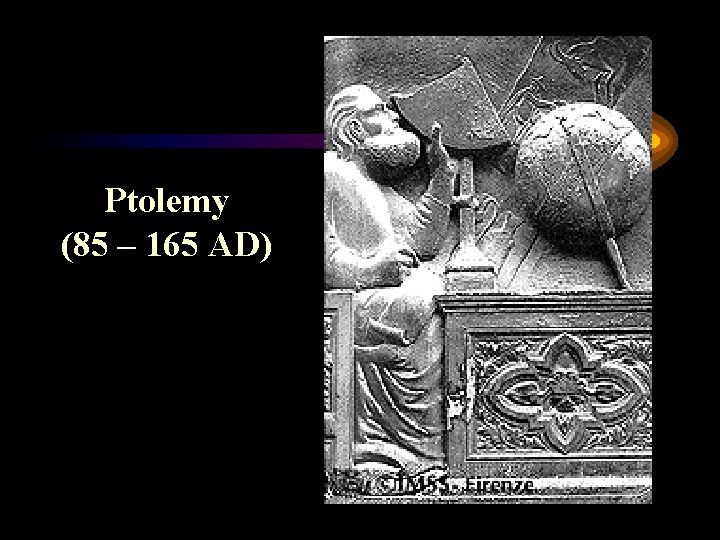
Ptolemy (85 – 165 AD)
Results: Planet-Earth distance changes Planet sometimes goes backward
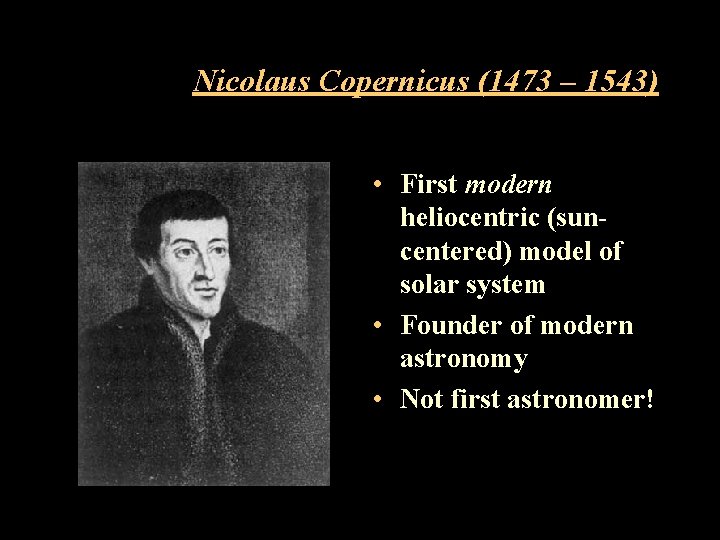
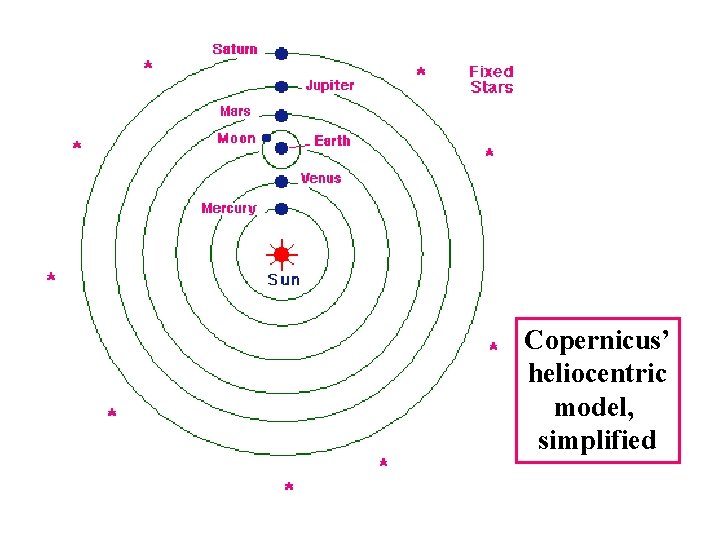
Nicolaus Copernicus (1473 – 1543) • First modern heliocentric (suncentered) model of solar system • Founder of modern astronomy • Not first astronomer!
Copernicus’ heliocentric model, simplified
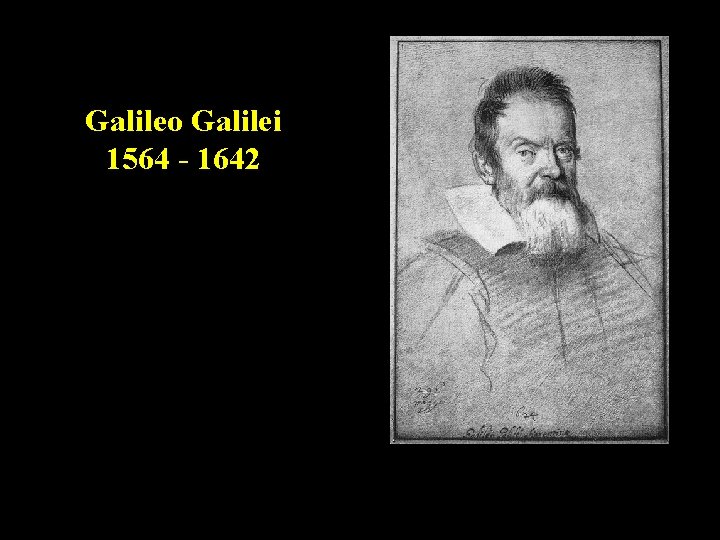
Galileo Galilei 1564 - 1642
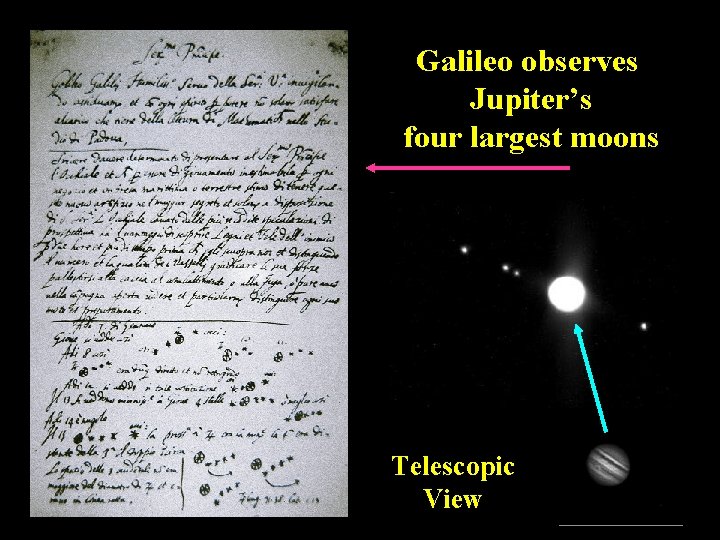
Galileo observes Jupiter’s four largest moons Telescopic View
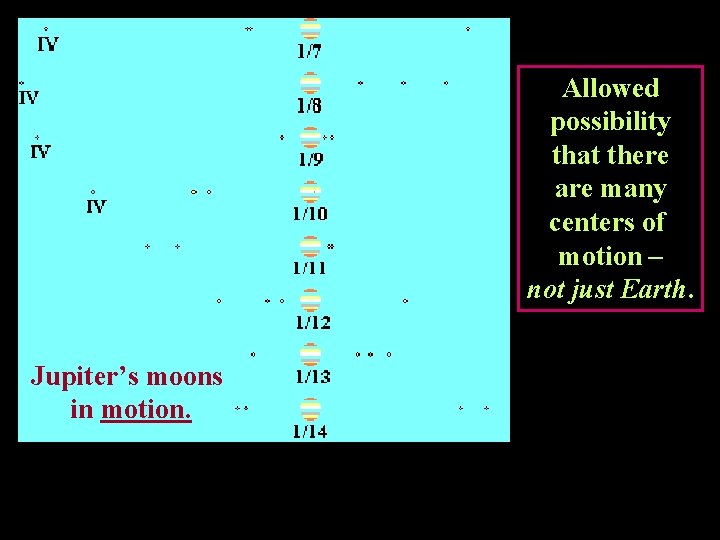
Allowed possibility that there are many centers of motion – not just Earth. Jupiter’s moons in motion.
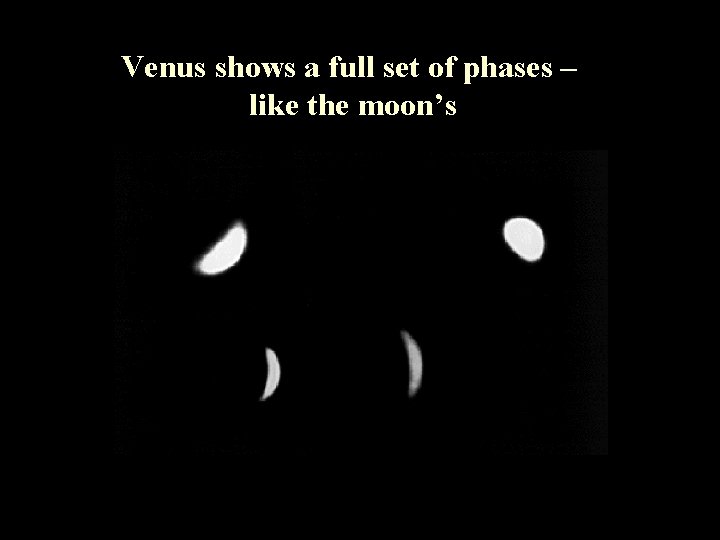
Venus shows a full set of phases – like the moon’s
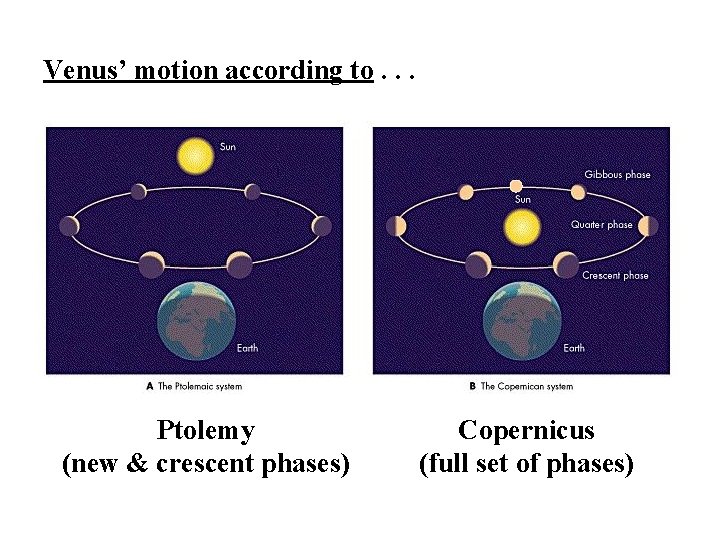
Venus’ motion according to. . . Ptolemy (new & crescent phases) Copernicus (full set of phases)
ORBITS
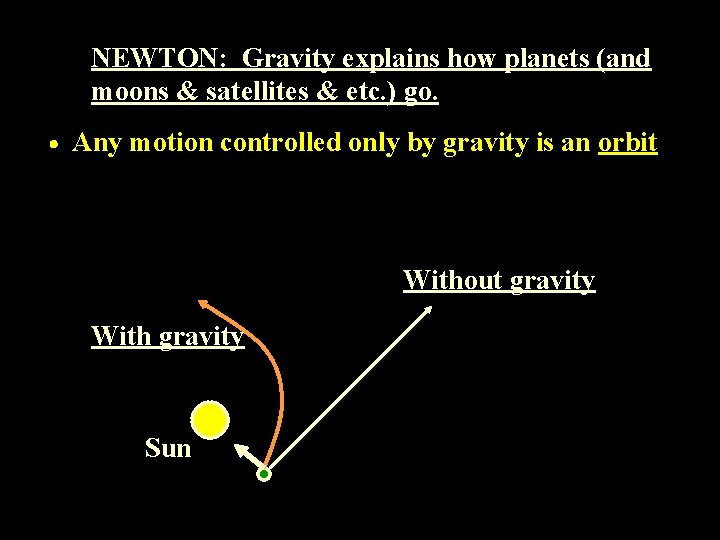
NEWTON: Gravity explains how planets (and moons & satellites & etc. ) go. Any motion controlled only by gravity is an orbit Without gravity With gravity Sun
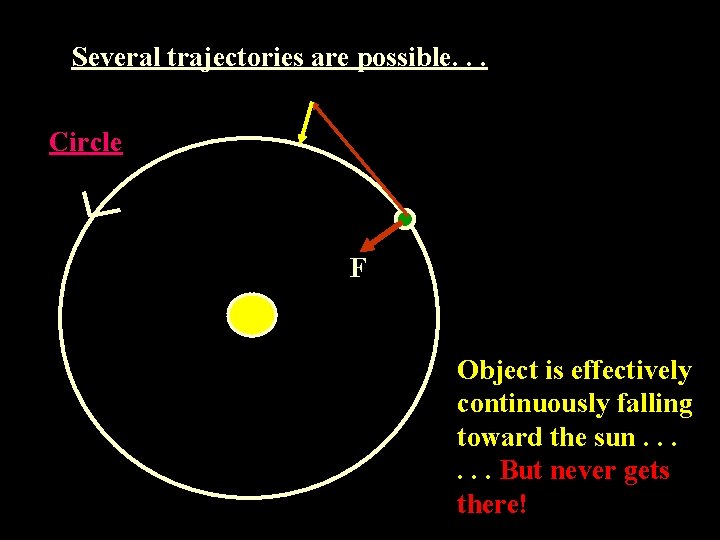
Several trajectories are possible. . . Circle F Object is effectively continuously falling toward the sun. . . But never gets there!
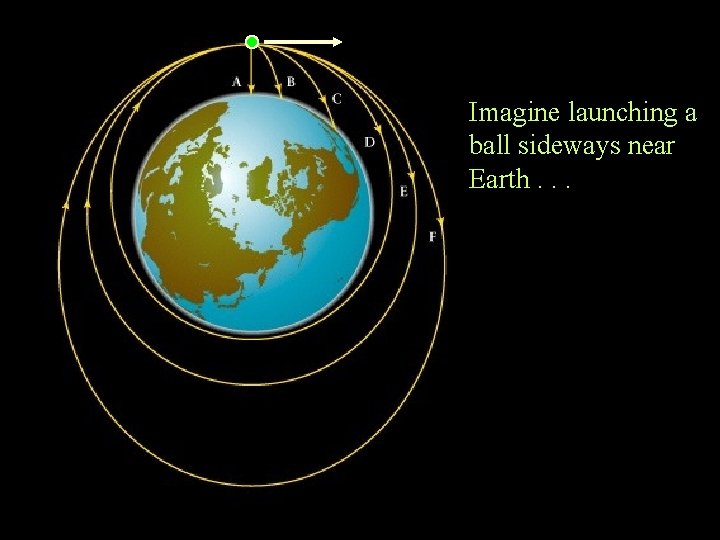
Imagine launching a ball sideways near Earth. . .
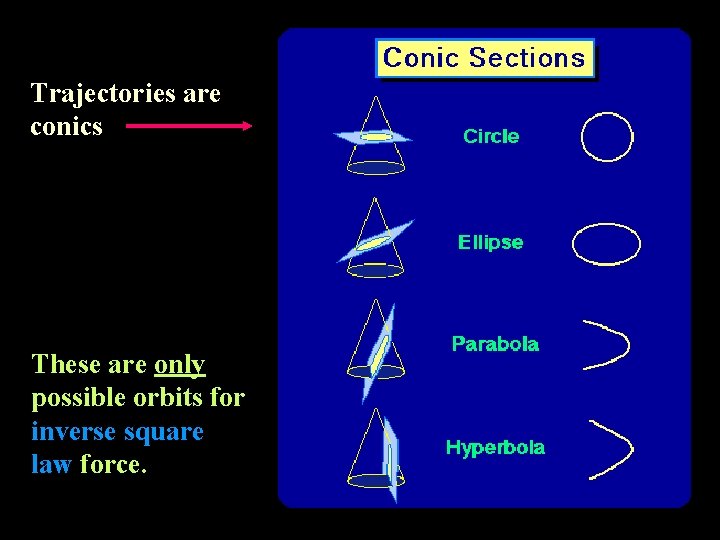
Possible trajectories: “Escape” Circle Ellipse Parabola Hyperbola Which one you get depends on speed (v)! v
Trajectories are conics These are only possible orbits for inverse square law force.
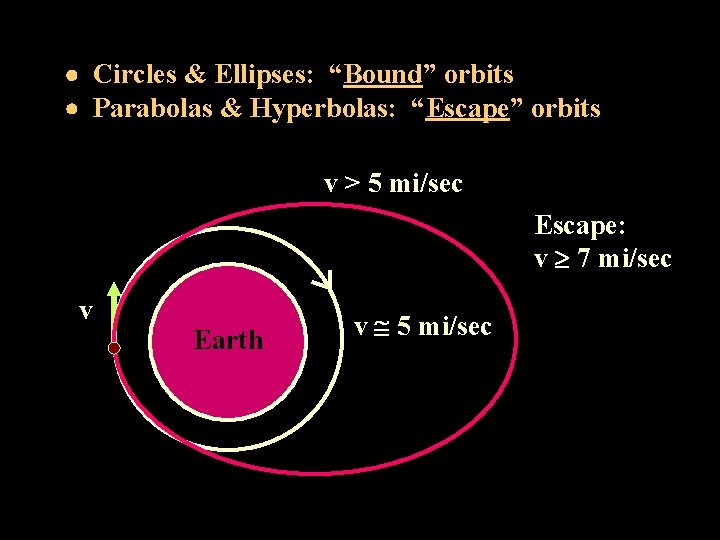
Circles & Ellipses: “Bound” orbits Parabolas & Hyperbolas: “Escape” orbits v > 5 mi/sec Escape: v 7 mi/sec v Earth v 5 mi/sec
KEPLER’S LAWS
Johannes Kepler (1571 – 1630)
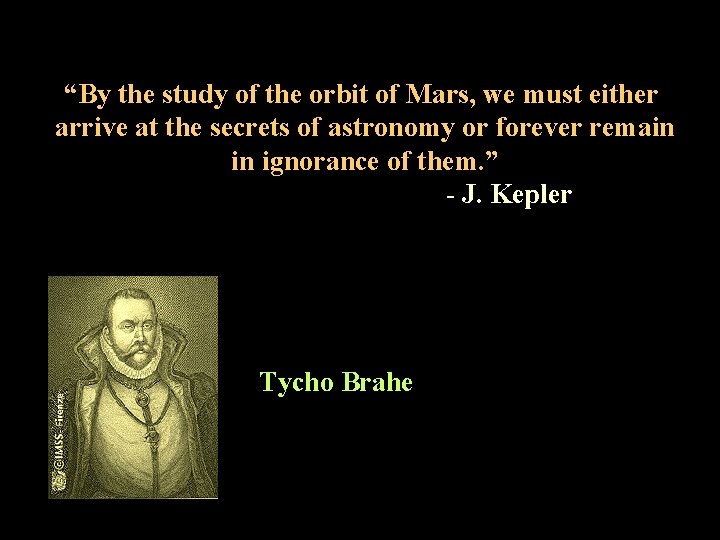
“By the study of the orbit of Mars, we must either arrive at the secrets of astronomy or forever remain in ignorance of them. ” - J. Kepler Tycho Brahe
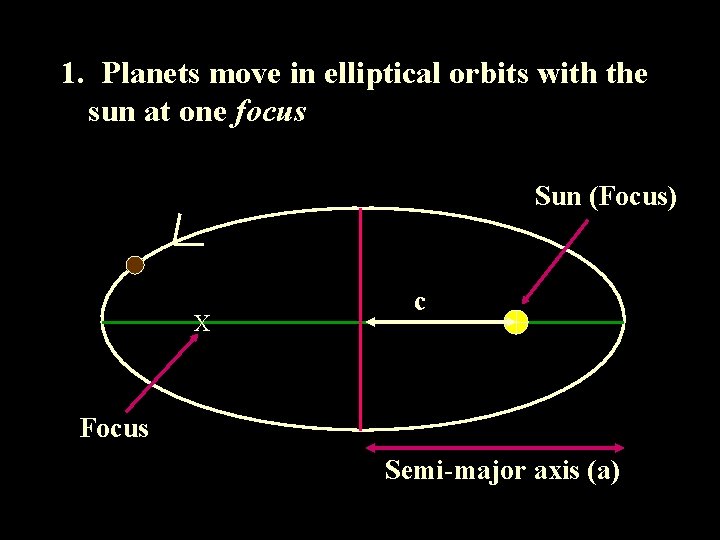
1. Planets move in elliptical orbits with the sun at one focus Sun (Focus) X c Focus Semi-major axis (a)
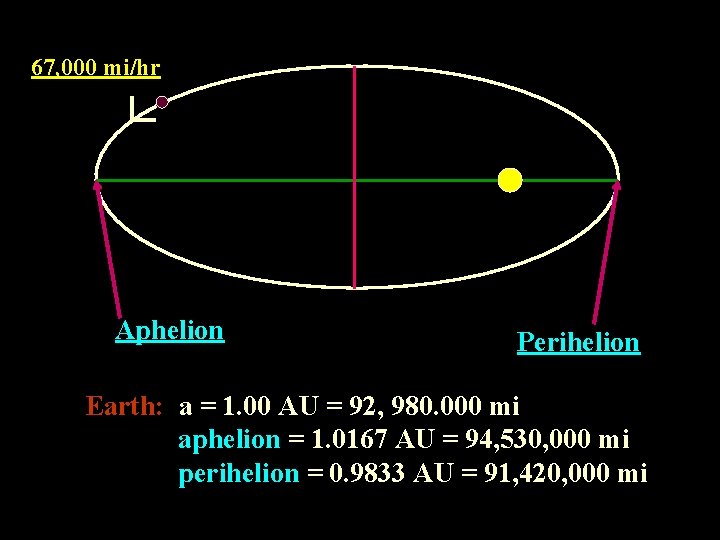
67, 000 mi/hr Aphelion Perihelion Earth: a = 1. 00 AU = 92, 980. 000 mi aphelion = 1. 0167 AU = 94, 530, 000 mi perihelion = 0. 9833 AU = 91, 420, 000 mi
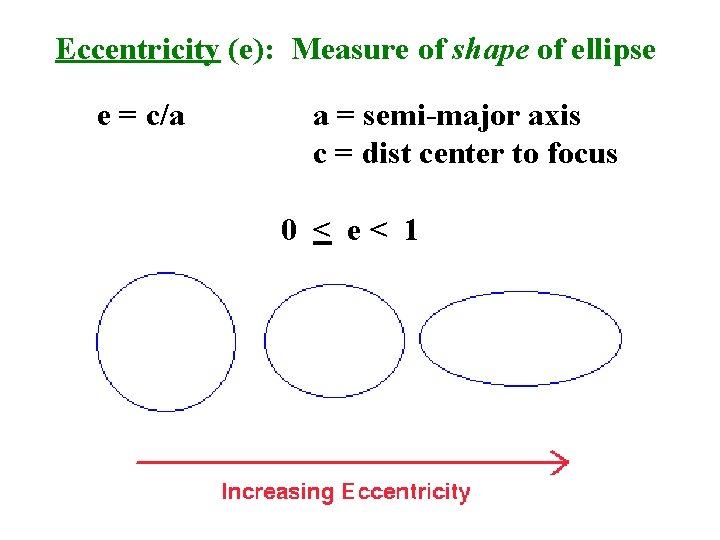
Eccentricity (e): Measure of shape of ellipse e = c/a a = semi-major axis c = dist center to focus 0 < e< 1
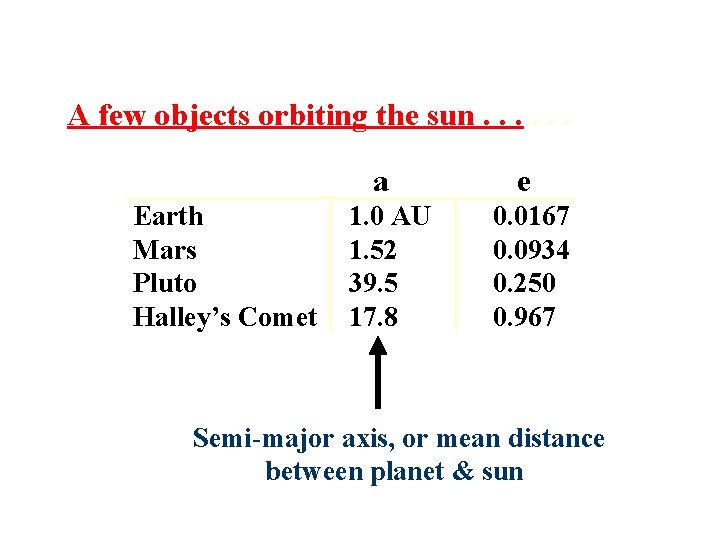
A few objects orbiting the sun. . . a Earth Mars Pluto Halley’s Comet 1. 0 AU 1. 52 39. 5 17. 8 e 0. 0167 0. 0934 0. 250 0. 967 Semi-major axis, or mean distance between planet & sun
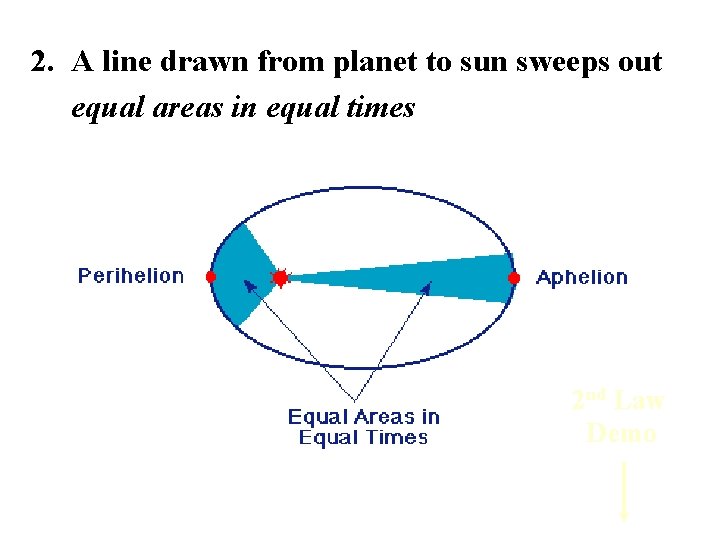
2. A line drawn from planet to sun sweeps out equal areas in equal times 2 nd Law Demo
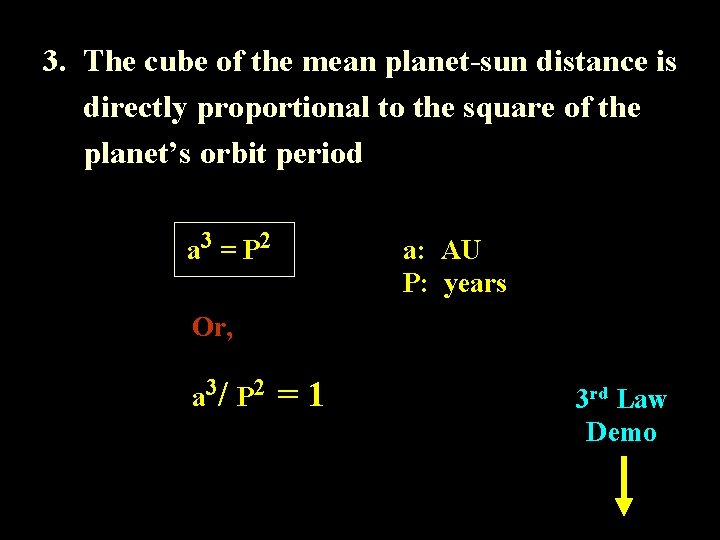
3. The cube of the mean planet-sun distance is directly proportional to the square of the planet’s orbit period a 3 = P 2 a: AU P: years Or, a 3/ P 2 =1 3 rd Law Demo
Solar System:
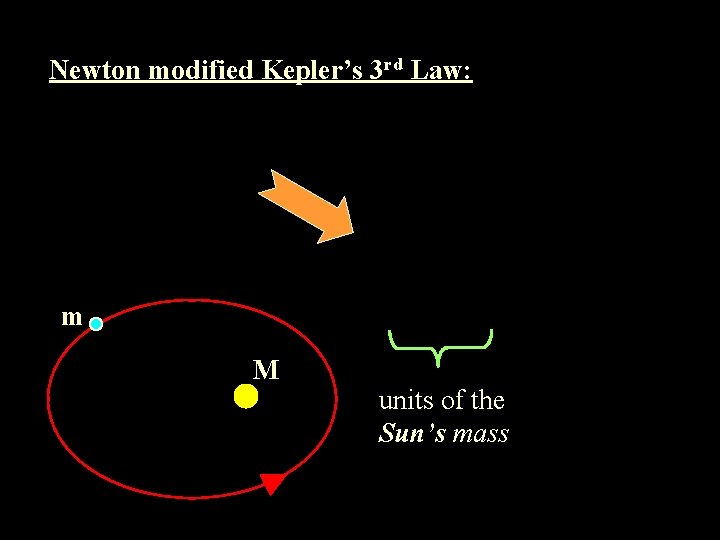
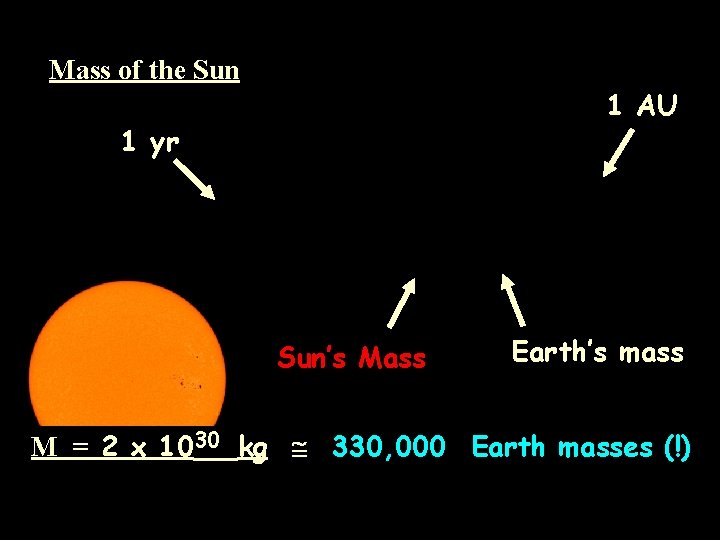
Newton modified Kepler’s 3 rd Law: m M units of the Sun’s mass
SUN’S MASS
Mass of the Sun 1 AU 1 yr Sun’s Mass Earth’s mass M = 2 x 1030 kg 330, 000 Earth masses (!)
CENTER OF MASS ORBITS
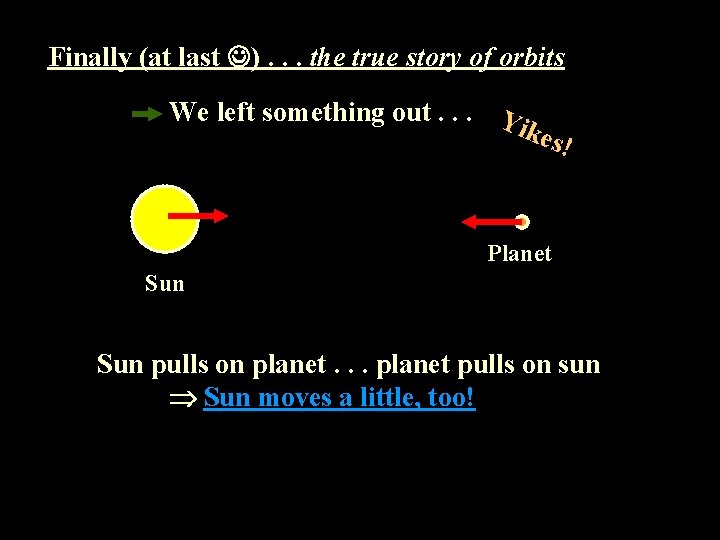
Finally (at last ). . . the true story of orbits We left something out. . . Y ike s! Planet Sun pulls on planet. . . planet pulls on sun Sun moves a little, too!
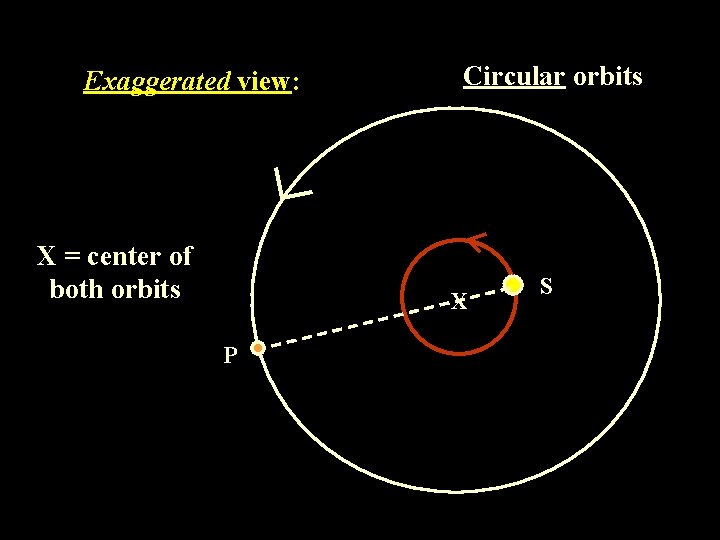
Exaggerated view: X = center of both orbits Circular orbits X P S
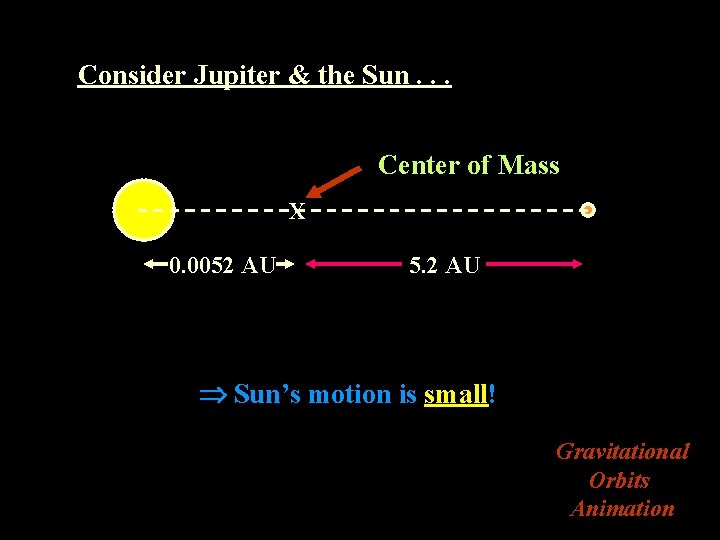
Consider Jupiter & the Sun. . . Center of Mass X 0. 0052 AU 5. 2 AU Sun’s motion is small! Gravitational Orbits Animation
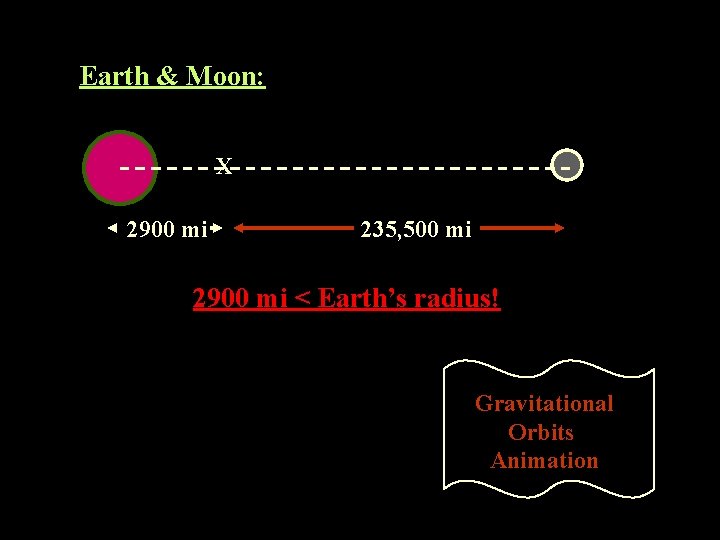
Earth & Moon: X 2900 mi 235, 500 mi 2900 mi < Earth’s radius! Gravitational Orbits Animation
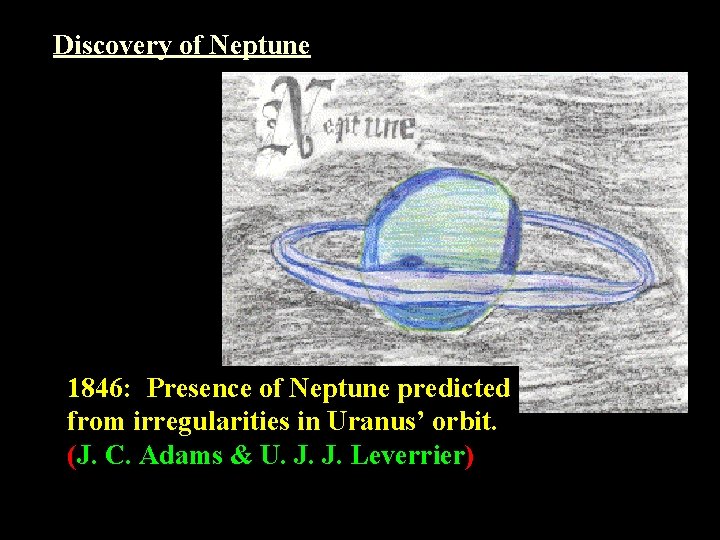
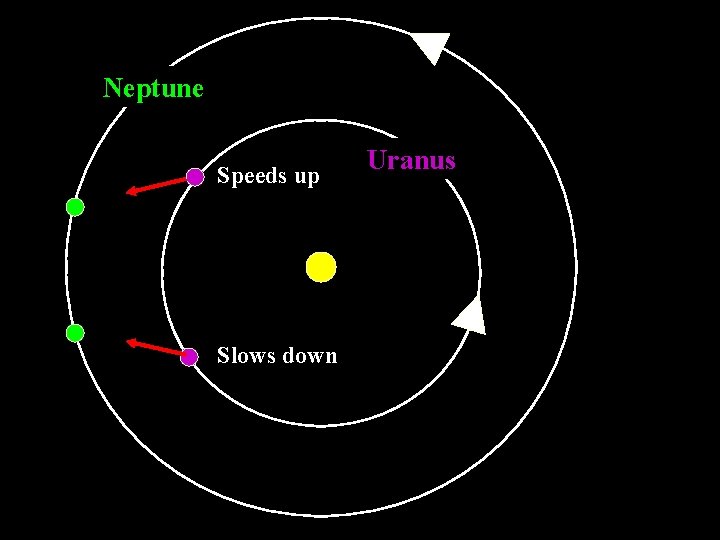
Discovery of Neptune 1846: Presence of Neptune predicted from irregularities in Uranus’ orbit. (J. C. Adams & U. J. J. Leverrier)
Neptune Speeds up Slows down Uranus