
Gratiana evaluation studies St Lucie Co 20062007 Two
- Slides: 22
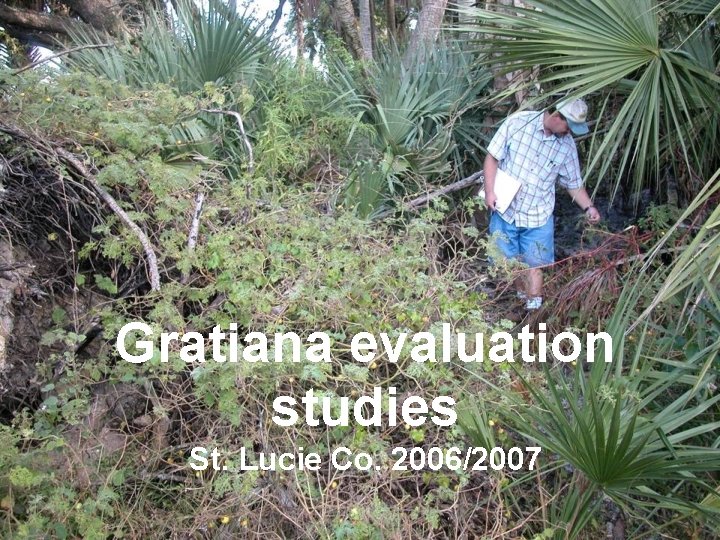
Gratiana evaluation studies St. Lucie Co. 2006/2007
Two methods • TSA demographics (plant density, beetle density, plant performance over time) • Insecticide exclusion
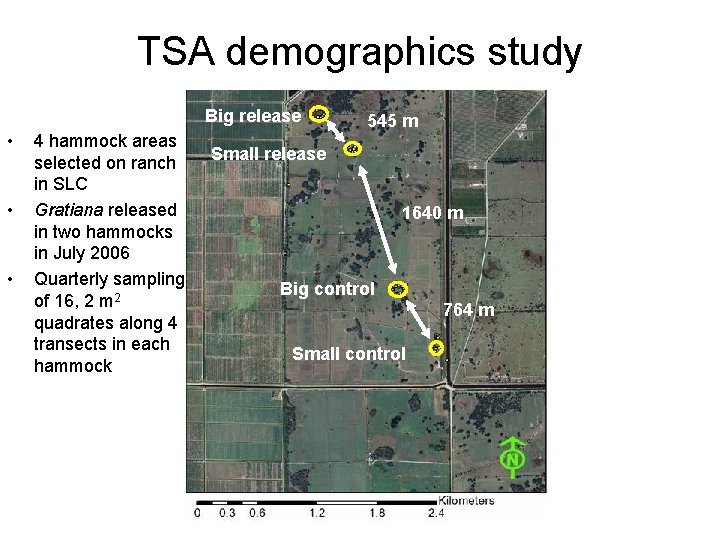
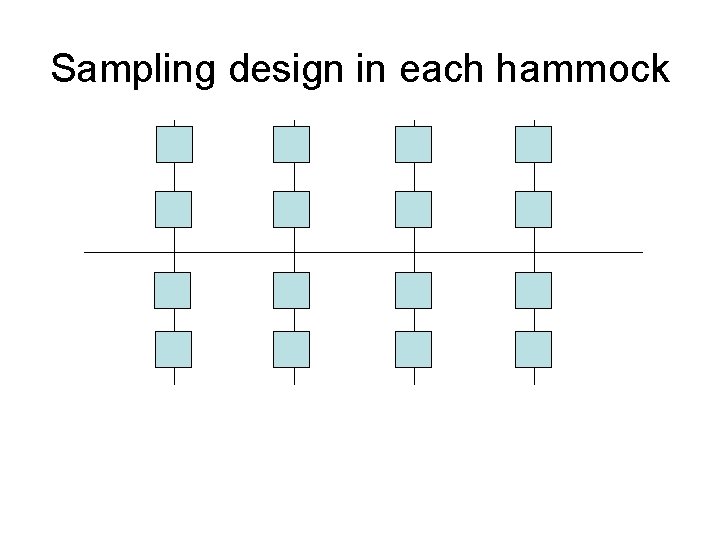
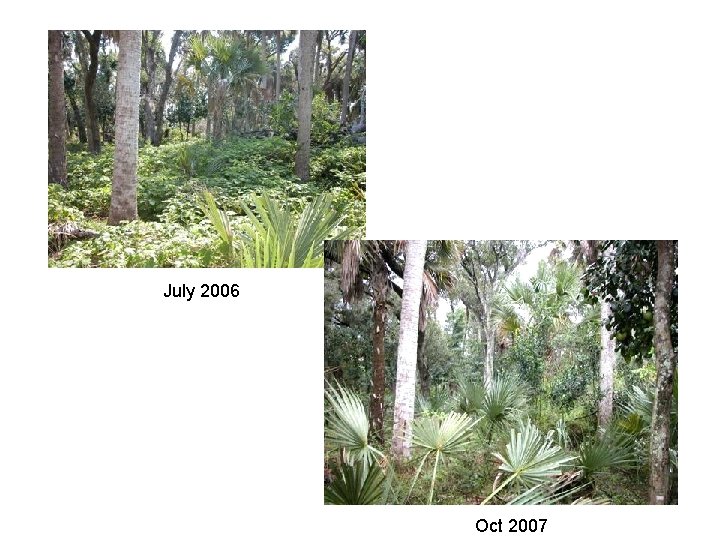
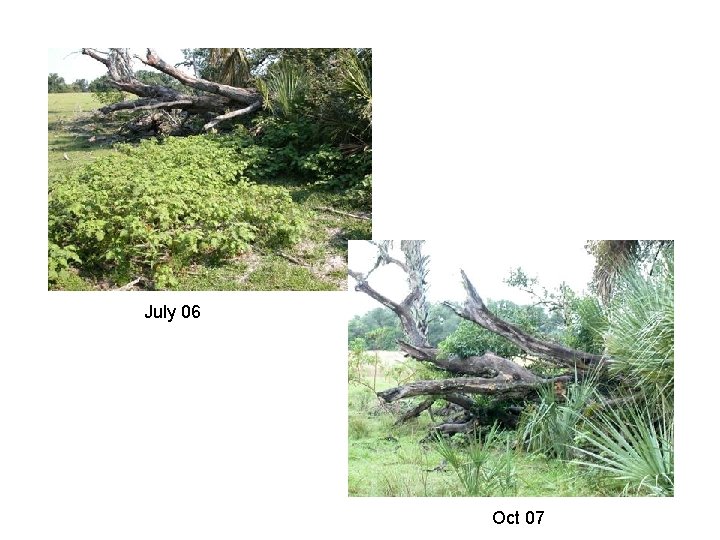
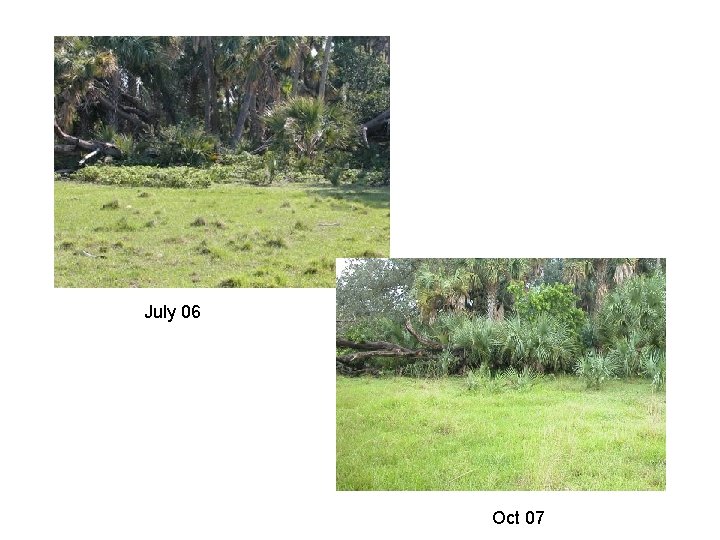
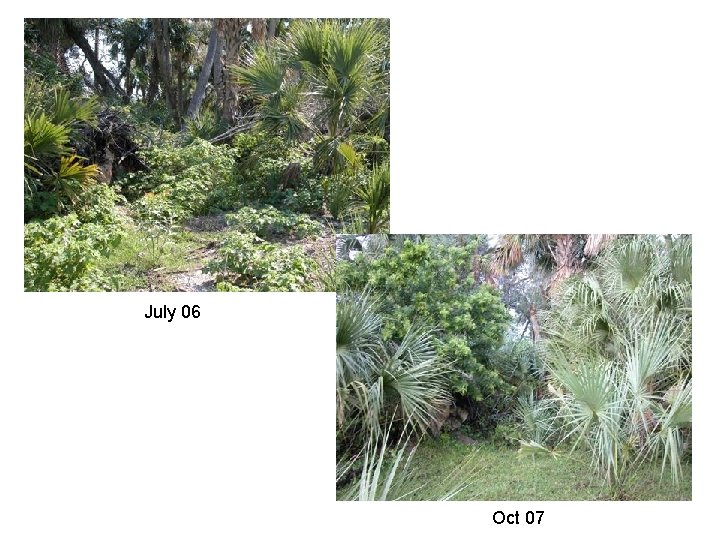
TSA demographics study Big release • • • 4 hammock areas selected on ranch in SLC Gratiana released in two hammocks in July 2006 Quarterly sampling of 16, 2 m 2 quadrates along 4 transects in each hammock 545 m Small release 1640 m Big control 764 m Small control
Sampling design in each hammock
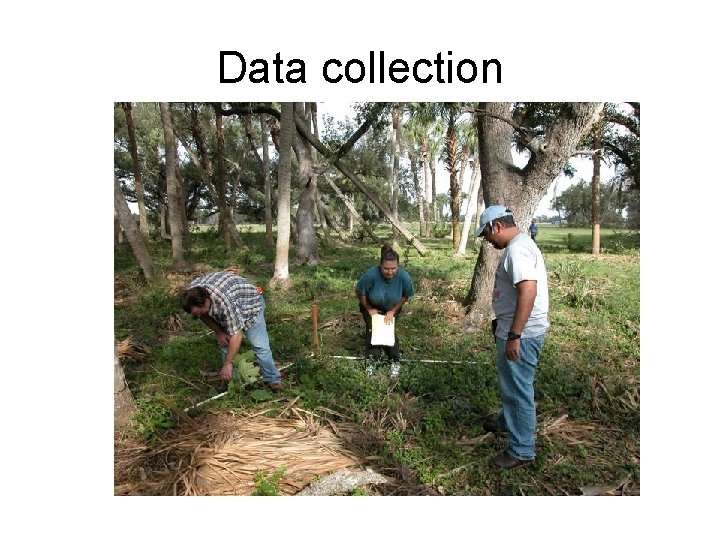
Data collection
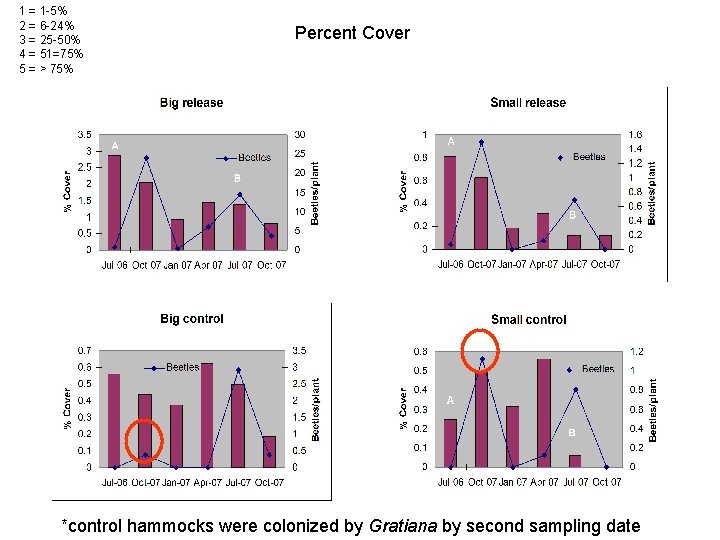
1 = 1 -5% 2 = 6 -24% 3 = 25 -50% 4 = 51=75% 5 = > 75% Percent Cover *control hammocks were colonized by Gratiana by second sampling date
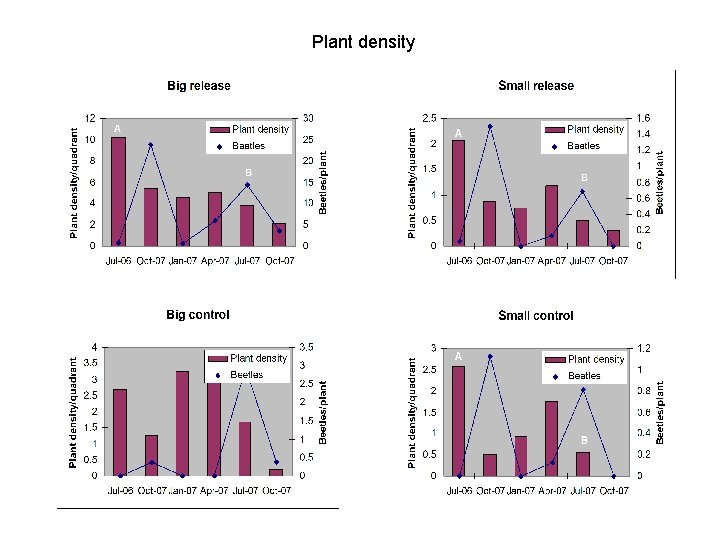
Plant density
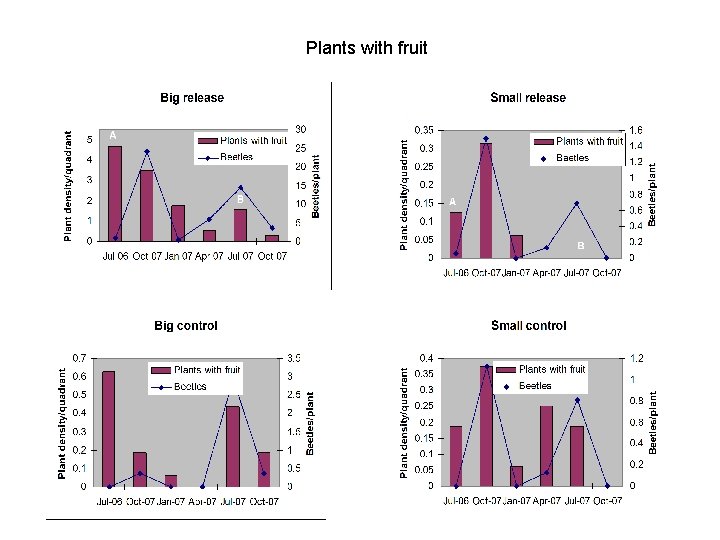
Plants with fruit
July 2006 Oct 2007
July 06 Oct 07
July 06 Oct 07
July 06 Oct 07
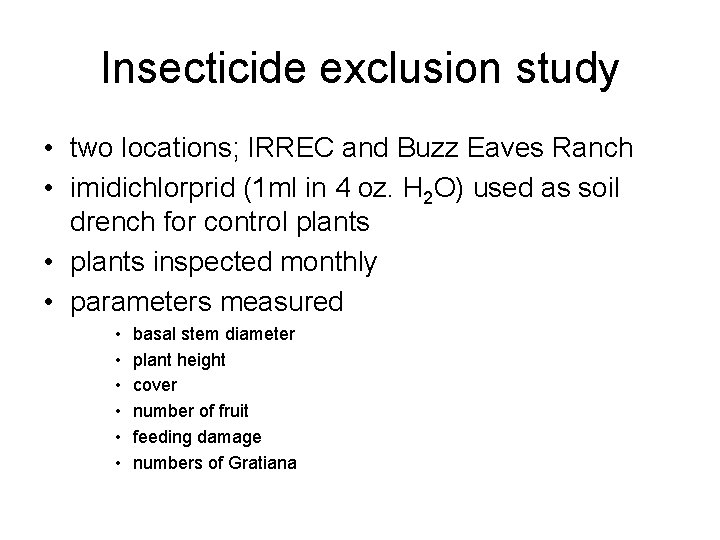
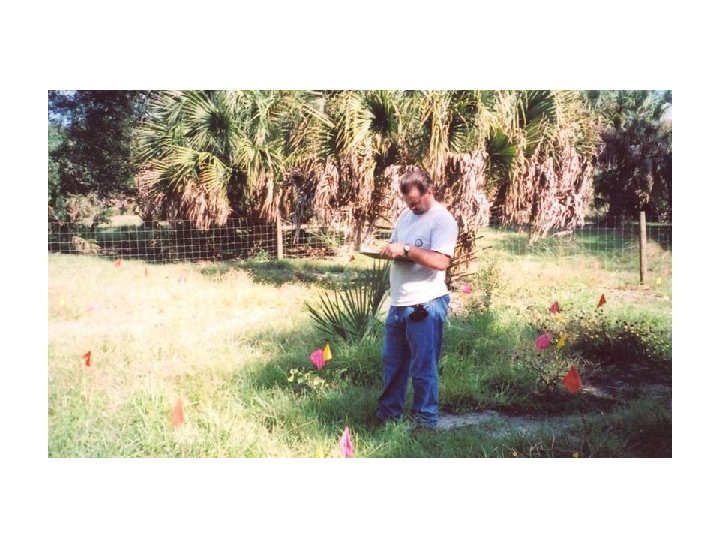
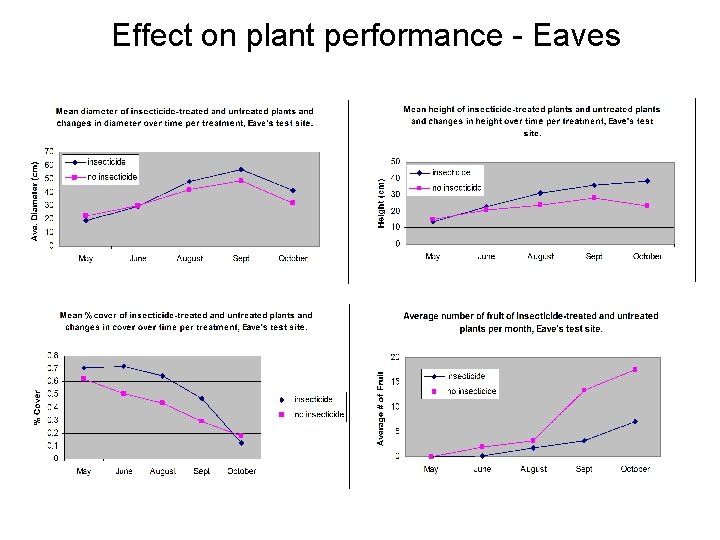
Insecticide exclusion study • two locations; IRREC and Buzz Eaves Ranch • imidichlorprid (1 ml in 4 oz. H 2 O) used as soil drench for control plants • plants inspected monthly • parameters measured • • • basal stem diameter plant height cover number of fruit feeding damage numbers of Gratiana
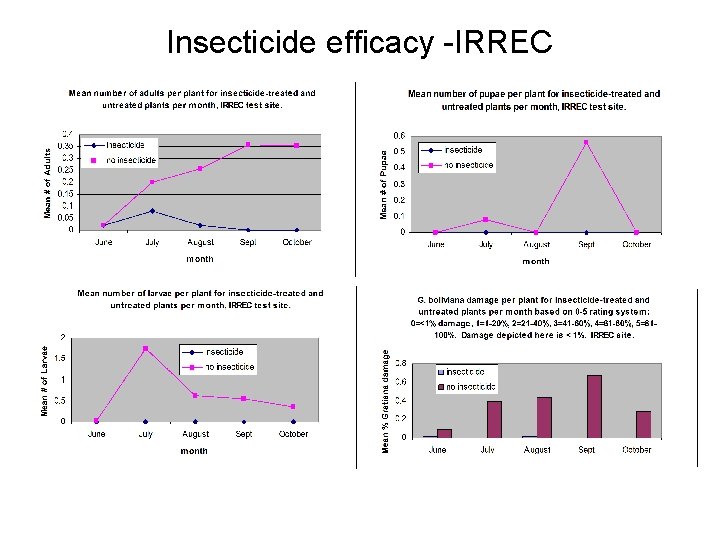
Insecticide efficacy -IRREC
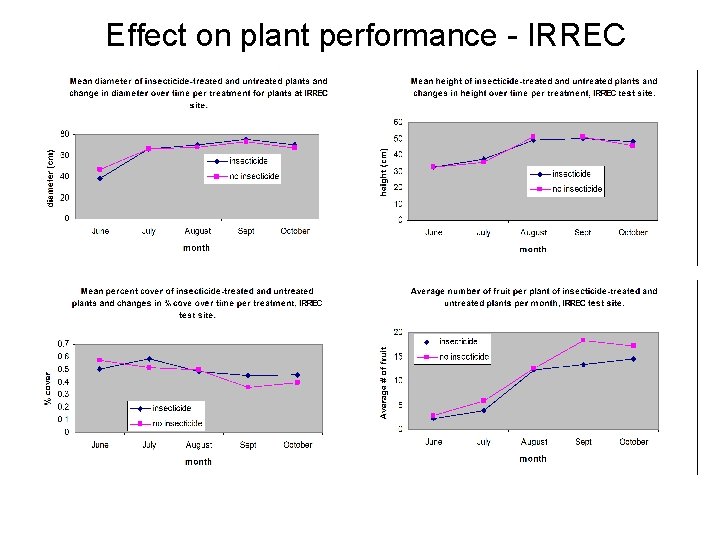
Effect on plant performance - IRREC
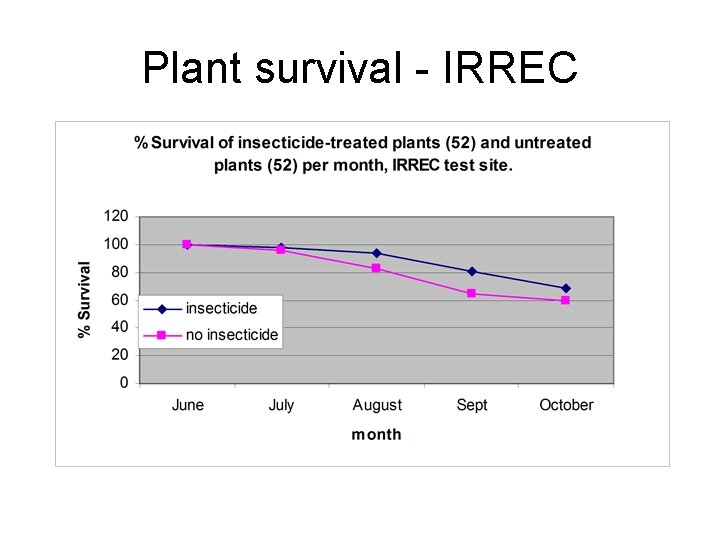
Plant survival - IRREC
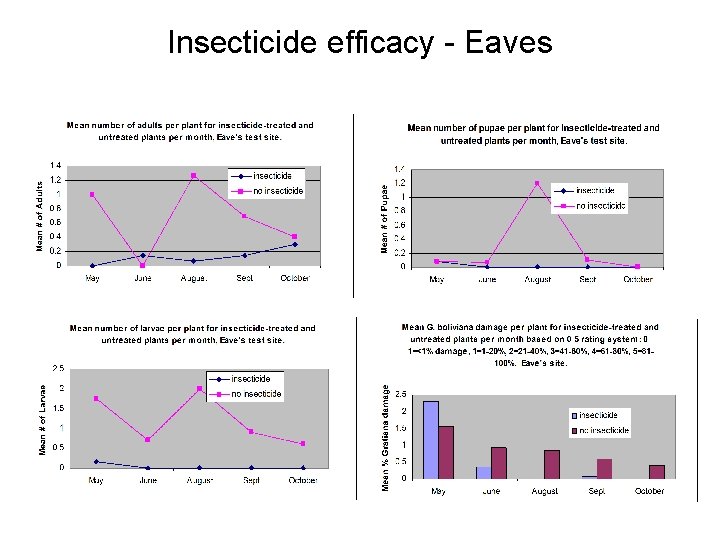
Insecticide efficacy - Eaves
Effect on plant performance - Eaves
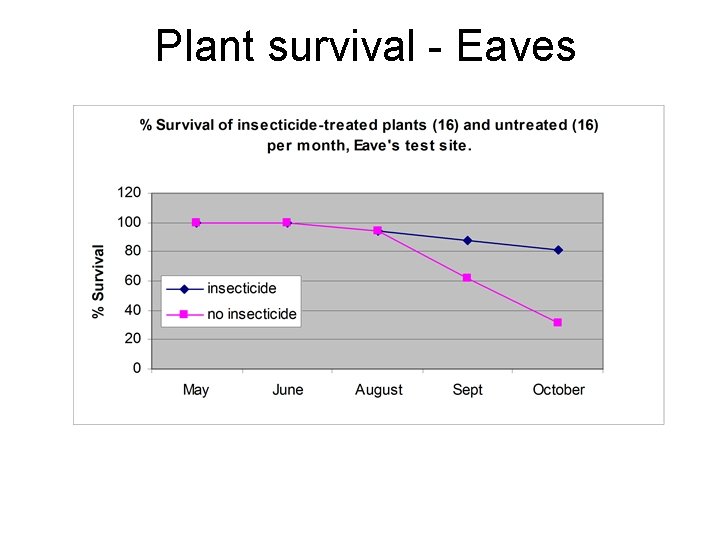
Plant survival - Eaves
Conclusions • Plant population dynamics – study design working well except for controls – effects of G. boliviana evident after one year – study will continue at least one more year • Insecticide exclusion – imidichloprid worked well to exclude Gratiana – lousy design: should not follow individual plants – insecticide exclusion may work in large plots to follow TSA demographics, but there is a possible concern about migration from untreated to treated plots