
Graphs Chapter 20 Terminology FIGURE 20 1 An

![Shortest Paths • FIGURE 20 -28 Checking weight[u] by examining the graph: (a) weight[2]](https://slidetodoc.com/presentation_image_h2/33ee0ebfd08a0faf8830822b6a82c991/image-39.jpg "Shortest Paths • FIGURE 20 -28 Checking weight[u] by examining the graph: (a) weight[2]")
![Shortest Paths • FIGURE 20 -28 Checking weight[u] by examining the graph: (c) weight[3]](https://slidetodoc.com/presentation_image_h2/33ee0ebfd08a0faf8830822b6a82c991/image-40.jpg "Shortest Paths • FIGURE 20 -28 Checking weight[u] by examining the graph: (c) weight[3]")

- Slides: 50
Graphs Chapter 20
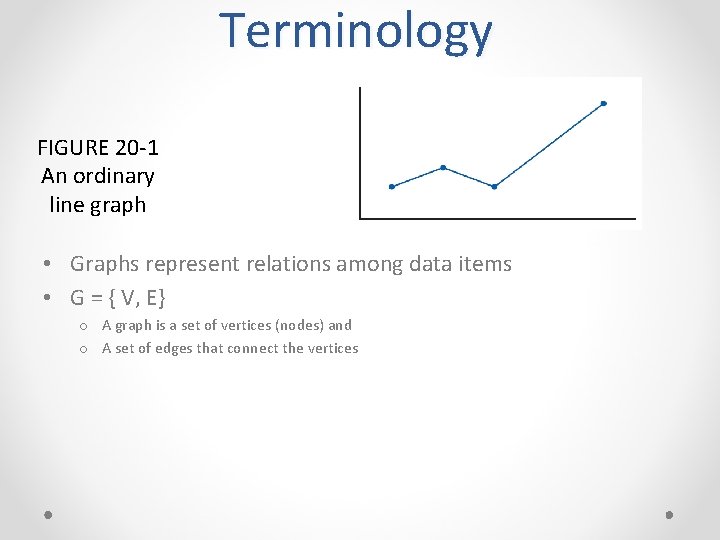
Terminology FIGURE 20 -1 An ordinary line graph • Graphs represent relations among data items • G = { V, E} o A graph is a set of vertices (nodes) and o A set of edges that connect the vertices
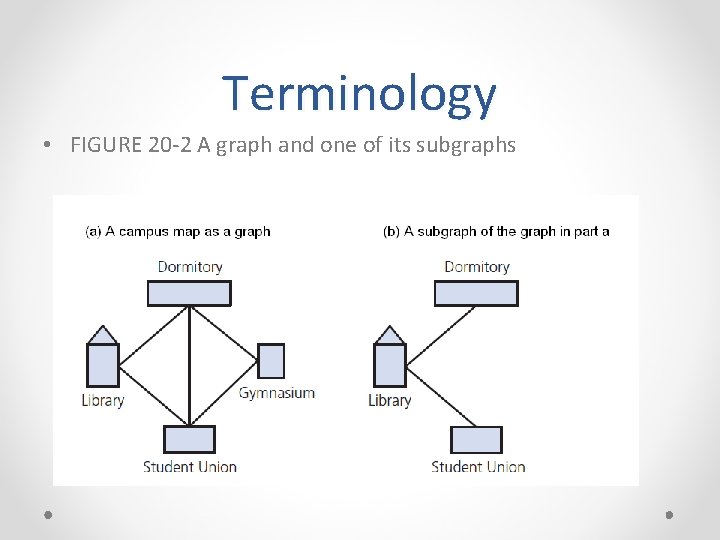
Terminology • FIGURE 20 -2 A graph and one of its subgraphs
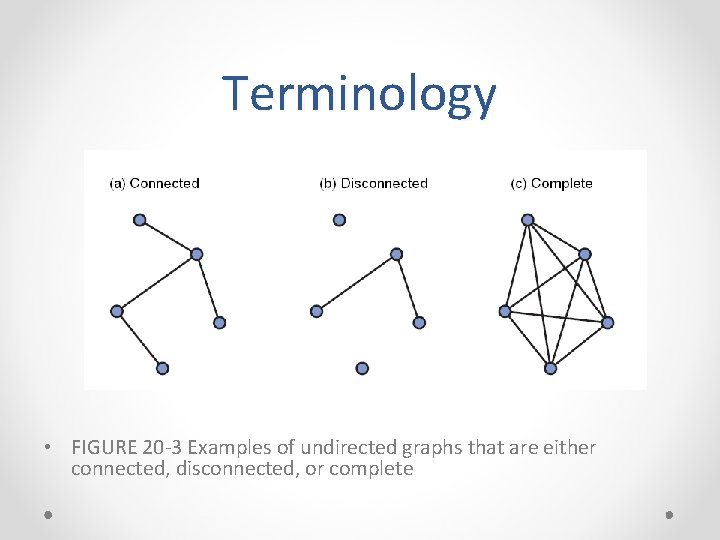
Terminology • FIGURE 20 -3 Examples of undirected graphs that are either connected, disconnected, or complete
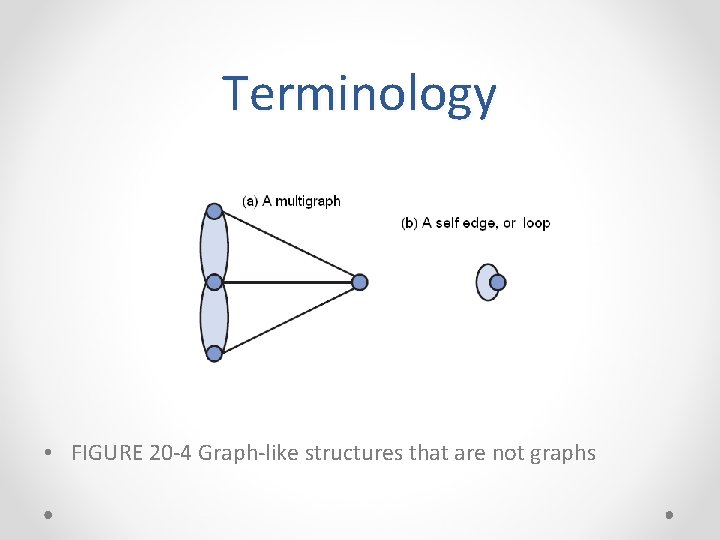
Terminology • FIGURE 20 -4 Graph-like structures that are not graphs
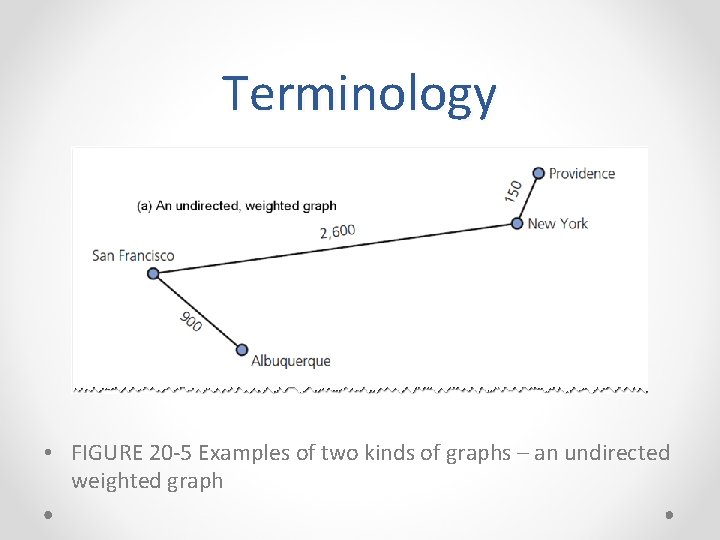
Terminology • FIGURE 20 -5 Examples of two kinds of graphs – an undirected weighted graph
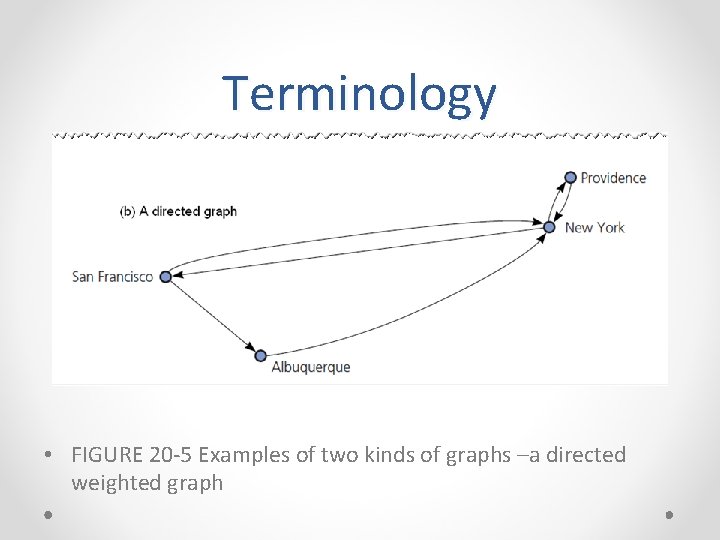
Terminology • FIGURE 20 -5 Examples of two kinds of graphs –a directed weighted graph
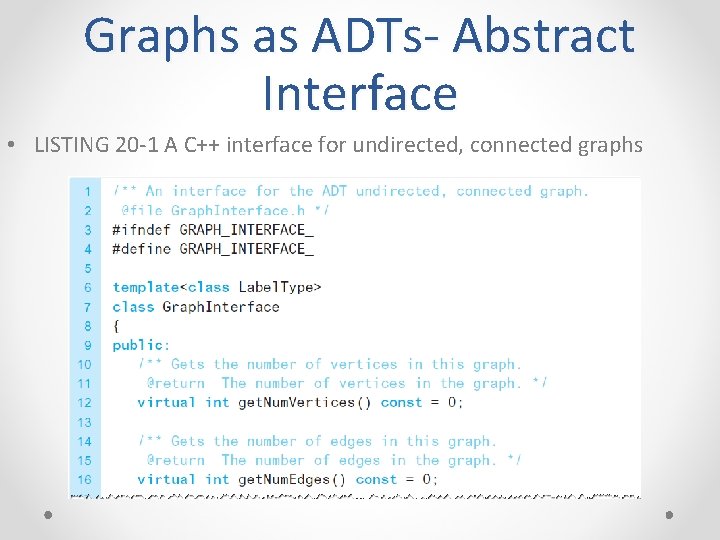
Graphs as ADTs What data structure would you use? What operations should be supplied?
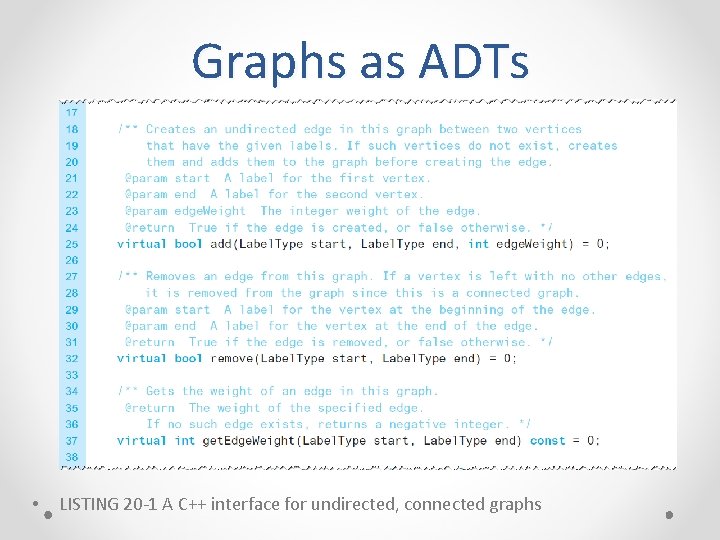
Graphs as ADT graph operations o Test if empty o Get number of vertices, edges in a graph o See if edge exists between two given vertices o Add vertex to graph whose vertices have distinct, different values from new vertex o Add/remove edge between two given vertices o Remove vertex, edges to other vertices o Retrieve vertex that contains given value
Graphs as ADTs- Abstract Interface • LISTING 20 -1 A C++ interface for undirected, connected graphs
Graphs as ADTs • LISTING 20 -1 A C++ interface for undirected, connected graphs
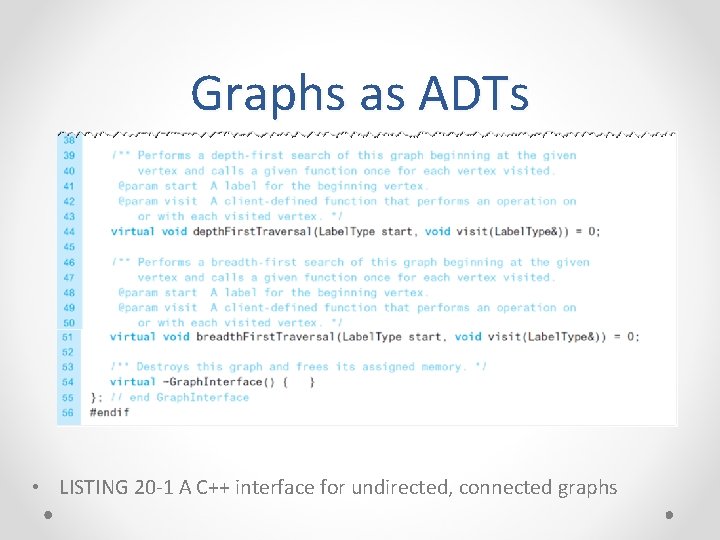
Graphs as ADTs • LISTING 20 -1 A C++ interface for undirected, connected graphs
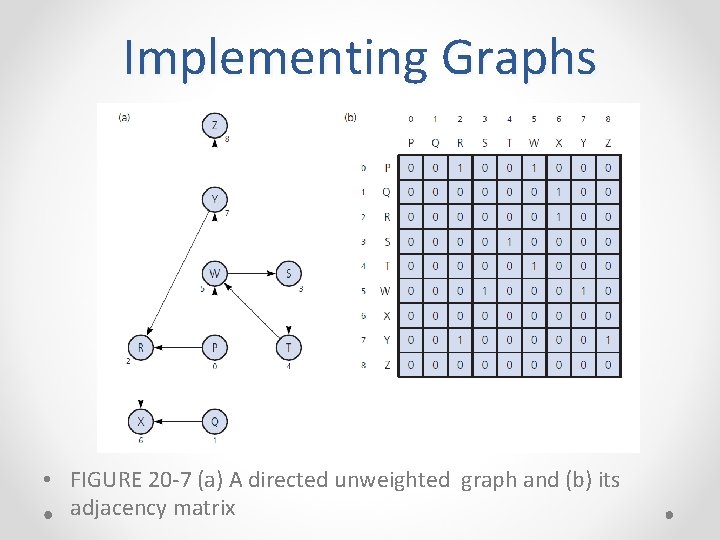
Implementing Graphs • FIGURE 20 -7 (a) A directed unweighted graph and (b) its adjacency matrix
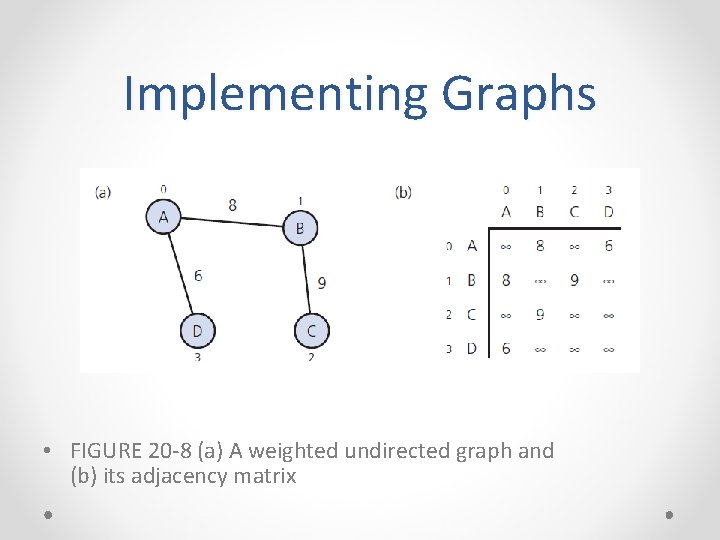
Implementing Graphs • FIGURE 20 -8 (a) A weighted undirected graph and (b) its adjacency matrix
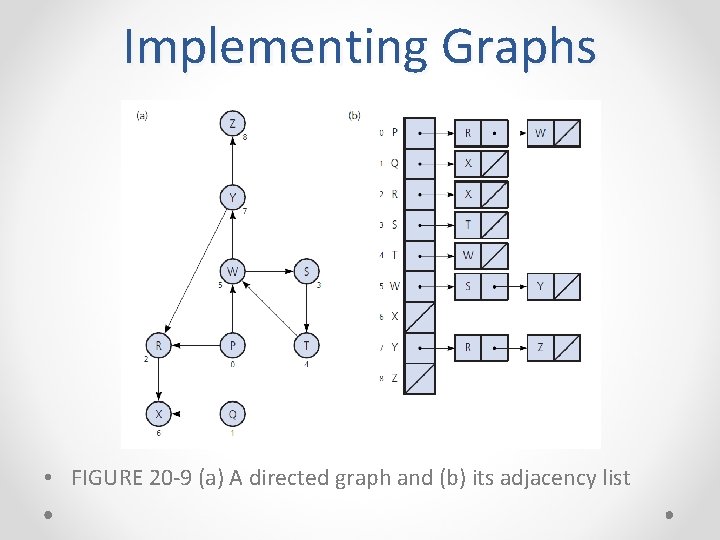
Implementing Graphs • FIGURE 20 -9 (a) A directed graph and (b) its adjacency list
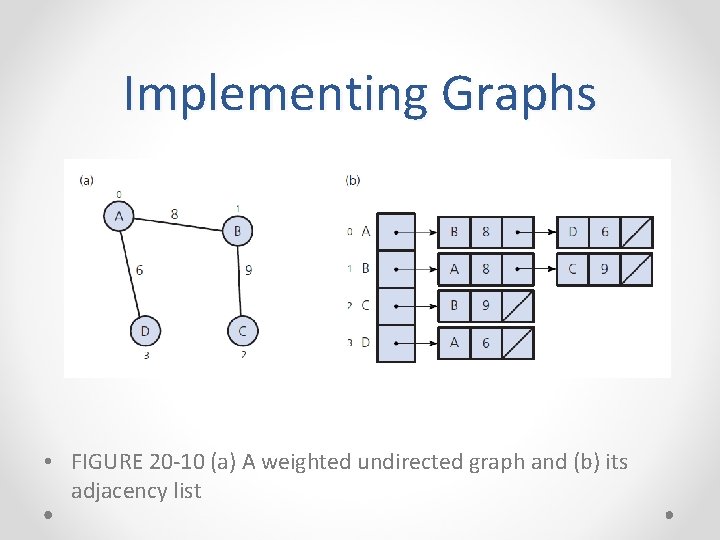
Implementing Graphs • FIGURE 20 -10 (a) A weighted undirected graph and (b) its adjacency list
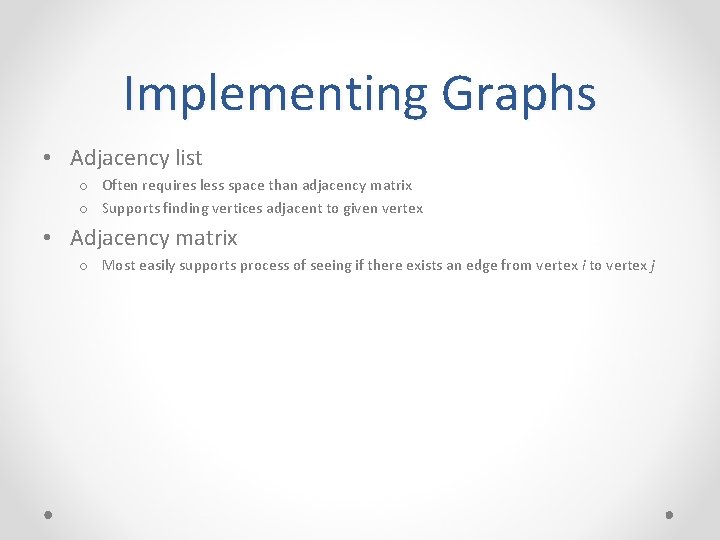
Implementing Graphs • Adjacency list o Often requires less space than adjacency matrix o Supports finding vertices adjacent to given vertex • Adjacency matrix o Most easily supports process of seeing if there exists an edge from vertex i to vertex j
Graph Traversals • Visits all vertices it can reach • Visits all vertices if and only if the graph is connected • Connected component o Subset of vertices visited during a traversal that begins at a given vertex
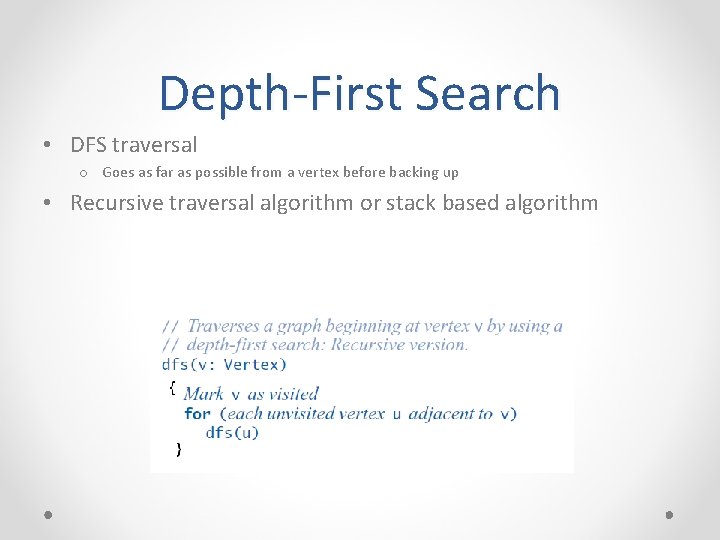
Depth-First Search • DFS traversal o Goes as far as possible from a vertex before backing up • Recursive traversal algorithm or stack based algorithm
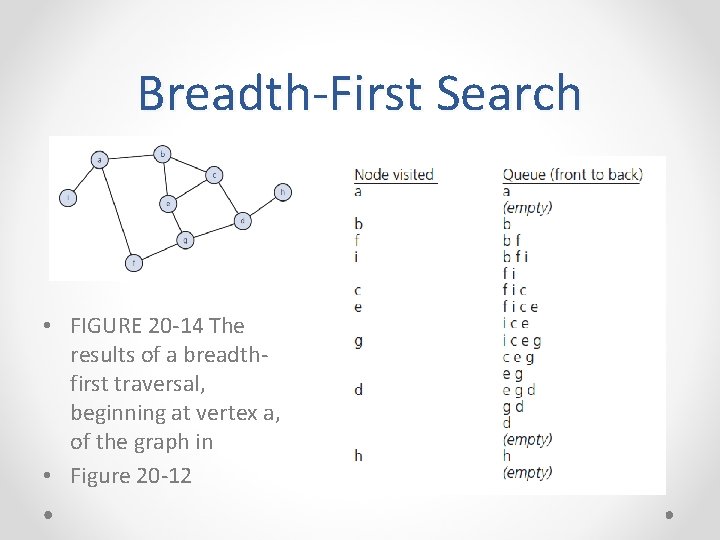
Breadth-First Search • BFS traversal o Visits all vertices adjacent to a vertex before going forward • BFS is a first visited, first explored strategy uses a queue based strategy o Contrast DFS as last visited, first explored
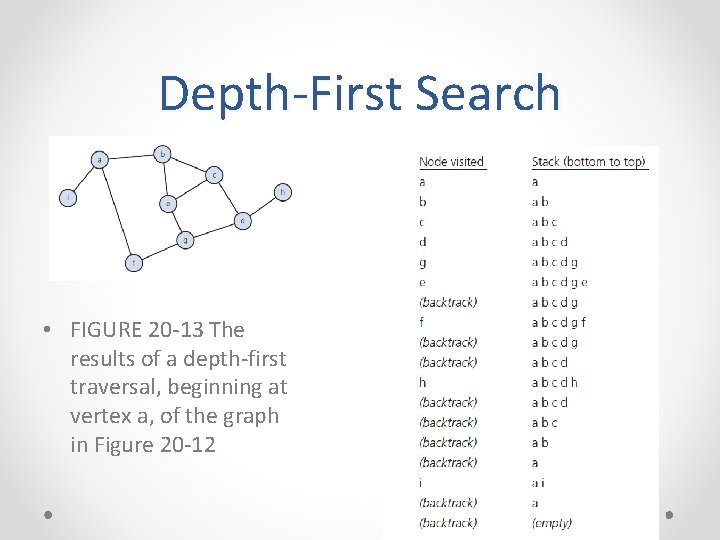
Depth-First Search • FIGURE 20 -13 The results of a depth-first traversal, beginning at vertex a, of the graph in Figure 20 -12
Breadth-First Search • FIGURE 20 -14 The results of a breadthfirst traversal, beginning at vertex a, of the graph in • Figure 20 -12
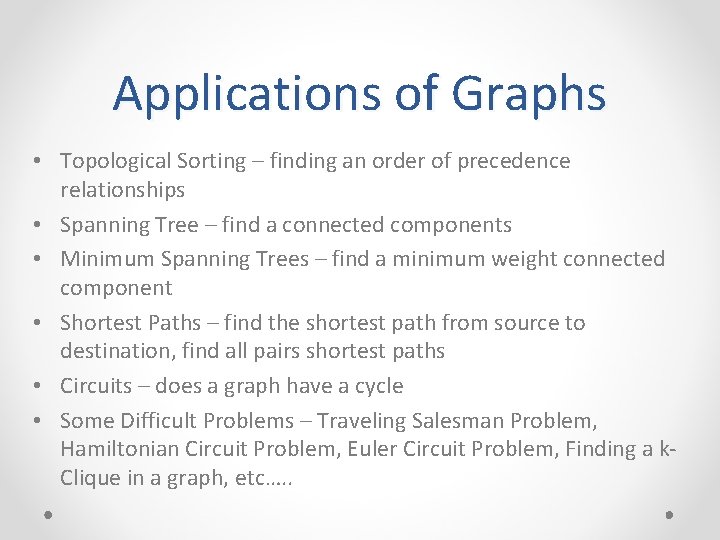
Applications of Graphs • Topological Sorting – finding an order of precedence relationships • Spanning Tree – find a connected components • Minimum Spanning Trees – find a minimum weight connected component • Shortest Paths – find the shortest path from source to destination, find all pairs shortest paths • Circuits – does a graph have a cycle • Some Difficult Problems – Traveling Salesman Problem, Hamiltonian Circuit Problem, Euler Circuit Problem, Finding a k. Clique in a graph, etc…. .
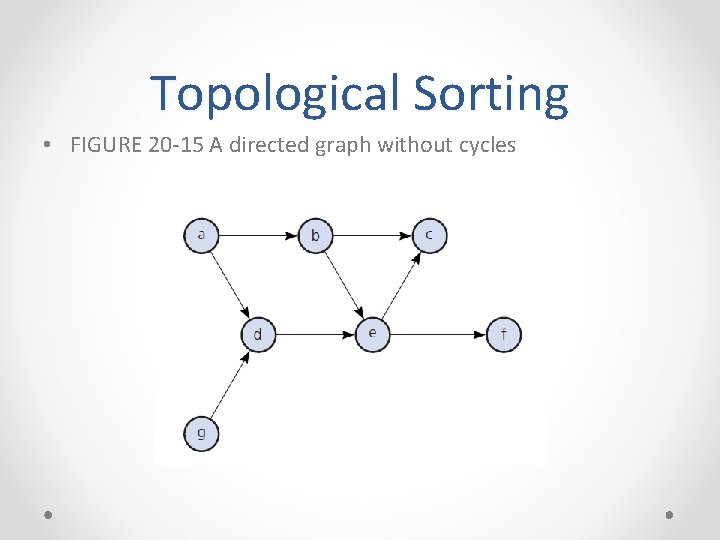
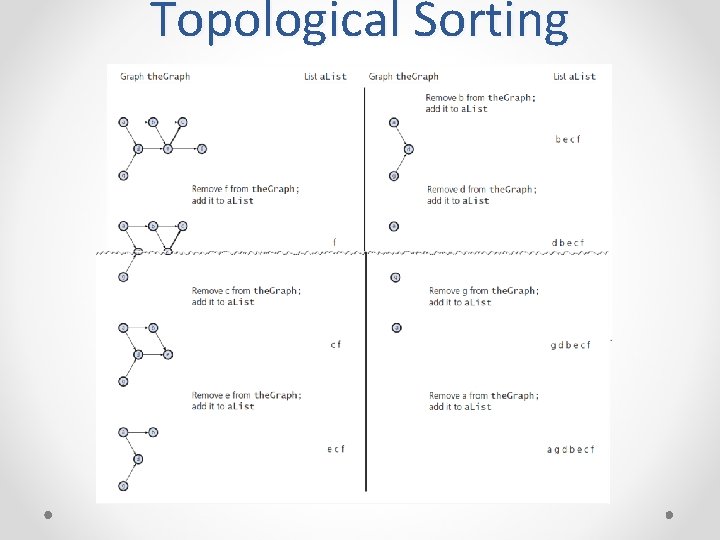
Topological Sorting • FIGURE 20 -15 A directed graph without cycles
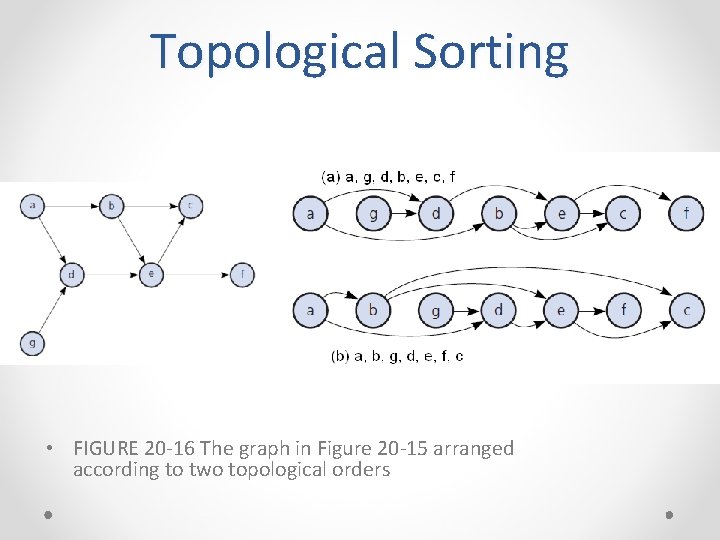
Topological Sorting • FIGURE 20 -16 The graph in Figure 20 -15 arranged according to two topological orders
Topological Sorting
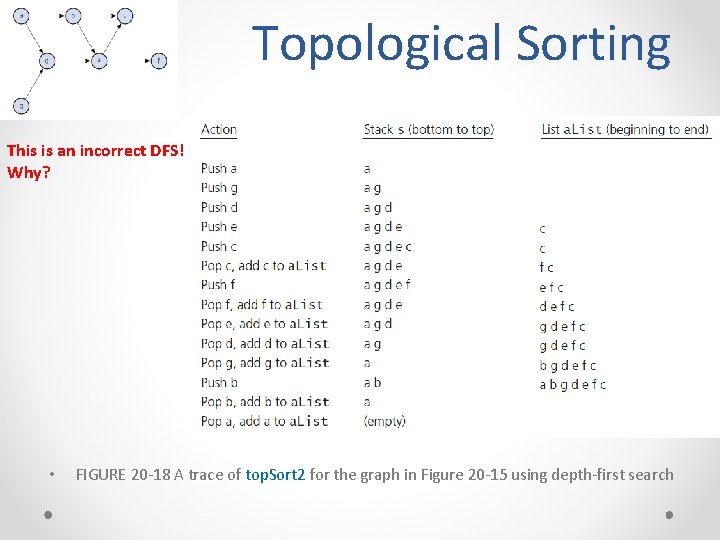
Topological Sorting This is an incorrect DFS! Why? • FIGURE 20 -18 A trace of top. Sort 2 for the graph in Figure 20 -15 using depth-first search
Spanning Trees • A tree is an undirected connected graph without cycles • Detecting a cycle in an undirected graph o Connected undirected graph with n vertices must have at least n – 1 edges o If it has exactly n – 1 edges, it cannot contain a cycle o With more than n – 1 edges, must contain at least one cycle
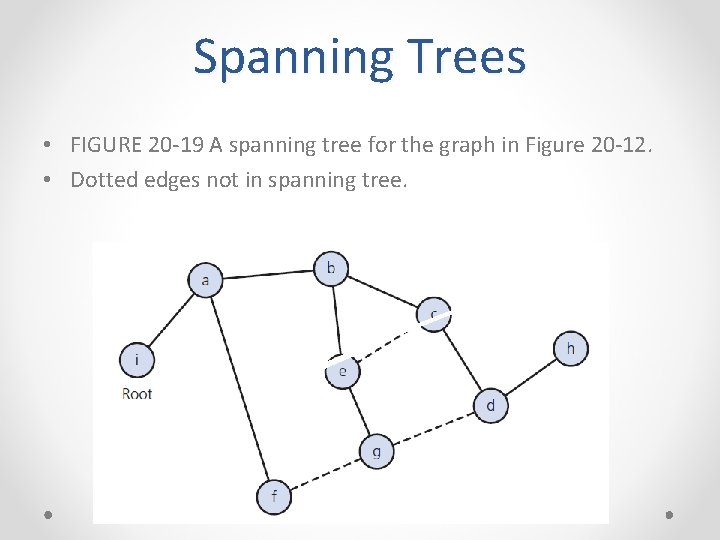
Spanning Trees • FIGURE 20 -19 A spanning tree for the graph in Figure 20 -12. • Dotted edges not in spanning tree.
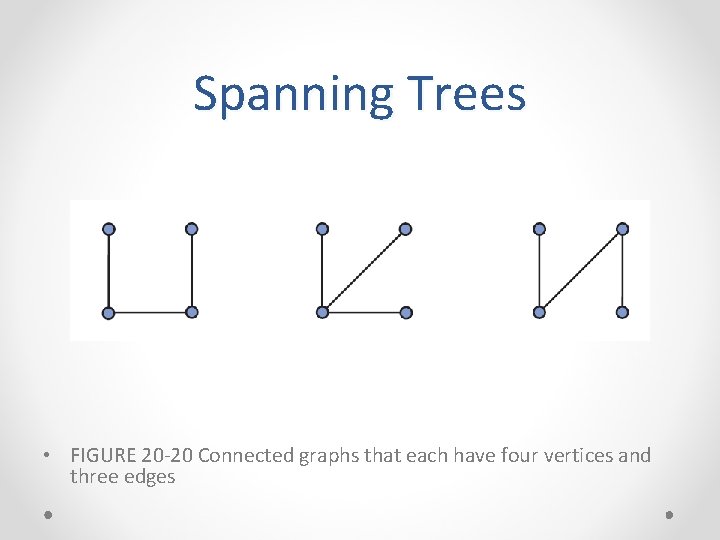
Spanning Trees • FIGURE 20 -20 Connected graphs that each have four vertices and three edges
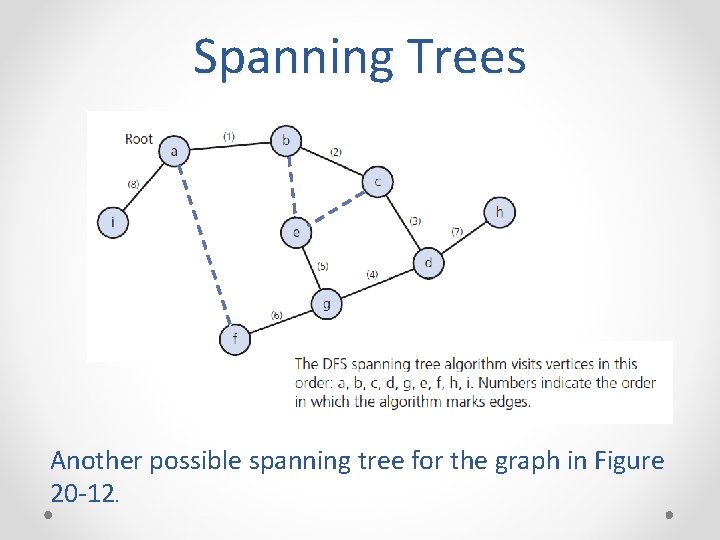
Spanning Trees Another possible spanning tree for the graph in Figure 20 -12.
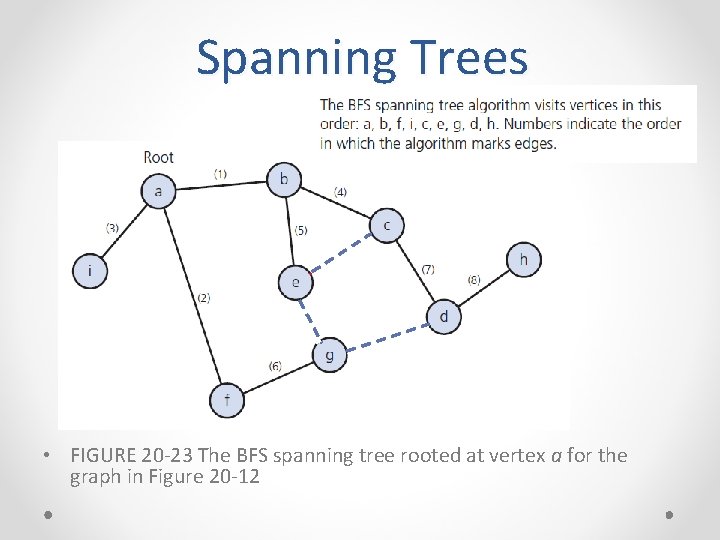
Spanning Trees • FIGURE 20 -23 The BFS spanning tree rooted at vertex a for the graph in Figure 20 -12
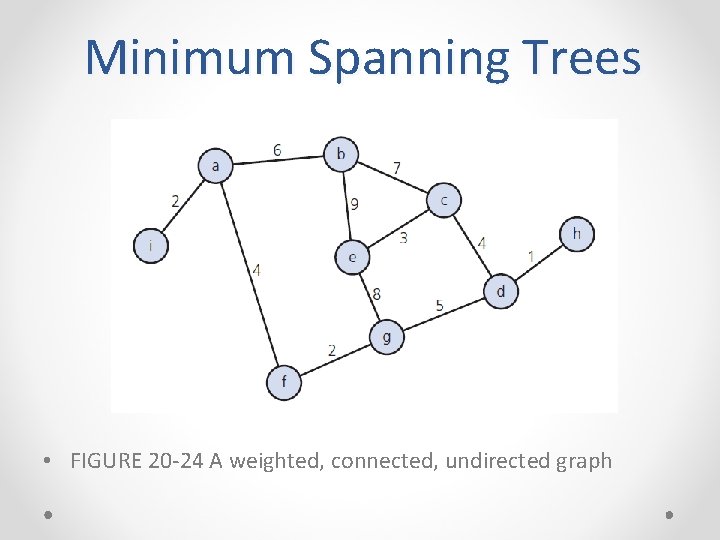
Minimum Spanning Trees • FIGURE 20 -24 A weighted, connected, undirected graph
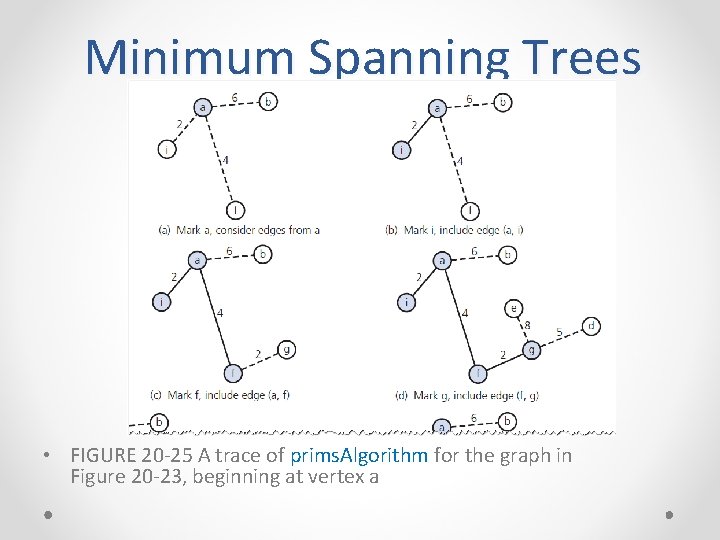
Minimum Spanning Trees • FIGURE 20 -25 A trace of prims. Algorithm for the graph in Figure 20 -23, beginning at vertex a
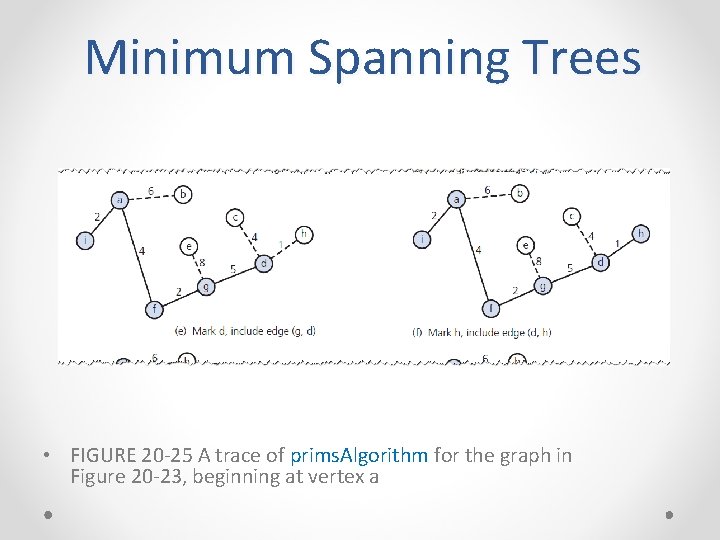
Minimum Spanning Trees • FIGURE 20 -25 A trace of prims. Algorithm for the graph in Figure 20 -23, beginning at vertex a
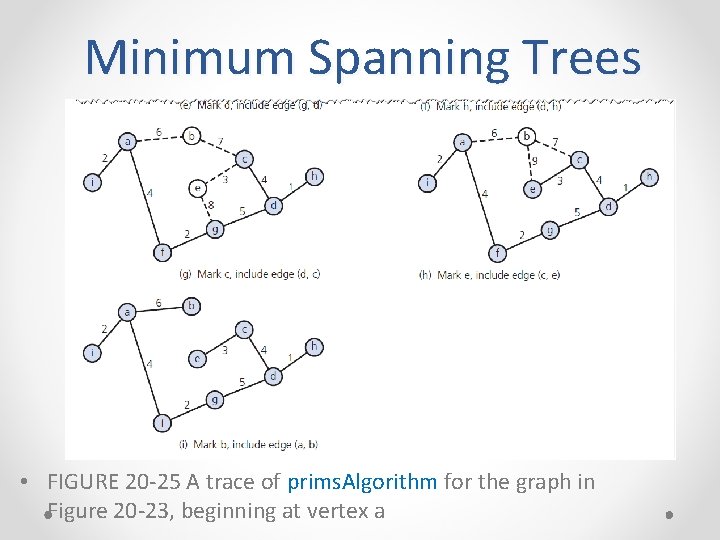
Minimum Spanning Trees • FIGURE 20 -25 A trace of prims. Algorithm for the graph in Figure 20 -23, beginning at vertex a
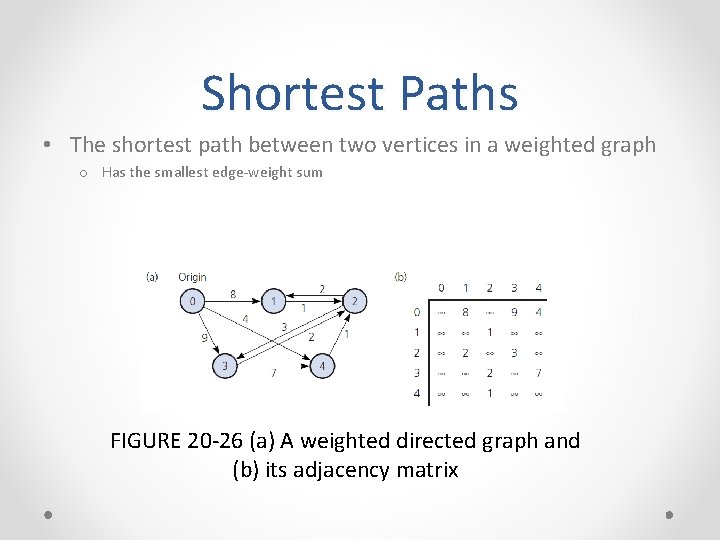
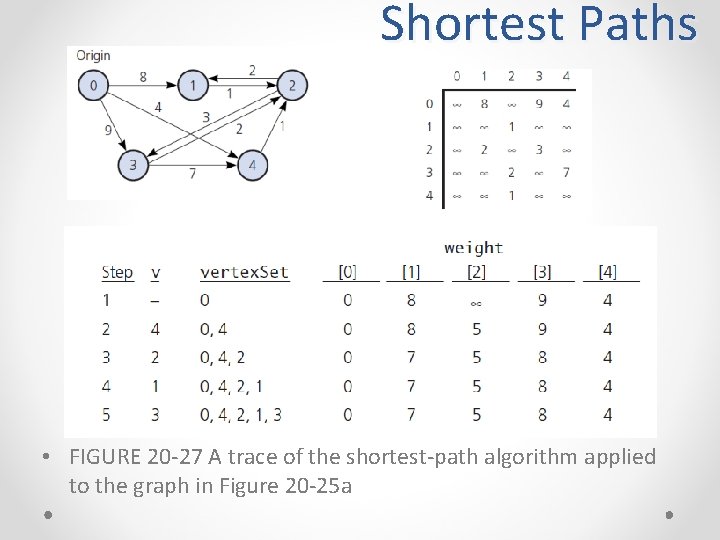
Shortest Paths • The shortest path between two vertices in a weighted graph o Has the smallest edge-weight sum FIGURE 20 -26 (a) A weighted directed graph and (b) its adjacency matrix
Shortest Paths • FIGURE 20 -27 A trace of the shortest-path algorithm applied to the graph in Figure 20 -25 a
Shortest Paths • FIGURE 20 -28 Checking weight[u] by examining the graph: (a) weight[2] in step 2; (b) weight[1] in step 3;
Shortest Paths • FIGURE 20 -28 Checking weight[u] by examining the graph: (c) weight[3] in step 3; (d) weight[3] in step 4
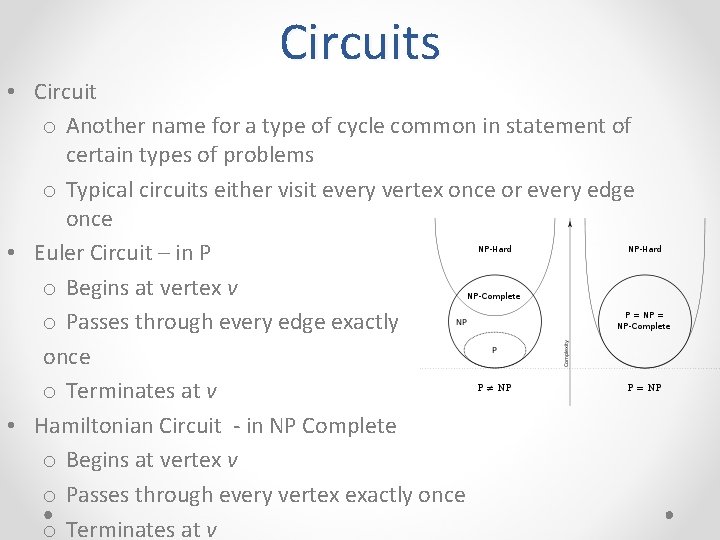
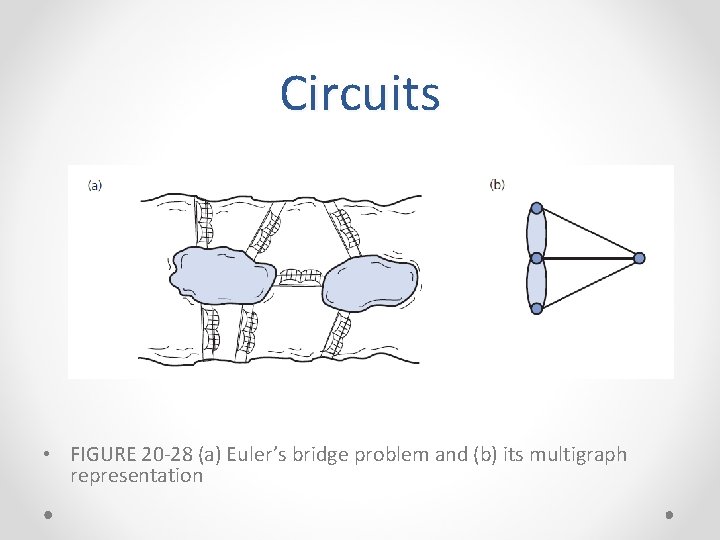
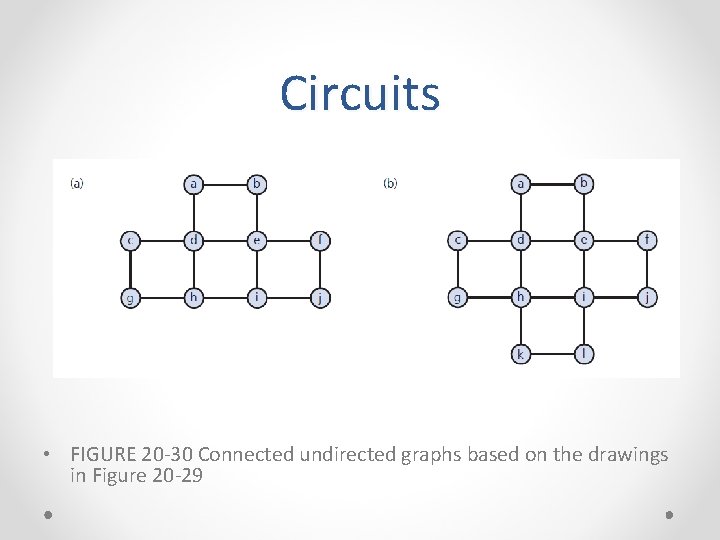
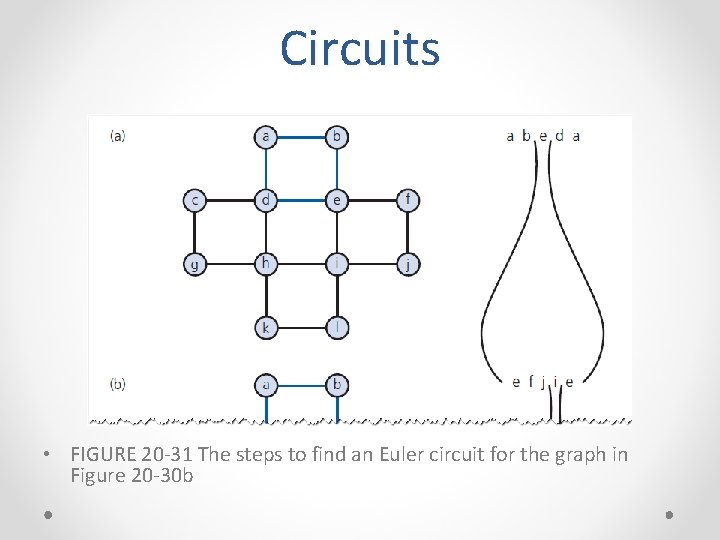
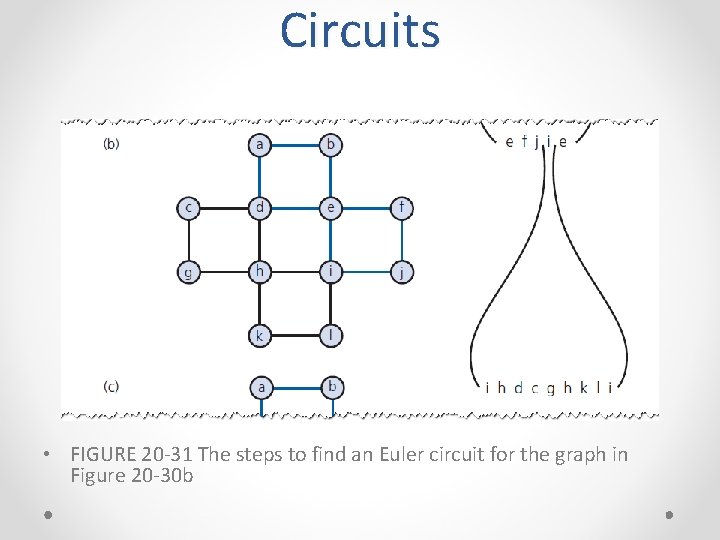
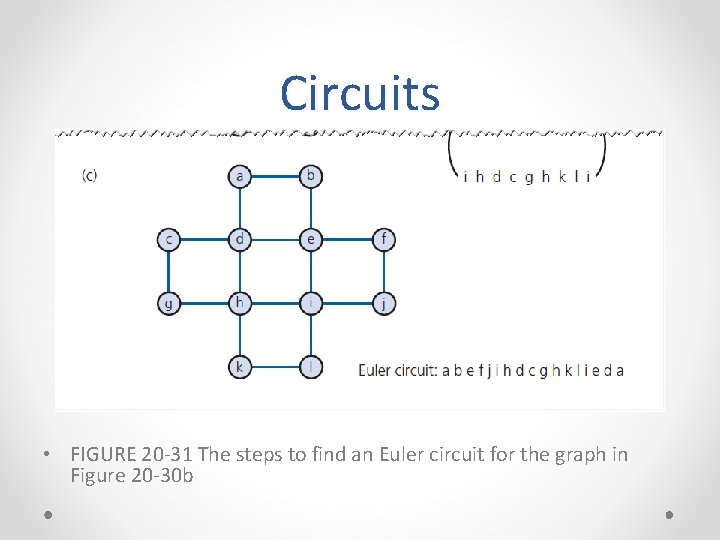
Circuits • Circuit o Another name for a type of cycle common in statement of certain types of problems o Typical circuits either visit every vertex once or every edge once • Euler Circuit – in P o Begins at vertex v o Passes through every edge exactly once o Terminates at v • Hamiltonian Circuit - in NP Complete o Begins at vertex v o Passes through every vertex exactly once o Terminates at v
Circuits • FIGURE 20 -28 (a) Euler’s bridge problem and (b) its multigraph representation
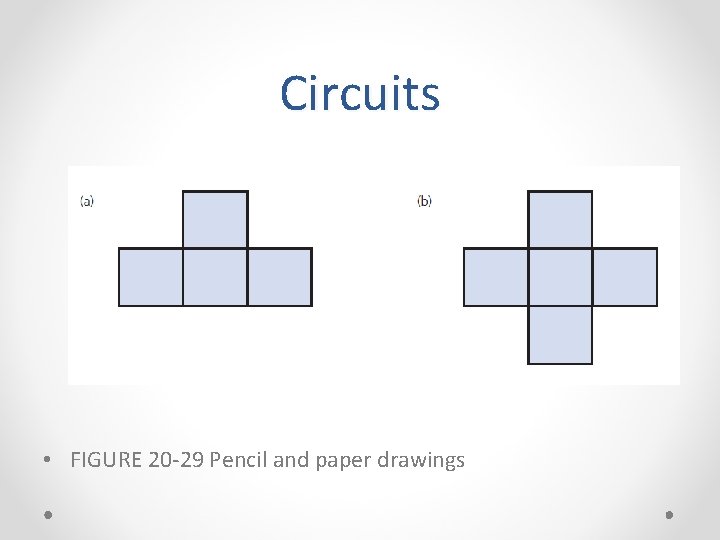
Circuits • FIGURE 20 -29 Pencil and paper drawings
Circuits • FIGURE 20 -30 Connected undirected graphs based on the drawings in Figure 20 -29
Circuits • FIGURE 20 -31 The steps to find an Euler circuit for the graph in Figure 20 -30 b
Circuits • FIGURE 20 -31 The steps to find an Euler circuit for the graph in Figure 20 -30 b
Circuits • FIGURE 20 -31 The steps to find an Euler circuit for the graph in Figure 20 -30 b
Some Difficult Problems • Hamilton circuit o Begins at vertex v o Passes through every vertex exactly once o Terminates at v • Variation is “traveling salesperson problem” o Visit every city on his route exactly once o Edge (road) has associated cost (mileage) o Goal is determine least expensive circuit
End Chapter 20