
Graphology Handwriting Analysis What is Graphology Graphology or
- Slides: 36
Graphology / Handwriting Analysis
What is Graphology? Graphology or Handwriting Analysis is a science of interpreting a person's character from his/her personal handwriting. Coupled with psychology and knowledge of human behavior, it can be used for many varied purposes.
Forensic Document Examiner Use Handwriting Analysis to Determine identity of writer ◦ In ransom notes ◦ In document forgery ◦ In death threats ◦ In suicide notes ◦ Can you think of others?
Ø Handwriting analyzing can tell a lot about personality. It can be used for Recruitment, Marriage compatibility, Career Guidance, Motivate workers, Child development. . Etc. Ø Large companies use graphology (handwriting analyzing) to check job applications. Ø Police use handwriting experts to link possible suspects to a crime.
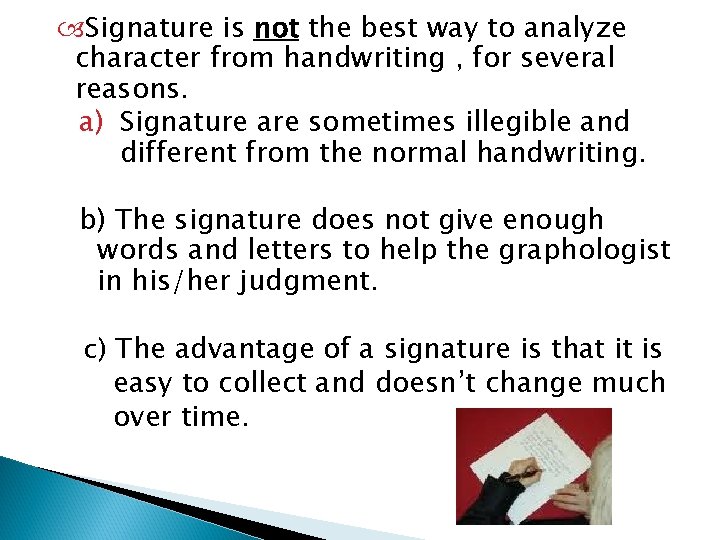
Signature is not the best way to analyze character from handwriting , for several reasons. a) Signature are sometimes illegible and different from the normal handwriting. b) The signature does not give enough words and letters to help the graphologist in his/her judgment. c) The advantage of a signature is that it is easy to collect and doesn’t change much over time.
What is Graphoanalysis? Graphoanalysis is a scientific system of identifying and assessing the character and personality of an individual through a study of handwriting. This is done by: 1) identifying strokes, 2) relating these strokes to specific personality traits, 3) evaluating the relative strength of the interrelated traits.
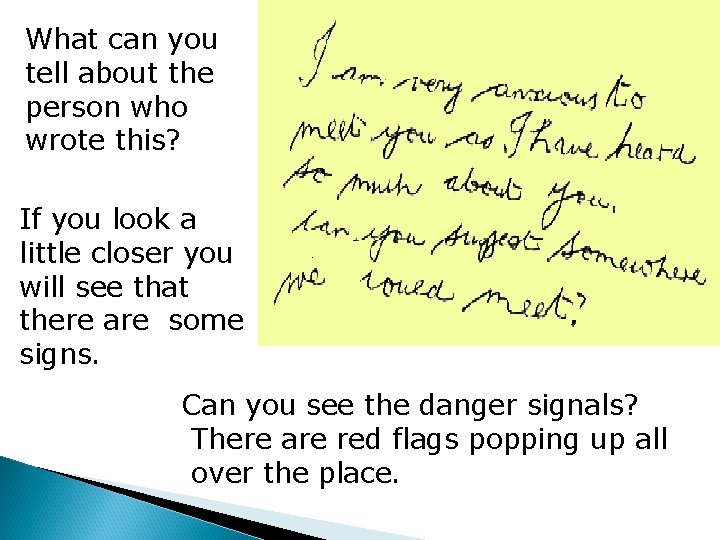
What can you tell about the person who wrote this? If you look a little closer you will see that there are some signs. Can you see the danger signals? There are red flags popping up all over the place.
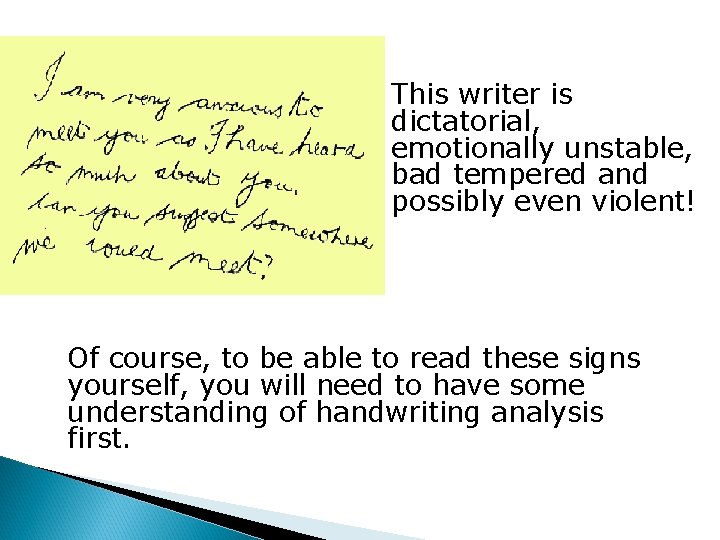
This writer is dictatorial, emotionally unstable, bad tempered and possibly even violent! Of course, to be able to read these signs yourself, you will need to have some understanding of handwriting analysis first.
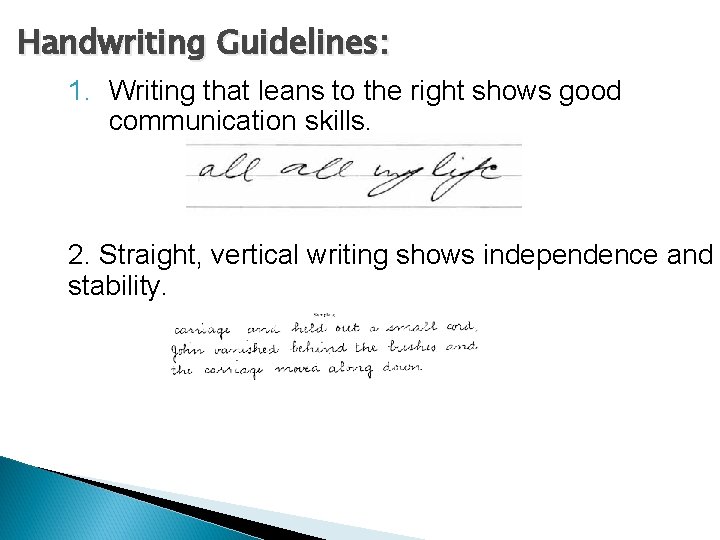
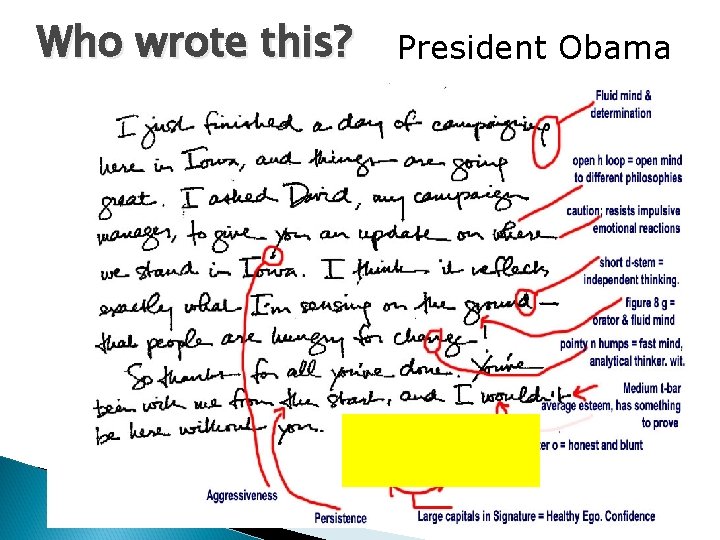
Handwriting Guidelines: 1. Writing that leans to the right shows good communication skills. 2. Straight, vertical writing shows independence and stability.
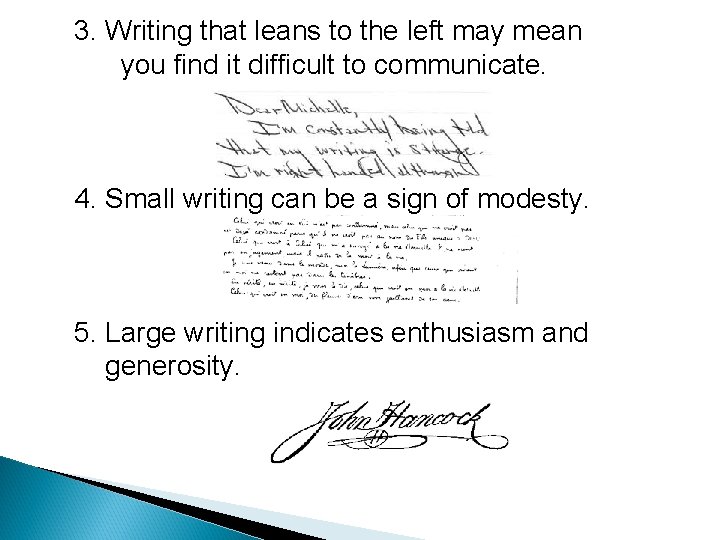
3. Writing that leans to the left may mean you find it difficult to communicate. 4. Small writing can be a sign of modesty. 5. Large writing indicates enthusiasm and generosity.
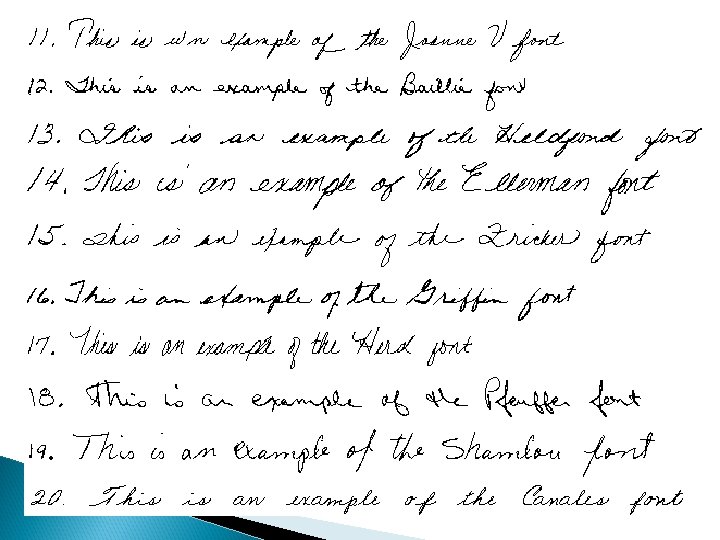
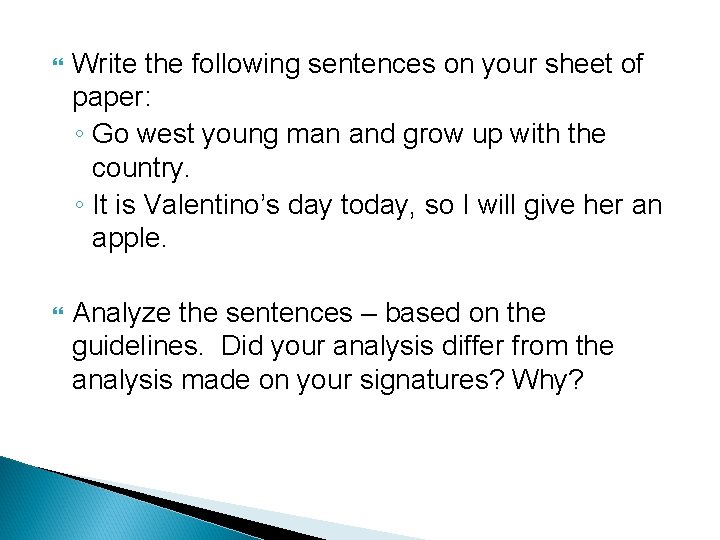
Exercise: Break yourself up into groups of 3 or 4. Each of you write your signature on a sheet of paper. As a group, analyze each signature and discuss your conclusions. On the next slide there is a collection of sentences by different writers. As a group analyze each one to determine the personality of the writer.
Write the following sentences on your sheet of paper: ◦ Go west young man and grow up with the country. ◦ It is Valentino’s day today, so I will give her an apple. Analyze the sentences – based on the guidelines. Did your analysis differ from the analysis made on your signatures? Why?
Who wrote this? President Obama
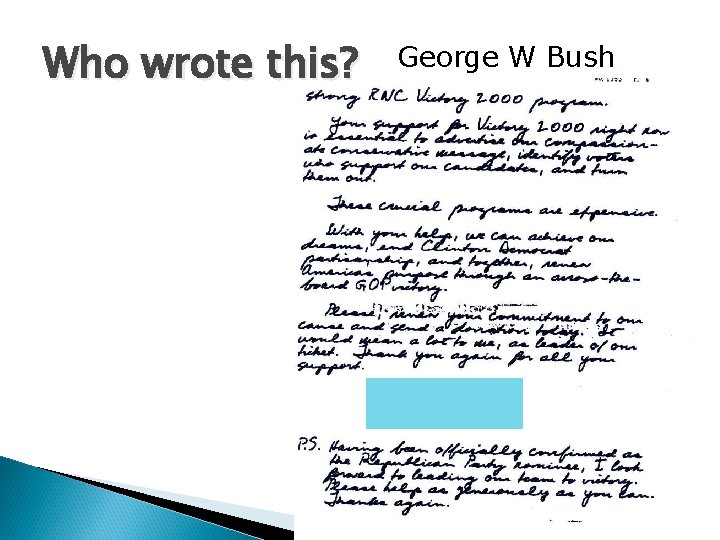
Who wrote this? George W Bush
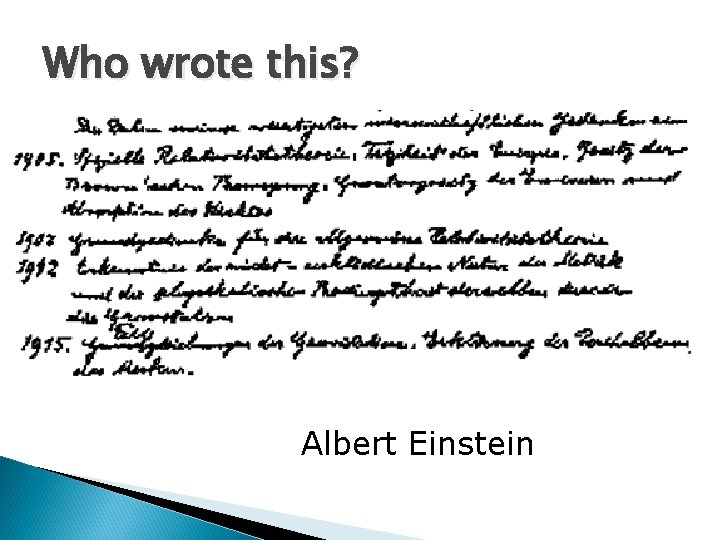
Who wrote this? Albert Einstein
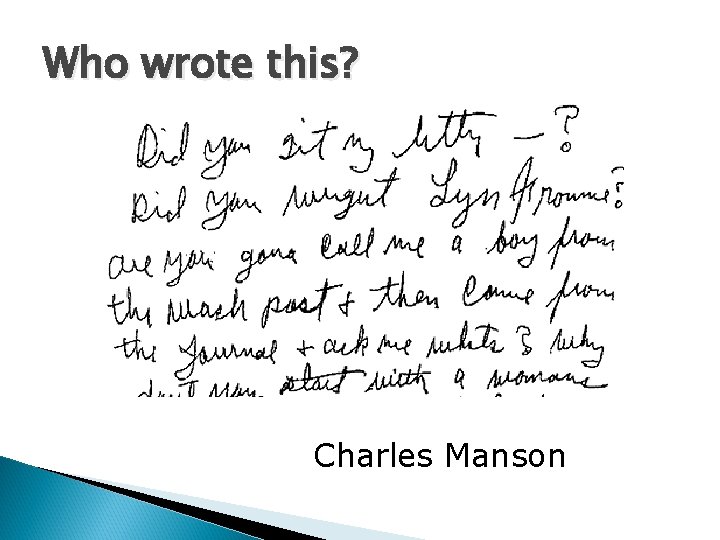
Who wrote this? Charles Manson
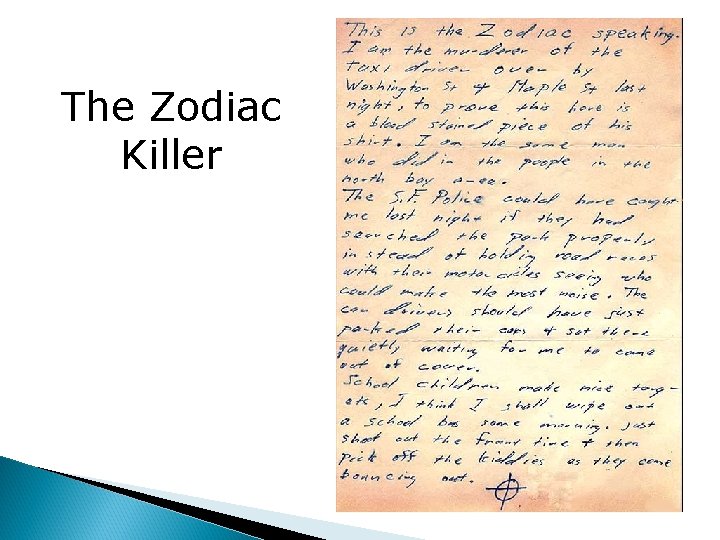
The Zodiac Killer
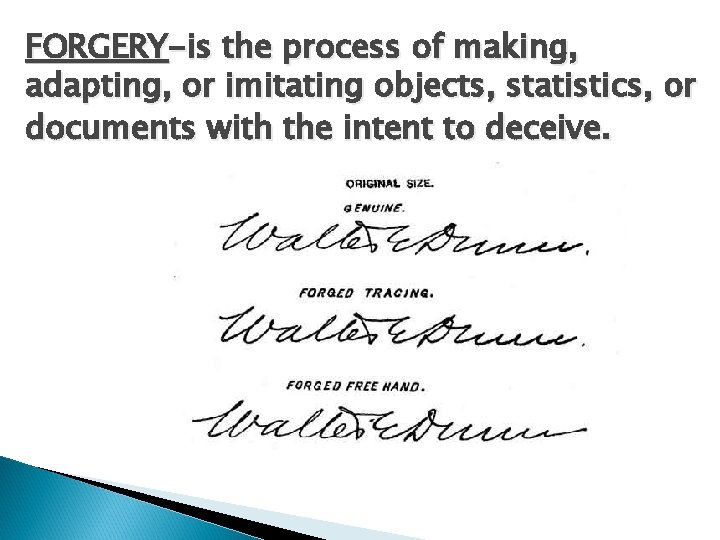
FORGERY-is the process of making, adapting, or imitating objects, statistics, or documents with the intent to deceive.
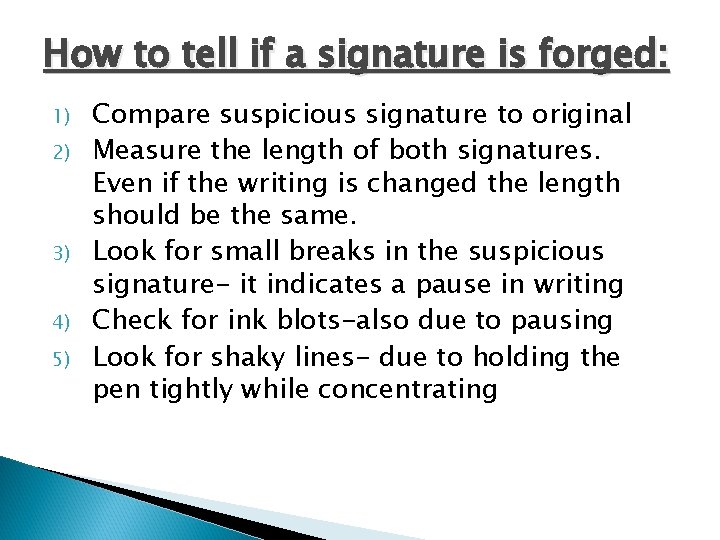
How to tell if a signature is forged: 1) 2) 3) 4) 5) Compare suspicious signature to original Measure the length of both signatures. Even if the writing is changed the length should be the same. Look for small breaks in the suspicious signature- it indicates a pause in writing Check for ink blots-also due to pausing Look for shaky lines- due to holding the pen tightly while concentrating
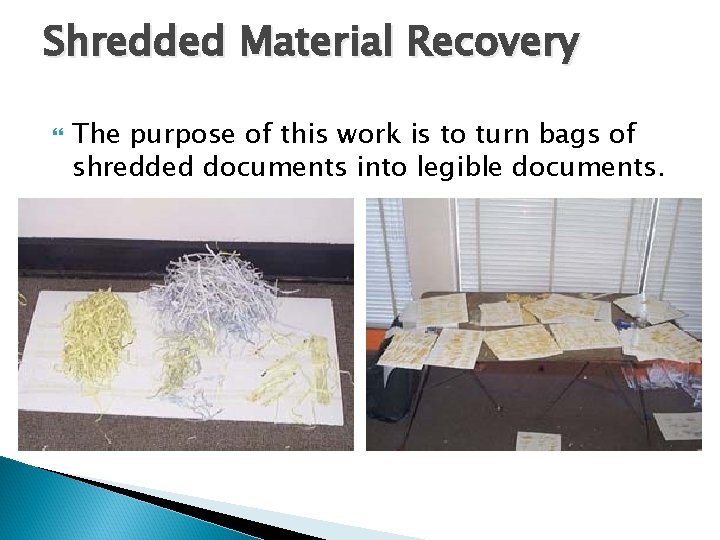
Shredded Material Recovery The purpose of this work is to turn bags of shredded documents into legible documents.
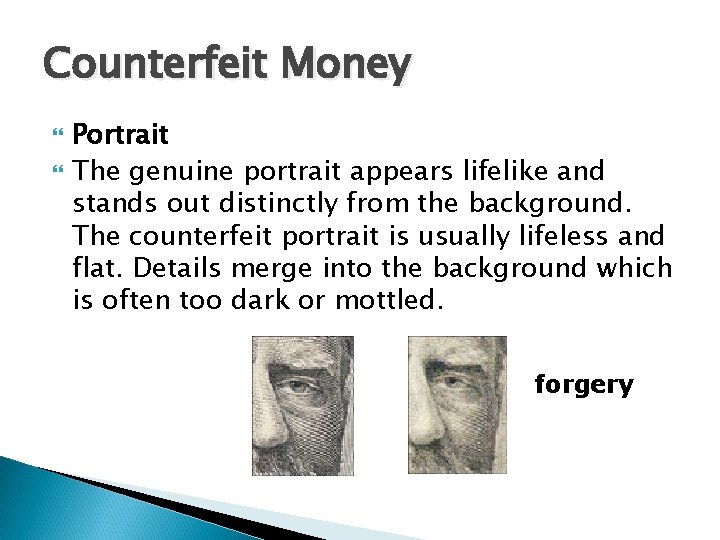
Counterfeit Money Portrait The genuine portrait appears lifelike and stands out distinctly from the background. The counterfeit portrait is usually lifeless and flat. Details merge into the background which is often too dark or mottled. forgery
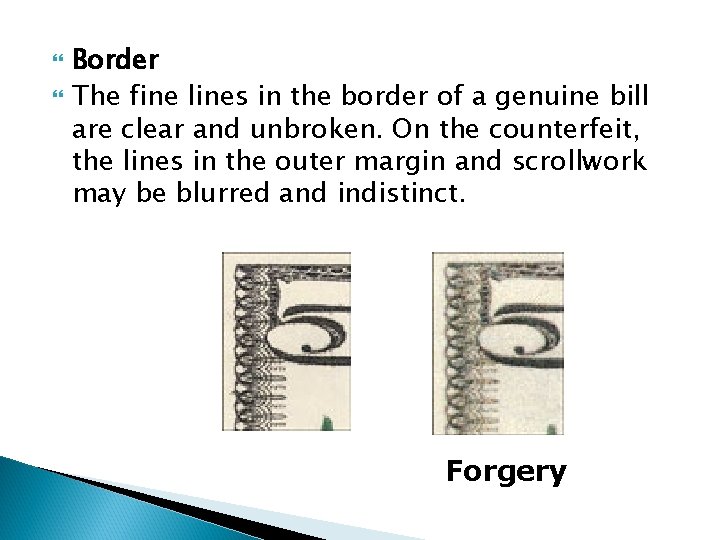
Border The fine lines in the border of a genuine bill are clear and unbroken. On the counterfeit, the lines in the outer margin and scrollwork may be blurred and indistinct. Forgery
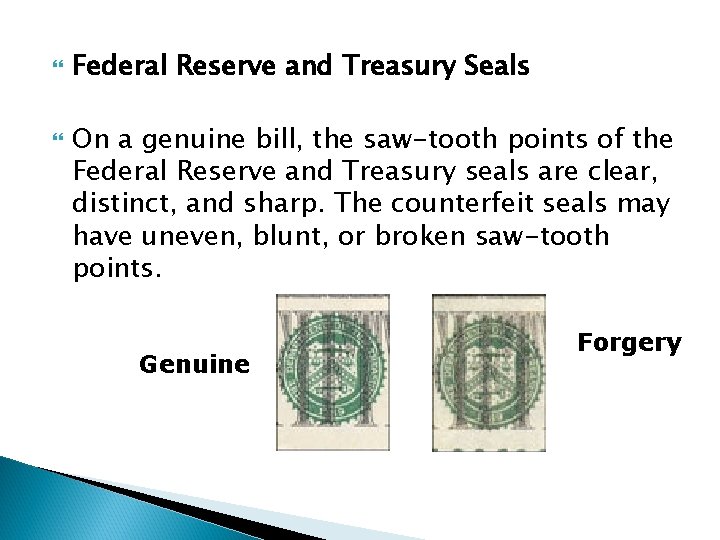
Federal Reserve and Treasury Seals On a genuine bill, the saw-tooth points of the Federal Reserve and Treasury seals are clear, distinct, and sharp. The counterfeit seals may have uneven, blunt, or broken saw-tooth points. Genuine Forgery
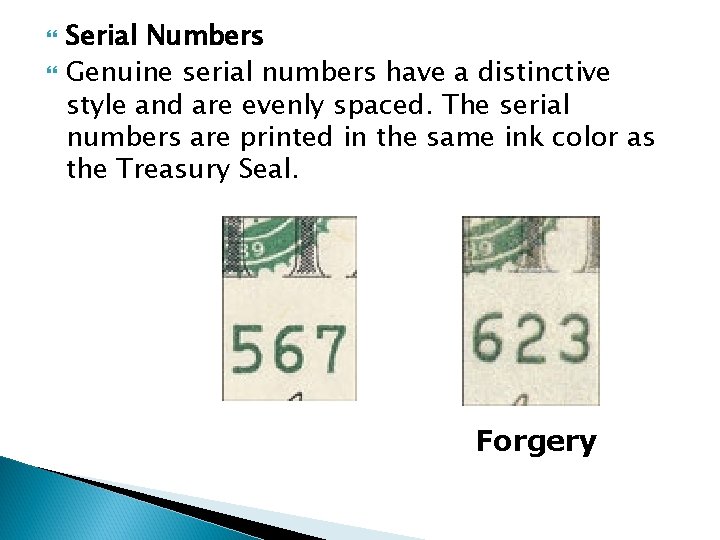
Serial Numbers Genuine serial numbers have a distinctive style and are evenly spaced. The serial numbers are printed in the same ink color as the Treasury Seal. Forgery
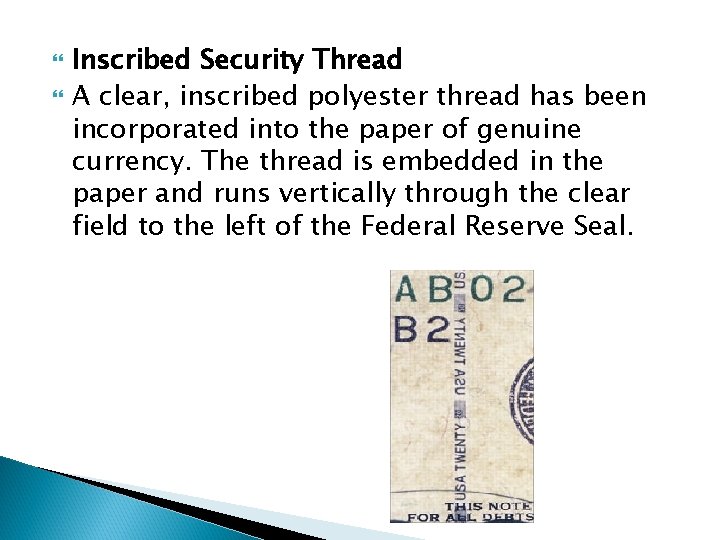
Inscribed Security Thread A clear, inscribed polyester thread has been incorporated into the paper of genuine currency. The thread is embedded in the paper and runs vertically through the clear field to the left of the Federal Reserve Seal.
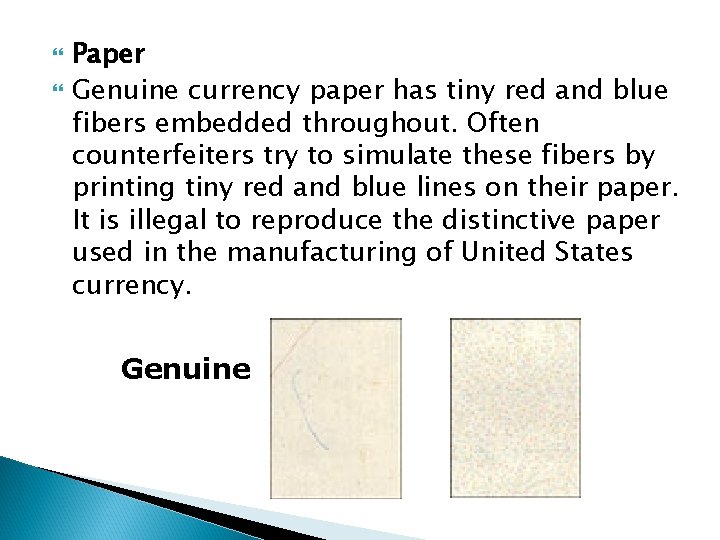
Paper Genuine currency paper has tiny red and blue fibers embedded throughout. Often counterfeiters try to simulate these fibers by printing tiny red and blue lines on their paper. It is illegal to reproduce the distinctive paper used in the manufacturing of United States currency. Genuine
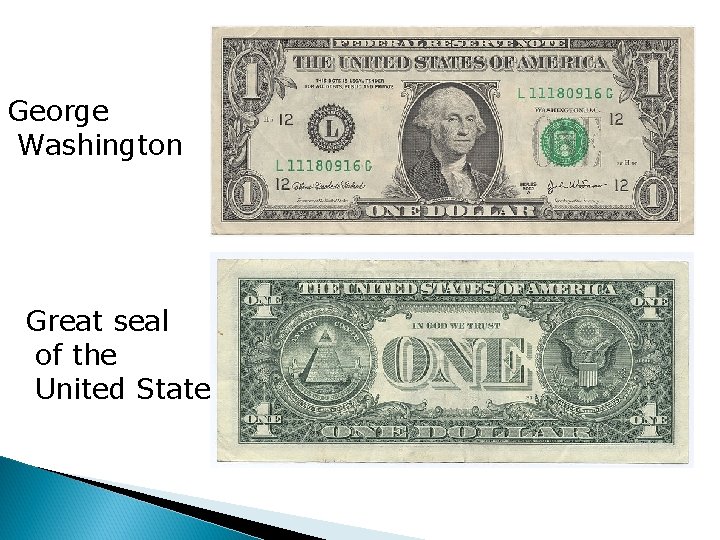
George Washington Great seal of the United States
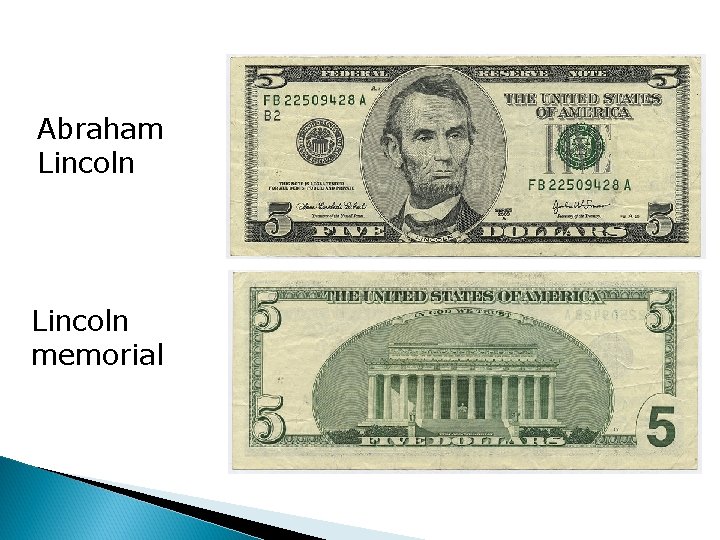
Abraham Lincoln memorial The five dollar bill
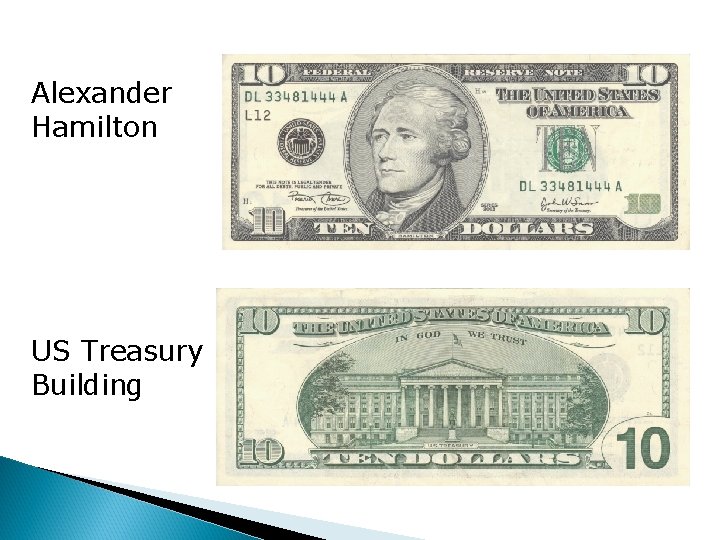
Alexander Hamilton US Treasury Building
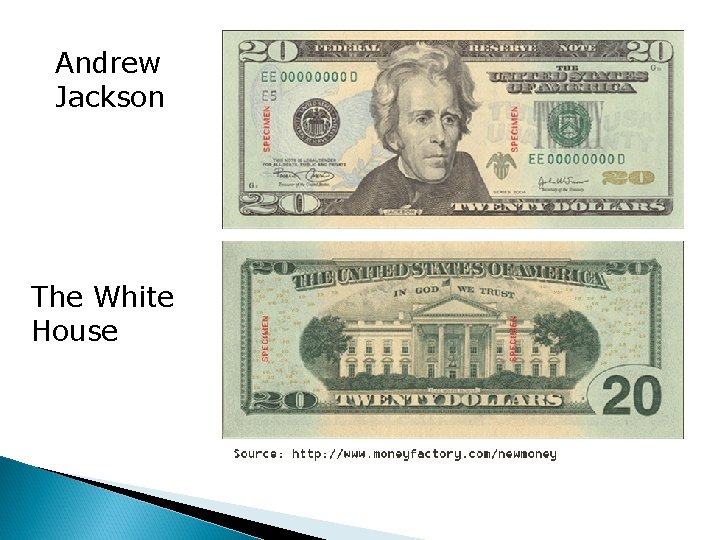
Andrew Jackson The White House
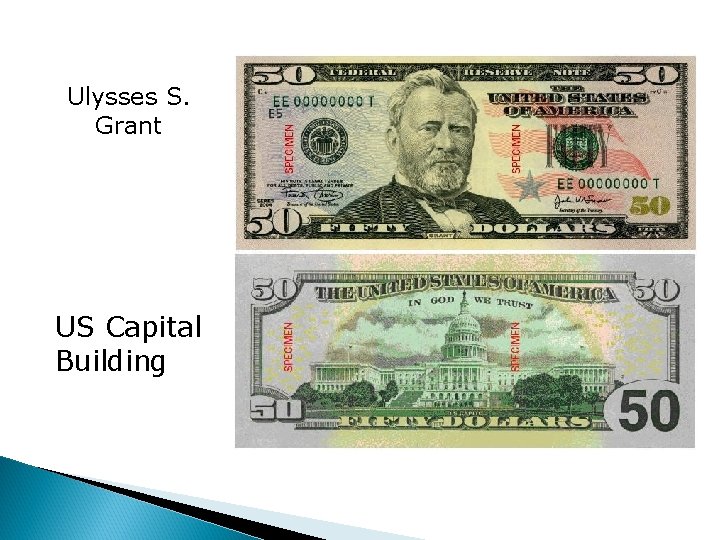
Ulysses S. Grant US Capital Building
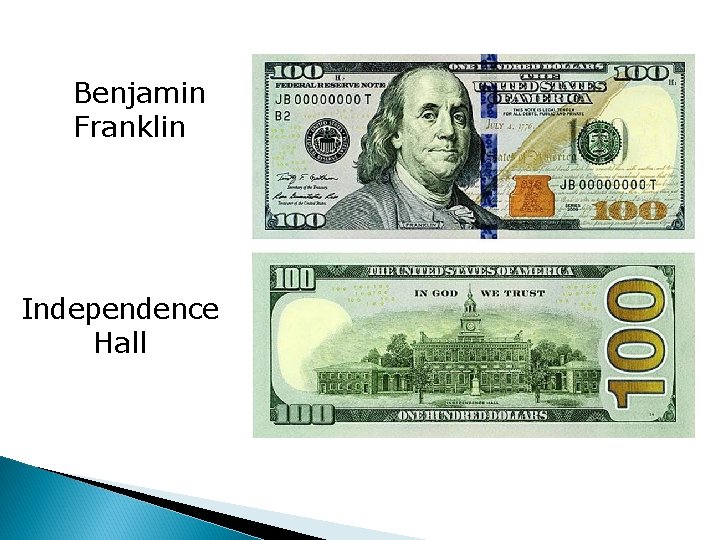
Benjamin Franklin Independence Hall
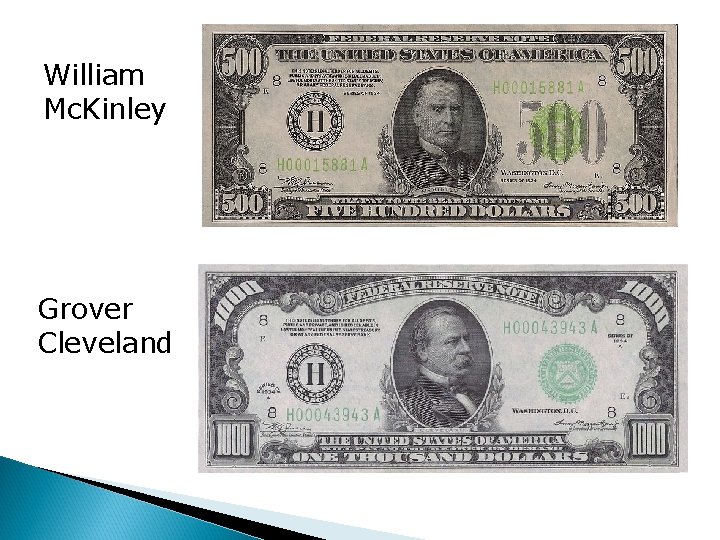
William Mc. Kinley Grover Cleveland
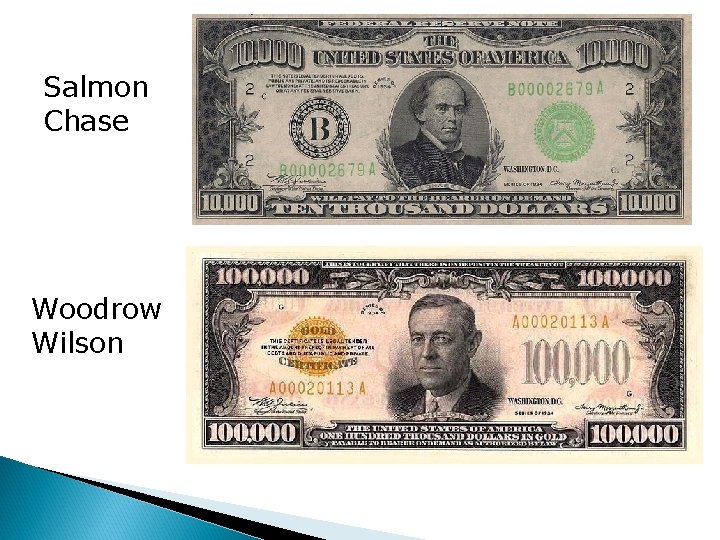
Salmon Chase Woodrow Wilson
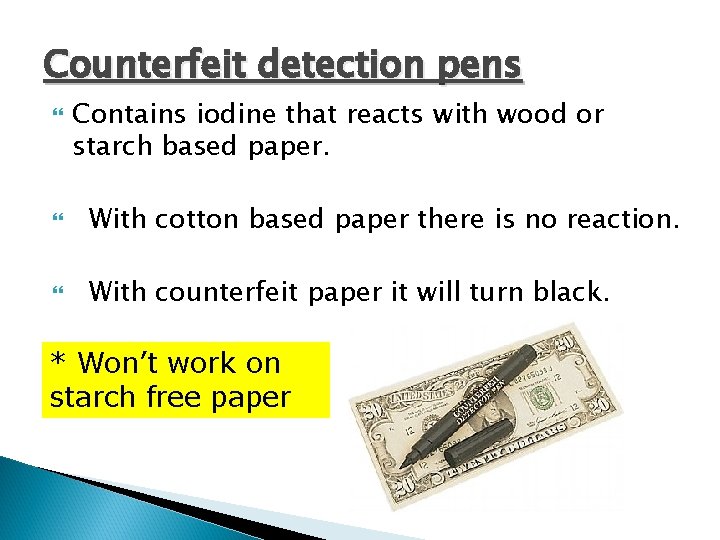
Counterfeit detection pens Contains iodine that reacts with wood or starch based paper. With cotton based paper there is no reaction. With counterfeit paper it will turn black. * Won’t work on starch free paper