
Graphing Using Tables continued Graph 2 x y
Graphing Using Tables (continued)
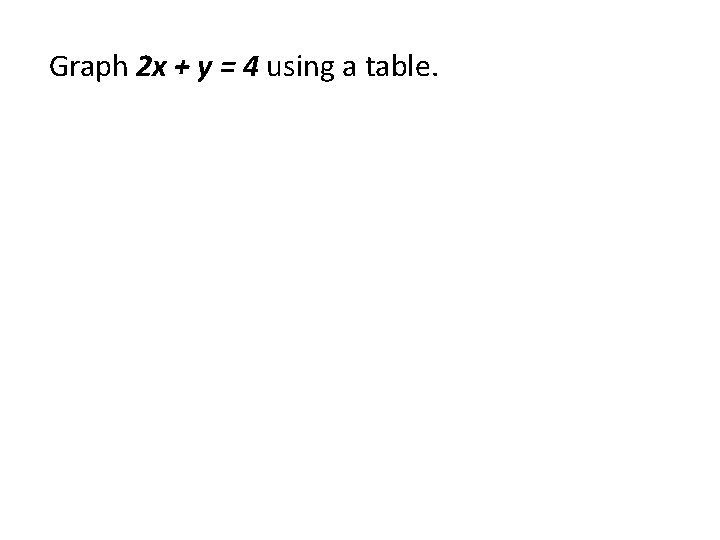
Graph 2 x + y = 4 using a table.

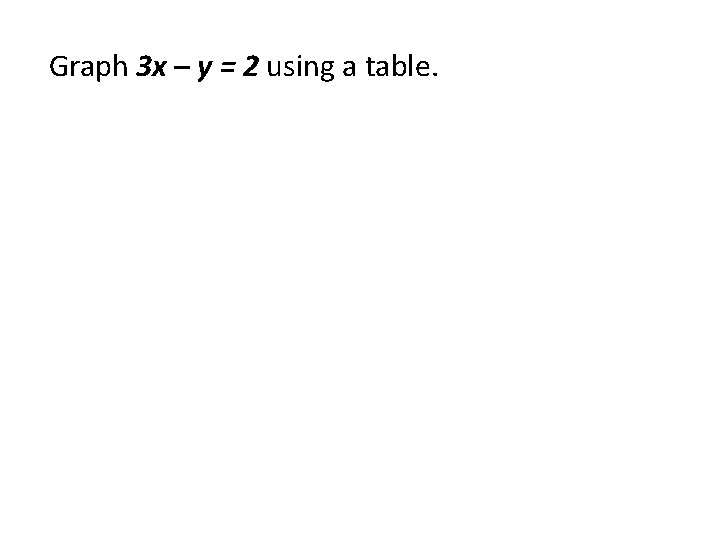
Graph 3 x – y = 2 using a table.


Graph using a table.

Graphing • LINEAR EQUATIONS are what we will focus on the next few weeks.
Characteristics of Linear Equations • How can I look at an equation and know that it will form a line? – 5 Characteristics • • • No variable has an exponent other than 1 (Ex. 1) No variable is in absolute value (Ex. 2) No variables are multiplied together (Ex. 3) No variable in the denominator (Ex. 4) No more than 2 variable (Ex. : 2 x + y + z = 9) • If an equation passes these 5 things, it will form a line.
Graphing • What do you notice about ALMOST any line you can draw on a graph? • Intercepts occur when a graph hits either axis. – X-intercept – where the graph crosses the x-axis • Occurs when y = 0 – Y-intercept – where the graph crosses the y-axis • Occurs when x = 0
Graphing Using Intercepts • If you know an equation is linear, you may find the x- and y-intercepts and use the 2 points to graph a line. • Example: Graph 5 x – 2 y = 15 using intercepts.

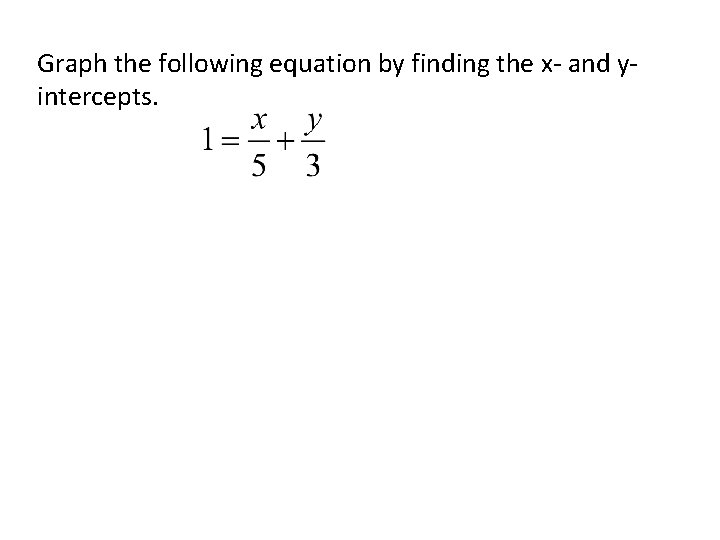
Graph the following equation by finding the x- and yintercepts.

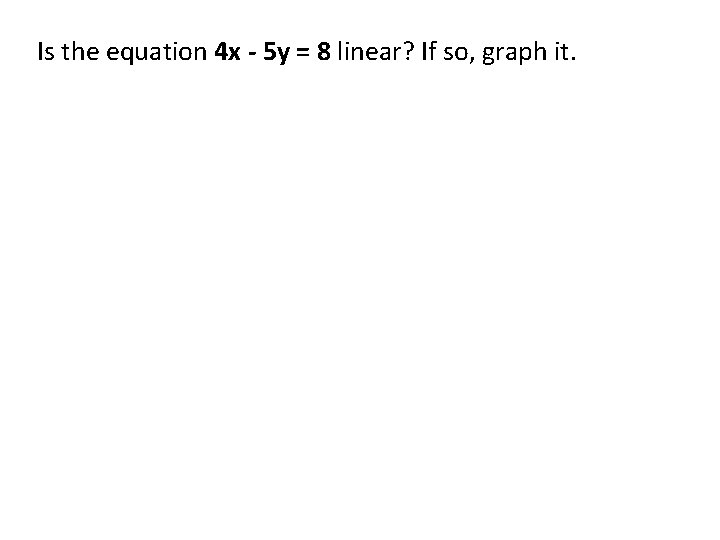
Is the equation 4 x - 5 y = 8 linear? If so, graph it.

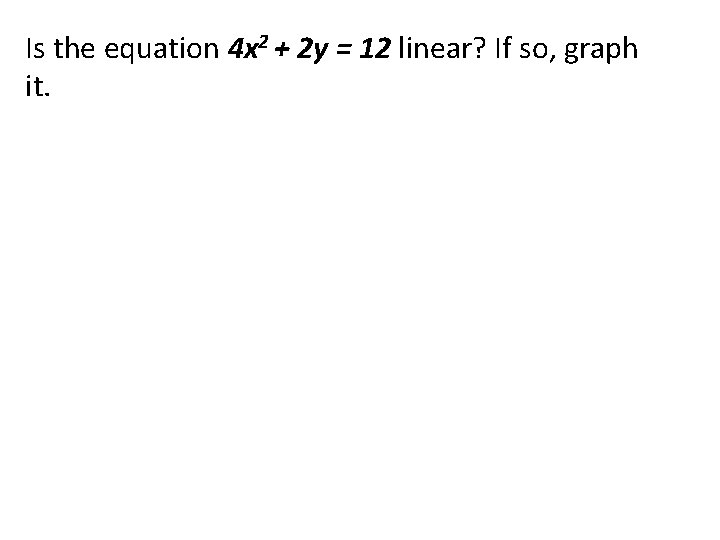
Is the equation 4 x 2 + 2 y = 12 linear? If so, graph it.
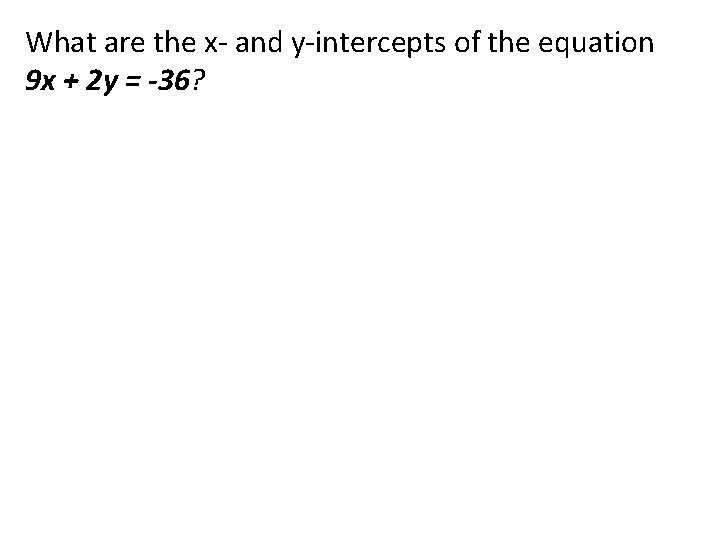
What are the x- and y-intercepts of the equation 9 x + 2 y = -36?
- Slides: 19