
Graphing used to Display the Data that scientists

- Slides: 18
Graphing used to Display the Data that scientists collected during a controlled experiment. 1
The FIVE Parts of a Graph The Independent variable The Dependent variable The Scale The Legend The Title 2
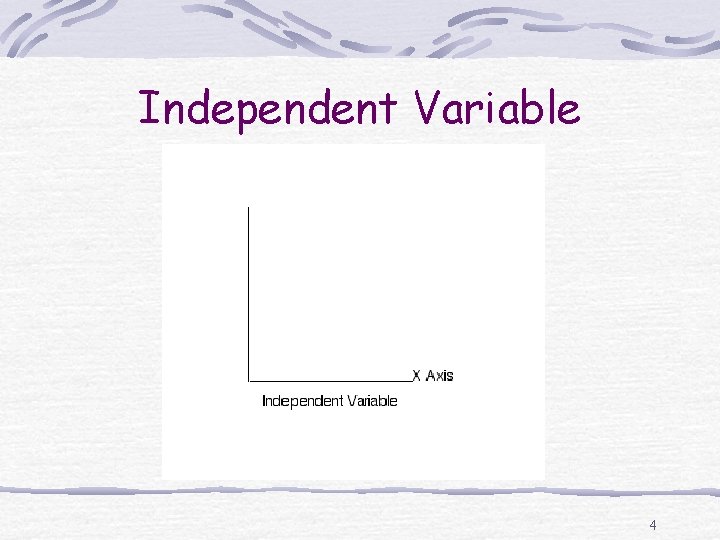
Independent or Manipulated Variable Independent variable belongs on the X or HORIZONTAL axis of the graph. It represents the data that can be directly controlled or manipulated by the EXPERIMENTER (YOU!). Examples: time(length of the experiment), distance(depth of the water), temperature, etc. VARIABLE -part of the experiment that changes 3
Independent Variable 4
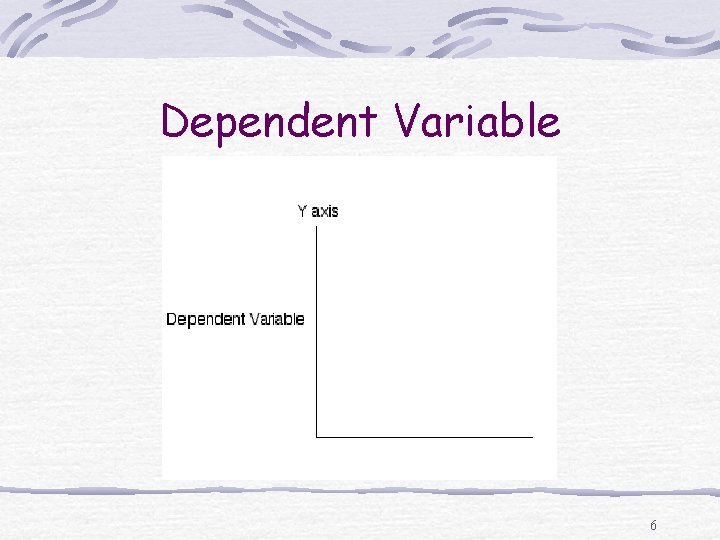
Dependent or Responding Variable This variable is placed on the Y or VERTICAL axis. This variable is directly affected by or depends upon the independent variable. Whatever happens to the independent variable the dependent variable should react to it. Example: • If we increase the amount of light for plants, the more the plants will grow. The amount of light is the independent variable while the plant’s growth is dependent upon it. 5
Dependent Variable 6
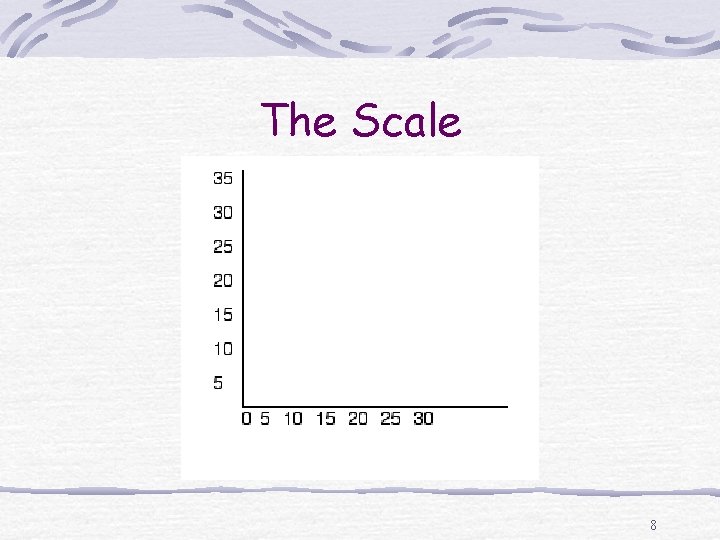
The Scale The scale represents the range of values that applies to each variable. The scale must contain all the data values for each variable. Each BLOCK must be arranged on the graph using the SAME INTERVALS such as multiples of 2 X (2, 4, 6, …) or 5 X (5, 10, 15, …)AND EVENLY SPACED OUT BETWEEN NUMBERS. The SAME INTERVALS does not have to be the same for BOTH AXES NEVER PUT A BREAK IN THE SCALE! 7
The Scale 8
Y X 9
The Legend A short description of the graph’s DATA. This part can usually be found on the right side of the graph. A legend is important when you are representing more than one set of data. 10
The Title The title should be a short statement representing what is found on the graph. READING the title should give reader an idea about the graph. It usually contains the independent and dependent variables. Example: Amount of Sunlight vs. Plant Growth 11
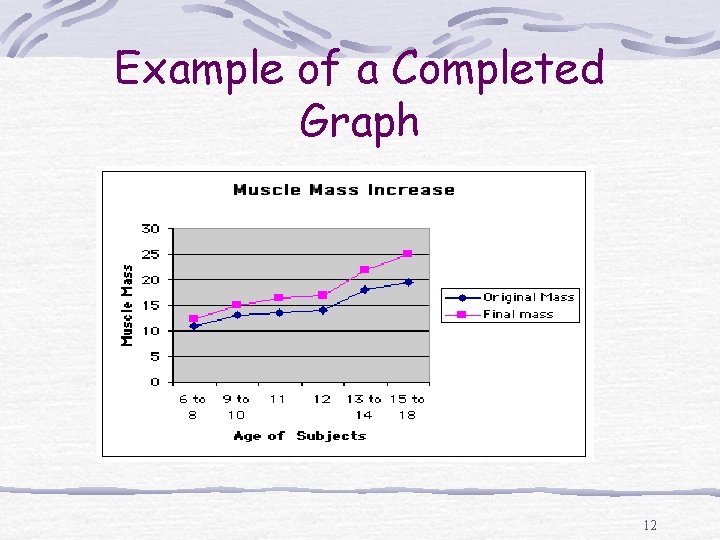
Example of a Completed Graph 12
STEPS IN CONSTRUCTING A GRAPH 1. LABEL THE X – AXIS 2. LABEL THE YAXIS 3. LABEL THE UNIT OF MEASUREMENT 4. NUMBER EACH AXIS 5. PLOT THE DATA 6. DRAW THE LINE OR BAR 7. TITLE THE GRAPH 13
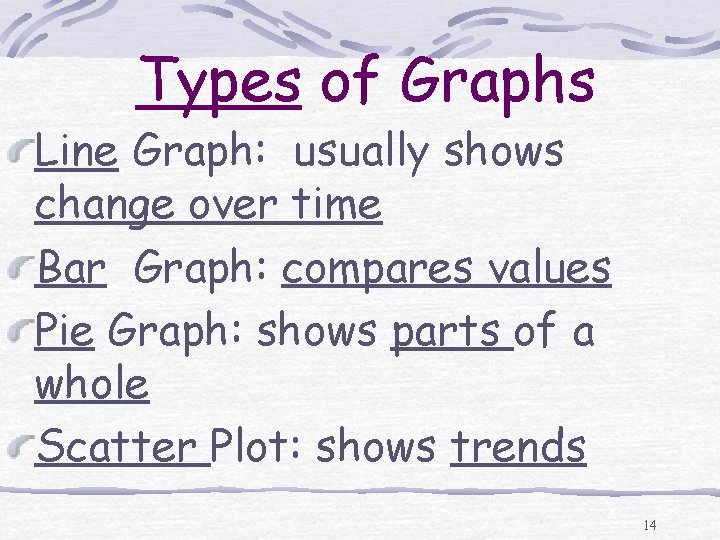
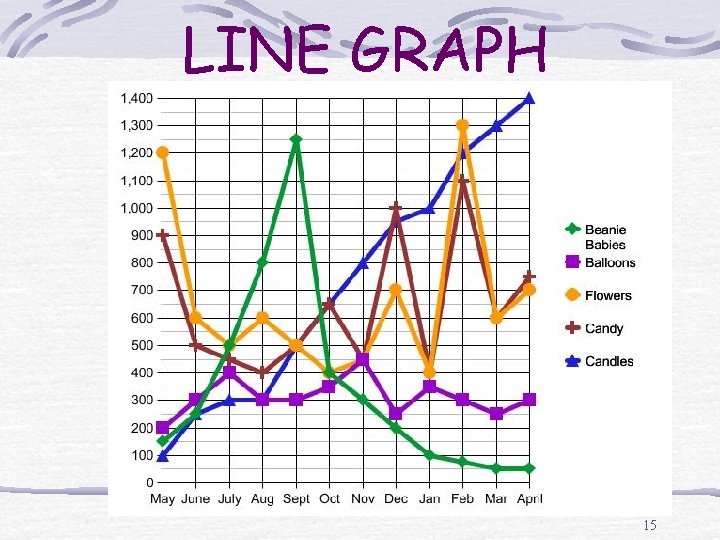
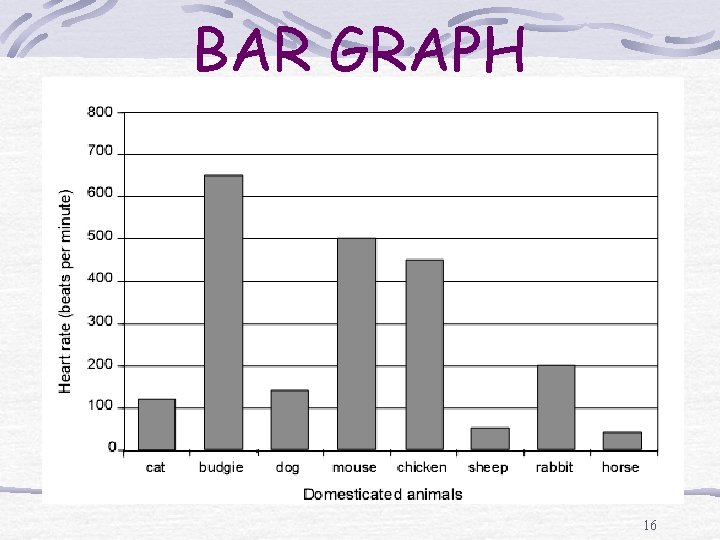
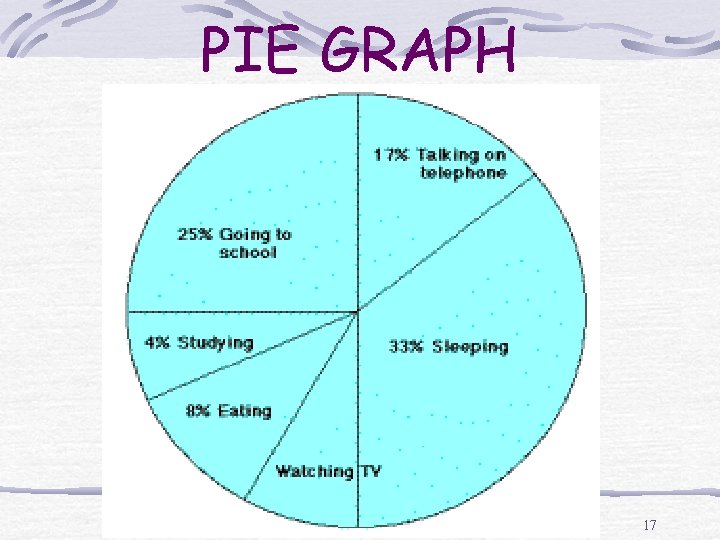
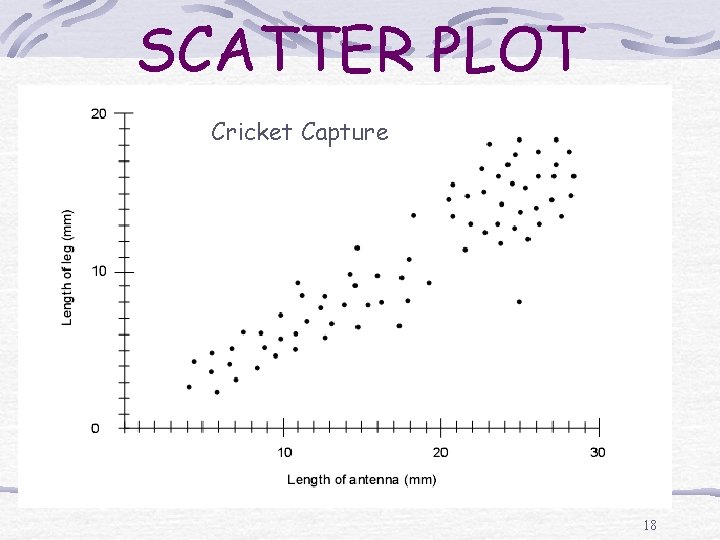
Types of Graphs Line Graph: usually shows change over time Bar Graph: compares values Pie Graph: shows parts of a whole Scatter Plot: shows trends 14
LINE GRAPH 15
BAR GRAPH 16
PIE GRAPH 17
SCATTER PLOT Cricket Capture 18