
GRAPHING BASICS Data Management Graphing 1 Learning Target
GRAPHING BASICS Data Management & Graphing 1
Learning Target Students will understand how to set up a graph and graph data
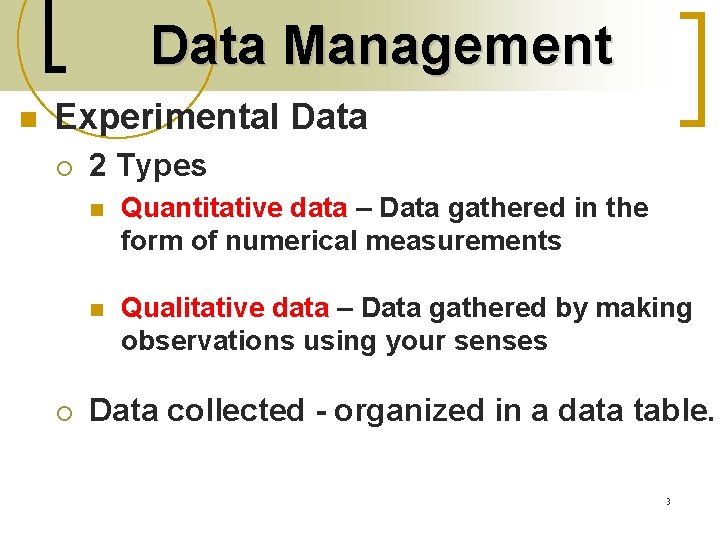
Data Management n Experimental Data ¡ ¡ 2 Types n Quantitative data – Data gathered in the form of numerical measurements n Qualitative data – Data gathered by making observations using your senses Data collected - organized in a data table. 3
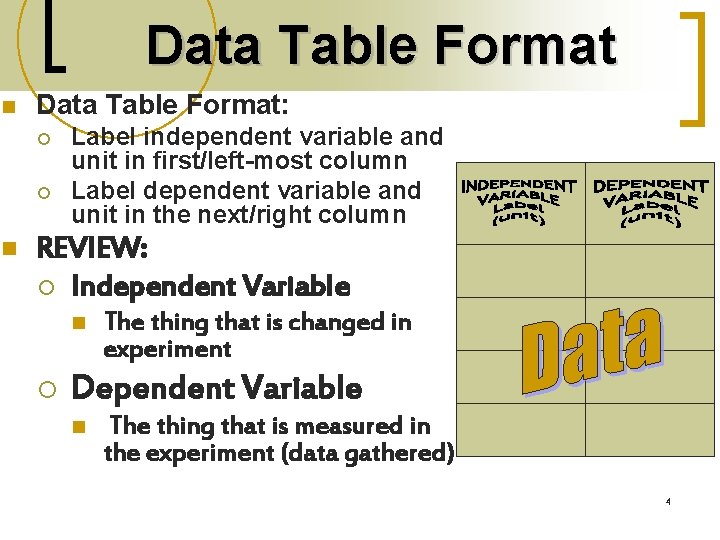
Data Table Format n Data Table Format: ¡ ¡ n Label independent variable and unit in first/left-most column Label dependent variable and unit in the next/right column REVIEW: ¡ Independent Variable n ¡ The thing that is changed in experiment Dependent Variable n The thing that is measured in the experiment (data gathered) 4
Why Graph? n Effective way to visually display the information or data collected in an experiment. n Graphs can show a trend in information or data collected. n Shows relationships between data 5
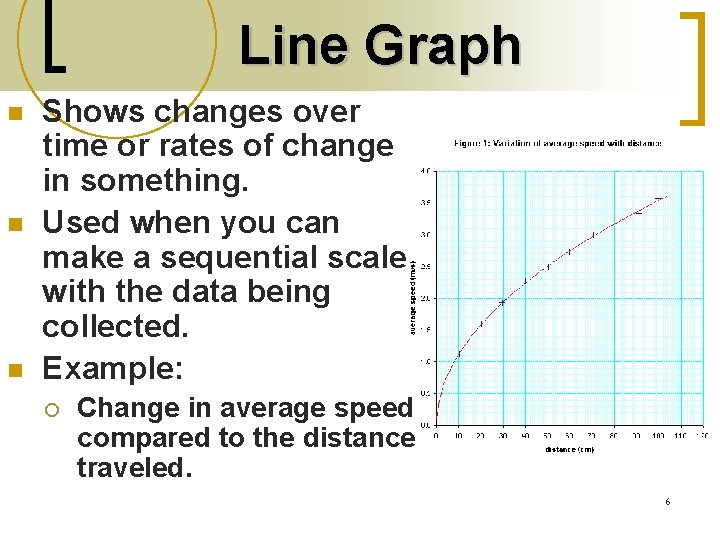
Line Graph n n n Shows changes over time or rates of change in something. Used when you can make a sequential scale with the data being collected. Example: ¡ Change in average speed compared to the distance traveled. 6
Graph Titles n n A title describes what the experiment was comparing For line graphs: ¡ Titles should be: dependent variable vs. the independent variable ¡ This allows you to see the slope calculation in the title n n Temperature vs. Time All titles are placed at the TOP of the graph 7
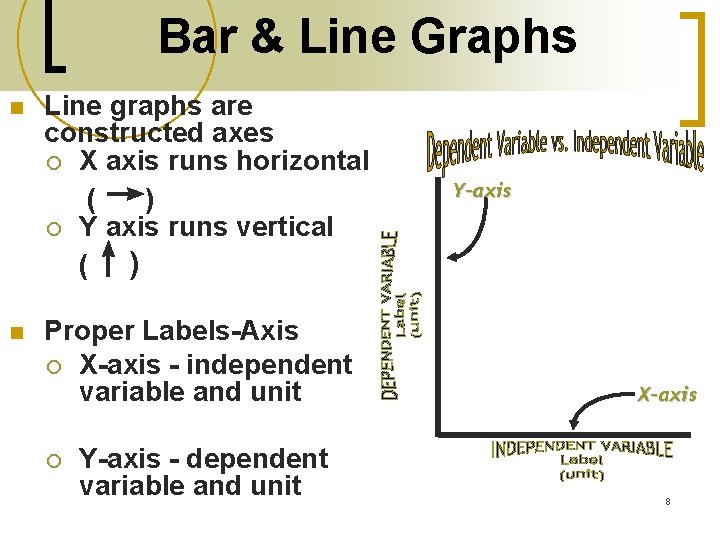
Bar & Line Graphs n n Line graphs are constructed axes ¡ X axis runs horizontal ( →) ¡ Y axis runs vertical (↑) Proper Labels-Axis ¡ X-axis - independent variable and unit ¡ Y-axis - dependent variable and unit Y-axis X-axis 8
Line graphs must: • use paper with grid lines (i. e. graph paper) if not created on a computer • use a scale with even increasing or decreasing increments along axis 9
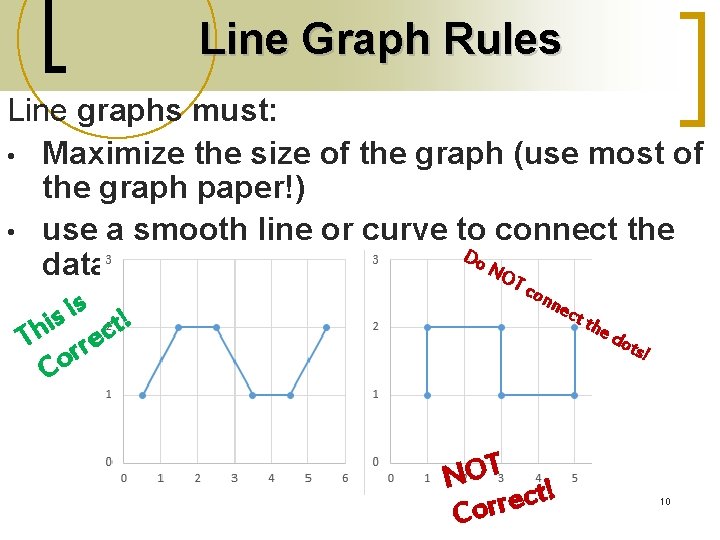
Line Graph Rules Line graphs must: • Maximize the size of the graph (use most of the graph paper!) • use a smooth line or curve to connect the Do NO data points Tc onn s ! ect i s the i t h do T rrec ts! Co NOT t! c e r r o C 10
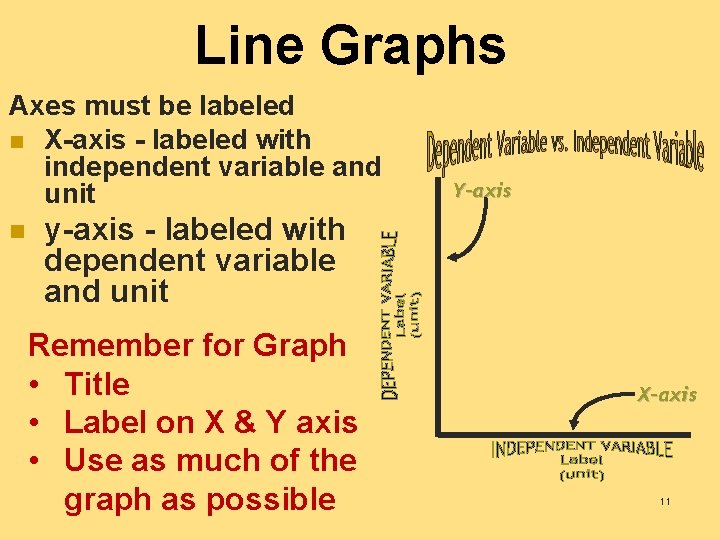
Line Graphs Axes must be labeled n X-axis - labeled with independent variable and unit n Y-axis y-axis - labeled with dependent variable and unit Remember for Graph • Title • Label on X & Y axis • Use as much of the graph as possible X-axis 11
n If you want to practice, go to the next slides 12
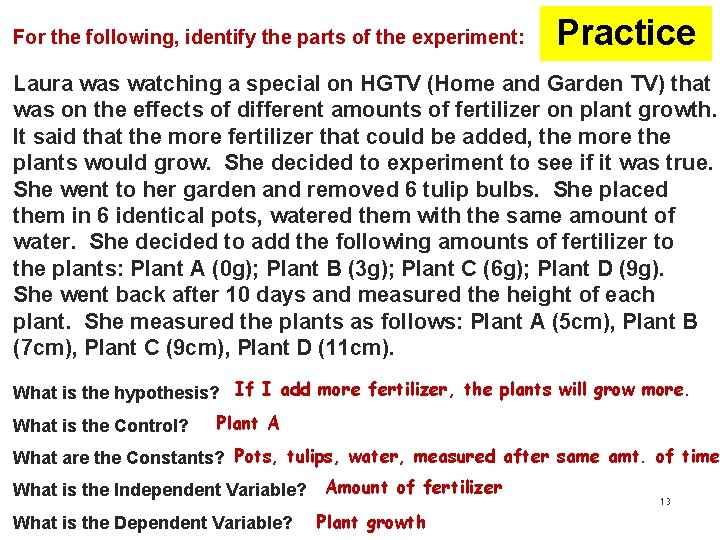
For the following, identify the parts of the experiment: Practice Laura was watching a special on HGTV (Home and Garden TV) that was on the effects of different amounts of fertilizer on plant growth. It said that the more fertilizer that could be added, the more the plants would grow. She decided to experiment to see if it was true. She went to her garden and removed 6 tulip bulbs. She placed them in 6 identical pots, watered them with the same amount of water. She decided to add the following amounts of fertilizer to the plants: Plant A (0 g); Plant B (3 g); Plant C (6 g); Plant D (9 g). She went back after 10 days and measured the height of each plant. She measured the plants as follows: Plant A (5 cm), Plant B (7 cm), Plant C (9 cm), Plant D (11 cm). What is the hypothesis? If I add more fertilizer, the plants will grow more. What is the Control? Plant A What are the Constants? Pots, tulips, water, measured after same amt. of time What is the Independent Variable? What is the Dependent Variable? Amount of fertilizer Plant growth 13
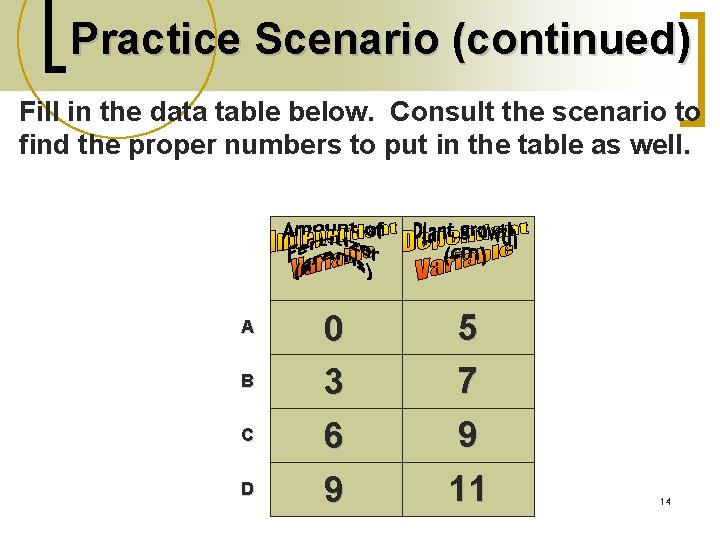
Practice Scenario (continued) Fill in the data table below. Consult the scenario to find the proper numbers to put in the table as well. A B C D 0 3 6 9 5 7 9 11 14
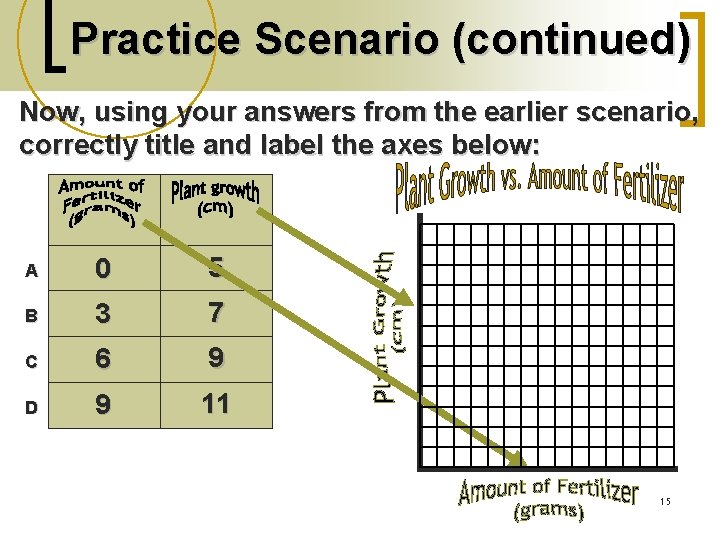
Practice Scenario (continued) Now, using your answers from the earlier scenario, correctly title and label the axes below: A 0 5 B 3 7 C 6 9 D 9 11 15
- Slides: 15