
Graphing and Charting Student Progress Kelli Jones Ed


- Slides: 15
Graphing and Charting Student Progress Kelli Jones, Ed. S. Gloria Griffin, Ed. S. Cobb County Psychological Services Resource: NASP Publication: Graphing Made Easy by James Mc. Dougal, Karrie Clark & Jacklyn Wilson
Why Graph Data? • Visually summarize information - displays data to others easily - establishes a common language, encouraging open discussion - student performance - projected performance - actual performance as it changes over time - can compare results to peers
Why Graph Data - can be easily included in reports, printed for meetings, emailed - sharing data during intervention phase can shape perceptions of effectiveness of the intervention and student progress - measure of professional accountability
Why Graph Data • Allows the team to determine whether modification of an intervention is needed or when a new intervention design is indicated
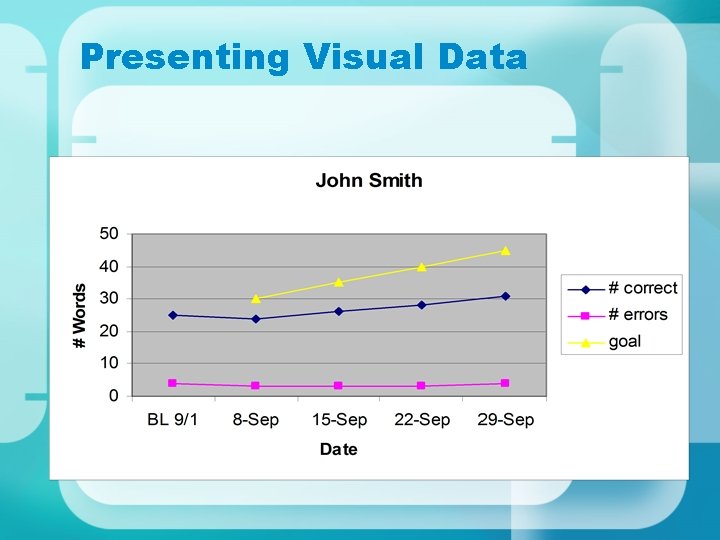
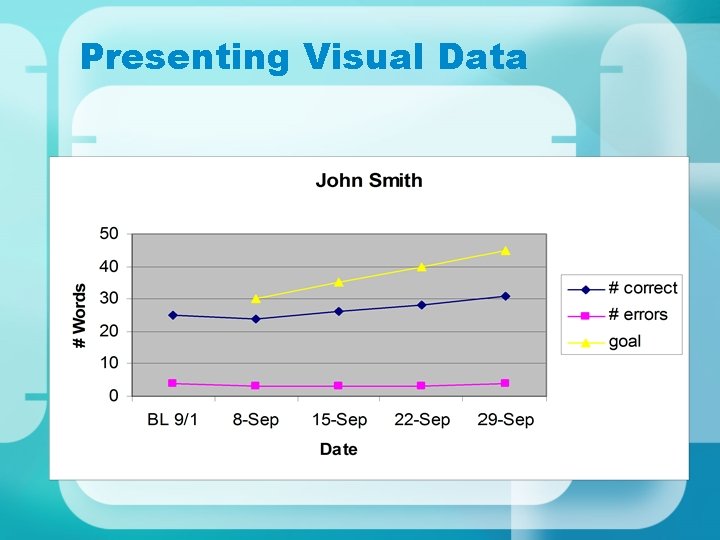
Presenting Visual Data
FIDELITY • “Graphs are only as accurate as the information used to construct them”
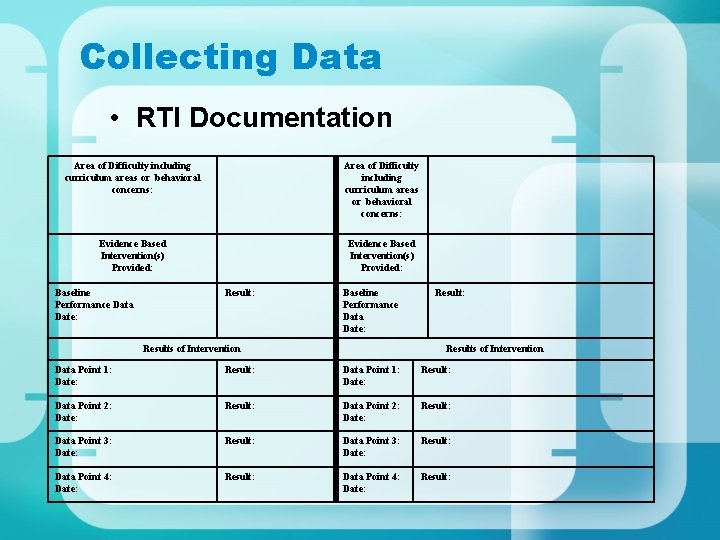
Collecting Data • RTI Documentation Area of Difficulty including curriculum areas or behavioral concerns: Evidence Based Intervention(s) Provided: Baseline Performance Data Date: Result: Baseline Performance Data Date: Results of Intervention Result: Results of Intervention Data Point 1: Date: Result: Data Point 2: Date: Result: Data Point 3: Date: Result: Data Point 4: Date: Result:
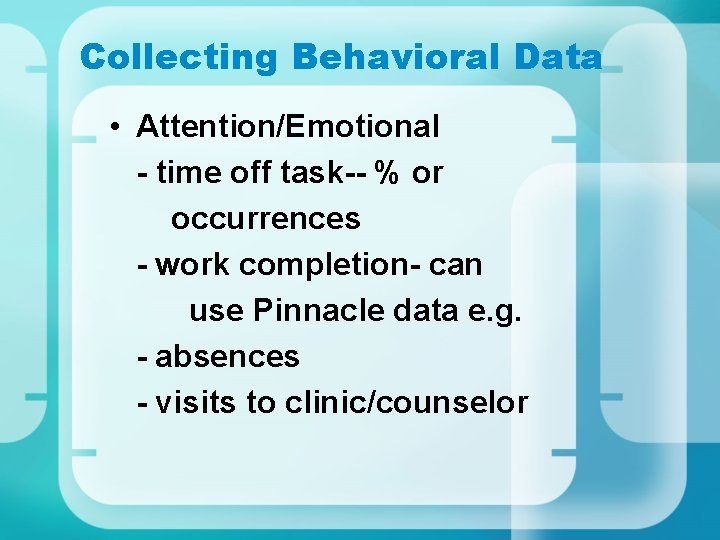
Collecting Behavioral Data • Attention/Emotional - time off task-- % or occurrences - work completion- can use Pinnacle data e. g. - absences - visits to clinic/counselor
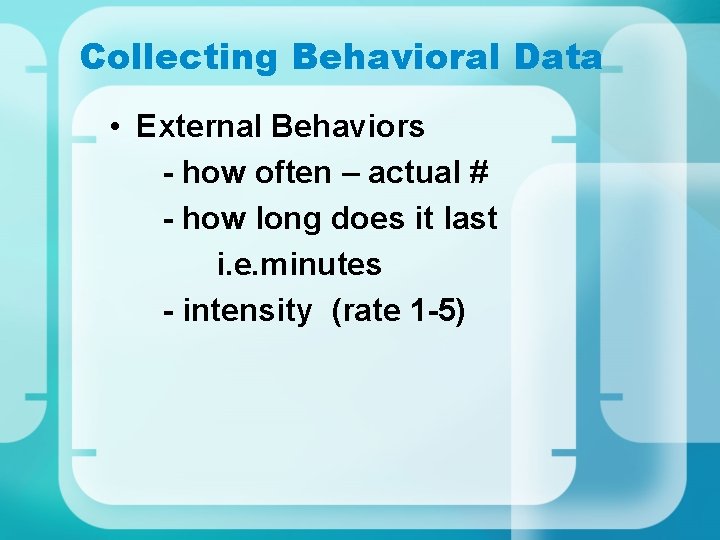
Collecting Behavioral Data • External Behaviors - how often – actual # - how long does it last i. e. minutes - intensity (rate 1 -5)
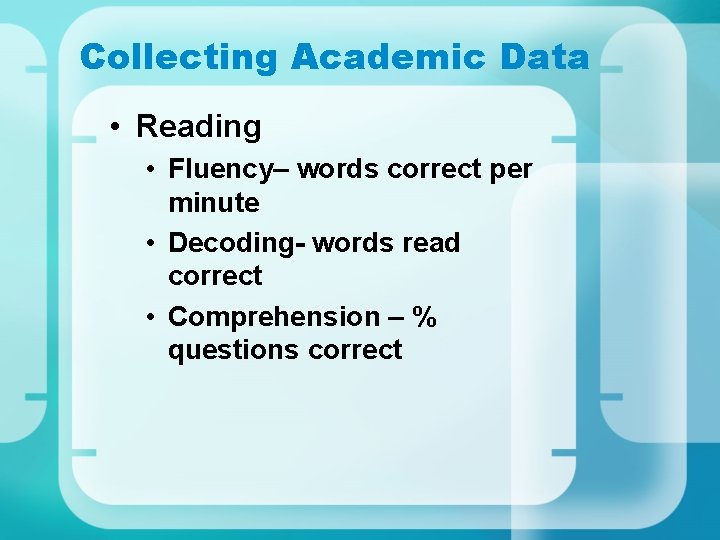
Collecting Academic Data • Reading • Fluency– words correct per minute • Decoding- words read correct • Comprehension – % questions correct
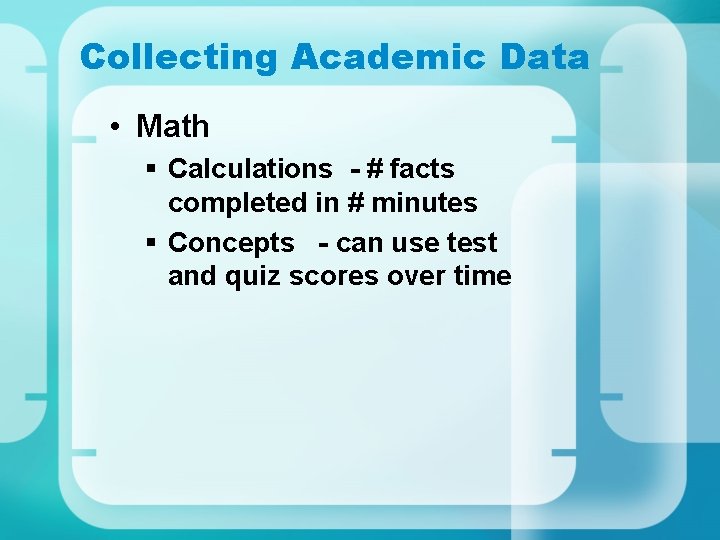
Collecting Academic Data • Math § Calculations - # facts completed in # minutes § Concepts - can use test and quiz scores over time
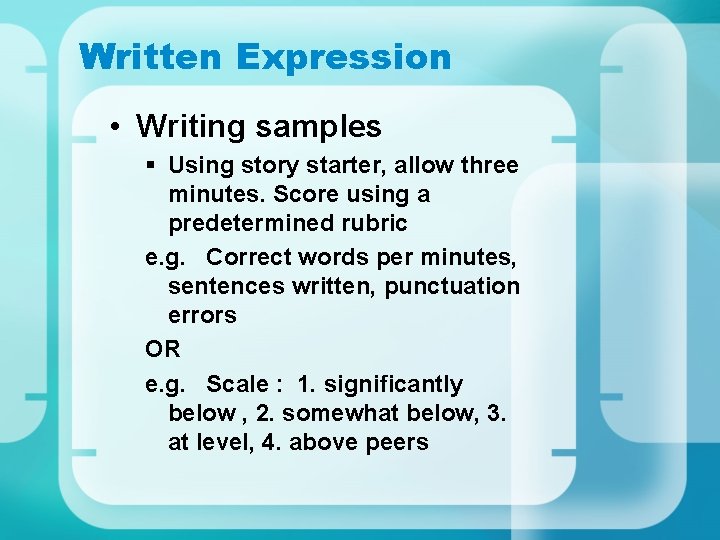
Written Expression • Writing samples § Using story starter, allow three minutes. Score using a predetermined rubric e. g. Correct words per minutes, sentences written, punctuation errors OR e. g. Scale : 1. significantly below , 2. somewhat below, 3. at level, 4. above peers
EXCEL DATA PREVIEW # c o r r e c t Date # e r r o r s goal BL 9 / 1 25 4 8 -Sep 24 3 30 15 S e p 26 3 35 22 S e p 28 3 40 29 S e p 31 4 45
Presenting Visual Data
RESOURCES • http: //www. oswego. edu/~ mcdougal/web_site_4_11 _2005/index. html • Can download all templates for use