
Graphical Analysis of Motion First we will graphically
- Slides: 8
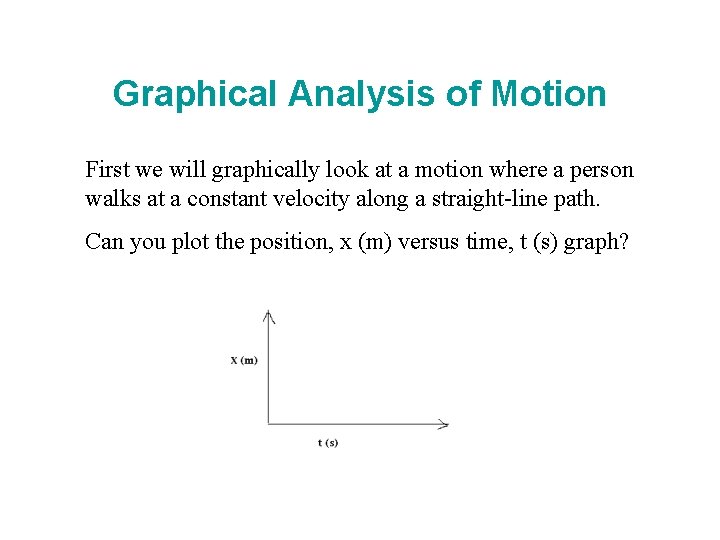
Graphical Analysis of Motion First we will graphically look at a motion where a person walks at a constant velocity along a straight-line path. Can you plot the position, x (m) versus time, t (s) graph?
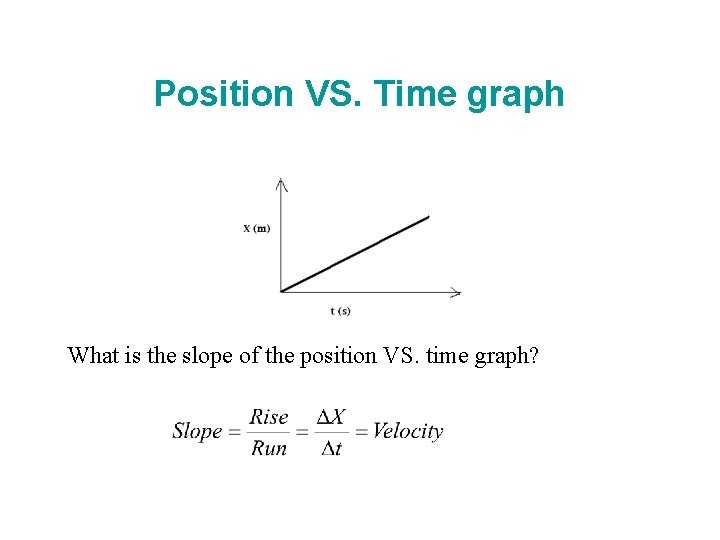
Position VS. Time graph What is the slope of the position VS. time graph?
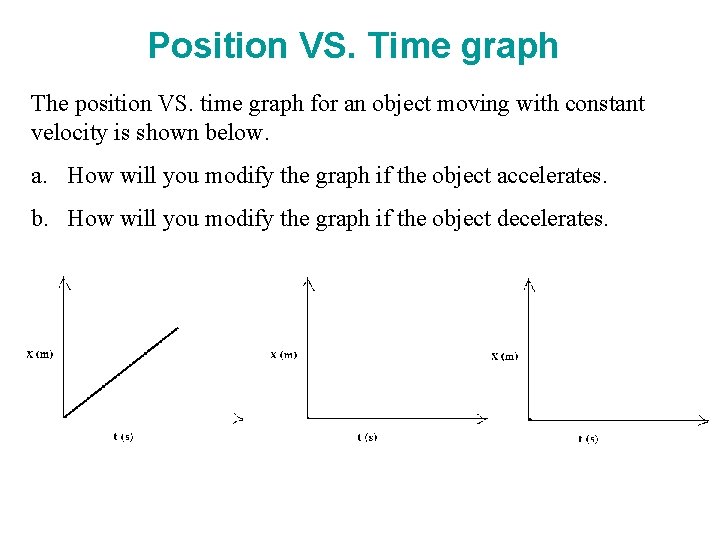
Position VS. Time graph The position VS. time graph for an object moving with constant velocity is shown below. a. How will you modify the graph if the object accelerates. b. How will you modify the graph if the object decelerates.
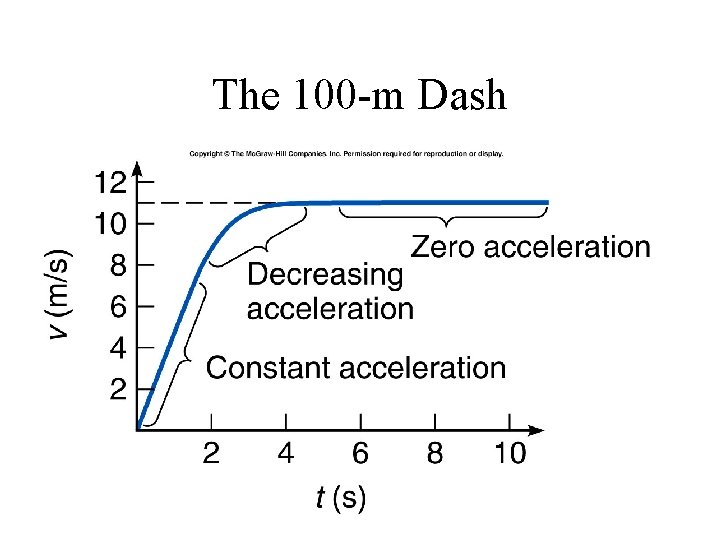
The 100 -m Dash
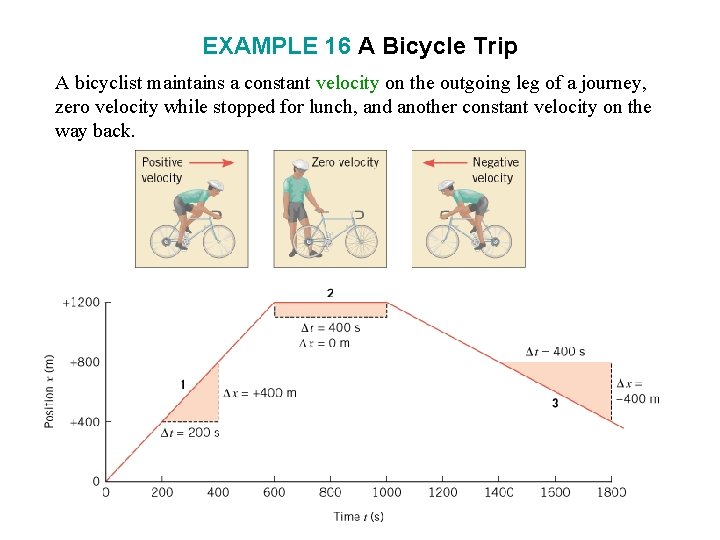
EXAMPLE 16 A Bicycle Trip A bicyclist maintains a constant velocity on the outgoing leg of a journey, zero velocity while stopped for lunch, and another constant velocity on the way back.
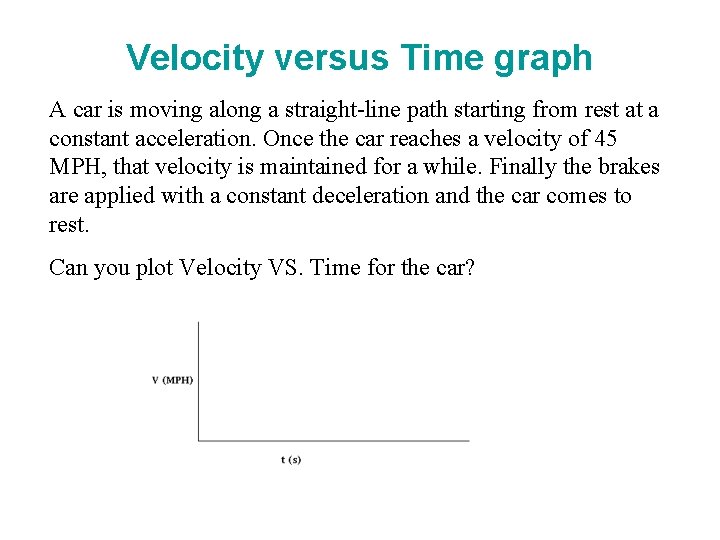
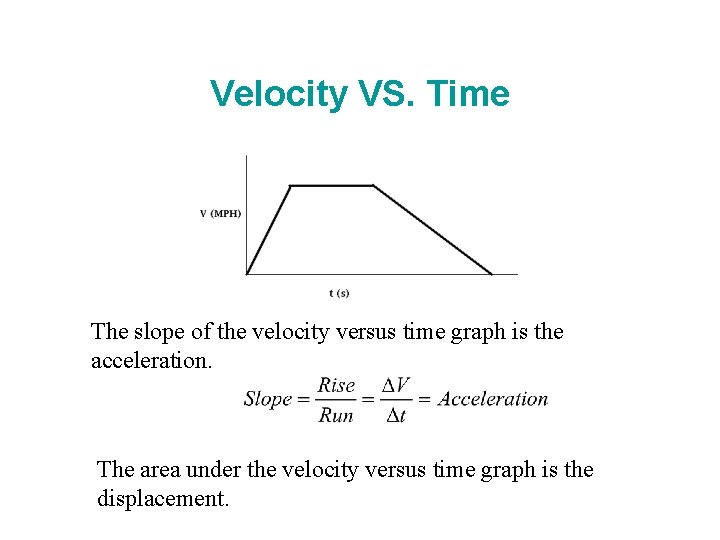
Velocity versus Time graph A car is moving along a straight-line path starting from rest at a constant acceleration. Once the car reaches a velocity of 45 MPH, that velocity is maintained for a while. Finally the brakes are applied with a constant deceleration and the car comes to rest. Can you plot Velocity VS. Time for the car?
Velocity VS. Time The slope of the velocity versus time graph is the acceleration. The area under the velocity versus time graph is the displacement.
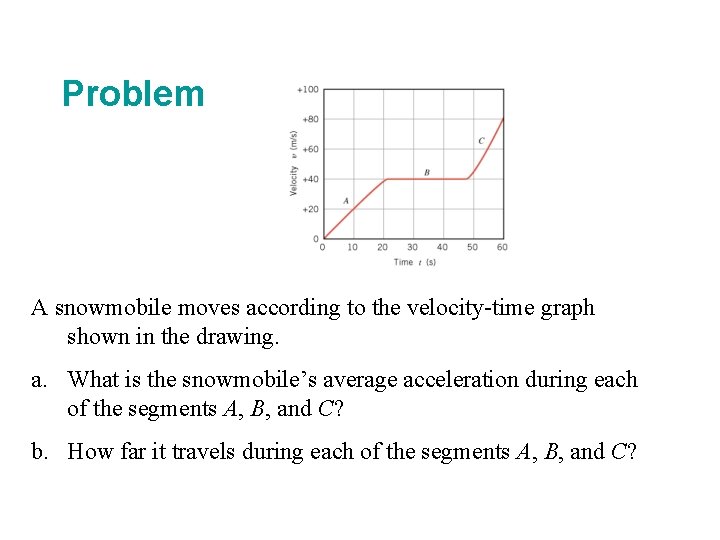
Problem A snowmobile moves according to the velocity-time graph shown in the drawing. a. What is the snowmobile’s average acceleration during each of the segments A, B, and C? b. How far it travels during each of the segments A, B, and C?