
Graphic Communication Higher Sectional Drawings Graphic Communication Higher
- Slides: 11
Graphic Communication Higher Sectional Drawings
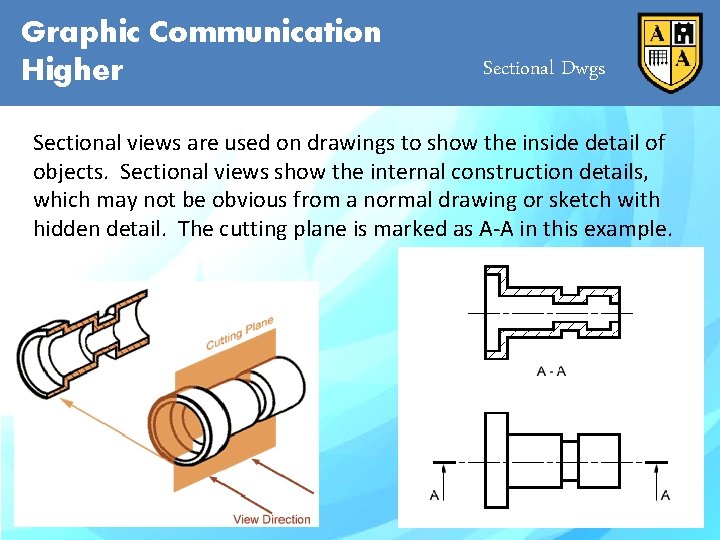
Graphic Communication Higher Sectional Dwgs Sectional views are used on drawings to show the inside detail of objects. Sectional views show the internal construction details, which may not be obvious from a normal drawing or sketch with hidden detail. The cutting plane is marked as A-A in this example.
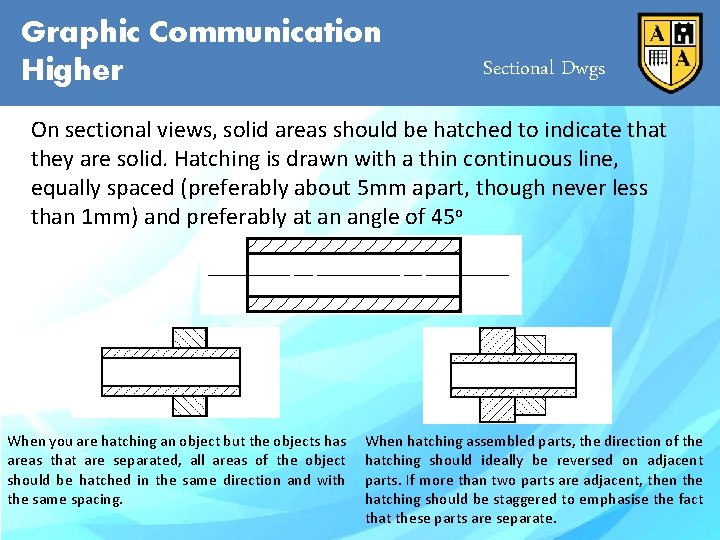
Graphic Communication Higher Sectional Dwgs On sectional views, solid areas should be hatched to indicate that they are solid. Hatching is drawn with a thin continuous line, equally spaced (preferably about 5 mm apart, though never less than 1 mm) and preferably at an angle of 45 o When you are hatching an object but the objects has areas that are separated, all areas of the object should be hatched in the same direction and with the same spacing. When hatching assembled parts, the direction of the hatching should ideally be reversed on adjacent parts. If more than two parts are adjacent, then the hatching should be staggered to emphasise the fact that these parts are separate.
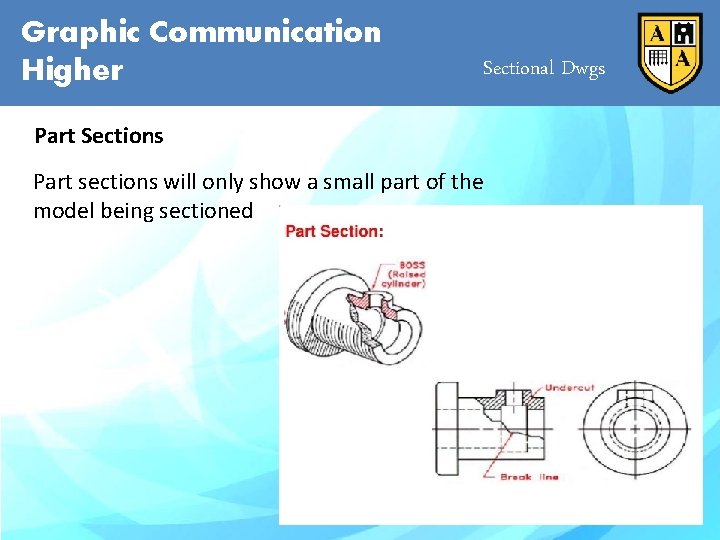
Graphic Communication Higher Sectional Dwgs Part Sections Part sections will only show a small part of the model being sectioned
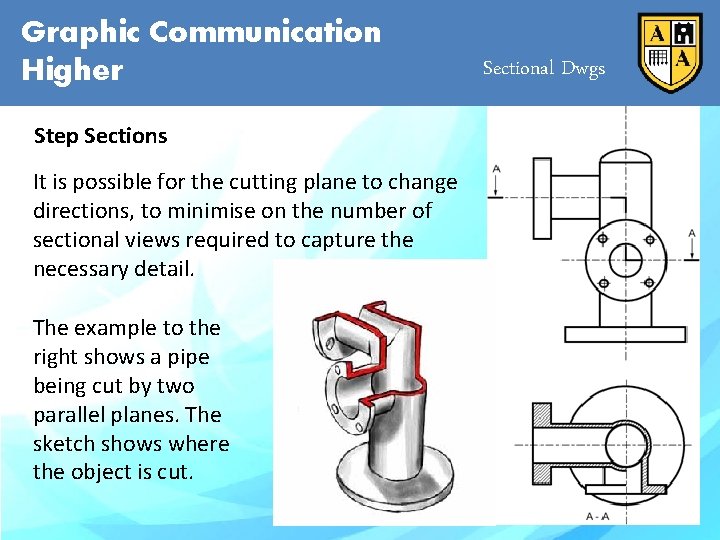
Graphic Communication Higher Step Sections It is possible for the cutting plane to change directions, to minimise on the number of sectional views required to capture the necessary detail. The example to the right shows a pipe being cut by two parallel planes. The sketch shows where the object is cut. Sectional Dwgs
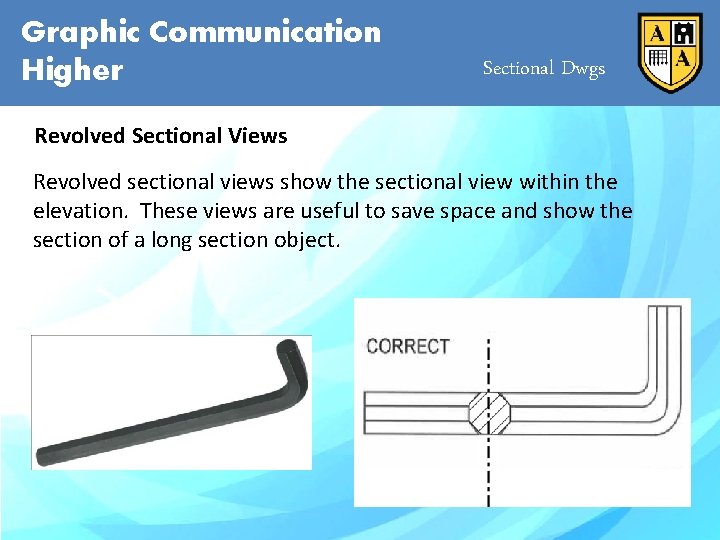
Graphic Communication Higher Sectional Dwgs Revolved Sectional Views Revolved sectional views show the sectional view within the elevation. These views are useful to save space and show the section of a long section object.
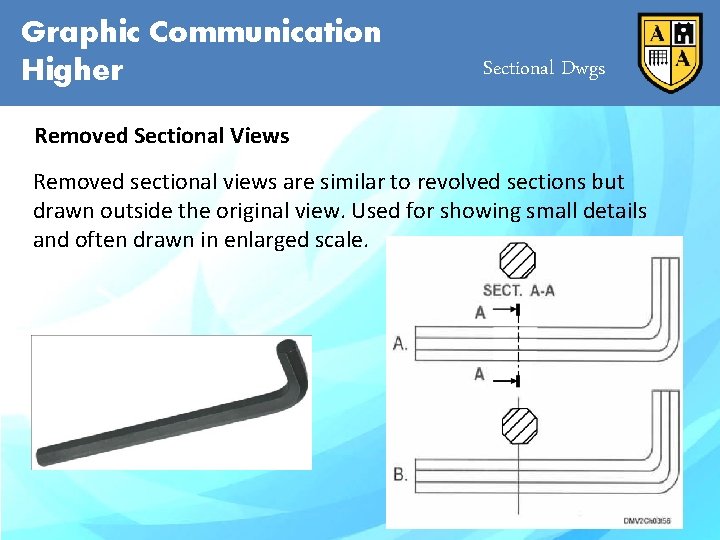
Graphic Communication Higher Sectional Dwgs Removed Sectional Views Removed sectional views are similar to revolved sections but drawn outside the original view. Used for showing small details and often drawn in enlarged scale.
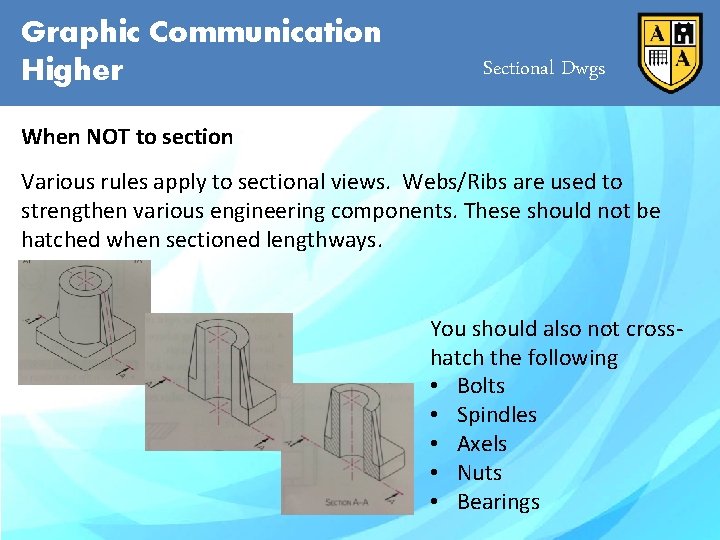
Graphic Communication Higher Sectional Dwgs When NOT to section Various rules apply to sectional views. Webs/Ribs are used to strengthen various engineering components. These should not be hatched when sectioned lengthways. You should also not crosshatch the following • Bolts • Spindles • Axels • Nuts • Bearings
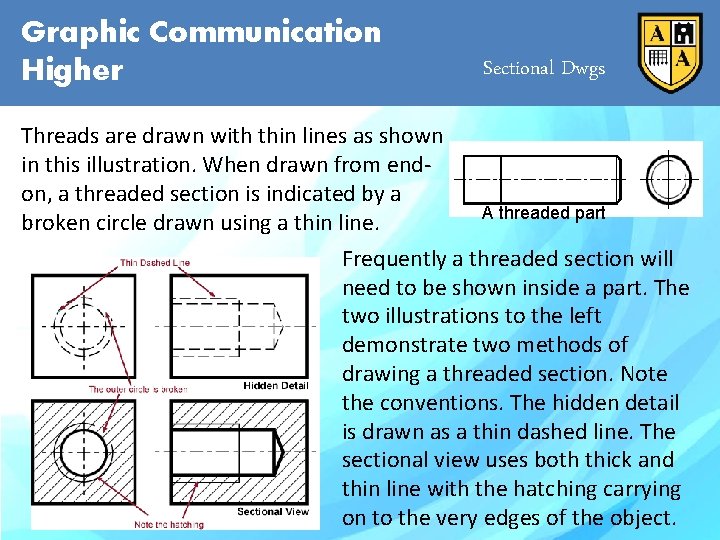
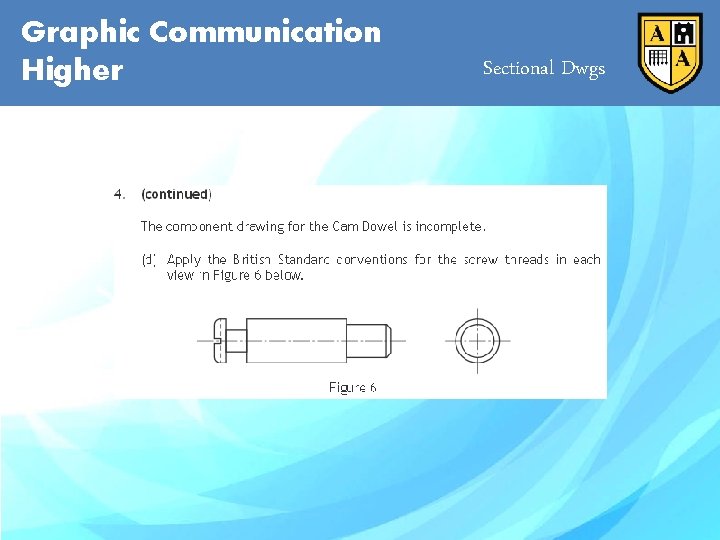
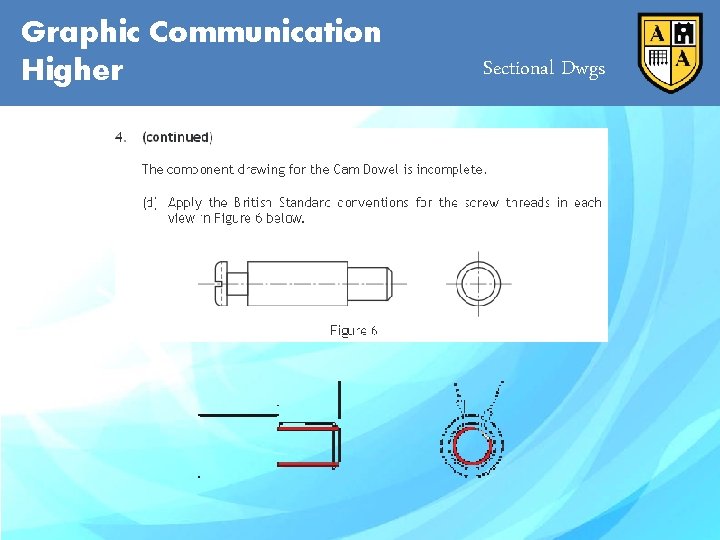
Graphic Communication Higher Threads are drawn with thin lines as shown in this illustration. When drawn from endon, a threaded section is indicated by a broken circle drawn using a thin line. Sectional Dwgs A threaded part Frequently a threaded section will need to be shown inside a part. The two illustrations to the left demonstrate two methods of drawing a threaded section. Note the conventions. The hidden detail is drawn as a thin dashed line. The sectional view uses both thick and thin line with the hatching carrying on to the very edges of the object.
Graphic Communication Higher Sectional Dwgs
Graphic Communication Higher Sectional Dwgs