
Graph SC Parallel Secure Computation Made Easy Kartik
![Achieving Parallelism Oblivious Parallel RAM [BCP’ 14] Polylogarithmic Blowup: Not practical Graph. SC: O(log](https://slidetodoc.com/presentation_image_h/048c8506422be3997454c36a23b237d0/image-18.jpg "Achieving Parallelism Oblivious Parallel RAM [BCP’ 14] Polylogarithmic Blowup: Not practical Graph. SC: O(log")
![Pregel by “Graph-parallel” algorithms [LGKB’ 10, GLGBG’ 12, MABDHLC’ 10, ZCF’ 10] 19](https://slidetodoc.com/presentation_image_h/048c8506422be3997454c36a23b237d0/image-19.jpg "Pregel by “Graph-parallel” algorithms [LGKB’ 10, GLGBG’ 12, MABDHLC’ 10, ZCF’ 10] 19")
- Slides: 30
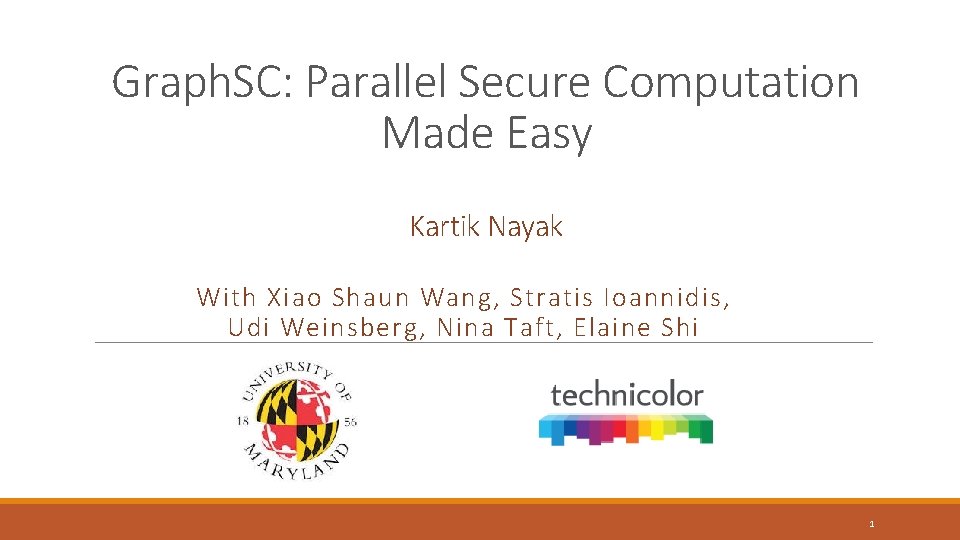
Graph. SC: Parallel Secure Computation Made Easy Kartik Nayak With Xiao Shaun Wang, Stratis Ioannidis, Udi Weinsberg, Nina Taft, Elaine Shi 1
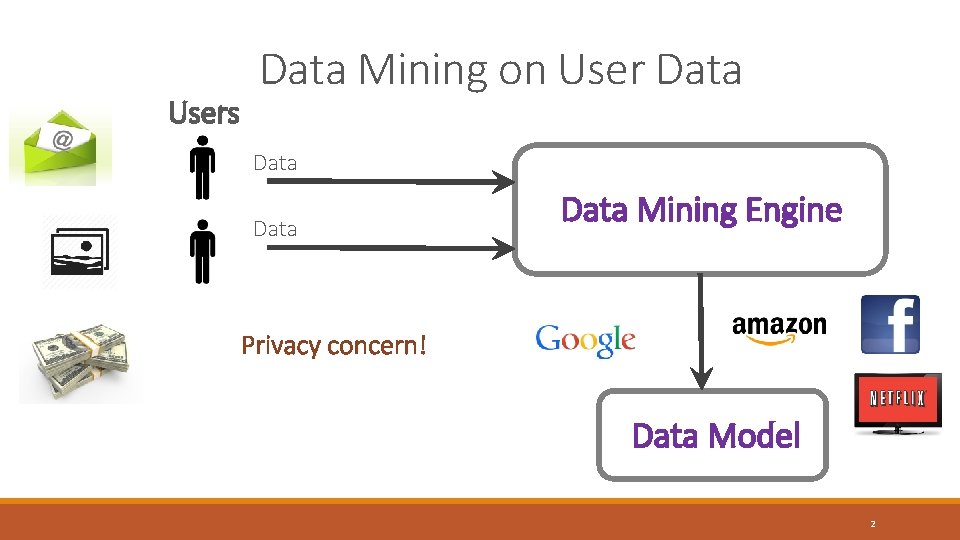
Users Data Mining on User Data Mining Engine Privacy concern! Data Model 2
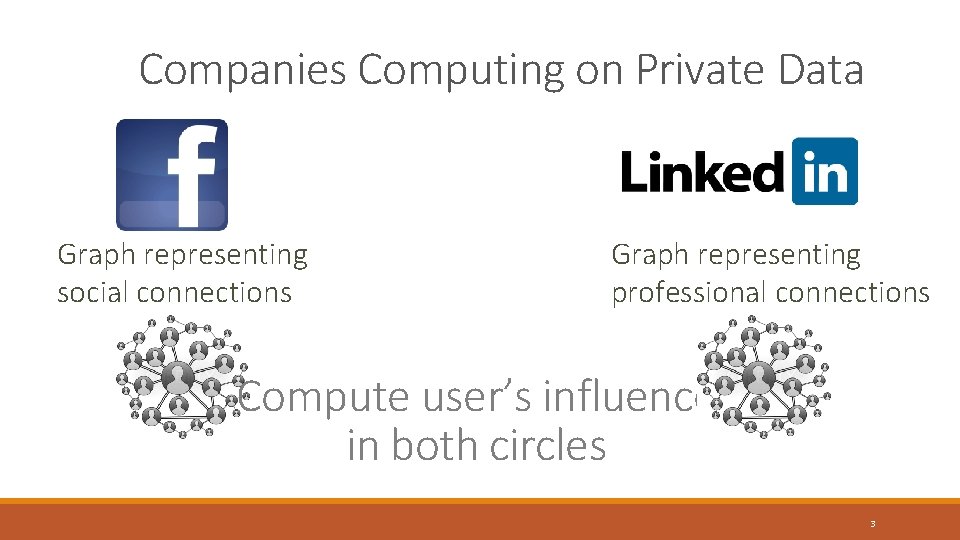
Companies Computing on Private Data Graph representing social connections Graph representing professional connections Compute user’s influence in both circles 3
Companies want to run machine learning algorithms Users/Companies do NOT to reveal data want Can we enable this in practice? 4
Cryptography to the rescue: Secure Multiparty Computation Ensures that we learn only the outcome 5
Key Challenges Generic Solutions 1 Lot of work improving individual algorithms Departure from one-at-a-time approach 6
Key Challenges 2 Convert Program to Run on Secure Computation (Cost of obliviousness) 7
Key Challenges 3 Parallelizability There’s a lot of data – maintain benefits of parallelism in the insecure setting With cryptography, expensive computation 8
Key Contributions 9
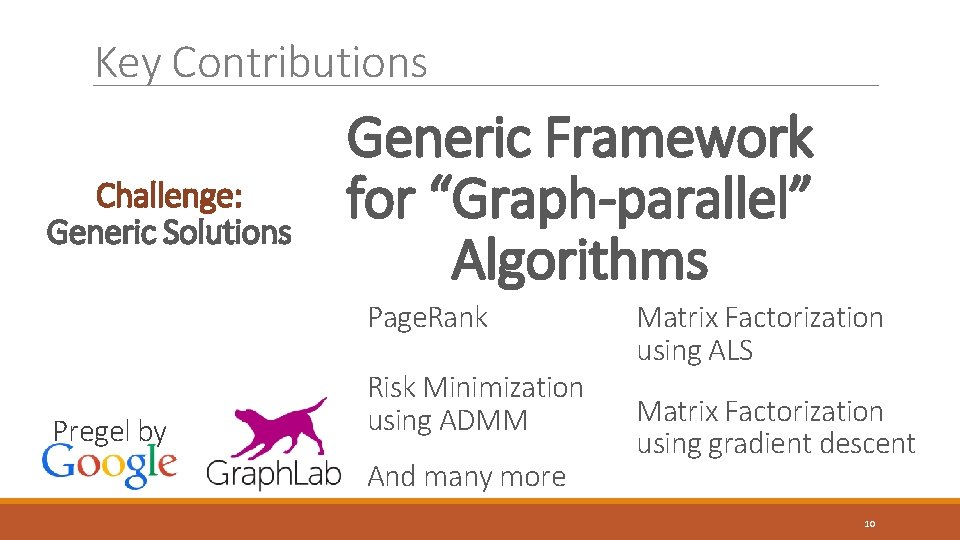
Key Contributions Challenge: Generic Solutions Generic Framework for “Graph-parallel” Algorithms Page. Rank Pregel by Risk Minimization using ADMM And many more Matrix Factorization using ALS Matrix Factorization using gradient descent 10
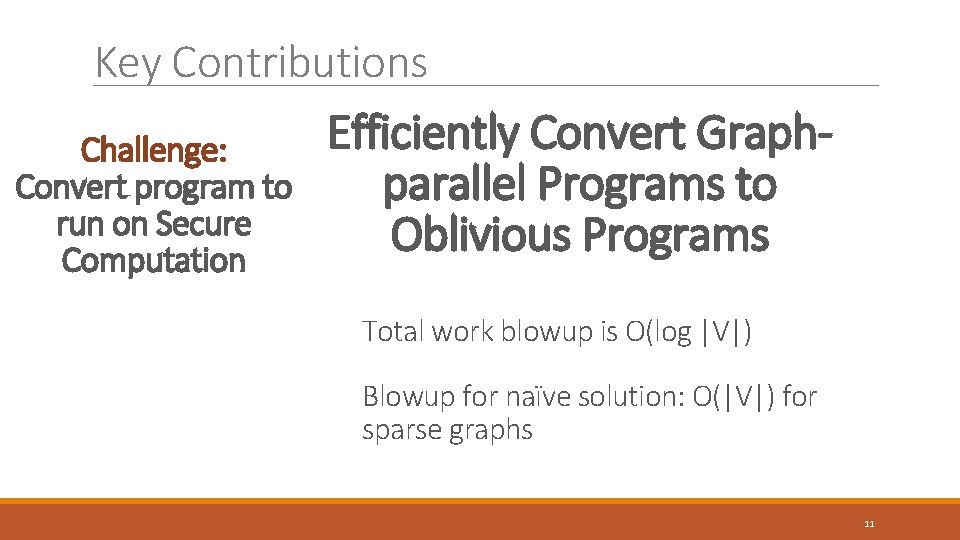
Key Contributions Efficiently Convert Graph. Challenge: Convert program to parallel Programs to run on Secure Oblivious Programs Computation Total work blowup is O(log |V|) Blowup for naïve solution: O(|V|) for sparse graphs 11
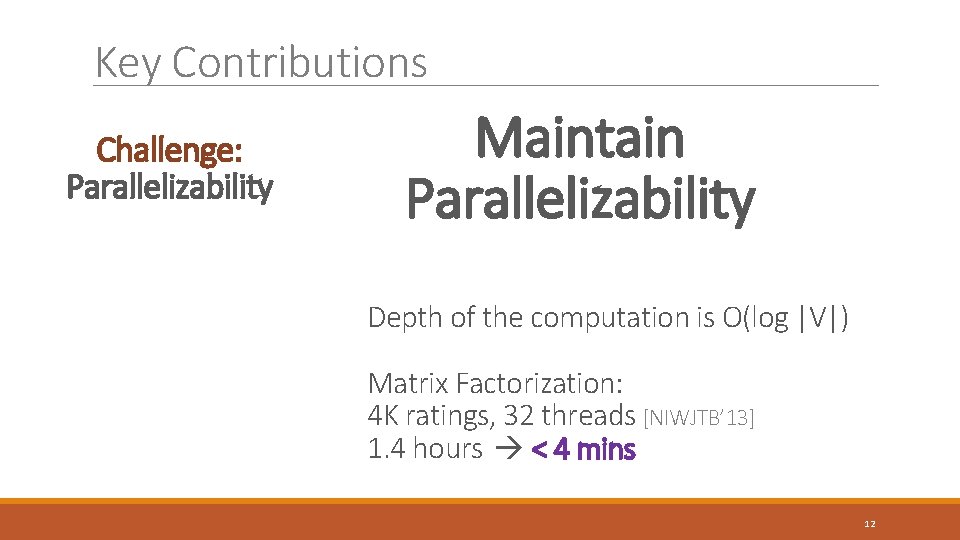
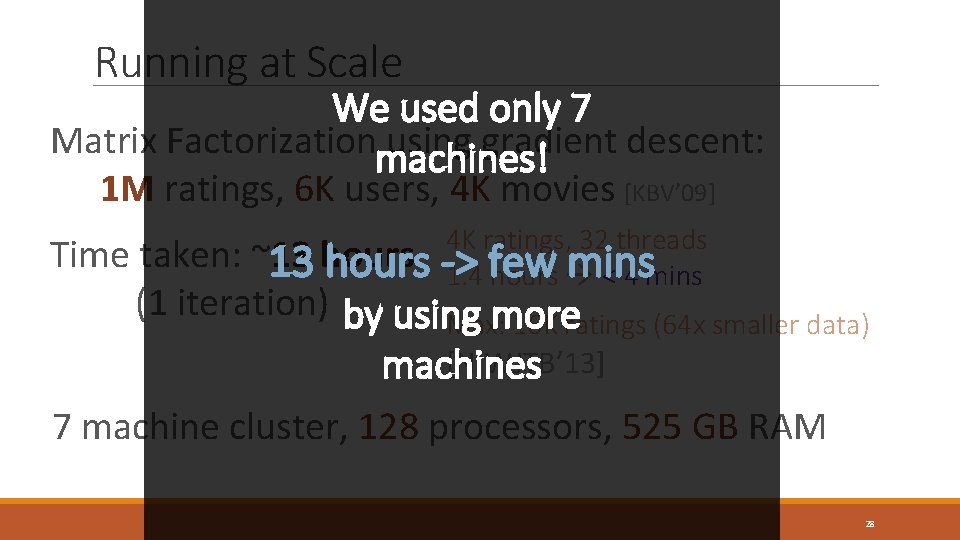
Key Contributions Challenge: Parallelizability Maintain Parallelizability Depth of the computation is O(log |V|) Matrix Factorization: 4 K ratings, 32 threads [NIWJTB’ 13] 1. 4 hours < 4 mins 12
Key Contributions 1 Generic Framework for Graph-parallel Algorithms 2 Efficiently Convert to Oblivious Programs 3 Maintain Parallelizability 13
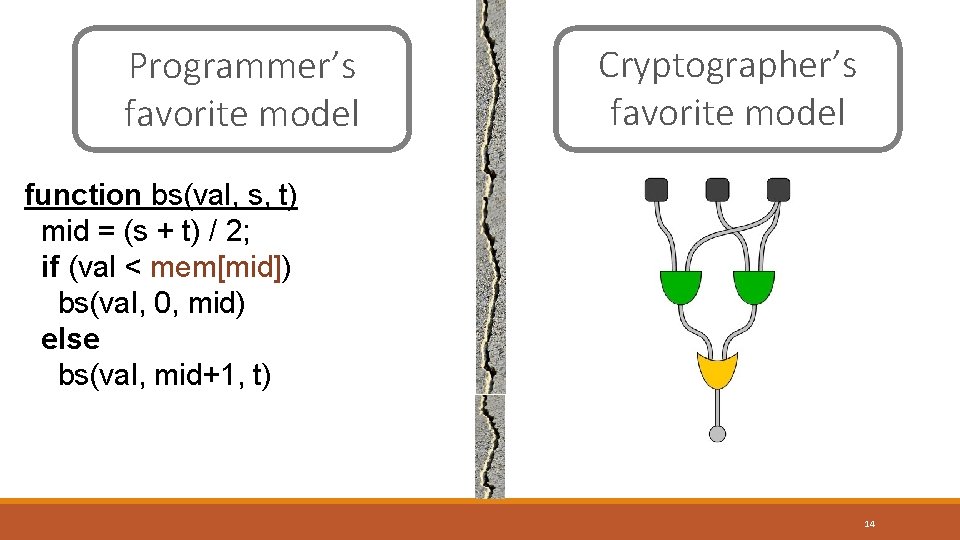
Programmer’s favorite model Cryptographer’s favorite model function bs(val, s, t) mid = (s + t) / 2; if (val < mem[mid]) bs(val, 0, mid) else bs(val, mid+1, t) 14
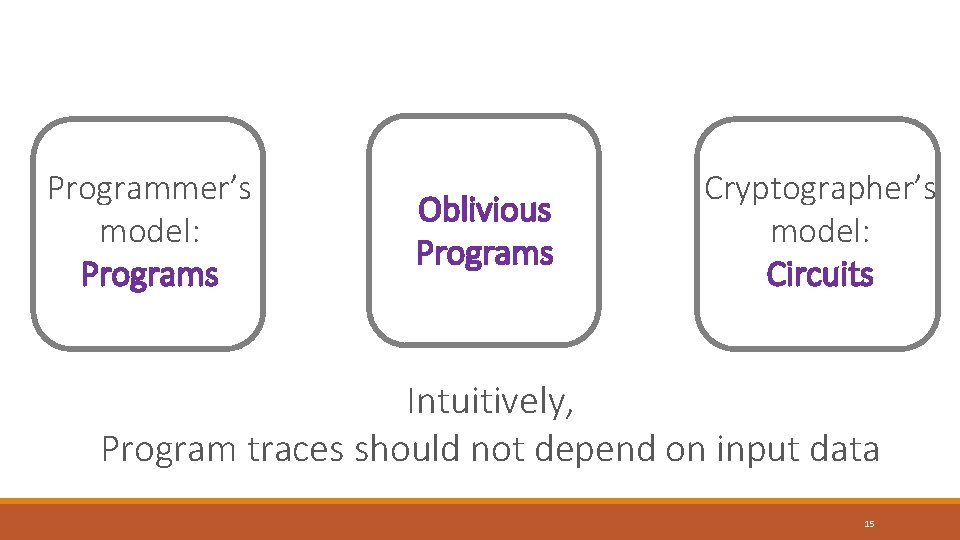
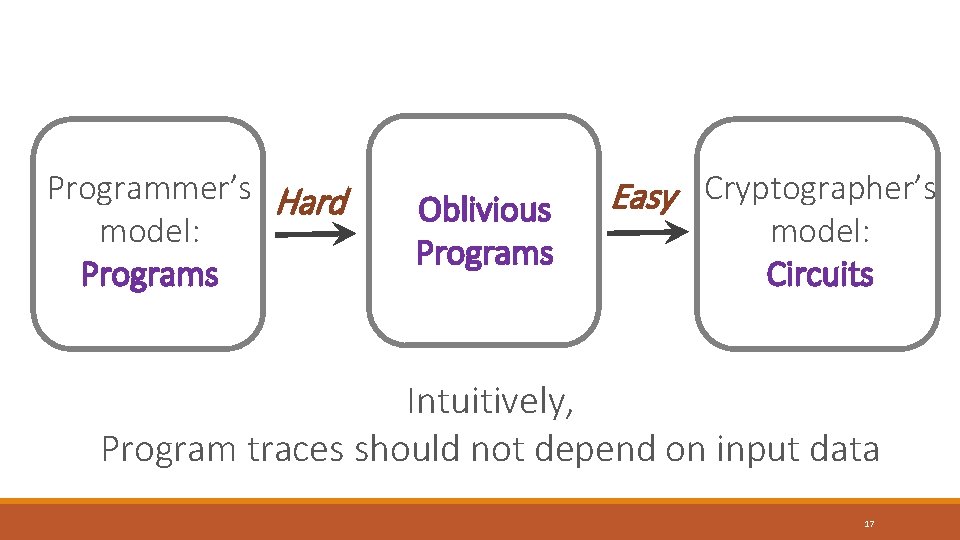
Programmer’s model: Programs Oblivious Programs Cryptographer’s model: Circuits Intuitively, Program traces should not depend on input data 15
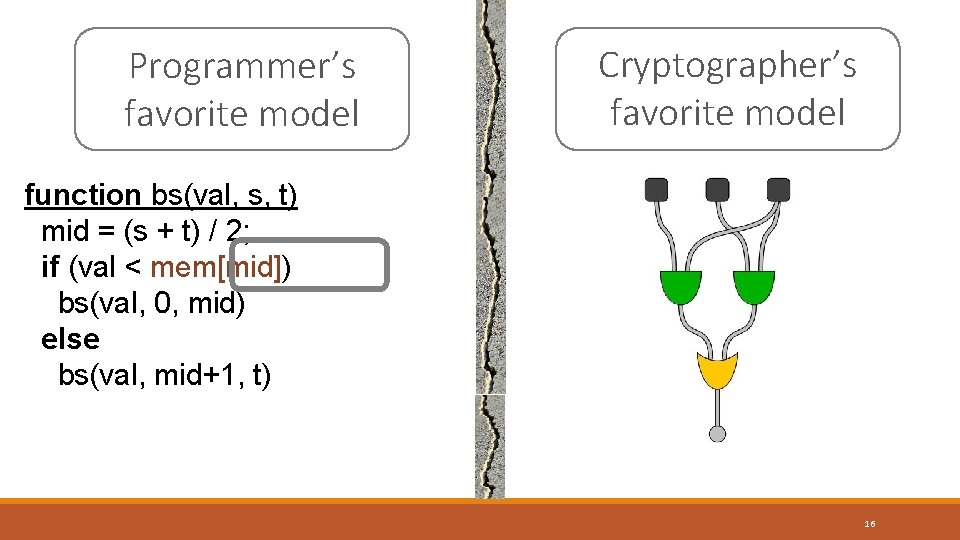
Programmer’s favorite model Cryptographer’s favorite model function bs(val, s, t) mid = (s + t) / 2; if (val < mem[mid]) bs(val, 0, mid) else bs(val, mid+1, t) 16
Programmer’s Hard model: Programs Oblivious Programs Easy Cryptographer’s model: Circuits Intuitively, Program traces should not depend on input data 17
Achieving Parallelism Oblivious Parallel RAM [BCP’ 14] Polylogarithmic Blowup: Not practical Graph. SC: O(log |V|) blowup Goal: Low Depth Circuits 18
Pregel by “Graph-parallel” algorithms [LGKB’ 10, GLGBG’ 12, MABDHLC’ 10, ZCF’ 10] 19
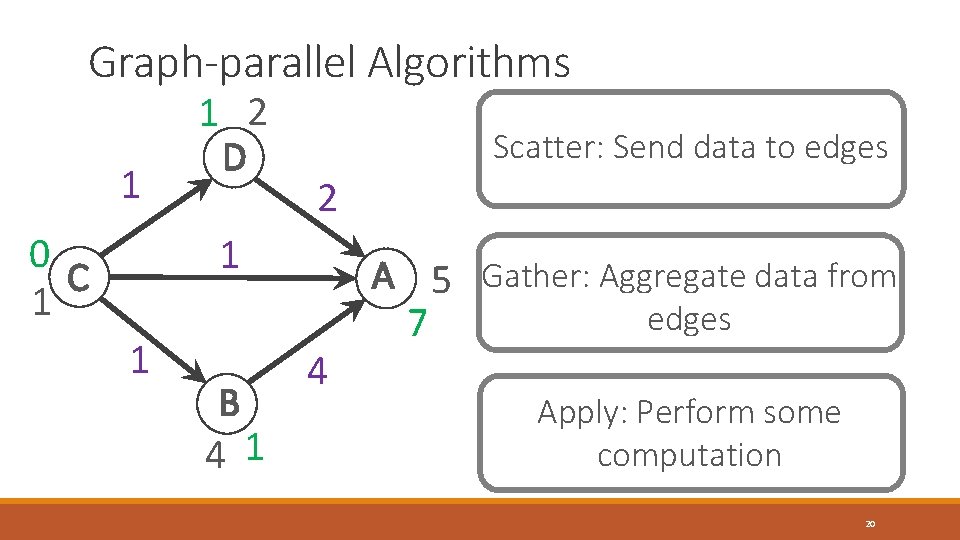
Graph-parallel Algorithms 1 0 C 1 1 2 D Scatter: Send data to edges 2 1 1 B 4 1 A 5 Gather: Aggregate data from 4 7 edges Apply: Perform some computation 20
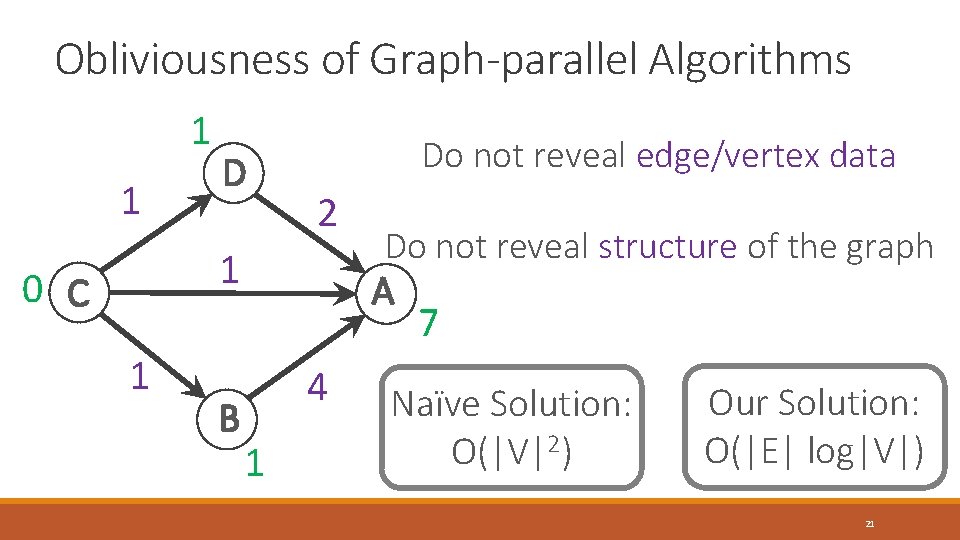
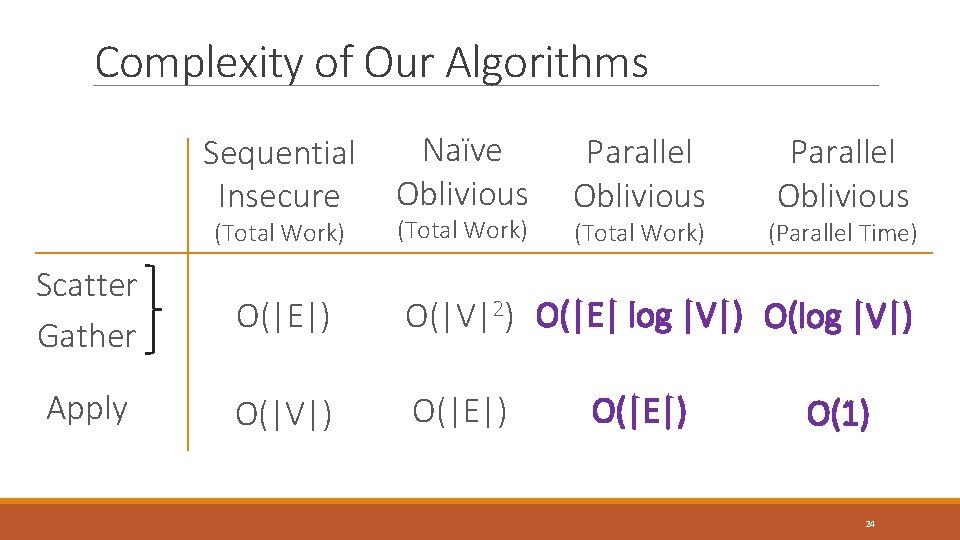
Obliviousness of Graph-parallel Algorithms 1 1 D Do not reveal edge/vertex data 2 1 0 C 1 B Do not reveal structure of the graph A 4 1 7 Naïve Solution: O(|V|2) Our Solution: O(|E| log|V|) 21
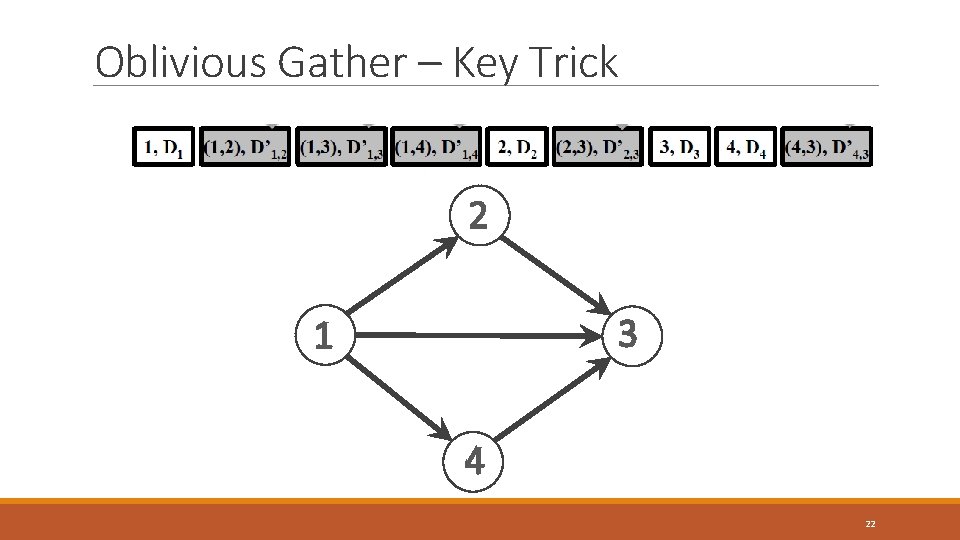
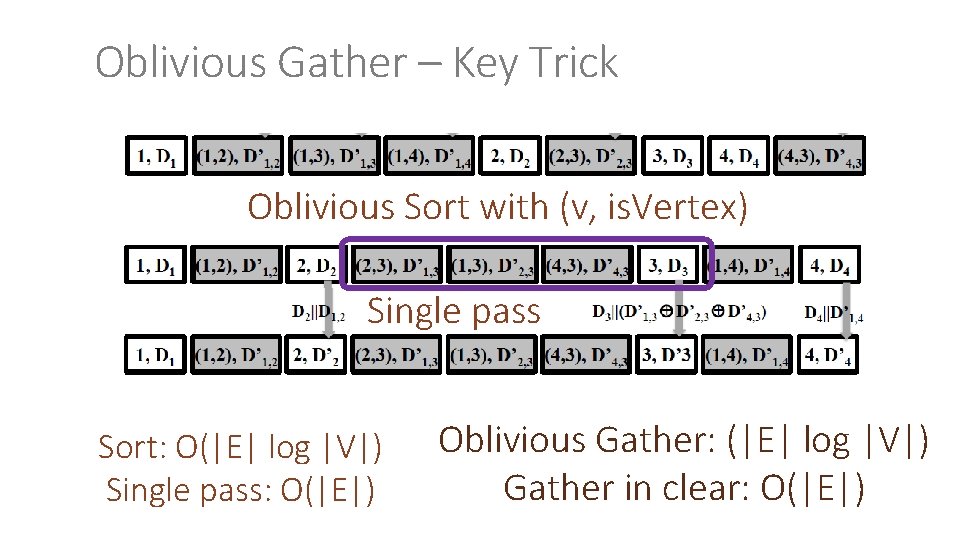
Oblivious Gather – Key Trick 2 3 1 4 22
Oblivious Gather – Key Trick Oblivious Sort with (v, is. Vertex) Single pass Sort: O(|E| log |V|) Single pass: O(|E|) Oblivious Gather: (|E| log |V|) Gather in clear: O(|E|) 23
Complexity of Our Algorithms Sequential Insecure (Total Work) Naïve Oblivious (Total Work) Parallel Oblivious (Parallel Time) Scatter Gather O(|E|) O(|V|2) O(|E| log |V|) O(log |V|) Apply O(|V|) O(|E|) O(1) 24
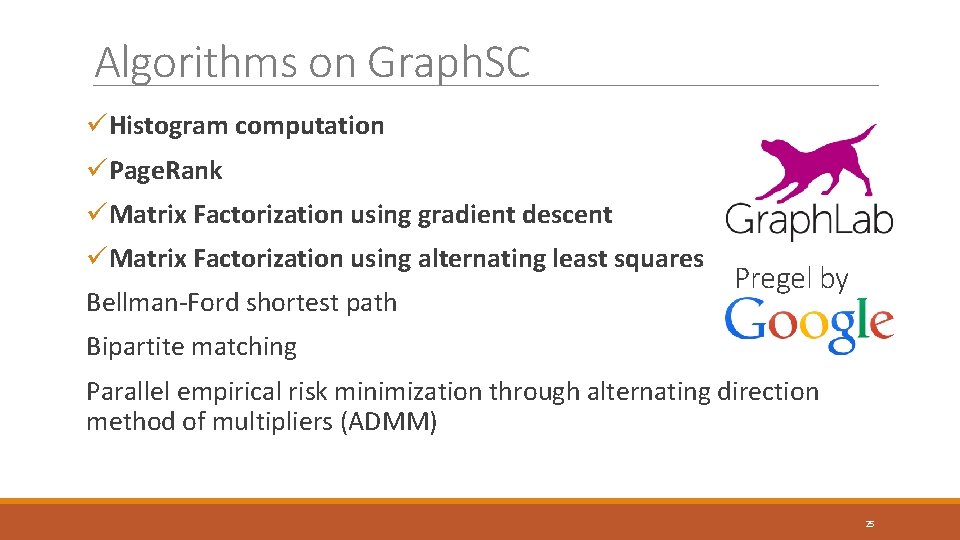
Algorithms on Graph. SC üHistogram computation üPage. Rank üMatrix Factorization using gradient descent üMatrix Factorization using alternating least squares Bellman-Ford shortest path Pregel by Bipartite matching Parallel empirical risk minimization through alternating direction method of multipliers (ADMM) 25
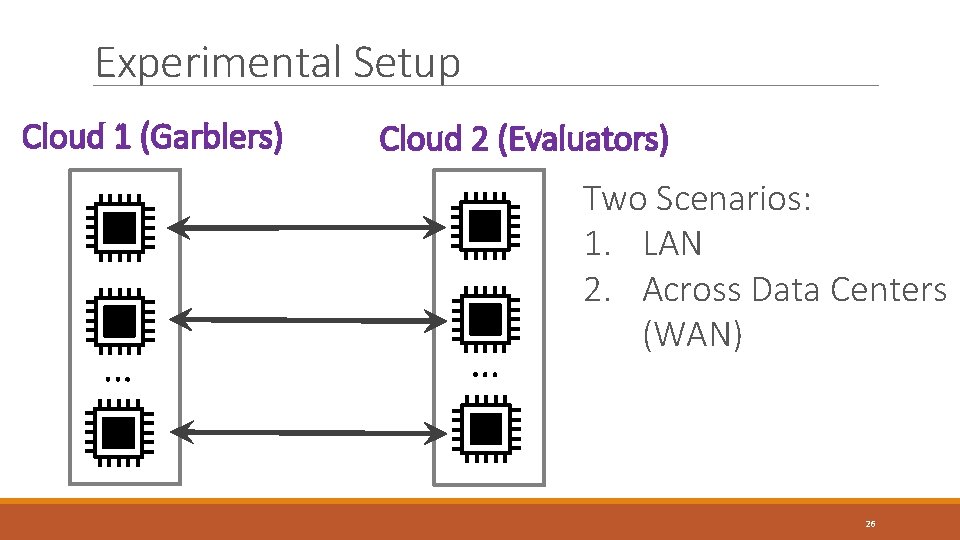
Experimental Setup Cloud 1 (Garblers) Cloud 2 (Evaluators) … Two Scenarios: 1. LAN 2. Across Data Centers (WAN) 26 …
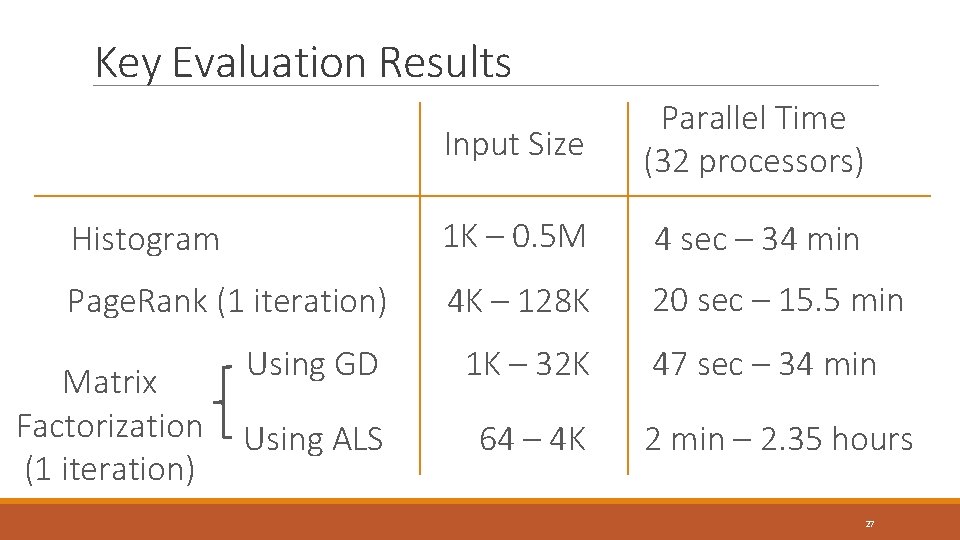
Key Evaluation Results Input Size Parallel Time (32 processors) Histogram 1 K – 0. 5 M 4 sec – 34 min Page. Rank (1 iteration) 4 K – 128 K 20 sec – 15. 5 min Using GD 1 K – 32 K Using ALS 64 – 4 K Matrix Factorization (1 iteration) 47 sec – 34 min 2 min – 2. 35 hours 27
Running at Scale We used only 7 Matrix Factorizationmachines! using gradient descent: 1 M ratings, 6 K users, 4 K movies [KBV’ 09] 4 K ratings, 32 threads -> mins 1. 4 few hours < 4 mins Time taken: ~13 13 hours (1 iteration) by using Max: more 16 K ratings (64 x smaller data) [NIWJTB’ 13] machines 7 machine cluster, 128 processors, 525 GB RAM 28
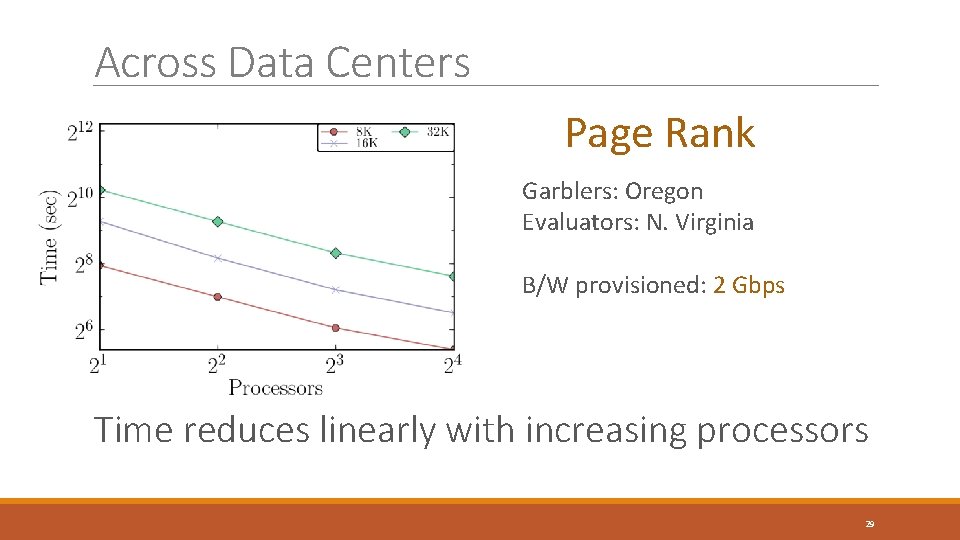
Across Data Centers Page Rank Garblers: Oregon Evaluators: N. Virginia B/W provisioned: 2 Gbps Time reduces linearly with increasing processors 29
Conclusion Graph. SC is a parallel secure computation framework for Graph-parallel algorithms www. oblivm. com Thank You! kartik@cs. umd. edu 30