
Graph database workshop Graph database scenarios with Azure
Graph database workshop Graph database scenarios with Azure Cosmos DB Gremlin API
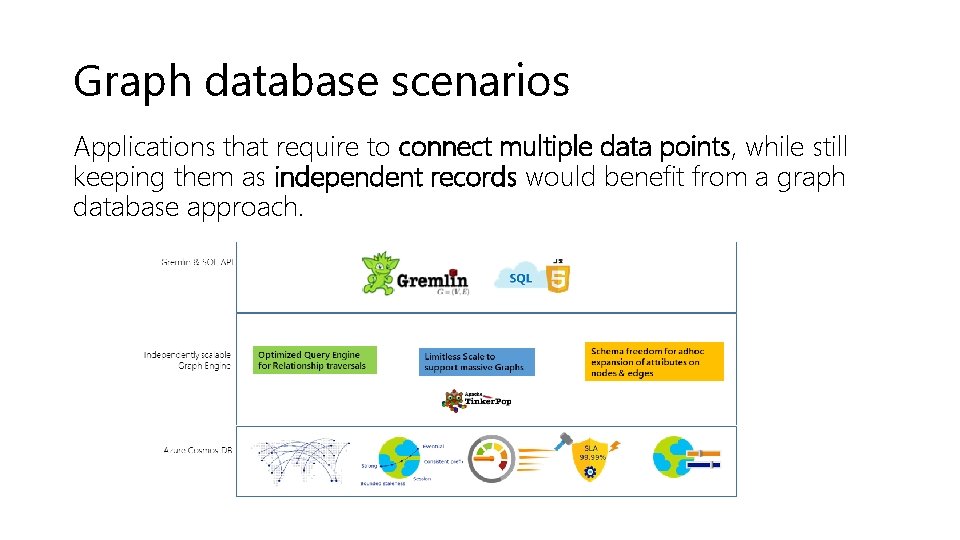
Graph database scenarios Applications that require to connect multiple data points, while still keeping them as independent records would benefit from a graph database approach.
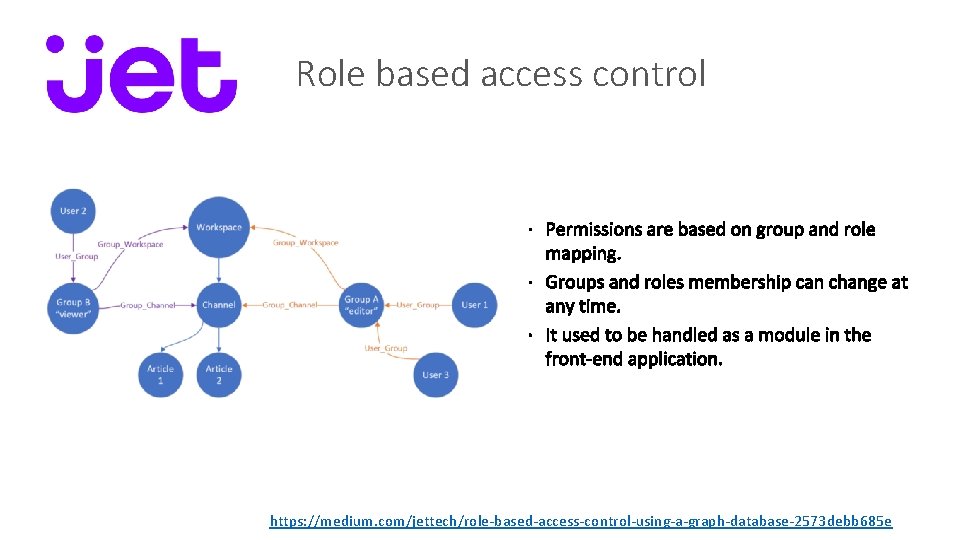
Role based access control https: //medium. com/jettech/role-based-access-control-using-a-graph-database-2573 debb 685 e
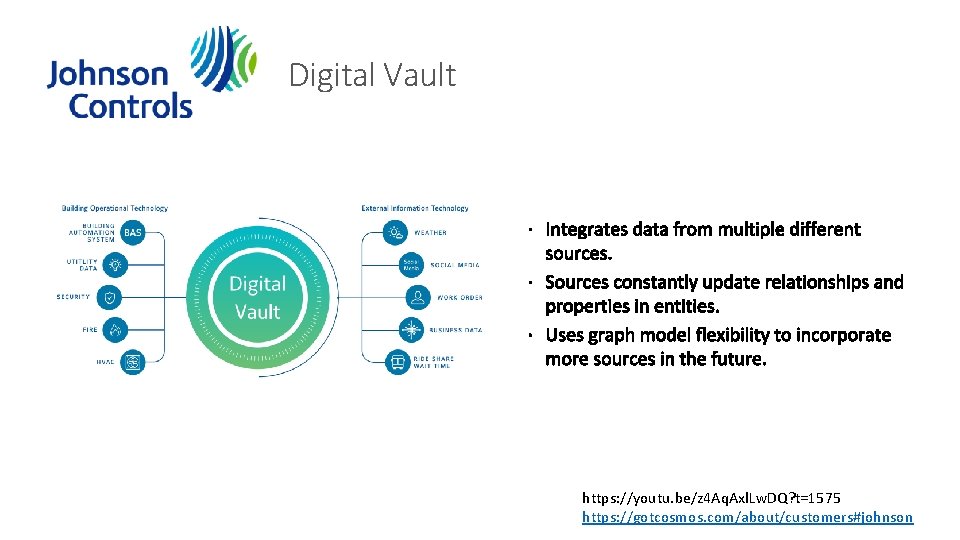
Digital Vault https: //youtu. be/z 4 Aq. Axl. Lw. DQ? t=1575 https: //gotcosmos. com/about/customers#johnson
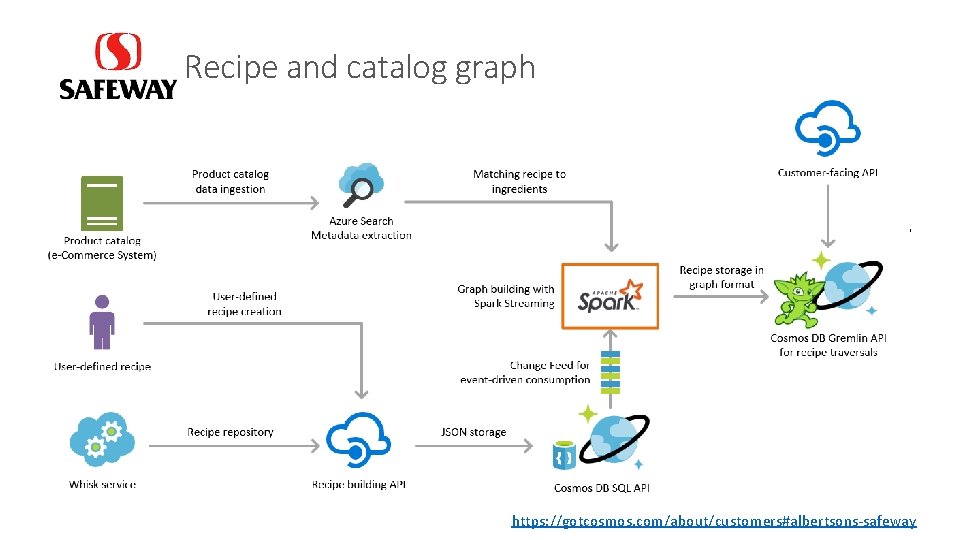
Recipe and catalog graph https: //gotcosmos. com/about/customers#albertsons-safeway
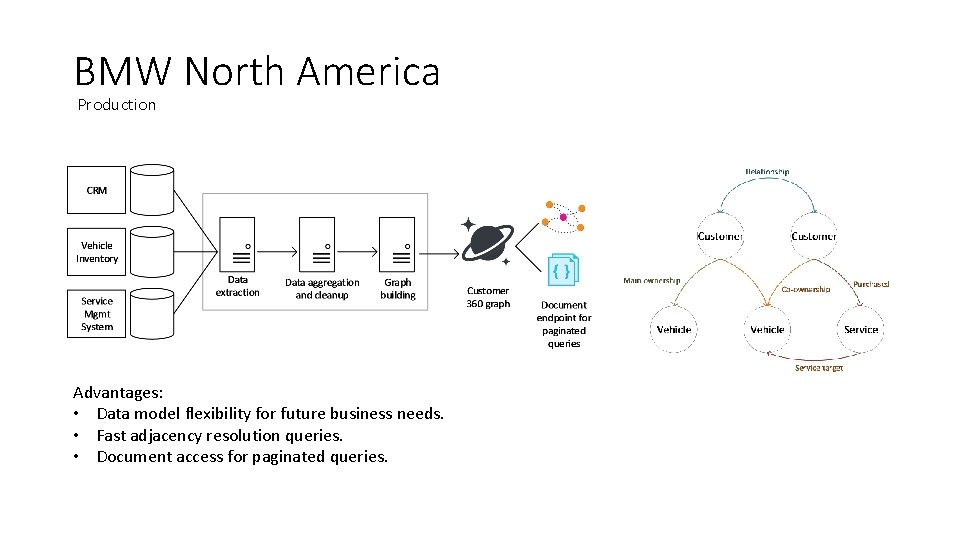
BMW North America Production Advantages: • Data model flexibility for future business needs. • Fast adjacency resolution queries. • Document access for paginated queries.
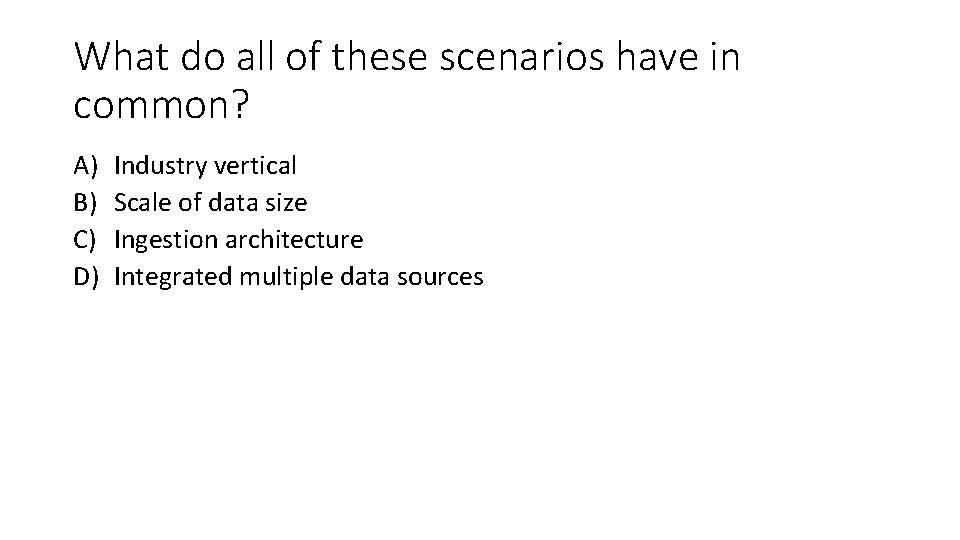
What do all of these scenarios have in common? A) B) C) D) Industry vertical Scale of data size Ingestion architecture Integrated multiple data sources
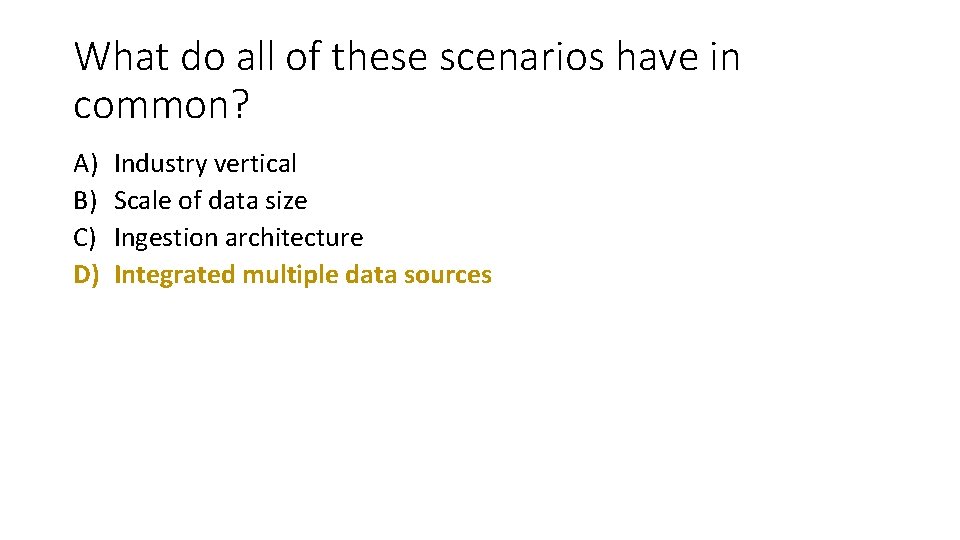
What do all of these scenarios have in common? A) B) C) D) Industry vertical Scale of data size Ingestion architecture Integrated multiple data sources
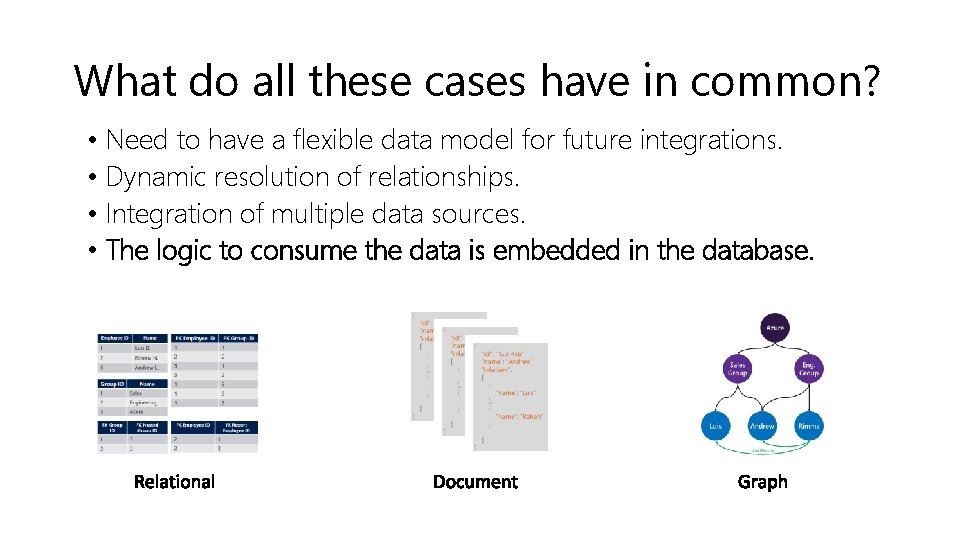
What do all these cases have in common? • Need to have a flexible data model for future integrations. • Dynamic resolution of relationships. • Integration of multiple data sources. • The logic to consume the data is embedded in the database.
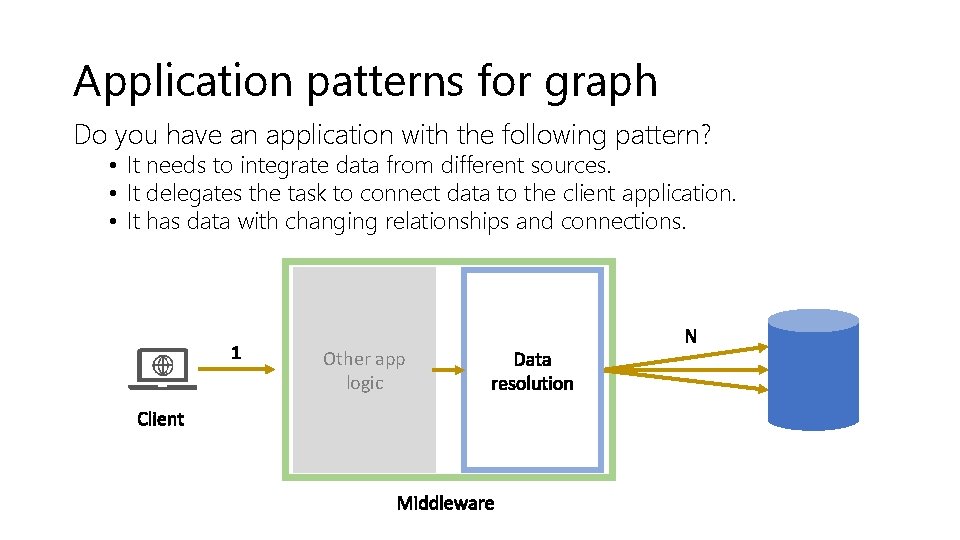
Application patterns for graph Do you have an application with the following pattern? • It needs to integrate data from different sources. • It delegates the task to connect data to the client application. • It has data with changing relationships and connections. Other app logic
Graph database modeling for efficiency Graph-formatted data benefits from flexible problem-space modeling. However, some models can be more performant than others. In this section we will review how to create graph data designs that are optimized for the Cosmos DB database engine.
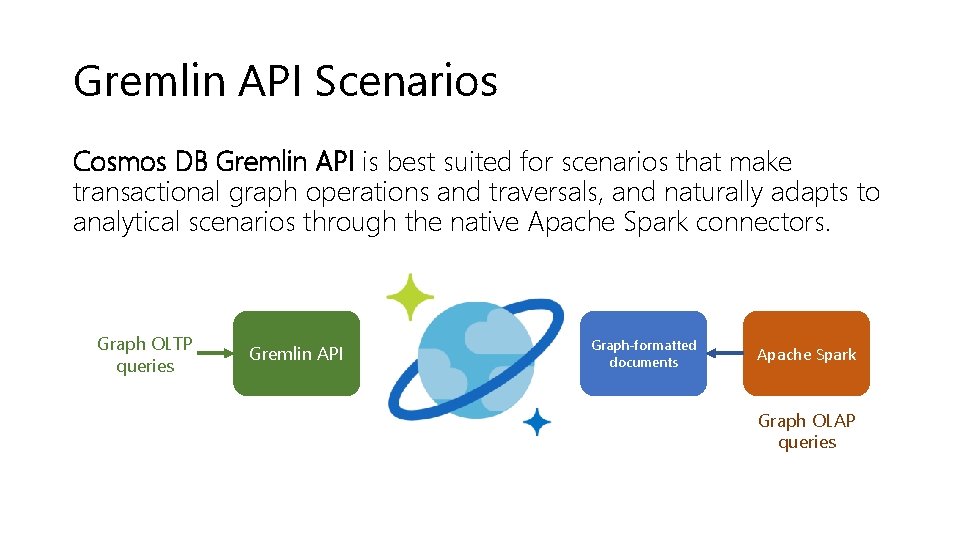
Gremlin API Scenarios Cosmos DB Gremlin API is best suited for scenarios that make transactional graph operations and traversals, and naturally adapts to analytical scenarios through the native Apache Spark connectors. Graph OLTP queries Gremlin API Graph-formatted documents Apache Spark Graph OLAP queries
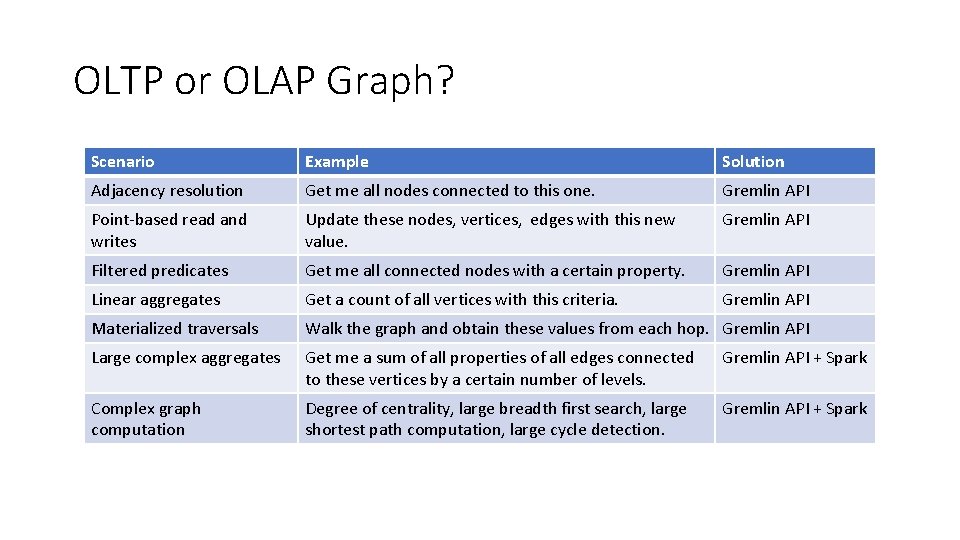
OLTP or OLAP Graph? Scenario Example Solution Adjacency resolution Get me all nodes connected to this one. Gremlin API Point-based read and writes Update these nodes, vertices, edges with this new value. Gremlin API Filtered predicates Get me all connected nodes with a certain property. Gremlin API Linear aggregates Get a count of all vertices with this criteria. Gremlin API Materialized traversals Walk the graph and obtain these values from each hop. Gremlin API Large complex aggregates Get me a sum of all properties of all edges connected to these vertices by a certain number of levels. Gremlin API + Spark Complex graph computation Degree of centrality, large breadth first search, large shortest path computation, large cycle detection. Gremlin API + Spark
Data Modeling Exercise Comparing a graph data model with a relational model.

Chapter 1: The Green-field app

Human Resources Data Relational vs Graph oriented model comparison Employee ID Name Group 1 Luis Bosquez Sales 2 Rimma Nehme Engineering 3 Andrew Liu Sales 3 rows, 3 columns Sales Group Luis Eng. Group Andrew Rimma 8 documents (vertices and edges)
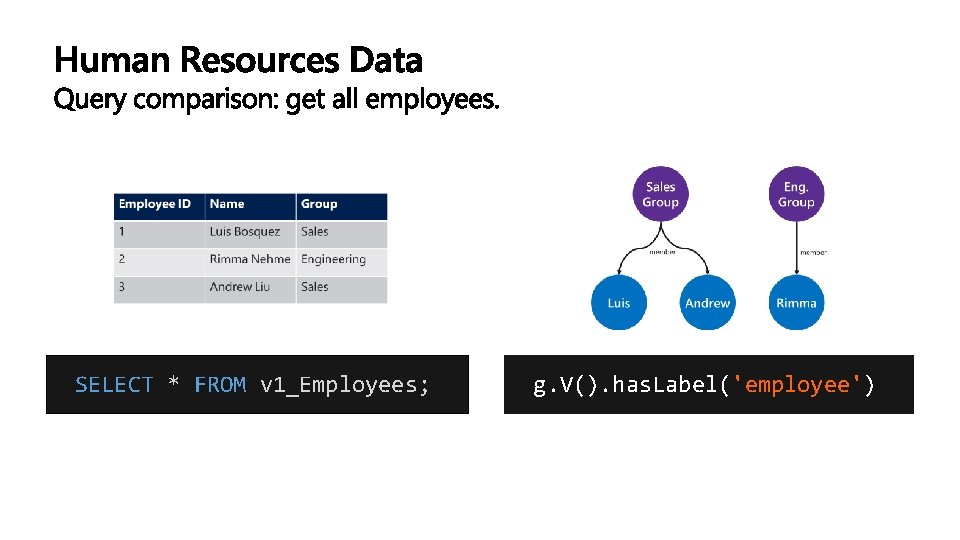
SELECT * FROM v 1_Employees; g. V(). has. Label('employee')
Chapter 2: The hidden business requirement
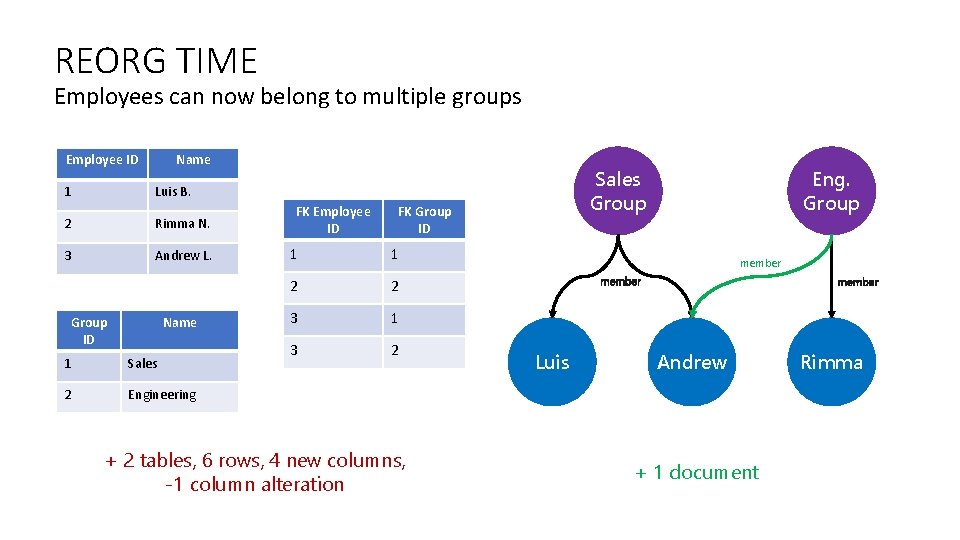
REORG TIME Employees can now belong to multiple groups Employee ID 1 Name Sales Group Luis B. 2 Rimma N. 3 Andrew L. Group ID Name 1 Sales 2 Engineering FK Employee ID FK Group ID 1 1 2 2 3 1 3 2 + 2 tables, 6 rows, 4 new columns, -1 column alteration Eng. Group member Luis Andrew + 1 document Rimma
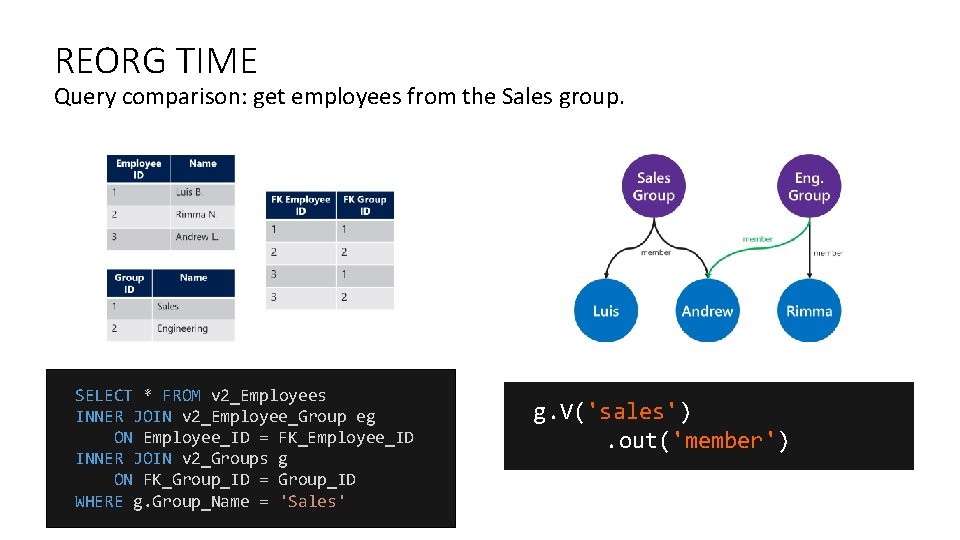
REORG TIME Query comparison: get employees from the Sales group. SELECT * FROM v 2_Employees INNER JOIN v 2_Employee_Group eg ON Employee_ID = FK_Employee_ID INNER JOIN v 2_Groups g ON FK_Group_ID = Group_ID WHERE g. Group_Name = 'Sales' g. V('sales'). out('member')
Chapter 3: The unexpected data migration
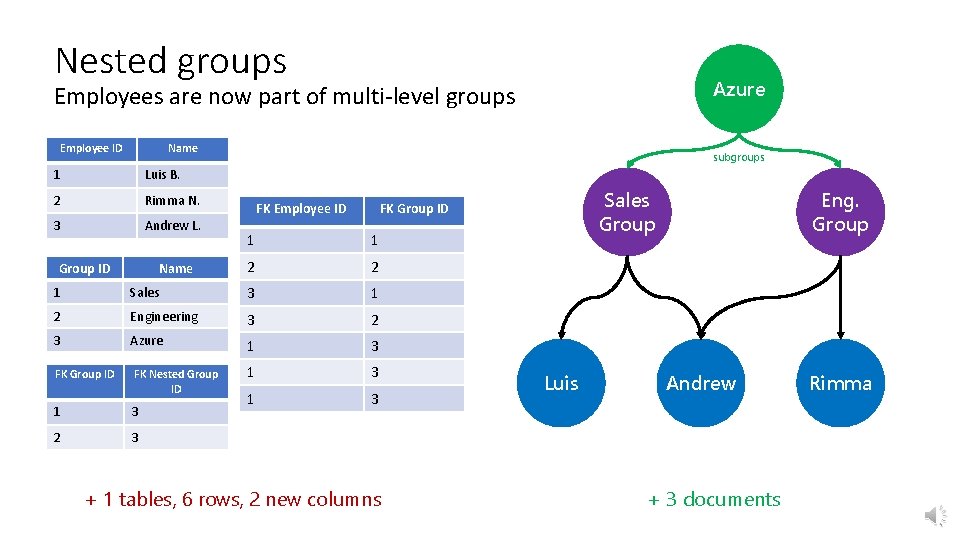
Nested groups Azure Employees are now part of multi-level groups Employee ID Name 1 Luis B. 2 Rimma N. 3 Andrew L. Group ID Name subgroups FK Employee ID 1 1 2 2 1 Sales 3 1 2 Engineering 3 2 3 Azure 1 3 1 3 FK Group ID FK Nested Group ID 1 3 2 3 Sales Group FK Group ID + 1 tables, 6 rows, 2 new columns Luis Eng. Group Andrew + 3 documents Rimma
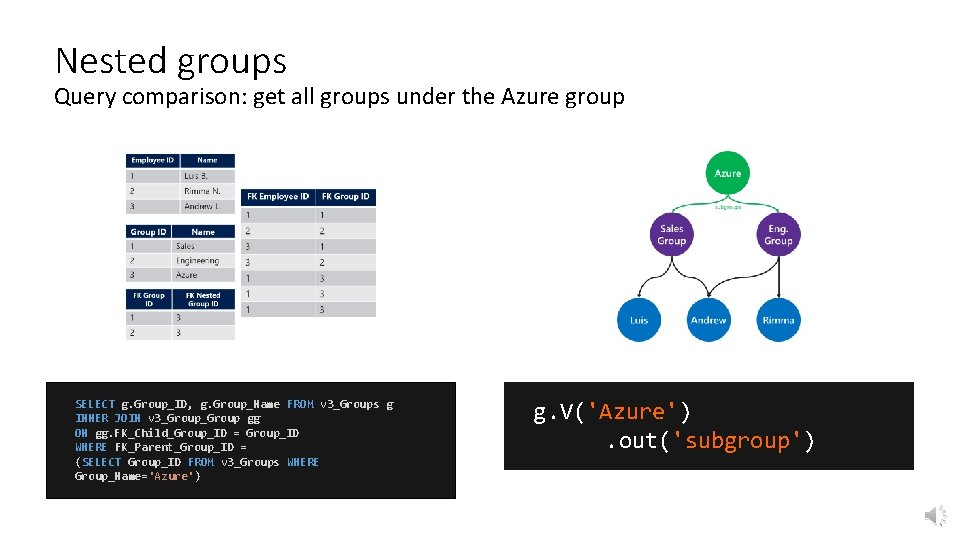
Nested groups Query comparison: get all groups under the Azure group SELECT g. Group_ID, g. Group_Name FROM v 3_Groups g INNER JOIN v 3_Group gg ON gg. FK_Child_Group_ID = Group_ID WHERE FK_Parent_Group_ID = (SELECT Group_ID FROM v 3_Groups WHERE Group_Name='Azure') g. V('Azure'). out('subgroup')
Chapter 4: The overloaded workload
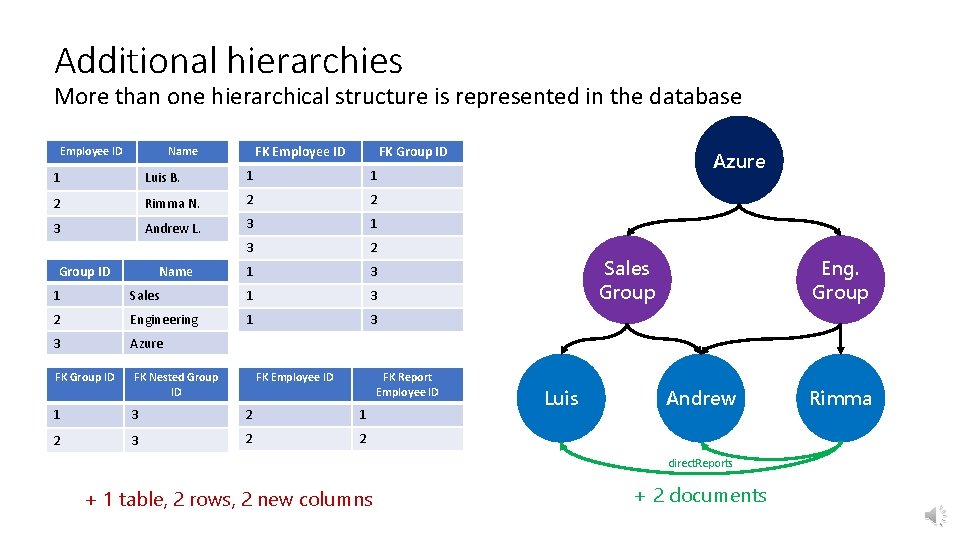
Additional hierarchies More than one hierarchical structure is represented in the database Employee ID FK Employee ID Name FK Group ID 1 Luis B. 1 1 2 Rimma N. 2 2 3 Andrew L. 3 1 3 2 1 3 Group ID Name 1 Sales 1 3 2 Engineering 1 3 3 Azure FK Group ID FK Nested Group ID FK Employee ID FK Report Employee ID 1 3 2 1 2 3 2 2 Azure Sales Group Luis Eng. Group Andrew direct. Reports + 1 table, 2 rows, 2 new columns + 2 documents Rimma
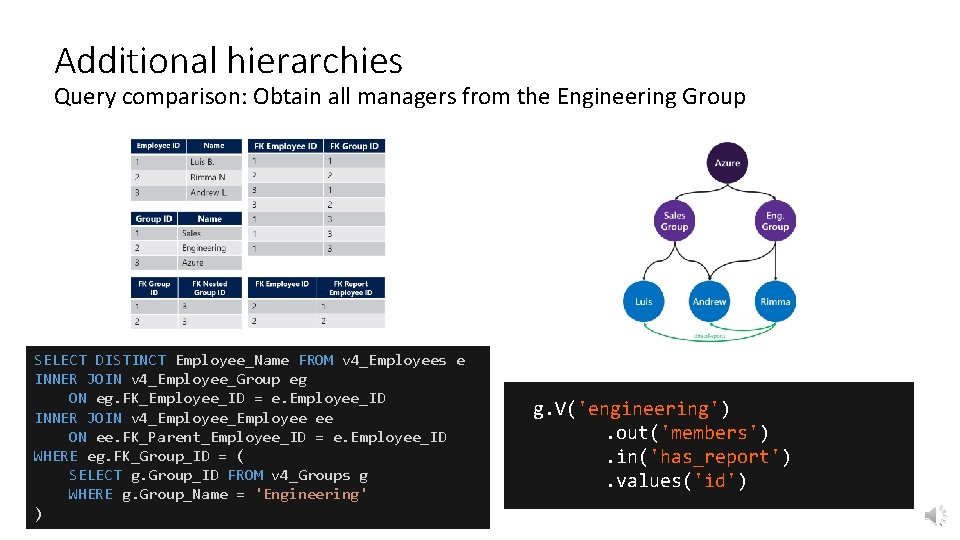
Additional hierarchies Query comparison: Obtain all managers from the Engineering Group SELECT DISTINCT Employee_Name FROM v 4_Employees e INNER JOIN v 4_Employee_Group eg ON eg. FK_Employee_ID = e. Employee_ID INNER JOIN v 4_Employee ee ON ee. FK_Parent_Employee_ID = e. Employee_ID WHERE eg. FK_Group_ID = ( SELECT g. Group_ID FROM v 4_Groups g WHERE g. Group_Name = 'Engineering' ) g. V('engineering'). out('members'). in('has_report'). values('id')

Epilogue: The learnings
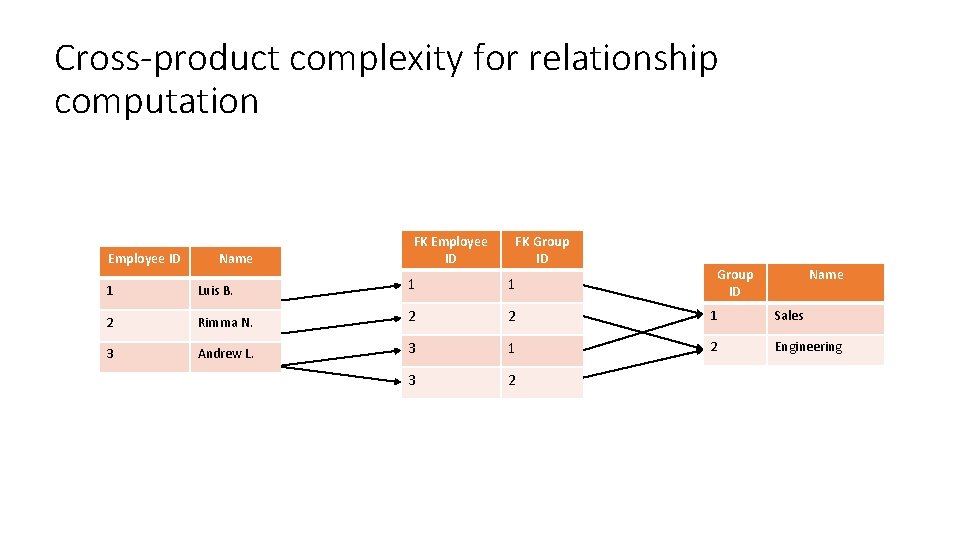
Cross-product complexity for relationship computation Employee ID Name FK Employee ID FK Group ID 1 Group ID Name 1 Luis B. 1 2 Rimma N. 2 2 1 Sales 3 Andrew L. 3 1 2 Engineering 3 2
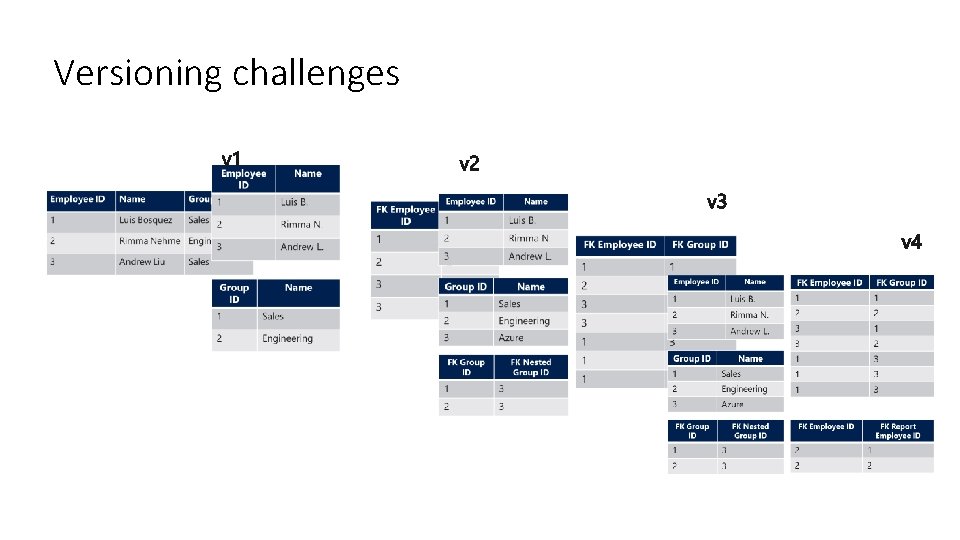
Versioning challenges Microsoft Confidential
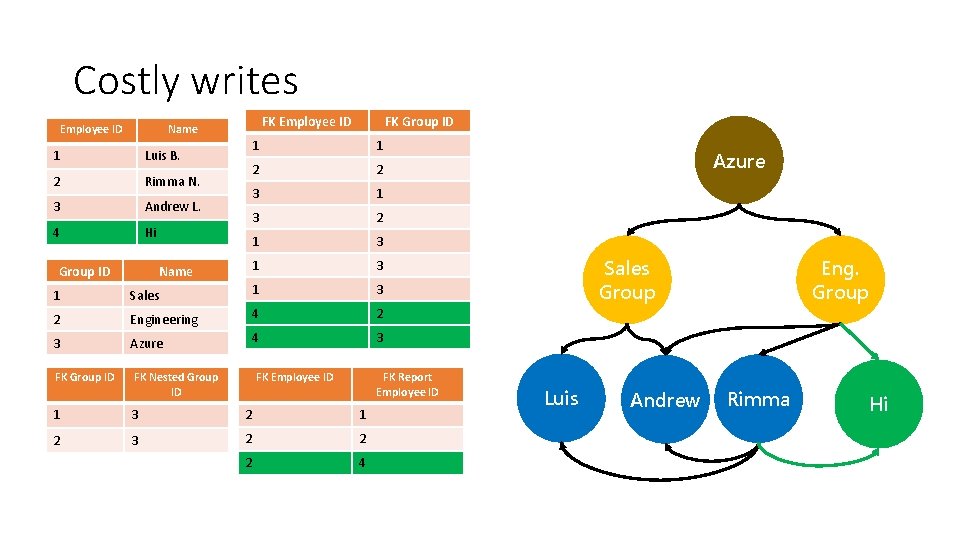
Costly writes Employee ID FK Employee ID Name 1 Luis B. 2 Rimma N. 3 Andrew L. 4 Hi Group ID Name FK Group ID 1 1 2 2 3 1 3 2 1 3 1 Sales 1 3 2 Engineering 4 2 3 Azure 4 3 FK Group ID FK Nested Group ID FK Employee ID FK Report Employee ID 1 3 2 1 2 3 2 2 2 4 Azure Sales Group Luis Andrew Eng. Group Rimma Hi
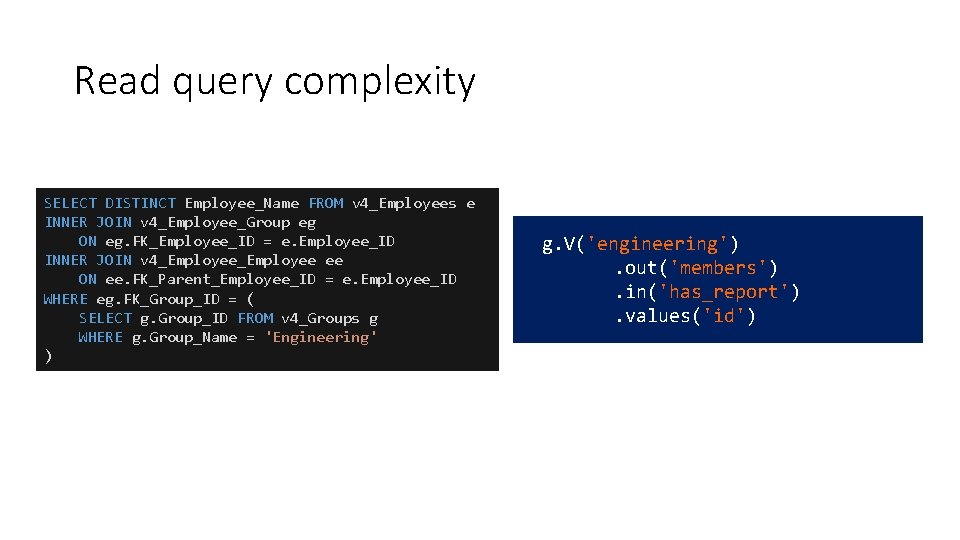
Read query complexity SELECT DISTINCT Employee_Name FROM v 4_Employees e INNER JOIN v 4_Employee_Group eg ON eg. FK_Employee_ID = e. Employee_ID INNER JOIN v 4_Employee ee ON ee. FK_Parent_Employee_ID = e. Employee_ID WHERE eg. FK_Group_ID = ( SELECT g. Group_ID FROM v 4_Groups g WHERE g. Group_Name = 'Engineering' ) g. V('engineering'). out('members'). in('has_report'). values('id')
Modeling principles • Graph databases provide benefits for hierarchical data and one-tomany entity relationships. • Property graphs allow for containing rich metadata in each entity object. • Labels allow for entity type detection and effective filtering. • Relationships have a direction that can be used meaningfully.
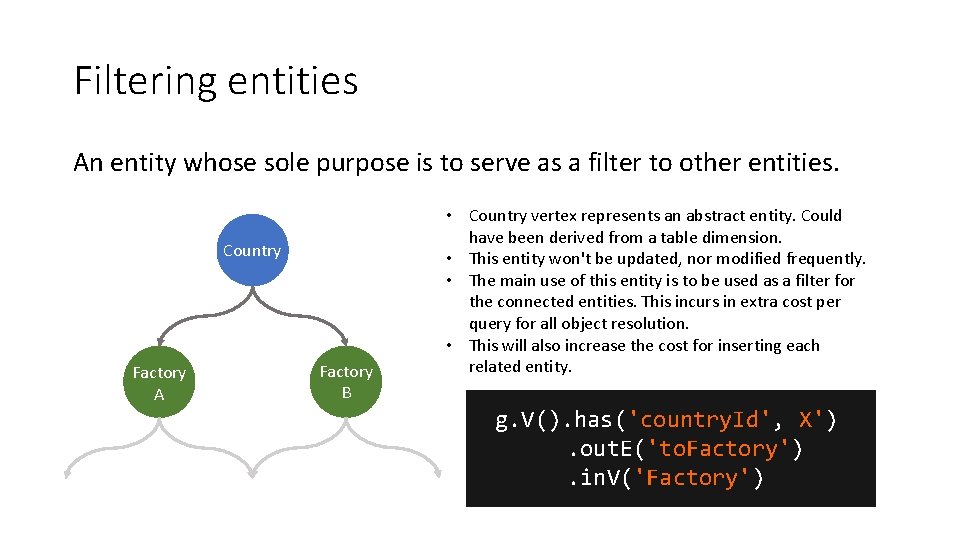
Filtering entities An entity whose sole purpose is to serve as a filter to other entities. Country Factory A Factory B • Country vertex represents an abstract entity. Could have been derived from a table dimension. • This entity won't be updated, nor modified frequently. • The main use of this entity is to be used as a filter for the connected entities. This incurs in extra cost per query for all object resolution. • This will also increase the cost for inserting each related entity. g. V(). has('country. Id', X'). out. E('to. Factory'). in. V('Factory')
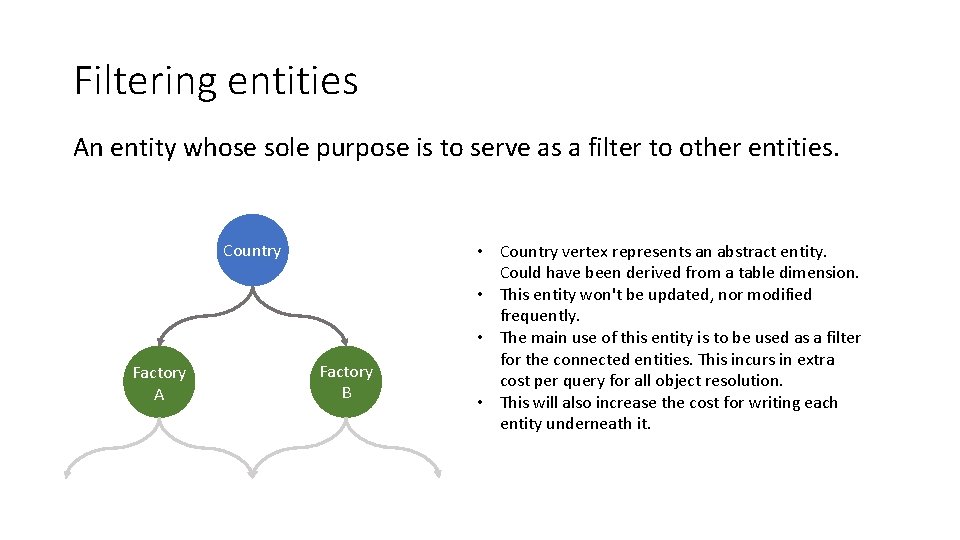
Filtering entities An entity whose sole purpose is to serve as a filter to other entities. Country Factory A Factory B • Country vertex represents an abstract entity. Could have been derived from a table dimension. • This entity won't be updated, nor modified frequently. • The main use of this entity is to be used as a filter for the connected entities. This incurs in extra cost per query for all object resolution. • This will also increase the cost for writing each entity underneath it.
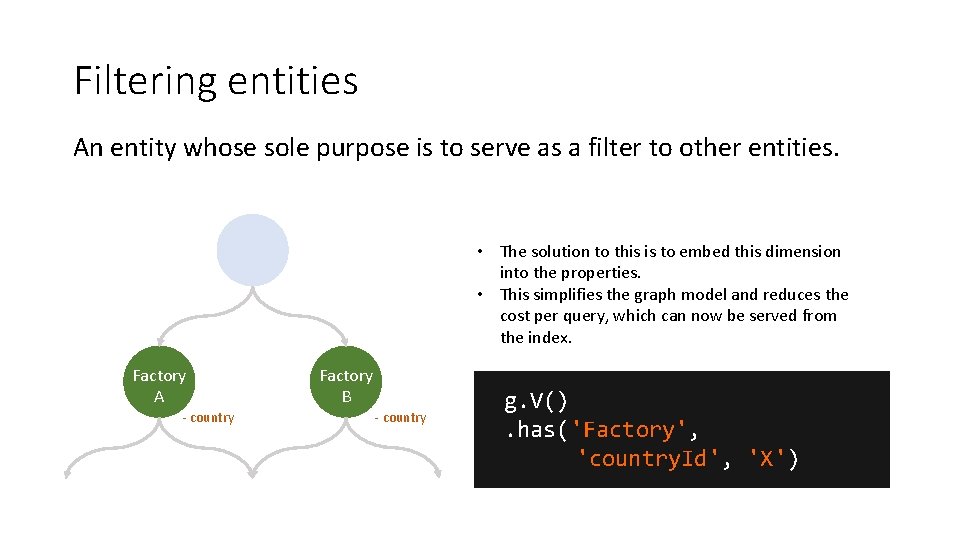
Filtering entities An entity whose sole purpose is to serve as a filter to other entities. • The solution to this is to embed this dimension into the properties. • This simplifies the graph model and reduces the cost per query, which can now be served from the index. Factory A - country Factory B - country g. V(). has('Factory', 'country. Id', 'X')

- Slides: 36