
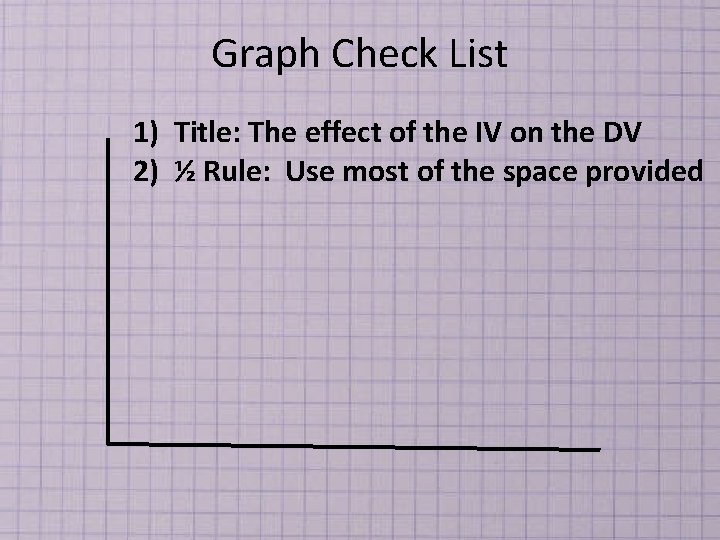
Graph Check List Draw a pair of axes
- Slides: 17
Graph Check List Draw a pair of axes in your notebook, full page
1) Title –All graphs need a title –Includes the IV and the DV –Example: The effect of temperature on tadpole growth
Graph Check List 1) Title: The effect of the IV on the DV
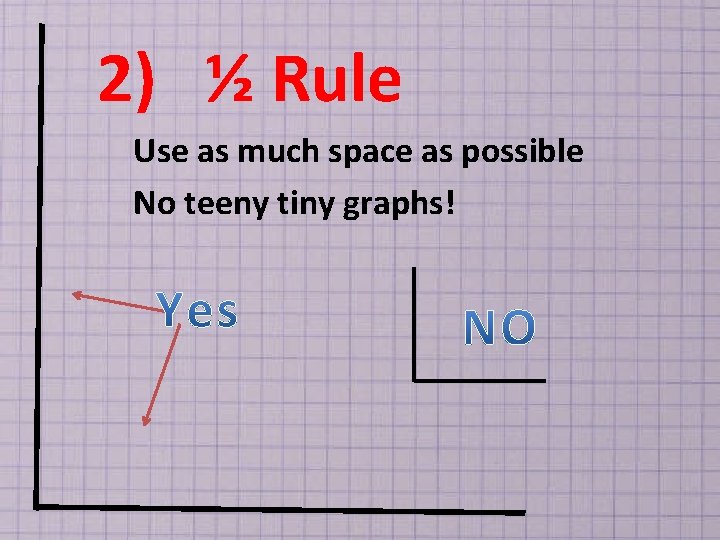
2) ½ Rule Use as much space as possible No teeny tiny graphs!
Graph Check List 1) Title: The effect of the IV on the DV 2) ½ Rule: Use most of the space provided
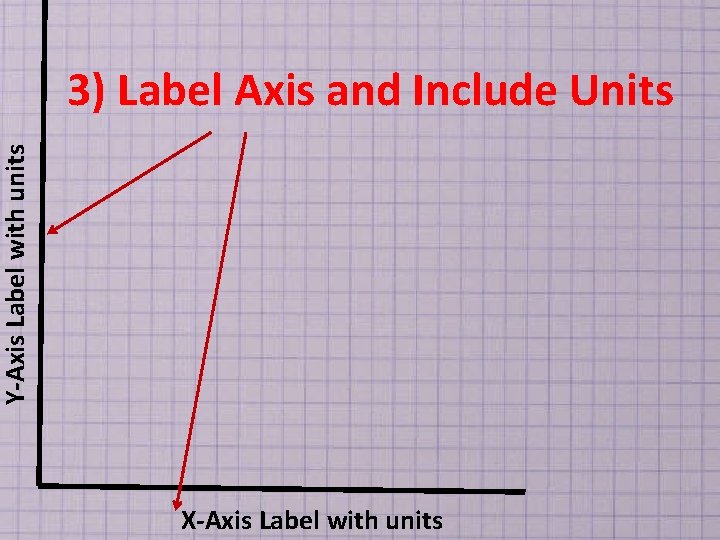
Y-Axis Label with units 3) Label Axis and Include Units X-Axis Label with units
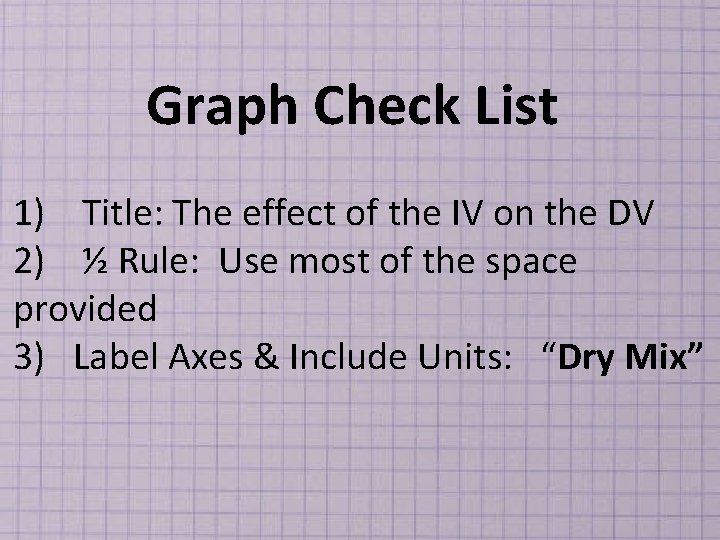
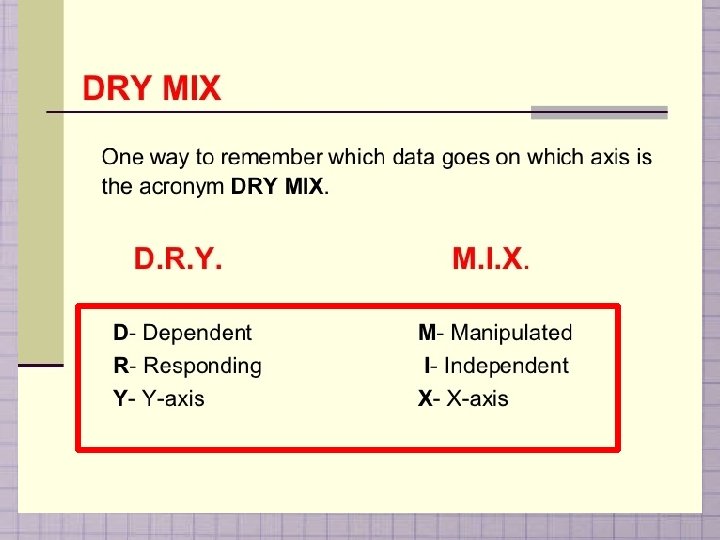
Graph Check List 1) Title: The effect of the IV on the DV 2) ½ Rule: Use most of the space provided 3) Label Axes & Include Units: “Dry Mix”
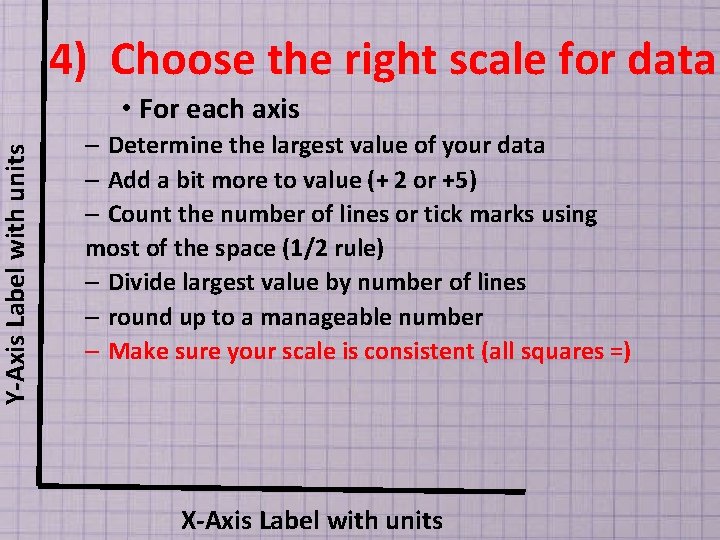
Y-Axis Label with units 4) Choose the right scale for data • For each axis – Determine the largest value of your data – Add a bit more to value (+ 2 or +5) – Count the number of lines or tick marks using most of the space (1/2 rule) – Divide largest value by number of lines – round up to a manageable number – Make sure your scale is consistent (all squares =) X-Axis Label with units
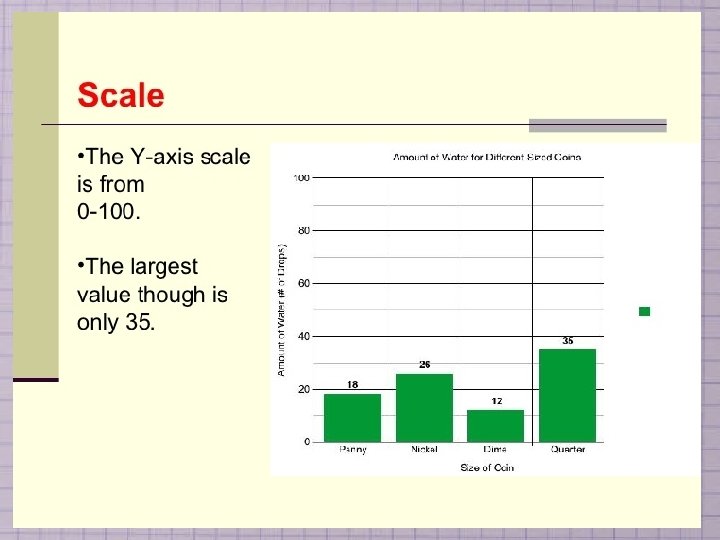
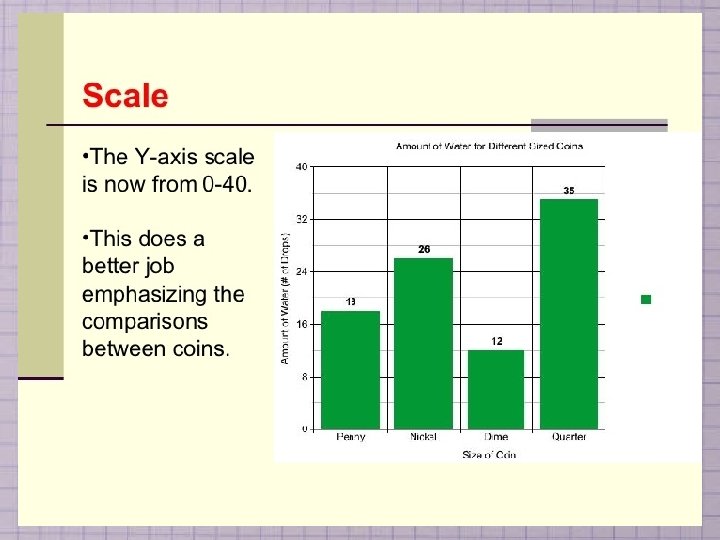
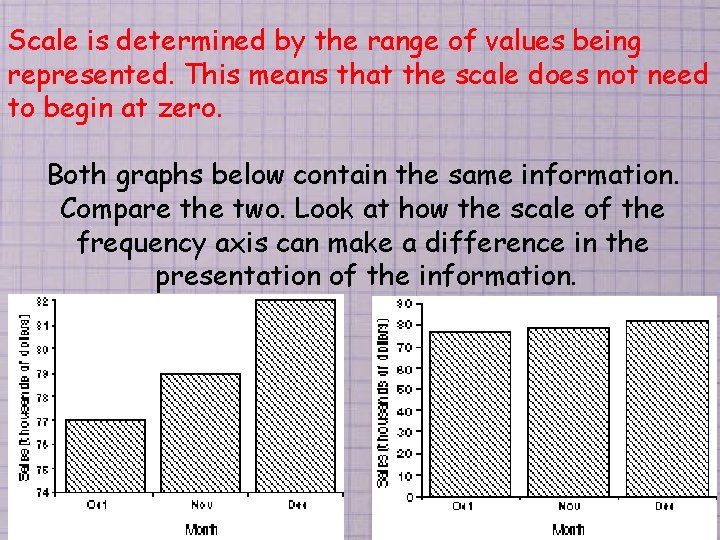
Scale is determined by the range of values being represented. This means that the scale does not need to begin at zero. Both graphs below contain the same information. Compare the two. Look at how the scale of the frequency axis can make a difference in the presentation of the information.
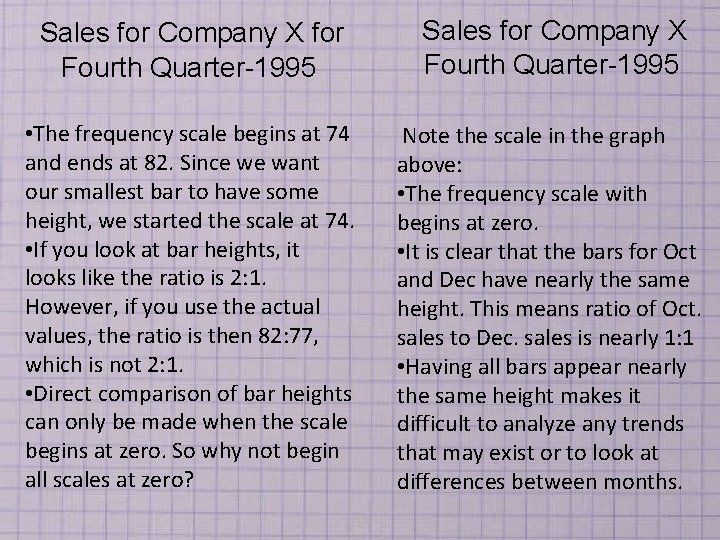
Sales for Company X for Fourth Quarter-1995 Sales for Company X Fourth Quarter-1995 • The frequency scale begins at 74 and ends at 82. Since we want our smallest bar to have some height, we started the scale at 74. • If you look at bar heights, it looks like the ratio is 2: 1. However, if you use the actual values, the ratio is then 82: 77, which is not 2: 1. • Direct comparison of bar heights can only be made when the scale begins at zero. So why not begin all scales at zero? Note the scale in the graph above: • The frequency scale with begins at zero. • It is clear that the bars for Oct and Dec have nearly the same height. This means ratio of Oct. sales to Dec. sales is nearly 1: 1 • Having all bars appear nearly the same height makes it difficult to analyze any trends that may exist or to look at differences between months.
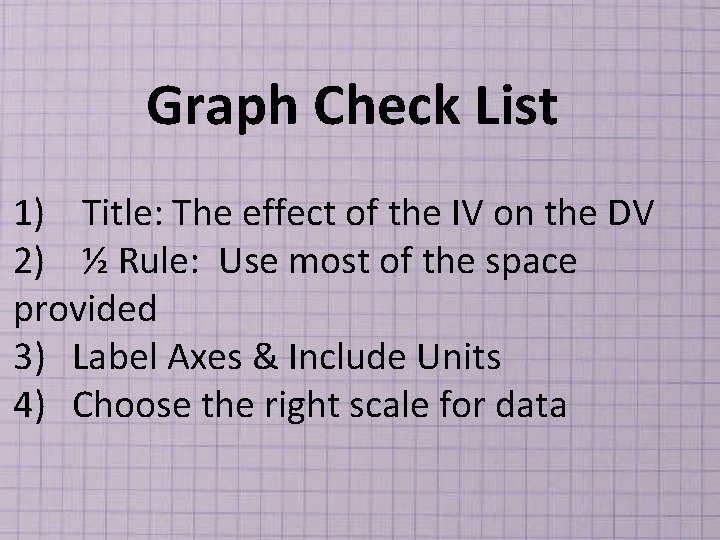
Graph Check List 1) Title: The effect of the IV on the DV 2) ½ Rule: Use most of the space provided 3) Label Axes & Include Units 4) Choose the right scale for data
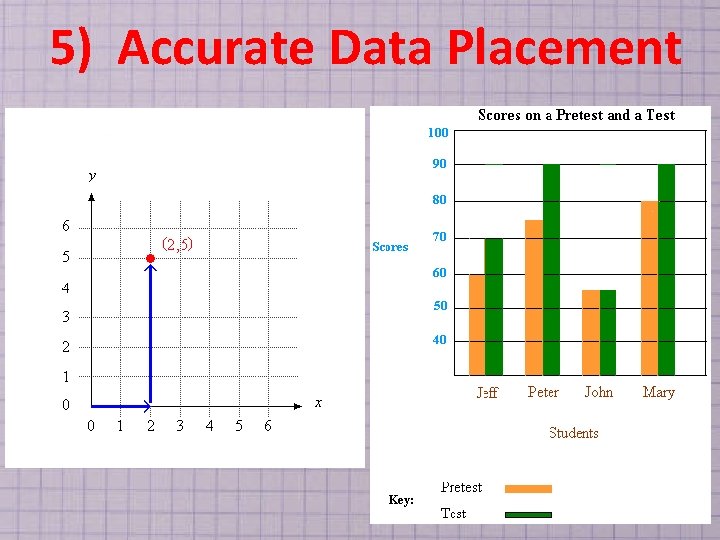
5) Accurate Data Placement
Y-Axis Label with units • • • Title: The effect of the IV on the DV ½ Rule: Use most of the space Label Axes & Include Units Determine Scale Accurate Data Placement X-Axis Label with units