
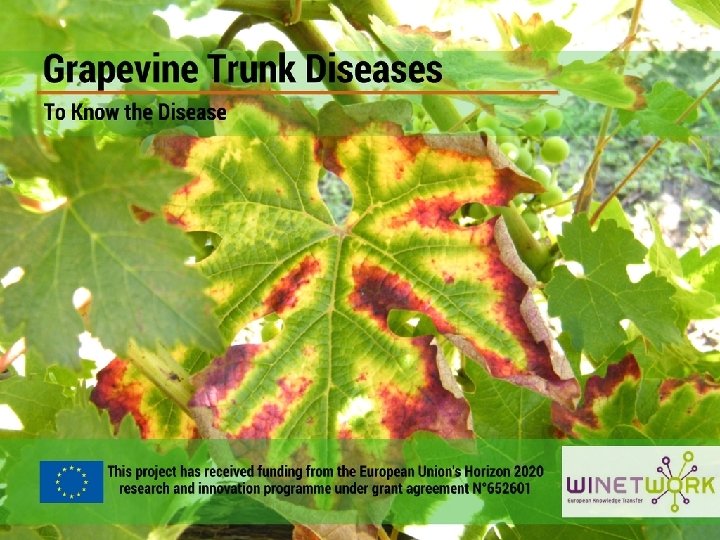
Grapevine Trunk Diseases What are they GTDs are

- Slides: 48
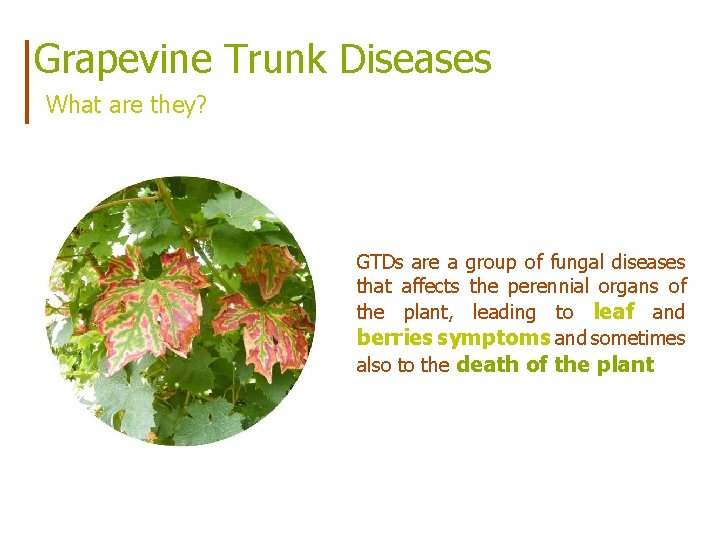
Grapevine Trunk Diseases What are they? GTDs are a group of fungal diseases that affects the perennial organs of the plant, leading to leaf and berries symptoms and sometimes also to the death of the plant
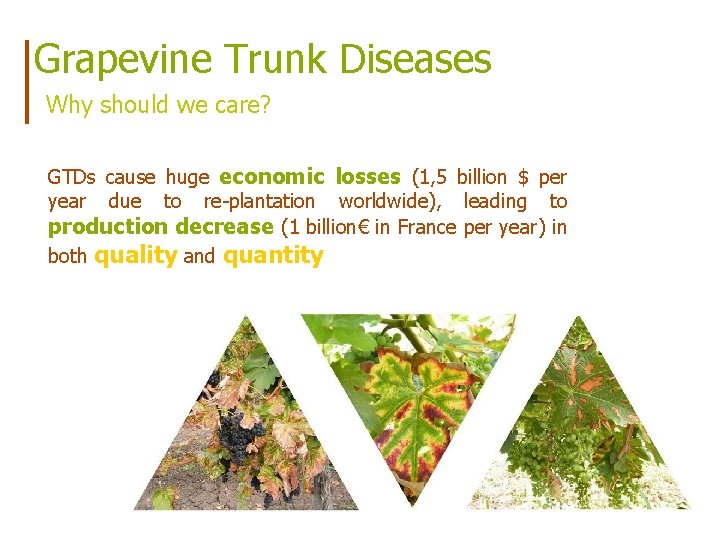
Grapevine Trunk Diseases Why should we care? GTDs cause huge economic losses (1, 5 billion $ per year due to re-plantation worldwide), leading to production decrease (1 billion€ in France per year) in both quality and quantity
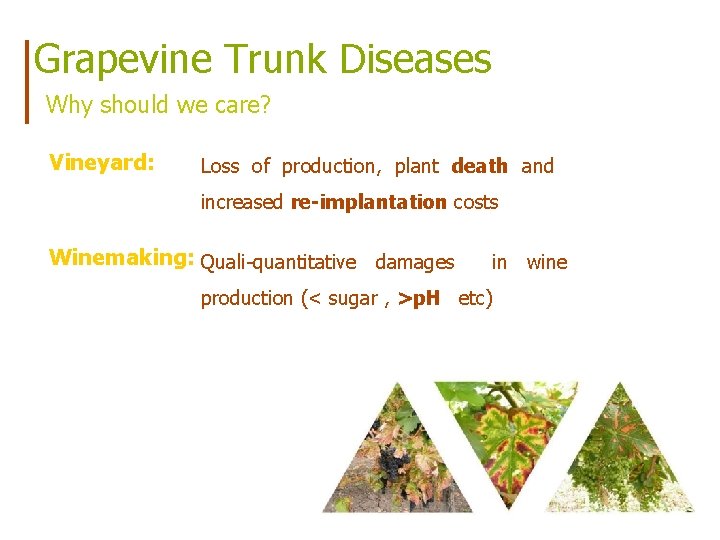
Grapevine Trunk Diseases Why should we care? Vineyard: Loss of production, plant death and increased re-implantation costs Winemaking: Quali-quantitative damages in wine production (< sugar , >p. H etc)
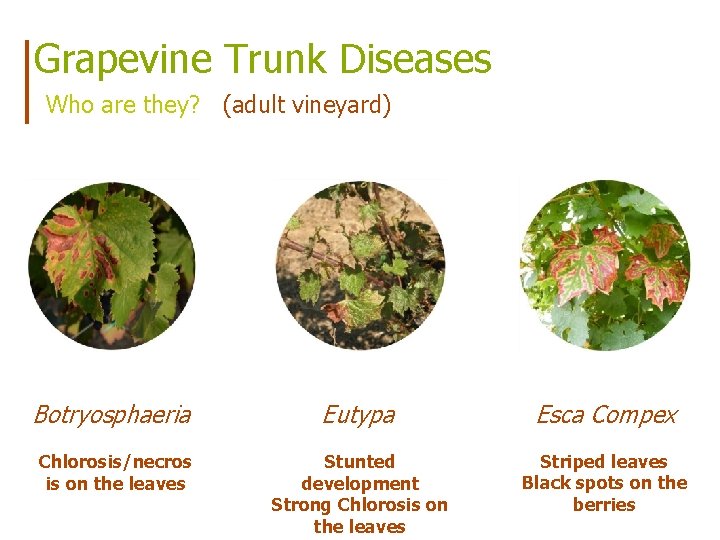
Grapevine Trunk Diseases Who are they? (adult vineyard) Botryosphaeria Eutypa Esca Compex Chlorosis/necros is on the leaves Stunted development Strong Chlorosis on the leaves Striped leaves Black spots on the berries
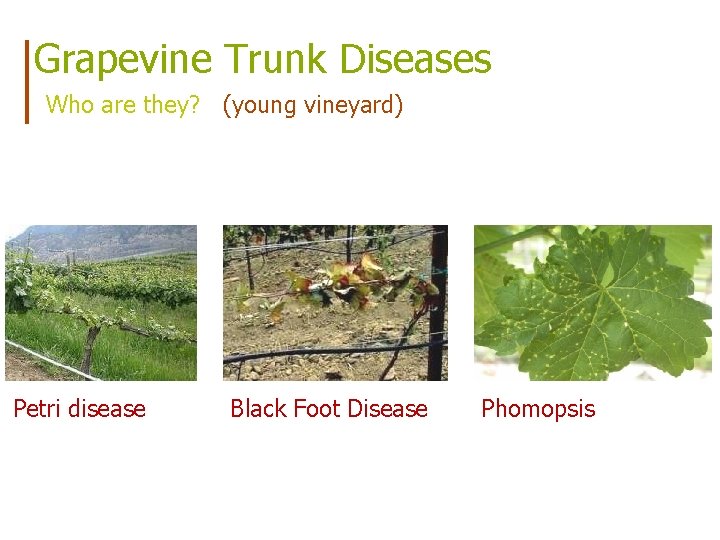
Grapevine Trunk Diseases Who are they? (young vineyard) Petri disease Black Foot Disease Phomopsis
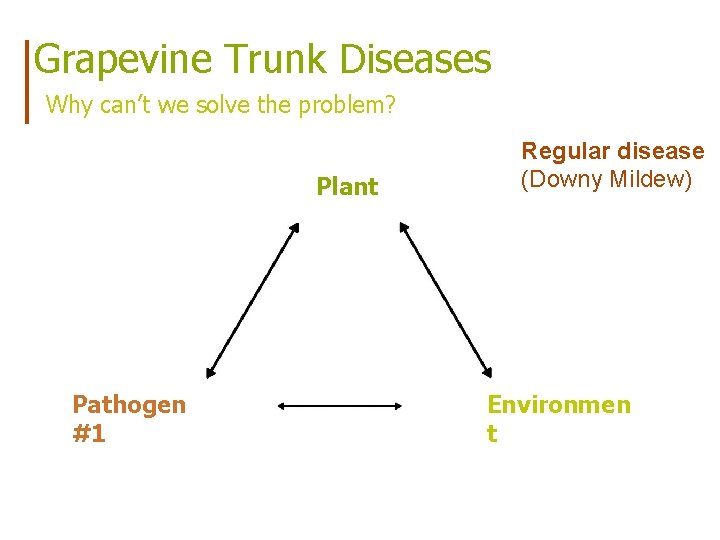
Grapevine Trunk Diseases Why can’t we solve the problem? Plant Pathogen #1 Regular disease (Downy Mildew) Environmen t
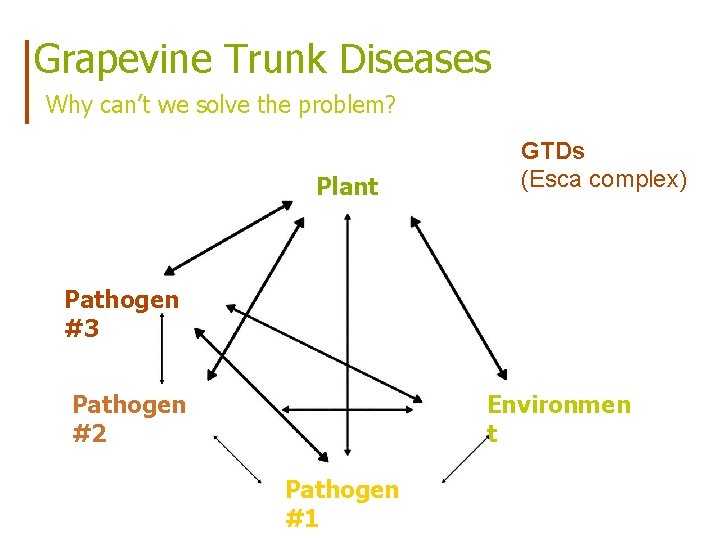
Grapevine Trunk Diseases Why can’t we solve the problem? Plant GTDs (Esca complex) Pathogen #3 Pathogen #2 Environmen t Pathogen #1
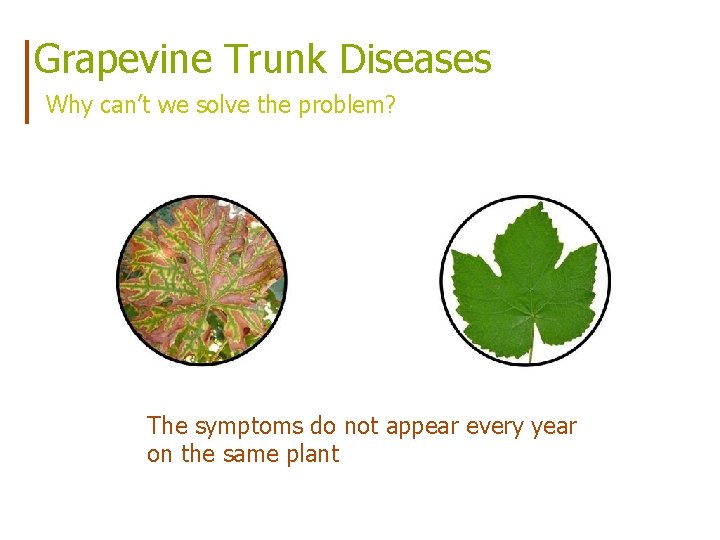
Grapevine Trunk Diseases Why can’t we solve the problem? The symptoms do not appear every year on the same plant
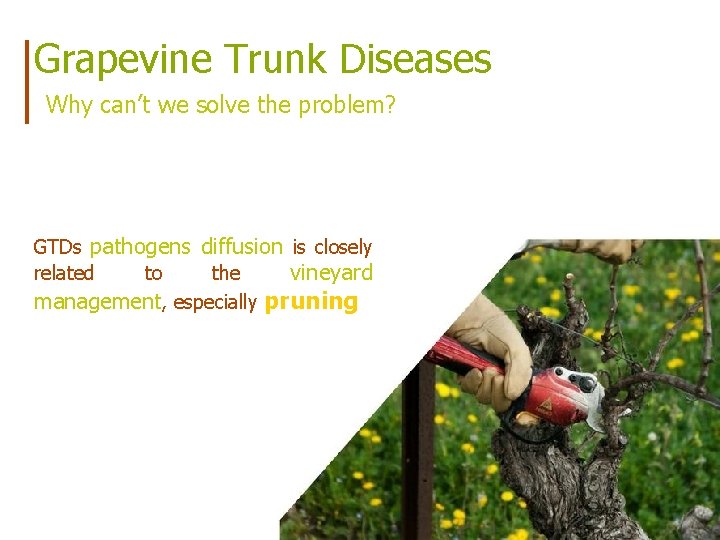
Grapevine Trunk Diseases Why can’t we solve the problem? GTDs pathogens diffusion is closely related to the vineyard management, especially pruning
Grapevine Trunk Diseases Why can’t we solve the problem? At the moment there is NO Effective control strategy
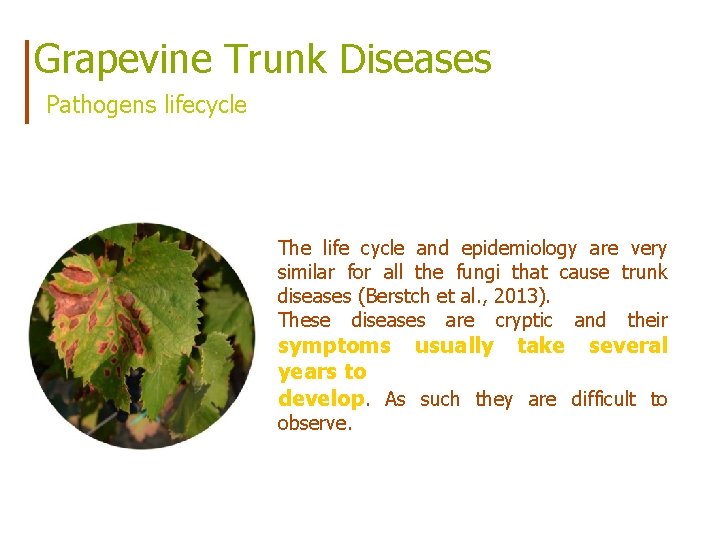
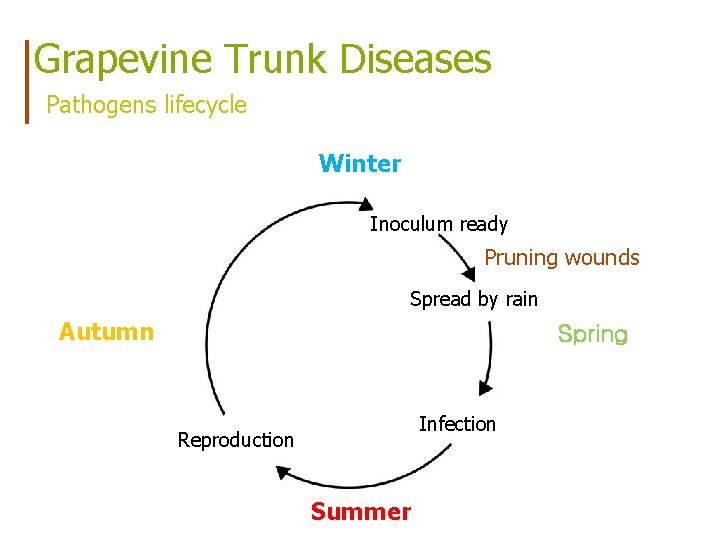
Grapevine Trunk Diseases Pathogens lifecycle The life cycle and epidemiology are very similar for all the fungi that cause trunk diseases (Berstch et al. , 2013). These diseases are cryptic and their symptoms usually take several years to develop. As such they are difficult to observe.
Grapevine Trunk Diseases Pathogens lifecycle Winter Inoculum ready Pruning wounds Spread by rain Autumn Spring Infection Reproduction Summer
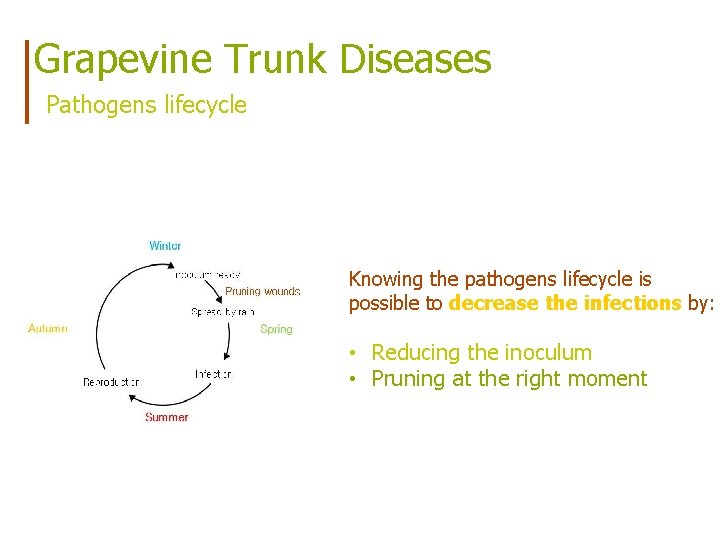
Grapevine Trunk Diseases Pathogens lifecycle Knowing the pathogens lifecycle is possible to decrease the infections by: • Reducing the inoculum • Pruning at the right moment
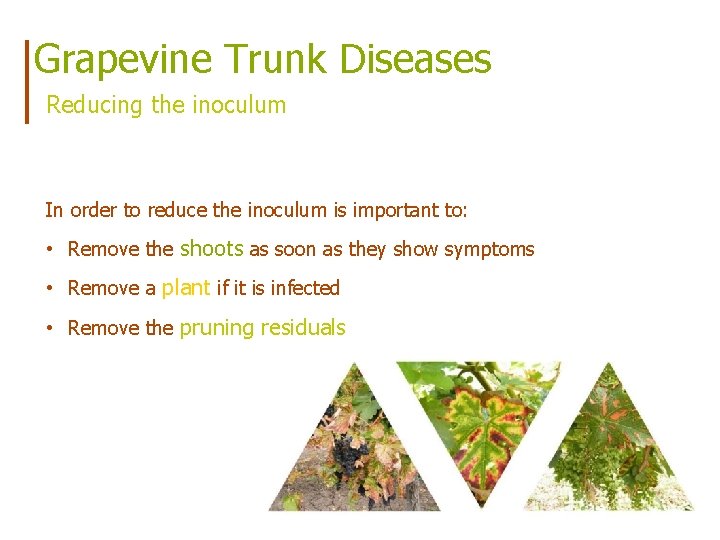
Grapevine Trunk Diseases Reducing the inoculum In order to reduce the inoculum is important to: • Remove the shoots as soon as they show symptoms • Remove a plant if it is infected • Remove the pruning residuals
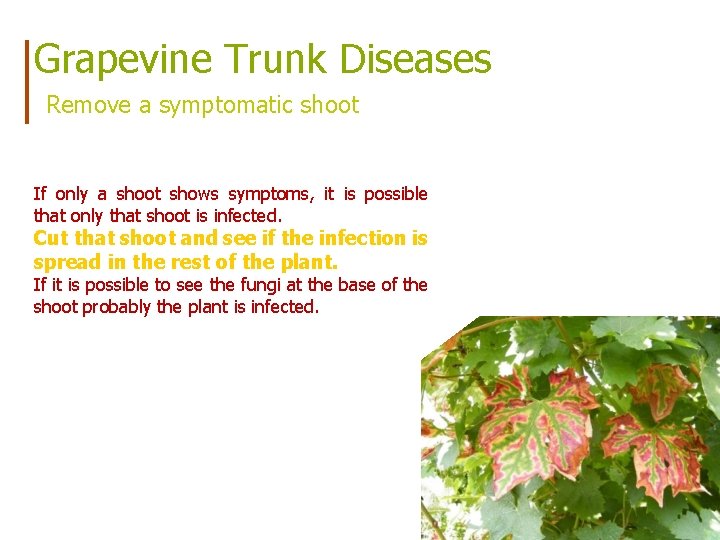
Grapevine Trunk Diseases Remove a symptomatic shoot If only a shoot shows symptoms, it is possible that only that shoot is infected. Cut that shoot and see if the infection is spread in the rest of the plant. If it is possible to see the fungi at the base of the shoot probably the plant is infected.
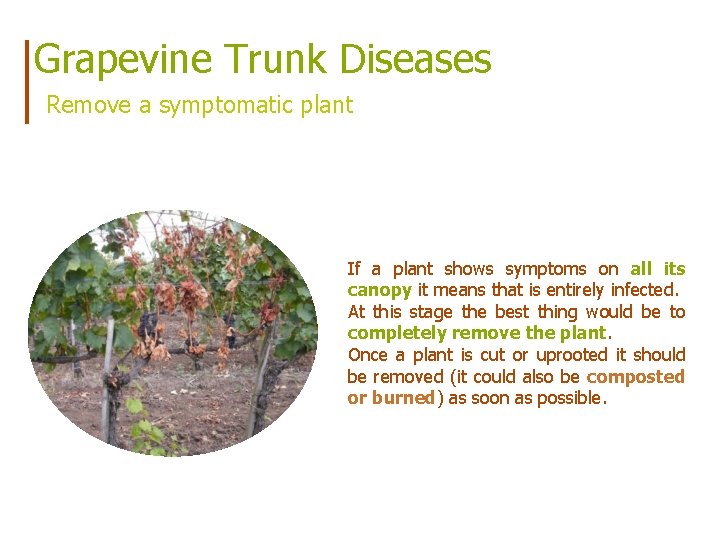
Grapevine Trunk Diseases Remove a symptomatic plant If a plant shows symptoms on all its canopy it means that is entirely infected. At this stage the best thing would be to completely remove the plant. Once a plant is cut or uprooted it should be removed (it could also be composted or burned) as soon as possible.
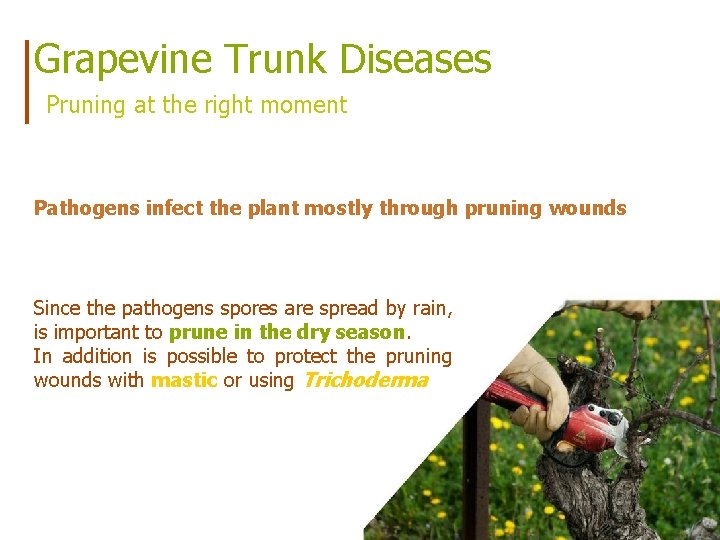
Grapevine Trunk Diseases Pruning at the right moment Pathogens infect the plant mostly through pruning wounds Since the pathogens spores are spread by rain, is important to prune in the dry season. In addition is possible to protect the pruning wounds with mastic or using Trichoderma
Grapevine Trunk Diseases Quiz Please answer to the given questions
Grapevine Trunk Diseases Video-clip Symptoms and Epidemiology
Grapevine Trunk Diseases Quiz Results and Discussion
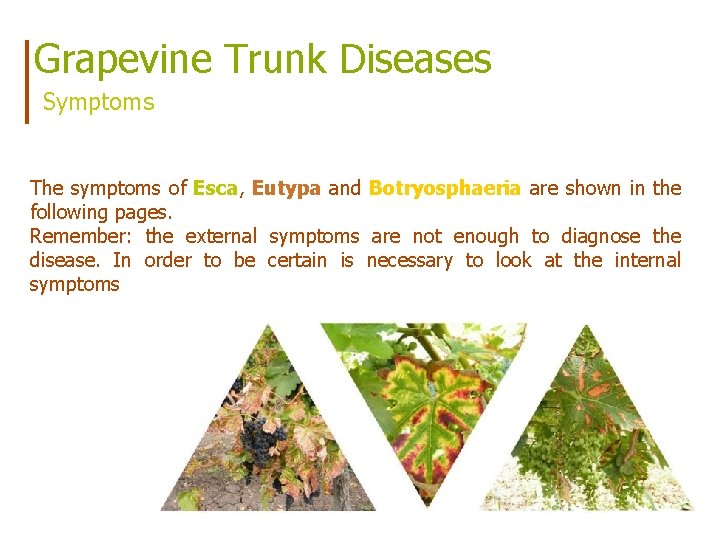
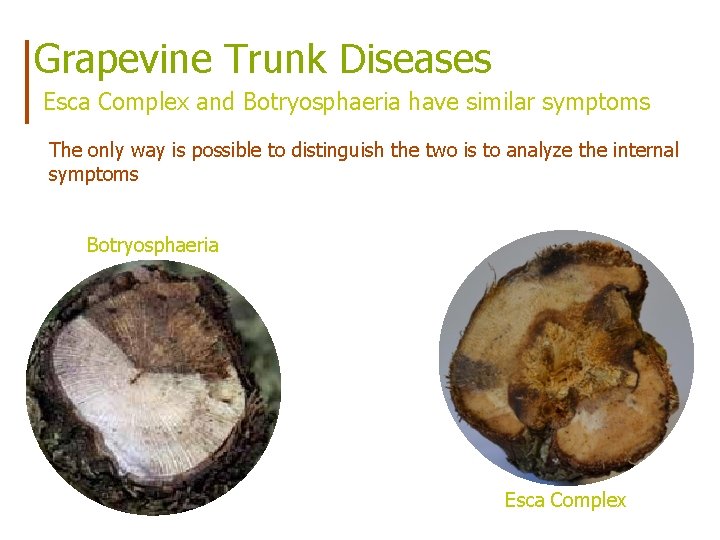
Grapevine Trunk Diseases Symptoms The symptoms of Esca, Eutypa and Botryosphaeria are shown in the following pages. Remember: the external symptoms are not enough to diagnose the disease. In order to be certain is necessary to look at the internal symptoms
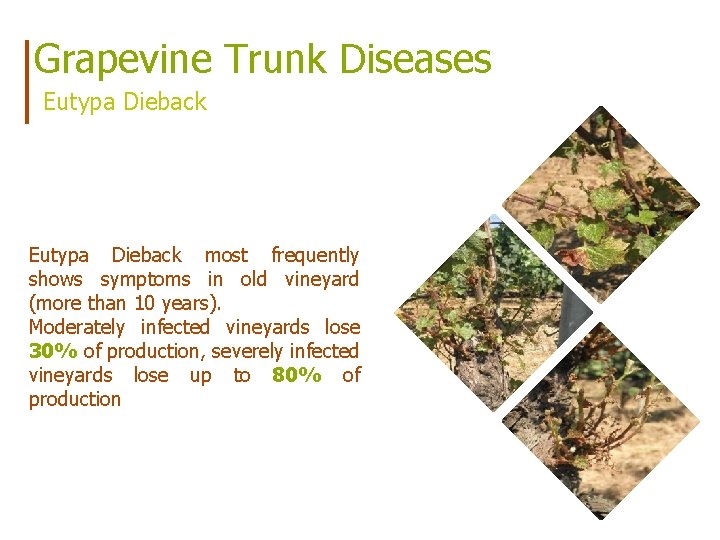
Grapevine Trunk Diseases Eutypa Dieback most frequently shows symptoms in old vineyard (more than 10 years). Moderately infected vineyards lose 30% of production, severely infected vineyards lose up to 80% of production
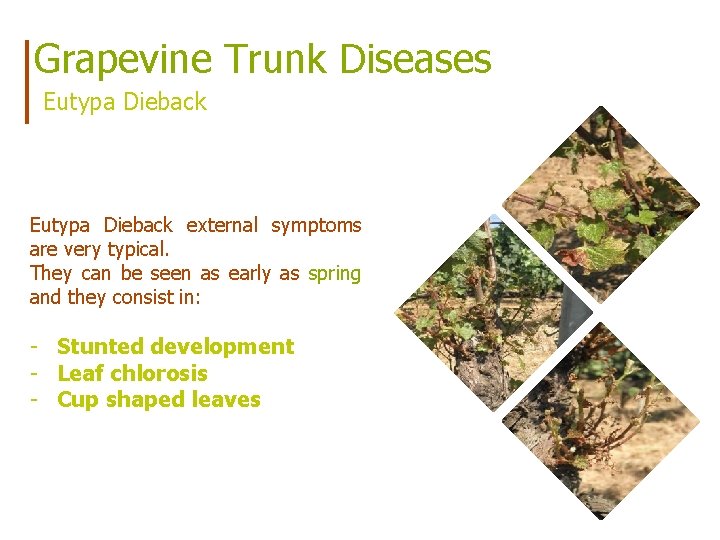
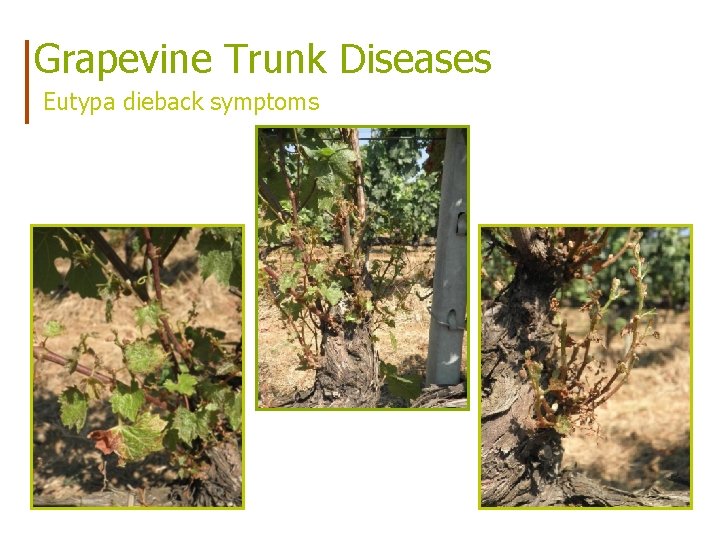
Grapevine Trunk Diseases Eutypa Dieback external symptoms are very typical. They can be seen as early as spring and they consist in: - Stunted development - Leaf chlorosis - Cup shaped leaves
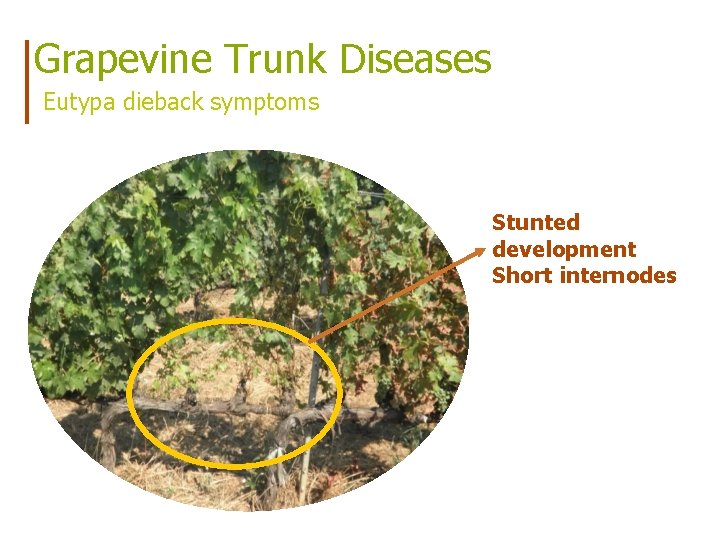
Grapevine Trunk Diseases Eutypa dieback symptoms Stunted development Short internodes
Grapevine Trunk Diseases Eutypa dieback symptoms
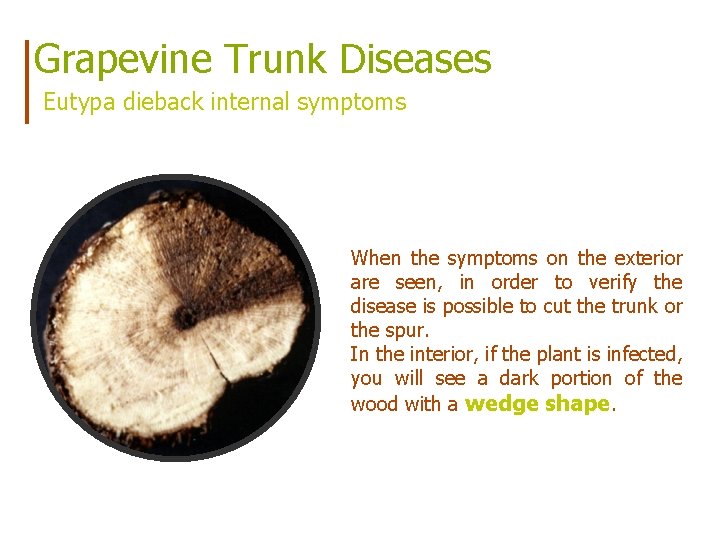
Grapevine Trunk Diseases Eutypa dieback internal symptoms When the symptoms on the exterior are seen, in order to verify the disease is possible to cut the trunk or the spur. In the interior, if the plant is infected, you will see a dark portion of the wood with a wedge shape.
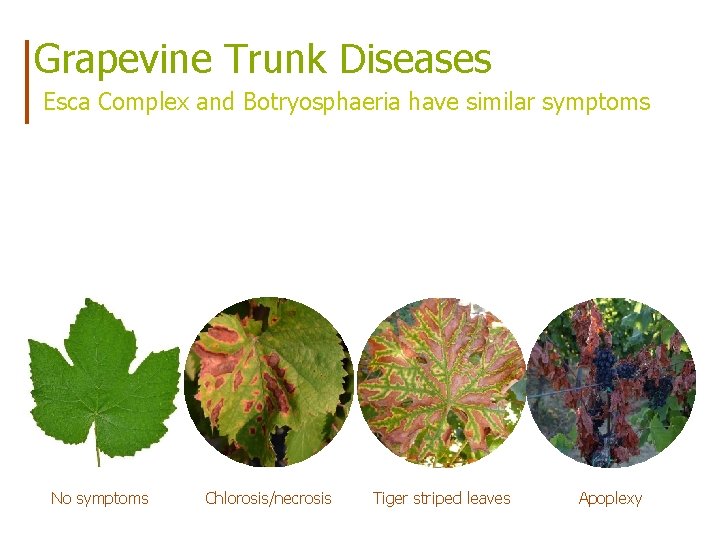
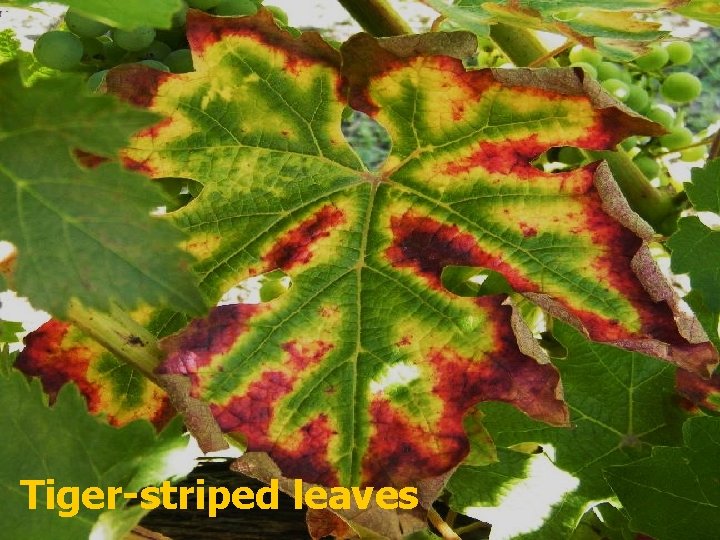
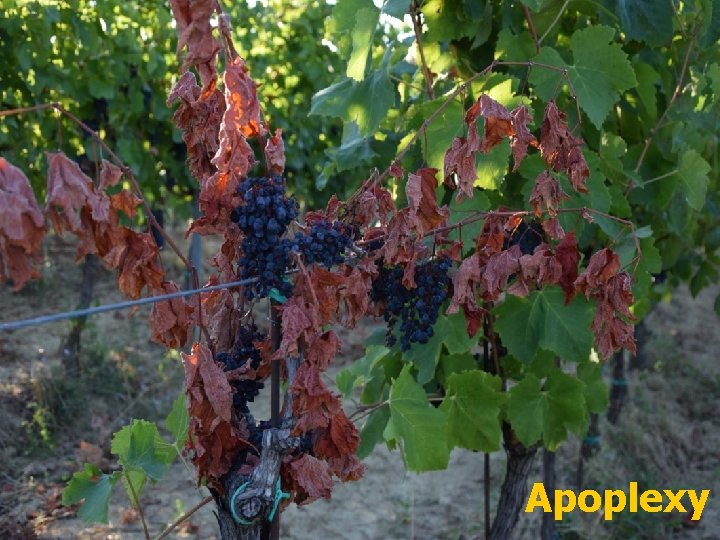
Grapevine Trunk Diseases Esca Complex and Botryosphaeria have similar symptoms No symptoms Chlorosis/necrosis Tiger striped leaves Apoplexy
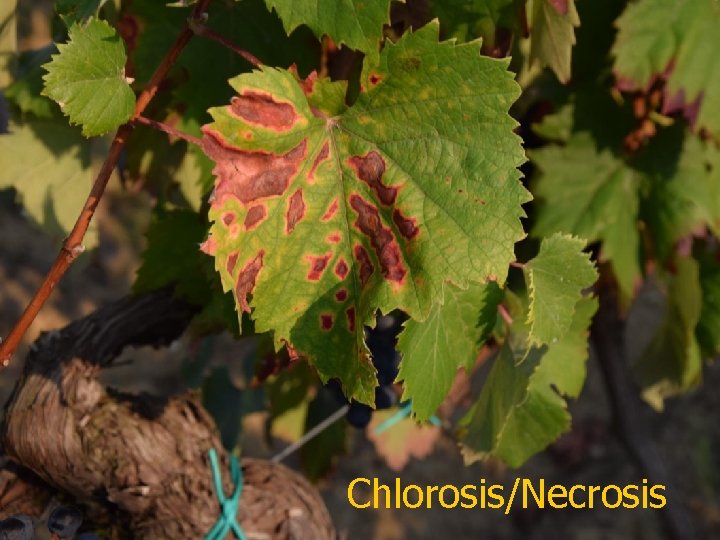
Chlorosis/Necrosis
Tiger-striped leaves
Apoplexy
Grapevine Trunk Diseases Esca Complex and Botryosphaeria have similar symptoms The only way is possible to distinguish the two is to analyze the internal symptoms Botryosphaeria Esca Complex
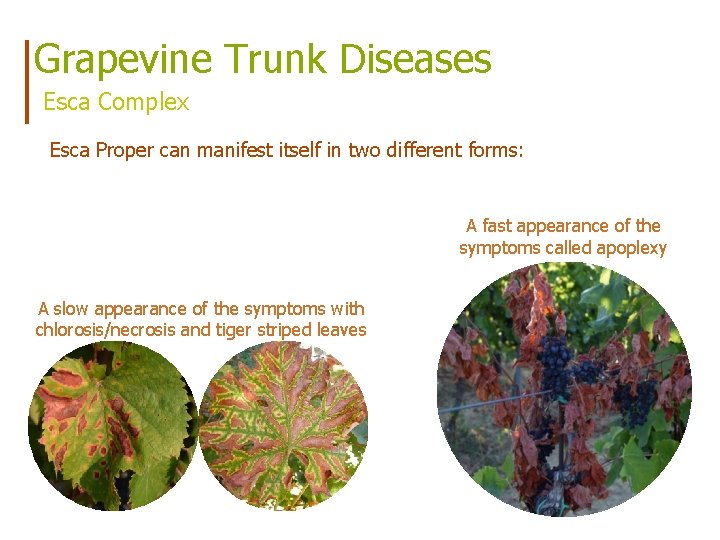
Grapevine Trunk Diseases Esca Complex Esca Proper can manifest itself in two different forms: A fast appearance of the symptoms called apoplexy A slow appearance of the symptoms with chlorosis/necrosis and tiger striped leaves
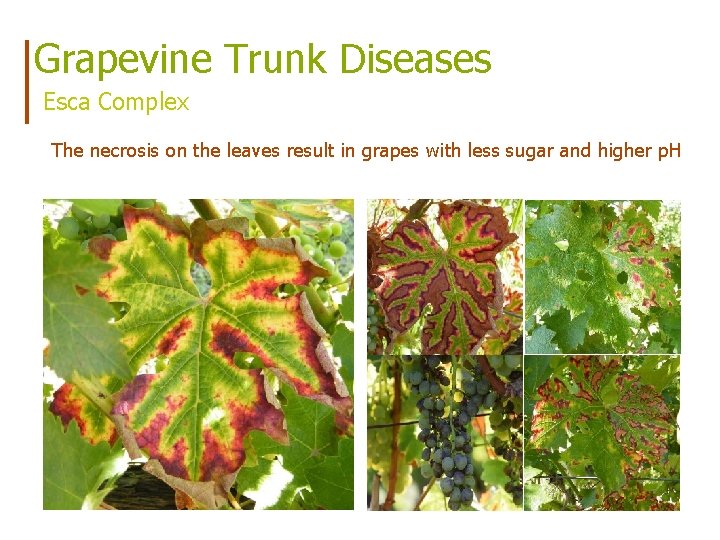
Grapevine Trunk Diseases Esca Complex The necrosis on the leaves result in grapes with less sugar and higher p. H
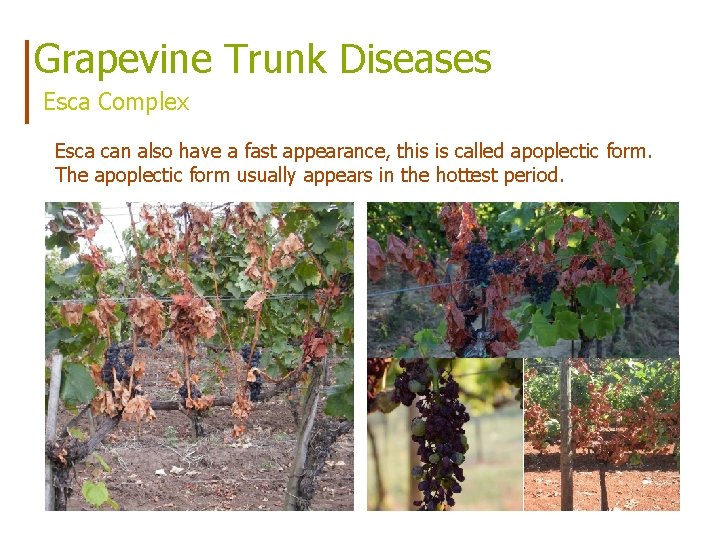
Grapevine Trunk Diseases Esca Complex Esca can also have a fast appearance, this is called apoplectic form. The apoplectic form usually appears in the hottest period.
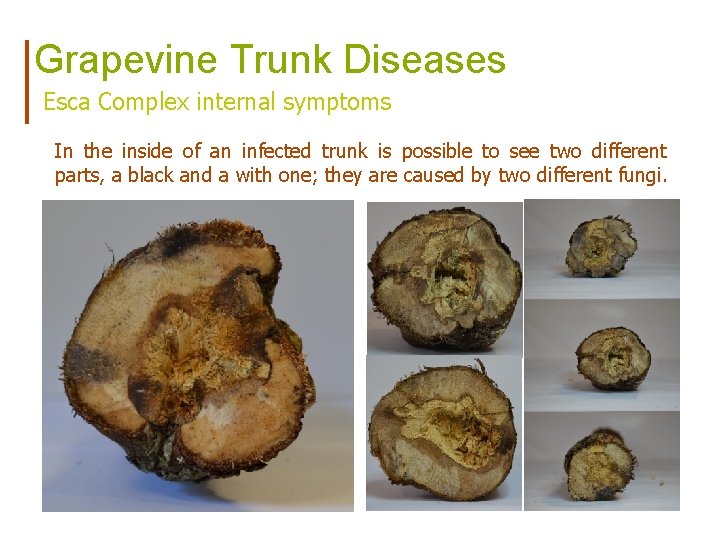
Grapevine Trunk Diseases Esca Complex internal symptoms In the inside of an infected trunk is possible to see two different parts, a black and a with one; they are caused by two different fungi.
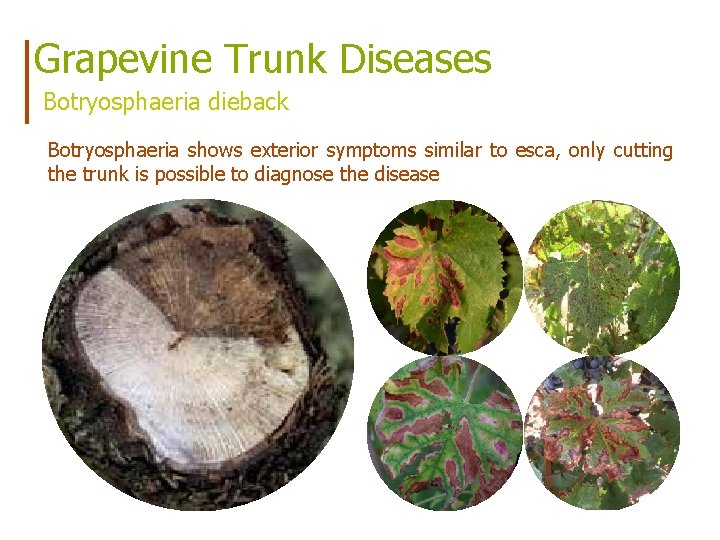
Grapevine Trunk Diseases Botryosphaeria dieback Botryosphaeria shows exterior symptoms similar to esca, only cutting the trunk is possible to diagnose the disease
Grapevine Trunk Diseases Thanks for the attention
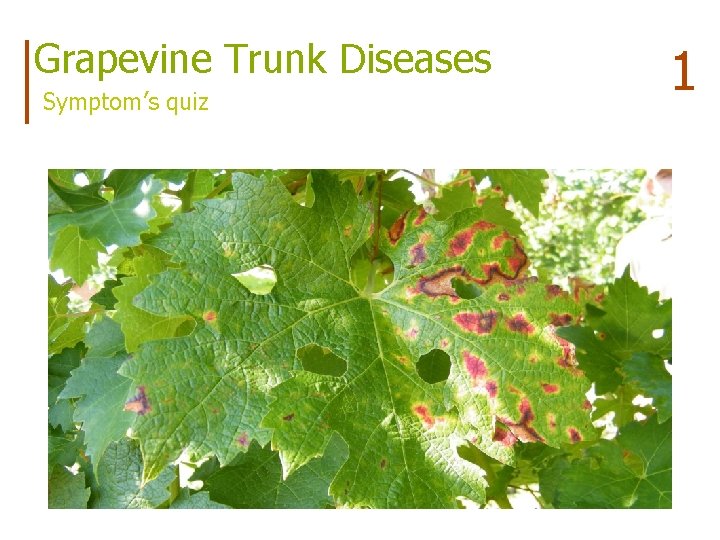
Grapevine Trunk Diseases Symptom’s quiz 1
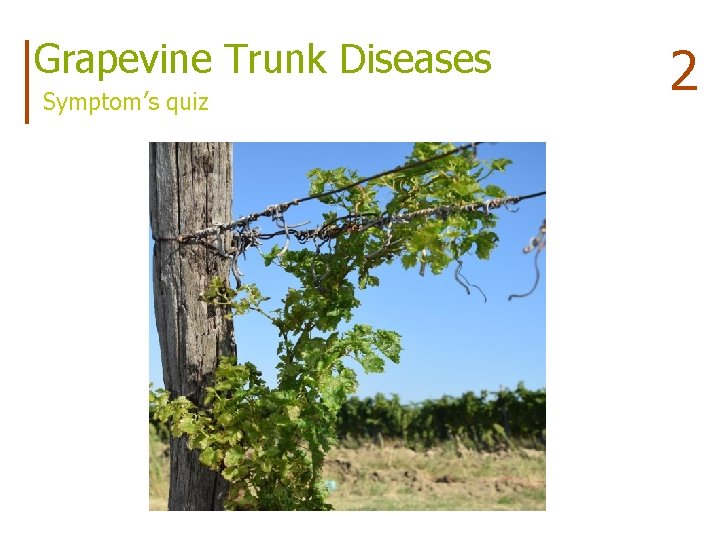
Grapevine Trunk Diseases Symptom’s quiz 2
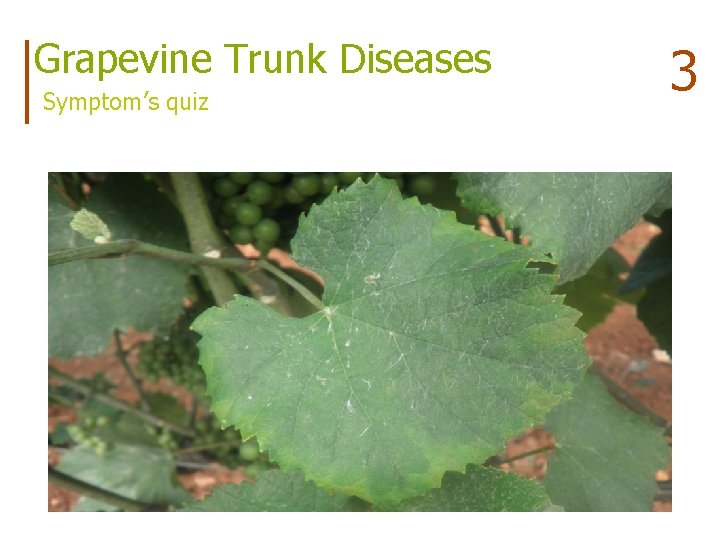
Grapevine Trunk Diseases Symptom’s quiz 3
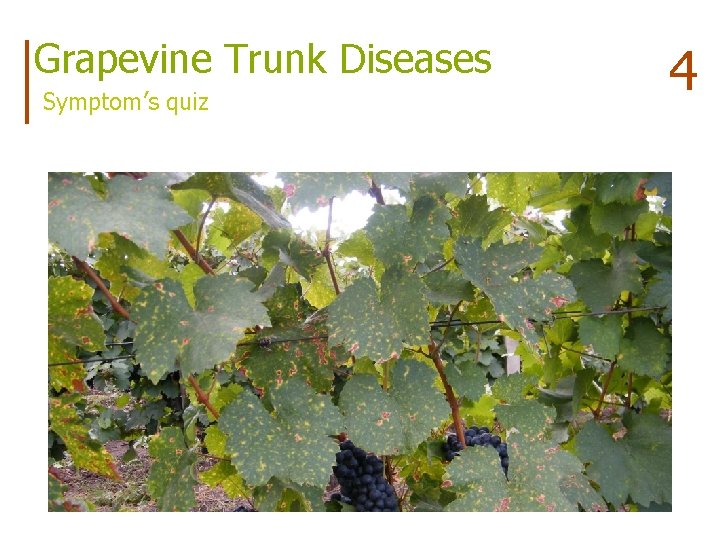
Grapevine Trunk Diseases Symptom’s quiz 4
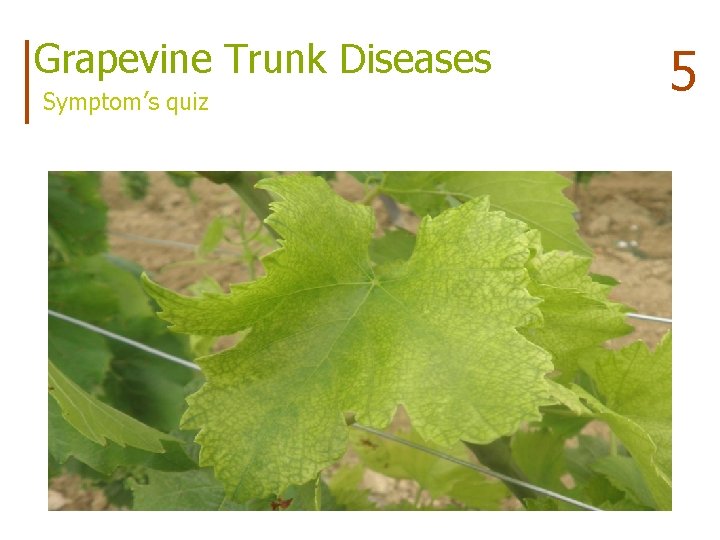
Grapevine Trunk Diseases Symptom’s quiz 5
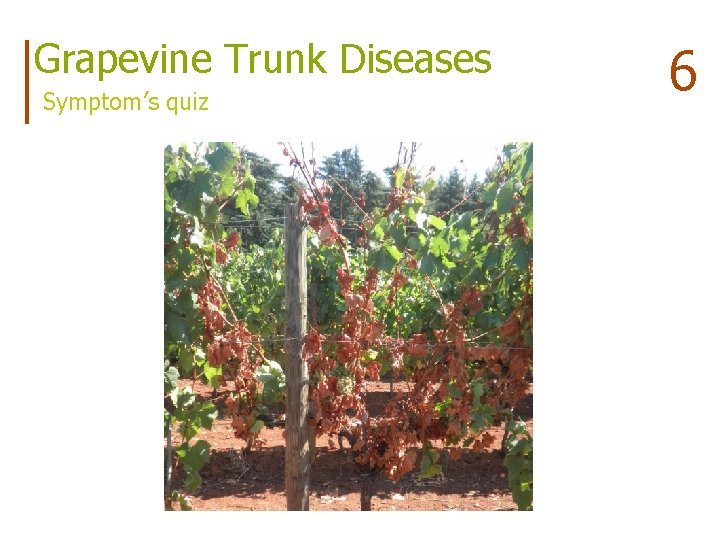
Grapevine Trunk Diseases Symptom’s quiz 6
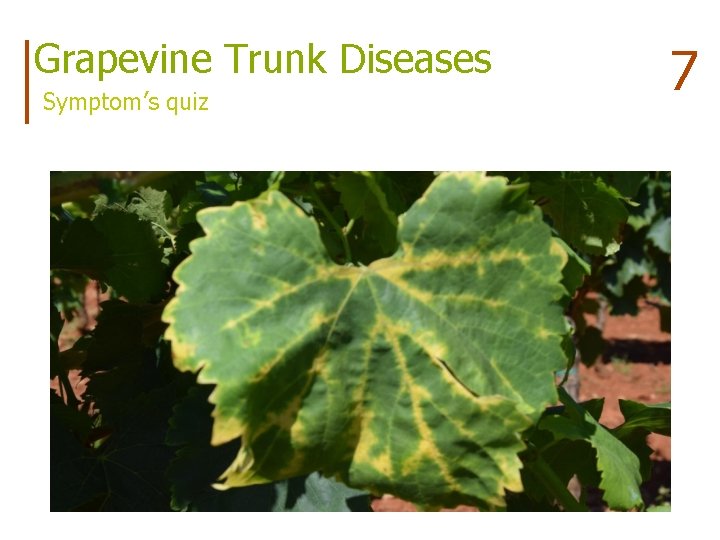
Grapevine Trunk Diseases Symptom’s quiz 7
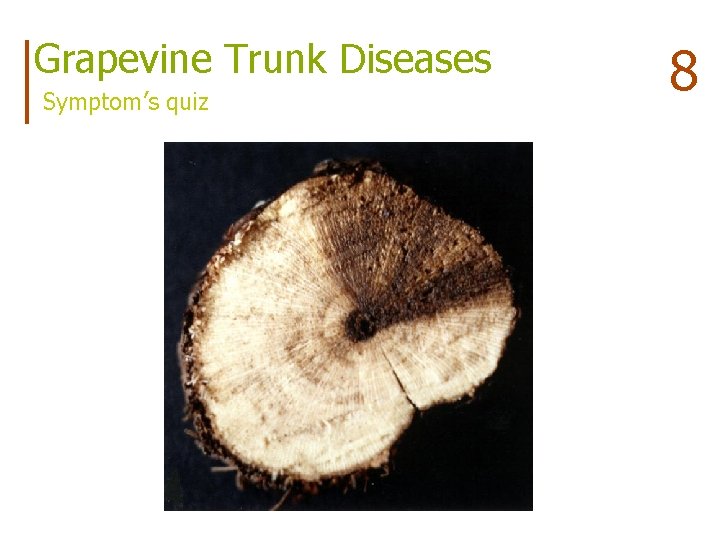
Grapevine Trunk Diseases Symptom’s quiz 8
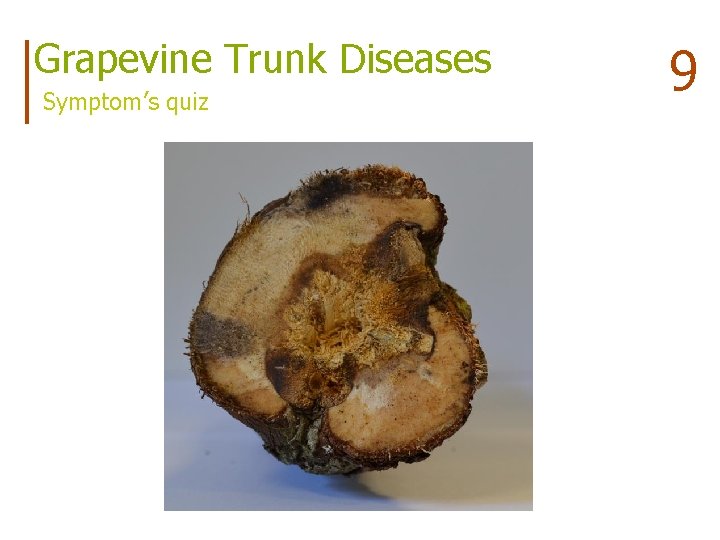
Grapevine Trunk Diseases Symptom’s quiz 9
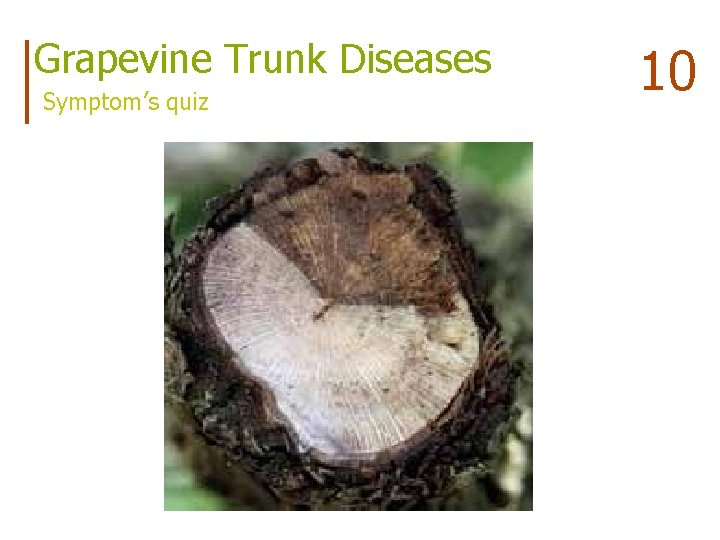
Grapevine Trunk Diseases Symptom’s quiz 10