
Grand unification of AGN activity across the universe
- Slides: 17
Grand unification of AGN activity across the universe Nikos Fanidakis and C. M. Baugh, R. G. Bower, S. Cole, C. Done, C. S. Frenk 9 th Hellenic Astronomical Conference, Athens, Greece September 20 -24, 2009
Outline • Hierarchical evolution of galaxies • Essential ingredients and modelling of AGN • Results: • Luminosity functions • The optical – radio plane of AGN • Conclusions
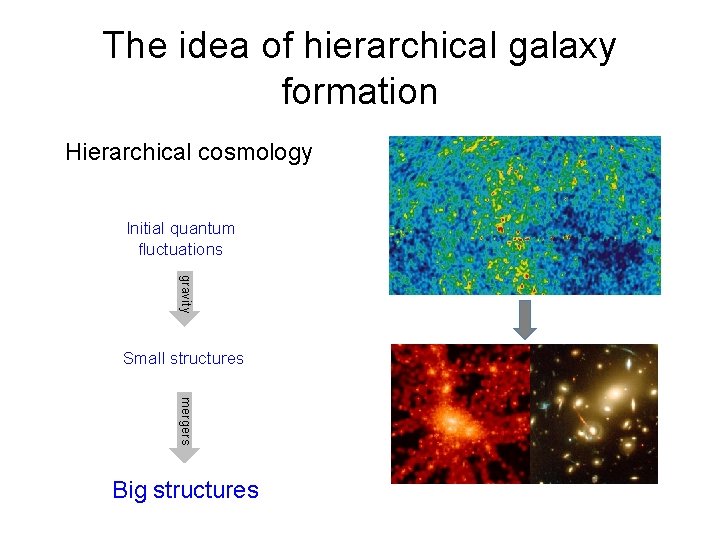
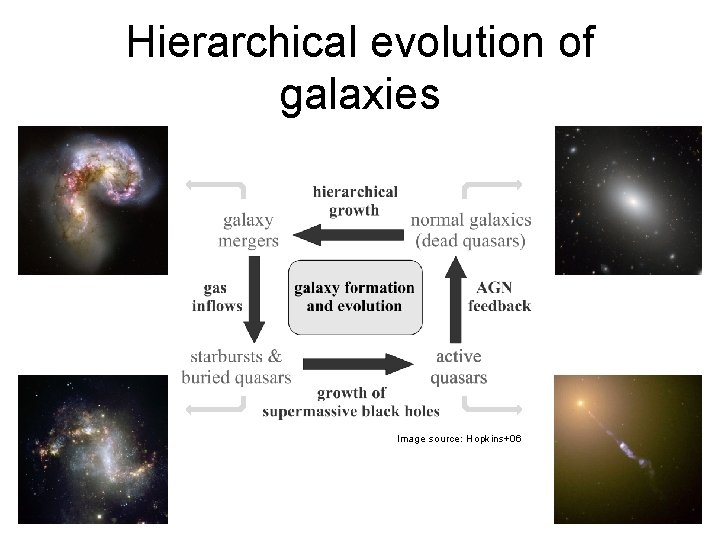
The idea of hierarchical galaxy formation Hierarchical cosmology Initial quantum fluctuations gravity Small structures mergers Big structures
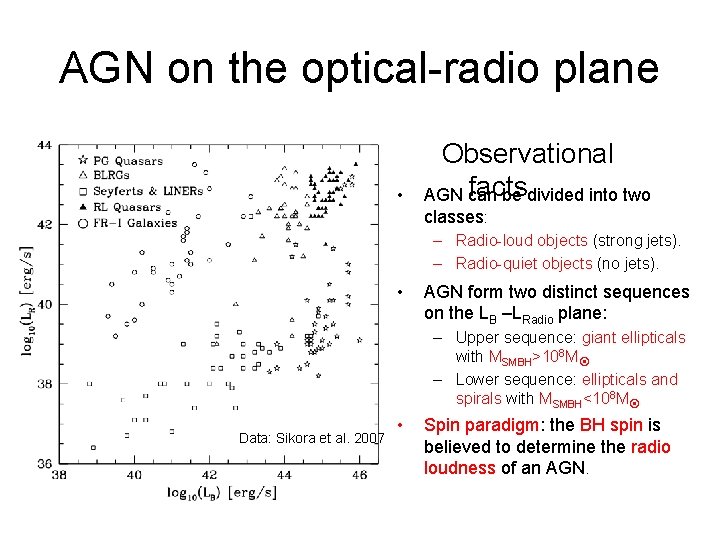
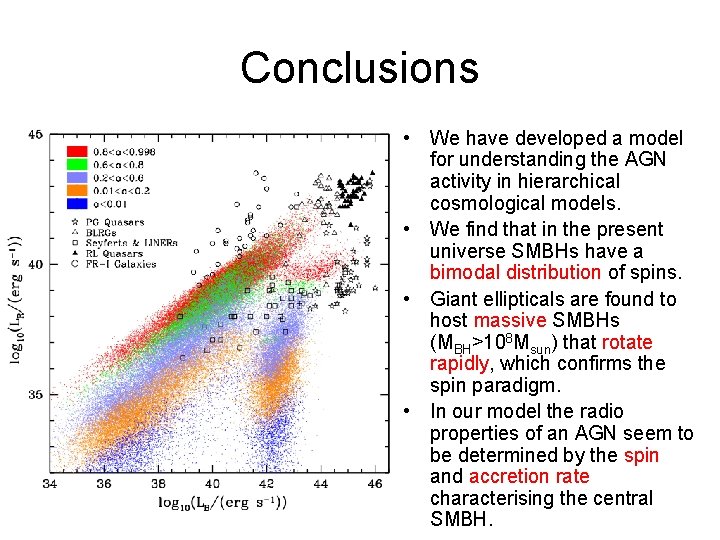
AGN on the optical-radio plane • Observational facts AGN can be divided into two classes: – Radio-loud objects (strong jets). – Radio-quiet objects (no jets). • AGN form two distinct sequences on the LΒ –LRadio plane: – Upper sequence: giant ellipticals with MSMBH>108 M – Lower sequence: ellipticals and spirals with MSMBH<108 M Data: Sikora et al. 2007 • Spin paradigm: the BH spin is believed to determine the radio loudness of an AGN.
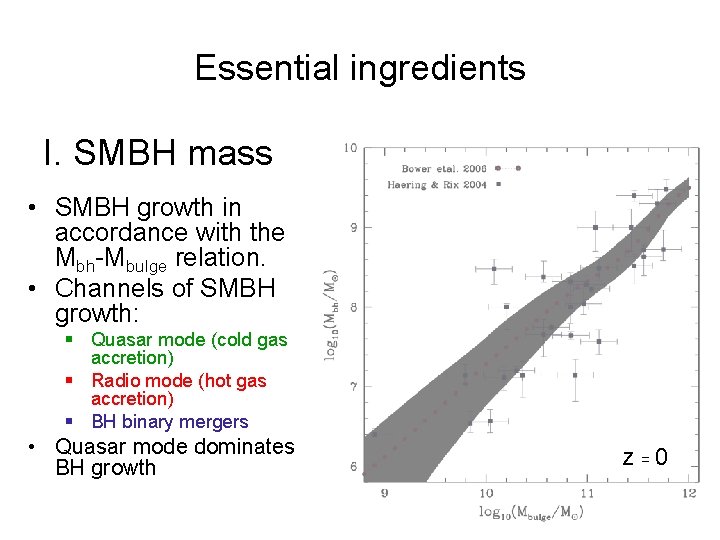
Essential ingredients I. SMBH mass • SMBH growth in accordance with the Mbh-Mbulge relation. • Channels of SMBH growth: § Quasar mode (cold gas accretion) § Radio mode (hot gas accretion) § BH binary mergers • Quasar mode dominates BH growth z =0
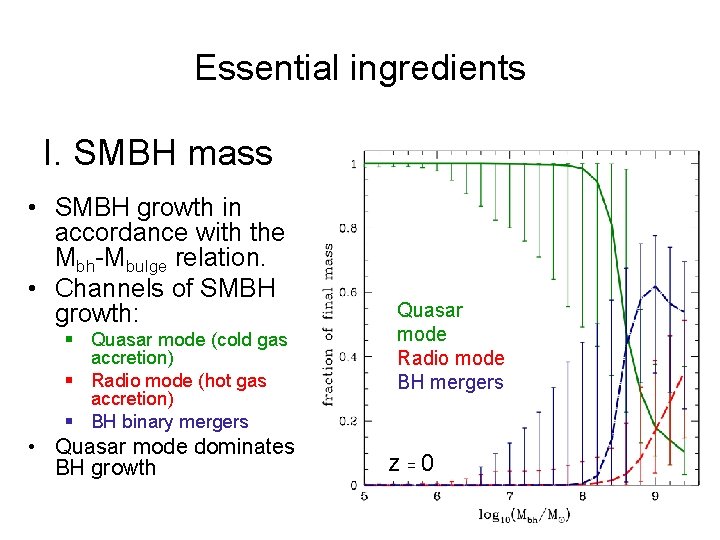
Essential ingredients I. SMBH mass • SMBH growth in accordance with the Mbh-Mbulge relation. • Channels of SMBH growth: § Quasar mode (cold gas accretion) § Radio mode (hot gas accretion) § BH binary mergers • Quasar mode dominates BH growth Quasar mode Radio mode BH mergers z =0
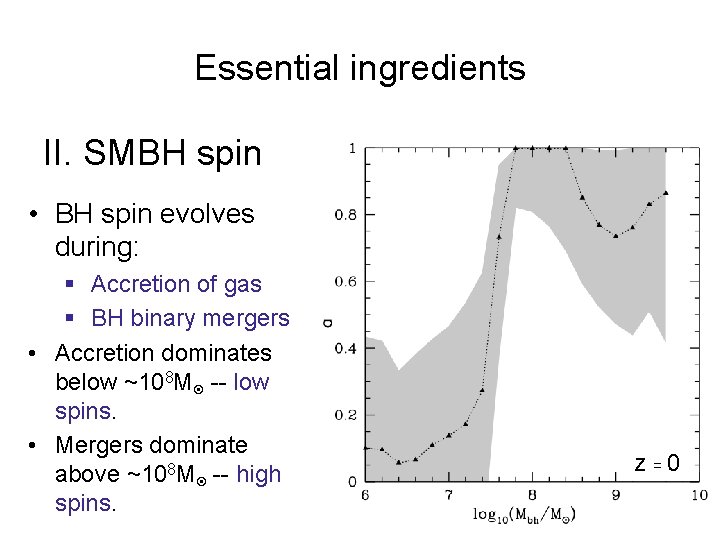
Essential ingredients II. SMBH spin • BH spin evolves during: § Accretion of gas § BH binary mergers • Accretion dominates below ~108 M -- low spins. • Mergers dominate above ~108 M -- high spins. z =0
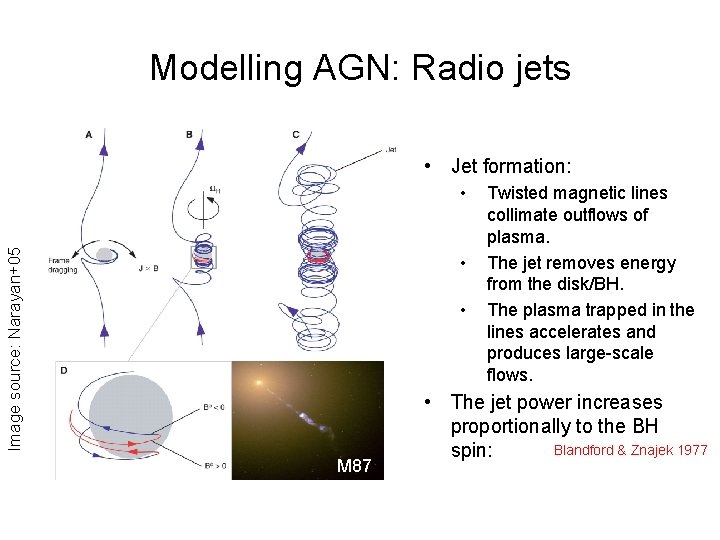
Modelling AGN: Radio jets • Jet formation: Image source: Narayan+05 • • • M 87 Twisted magnetic lines collimate outflows of plasma. The jet removes energy from the disk/BH. The plasma trapped in the lines accelerates and produces large-scale flows. • The jet power increases proportionally to the BH Blandford & Znajek 1977 spin:
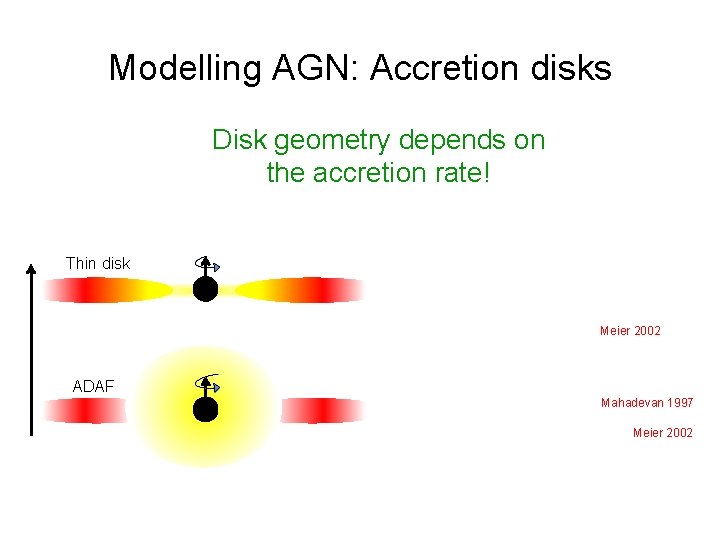
Modelling AGN: Accretion disks Disk geometry depends on the accretion rate! Thin disk Meier 2002 ADAF Mahadevan 1997 Meier 2002
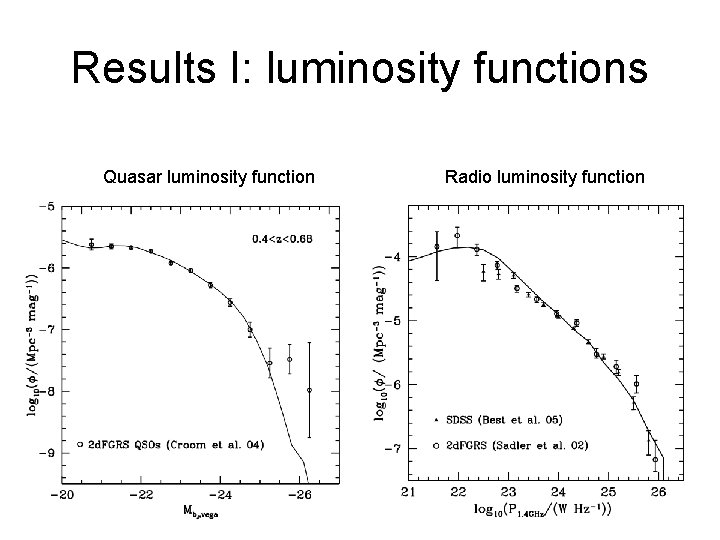
Results I: luminosity functions Quasar luminosity function Radio luminosity function
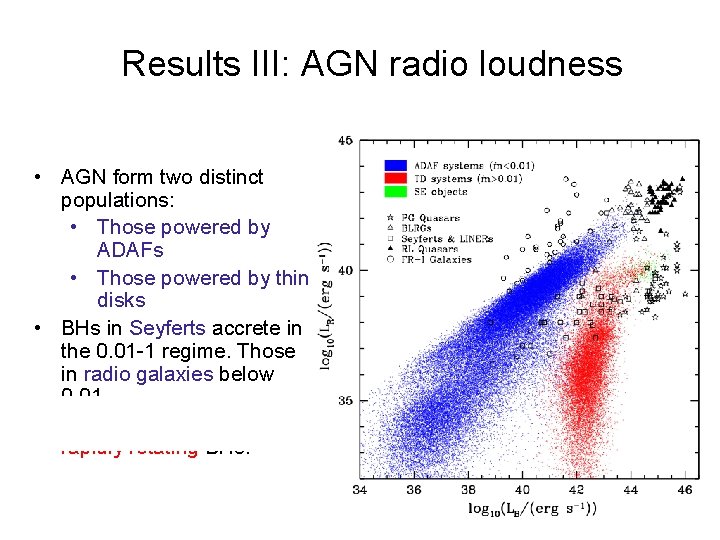
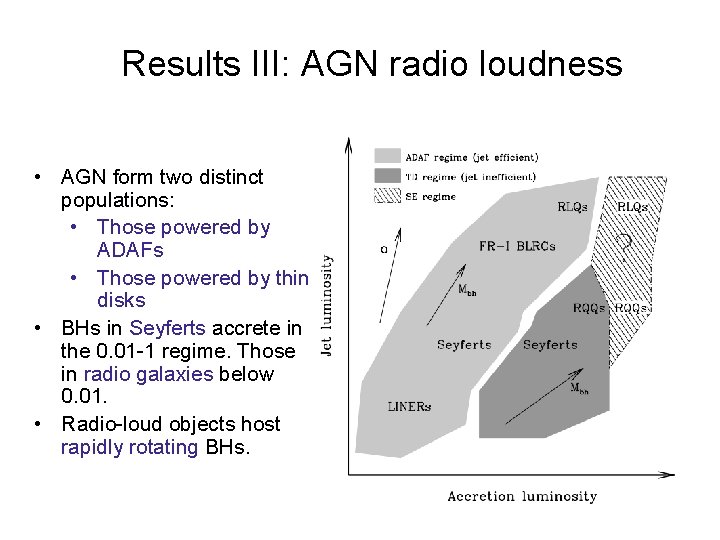
Results III: AGN radio loudness • AGN form two distinct populations: • Those powered by ADAFs • Those powered by thin disks • BHs in Seyferts accrete in the 0. 01 -1 regime. Those in radio galaxies below 0. 01. • Radio-loud objects host rapidly rotating BHs.
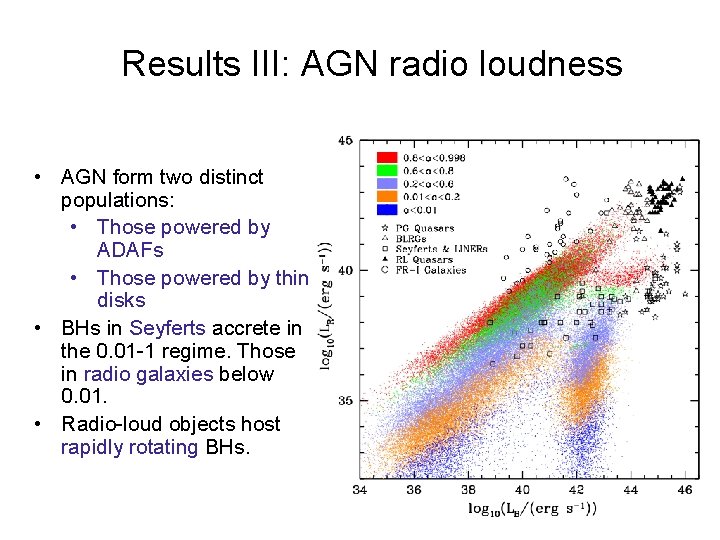
Results III: AGN radio loudness • AGN form two distinct populations: • Those powered by ADAFs • Those powered by thin disks • BHs in Seyferts accrete in the 0. 01 -1 regime. Those in radio galaxies below 0. 01. • Radio-loud objects host rapidly rotating BHs.
Results III: AGN radio loudness • AGN form two distinct populations: • Those powered by ADAFs • Those powered by thin disks • BHs in Seyferts accrete in the 0. 01 -1 regime. Those in radio galaxies below 0. 01. • Radio-loud objects host rapidly rotating BHs.
Conclusions • We have developed a model for understanding the AGN activity in hierarchical cosmological models. • We find that in the present universe SMBHs have a bimodal distribution of spins. • Giant ellipticals are found to host massive SMBHs (MBH>108 Msun) that rotate rapidly, which confirms the spin paradigm. • In our model the radio properties of an AGN seem to be determined by the spin and accretion rate characterising the central SMBH.
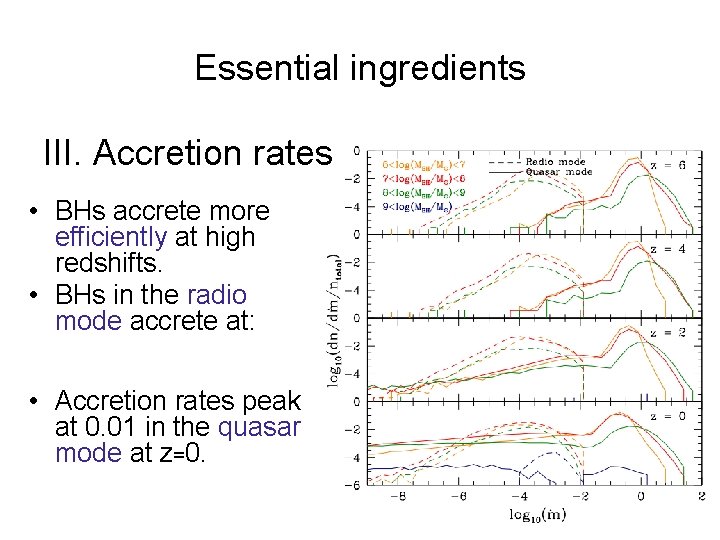
Essential ingredients III. Accretion rates • BHs accrete more efficiently at high redshifts. • BHs in the radio mode accrete at: • Accretion rates peak at 0. 01 in the quasar mode at z=0.
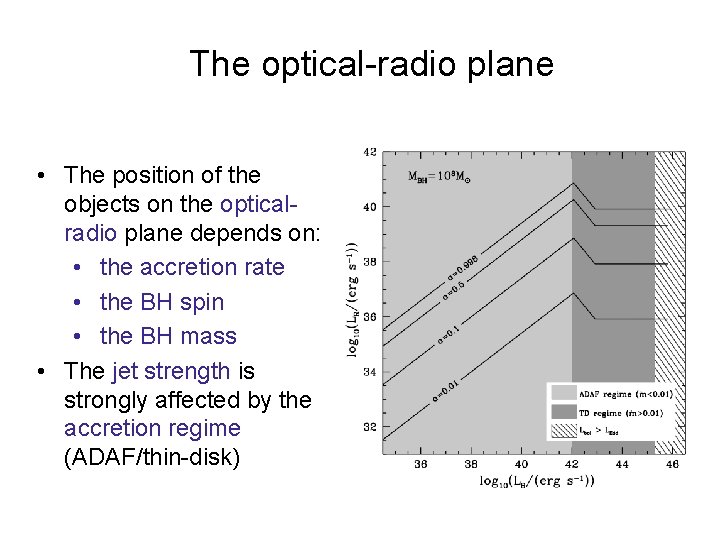
The optical-radio plane • The position of the objects on the opticalradio plane depends on: • the accretion rate • the BH spin • the BH mass • The jet strength is strongly affected by the accretion regime (ADAF/thin-disk)
Hierarchical evolution of galaxies Image source: Hopkins+06