
Gramtica de 2 A Los Posesivos Possessive adjectives


- Slides: 7
Gramática de 2 A
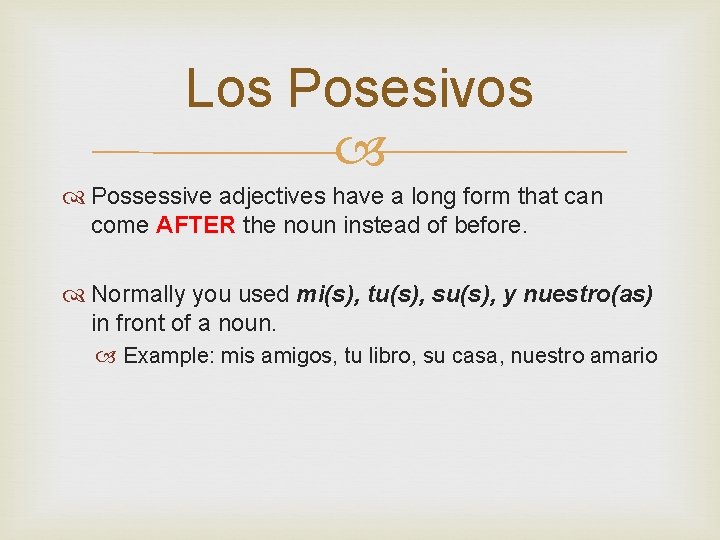
Los Posesivos Possessive adjectives have a long form that can come AFTER the noun instead of before. Normally you used mi(s), tu(s), su(s), y nuestro(as) in front of a noun. Example: mis amigos, tu libro, su casa, nuestro amario
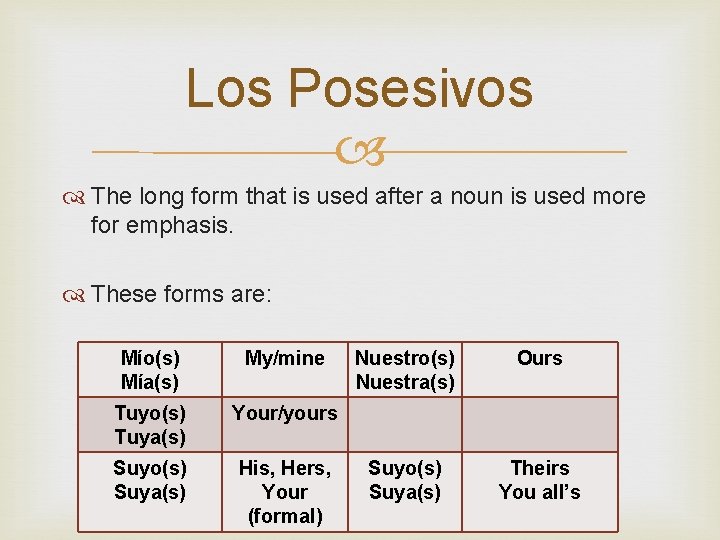
Los Posesivos The long form that is used after a noun is used more for emphasis. These forms are: Mío(s) Mía(s) My/mine Tuyo(s) Tuya(s) Your/yours Suyo(s) Suya(s) His, Hers, Your (formal) Nuestro(s) Nuestra(s) Ours Suyo(s) Suya(s) Theirs You all’s
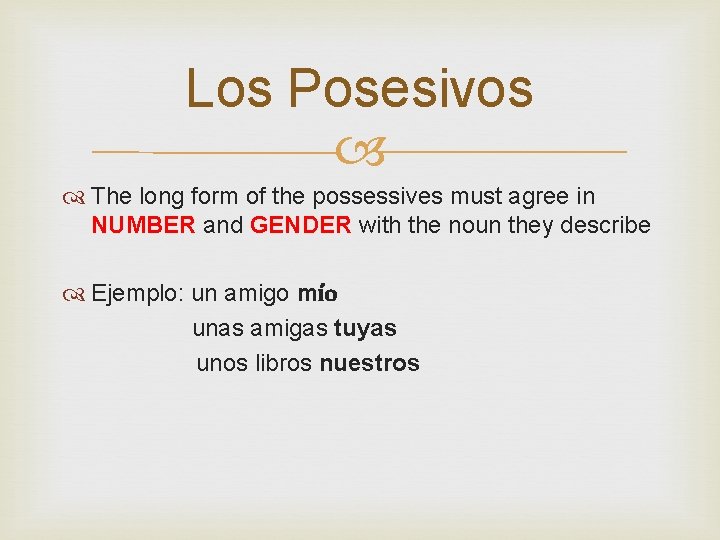
Los Posesivos The long form of the possessives must agree in NUMBER and GENDER with the noun they describe Ejemplo: un amigo mío unas amigas tuyas unos libros nuestros
Los Posesivos These possessive adjectives may also be used WITHOUT a noun. This means the possessive adjectives will replace the noun used. Ejemplo: ¿Estas chaquetas son suyas? Sí, son nuestras.
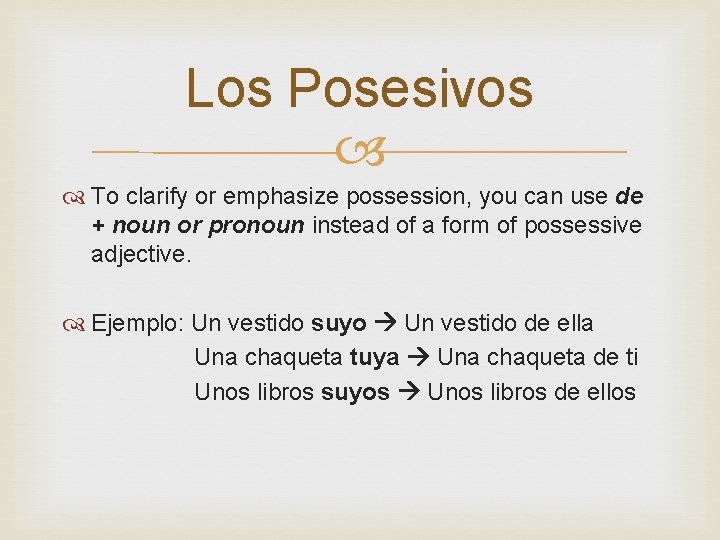
Los Posesivos To clarify or emphasize possession, you can use de + noun or pronoun instead of a form of possessive adjective. Ejemplo: Un vestido suyo Un vestido de ella Una chaqueta tuya Una chaqueta de ti Unos libros suyos Unos libros de ellos
Práctica Write each possessive and noun using the long form of possessives 1. 2. 3. 4. 5. My gel Her perfume Your (informal) brush Their make-up His books 6. Our classes 7. You all’s jewelry 8. My towel 9. Marta’s hair dryer 10. His teeth