
Grammatical Problems in Translation English and Arabic belong
Grammatical Problems in Translation
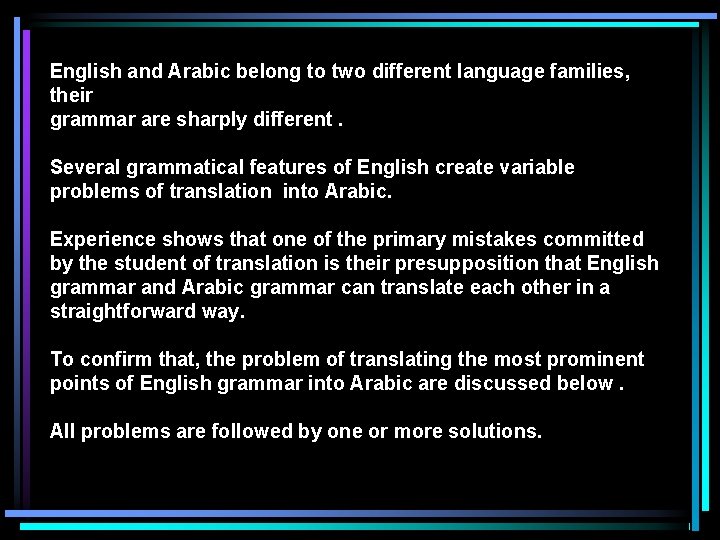
English and Arabic belong to two different language families, their grammar are sharply different. Several grammatical features of English create variable problems of translation into Arabic. Experience shows that one of the primary mistakes committed by the student of translation is their presupposition that English grammar and Arabic grammar can translate each other in a straightforward way. To confirm that, the problem of translating the most prominent points of English grammar into Arabic are discussed below. All problems are followed by one or more solutions.
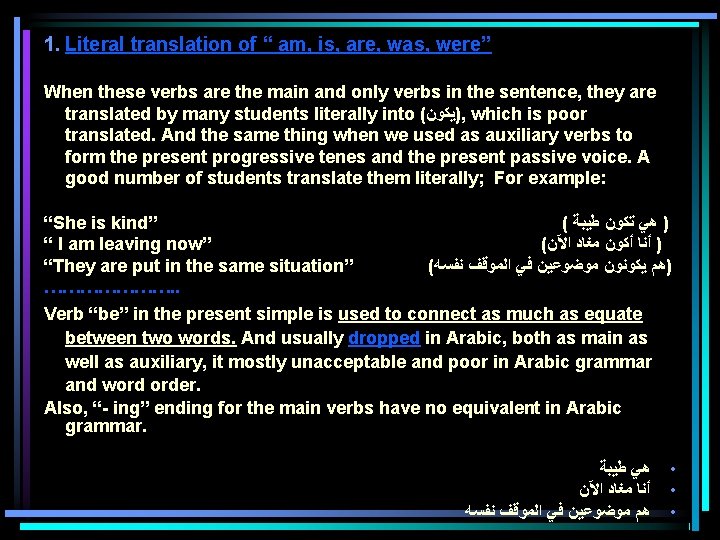
1. Literal translation of “ am, is, are, was, were” When these verbs are the main and only verbs in the sentence, they are translated by many students literally into ( )ﻳﻜﻮﻥ , which is poor translated. And the same thing when we used as auxiliary verbs to form the present progressive tenes and the present passive voice. A good number of students translate them literally; For example: “She is kind” ( ) ﻫﻲ ﺗﻜﻮﻥ ﻃﻴﺒﺔ “ I am leaving now” ( ) ﺃﻨﺎ ﺃﻜﻮﻥ ﻣﻐﺎﺩ ﺍﻵﻦ “They are put in the same situation” ( )ﻫﻢ ﻳﻜﻮﻧﻮﻥ ﻣﻮﺿﻮﻋﻴﻦ ﻓﻲ ﺍﻟﻤﻮﻗﻒ ﻧﻔﺴﻪ …………………. . Verb “be” in the present simple is used to connect as much as equate between two words. And usually dropped in Arabic, both as main as well as auxiliary, it mostly unacceptable and poor in Arabic grammar and word order. Also, “- ing” ending for the main verbs have no equivalent in Arabic grammar. ﻫﻲ ﻃﻴﺒﺔ ﺃﻨﺎ ﻣﻐﺎﺩ ﺍﻵﻦ ﻫﻢ ﻣﻮﺿﻮﻋﻴﻦ ﻓﻲ ﺍﻟﻤﻮﻗﻒ ﻧﻔﺴﻪ • • •
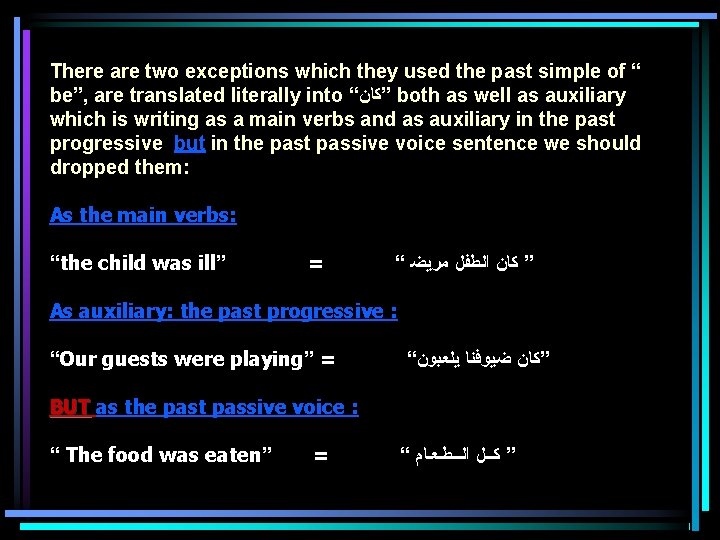
There are two exceptions which they used the past simple of “ be”, are translated literally into “ ”ﻛﺎﻥ both as well as auxiliary which is writing as a main verbs and as auxiliary in the past progressive but in the past passive voice sentence we should dropped them: As the main verbs: “the child was ill” = “ ” ﻛﺎﻥ ﺍﻟﻄﻔﻞ ﻣﺮﻳﻀ As auxiliary: the past progressive : “Our guests were playing” = “ ”ﻛﺎﻥ ﺿﻴﻮﻓﻨﺎ ﻳﻠﻌﺒﻮﻥ BUT as the past passive voice : “ The food was eaten” = “ ” ﻛــﻞ ﺍﻟــﻄـﻌـﺎﻡ
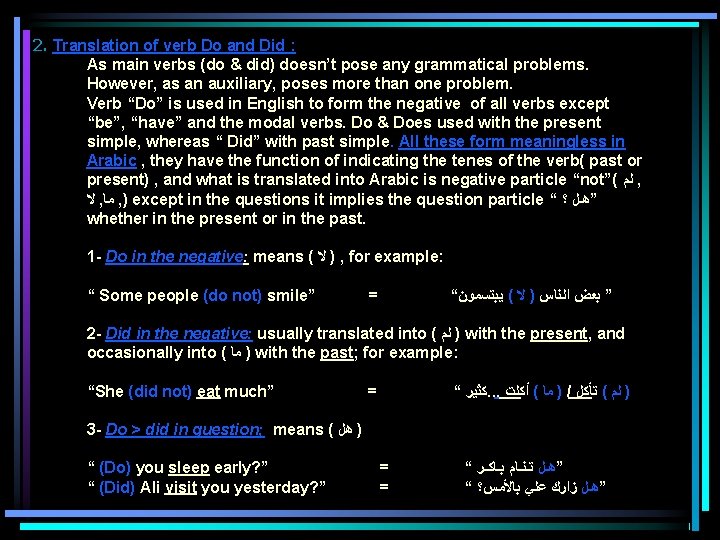
2. Translation of verb Do and Did : As main verbs (do & did) doesn’t pose any grammatical problems. However, as an auxiliary, poses more than one problem. Verb “Do” is used in English to form the negative of all verbs except “be”, “have” and the modal verbs. Do & Does used with the present simple, whereas “ Did” with past simple. All these form meaningless in Arabic , they have the function of indicating the tenes of the verb( past or present) , and what is translated into Arabic is negative particle “not”( ﻟﻢ , ﻻ , ﻣﺎ , ) except in the questions it implies the question particle “ ”ﻫـﻞ ؟ whether in the present or in the past. 1 - Do in the negative: means ( ) ﻻ , for example: “ Some people (do not) smile” = “ ” ﺑﻌﺾ ﺍﻟﻨﺎﺱ ) ﻻ ( ﻳﺒﺘﺴﻤﻮﻥ 2 - Did in the negative: usually translated into ( ) ﻟﻢ with the present, and occasionally into ( ) ﻣﺎ with the past; for example: “She (did not) eat much” = “ ﻛﺜﻴﺮ. . . ) ﻣﺎ ( ﺃﻜﻠﺖ / ) ﻟﻢ ( ﺗﺄﻜﻞ 3 - Do > did in question; means ( ) ﻫﻞ “ (Do) you sleep early? ” “ (Did) Ali visit you yesterday? ” = = “ ”ﻫـﻞ ﺗـﻨـﺎﻡ ﺑـﺎﻛـﺮ “ ”ﻫـﻞ ﺯﺍﺭﻙ ﻋﻠﻲ ﺑﺎﻷﻤﺲ؟
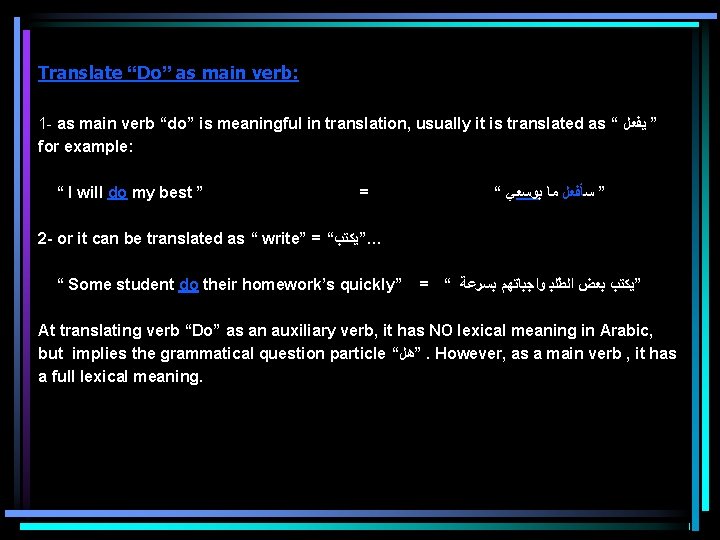
Translate “Do” as main verb: 1 - as main verb “do” is meaningful in translation, usually it is translated as “ ” ﻳﻔﻌﻞ for example: “ I will do my best ” = “ ” ﺳﺄﻔﻌﻞ ﻣﺎ ﺑﻮﺳﻌﻲ 2 - or it can be translated as “ write” = “ …”ﻳﻜﺘﺐ “ Some student do their homework’s quickly” = “ ”ﻳﻜﺘﺐ ﺑﻌﺾ ﺍﻟﻄﻠﺒ ﻭﺍﺟﺒﺎﺗﻬﻢ ﺑﺴﺮﻋﺔ At translating verb “Do” as an auxiliary verb, it has NO lexical meaning in Arabic, but implies the grammatical question particle “ ”ﻫﻞ. However, as a main verb , it has a full lexical meaning.
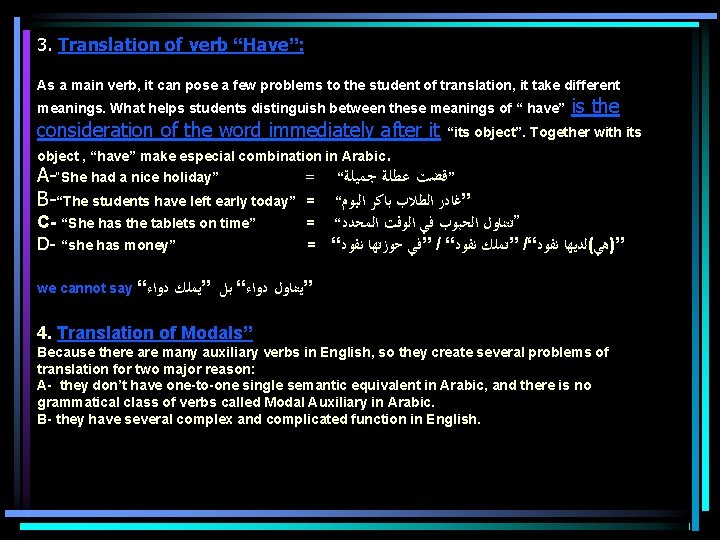
3. Translation of verb “Have”: As a main verb, it can pose a few problems to the student of translation, it take different meanings. What helps students distinguish between these meanings of “ have” is the consideration of the word immediately after it “its object”. Together with its object , “have” make especial combination in Arabic. A-“She had a nice holiday” = “ ”ﻗﻀﺖ ﻋﻄﻠﺔ ﺟﻤﻴﻠﺔ B-“The students have left early today” = “ ”ﻏﺎﺩﺭ ﺍﻟﻄﻼﺏ ﺑﺎﻛﺮ ﺍﻟﻴﻮﻡ C- “She has the tablets on time” D- “she has money” we cannot say = = “ ﺍﻟﻤﺤﺪﺩ ”ﺗﺘﻨﺎﻭﻝ ﺍﻟﺤﺒﻮﺏ ﻓﻲ ﺍﻟﻮﻗﺖ “ ”ﻓﻲ ﺣﻮﺯﺗﻬﺎ ﻧﻘﻮﺩ / “ ”ﺗﻤﻠﻚ ﻧﻘﻮﺩ /“ ”)ﻫﻲ(ﻟﺪﻳﻬﺎ ﻧﻘﻮﺩ “ ”ﻳﺘﻨﺎﻭﻝ ﺩﻭﺍﺀ“ ﺑﻞ ”ﻳﻤﻠﻚ ﺩﻭﺍﺀ 4. Translation of Modals” Because there are many auxiliary verbs in English, so they create several problems of translation for two major reason: A- they don’t have one-to-one single semantic equivalent in Arabic, and there is no grammatical class of verbs called Modal Auxiliary in Arabic. B- they have several complex and complicated function in English.
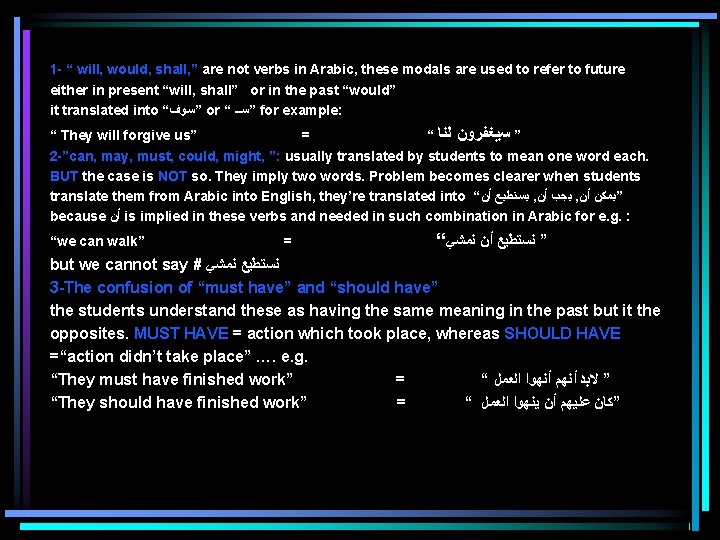
1 - “ will, would, shall, ” are not verbs in Arabic, these modals are used to refer to future either in present “will, shall” or in the past “would” it translated into “ ”ﺳﻮﻑ or “ ”ﺳــ for example: “ They will forgive us” = “ ﻟﻨﺎ ” ﺳﻴﻐﻔﺮﻭﻥ 2 -”can, may, must, could, might, ”: usually translated by students to mean one word each. BUT the case is NOT so. They imply two words. Problem becomes clearer when students translate them from Arabic into English, they’re translated into “ ﻳﺴﺘﻄﻴﻊ ﺃﻦ , ﻳﺠﺐ ﺃﻦ , ”ﻳﻤﻜﻦ ﺃﻦ because ﺃﻦ is implied in these verbs and needed in such combination in Arabic for e. g. : “we can walk” = “ ” ﻧﺴﺘﻄﻴﻊ ﺃﻦ ﻧﻤﺸﻲ but we cannot say # ﻧﺴﺘﻄﻴﻊ ﻧﻤﺸﻲ 3 -The confusion of “must have” and “should have” the students understand these as having the same meaning in the past but it the opposites. MUST HAVE = action which took place, whereas SHOULD HAVE =“action didn’t take place” …. e. g. “They must have finished work” = “ ” ﻻﺑﺪ ﺃﻨﻬﻢ ﺃﻨﻬﻮﺍ ﺍﻟﻌﻤﻞ “They should have finished work” = “ ”ﻛﺎﻥ ﻋﻠﻴﻬﻢ ﺃﻦ ﻳﻨﻬﻮﺍ ﺍﻟﻌﻤﻞ
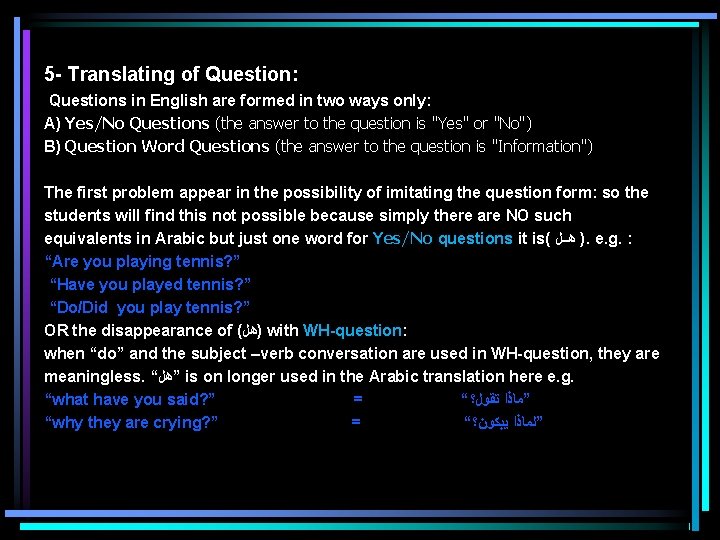
5 - Translating of Question: Questions in English are formed in two ways only: A) Yes/No Questions (the answer to the question is "Yes" or "No") B) Question Word Questions (the answer to the question is "Information") The first problem appear in the possibility of imitating the question form: so the students will find this not possible because simply there are NO such equivalents in Arabic but just one word for Yes/No questions it is( ) ﻫــﻞ. e. g. : “Are you playing tennis? ” “Have you played tennis? ” “Do/Did you play tennis? ” OR the disappearance of ( )ﻫﻞ with WH-question: when “do” and the subject –verb conversation are used in WH-question, they are meaningless. “ ”ﻫﻞ is on longer used in the Arabic translation here e. g. “what have you said? ” = “ ”ﻣﺎﺫﺍ ﺗﻘﻮﻝ؟ “why they are crying? ” = “ ”ﻟﻤﺎﺫﺍ ﻳﺒﻜﻮﻥ؟
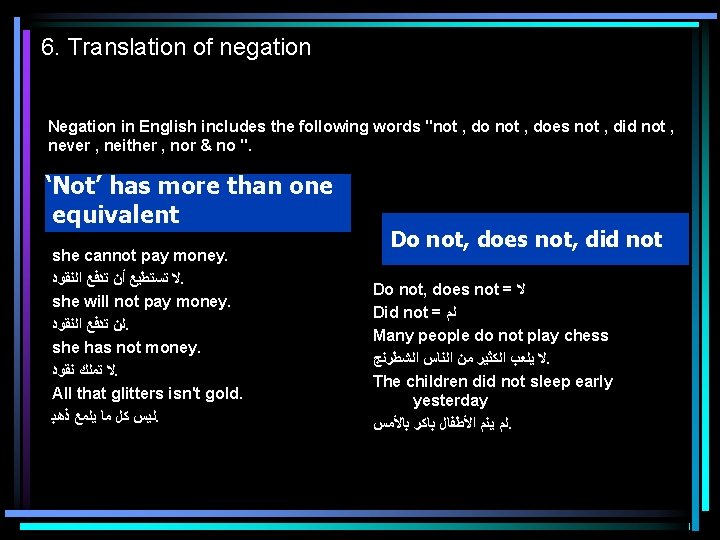
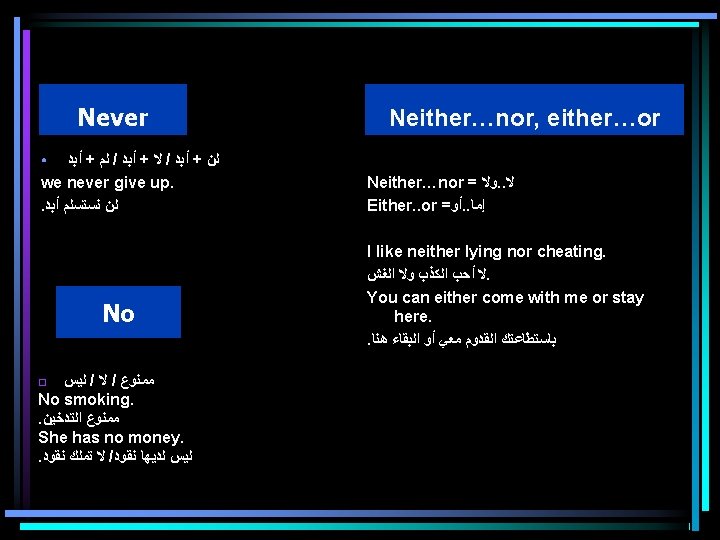
6. Translation of negation Negation in English includes the following words "not , does not , did not , never , neither , nor & no ". ‘Not’ has more than one equivalent she cannot pay money. ﻻ ﺗﺴﺘﻄﻴﻊ ﺃﻦ ﺗﺪﻓﻊ ﺍﻟﻨﻘﻮﺩ. she will not pay money. ﻟﻦ ﺗﺪﻓﻊ ﺍﻟﻨﻘﻮﺩ. she has not money. ﻻ ﺗﻤﻠﻚ ﻧﻘﻮﺩ. All that glitters isn't gold. ﻟﻴﺲ ﻛﻞ ﻣﺎ ﻳﻠﻤﻊ ﺫﻫﺒ. Do not, does not, did not Do not, does not = ﻻ Did not = ﻟﻢ Many people do not play chess ﻻ ﻳﻠﻌﺐ ﺍﻟﻜﺜﻴﺮ ﻣﻦ ﺍﻟﻨﺎﺱ ﺍﻟﺸﻄﺮﻧﺞ. The children did not sleep early yesterday ﻟﻢ ﻳﻨﻢ ﺍﻷﻄﻔﺎﻝ ﺑﺎﻛﺮ ﺑﺎﻷﻤﺲ.

We hope you like it Prepared by : Jamal Abed Elhadi To Dr. : Sha 3 ban El 3 omari BEST WISHES
- Slides: 12