
Grammatical issues in translation The grammatical level 1
- Slides: 22
Grammatical issues in translation The grammatical level: 1. Morphology: words and their formation by affixation, inflection, derivation and compounding 2. Syntax: the arrangement of words into phrases and sentence.
It is the grammatical level where translation loss is generally obvious given the grammatical differences between languages. However, the question is not whethere is translation loss (there always is), but what it consists in and whether it matters
1. 1 Words (lexis) It is vital to remember that meanings are not found exclusively in the words listed individually in the dictionary. Any text shows that the combination of words creates meanings that they do not have in isolation and even meanings that are not wholly predictable from the senses of the words combined.
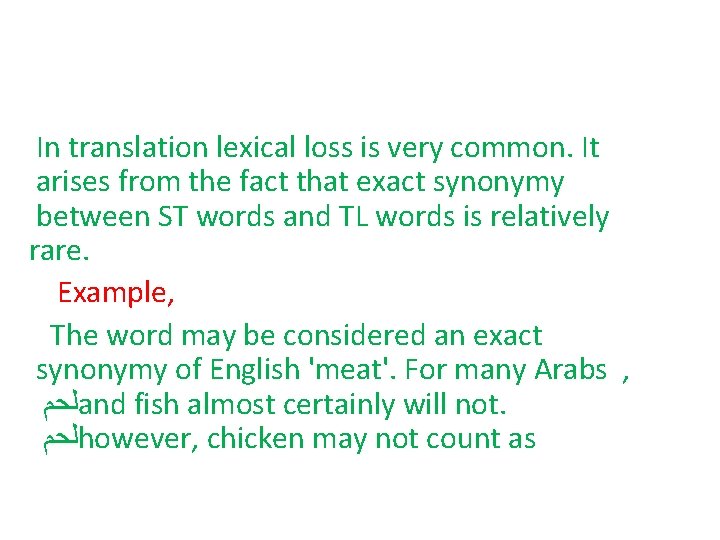
In translation lexical loss is very common. It arises from the fact that exact synonymy between ST words and TL words is relatively rare. Example, The word may be considered an exact synonymy of English 'meat'. For many Arabs , ﻟﺤﻢ and fish almost certainly will not. ﻟﺤﻢ however, chicken may not count as
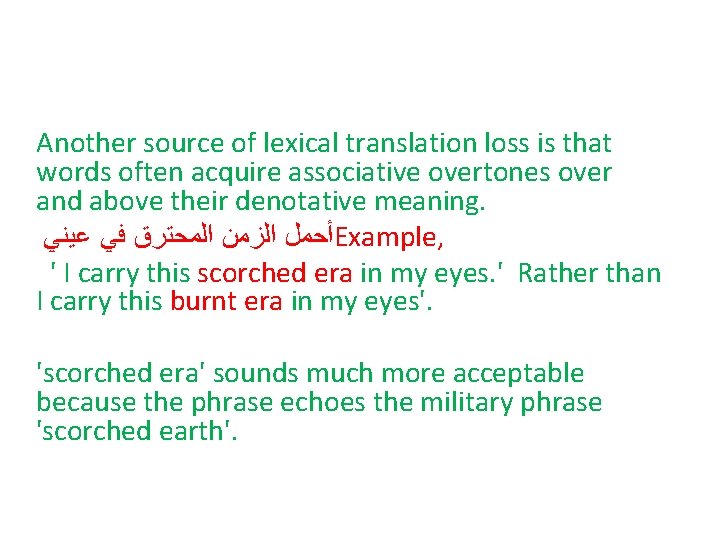
Another source of lexical translation loss is that words often acquire associative overtones over and above their denotative meaning. ﺃﺤﻤﻞ ﺍﻟﺰﻣﻦ ﺍﻟﻤﺤﺘﺮﻕ ﻓﻲ ﻋﻴﻨﻲ Example, ' I carry this scorched era in my eyes. ' Rather than I carry this burnt era in my eyes'. 'scorched era' sounds much more acceptable because the phrase echoes the military phrase 'scorched earth'.
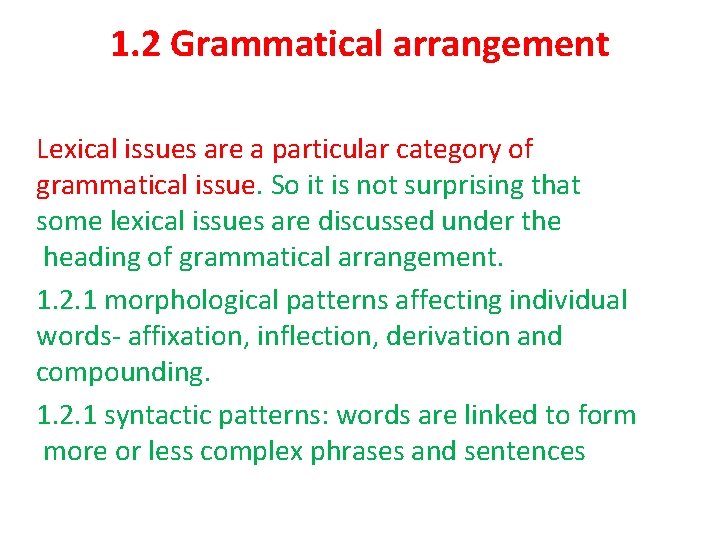
1. 2 Grammatical arrangement Lexical issues are a particular category of grammatical issue. So it is not surprising that some lexical issues are discussed under the heading of grammatical arrangement. 1. 2. 1 morphological patterns affecting individual words- affixation, inflection, derivation and compounding. 1. 2. 1 syntactic patterns: words are linked to form more or less complex phrases and sentences
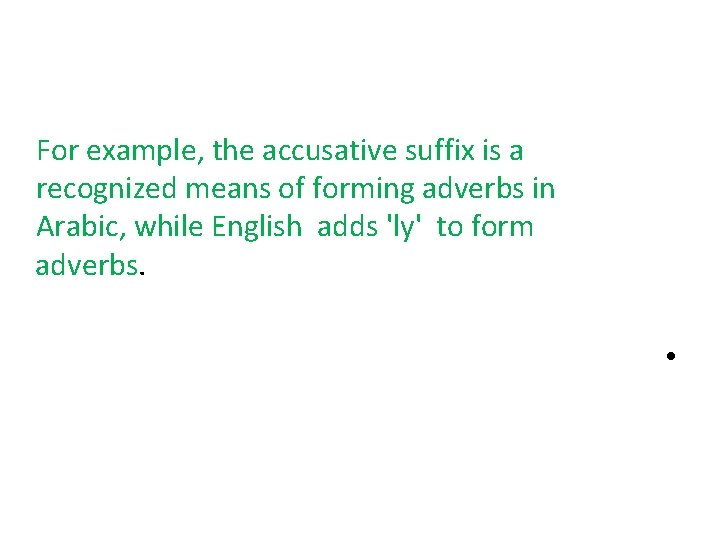
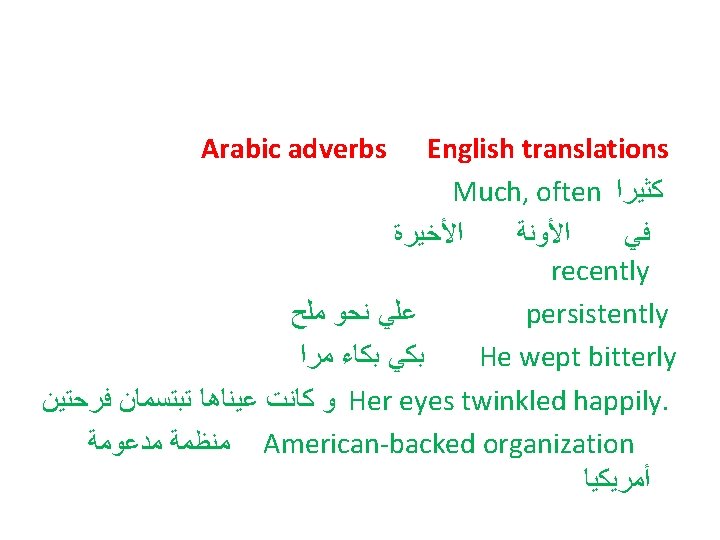
For example, the accusative suffix is a recognized means of forming adverbs in Arabic, while English adds 'ly' to form adverbs. •
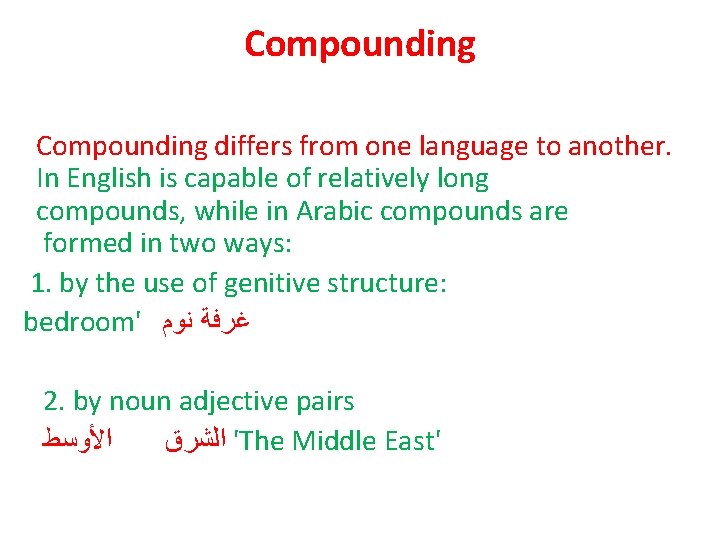
Compounding differs from one language to another. In English is capable of relatively long compounds, while in Arabic compounds are formed in two ways: 1. by the use of genitive structure: bedroom' ﻏﺮﻓﺔ ﻧﻮﻡ 2. by noun adjective pairs ﺍﻷﻮﺳﻂ ' ﺍﻟﺸﺮﻕ The Middle East'
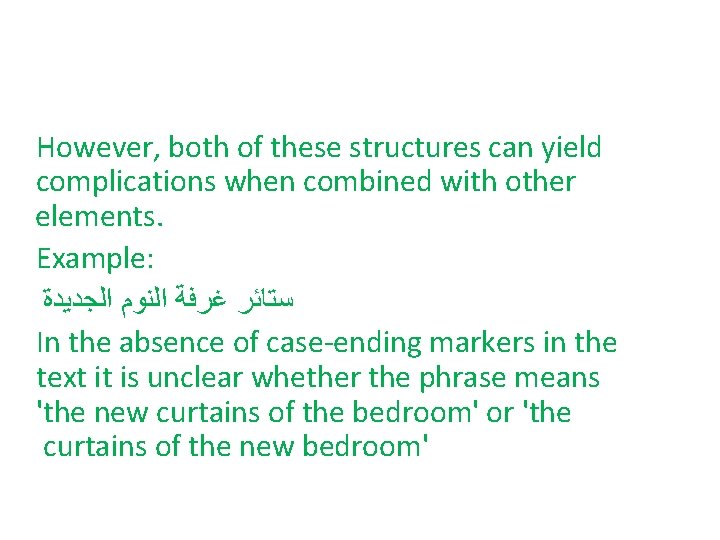
However, both of these structures can yield complications when combined with other elements. Example: ﺳﺘﺎﺋﺮ ﻏﺮﻓﺔ ﺍﻟﻨﻮﻡ ﺍﻟﺠﺪﻳﺪﺓ In the absence of case-ending markers in the text it is unclear whether the phrase means 'the new curtains of the bedroom' or 'the curtains of the new bedroom'
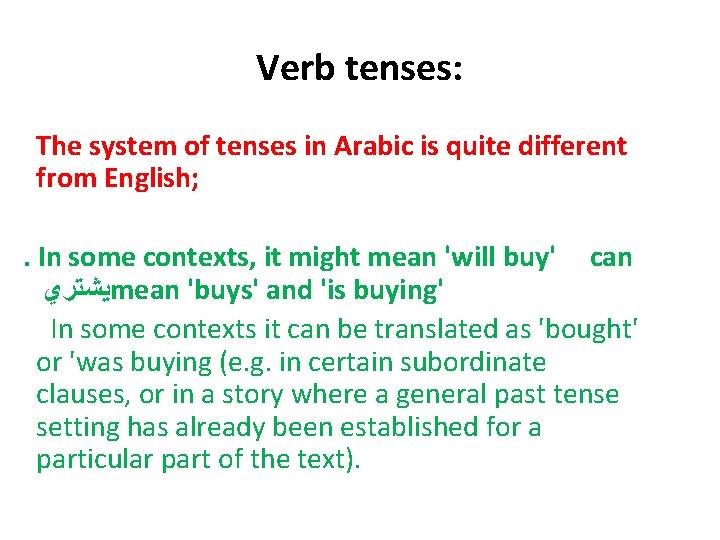
Verb tenses: The system of tenses in Arabic is quite different from English; . In some contexts, it might mean 'will buy' can ﻳﺸﺘﺮﻱ mean 'buys' and 'is buying' In some contexts it can be translated as 'bought' or 'was buying (e. g. in certain subordinate clauses, or in a story where a general past tense setting has already been established for a particular part of the text).
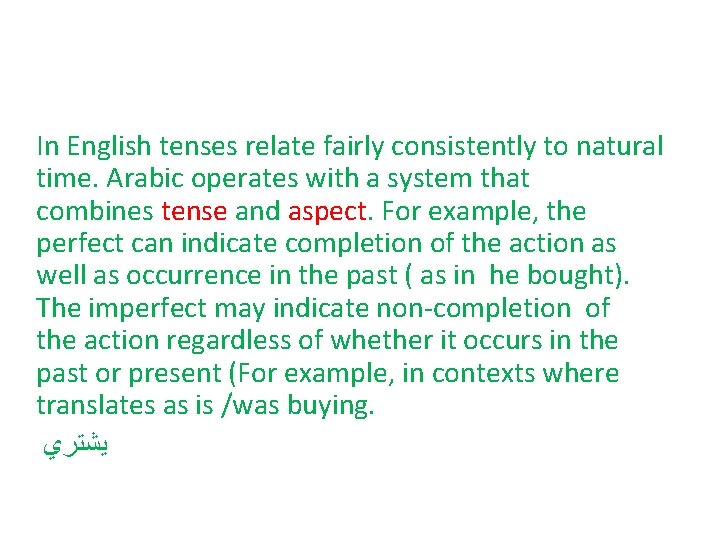
In English tenses relate fairly consistently to natural time. Arabic operates with a system that combines tense and aspect. For example, the perfect can indicate completion of the action as well as occurrence in the past ( as in he bought). The imperfect may indicate non-completion of the action regardless of whether it occurs in the past or present (For example, in contexts where translates as is /was buying. ﻳﺸﺘﺮﻱ
The actual time significance of the imperfect in particular is very often context- dependent. To sum up, translators should give priority to the exact meaning of word in a particular context and to constructing idiomatic TL sentences, even where this entails translation loss.
Morphological repetition: The most important forms of morphological repetition which are of most importance for translation are: Pattern repetition, root repetition and suffix repetition. 1. Pattern repetition It involves the repetition of the same pattern in two or more words ﻓﻌﻞ , ﻓﺎﻋﻞ , ﻣﻔﻌﻮﻝ , , ﻓﻌﻞ , ()ﻣﻔﻌﻠﺔ in close proximity,
2. Root repetition It involves repetition of the same root in two or more words in close proximity. They provide textual cohesion as well as stylistic and other purposes e. g 'The big old house' ﺍﻟﺒﻴﺖ ﺍﻟﻘﺪﻳﻢ ﺍﻟﻜﺒﻴﺮ
pattern does not have any ﻓﻌﻴﻞ Here the particular significance. However, when Pattern repetition is combined with some kind of semantic relationship, they give additional emphasis
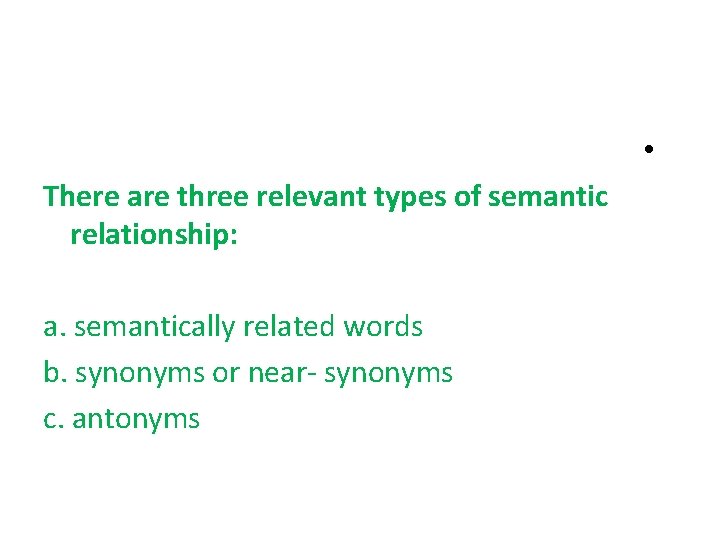
• There are three relevant types of semantic relationship: a. semantically related words b. synonyms or near- synonyms c. antonyms
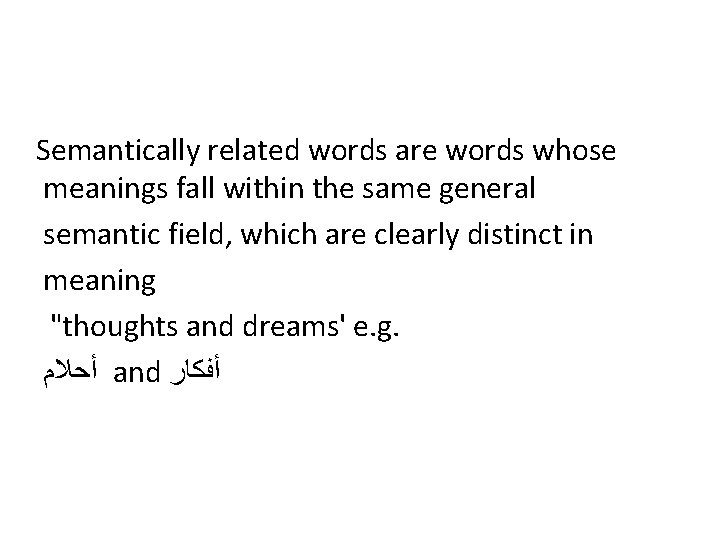
Semantically related words are words whose meanings fall within the same general semantic field, which are clearly distinct in meaning "thoughts and dreams' e. g. ﺃﺤﻼﻡ and ﺃﻔﻜﺎﺭ
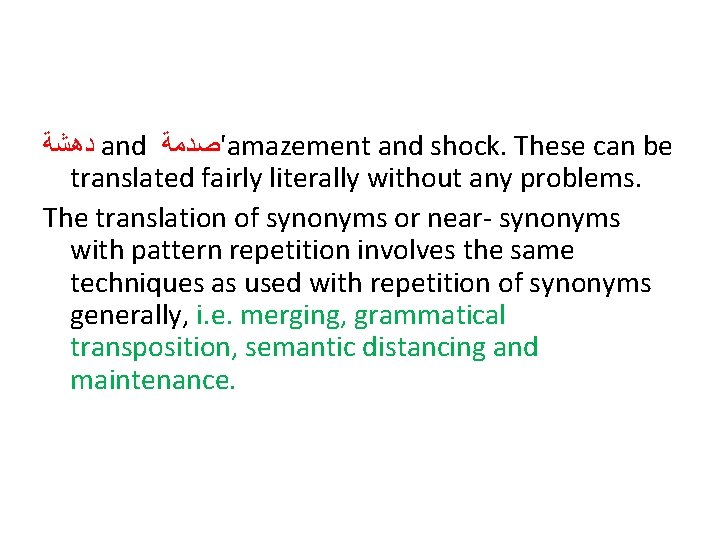
ﺩﻫﺸﺔ and 'ﺻﺪﻣﺔ amazement and shock. These can be translated fairly literally without any problems. The translation of synonyms or near- synonyms with pattern repetition involves the same techniques as used with repetition of synonyms generally, i. e. merging, grammatical transposition, semantic distancing and maintenance.
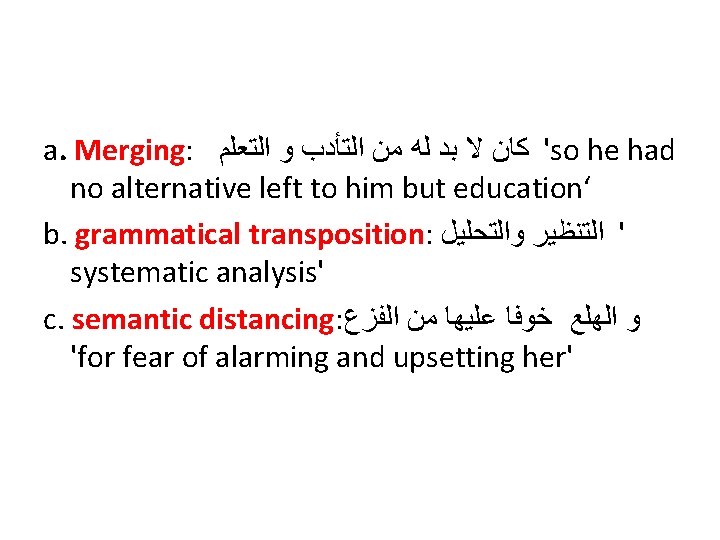
a. Merging: ' ﻛﺎﻥ ﻻ ﺑﺪ ﻟﻪ ﻣﻦ ﺍﻟﺘﺄﺪﺏ ﻭ ﺍﻟﺘﻌﻠﻢ so he had no alternative left to him but education‘ b. grammatical transposition: ' ﺍﻟﺘﻨﻈﻴﺮ ﻭﺍﻟﺘﺤﻠﻴﻞ systematic analysis' c. semantic distancing: ﻭ ﺍﻟﻬﻠﻊ ﺧﻮﻓﺎ ﻋﻠﻴﻬﺎ ﻣﻦ ﺍﻟﻔﺰﻉ 'for fear of alarming and upsetting her'
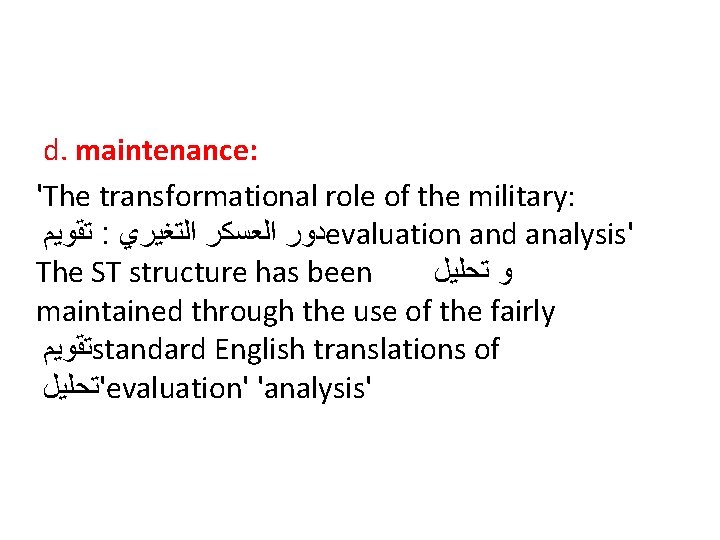
d. maintenance: 'The transformational role of the military: ﺗﻘﻮﻳﻢ : ﺩﻭﺭ ﺍﻟﻌﺴﻜﺮ ﺍﻟﺘﻐﻴﺮﻱ evaluation and analysis' The ST structure has been ﻭ ﺗﺤﻠﻴﻞ maintained through the use of the fairly ﺗﻘﻮﻳﻢ standard English translations of 'ﺗﺤﻠﻴﻞ evaluation' 'analysis'
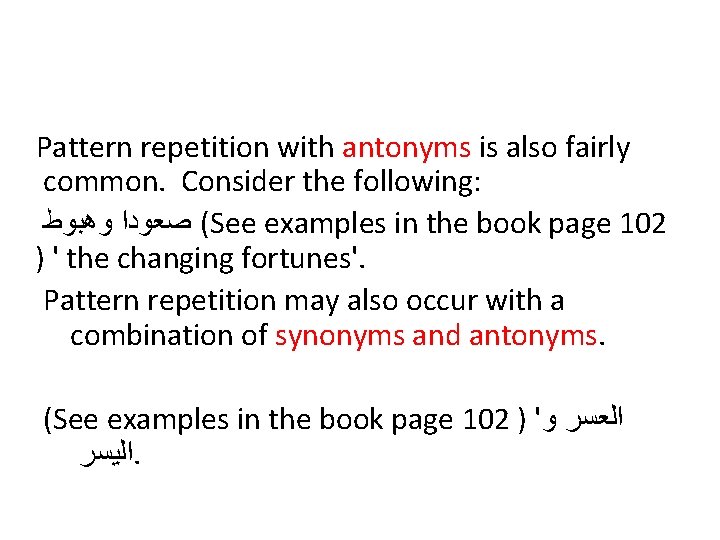
Pattern repetition with antonyms is also fairly common. Consider the following: ( ﺻﻌﻮﺩﺍ ﻭﻫﺒﻮﻃ See examples in the book page 102 ) ' the changing fortunes'. Pattern repetition may also occur with a combination of synonyms and antonyms. (See examples in the book page 102 ) ' ﺍﻟﻌﺴﺮ ﻭ ﺍﻟﻴﺴﺮ.