
Grammar Year 9 Reminder of Grammar In this
- Slides: 30
Grammar Year 9
Reminder of Grammar • In this power point you will find the basics of grammar explained in a very short and easy way. • The Power Point is based on the test you did in class. • You can find good websites in the end of this Power Point. Explanations: If you need more or other explanation I suggest you go to http: //www. webenglishteacher. com/grammar. html or http: //www. englischhilfen. de/en/exercises_list/alle_grammar. htm
Plural
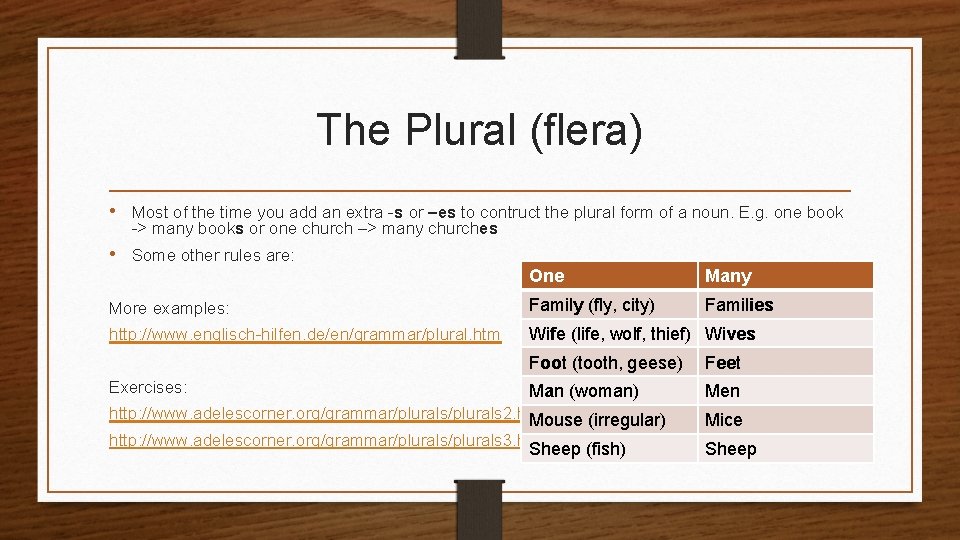
The Plural (flera) • Most of the time you add an extra -s or –es to contruct the plural form of a noun. E. g. one book -> many books or one church –> many churches • Some other rules are: One Many More examples: Family (fly, city) Families http: //www. englisch-hilfen. de/en/grammar/plural. htm Wife (life, wolf, thief) Wives Exercises: Foot (tooth, geese) Feet Man (woman) Men http: //www. adelescorner. org/grammar/plurals 2. html Mouse (irregular) Mice http: //www. adelescorner. org/grammar/plurals 3. html Sheep (fish)
Apostrophe Short form and the genitive (ägande)
The Apostrophe The apostrophe can be used for two different things: 1. Something has been taken away, a short form: isn’t, can’t, it’s 2. To show that someone owns something, this is called the Genitive: Ronny's brother http: //www. englisch-hilfen. de/en/grammar/genitiv. htm
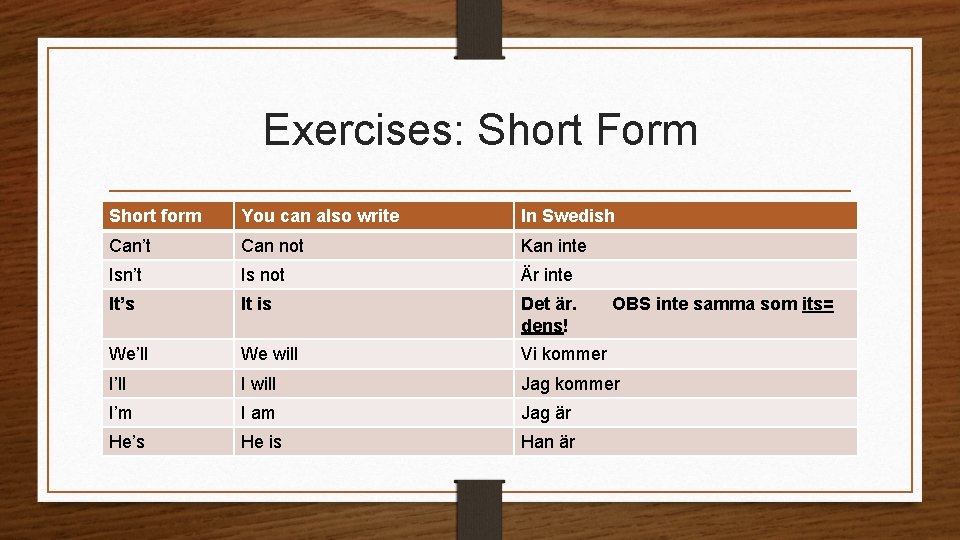
Exercises: Short Form Short form You can also write In Swedish Can’t Can not Kan inte Isn’t Is not Är inte It’s It is Det är. dens! We’ll We will Vi kommer I’ll I will Jag kommer I’m I am Jag är He’s He is Han är OBS inte samma som its=
Genitive Singular • Add 's to the noun. • Mandy's brother John plays football. • My teacher's name is. . . http: //www. englisch-hilfen. de/en/grammar/genitiv. htm
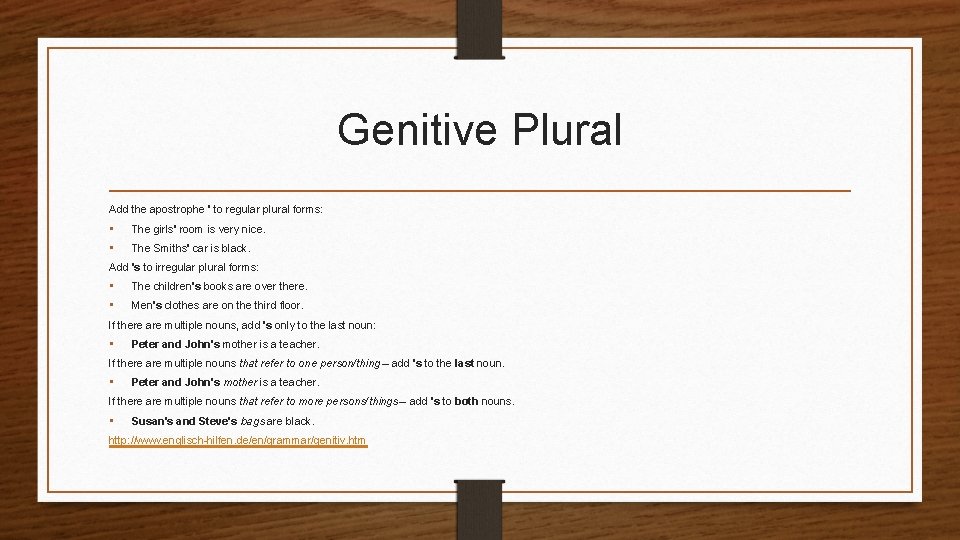
Genitive Plural Add the apostrophe ' to regular plural forms: • • The girls' room is very nice. The Smiths' car is black. Add 's to irregular plural forms: • • The children's books are over there. Men's clothes are on the third floor. If there are multiple nouns, add 's only to the last noun: • Peter and John's mother is a teacher. If there are multiple nouns that refer to one person/thing – add 's to the last noun. • Peter and John's mother is a teacher. If there are multiple nouns that refer to more persons/things – add 's to both nouns. • Susan's and Steve's bags are black. http: //www. englisch-hilfen. de/en/grammar/genitiv. htm
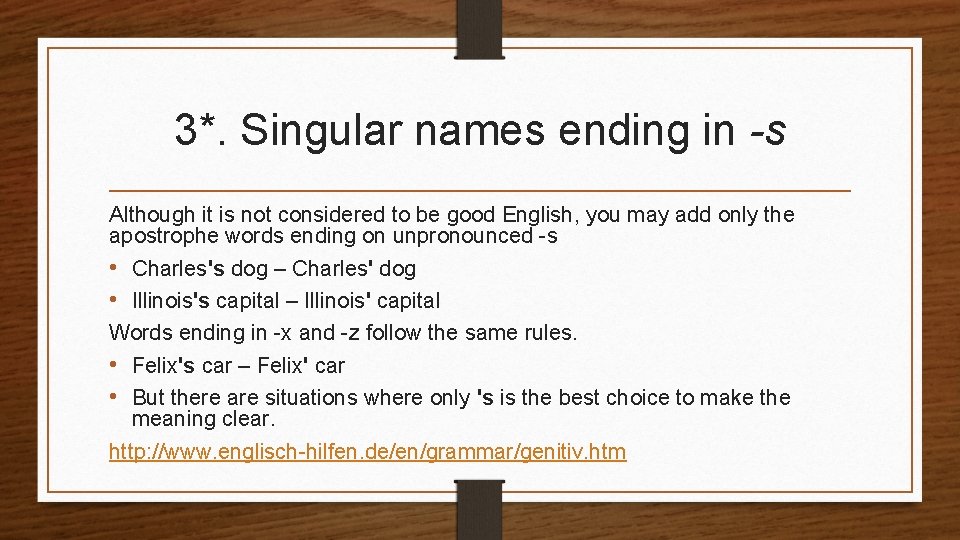
3*. Singular names ending in -s Although it is not considered to be good English, you may add only the apostrophe words ending on unpronounced -s • Charles's dog – Charles' dog • Illinois's capital – Illinois' capital Words ending in -x and -z follow the same rules. • Felix's car – Felix' car • But there are situations where only 's is the best choice to make the meaning clear. http: //www. englisch-hilfen. de/en/grammar/genitiv. htm
-s or of
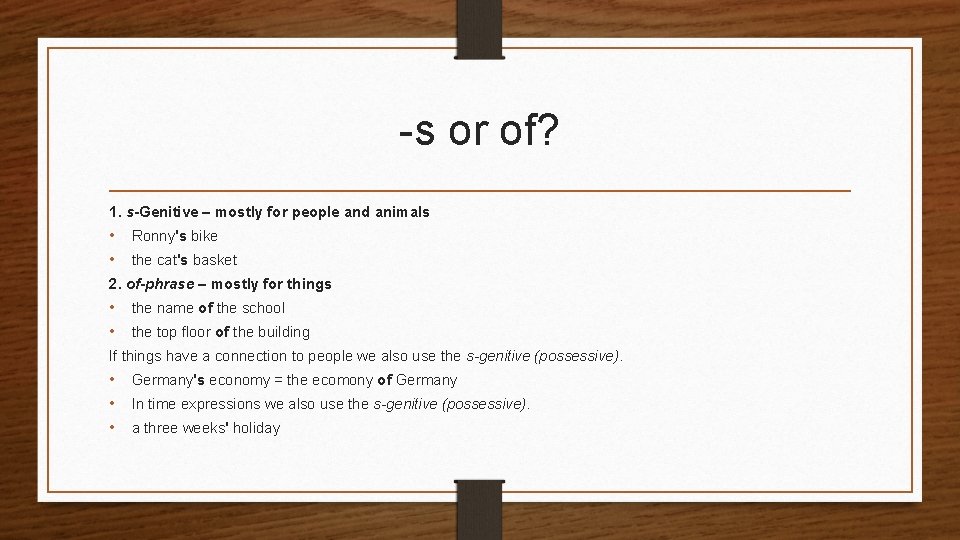
-s or of? 1. s-Genitive – mostly for people and animals • Ronny's bike • the cat's basket 2. of-phrase – mostly for things • the name of the school • the top floor of the building If things have a connection to people we also use the s-genitive (possessive). • Germany's economy = the ecomony of Germany • In time expressions we also use the s-genitive (possessive). • a three weeks' holiday
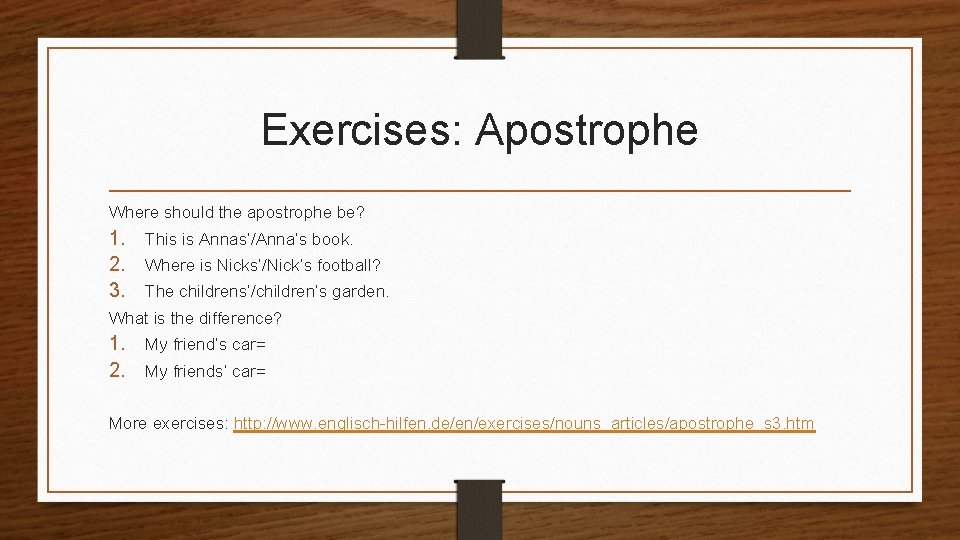
Exercises: Apostrophe Where should the apostrophe be? 1. This is Annas’/Anna’s book. 2. Where is Nicks’/Nick’s football? 3. The childrens’/children’s garden. What is the difference? 1. My friend’s car= 2. My friends’ car= More exercises: http: //www. englisch-hilfen. de/en/exercises/nouns_articles/apostrophe_s 3. htm
is/are
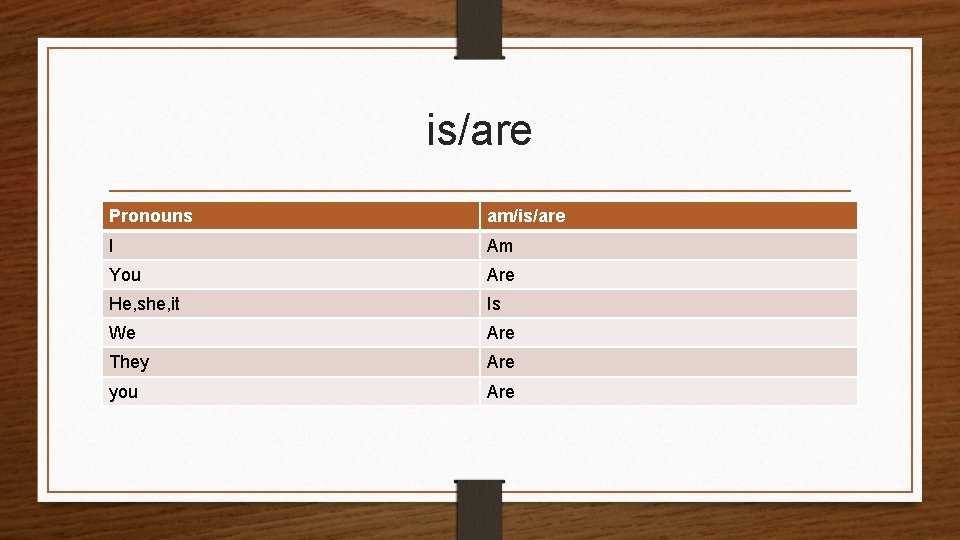
is/are Pronouns am/is/are I Am You Are He, she, it Is We Are They Are you Are
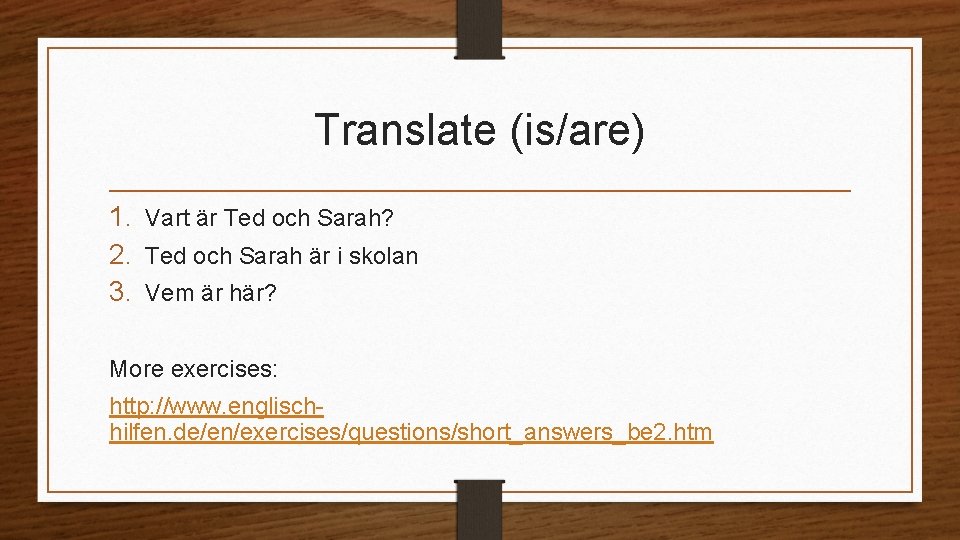
Translate (is/are) 1. Vart är Ted och Sarah? 2. Ted och Sarah är i skolan 3. Vem är här? More exercises: http: //www. englischhilfen. de/en/exercises/questions/short_answers_be 2. htm
was/were
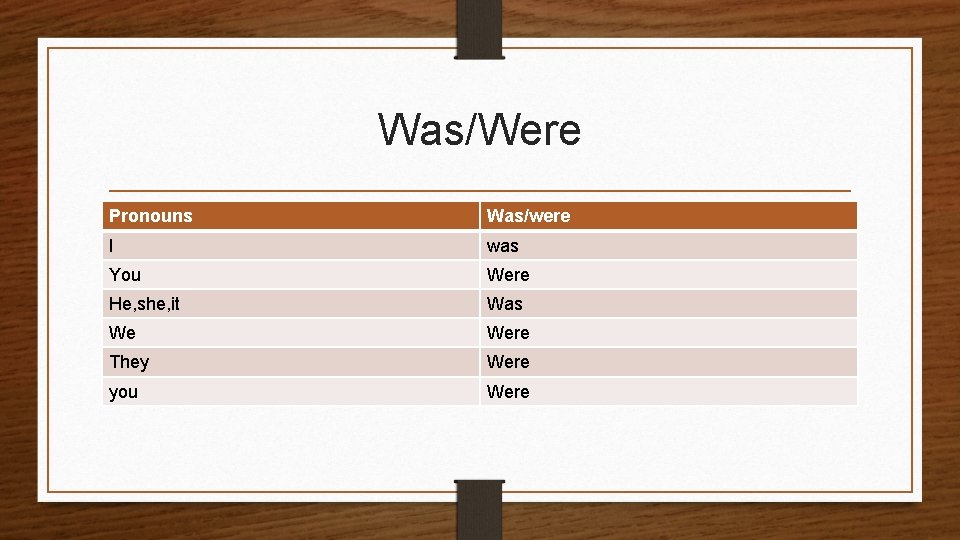
Was/Were Pronouns Was/were I was You Were He, she, it Was We Were They Were you Were
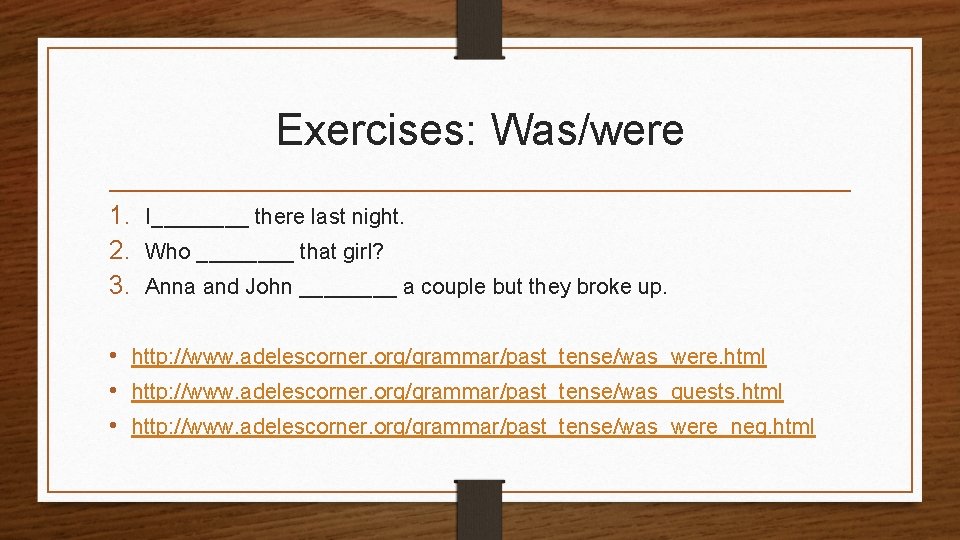
Exercises: Was/were 1. I____ there last night. 2. Who ____ that girl? 3. Anna and John ____ a couple but they broke up. • http: //www. adelescorner. org/grammar/past_tense/was_were. html • http: //www. adelescorner. org/grammar/past_tense/was_quests. html • http: //www. adelescorner. org/grammar/past_tense/was_were_neg. html
Question Words
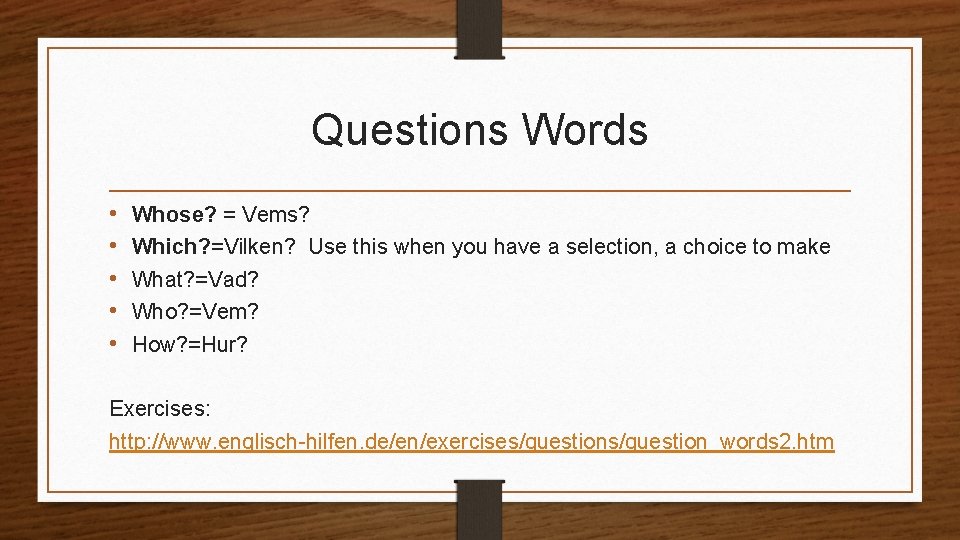
Questions Words • • • Whose? = Vems? Which? =Vilken? Use this when you have a selection, a choice to make What? =Vad? Who? =Vem? How? =Hur? Exercises: http: //www. englisch-hilfen. de/en/exercises/question_words 2. htm
there is (there's) and it is (it's)
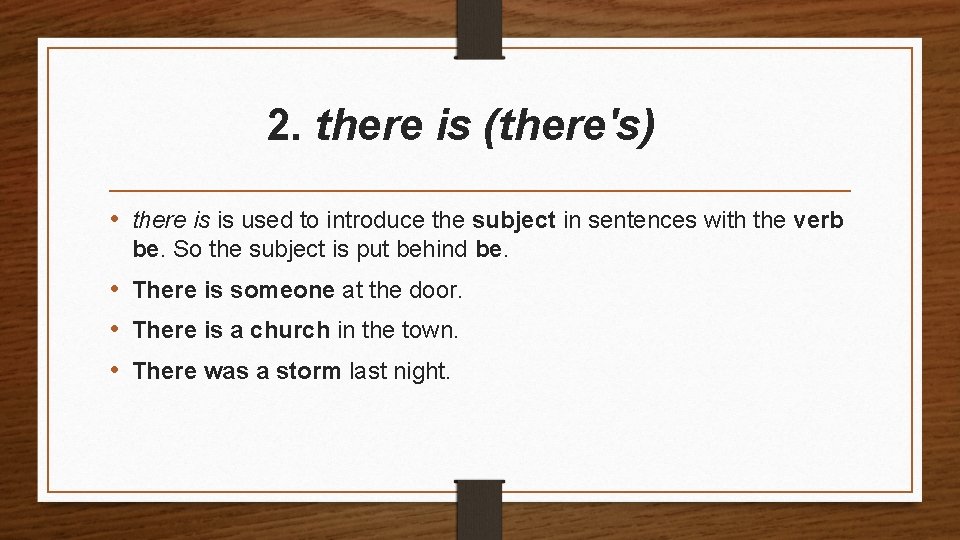
2. there is (there's) • there is is used to introduce the subject in sentences with the verb be. So the subject is put behind be. • There is someone at the door. • There is a church in the town. • There was a storm last night.
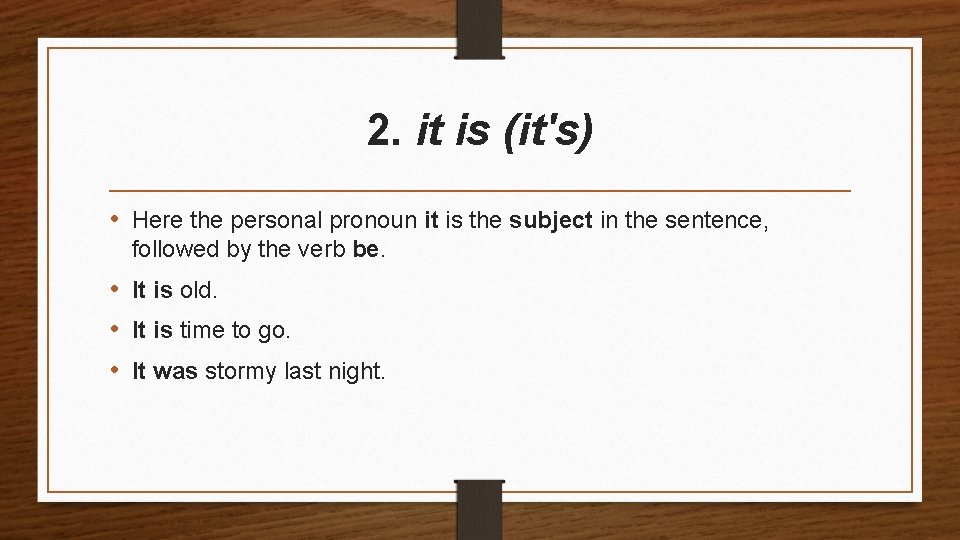
2. it is (it's) • Here the personal pronoun it is the subject in the sentence, followed by the verb be. • It is old. • It is time to go. • It was stormy last night.
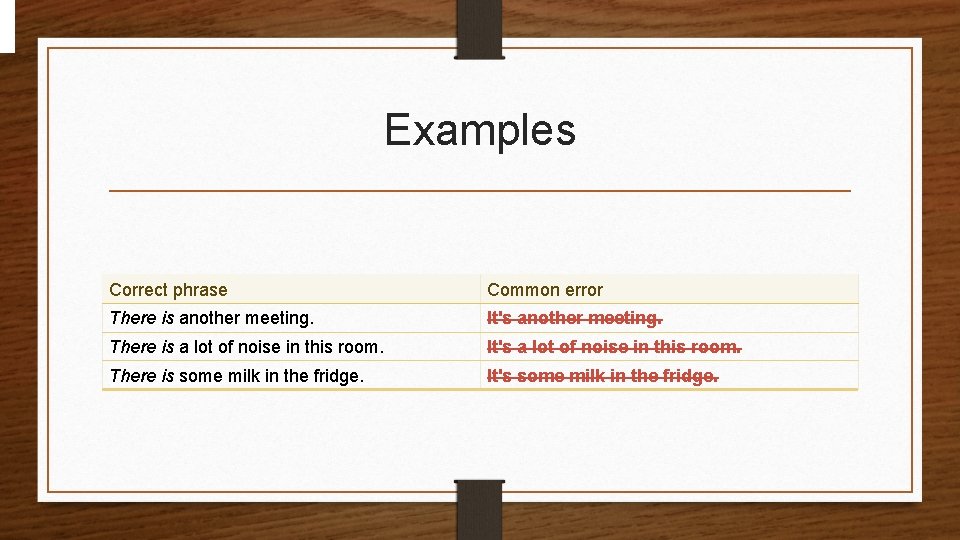
Examples Correct phrase Common error There is another meeting. It's another meeting. There is a lot of noise in this room. It's a lot of noise in this room. There is some milk in the fridge. It's some milk in the fridge.
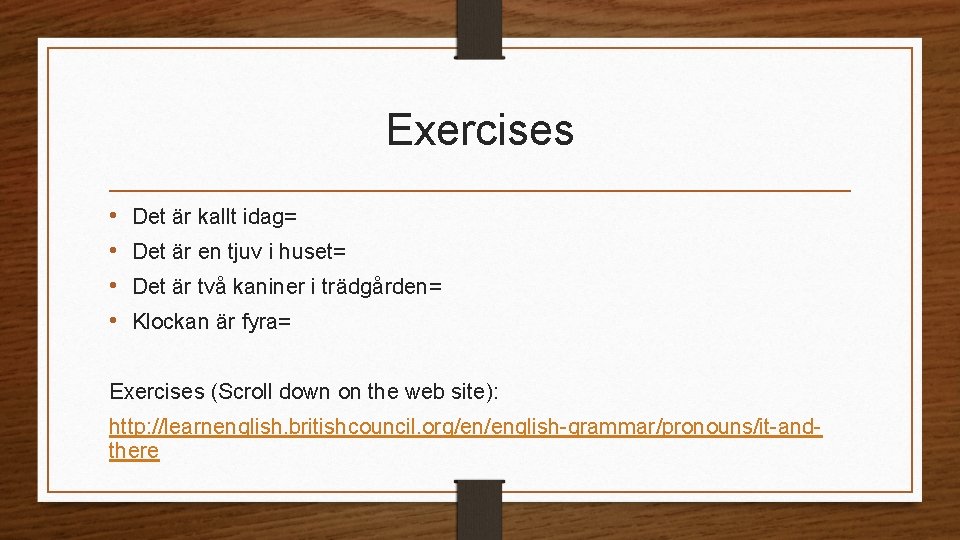
Exercises • • Det är kallt idag= Det är en tjuv i huset= Det är två kaniner i trädgården= Klockan är fyra= Exercises (Scroll down on the web site): http: //learnenglish. britishcouncil. org/en/english-grammar/pronouns/it-andthere
Spelling
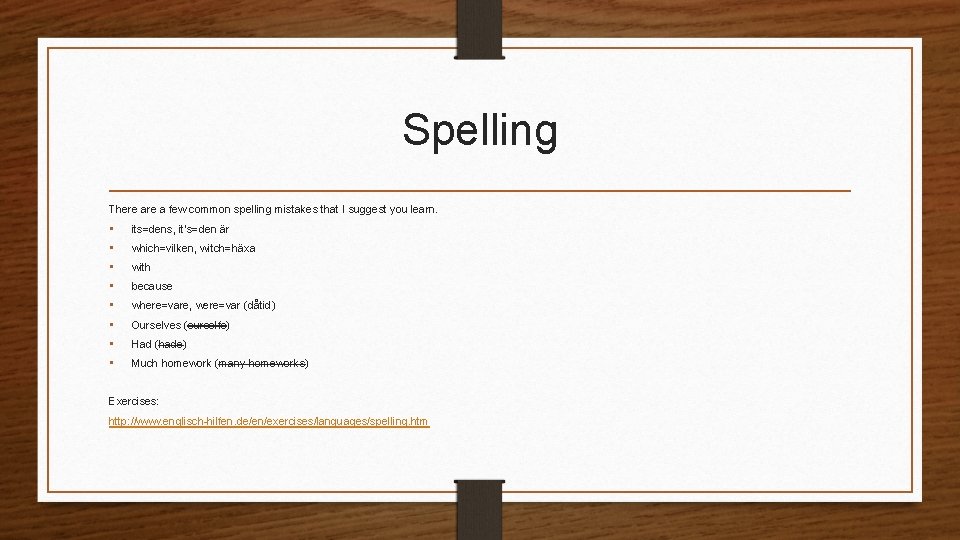
Spelling There a few common spelling mistakes that I suggest you learn. • • its=dens, it’s=den är which=vilken, witch=häxa with because where=vare, were=var (dåtid) Ourselves (ourselfs) Had (hade) Much homework (many homeworks) Exercises: http: //www. englisch-hilfen. de/en/exercises/languages/spelling. htm
Still Want More Grammar?
More Exercises on Grammar Vocabulary: http: //www. englisch-hilfen. de/en/exercises_list/alle_words. htm Grammar: • http: //www. englisch-hilfen. de/en/exercises_list/alle_grammar. htm • http: //www. adelescorner. org/