
Grammar Unit 50 Questions Do you know where




- Slides: 15
Grammar - Unit 50 Questions (Do you know where …? / He asked me where …)
Agenda q Learning objectives q Example Set A – Forming questions using when why and could q Example Set B – Direct and reported speech Questions 2 (Do you know where …? / He asked me where …) 2
Agenda Ø Learning objectives q Example Set A – Forming questions using when why and could q Example Set B – Direct and reported speech Questions 2 (Do you know where …? / He asked me where …) 3
Learning Objectives q Using Do you know where…? in questions. q Using I don’t know why…? q Using Could you tell me what…? q Using direct and reported speech in questions. Questions 2 (Do you know where …? / He asked me where …) 4
Agenda ü Learning objectives Ø Example Set A – Forming questions using when why and could q Example Set B – Direct and reported speech Questions 2 (Do you know where …? / He asked me where …) 5
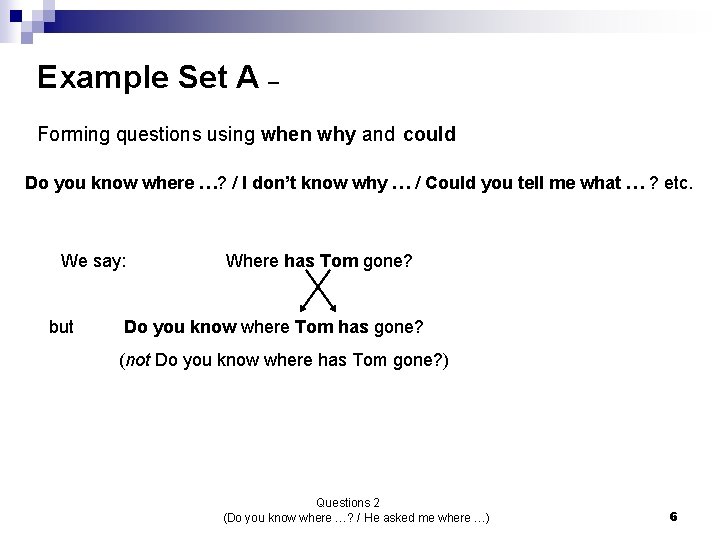
Example Set A – Forming questions using when why and could Do you know where …? / I don’t know why … / Could you tell me what … ? etc. We say: but Where has Tom gone? Do you know where Tom has gone? (not Do you know where has Tom gone? ) Questions 2 (Do you know where …? / He asked me where …) 6
Continue… When the question (Where has Tom gone? ) is part of a longer sentence ( Do you know …? / I don’t know … / Can you tell me …? etc. ), the word order changes. We say: q What time is it? but q Who are those people? Do you know what time it is? I don’t know who those people are. q Where can I find Linda? Can you tell me where I can find Linda? q How much will it cost? Do you have any idea how much it will cost? Questions 2 (Do you know where …? / He asked me where …) 7
Continue… Be careful with do/does/did questions. We say: q What time does the film begin? but Do you know what time the film begins? (not does the film begin) q What do you mean? Please explain what you mean. q Why did she leave early? I wonder why she left early. Questions 2 (Do you know where …? / He asked me where …) 8
Continue… Use if or whether where there is no other question word ( what, why etc. ): q Did anybody see you? but Do you know if anybody saw you? or … whether anybody saw you? Questions 2 (Do you know where …? / He asked me where …) 9
Agenda ü Learning objectives ü Example Set A – Forming questions using when why and could Ø Example Set B – Direct and reported speech Questions 2 (Do you know where …? / He asked me where …) 10
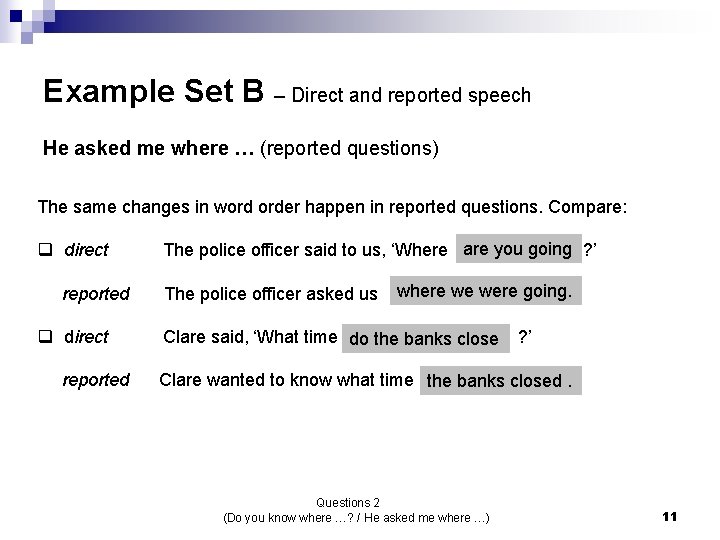
Example Set B – Direct and reported speech He asked me where … (reported questions) The same changes in word order happen in reported questions. Compare: q direct reported The police officer said to us, ‘Where are you going ? ’ The police officer asked us where we were going. Clare said, ‘What time do the banks close ? ’ Clare wanted to know what time the banks closed. Questions 2 (Do you know where …? / He asked me where …) 11
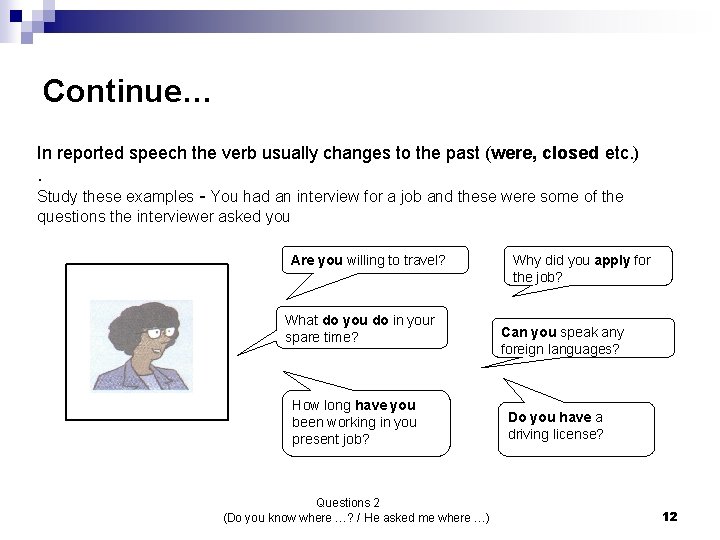
Continue… In reported speech the verb usually changes to the past (were, closed etc. ). Study these examples - You had an interview for a job and these were some of the questions the interviewer asked you Are you willing to travel? What do you do in your spare time? How long have you been working in you present job? Questions 2 (Do you know where …? / He asked me where …) Why did you apply for the job? Can you speak any foreign languages? Do you have a driving license? 12
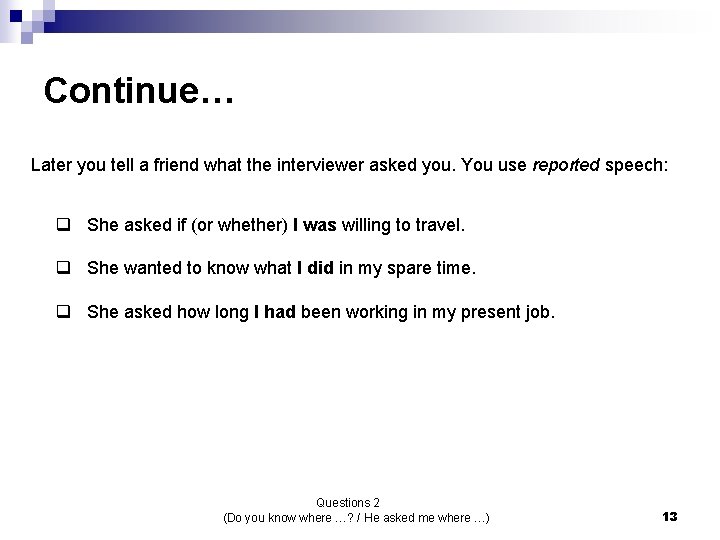
Continue… Later you tell a friend what the interviewer asked you. You use reported speech: q She asked if (or whether) I was willing to travel. q She wanted to know what I did in my spare time. q She asked how long I had been working in my present job. Questions 2 (Do you know where …? / He asked me where …) 13
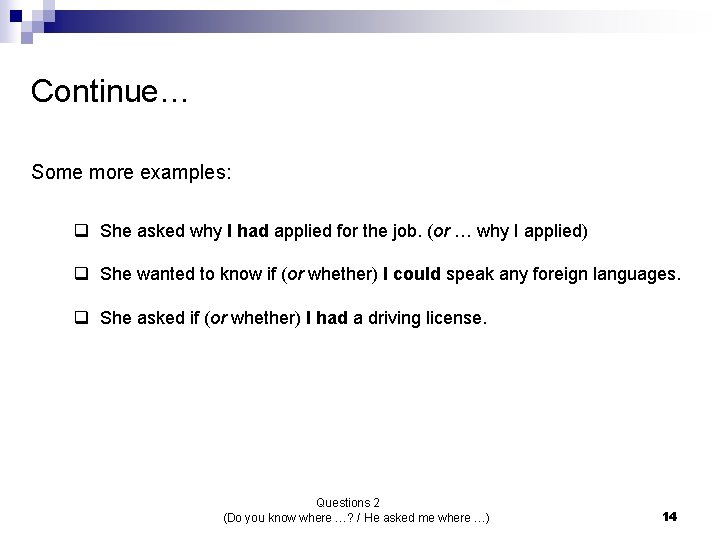
Continue… Some more examples: q She asked why I had applied for the job. (or … why I applied) q She wanted to know if (or whether) I could speak any foreign languages. q She asked if (or whether) I had a driving license. Questions 2 (Do you know where …? / He asked me where …) 14
Summary ü Learning objectives ü Example Set A – Forming questions using when why and could ü Example Set B – Direct and reported speech Questions 2 (Do you know where …? / He asked me where …) 15