
Grammar Starter Adverbials and Fronted Adverbials tell us
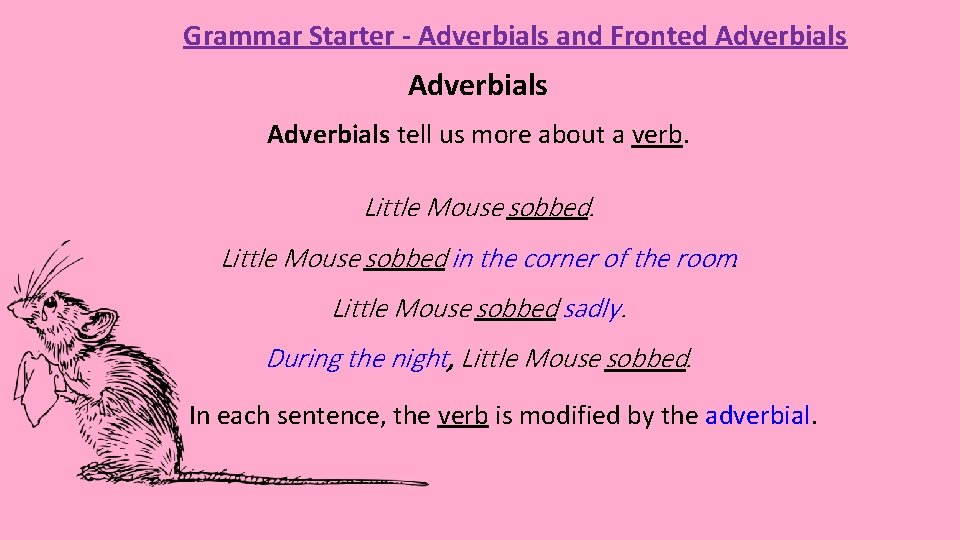
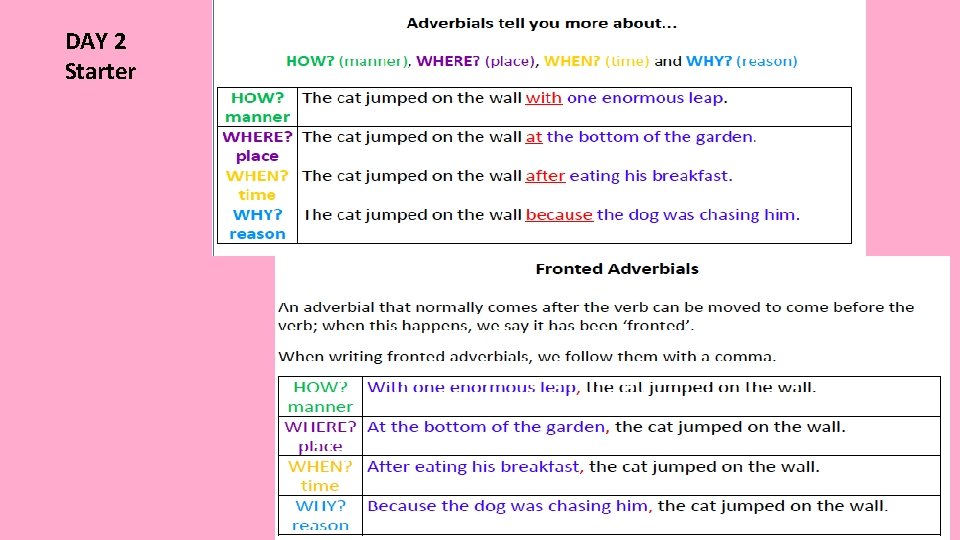
Grammar Starter - Adverbials and Fronted Adverbials tell us more about a verb. Little Mouse sobbed in the corner of the room. Little Mouse sobbed sadly. During the night, Little Mouse sobbed. In each sentence, the verb is modified by the adverbial.
Adverbials answer the questions… Where? When? How?

Adverbials Little Mouse quivered behind the door. Inside the cupboard, Little Mouse quivered with his mouse friends. Little Mouse quivered outside the room. Adverbials answer the question: Where?
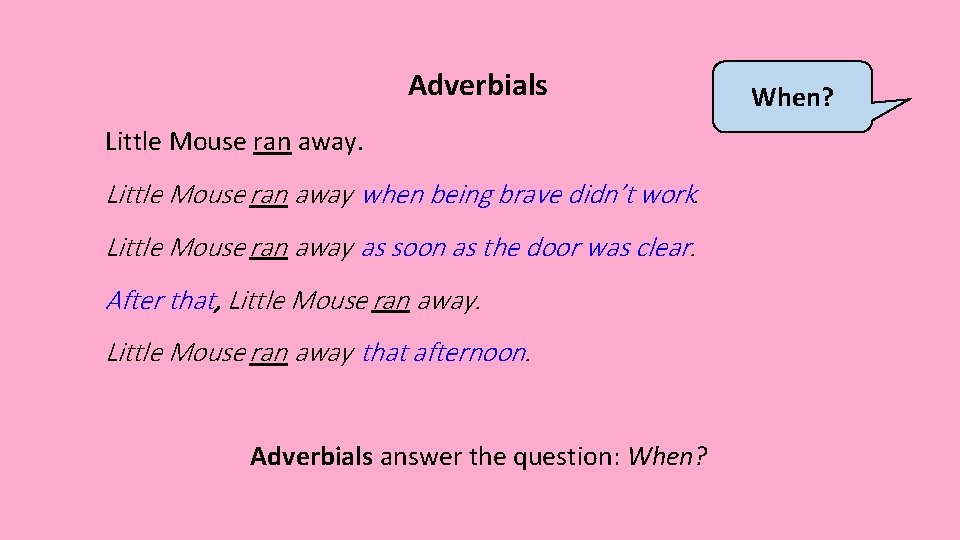
Adverbials Little Mouse ran away when being brave didn’t work. Little Mouse ran away as soon as the door was clear. After that, Little Mouse ran away that afternoon. Adverbials answer the question: When?
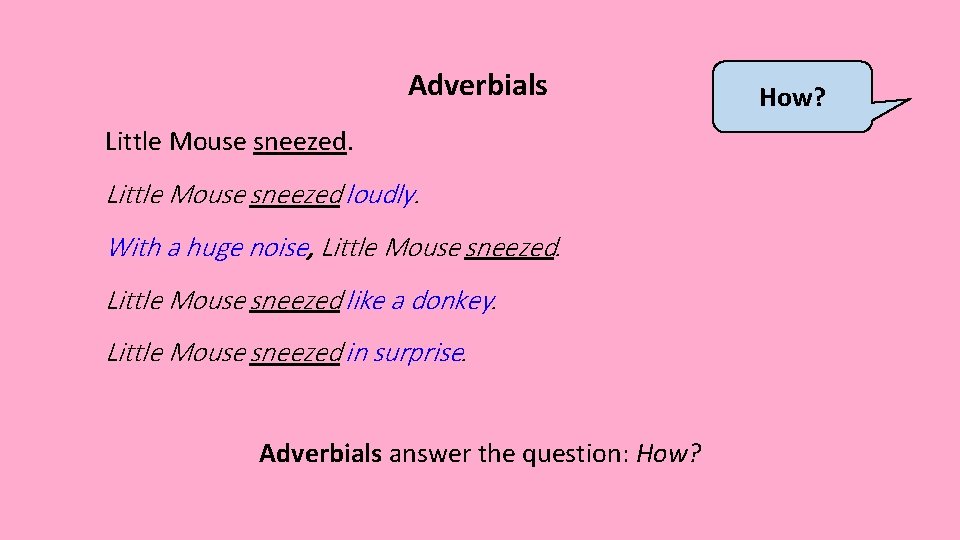
Adverbials Little Mouse sneezed loudly. With a huge noise, Little Mouse sneezed like a donkey. Little Mouse sneezed in surprise. Adverbials answer the question: How?
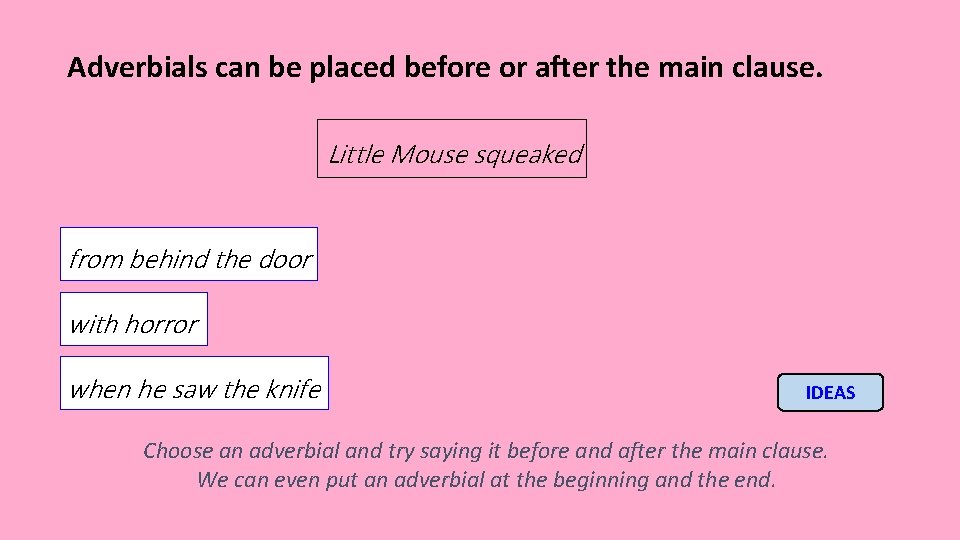
Adverbials can be placed before or after the main clause. Little Mouse squeaked from behind the door with horror when he saw the knife IDEAS Choose an adverbial and try saying it before and after the main clause. We can even put an adverbial at the beginning and the end.

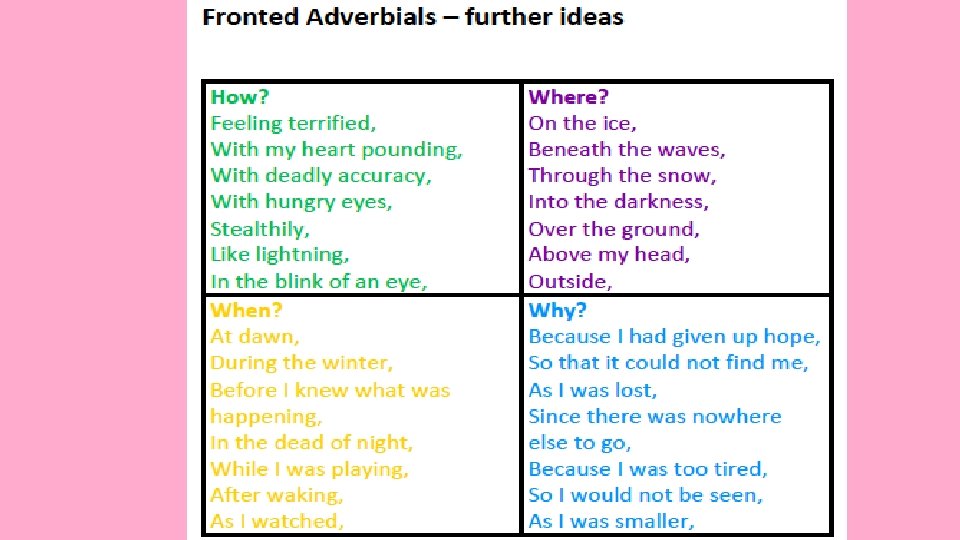
Fronted Adverbials When an adverbial appears in front of the sentence it is modifying… it is called a fronted adverbial. During the storm, Little Mouse cowered in the corner. With cruel eyes, the spider smiled. Eventually, Little Mouse calmed down. After screaming failed, Little Mouse decided to ask the spider politely to leave. Fronted adverbials are punctuated by a comma.
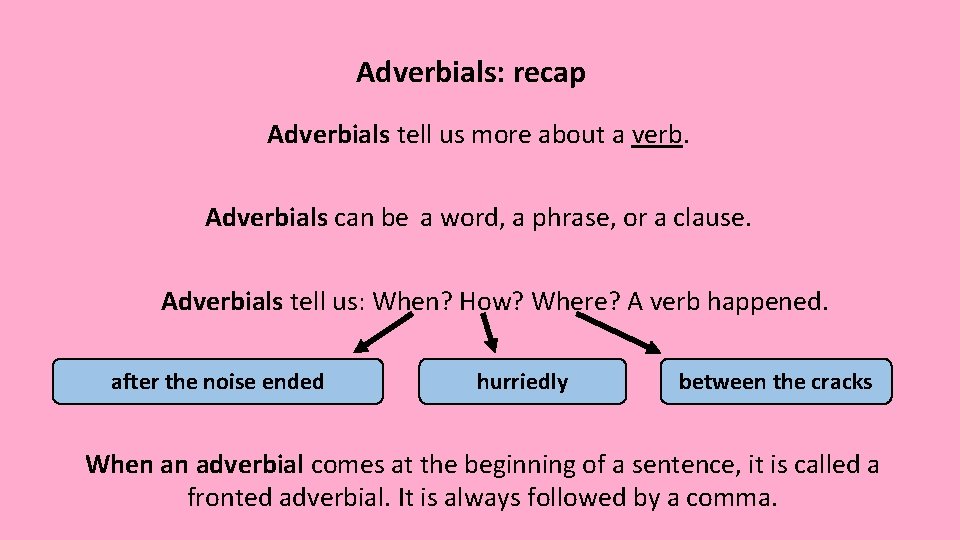
Adverbials: recap Adverbials tell us more about a verb. Adverbials can be a word, a phrase, or a clause. Adverbials tell us: When? How? Where? A verb happened. after the noise ended hurriedly between the cracks When an adverbial comes at the beginning of a sentence, it is called a fronted adverbial. It is always followed by a comma.
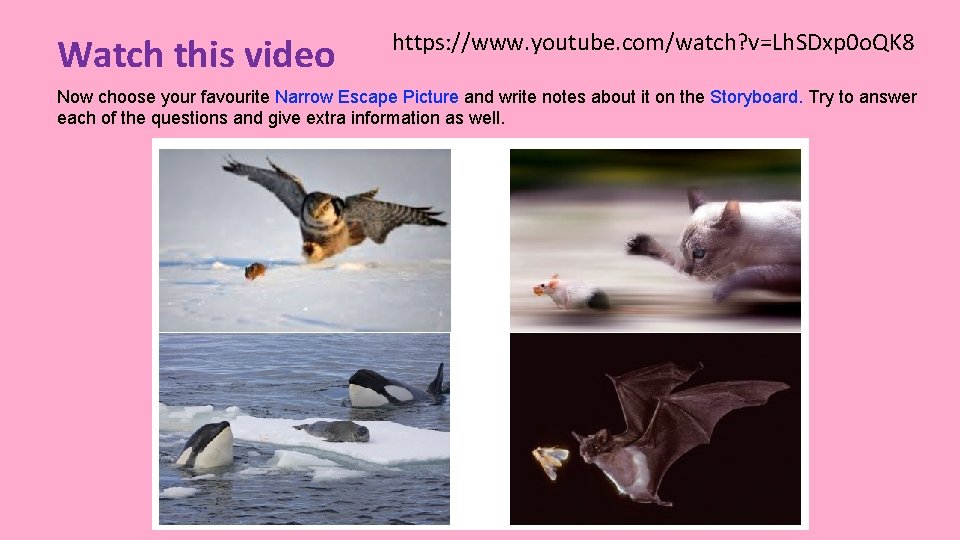
Watch this video https: //www. youtube. com/watch? v=Lh. SDxp 0 o. QK 8 Now choose your favourite Narrow Escape Picture and write notes about it on the Storyboard. Try to answer each of the questions and give extra information as well.
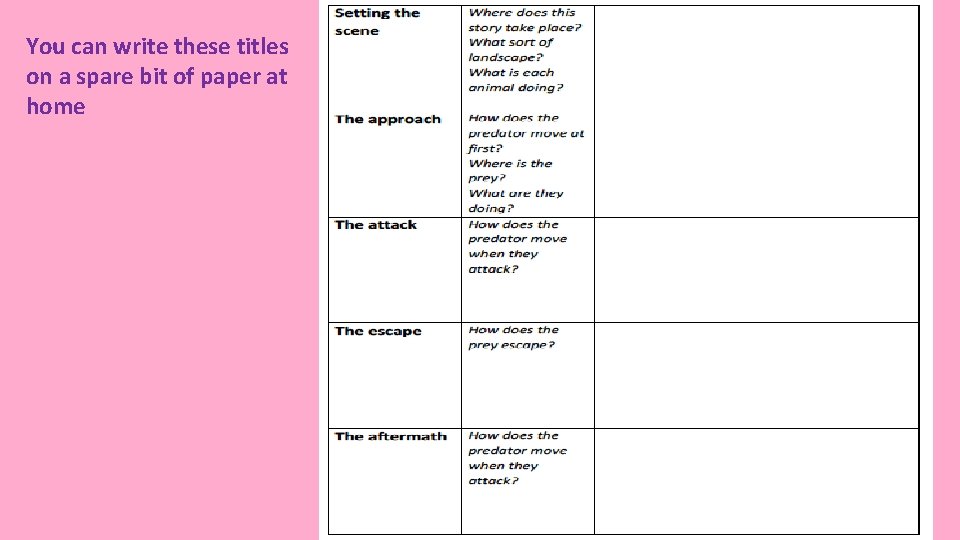
You can write these titles on a spare bit of paper at home
DAY 2 Starter
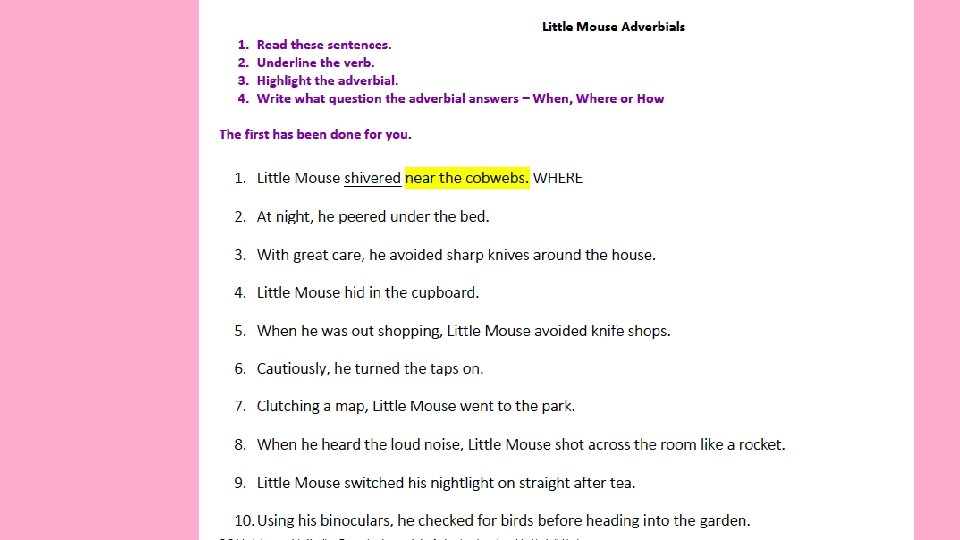
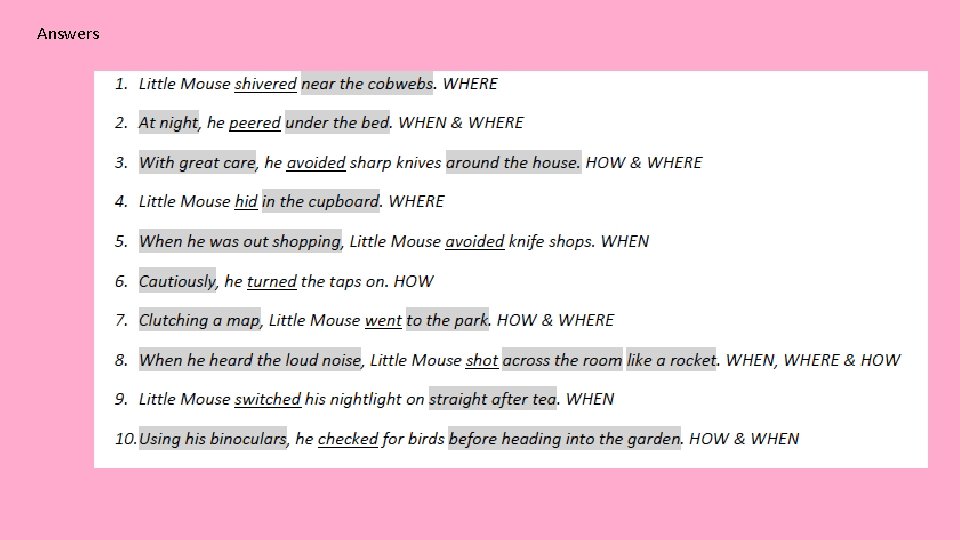
Answers
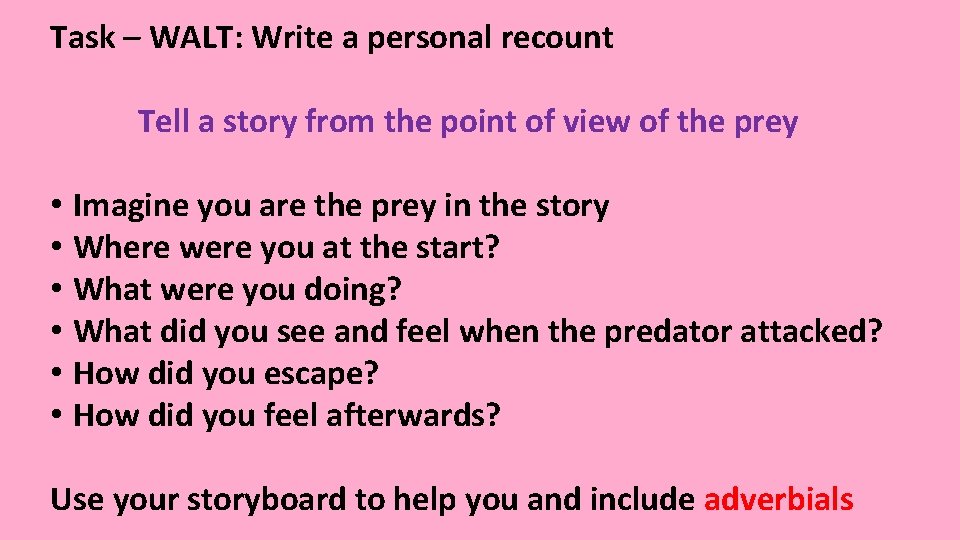
Task – WALT: Write a personal recount Tell a story from the point of view of the prey • Imagine you are the prey in the story • Where were you at the start? • What were you doing? • What did you see and feel when the predator attacked? • How did you escape? • How did you feel afterwards? Use your storyboard to help you and include adverbials
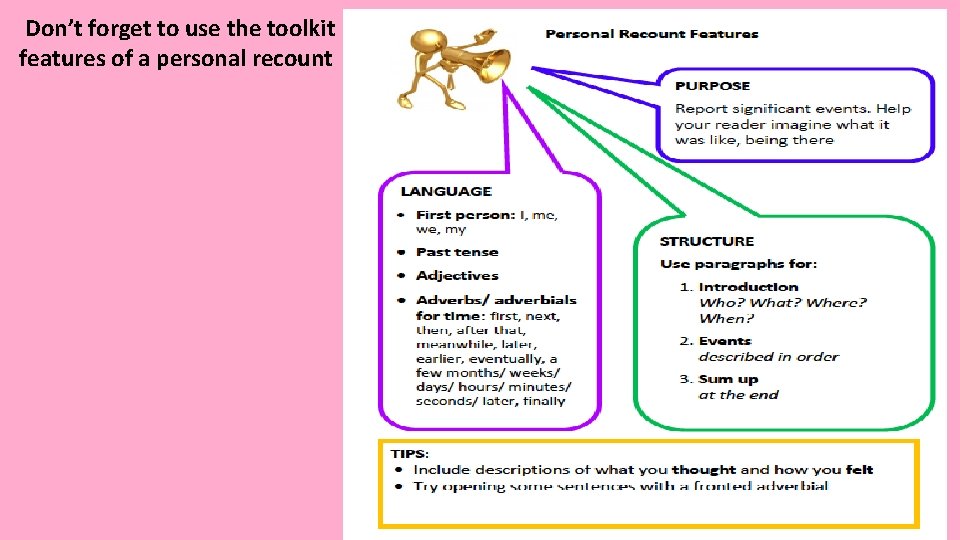
Don’t forget to use the toolkit features of a personal recount
- Slides: 16