
Grammar Review Nouns Noun A word that names




- Slides: 9
Grammar Review Nouns
Noun • A word that names something: a person, a place, a thing, or an idea • https: //www. youtube. com/ watch? v=8 JAd. Vk. RPh. Q
CLASSES OF NOUNS �COMMON NOUNS: flower, cloud, boy, chair, painting �PROPER NOUNS: Mount Sentinel, Jacob, Ms. Martin, Mona Lisa �ABSTRACT NOUNS: peace, love, harmony, pride, anger �CONCRETE NOUNS: grass, whisper, Lance Armstrong �COLLECTIVE NOUN: United States, Los Angeles Lakers, team, crowd, community
FORMS OF NOUNS �SINGULAR NOUNS: actor, stadium, bully, child �PLURAL NOUNS: actors, stadiums, bullies, children �MASCULINE NOUNS: uncle, brother, rooster, bull �FEMININE NOUNS: aunt, sister, woman, hen �NEUTER (w/out gender): tree, cobweb, fish �INDEFINITE (either): doctor, parent, plumber
NOUN AS THE SUBJECT � Example: Mrs. Martin’s cat ate all of the watermelon. ” (http: //www. youtube. com/watch? v=i 3 c. HNObc. Eh 8) � Example: “Patsy’s heart was beating very wildly beneath his jacket. ” �Paun Dunbar, “The Finish of Patsy Barnes” � The cat is doing the eating, so it’s the subject of the sentence. � Heart is the subject of the sentence; it is what is doing the beating. � We call this kind of noun a SUBJECTIVE NOUN (just remember SUBJECT)
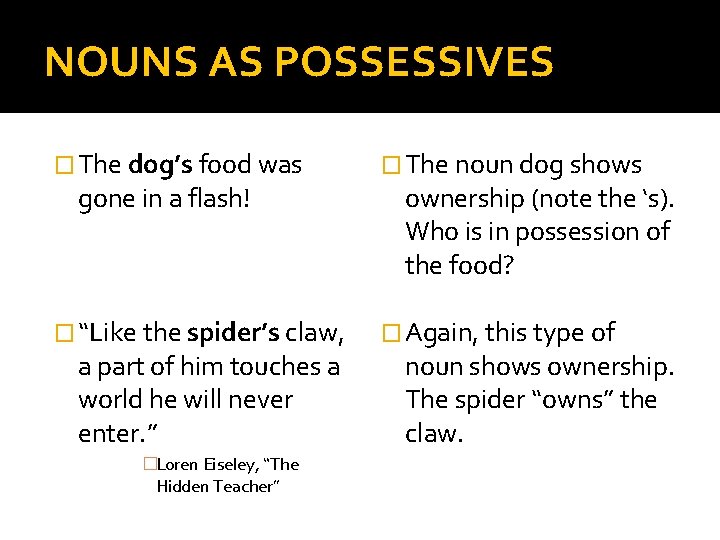
NOUNS AS POSSESSIVES � The dog’s food was � The noun dog shows � “Like the spider’s claw, � Again, this type of gone in a flash! a part of him touches a world he will never enter. ” �Loren Eiseley, “The Hidden Teacher” ownership (note the ‘s). Who is in possession of the food? noun shows ownership. The spider “owns” the claw.
DIRECT OBJECT/INDIRECT OBJECT �The direct object is the thing being acted on. This answers the question “what”? �You must have a direct object to have an indirect object. It tells to whom or for whom something is done. This answers the question “to/for whom? ”
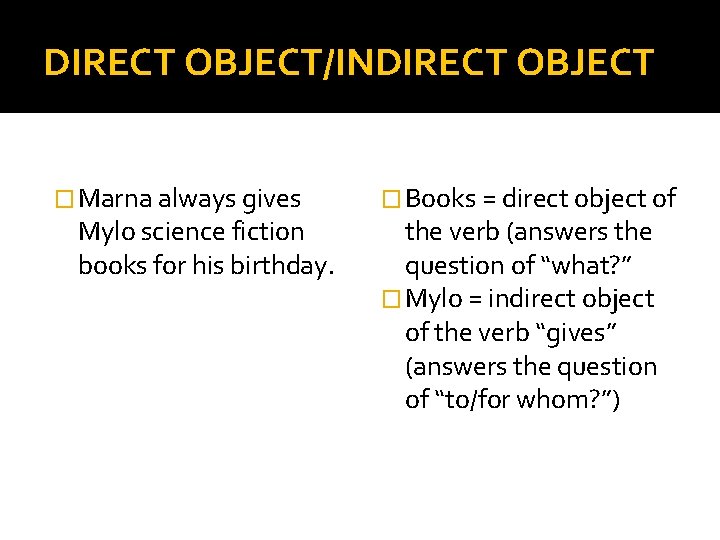
DIRECT OBJECT/INDIRECT OBJECT � Marna always gives Mylo science fiction books for his birthday. � Books = direct object of the verb (answers the question of “what? ” � Mylo = indirect object of the verb “gives” (answers the question of “to/for whom? ”)
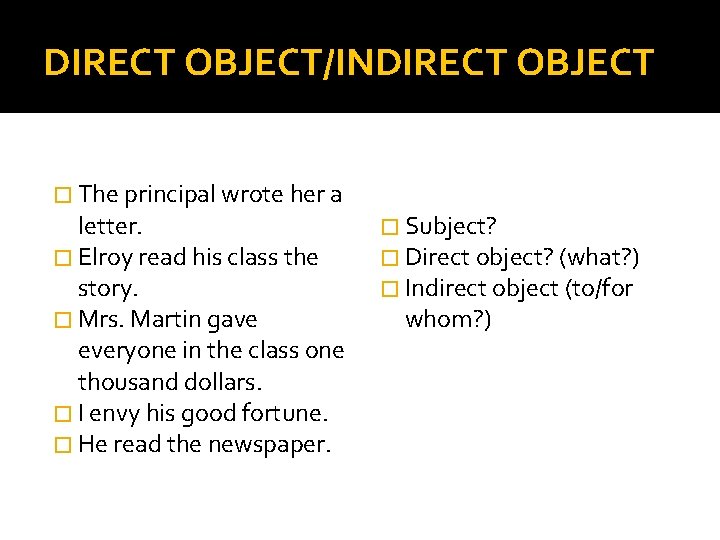
DIRECT OBJECT/INDIRECT OBJECT � The principal wrote her a letter. � Elroy read his class the story. � Mrs. Martin gave everyone in the class one thousand dollars. � I envy his good fortune. � He read the newspaper. � Subject? � Direct object? (what? ) � Indirect object (to/for whom? )