
Grammar Review I Past II Present III Future

- Slides: 23
Grammar Review I: Past II: Present III: Future
I: The Past is prologue! The story so far…
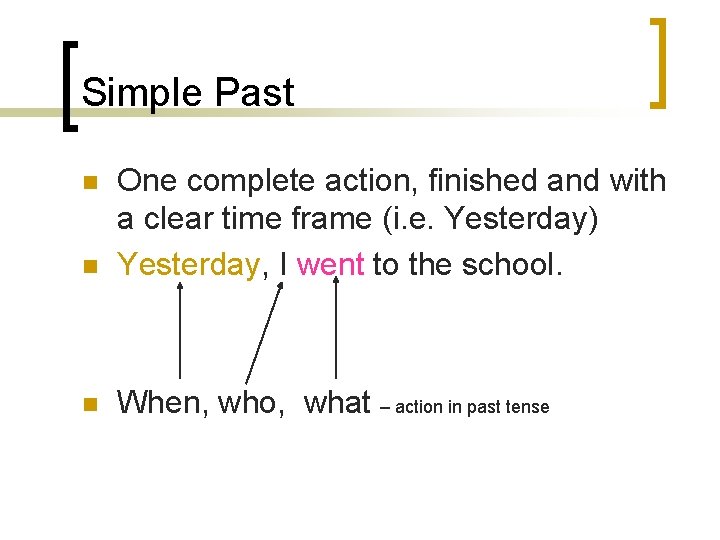
Simple Past n One complete action, finished and with a clear time frame (i. e. Yesterday) Yesterday, I went to the school. n When, who, what – action in past tense n
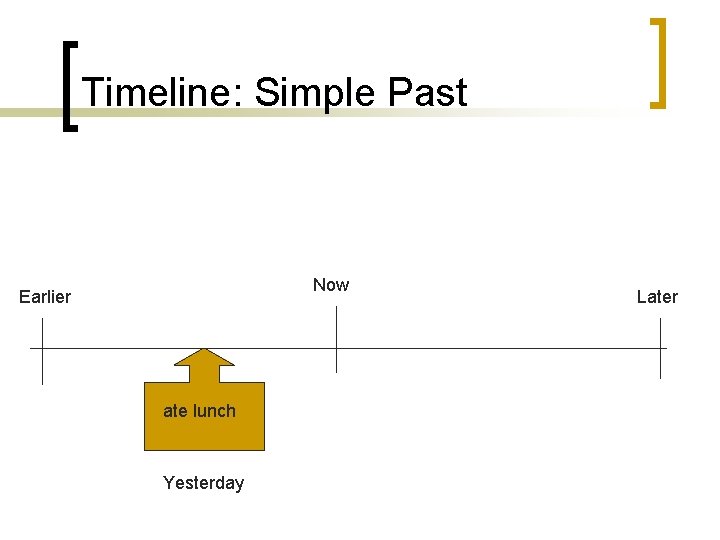
Timeline: Simple Past Now Earlier ate lunch Yesterday Later
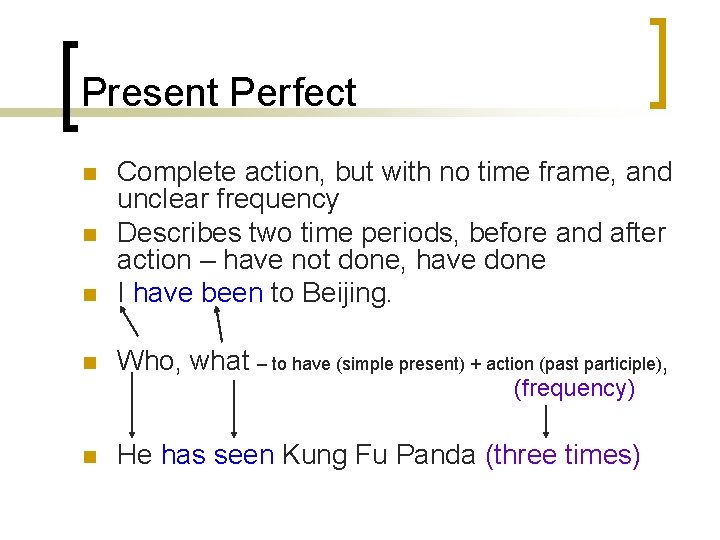
Present Perfect n Complete action, but with no time frame, and unclear frequency Describes two time periods, before and after action – have not done, have done I have been to Beijing. n Who, what – to have (simple present) + action (past participle), n n (frequency) n He has seen Kung Fu Panda (three times)
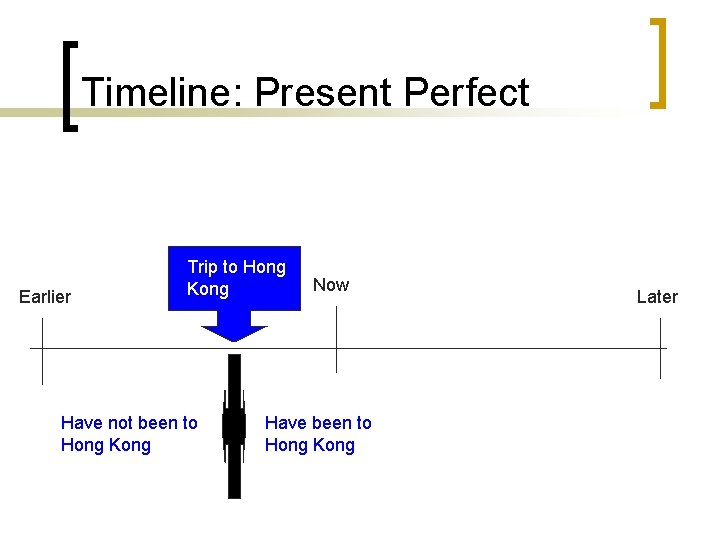
Timeline: Present Perfect Earlier Trip to Hong Kong Have not been to Hong Kong Now Have been to Hong Kong Later
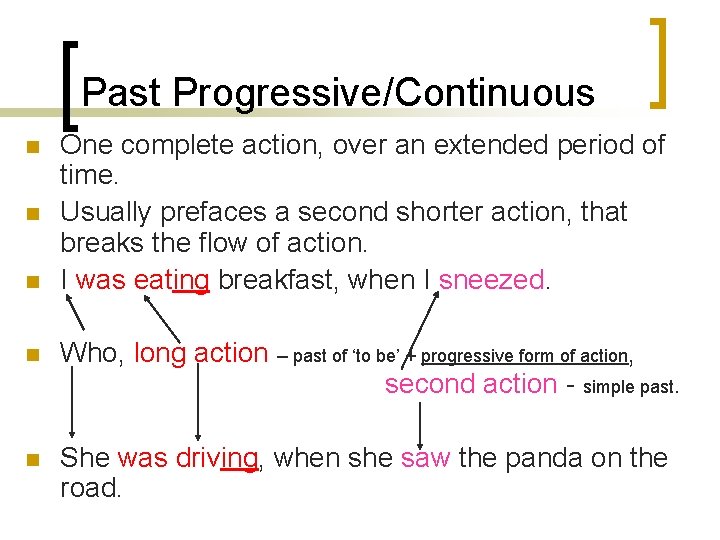
Past Progressive/Continuous n n n One complete action, over an extended period of time. Usually prefaces a second shorter action, that breaks the flow of action. I was eating breakfast, when I sneezed. n Who, long action – past of ‘to be’ + progressive form of action, second action - simple past. n She was driving, when she saw the panda on the road.
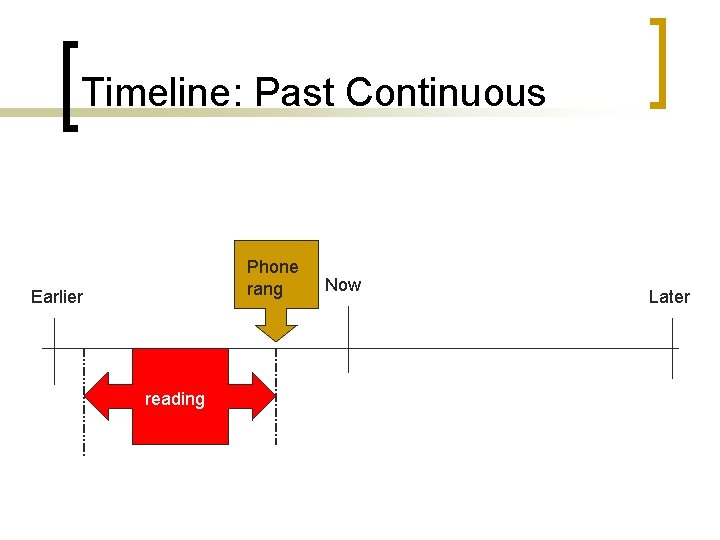
Timeline: Past Continuous Phone rang Earlier reading Now Later
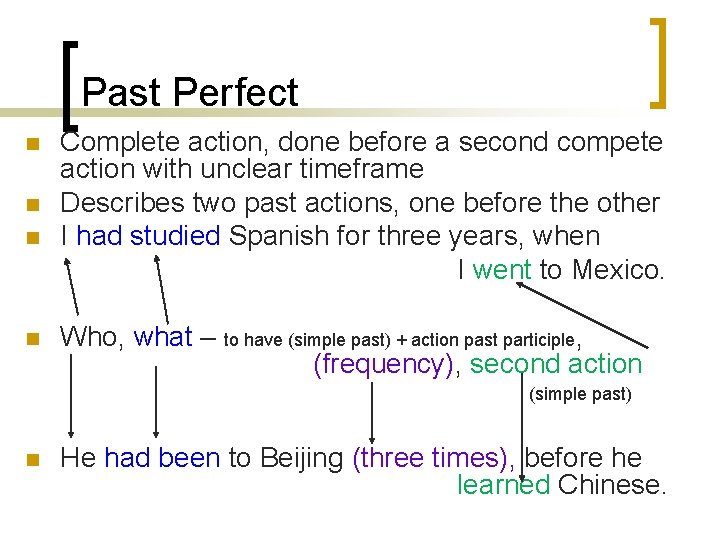
Past Perfect n n Complete action, done before a second compete action with unclear timeframe Describes two past actions, one before the other I had studied Spanish for three years, when I went to Mexico. Who, what – to have (simple past) + action past participle, (frequency), second action (simple past) n He had been to Beijing (three times), before he learned Chinese.
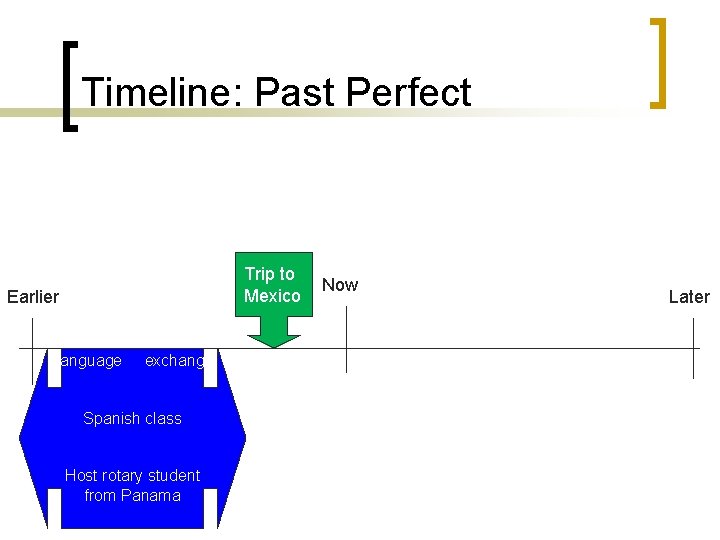
Timeline: Past Perfect Trip to Mexico Earlier Language exchange Spanish class Host rotary student from Panama Now Later
II: The best time was yesterday…. The next best time is NOW!
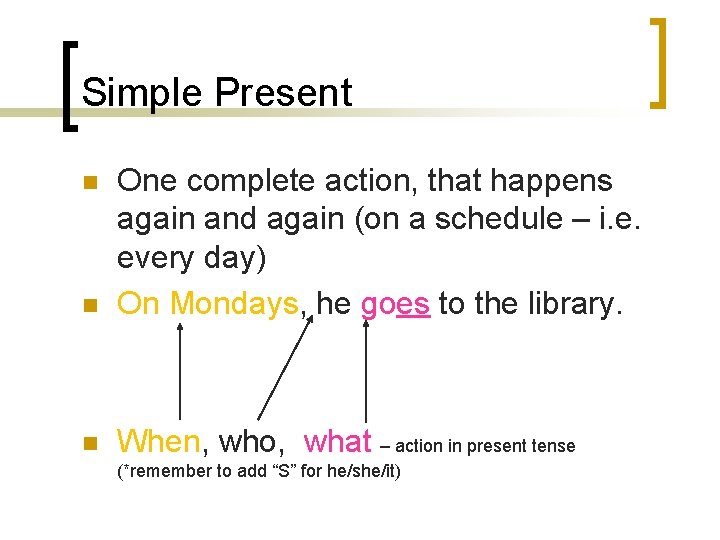
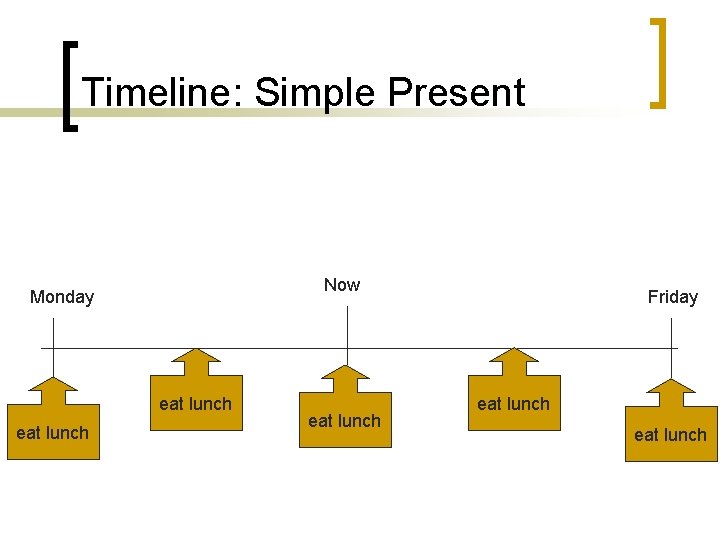
Simple Present n One complete action, that happens again and again (on a schedule – i. e. every day) On Mondays, he goes to the library. n When, who, what – action in present tense n (*remember to add “S” for he/she/it)
Timeline: Simple Present Now Monday eat lunch Friday eat lunch
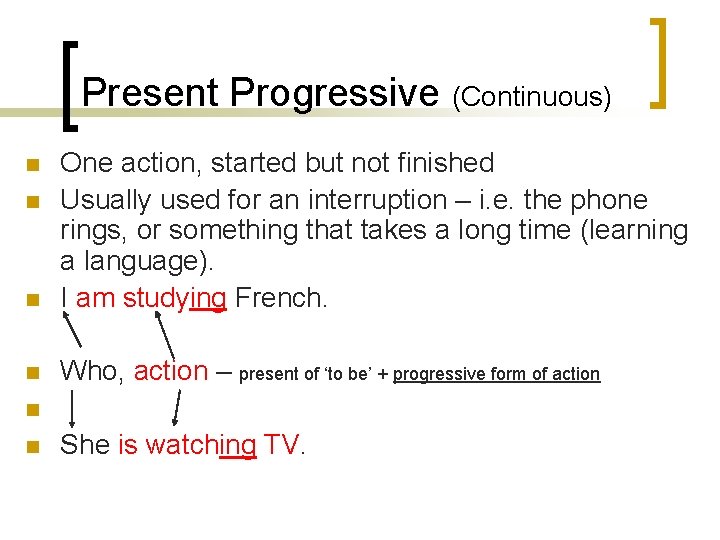
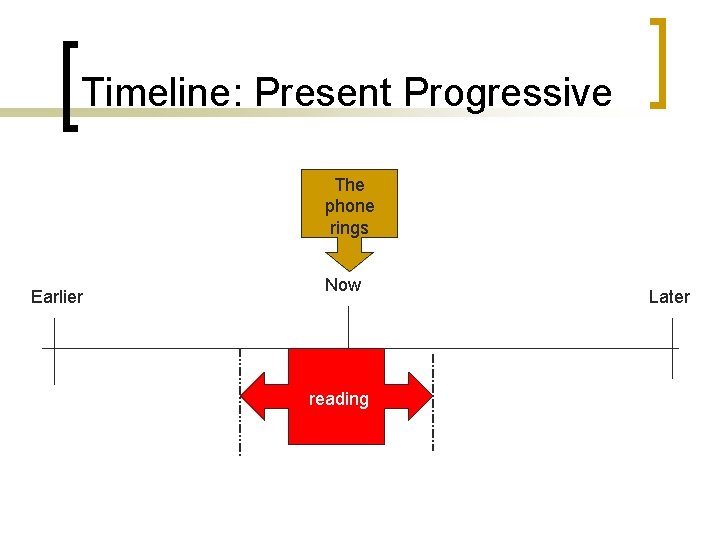
Present Progressive (Continuous) n One action, started but not finished Usually used for an interruption – i. e. the phone rings, or something that takes a long time (learning a language). I am studying French. n Who, action – present of ‘to be’ + progressive form of action n n She is watching TV.
Timeline: Present Progressive The phone rings Earlier Now reading Later
III: Back to the future… Quick…before it is written!
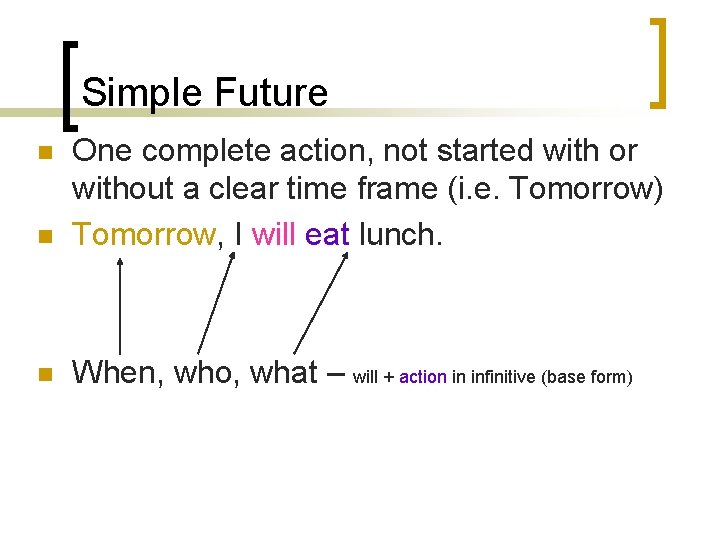
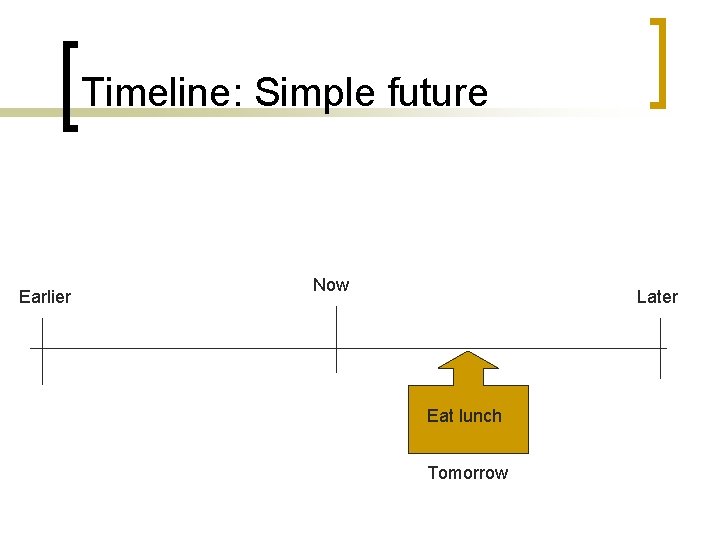
Simple Future n One complete action, not started with or without a clear time frame (i. e. Tomorrow) Tomorrow, I will eat lunch. n When, who, what – will + action in infinitive (base form) n
Timeline: Simple future Earlier Now Later Eat lunch Tomorrow
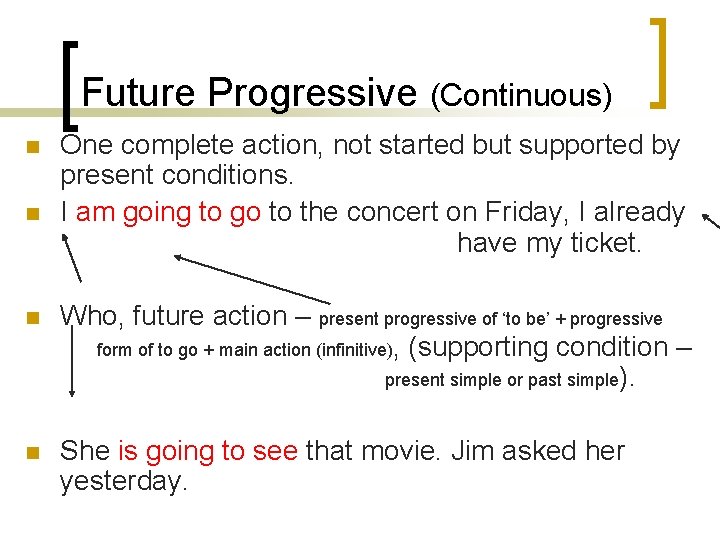
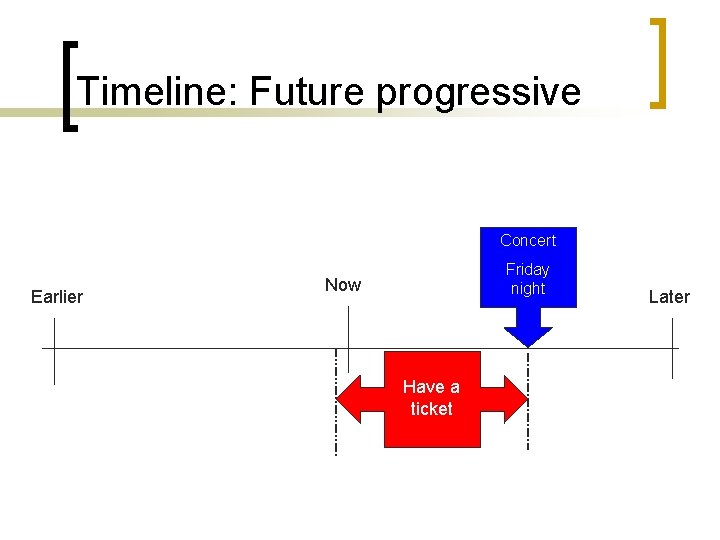
Future Progressive (Continuous) n n One complete action, not started but supported by present conditions. I am going to go to the concert on Friday, I already have my ticket. n Who, future action – present progressive of ‘to be’ + progressive form of to go + main action (infinitive), (supporting condition – present simple or past simple). n She is going to see that movie. Jim asked her yesterday.
Timeline: Future progressive Concert Earlier Friday night Now Have a ticket Later
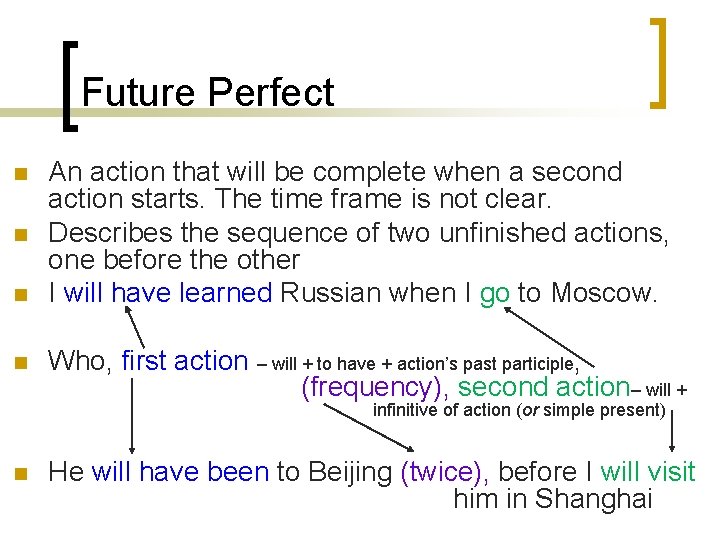
Future Perfect n n An action that will be complete when a second action starts. The time frame is not clear. Describes the sequence of two unfinished actions, one before the other I will have learned Russian when I go to Moscow. Who, first action – will + to have + action’s past participle, (frequency), second action– will + infinitive of action (or simple present) n He will have been to Beijing (twice), before I will visit him in Shanghai
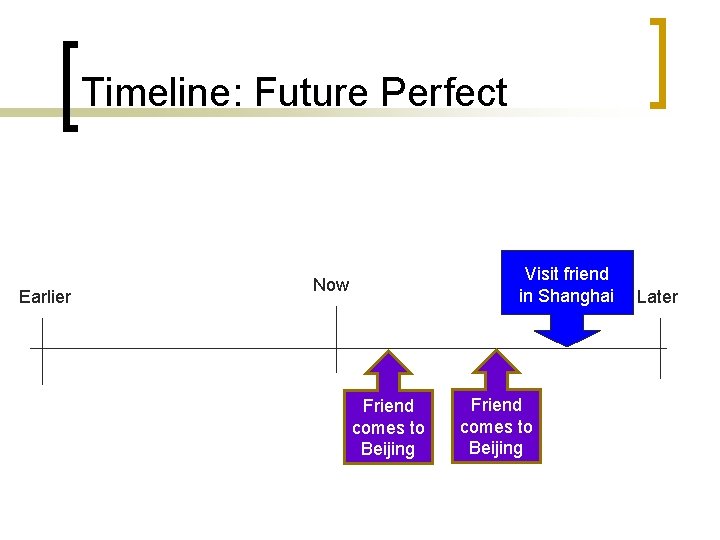
Timeline: Future Perfect Earlier Visit friend in Shanghai Now Friend comes to Beijing Later