
GRAMMAR PHRASES AND SENTENCES 1 GRAMMAR It is
- Slides: 27
GRAMMAR PHRASES AND SENTENCES 1
GRAMMAR It is the description of the structure of phrases and sentences which will account of the grammatical sequences and rule out all the ungrammatical sequences. 2
TYPES OF GRAMMAR There are three types of grammar which are: 3
(1) MENTAL GRAMMAR It is a form of internal linguistic knowledge which operates in the production and recognition of appropriately structured expressions in that language. This “ grammar” is subconscious and is not the result of any teaching. This is the interest of the psycholinguist. 4
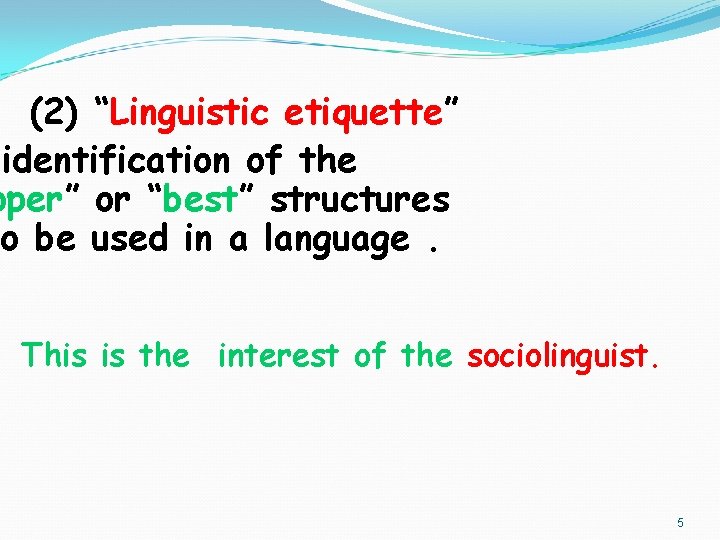
(2) “Linguistic etiquette” identification of the oper” or “best” structures o be used in a language. This is the interest of the sociolinguist. 5
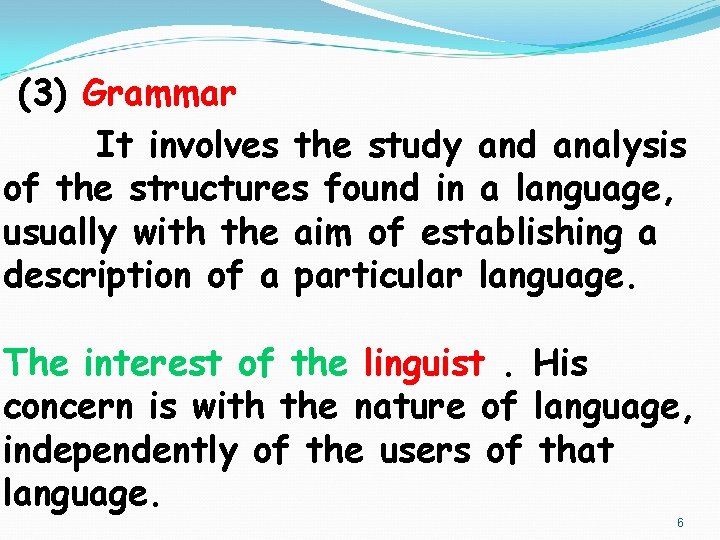
(3) Grammar It involves the study and analysis of the structures found in a language, usually with the aim of establishing a description of a particular language. The interest of the linguist. His concern is with the nature of language, independently of the users of that language. 6
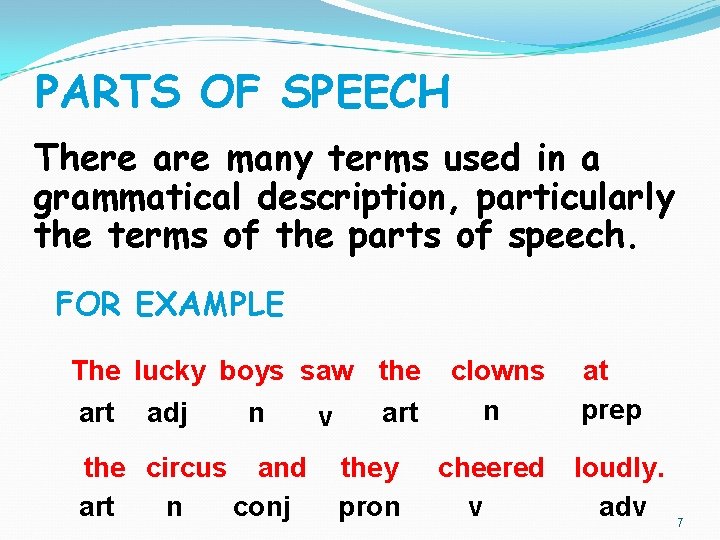
PARTS OF SPEECH There are many terms used in a grammatical description, particularly the terms of the parts of speech. FOR EXAMPLE The lucky boys saw the art adj n art v the circus and art n conj they pron clowns n at prep cheered v loudly. adv 7
Traditional Grammar These terms came from traditional grammar, which has its origins in the description of languages like Classical Latin and Greek. 8
Cont. Since these were well-established grammatical descriptions of these older languages, it seemed appropriate to adopt the existing categories from these descriptions and apply them in the analysis of languages like English. 9
Traditional categories Traditional grammatical analysis also uses a number of other categories, including “number”, “person”, “tense”, “ voice” and “gender”. It is better to consider them in terms of concord or agreement. FOR EXAMPLE The boy likes the dog. 10
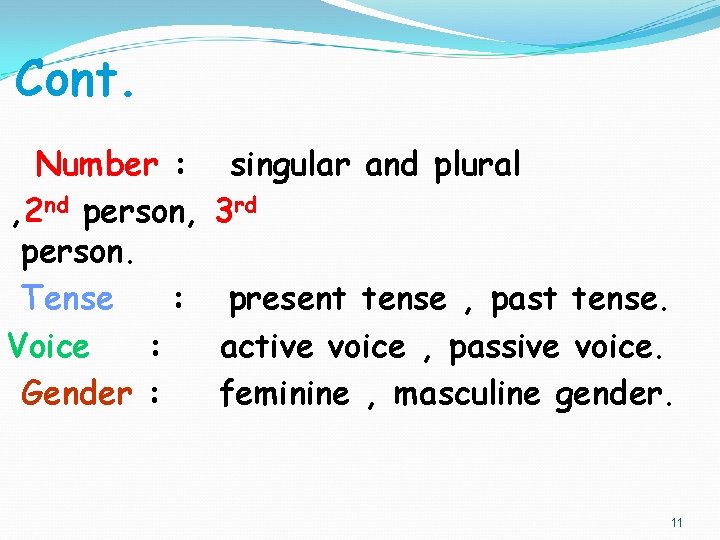
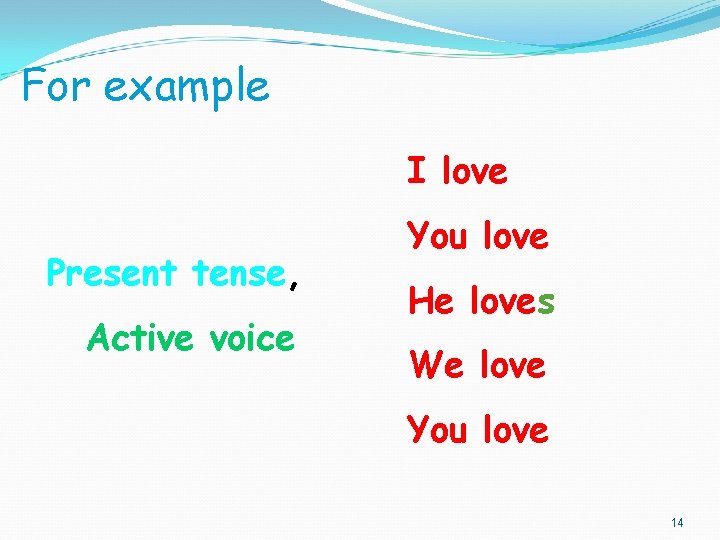
Cont. Number : , 2 nd person, person. Tense : Voice : Gender : singular and plural 3 rd present tense , past tense. active voice , passive voice. feminine , masculine gender. 11
Traditional grammar ppropriateness” has not been into consideration. In traditional grammar books, tables such as the following were presented for English, constructed by analogy with similar tables of forms in Latin grammar. 12
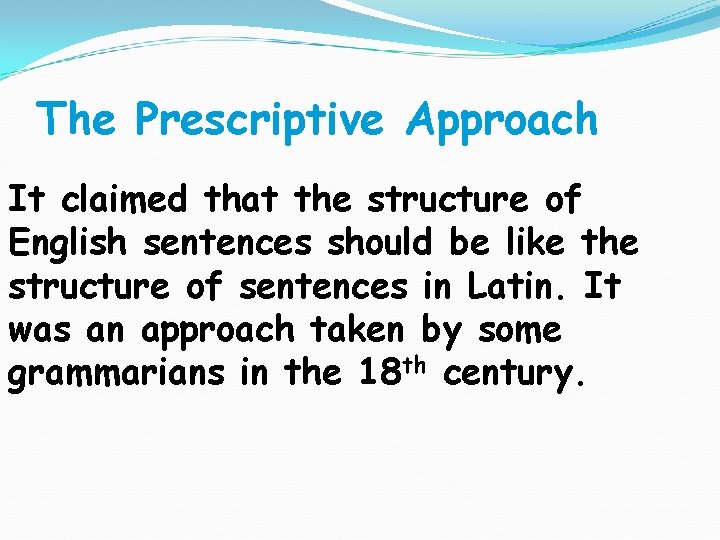
The Prescriptive Approach It claimed that the structure of English sentences should be like the structure of sentences in Latin. It was an approach taken by some grammarians in the 18 th century.
For example I love Present tense, Active voice You love He loves We love You love 14
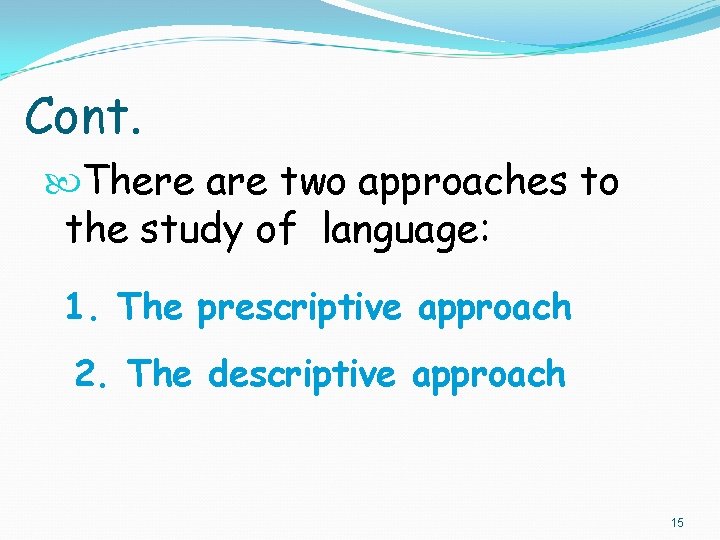
Cont. There are two approaches to the study of language: 1. The prescriptive approach 2. The descriptive approach 15
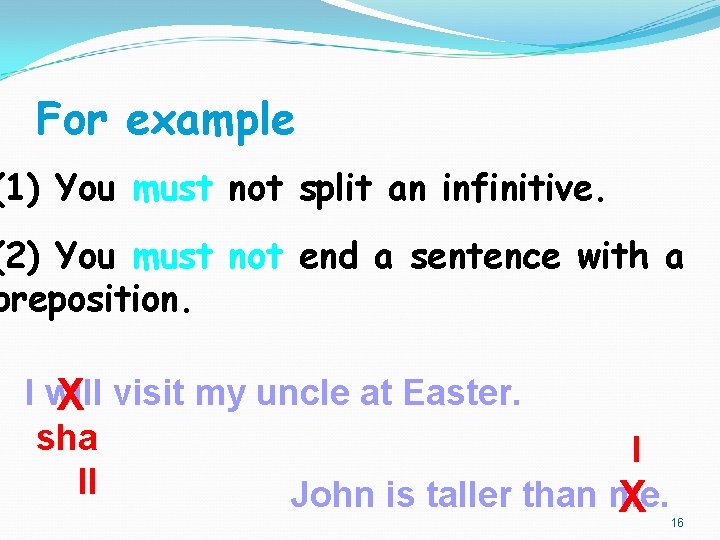
For example (1) You must not split an infinitive. (2) You must not end a sentence with a preposition. I will X visit my uncle at Easter. sha I ll John is taller than me. X 16
The Descriptive Approach The descriptive approach and its beginning. The inappropriateness of the old approach: - English VS Latin languages. - European languages VS non-European languages (Indian languages). As a consequence, a rather different approach has been taken throughout the present century. 17
Descriptive Analysis The analyst collects samples of the language he or she is interested in and attempts to describe the regular structures of language as it is used , not according to some view of how it should be used. It is the basis of most modern attempts to characterize the structure of different languages. 18
The Descriptive Approach In the study of grammar, there are different kinds of analysis: 1. Structural analysis 2. Immediate constituent analysis 3. Labeling and Bracketing 19
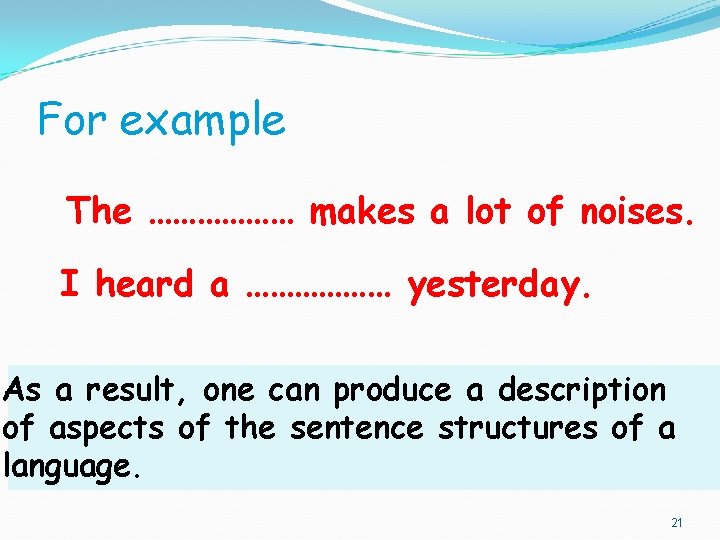
Structural Analysis Its main concern is to investigate the distribution of forms (e. g. morphemes) in a language. The method employed involves the use of “test-frames" which can be sentences with empty slots in them. 20
For example The ……………… makes a lot of noises. I heard a ……………… yesterday. As a result, one can produce a description of aspects of the sentence structures of a language. 21
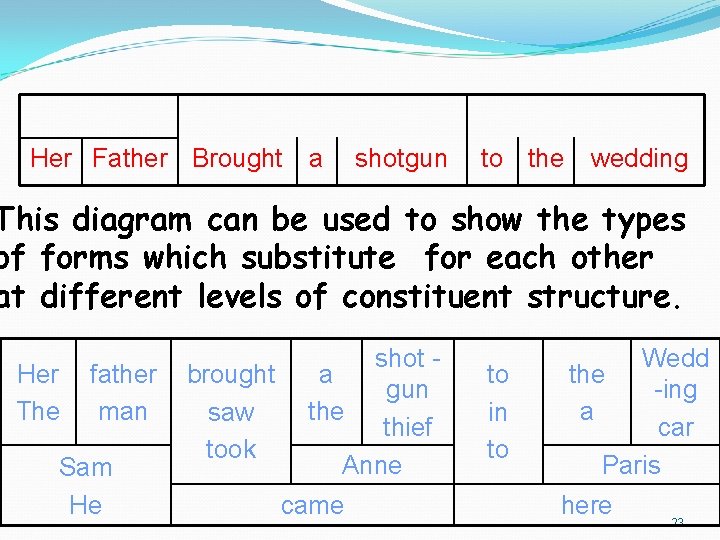
Immediate Constituent Analysis The technique employed in this approach is designated to show small constituents (or components) in sentences go together to form larger constituents. 22
Her Father Brought a shotgun to the wedding This diagram can be used to show the types of forms which substitute for each other at different levels of constituent structure. Her The father man Sam He brought saw took shot a gun the thief Anne came to in to Wedd the -ing a car Paris here 23
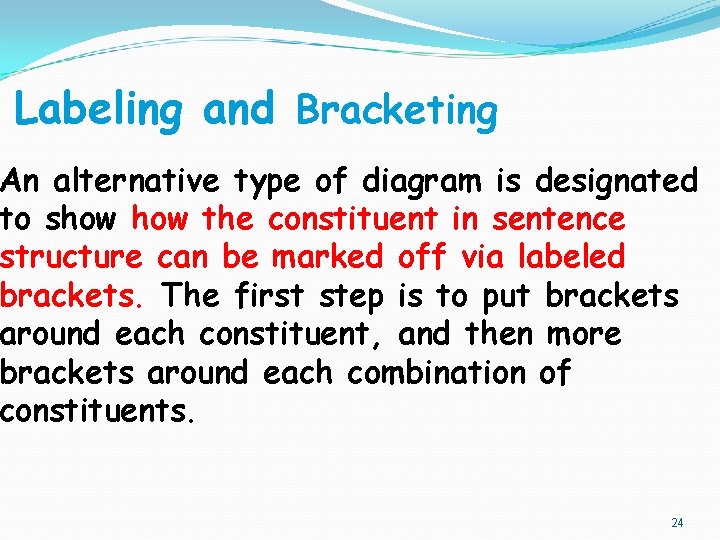
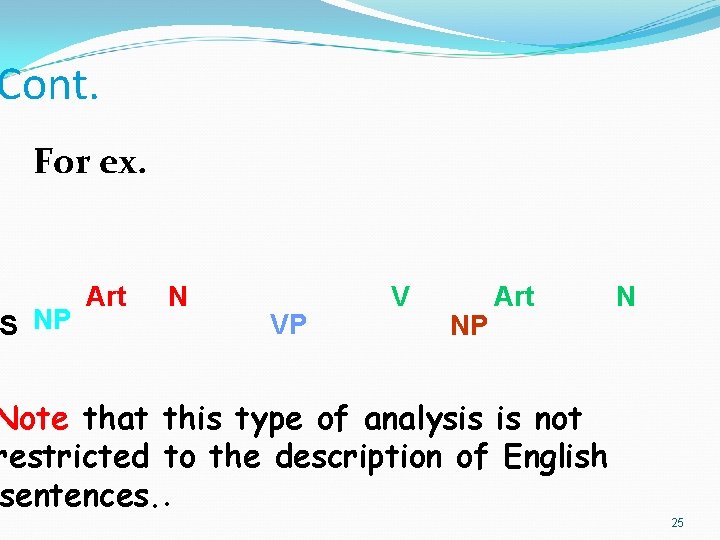
Labeling and Bracketing An alternative type of diagram is designated to show the constituent in sentence structure can be marked off via labeled brackets. The first step is to put brackets around each constituent, and then more brackets around each combination of constituents. 24
Cont. For ex. S NP Art N VP V NP Art N Note that this type of analysis is not restricted to the description of English sentences. . 25
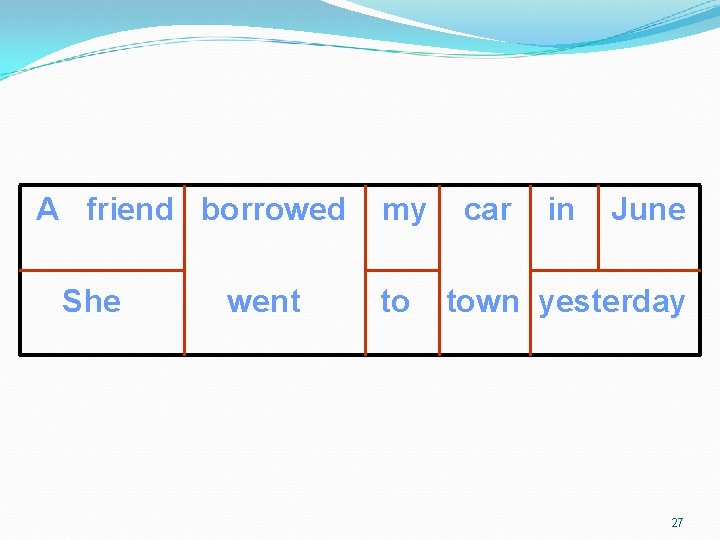
Exercise Draw a single diagram showing the different levels of constituents by using the immediate constituent analysis for the following sentences: 1) A friend borrowed my car in June. 2) She went to town yesterday. 26
A friend borrowed She went my to car in June town yesterday 27