
Grammar in a Nutshell 3 One Ones Use
- Slides: 18
Grammar in a Nutshell 3
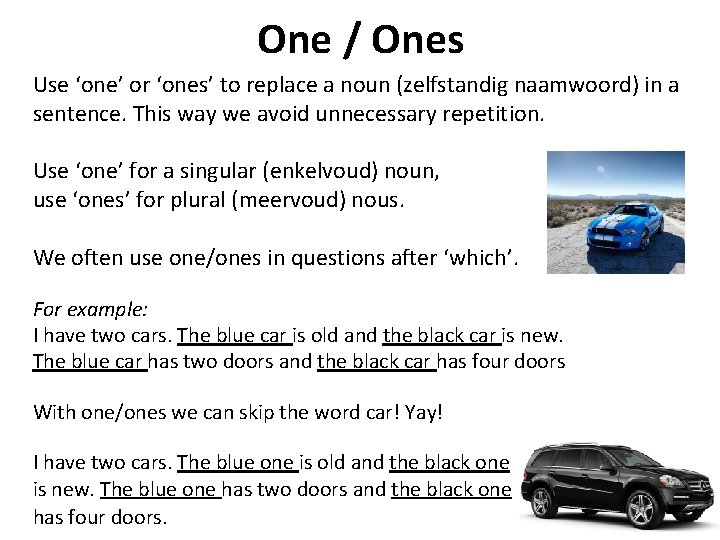
One / Ones Use ‘one’ or ‘ones’ to replace a noun (zelfstandig naamwoord) in a sentence. This way we avoid unnecessary repetition. Use ‘one’ for a singular (enkelvoud) noun, use ‘ones’ for plural (meervoud) nous. We often use one/ones in questions after ‘which’. For example: I have two cars. The blue car is old and the black car is new. The blue car has two doors and the black car has four doors With one/ones we can skip the word car! Yay! I have two cars. The blue one is old and the black one is new. The blue one has two doors and the black one has four doors.
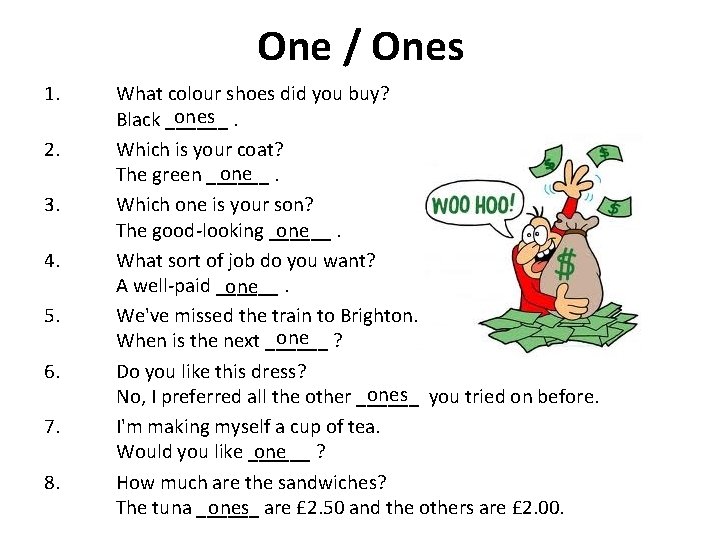
One / Ones 1. 2. 3. 4. 5. What colour shoes did you buy? ones Black ______. Which is your coat? one The green ______. Which one is your son? one The good-looking ______. What sort of job do you want? A well-paid ______. one We've missed the train to Brighton. one When is the next ______ ? 6. Do you like this dress? ones No, I preferred all the other ______ you tried on before. 7. I'm making myself a cup of tea. one Would you like ______ ? How much are the sandwiches? The tuna ______ are £ 2. 50 and the others are £ 2. 00. ones 8.
Demonstrative Pronouns
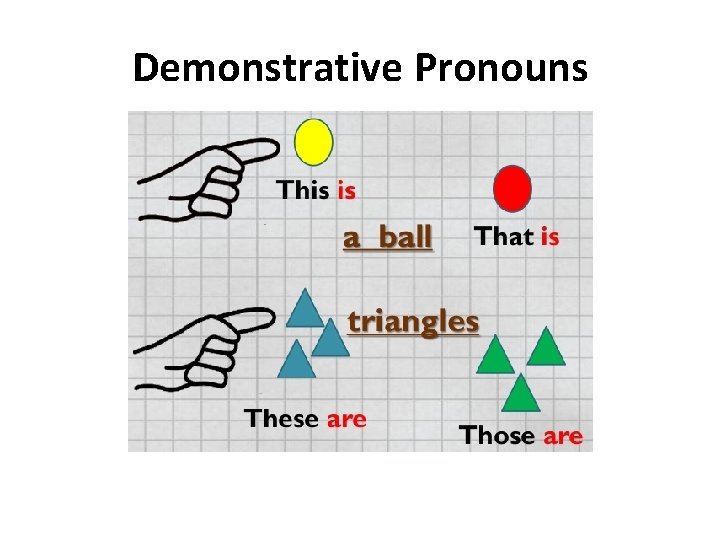
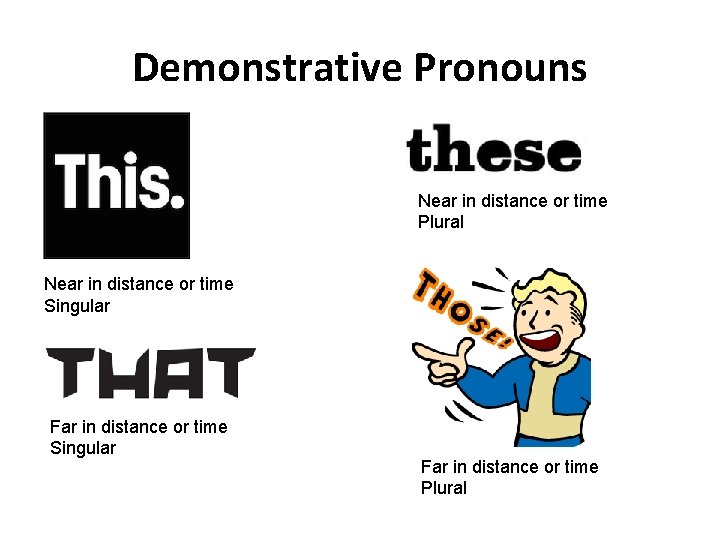
Demonstrative Pronouns Near in distance or time Plural Near in distance or time Singular Far in distance or time Plural
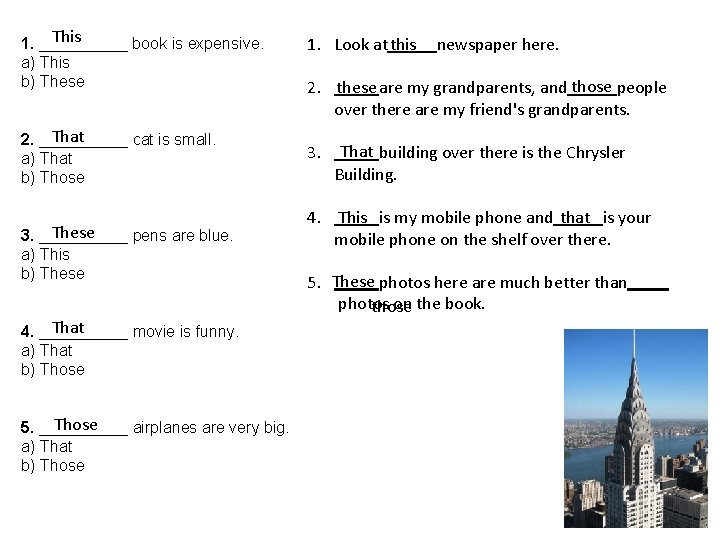
This 1. _____ book is expensive. a) This b) These That 2. _____ cat is small. a) That b) Those These 3. _____ pens are blue. a) This b) These That 4. _____ movie is funny. a) That b) Those 5. _____ airplanes are very big. a) That b) Those this 1. Look at newspaper here. those these 2. are my grandparents, and people over there are my friend's grandparents. That 3. building over there is the Chrysler Building. that This 4. is my mobile phone and is your mobile phone on the shelf over there. 5. These photos here are much better than photos on the book. those
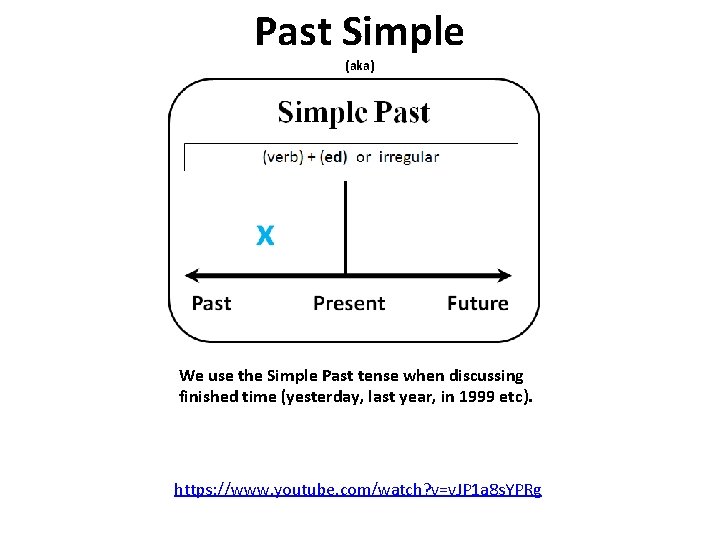
Past Simple (aka) We use the Simple Past tense when discussing finished time (yesterday, last year, in 1999 etc). https: //www. youtube. com/watch? v=v. JP 1 a 8 s. YPRg
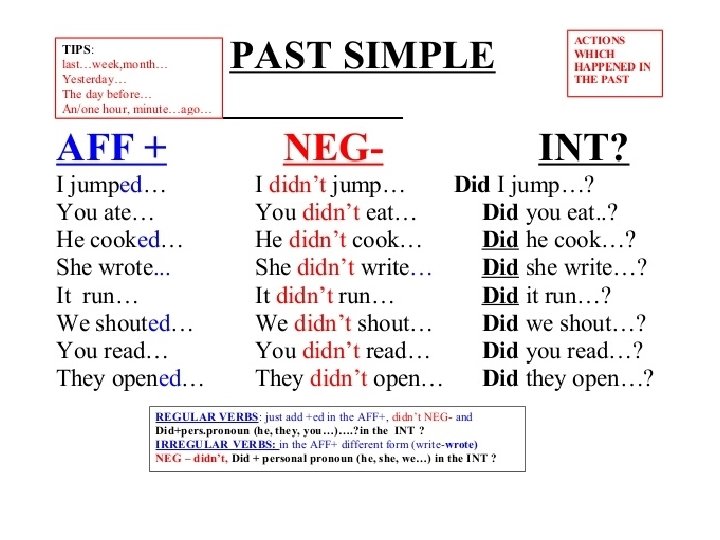
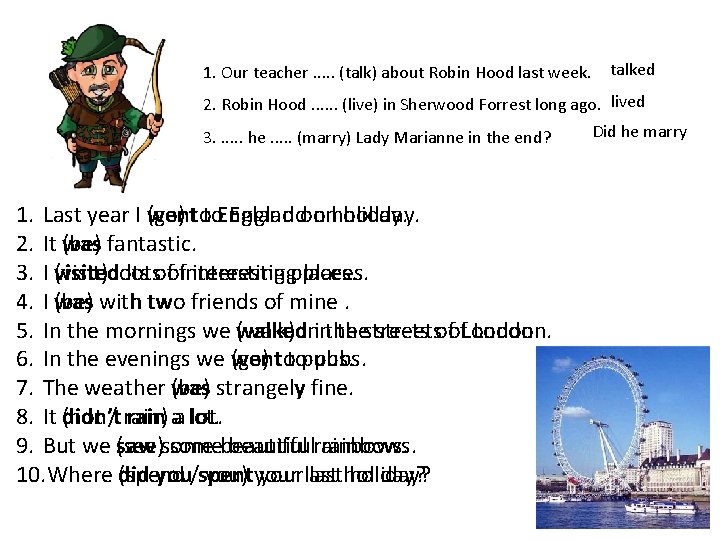
1. Our teacher. . . (talk) about Robin Hood last week. talked 2. Robin Hood. . . (live) in Sherwood Forrest long ago. lived Did he marry 3. . . he. . . (marry) Lady Marianne in the end? 1. Last year I went Last year I (go) to England on holiday. 2. It was It (be) fantastic. 3. I visited lots of interesting places. I (visit) lots of interesting places. 4. I was I (be) with two friends of mine. 5. In the mornings we walked In the mornings we (walk) in the streets of London. 6. In the evenings we went In the evenings we (go) to pubs. 7. The weather was The weather (be) strangely fine. 8. It didn’t It (not / rain) rain a lot. 9. But we saw But we (see) some beautiful rainbows. 10. Where did Where (spend / you) your last holiday? you spent your last holiday?
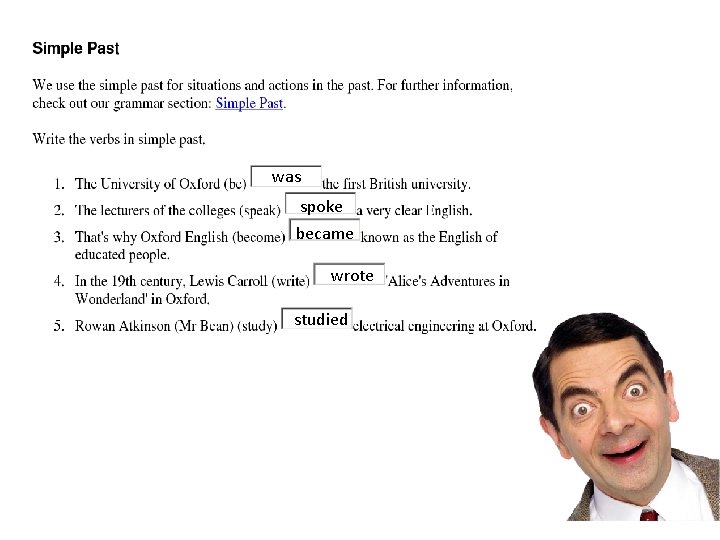
was spoke became wrote studied
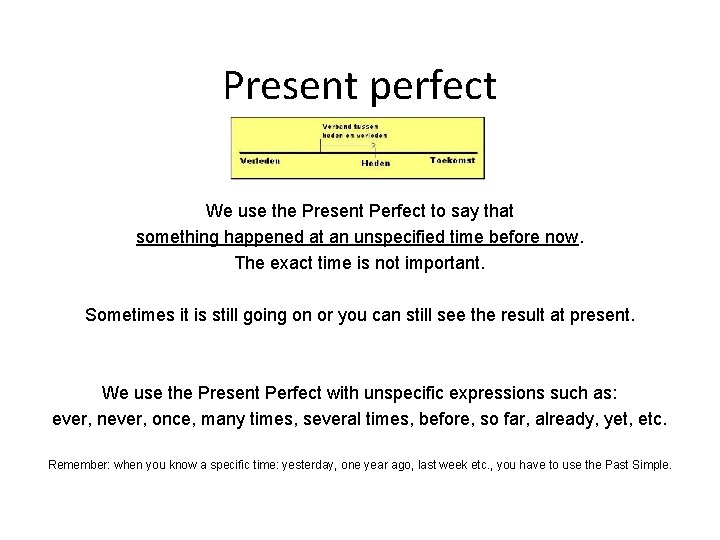
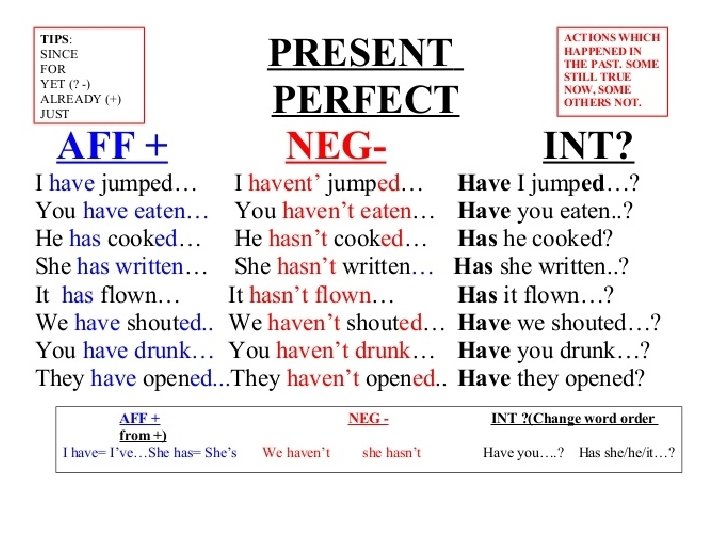
Present perfect We use the Present Perfect to say that something happened at an unspecified time before now. The exact time is not important. Sometimes it is still going on or you can still see the result at present. We use the Present Perfect with unspecific expressions such as: ever, never, once, many times, several times, before, so far, already, yet, etc. Remember: when you know a specific time: yesterday, one year ago, last week etc. , you have to use the Past Simple.
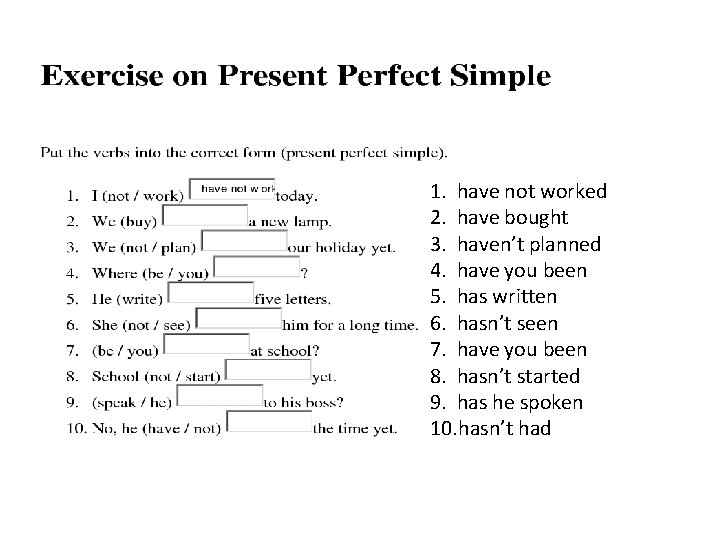
1. have not worked 2. have bought 3. haven’t planned 4. have you been 5. has written 6. hasn’t seen 7. have you been 8. hasn’t started 9. has he spoken 10. hasn’t had
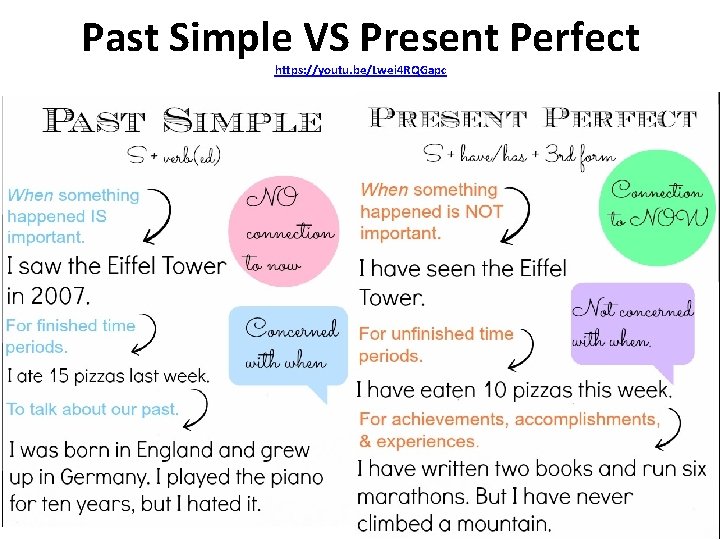
Past Simple VS Present Perfect https: //youtu. be/Lwei 4 RQGapc
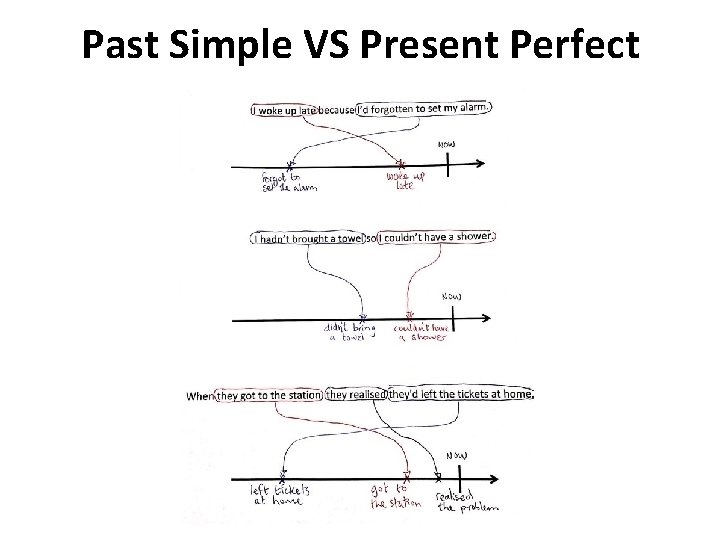
Past Simple VS Present Perfect
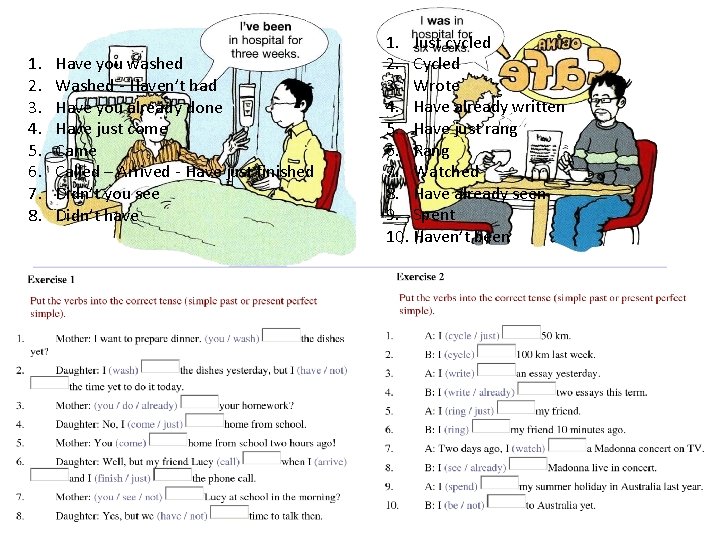
1. 2. 3. 4. 5. 6. 7. 8. Have you washed Washed - Haven’t had Have you already done Have just come Called – Arrived - Have just finished Didn’t you see Didn’t have 1. Just cycled 2. Cycled 3. Wrote 4. Have already written 5. Have just rang 6. Rang 7. Watched 8. Have already seen 9. Spent 10. Haven’t been
Grammar in a Nutshell 3