
GRAMMAR CORRECTION Penny Ur 2015 Various issues 1


- Slides: 42
GRAMMAR CORRECTION Penny Ur 2015
Various issues 1. Does it help? 2. What different kinds of correction are there? And which is the most effective? 3. What are learners’ preferences? 4. When should we NOT correct? 2
1. Does it help? 3
1. Does it help? Truscott (1999, 1996, 2006) claims that correction in both oral and written work does not work: – teachers correct inconsistently, sometimes wrongly – students are sometimes hurt by being corrected – students may not take corrections seriously – correction may interfere with fluency – learners do not learn from the correction 4
Some responses Chandler, 2004 Ferris, 1999 Ferris, 2004 Lyster, Lightbown, Spada, 1999 5
Teachers correct inconsistently, sometimes wrongly. i. e. Teachers are incompetent. But: Inconsistency is not a disaster. Teachers on the whole tend to correctly! 6
Students are hurt by being corrected. There is considerable evidence that students feel that correction is part of the ‘rules of the game’. The ability to correct respectfully and supportively is a part of professional competence. 7
Students may not understand or take corrections seriously. Much of our teaching may not be understood or taken seriously… (instructing, explaining, questioning, activating) …So we should not teach? 8
Correction may interfere with fluency. The procedures based on ‘Focus on form’ (Long and Robinson, 1998) is based precisely on this kind of ‘interference’. There is some evidence that learners want to be corrected when they make the mistake. But we need to know when to interrupt and when not. Again: a question of professional competence. 9
Learners do not learn from the correction. A key issue. Research evidence is controversial and sometimes contradictory: on the whole tentatively in favor. Learning from correction in any case is gradual and partial, not immediate and complete. 10
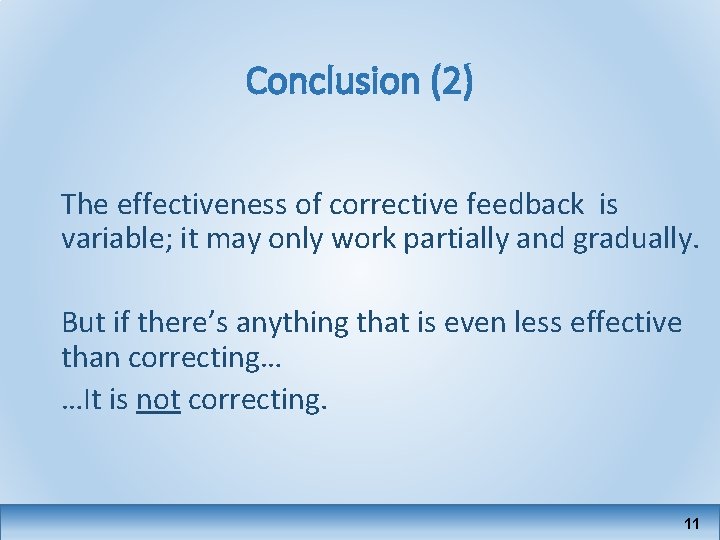
Conclusion (2) The effectiveness of corrective feedback is variable; it may only work partially and gradually. But if there’s anything that is even less effective than correcting… …It is not correcting. 11
2. Which are the best ways to correct? 12
Research Lyster, R. & Ranta, L. , 1997 Lyster, R. , 1998 13
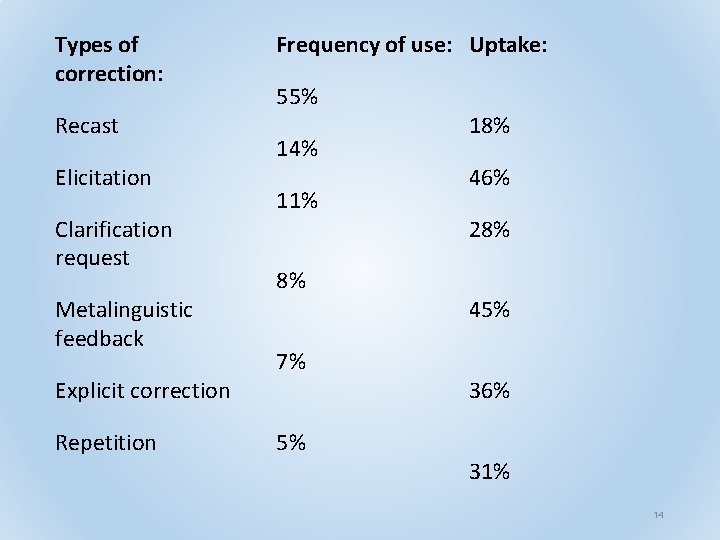
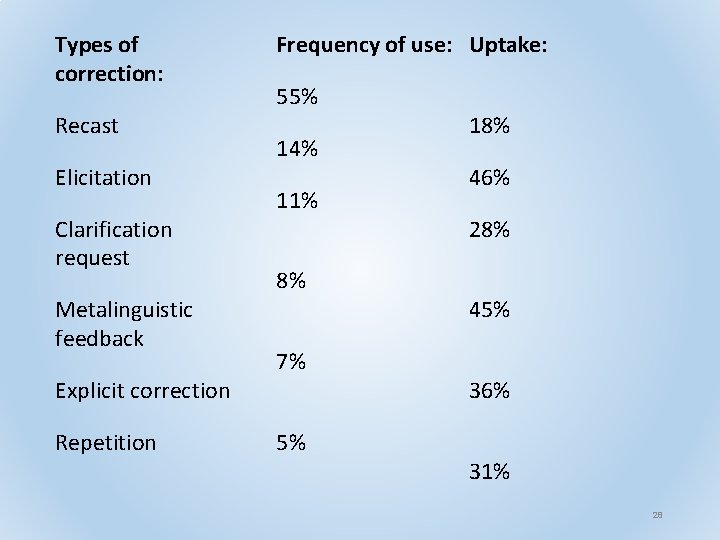
Types of correction: Recast Elicitation Clarification request Metalinguistic feedback Explicit correction Repetition Frequency of use: Uptake: 55% 14% 11% 8% 7% 5% 18% 46% 28% 45% 36% 31% 14
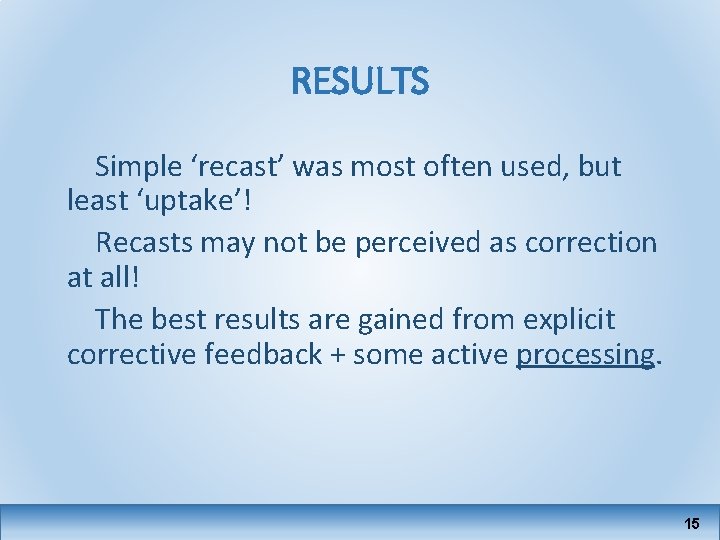
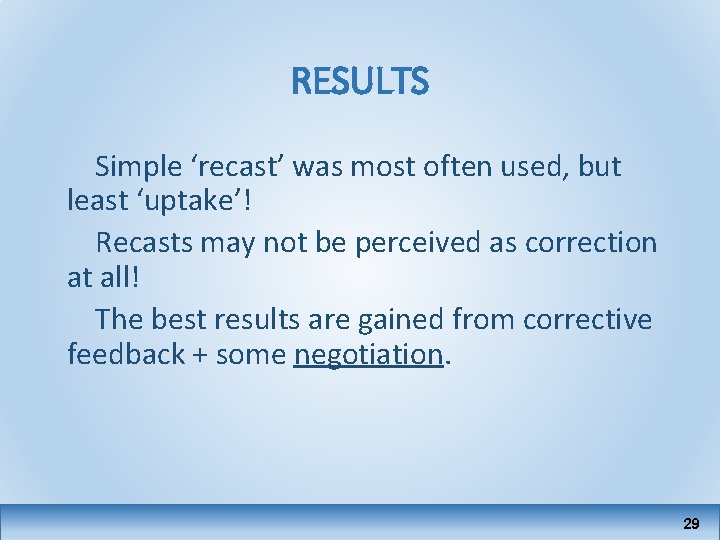
RESULTS Simple ‘recast’ was most often used, but least ‘uptake’! Recasts may not be perceived as correction at all! The best results are gained from explicit corrective feedback + some active processing. 15
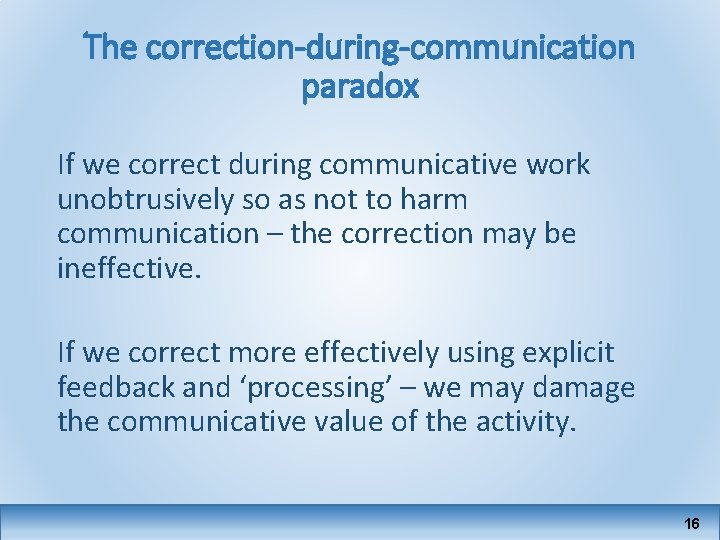
The correction-during-communication paradox If we correct during communicative work unobtrusively so as not to harm communication – the correction may be ineffective. If we correct more effectively using explicit feedback and ‘processing’ – we may damage the communicative value of the activity. 16
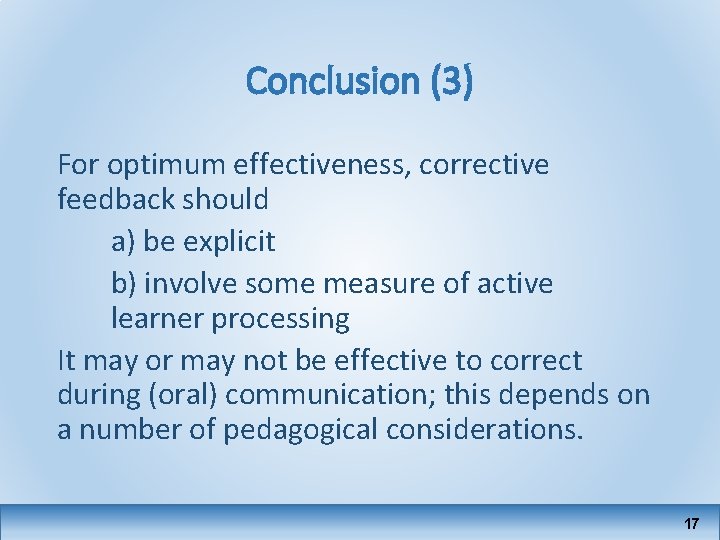
Conclusion (3) For optimum effectiveness, corrective feedback should a) be explicit b) involve some measure of active learner processing It may or may not be effective to correct during (oral) communication; this depends on a number of pedagogical considerations. 17
3. What do the learners say 18
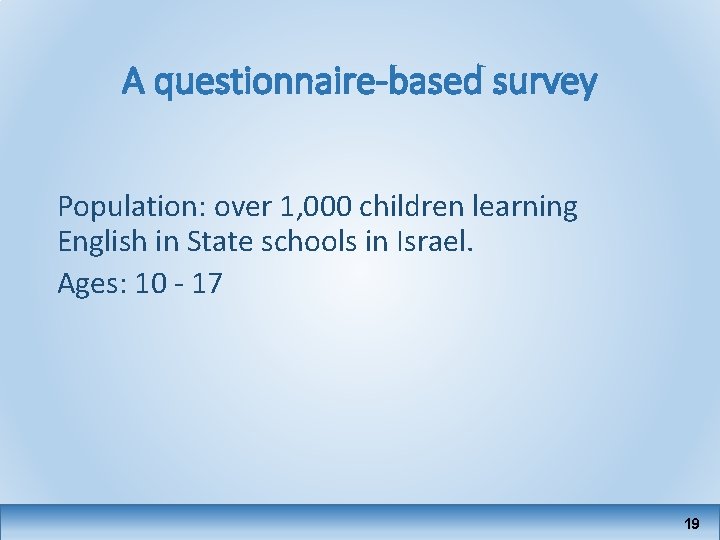
A questionnaire-based survey Population: over 1, 000 children learning English in State schools in Israel. Ages: 10 - 17 19
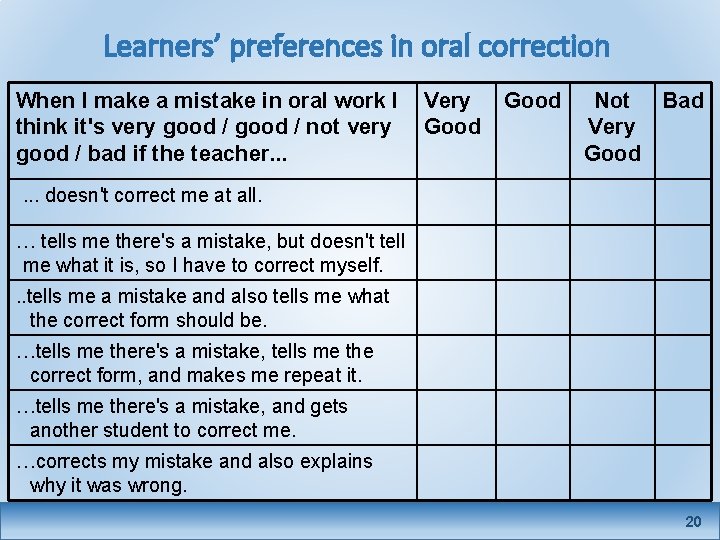
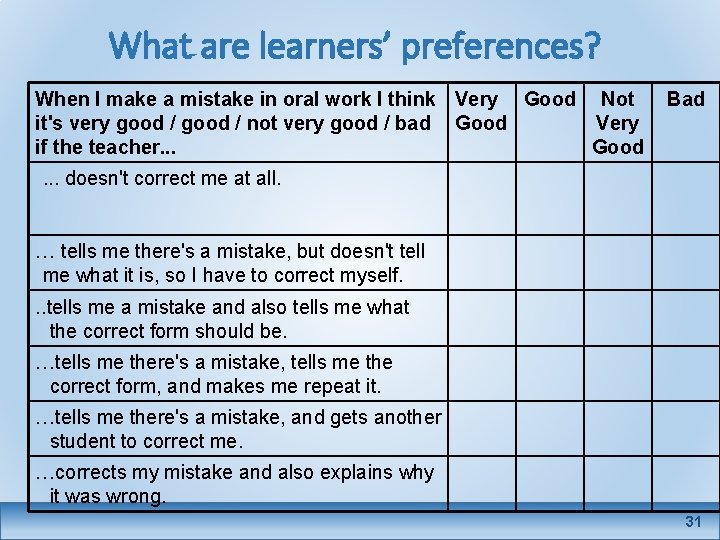
Learners’ preferences in oral correction When I make a mistake in oral work I think it's very good / not very good / bad if the teacher. . . Very Good Not Bad Very Good . . . doesn't correct me at all. … tells me there's a mistake, but doesn't tell me what it is, so I have to correct myself. . . tells me a mistake and also tells me what the correct form should be. …tells me there's a mistake, tells me the correct form, and makes me repeat it. …tells me there's a mistake, and gets another student to correct me. …corrects my mistake and also explains why it was wrong. 20
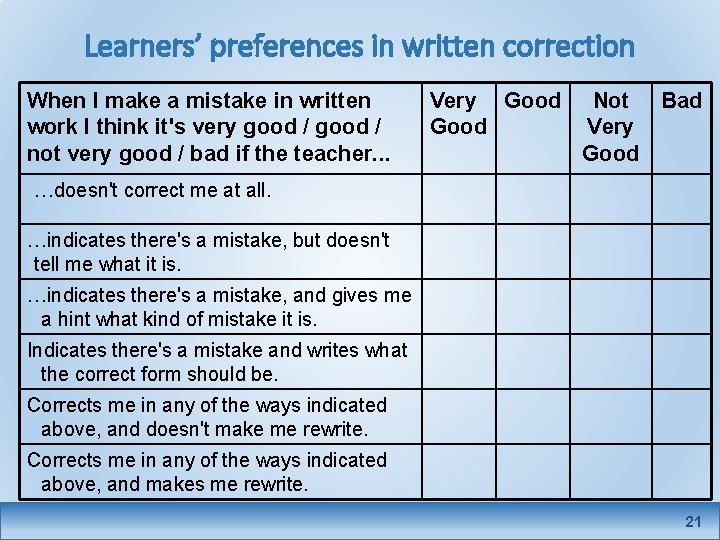
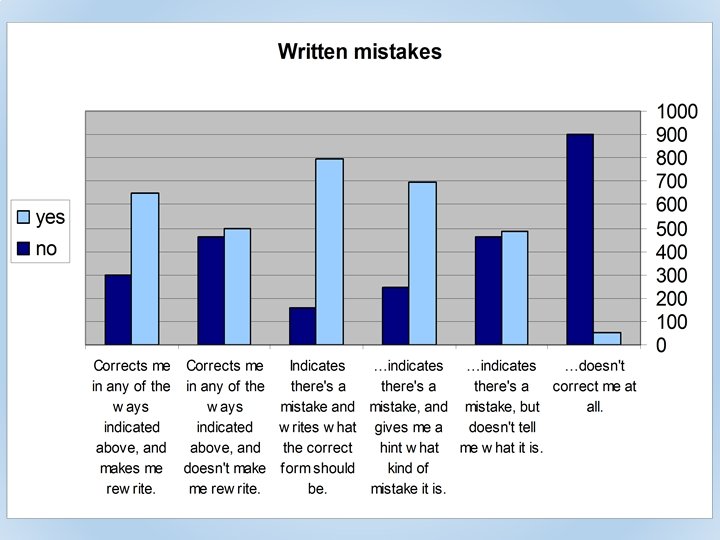
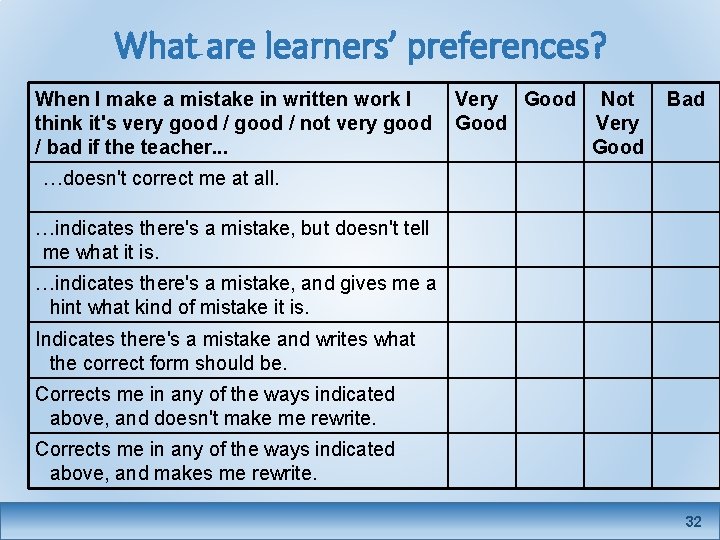
Learners’ preferences in written correction When I make a mistake in written work I think it's very good / not very good / bad if the teacher. . . Very Good Not Bad Very Good …doesn't correct me at all. …indicates there's a mistake, but doesn't tell me what it is. …indicates there's a mistake, and gives me a hint what kind of mistake it is. Indicates there's a mistake and writes what the correct form should be. Corrects me in any of the ways indicated above, and doesn't make me rewrite. Corrects me in any of the ways indicated above, and makes me rewrite. 21
22
23
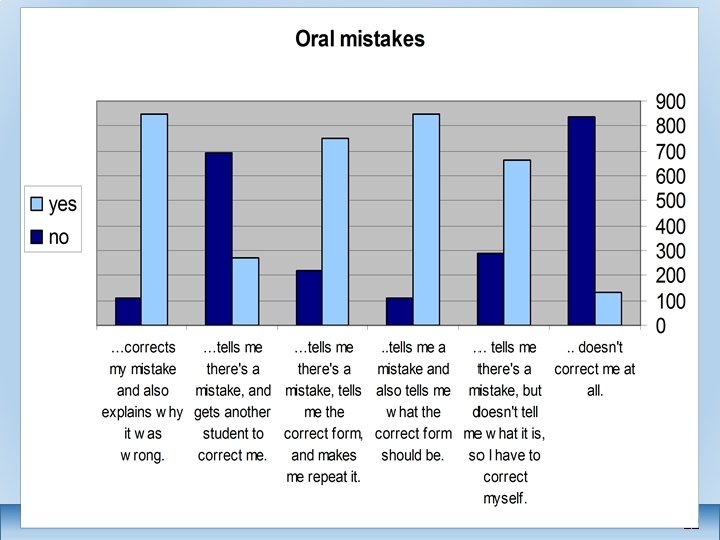
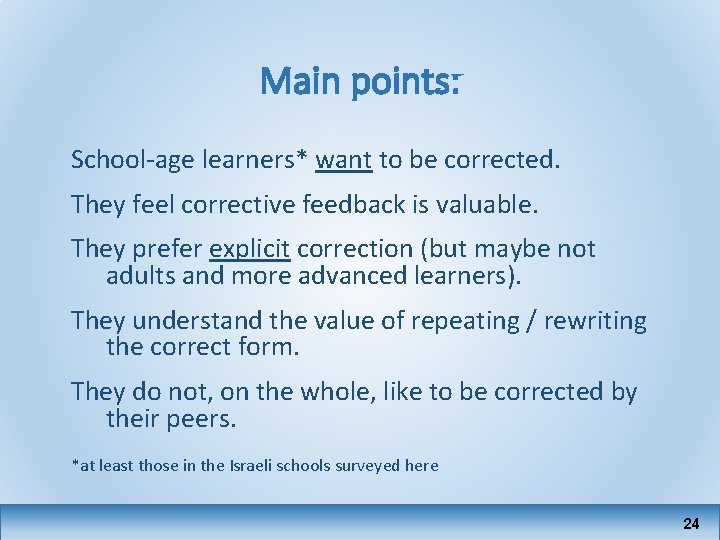
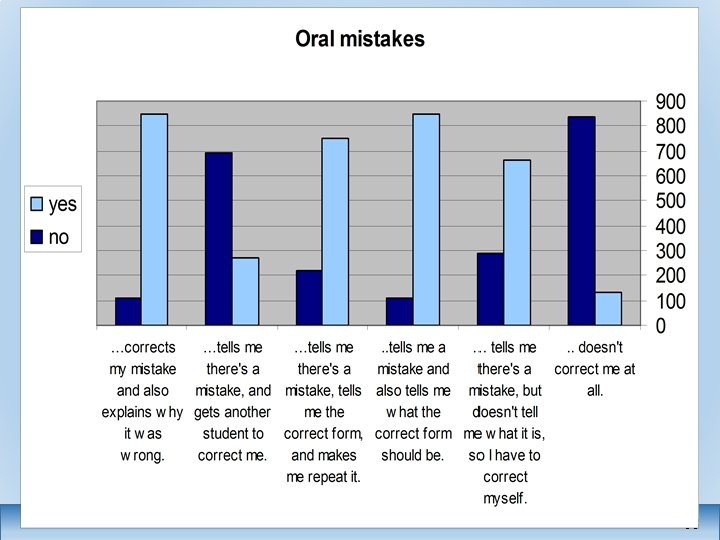
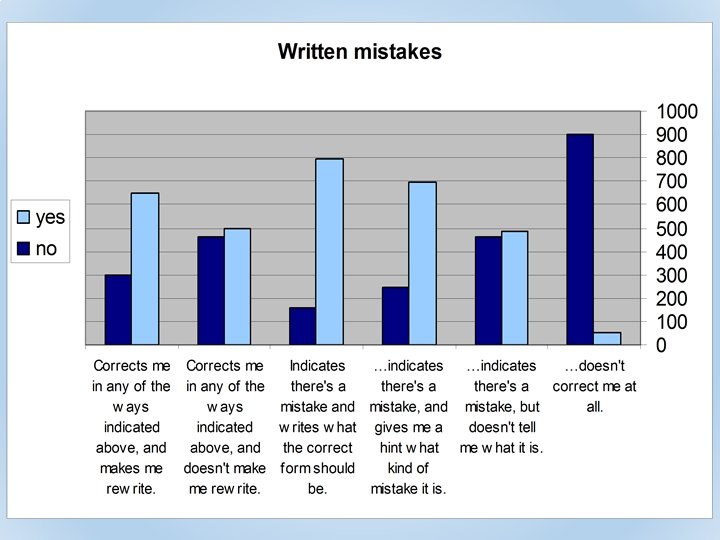
Main points: School-age learners* want to be corrected. They feel corrective feedback is valuable. They prefer explicit correction (but maybe not adults and more advanced learners). They understand the value of repeating / rewriting the correct form. They do not, on the whole, like to be corrected by their peers. *at least those in the Israeli schools surveyed here 24
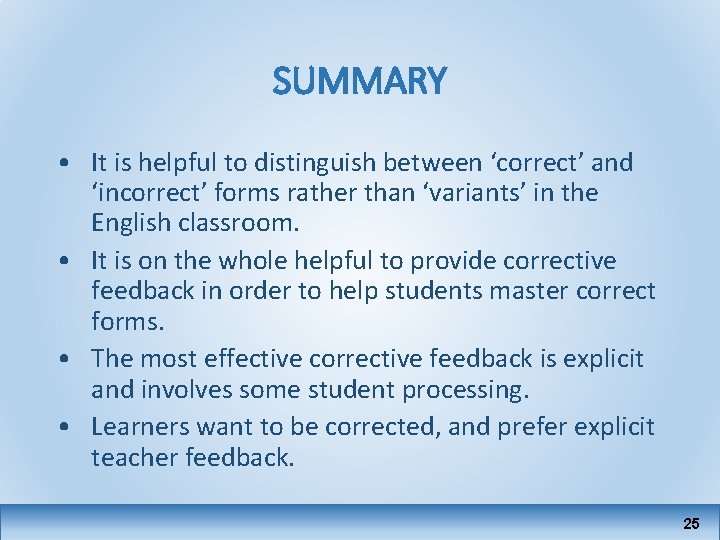
SUMMARY • It is helpful to distinguish between ‘correct’ and ‘incorrect’ forms rather than ‘variants’ in the English classroom. • It is on the whole helpful to provide corrective feedback in order to help students master correct forms. • The most effective corrective feedback is explicit and involves some student processing. • Learners want to be corrected, and prefer explicit teacher feedback. 25
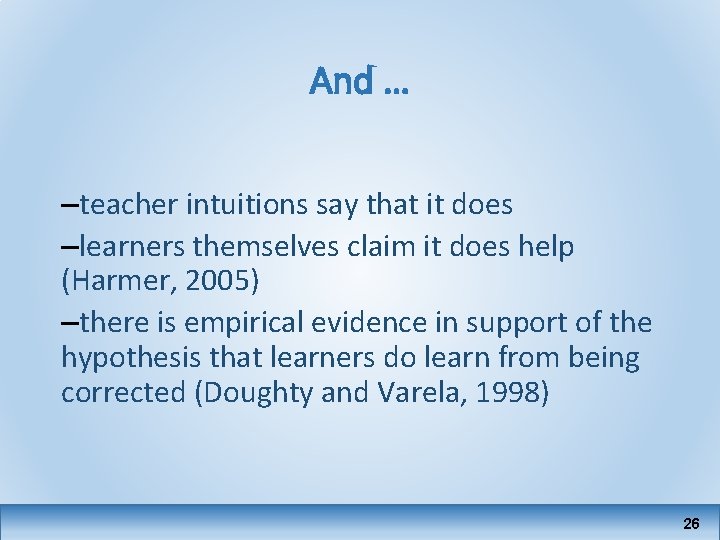
And … –teacher intuitions say that it does –learners themselves claim it does help (Harmer, 2005) –there is empirical evidence in support of the hypothesis that learners do learn from being corrected (Doughty and Varela, 1998) 26
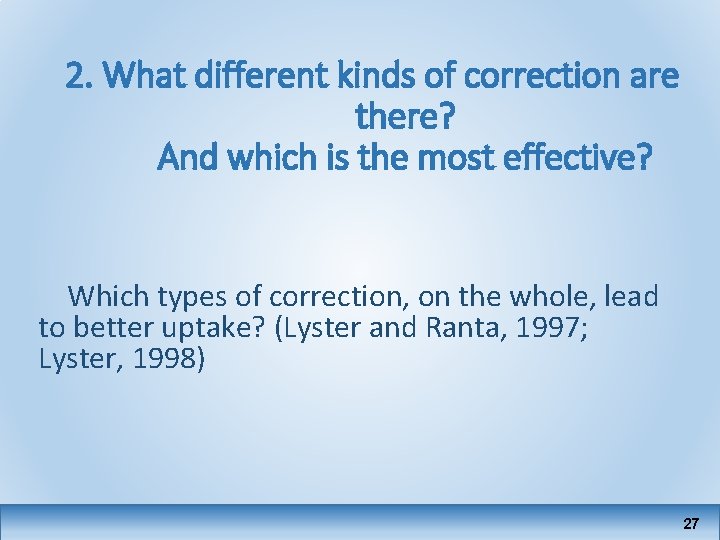
2. What different kinds of correction are there? And which is the most effective? Which types of correction, on the whole, lead to better uptake? (Lyster and Ranta, 1997; Lyster, 1998) 27
Types of correction: Recast Elicitation Clarification request Metalinguistic feedback Explicit correction Repetition Frequency of use: Uptake: 55% 14% 11% 8% 7% 5% 18% 46% 28% 45% 36% 31% 28
RESULTS Simple ‘recast’ was most often used, but least ‘uptake’! Recasts may not be perceived as correction at all! The best results are gained from corrective feedback + some negotiation. 29
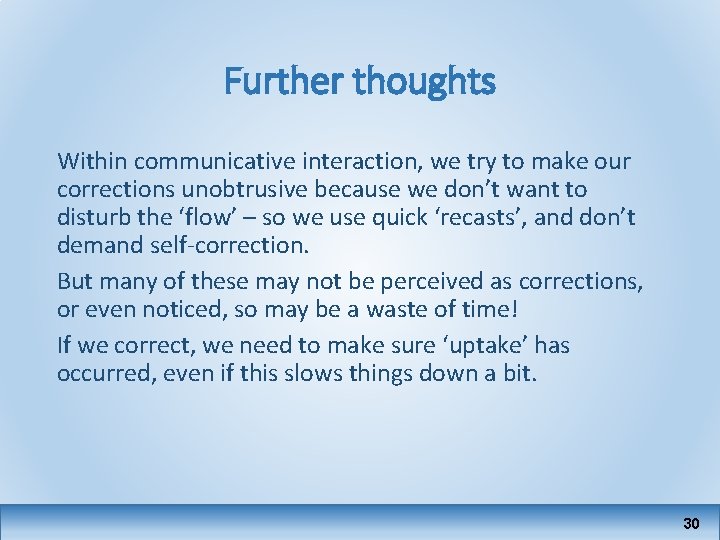
Further thoughts Within communicative interaction, we try to make our corrections unobtrusive because we don’t want to disturb the ‘flow’ – so we use quick ‘recasts’, and don’t demand self-correction. But many of these may not be perceived as corrections, or even noticed, so may be a waste of time! If we correct, we need to make sure ‘uptake’ has occurred, even if this slows things down a bit. 30
What are learners’ preferences? When I make a mistake in oral work I think Very Good Not it's very good / not very good / bad Good Very if the teacher. . . Good Bad . . . doesn't correct me at all. … tells me there's a mistake, but doesn't tell me what it is, so I have to correct myself. . . tells me a mistake and also tells me what the correct form should be. …tells me there's a mistake, tells me the correct form, and makes me repeat it. …tells me there's a mistake, and gets another student to correct me. …corrects my mistake and also explains why it was wrong. 31
What are learners’ preferences? When I make a mistake in written work I think it's very good / not very good / bad if the teacher. . . Very Good Not Very Good Bad …doesn't correct me at all. …indicates there's a mistake, but doesn't tell me what it is. …indicates there's a mistake, and gives me a hint what kind of mistake it is. Indicates there's a mistake and writes what the correct form should be. Corrects me in any of the ways indicated above, and doesn't make me rewrite. Corrects me in any of the ways indicated above, and makes me rewrite. 32
33
34
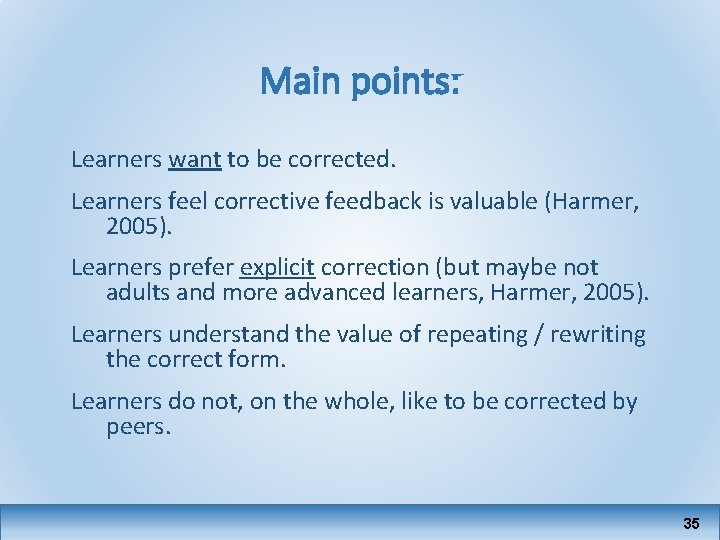
Main points: Learners want to be corrected. Learners feel corrective feedback is valuable (Harmer, 2005). Learners prefer explicit correction (but maybe not adults and more advanced learners, Harmer, 2005). Learners understand the value of repeating / rewriting the correct form. Learners do not, on the whole, like to be corrected by peers. 35
When should we NOT correct? 36
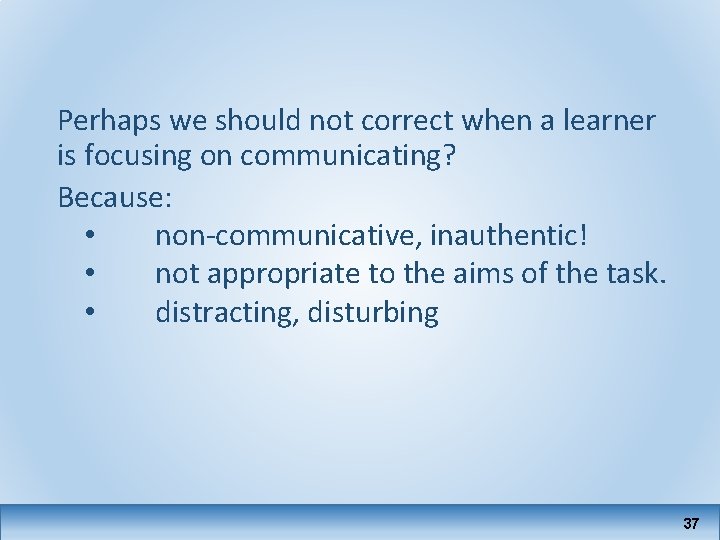
Perhaps we should not correct when a learner is focusing on communicating? Because: • non-communicative, inauthentic! • not appropriate to the aims of the task. • distracting, disturbing 37
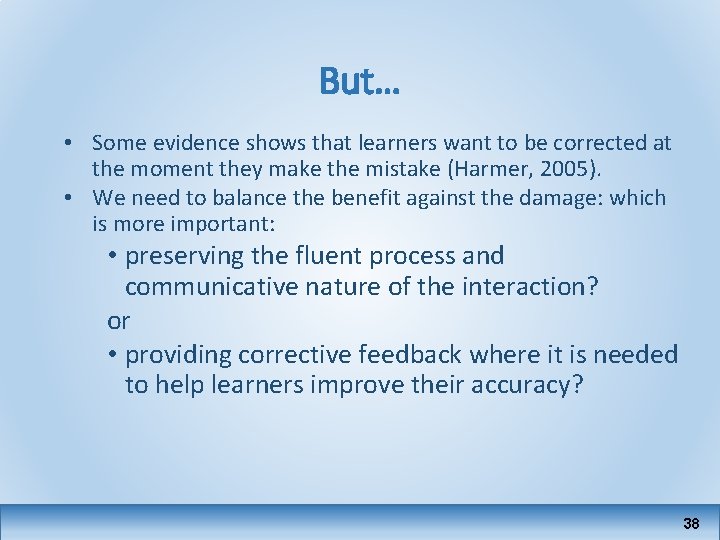
But… • Some evidence shows that learners want to be corrected at the moment they make the mistake (Harmer, 2005). • We need to balance the benefit against the damage: which is more important: • preserving the fluent process and communicative nature of the interaction? or • providing corrective feedback where it is needed to help learners improve their accuracy? 38
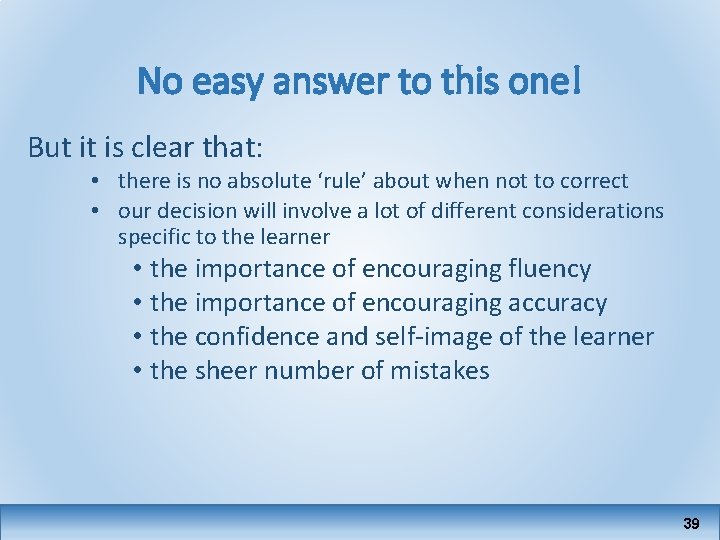
No easy answer to this one! But it is clear that: • there is no absolute ‘rule’ about when not to correct • our decision will involve a lot of different considerations specific to the learner • the importance of encouraging fluency • the importance of encouraging accuracy • the confidence and self-image of the learner • the sheer number of mistakes 39
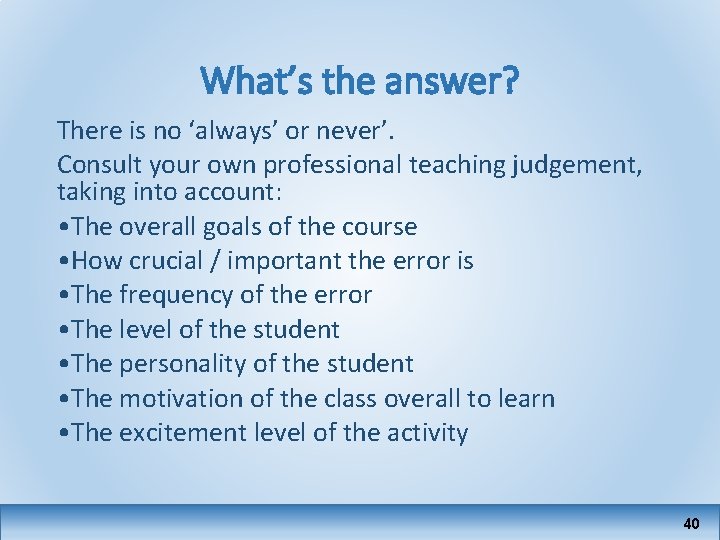
What’s the answer? There is no ‘always’ or never’. Consult your own professional teaching judgement, taking into account: • The overall goals of the course • How crucial / important the error is • The frequency of the error • The level of the student • The personality of the student • The motivation of the class overall to learn • The excitement level of the activity 40
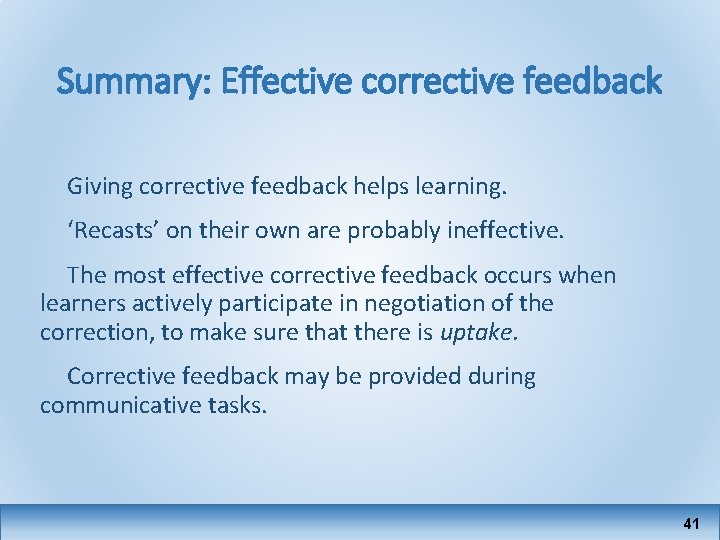
Summary: Effective corrective feedback Giving corrective feedback helps learning. ‘Recasts’ on their own are probably ineffective. The most effective corrective feedback occurs when learners actively participate in negotiation of the correction, to make sure that there is uptake. Corrective feedback may be provided during communicative tasks. 41
Thank you for listening! pennyur@gmail. com 42