
Grammaire Les verbes rflchis Franais 2 Les verbes
Grammaire – Les verbes réfléchis Français 2
Les verbes réfléchis 1. In English, sometimes the action of a verb is directed – or reflected back on the subject. When this happens, the verb may be followed by a reflexive pronoun, such as myself, yourself, him/herself, itself, ourselves, yourselves and themselves.
Par exemple -a. I looked at myself in the mirror. b. The children dress themselves for school. c. He made himself some dinner.
En français… 2. Reflexive verbs are used when the same person performs and receives the action of the verb. Since the subject also receives the action, an additional pronoun is needed. This is called the reflexive pronoun.
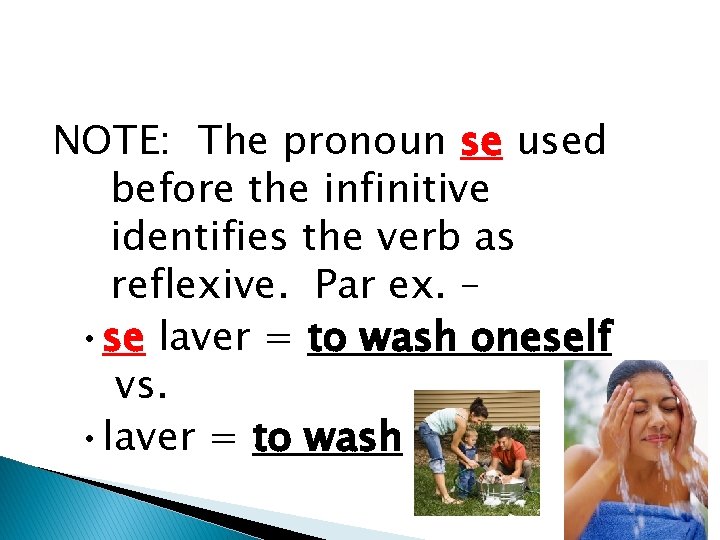
NOTE: The pronoun se used before the infinitive identifies the verb as reflexive. Par ex. – • se laver = to wash oneself vs. • laver = to wash
3. To form a reflexive verb, use the correct form of the verb and the reflexive pronoun that agrees with the subject. Par exemple…
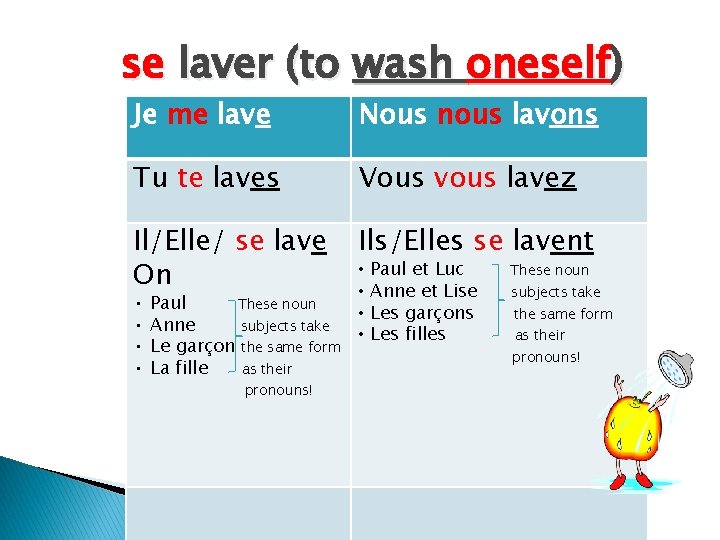
se laver (to wash oneself) Je me lave Nous nous lavons Tu te laves Vous vous lavez Il/Elle/ se lave On Ils/Elles se lavent • • Paul These noun Anne subjects take Le garçon the same form La fille as their pronouns! • • Paul et Luc Anne et Lise Les garçons Les filles These noun subjects take the same form as their pronouns!
4. Before a verb that begins with a vowel or silent h… �Shorten me to m’ te to t’ se to s’ Par exemple…
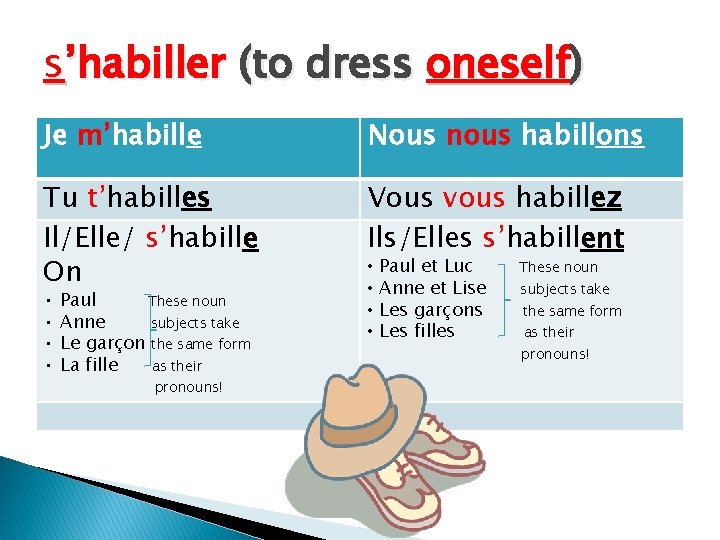
s’habiller (to dress oneself) Je m’habille Nous nous habillons Tu t’habilles Il/Elle/ s’habille On Vous vous habillez Ils/Elles s’habillent • • Paul These noun Anne subjects take Le garçon the same form La fille as their pronouns! • • Paul et Luc Anne et Lise Les garçons Les filles These noun subjects take the same form as their pronouns!
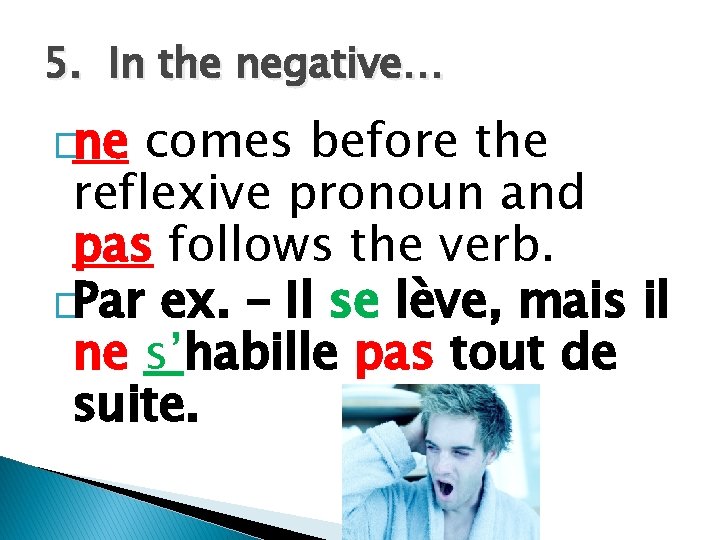
5. In the negative… �ne comes before the reflexive pronoun and pas follows the verb. �Par ex. – Il se lève, mais il ne s’habille pas tout de suite.
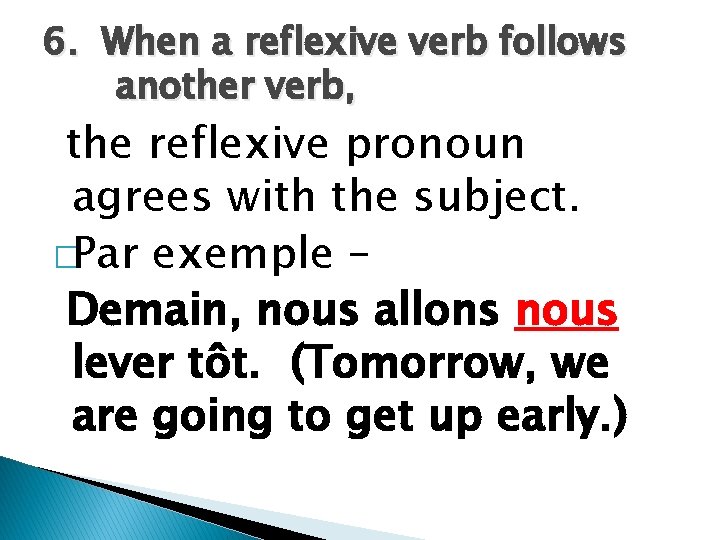
6. When a reflexive verb follows another verb, the reflexive pronoun agrees with the subject. �Par exemple – Demain, nous allons nous lever tôt. (Tomorrow, we are going to get up early. )
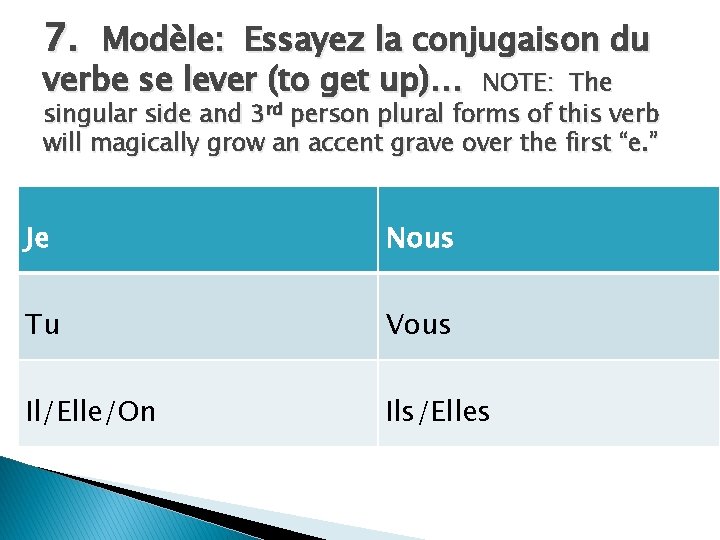
7. Modèle: Essayez la conjugaison du verbe se lever (to get up)… NOTE: The singular side and 3 rd person plural forms of this verb will magically grow an accent grave over the first “e. ” Je Nous Tu Vous Il/Elle/On Ils/Elles

se lever (to get up) Je me lève Nous nous levons Tu te lèves Vous vous levez Il/Elle se lève On Ils/Elles se lèvent
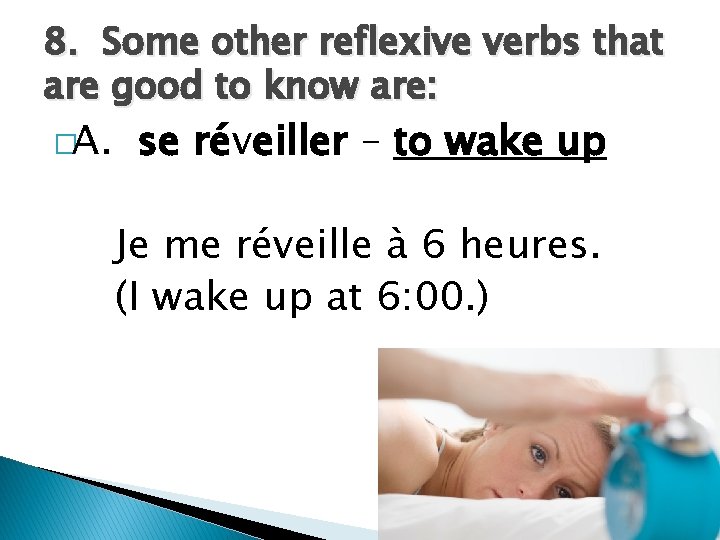
8. Some other reflexive verbs that are good to know are: �A. se réveiller – to wake up Je me réveille à 6 heures. (I wake up at 6: 00. )
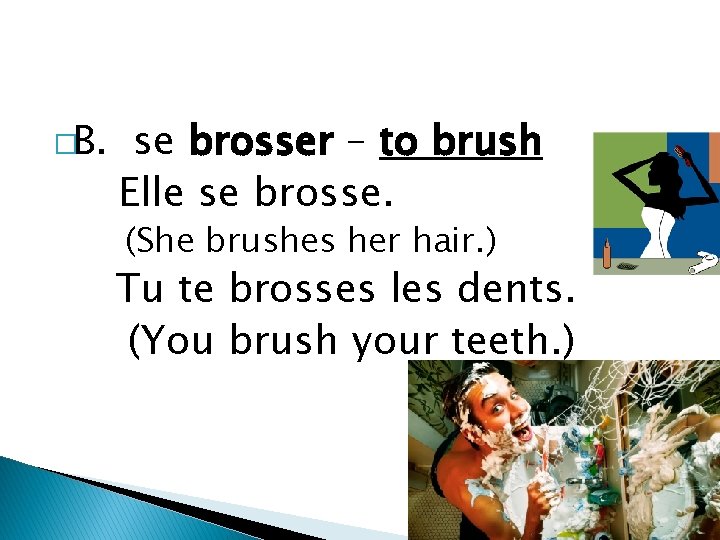
�B. se brosser – to brush Elle se brosse. (She brushes her hair. ) Tu te brosses les dents. (You brush your teeth. )
�C. se sécher – to dry oneself Elle se sèche les cheveux. (She dries her hair. )
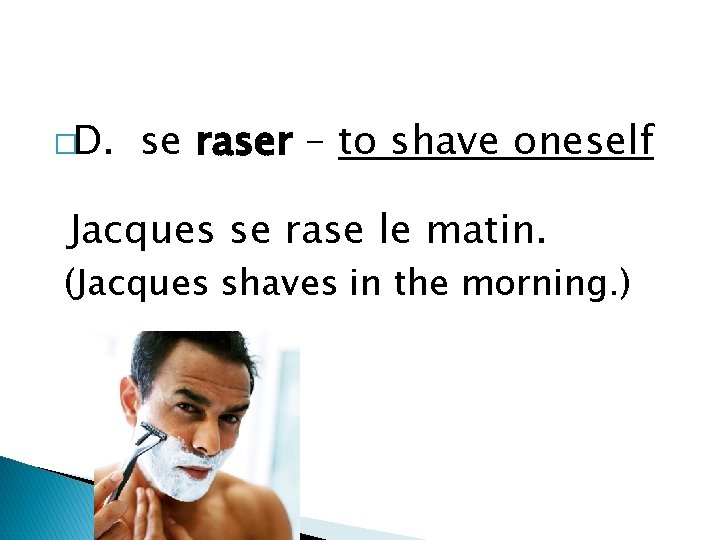
�D. se raser – to shave oneself Jacques se rase le matin. (Jacques shaves in the morning. )
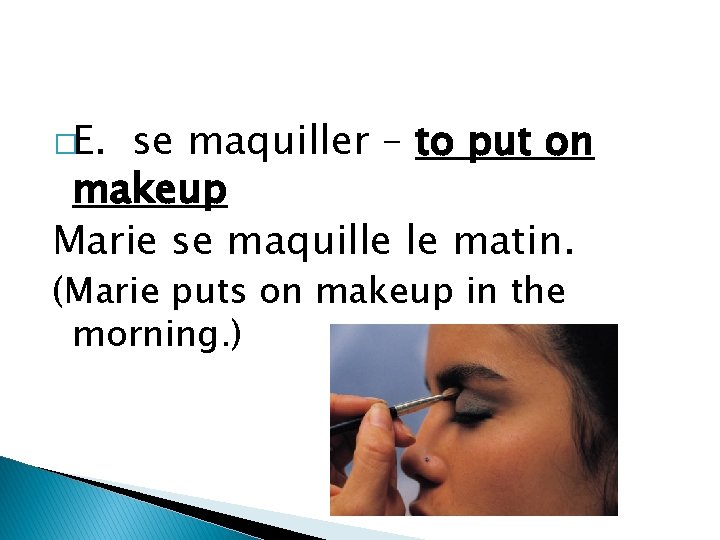
�E. se maquiller – to put on makeup Marie se maquille le matin. (Marie puts on makeup in the morning. )
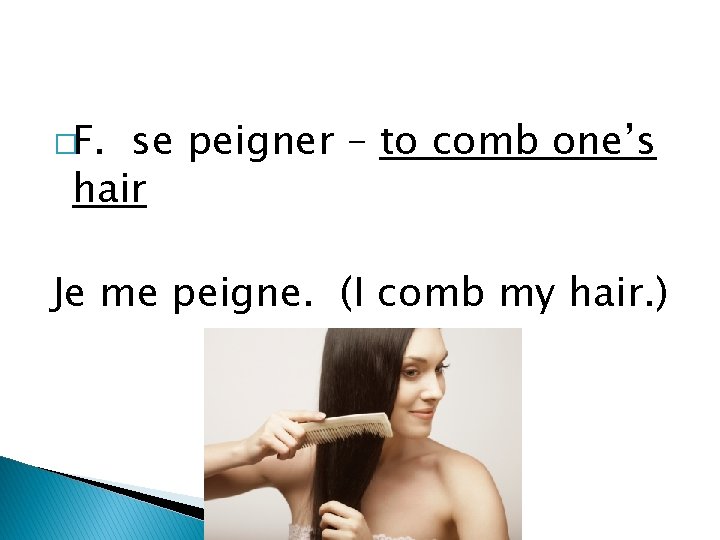
�F. se peigner – to comb one’s hair Je me peigne. (I comb my hair. )
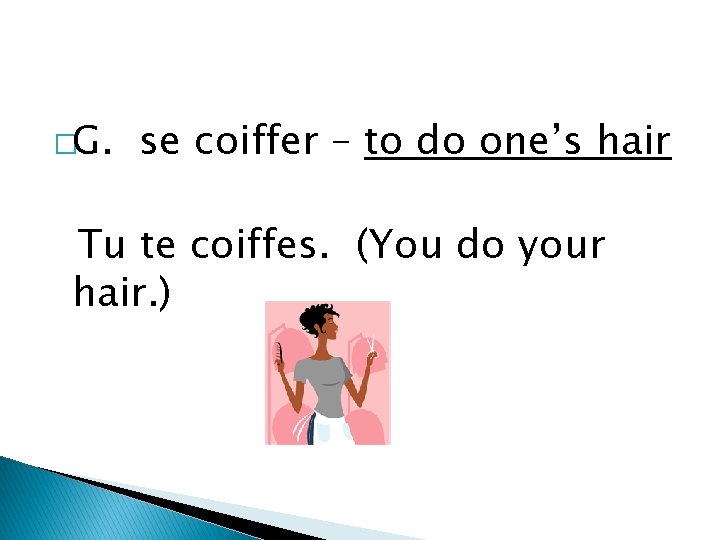
�G. se coiffer – to do one’s hair Tu te coiffes. (You do your hair. )
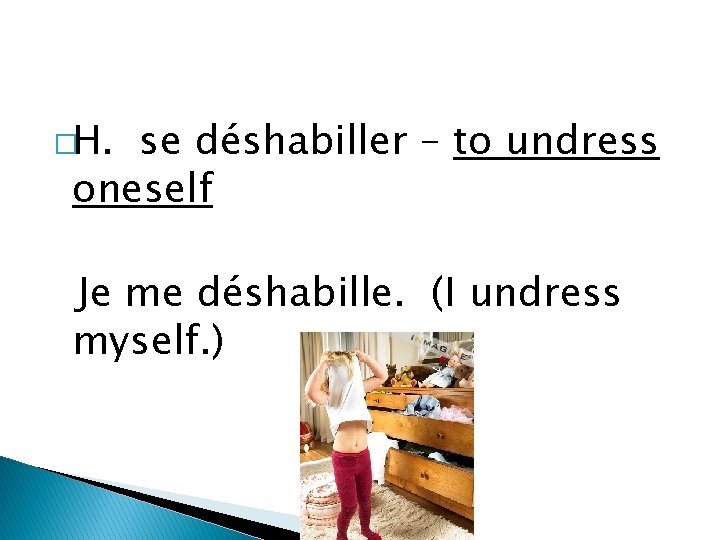
�H. se déshabiller – to undress oneself Je me déshabille. (I undress myself. )
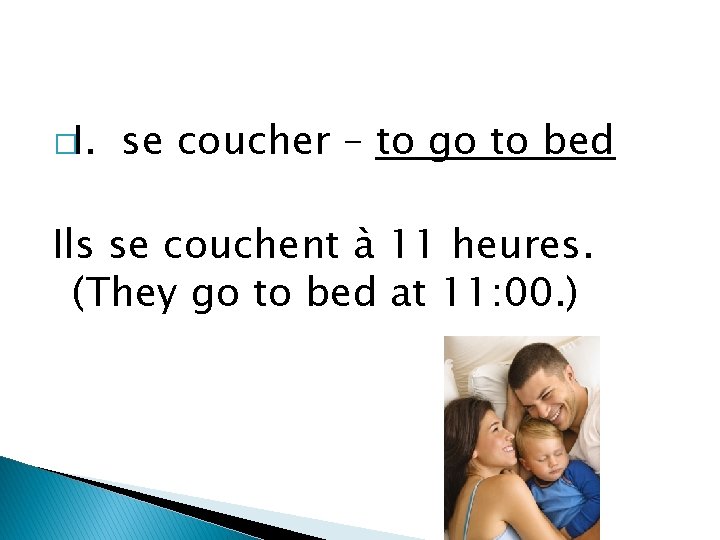
�I. se coucher – to go to bed Ils se couchent à 11 heures. (They go to bed at 11: 00. )
� Les autres verbes réfléchis importants sont… J. s’appeler – to call (onself); to be named Ex. – Je m’appelle Lise. (I call myself Lise. / My name is Lise. ) Note: This verb takes an extra “l” for the entire singular side and the 3 rd person plural forms. K. se dépêcher – to hurry (oneself) Ex. – Nous nous dépêchons le matin. (We hurry {ourselves} in the morning. )
Fin!
- Slides: 24