
GRAM POSITIVE GRAM NEGATIVE BACTERIA DR THAMINA SAYYED
GRAM POSITIVE & GRAM NEGATIVE BACTERIA DR. THAMINA SAYYED M. B. B. S. MD. MICROBIOLOGY REGISTRAR PROF KAMBALMBBS FRCpath 1
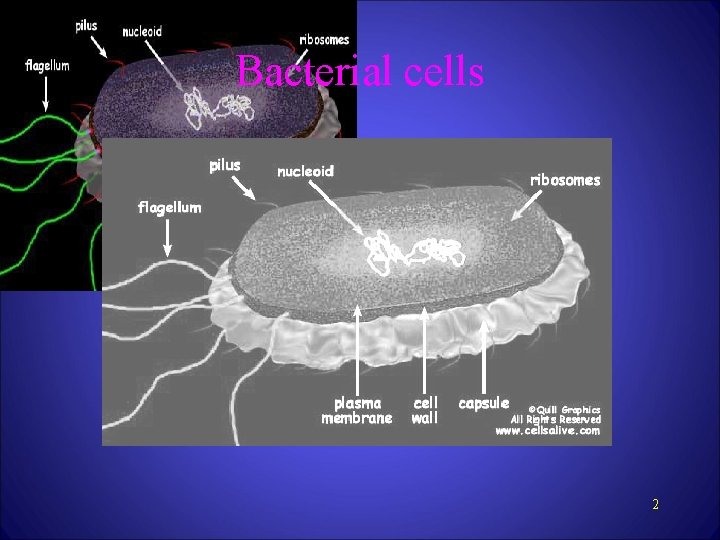
Bacterial cells 2
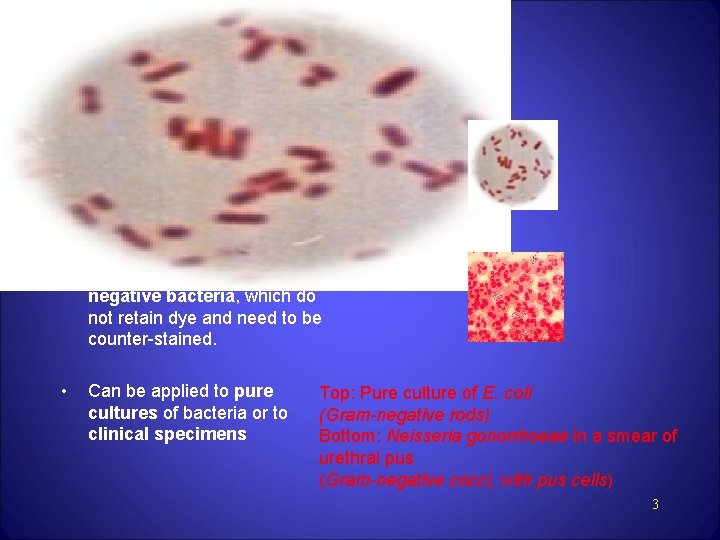
GRAM STAIN • Developed in 1884 by the Danish physician Hans Christian Gram • An important tool in bacterial taxonomy, distinguishing socalled Gram-positive bacteria, which remain coloured after the staining procedure, from Gramnegative bacteria, which do not retain dye and need to be counter-stained. • Can be applied to pure cultures of bacteria or to clinical specimens Top: Pure culture of E. coli (Gram-negative rods) Bottom: Neisseria gonorrhoeae in a smear of urethral pus (Gram-negative cocci, with pus cells) 3
CELL WALL Gram positive cell wall • Consists of – a thick, homogenous sheath of peptidoglycan 20 -80 nm thick – tightly bound acidic polysaccharides, including teichoic acid and lipoteichoic acid – cell membrane • Retain crystal violet and stain purple Gram negative cell wall • Consists of – an outer membrane containing lipopolysaccharide (LPS) – thin shell of peptidoglycan – periplasmic space – inner membrane • Lose crystal violet and stain pink from safranin counterstain 4
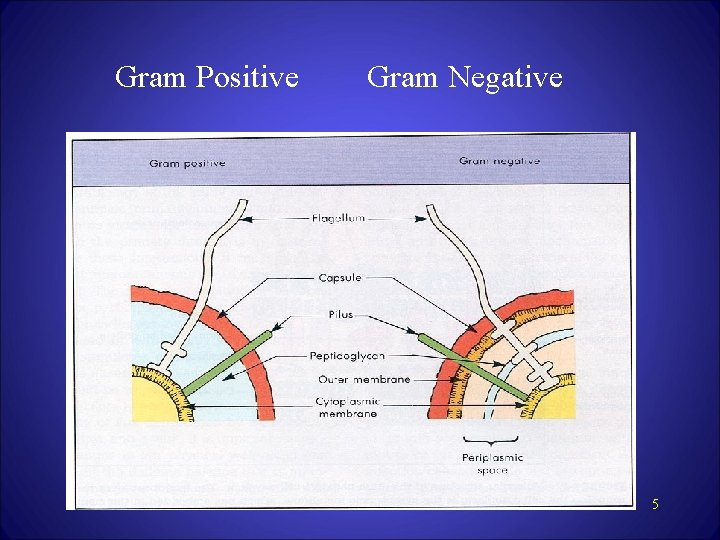
Gram Positive Gram Negative 5
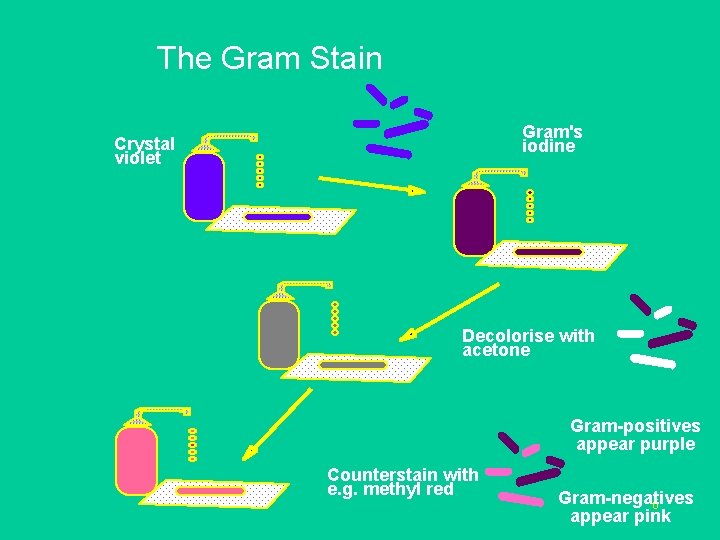
The Gram Stain Gram's iodine Crystal violet Decolorise with acetone Gram-positives appear purple Counterstain with e. g. methyl red Gram-negatives 6 appear pink
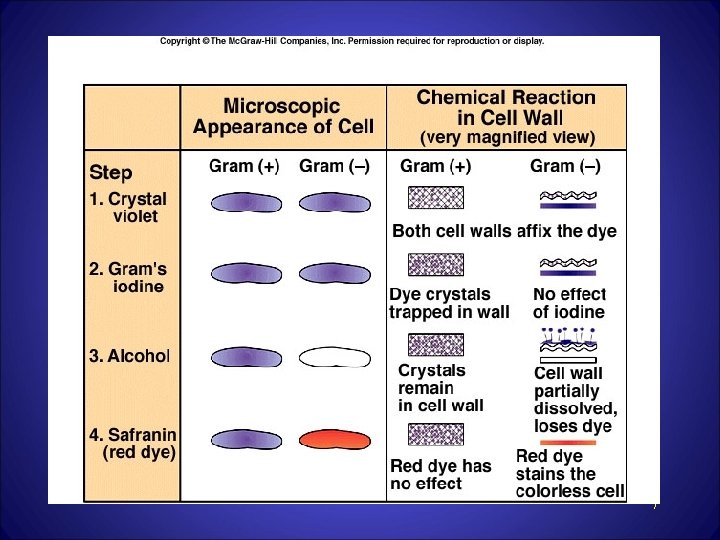
7
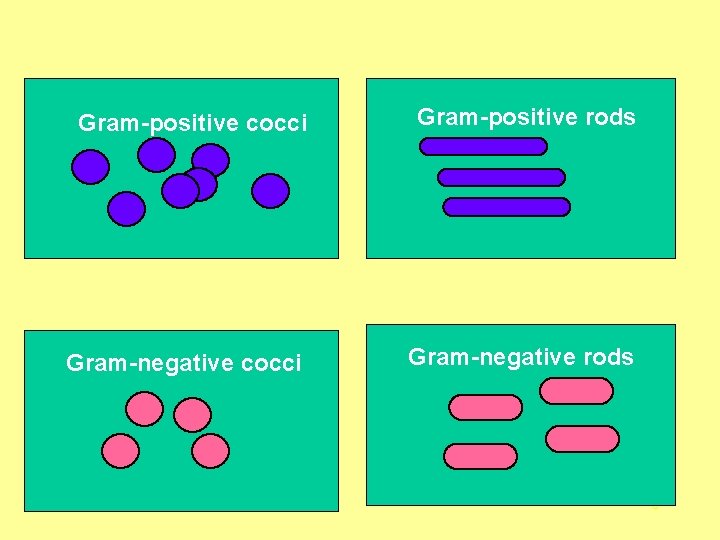
Gram-positive cocci Gram-positive rods Gram-negative cocci Gram-negative rods 8
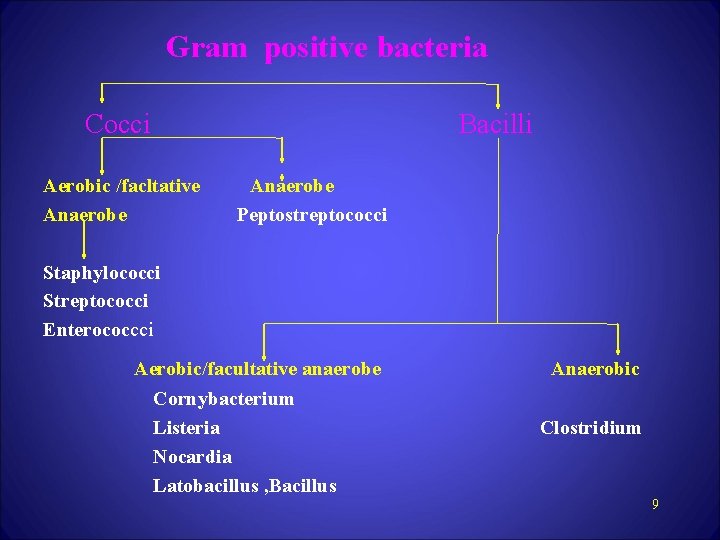
Gram positive bacteria Cocci Bacilli Aerobic /facltative Anaerobe Peptostreptococci Staphylococci Streptococci Enterococcci Aerobic/facultative anaerobe Cornybacterium Listeria Nocardia Latobacillus , Bacillus Anaerobic Clostridium 9

Gram-positive Cocci • Staphylococci – Catalase-positive – Gram-positive cocci in clusters • Staphylococcus aureus – coagulase-positive most important – pathogen • Staph. epidermidis – and other coagulase negative staphylococci eg. S saprophiticus • Streptococci – Catalase-negative – Gram-positive cocci in chains or pairs • • Strep. pyogenes Strep. pneumoniae Viridans-type streps Enterococcus faecalis 10
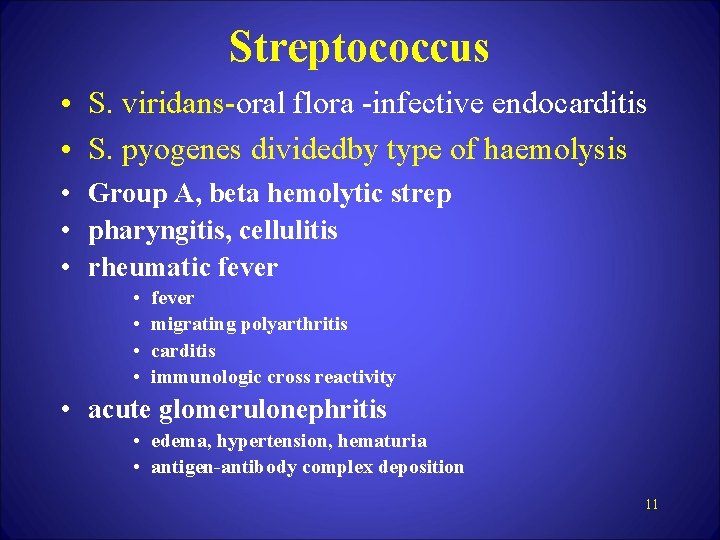
Streptococcus • S. viridans-oral flora -infective endocarditis • S. pyogenes dividedby type of haemolysis • Group A, beta hemolytic strep • pharyngitis, cellulitis • rheumatic fever • • fever migrating polyarthritis carditis immunologic cross reactivity • acute glomerulonephritis • edema, hypertension, hematuria • antigen-antibody complex deposition 11
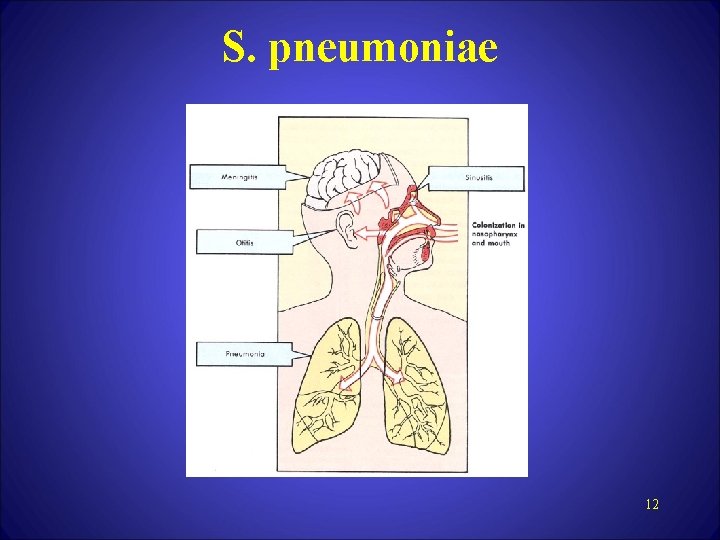
S. pneumoniae 12
GRAM POSITIVE BACILLI • A-Spore forming • B-Non spore forming Spore forming are divided into: Aerobic spore forming most important is Bacillus anthracis, that causes anthracis 13
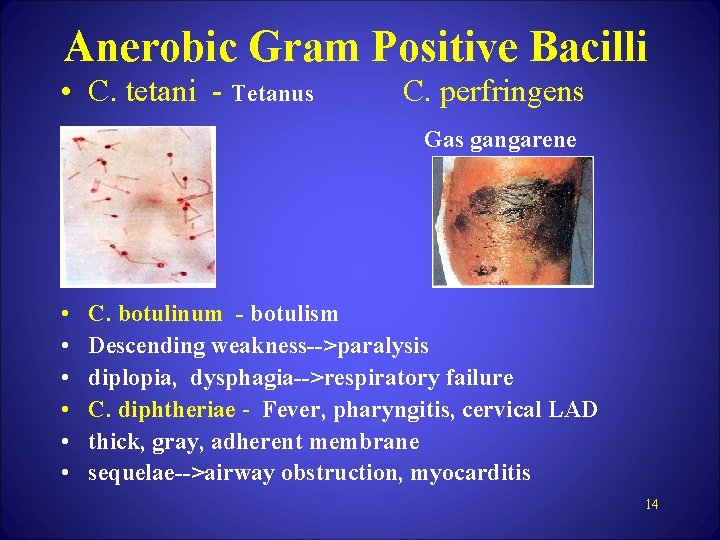
Anerobic Gram Positive Bacilli • C. tetani - Tetanus • • C. perfringens Gas gangarene C. botulinum - botulism Descending weakness-->paralysis diplopia, dysphagia-->respiratory failure C. diphtheriae - Fever, pharyngitis, cervical LAD thick, gray, adherent membrane sequelae-->airway obstruction, myocarditis 14
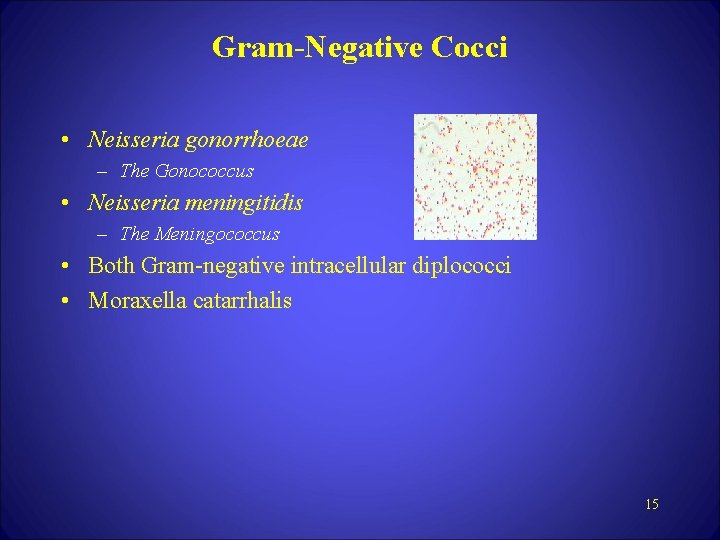
Gram-Negative Cocci • Neisseria gonorrhoeae – The Gonococcus • Neisseria meningitidis – The Meningococcus • Both Gram-negative intracellular diplococci • Moraxella catarrhalis 15

Gram-Negative Rods • Enteric Bacteria they ferment sugars most important are; – – E. coli Salmonella Shigella Yersinia and Klebsiella pneumoniae – Proteus
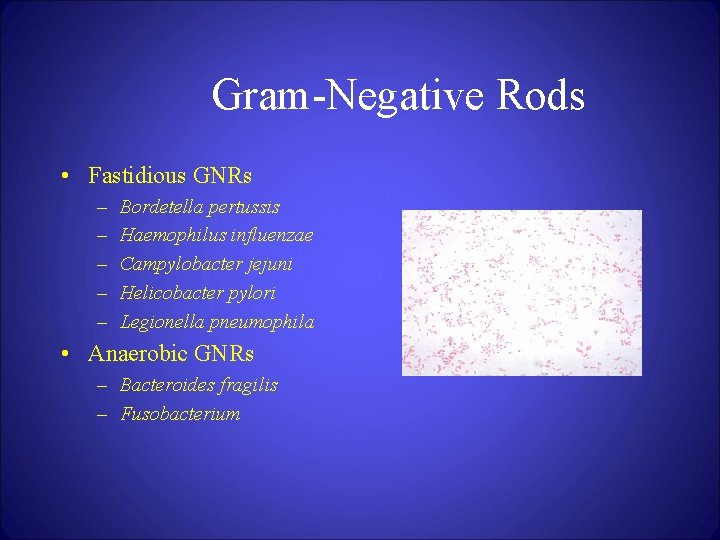
Gram-Negative Rods • Fastidious GNRs – – – Bordetella pertussis Haemophilus influenzae Campylobacter jejuni Helicobacter pylori Legionella pneumophila • Anaerobic GNRs – Bacteroides fragilis – Fusobacterium
Oxidise positive non fermentative i. e. they do not ferment sugars e. g. v Pseudomonas that causes infection in Immunocompromised patients v Oxidise negative non fermentative e. g. Acinobacter species 18
Oxidise positive comma shaped and also fermentative most important is Vibrio cholerae that causes cholera which is a disease characterized by severe diarrhea and dehydration 19
Non-Gram-stainable bacteria • Unusual gram-positives • Spirochaetes • Obligate intra-cellular bacteria
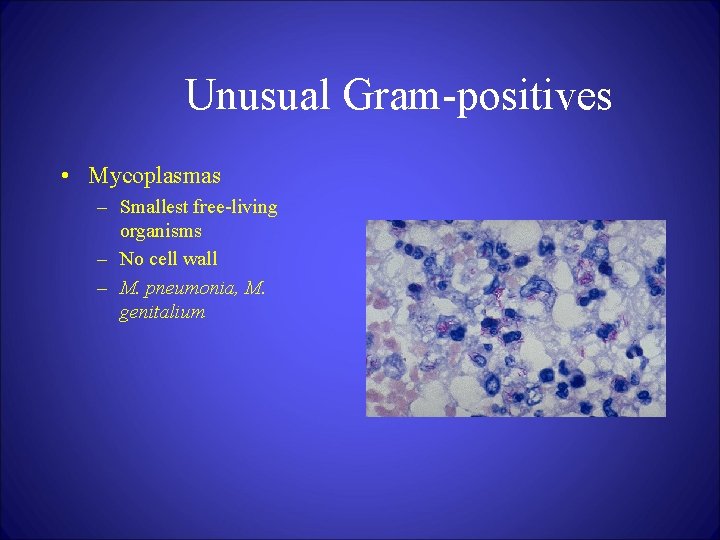
Unusual Gram-positives • Mycoplasmas – Smallest free-living organisms – No cell wall – M. pneumonia, M. genitalium
- Slides: 21