
Grains are the source of all breads and
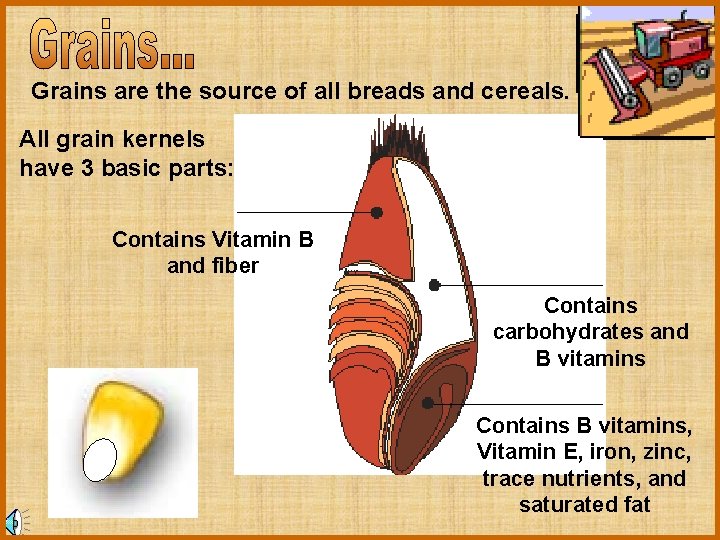
Grains are the source of all breads and cereals. All grain kernels have 3 basic parts: Contains Vitamin B and fiber Contains carbohydrates and B vitamins Contains B vitamins, Vitamin E, iron, zinc, trace nutrients, and saturated fat
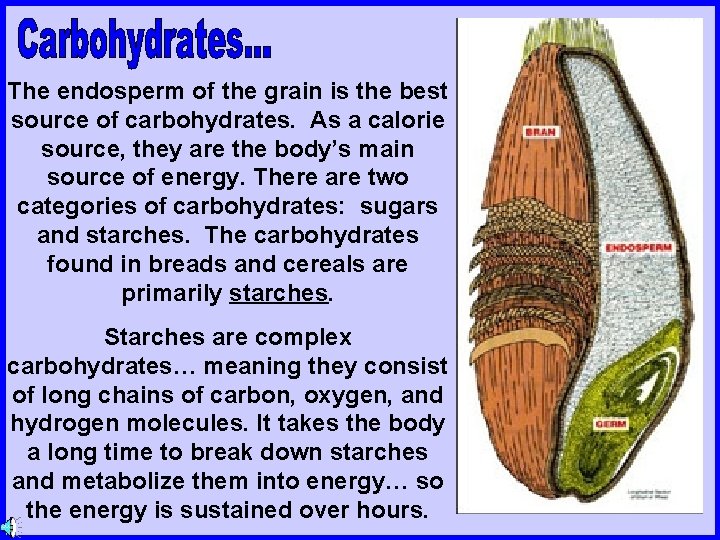
The endosperm of the grain is the best source of carbohydrates. As a calorie source, they are the body’s main source of energy. There are two categories of carbohydrates: sugars and starches. The carbohydrates found in breads and cereals are primarily starches. Starches are complex carbohydrates… meaning they consist of long chains of carbon, oxygen, and hydrogen molecules. It takes the body a long time to break down starches and metabolize them into energy… so the energy is sustained over hours.
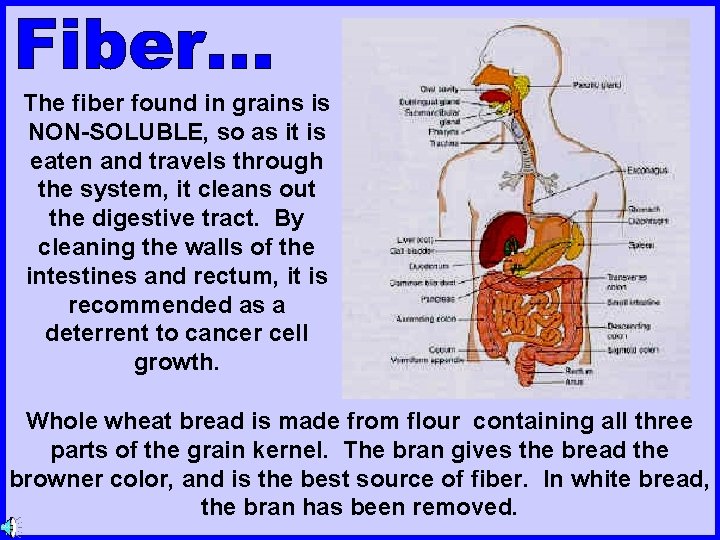
The fiber found in grains is NON-SOLUBLE, so as it is eaten and travels through the system, it cleans out the digestive tract. By cleaning the walls of the intestines and rectum, it is recommended as a deterrent to cancer cell growth. Whole wheat bread is made from flour containing all three parts of the grain kernel. The bran gives the bread the browner color, and is the best source of fiber. In white bread, the bran has been removed.
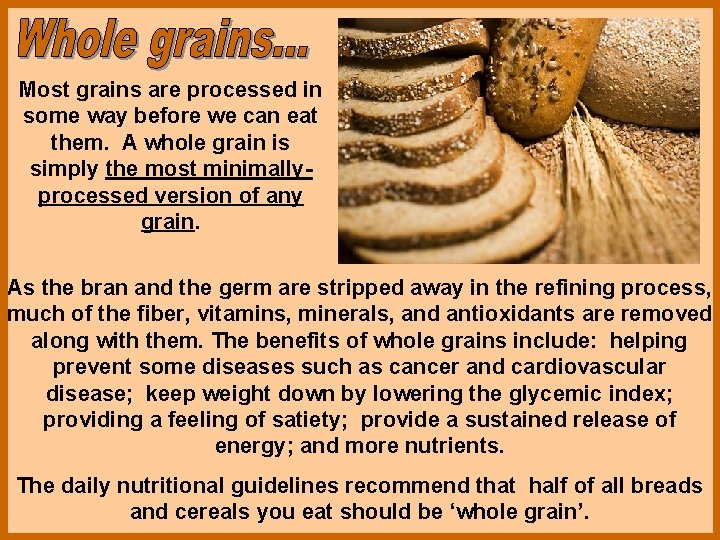
Most grains are processed in some way before we can eat them. A whole grain is simply the most minimallyprocessed version of any grain. As the bran and the germ are stripped away in the refining process, much of the fiber, vitamins, minerals, and antioxidants are removed along with them. The benefits of whole grains include: helping prevent some diseases such as cancer and cardiovascular disease; keep weight down by lowering the glycemic index; providing a feeling of satiety; provide a sustained release of energy; and more nutrients. The daily nutritional guidelines recommend that half of all breads and cereals you eat should be ‘whole grain’.
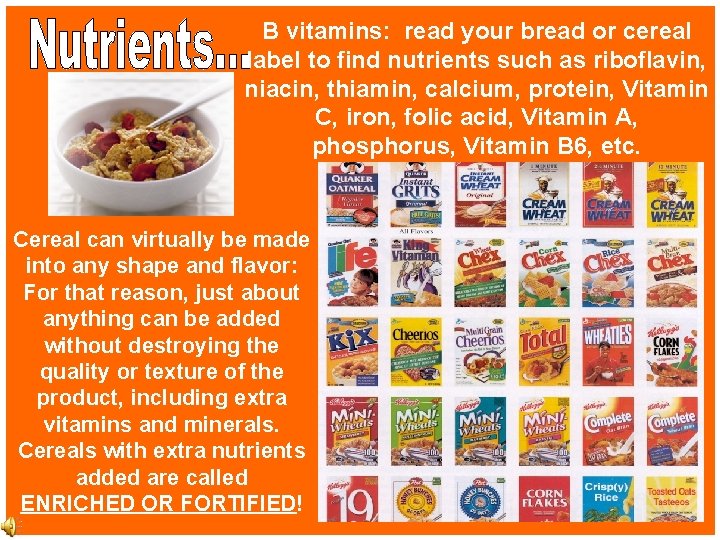
B vitamins: read your bread or cereal label to find nutrients such as riboflavin, niacin, thiamin, calcium, protein, Vitamin C, iron, folic acid, Vitamin A, phosphorus, Vitamin B 6, etc. Cereal can virtually be made into any shape and flavor: For that reason, just about anything can be added without destroying the quality or texture of the product, including extra vitamins and minerals. Cereals with extra nutrients added are called ENRICHED OR FORTIFIED!
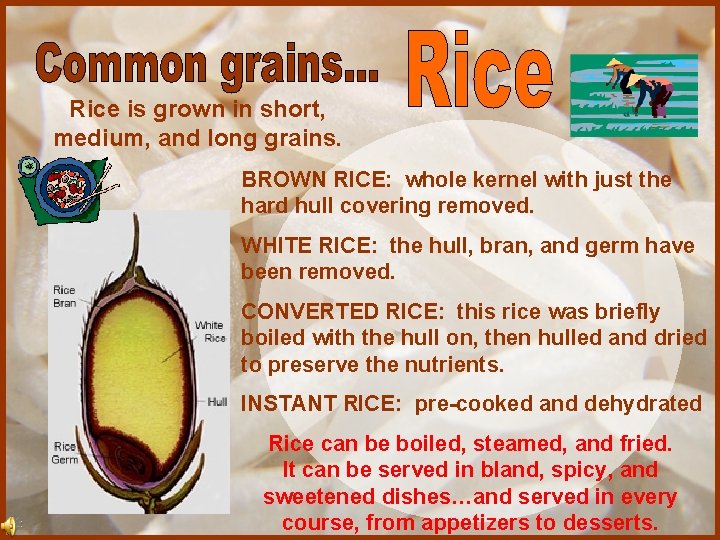
Rice is grown in short, medium, and long grains. BROWN RICE: whole kernel with just the hard hull covering removed. WHITE RICE: the hull, bran, and germ have been removed. CONVERTED RICE: this rice was briefly boiled with the hull on, then hulled and dried to preserve the nutrients. INSTANT RICE: pre-cooked and dehydrated Rice can be boiled, steamed, and fried. It can be served in bland, spicy, and sweetened dishes…and served in every course, from appetizers to desserts.
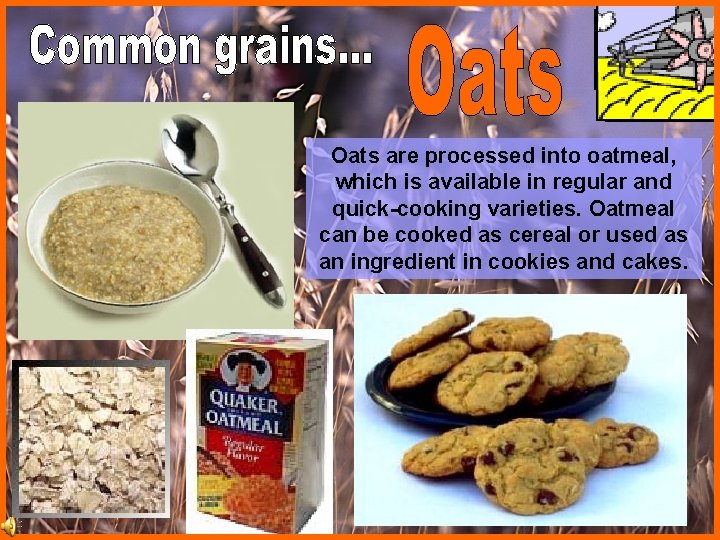
Oats are processed into oatmeal, which is available in regular and quick-cooking varieties. Oatmeal can be cooked as cereal or used as an ingredient in cookies and cakes.
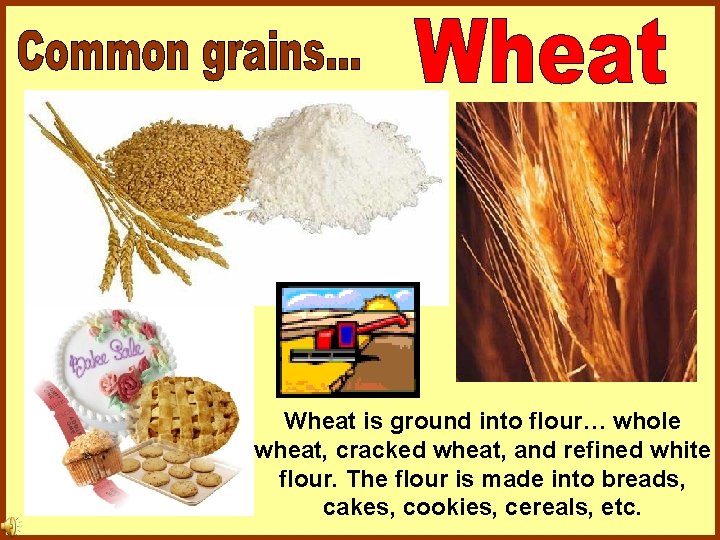
Wheat is ground into flour… whole wheat, cracked wheat, and refined white flour. The flour is made into breads, cakes, cookies, cereals, etc.
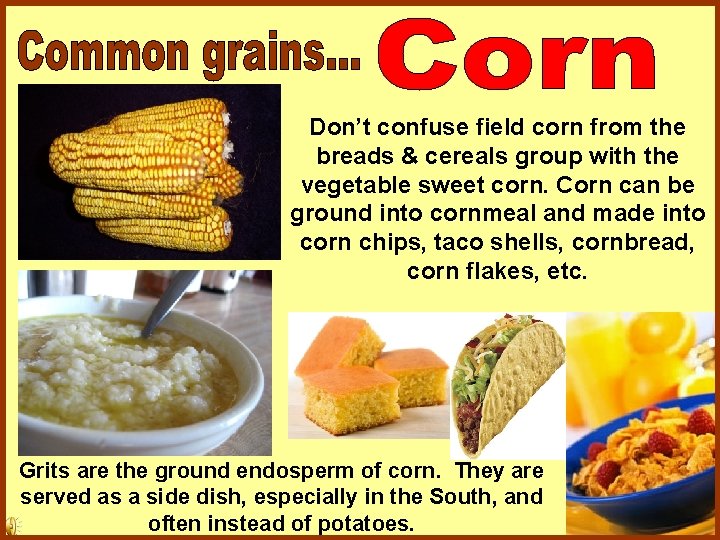
Don’t confuse field corn from the breads & cereals group with the vegetable sweet corn. Corn can be ground into cornmeal and made into corn chips, taco shells, cornbread, corn flakes, etc. Grits are the ground endosperm of corn. They are served as a side dish, especially in the South, and often instead of potatoes.
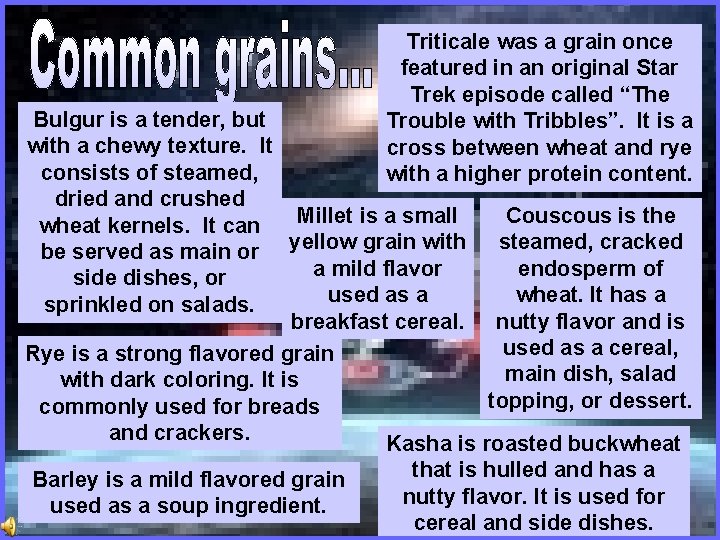
Triticale was a grain once featured in an original Star Trek episode called “The Trouble with Tribbles”. It is a cross between wheat and rye with a higher protein content. Bulgur is a tender, but with a chewy texture. It consists of steamed, dried and crushed Millet is a small Couscous is the wheat kernels. It can be served as main or yellow grain with steamed, cracked a mild flavor endosperm of side dishes, or used as a wheat. It has a sprinkled on salads. breakfast cereal. nutty flavor and is used as a cereal, Rye is a strong flavored grain main dish, salad with dark coloring. It is topping, or dessert. commonly used for breads and crackers. Kasha is roasted buckwheat Barley is a mild flavored grain used as a soup ingredient. that is hulled and has a nutty flavor. It is used for cereal and side dishes.
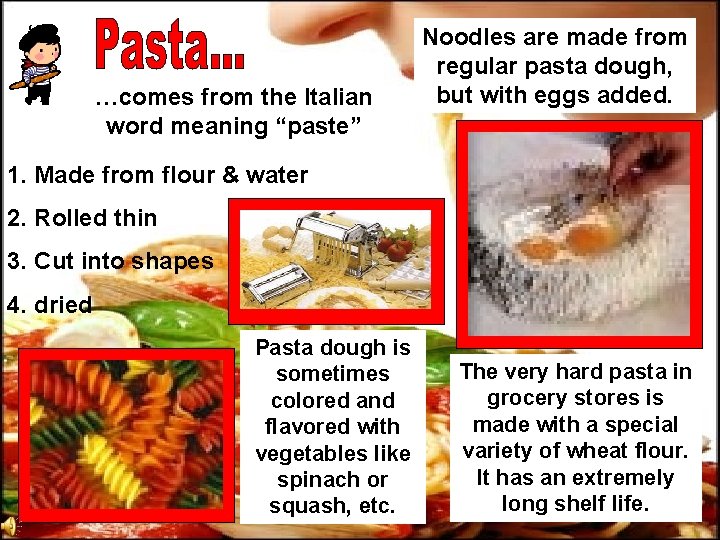
…comes from the Italian word meaning “paste” Noodles are made from regular pasta dough, but with eggs added. 1. Made from flour & water 2. Rolled thin 3. Cut into shapes 4. dried Pasta dough is sometimes colored and flavored with vegetables like spinach or squash, etc. The very hard pasta in grocery stores is made with a special variety of wheat flour. It has an extremely long shelf life.
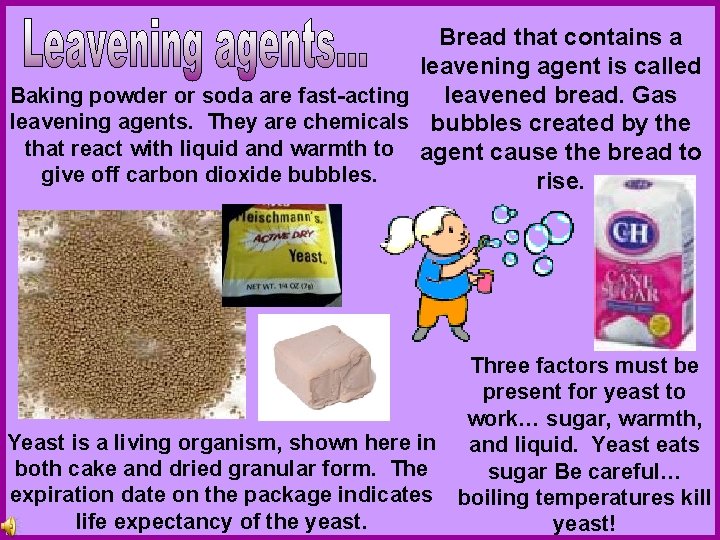
Bread that contains a leavening agent is called leavened bread. Gas Baking powder or soda are fast-acting leavening agents. They are chemicals bubbles created by the that react with liquid and warmth to agent cause the bread to give off carbon dioxide bubbles. rise. Three factors must be present for yeast to work… sugar, warmth, Yeast is a living organism, shown here in and liquid. Yeast eats both cake and dried granular form. The sugar Be careful… expiration date on the package indicates boiling temperatures kill life expectancy of the yeast!

1 cup of warm water with 3 sugar cubes and ¼ oz. yeast will inflate a balloon with carbon dioxide within 1 hour.
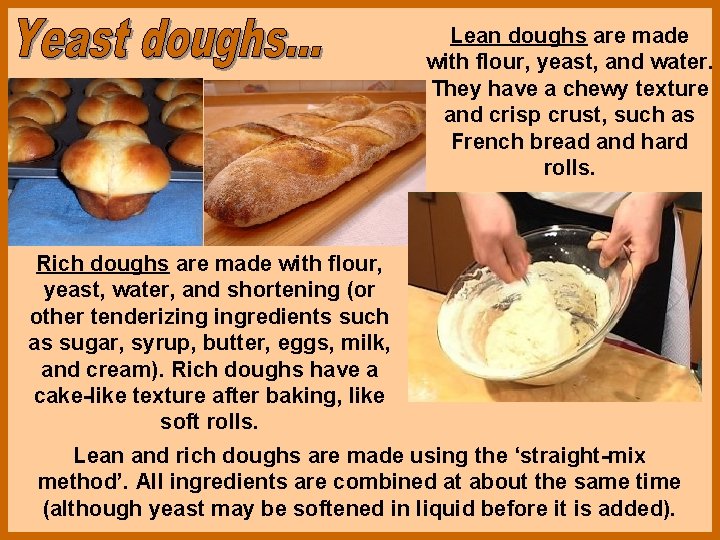
Lean doughs are made with flour, yeast, and water. They have a chewy texture and crisp crust, such as French bread and hard rolls. Rich doughs are made with flour, yeast, water, and shortening (or other tenderizing ingredients such as sugar, syrup, butter, eggs, milk, and cream). Rich doughs have a cake-like texture after baking, like soft rolls. Lean and rich doughs are made using the ‘straight-mix method’. All ingredients are combined at about the same time (although yeast may be softened in liquid before it is added).
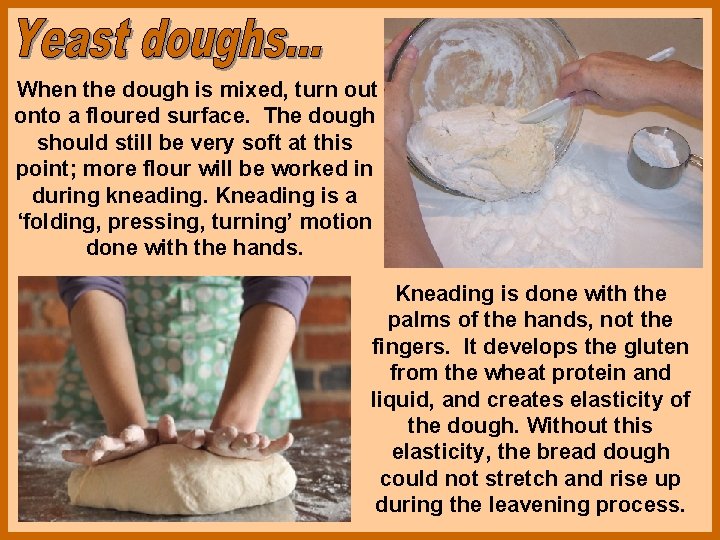
When the dough is mixed, turn out onto a floured surface. The dough should still be very soft at this point; more flour will be worked in during kneading. Kneading is a ‘folding, pressing, turning’ motion done with the hands. Kneading is done with the palms of the hands, not the fingers. It develops the gluten from the wheat protein and liquid, and creates elasticity of the dough. Without this elasticity, the bread dough could not stretch and rise up during the leavening process.
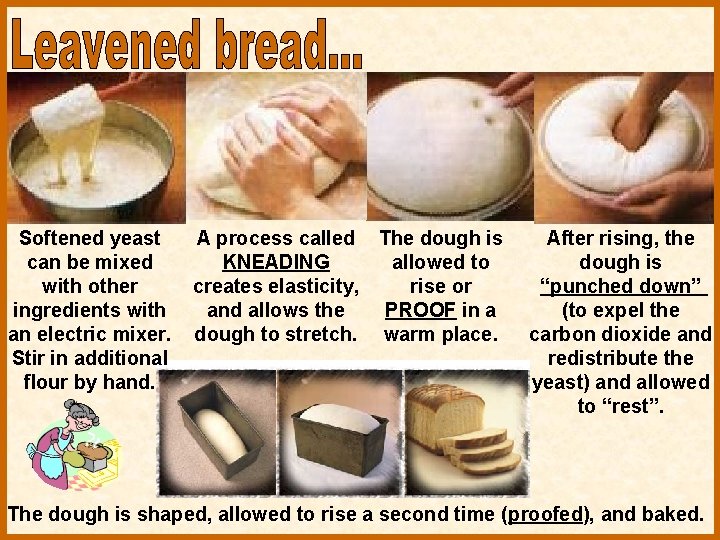
Softened yeast can be mixed with other ingredients with an electric mixer. Stir in additional flour by hand. A process called The dough is KNEADING allowed to creates elasticity, rise or and allows the PROOF in a dough to stretch. warm place. After rising, the dough is “punched down” (to expel the carbon dioxide and redistribute the yeast) and allowed to “rest”. The dough is shaped, allowed to rise a second time (proofed), and baked.
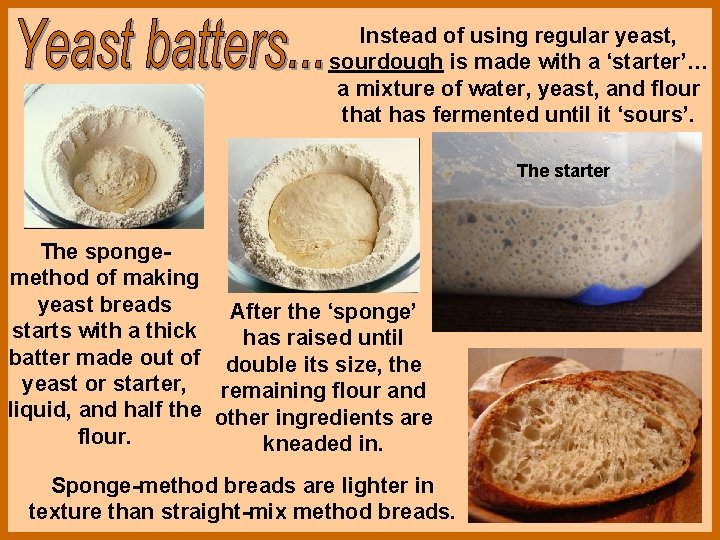
Instead of using regular yeast, sourdough is made with a ‘starter’… a mixture of water, yeast, and flour that has fermented until it ‘sours’. The starter The spongemethod of making yeast breads After the ‘sponge’ starts with a thick has raised until batter made out of double its size, the yeast or starter, remaining flour and liquid, and half the other ingredients are flour. kneaded in. Sponge-method breads are lighter in texture than straight-mix method breads.
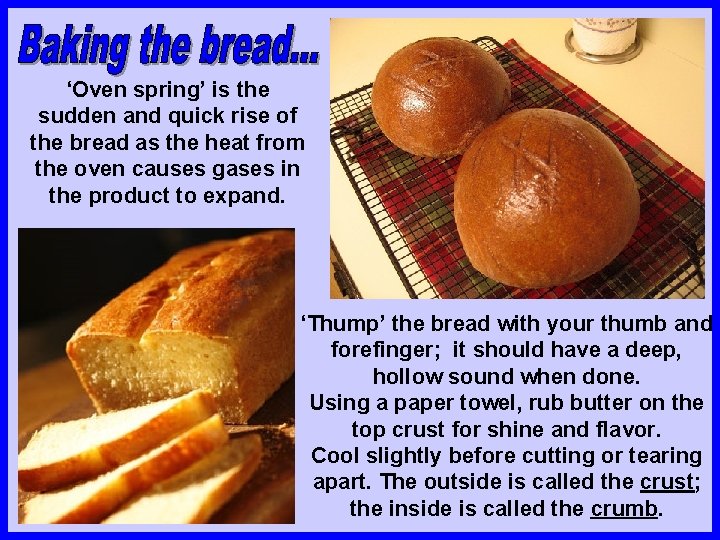
‘Oven spring’ is the sudden and quick rise of the bread as the heat from the oven causes gases in the product to expand. ‘Thump’ the bread with your thumb and forefinger; it should have a deep, hollow sound when done. Using a paper towel, rub butter on the top crust for shine and flavor. Cool slightly before cutting or tearing apart. The outside is called the crust; the inside is called the crumb.
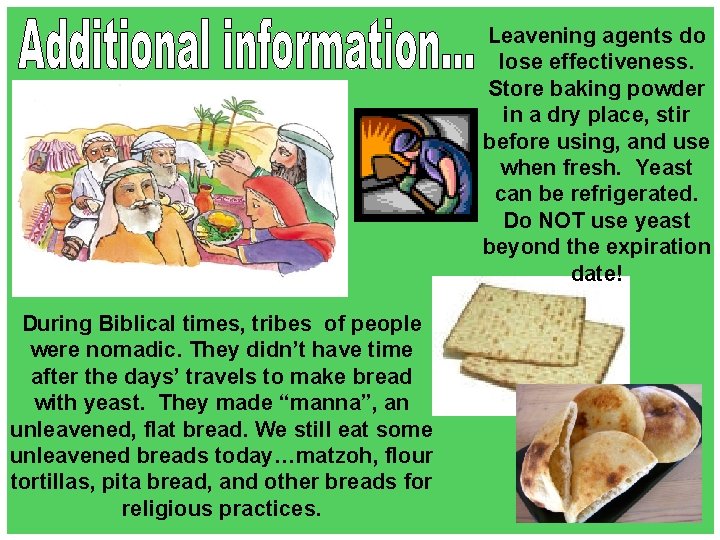
Leavening agents do lose effectiveness. Store baking powder in a dry place, stir before using, and use when fresh. Yeast can be refrigerated. Do NOT use yeast beyond the expiration date! During Biblical times, tribes of people were nomadic. They didn’t have time after the days’ travels to make bread with yeast. They made “manna”, an unleavened, flat bread. We still eat some unleavened breads today…matzoh, flour tortillas, pita bread, and other breads for religious practices.
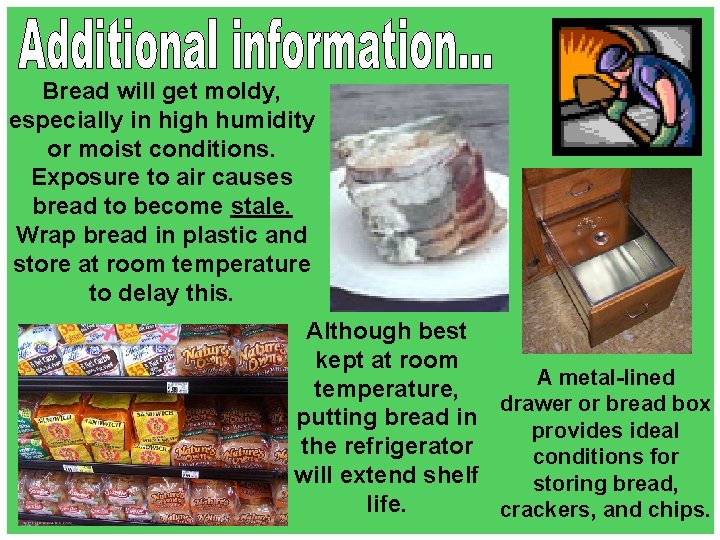
Bread will get moldy, especially in high humidity or moist conditions. Exposure to air causes bread to become stale. Wrap bread in plastic and store at room temperature to delay this. Although best kept at room A metal-lined temperature, drawer or bread box putting bread in provides ideal the refrigerator conditions for will extend shelf storing bread, life. crackers, and chips.
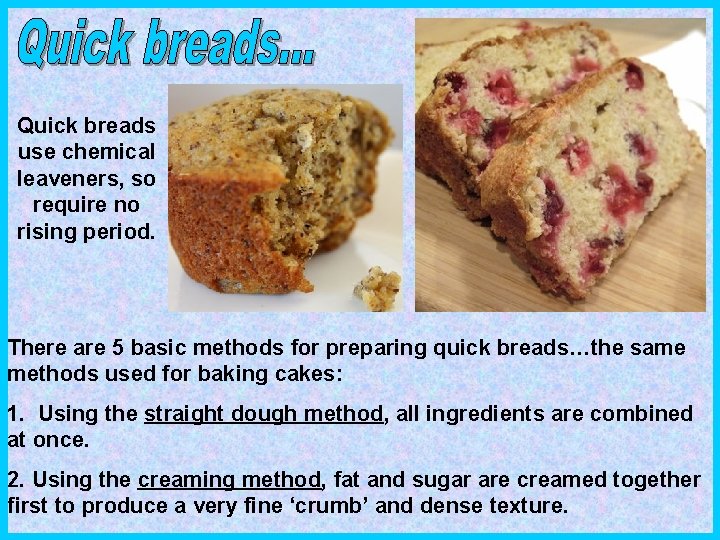
Quick breads use chemical leaveners, so require no rising period. There are 5 basic methods for preparing quick breads…the same methods used for baking cakes: 1. Using the straight dough method, all ingredients are combined at once. 2. Using the creaming method, fat and sugar are creamed together first to produce a very fine ‘crumb’ and dense texture.
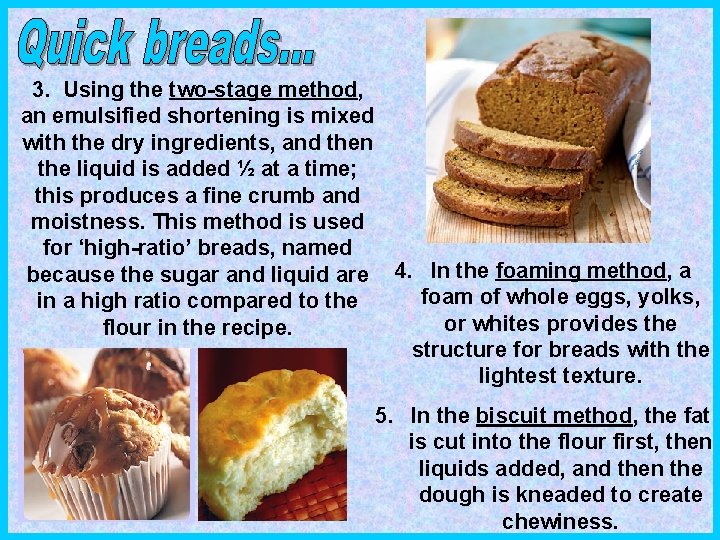
3. Using the two-stage method, an emulsified shortening is mixed with the dry ingredients, and then the liquid is added ½ at a time; this produces a fine crumb and moistness. This method is used for ‘high-ratio’ breads, named because the sugar and liquid are 4. In the foaming method, a foam of whole eggs, yolks, in a high ratio compared to the or whites provides the flour in the recipe. structure for breads with the lightest texture. 5. In the biscuit method, the fat is cut into the flour first, then liquids added, and then the dough is kneaded to create chewiness.
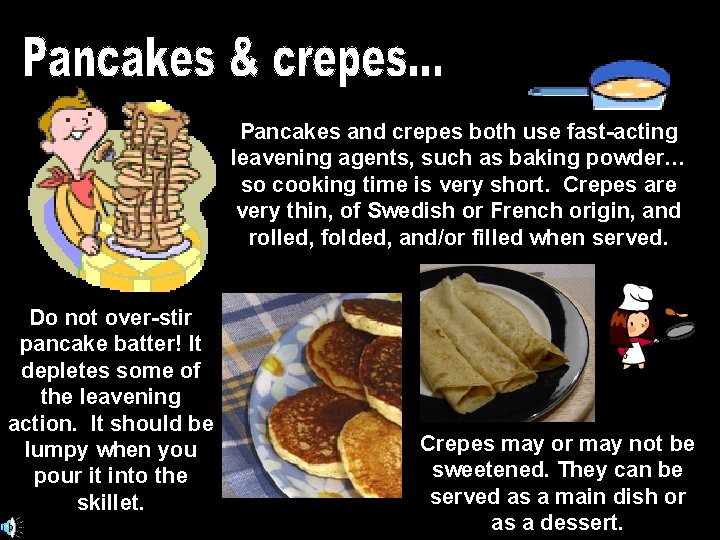
Pancakes and crepes both use fast-acting leavening agents, such as baking powder… so cooking time is very short. Crepes are very thin, of Swedish or French origin, and rolled, folded, and/or filled when served. Do not over-stir pancake batter! It depletes some of the leavening action. It should be lumpy when you pour it into the skillet. Crepes may or may not be sweetened. They can be served as a main dish or as a dessert.
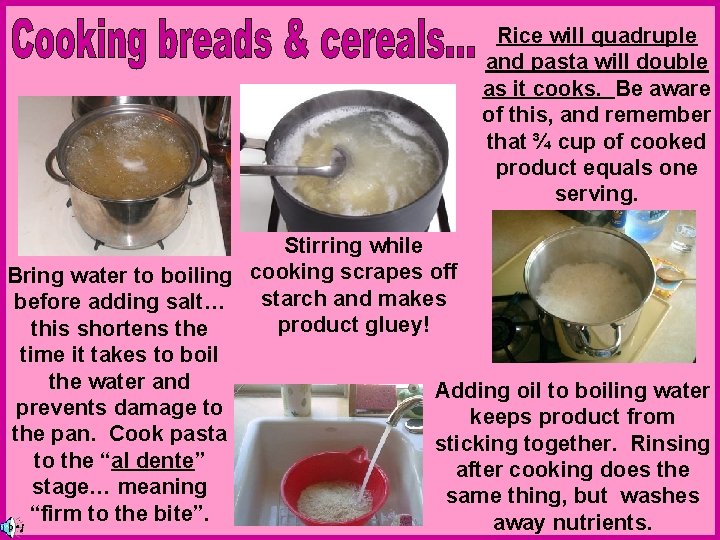
Rice will quadruple and pasta will double as it cooks. Be aware of this, and remember that ¾ cup of cooked product equals one serving. Stirring while Bring water to boiling cooking scrapes off starch and makes before adding salt… product gluey! this shortens the time it takes to boil the water and Adding oil to boiling water prevents damage to keeps product from the pan. Cook pasta sticking together. Rinsing to the “al dente” after cooking does the stage… meaning same thing, but washes “firm to the bite”. away nutrients.
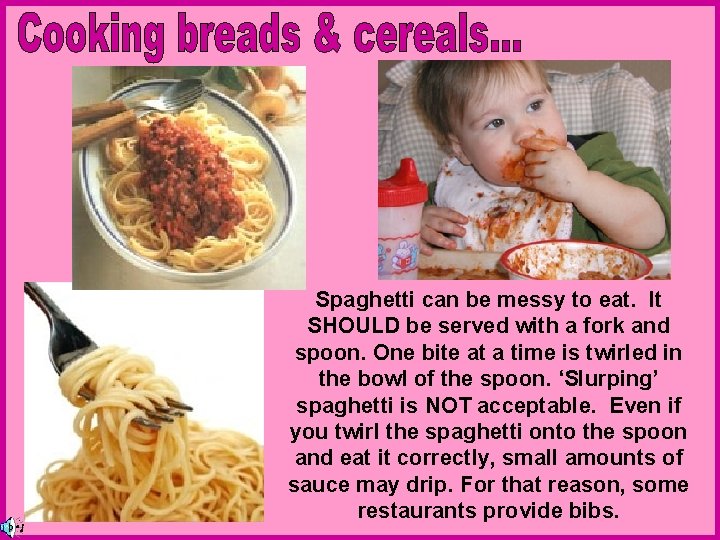
Spaghetti can be messy to eat. It SHOULD be served with a fork and spoon. One bite at a time is twirled in the bowl of the spoon. ‘Slurping’ spaghetti is NOT acceptable. Even if you twirl the spaghetti onto the spoon and eat it correctly, small amounts of sauce may drip. For that reason, some restaurants provide bibs.
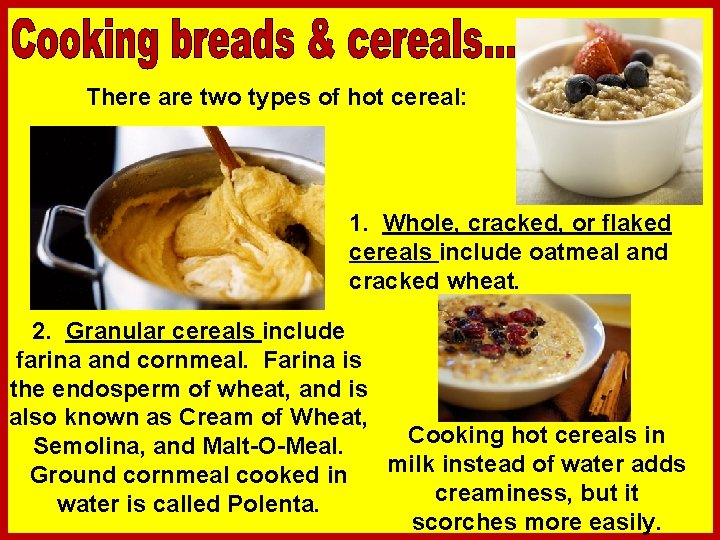
There are two types of hot cereal: 1. Whole, cracked, or flaked cereals include oatmeal and cracked wheat. 2. Granular cereals include farina and cornmeal. Farina is the endosperm of wheat, and is also known as Cream of Wheat, Cooking hot cereals in Semolina, and Malt-O-Meal. milk instead of water adds Ground cornmeal cooked in creaminess, but it water is called Polenta. scorches more easily.
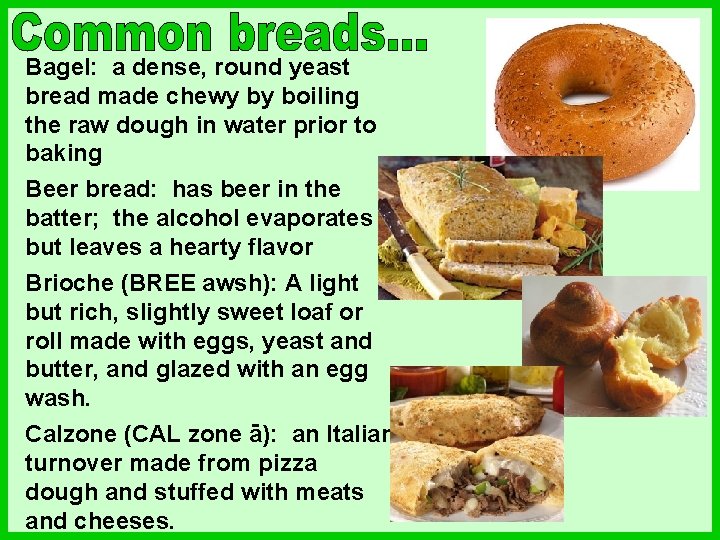
Bagel: a dense, round yeast bread made chewy by boiling the raw dough in water prior to baking Beer bread: has beer in the batter; the alcohol evaporates but leaves a hearty flavor Brioche (BREE awsh): A light but rich, slightly sweet loaf or roll made with eggs, yeast and butter, and glazed with an egg wash. Calzone (CAL zone ā): an Italian turnover made from pizza dough and stuffed with meats and cheeses.
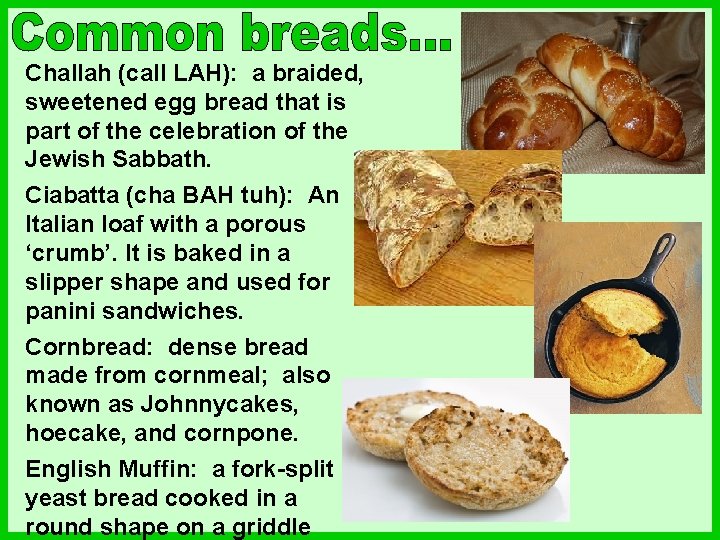
Challah (call LAH): a braided, sweetened egg bread that is part of the celebration of the Jewish Sabbath. Ciabatta (cha BAH tuh): An Italian loaf with a porous ‘crumb’. It is baked in a slipper shape and used for panini sandwiches. Cornbread: dense bread made from cornmeal; also known as Johnnycakes, hoecake, and cornpone. English Muffin: a fork-split yeast bread cooked in a round shape on a griddle
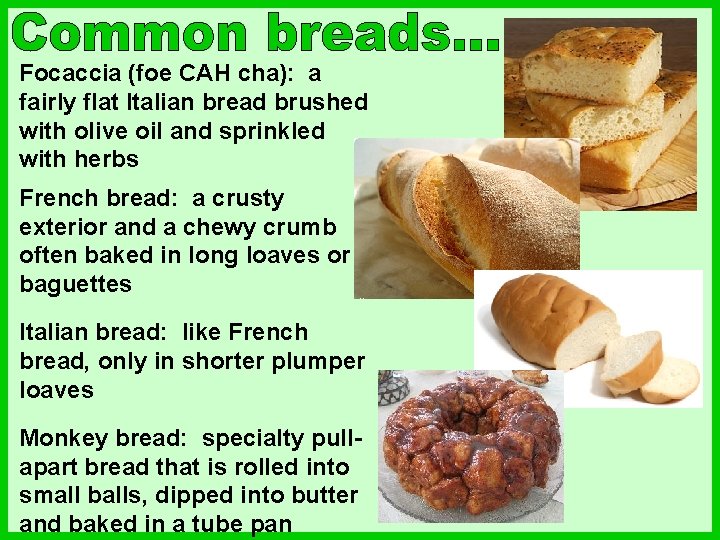
Focaccia (foe CAH cha): a fairly flat Italian bread brushed with olive oil and sprinkled with herbs French bread: a crusty exterior and a chewy crumb often baked in long loaves or baguettes Italian bread: like French bread, only in shorter plumper loaves Monkey bread: specialty pullapart bread that is rolled into small balls, dipped into butter and baked in a tube pan
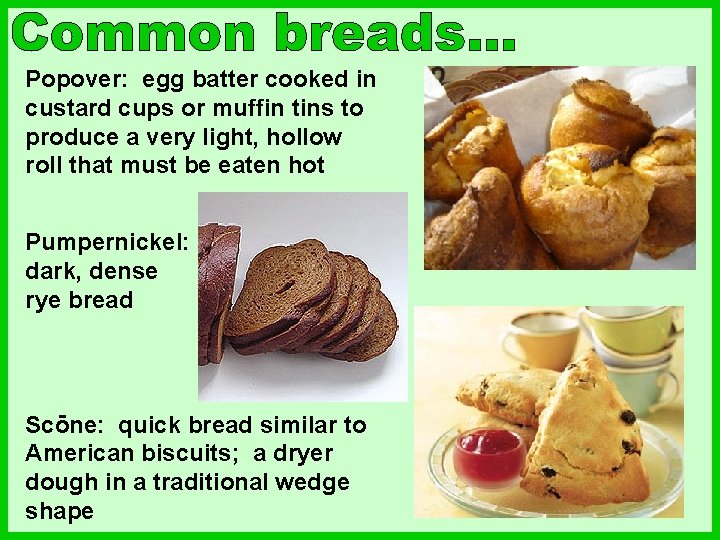
Popover: egg batter cooked in custard cups or muffin tins to produce a very light, hollow roll that must be eaten hot Pumpernickel: dark, dense rye bread Scōne: quick bread similar to American biscuits; a dryer dough in a traditional wedge shape a

- Slides: 32