
Graduation Model An approach to poverty alleviation and
- Slides: 14
Graduation Model An approach to poverty alleviation and employment
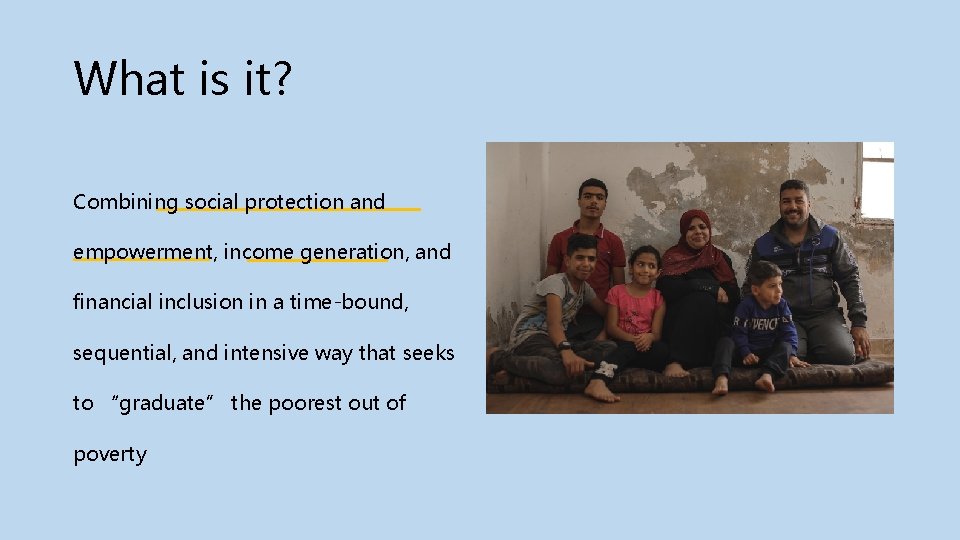
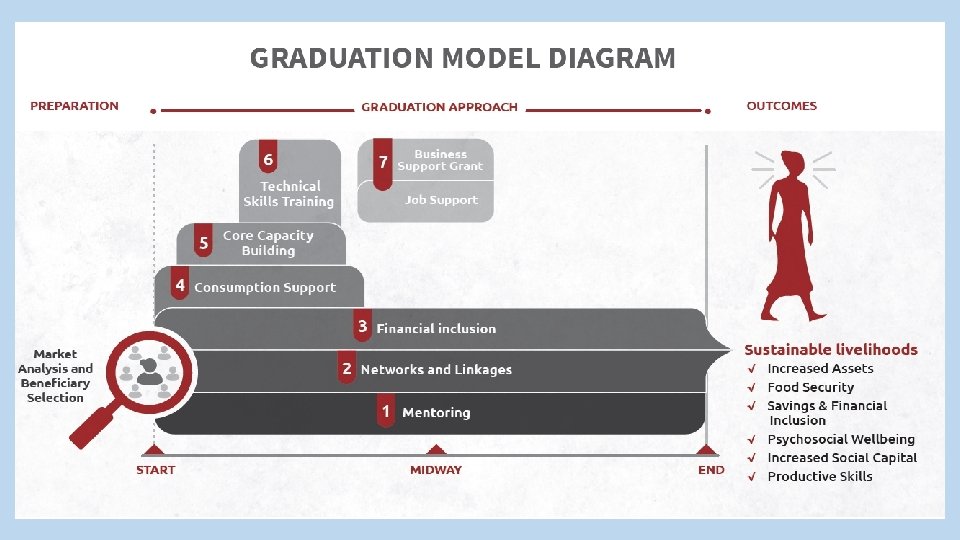
What is it? Combining social protection and empowerment, income generation, and financial inclusion in a time-bound, sequential, and intensive way that seeks to “graduate” the poorest out of poverty
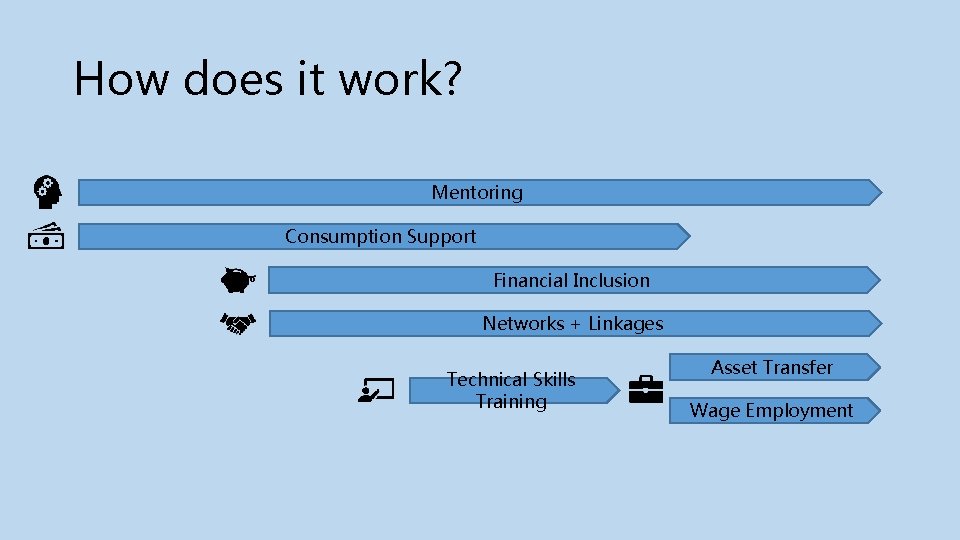
How does it work? Mentoring Consumption Support Financial Inclusion Networks + Linkages Technical Skills Training Asset Transfer Wage Employment
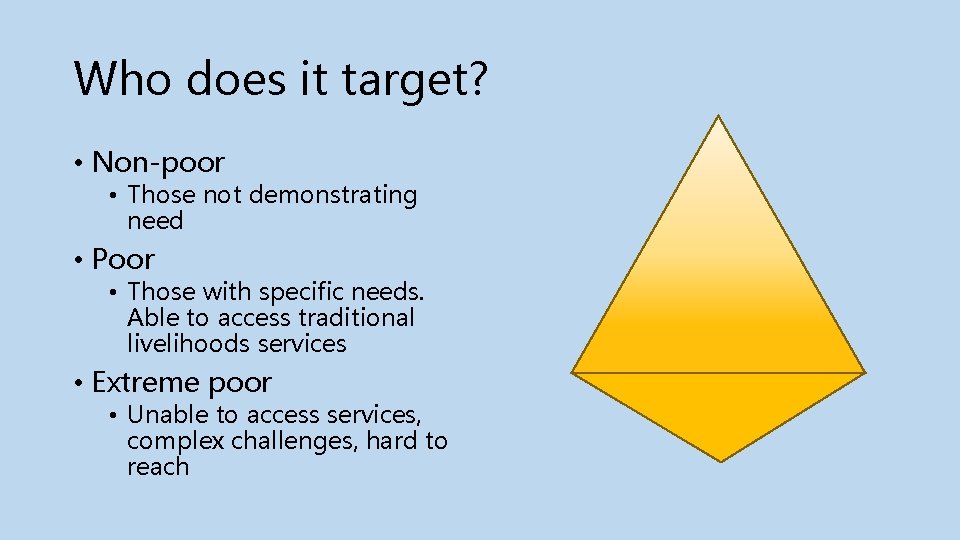
Who does it target? • Non-poor • Those not demonstrating need • Poor • Those with specific needs. Able to access traditional livelihoods services • Extreme poor • Unable to access services, complex challenges, hard to reach
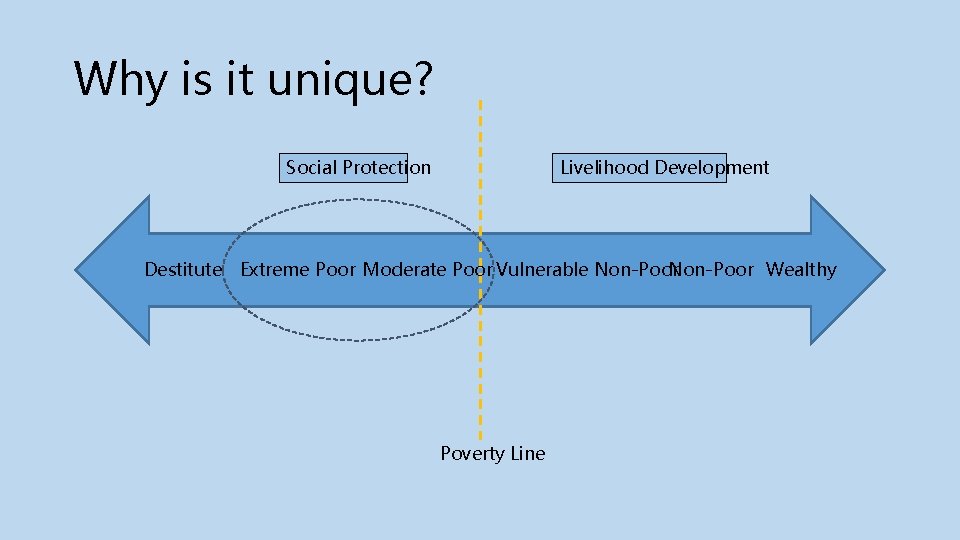
Why is it unique? Social Protection Livelihood Development Destitute Extreme Poor Moderate Poor Vulnerable Non-Poor Wealthy Poverty Line
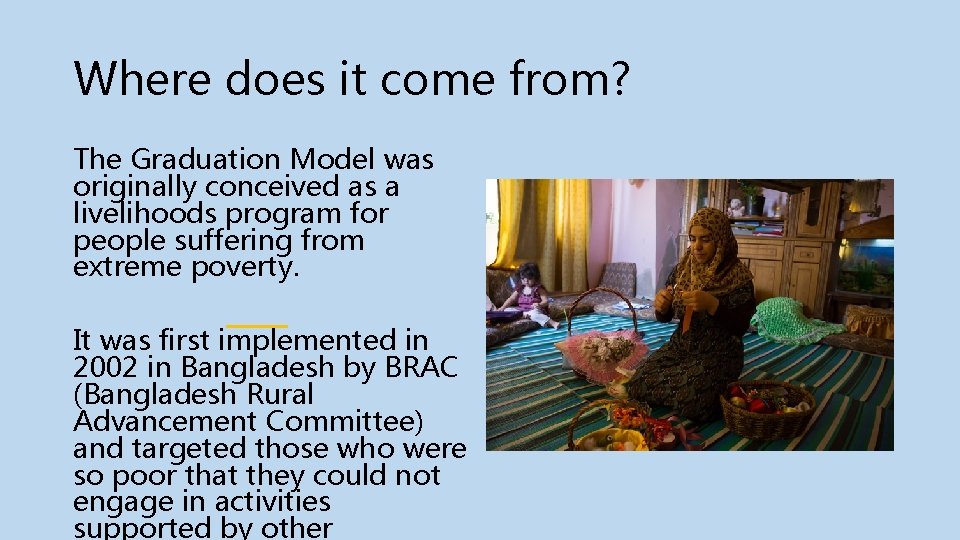
Where does it come from? The Graduation Model was originally conceived as a livelihoods program for people suffering from extreme poverty. It was first implemented in 2002 in Bangladesh by BRAC (Bangladesh Rural Advancement Committee) and targeted those who were so poor that they could not engage in activities supported by other
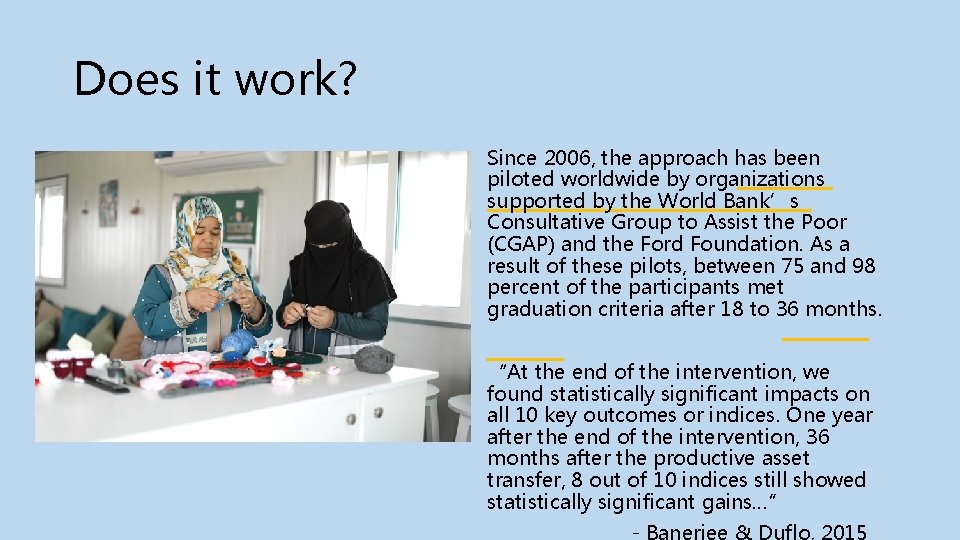
Does it work? Since 2006, the approach has been piloted worldwide by organizations supported by the World Bank’s Consultative Group to Assist the Poor (CGAP) and the Ford Foundation. As a result of these pilots, between 75 and 98 percent of the participants met graduation criteria after 18 to 36 months. “At the end of the intervention, we found statistically significant impacts on all 10 key outcomes or indices. One year after the end of the intervention, 36 months after the productive asset transfer, 8 out of 10 indices still showed statistically significant gains…”
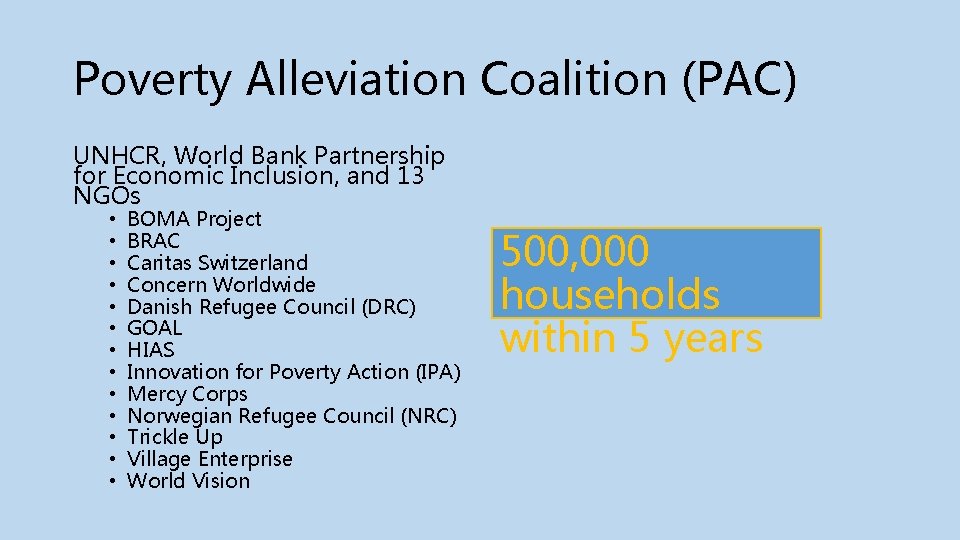
Poverty Alleviation Coalition (PAC) UNHCR, World Bank Partnership for Economic Inclusion, and 13 NGOs • • • • BOMA Project BRAC Caritas Switzerland Concern Worldwide Danish Refugee Council (DRC) GOAL HIAS Innovation for Poverty Action (IPA) Mercy Corps Norwegian Refugee Council (NRC) Trickle Up Village Enterprise World Vision 500, 000 households within 5 years
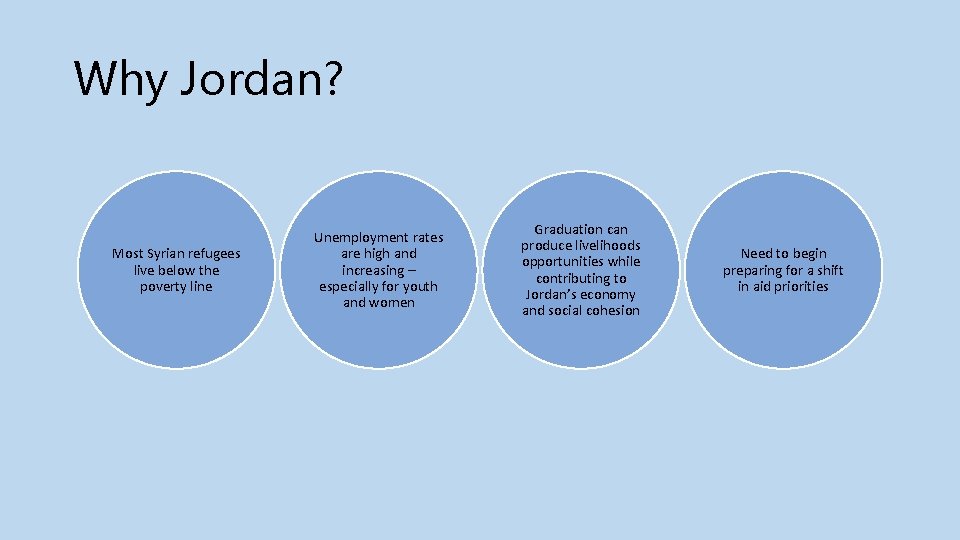
Why Jordan? Most Syrian refugees live below the poverty line Unemployment rates are high and increasing – especially for youth and women Graduation can produce livelihoods opportunities while contributing to Jordan’s economy and social cohesion Need to begin preparing for a shift in aid priorities
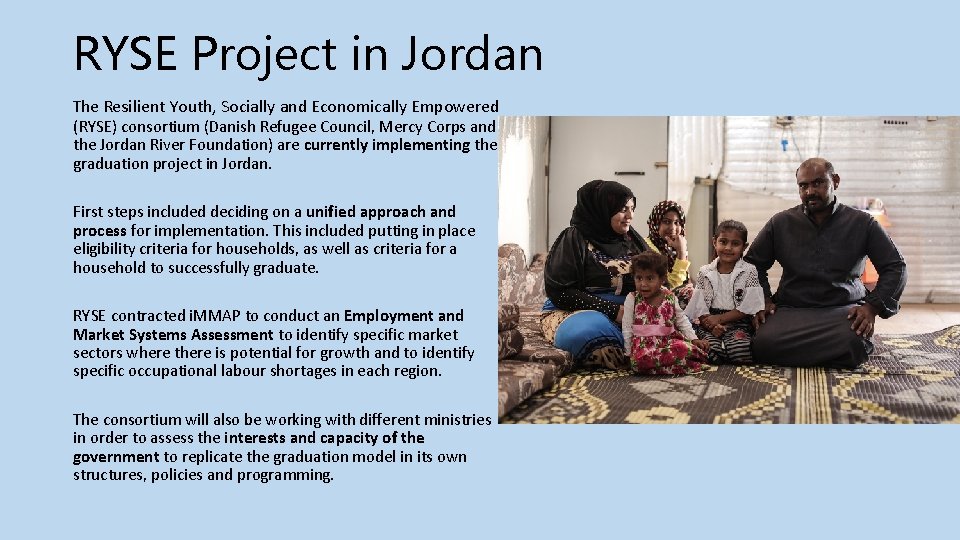
RYSE Project in Jordan The Resilient Youth, Socially and Economically Empowered (RYSE) consortium (Danish Refugee Council, Mercy Corps and the Jordan River Foundation) are currently implementing the graduation project in Jordan. First steps included deciding on a unified approach and process for implementation. This included putting in place eligibility criteria for households, as well as criteria for a household to successfully graduate. RYSE contracted i. MMAP to conduct an Employment and Market Systems Assessment to identify specific market sectors where there is potential for growth and to identify specific occupational labour shortages in each region. The consortium will also be working with different ministries in order to assess the interests and capacity of the government to replicate the graduation model in its own structures, policies and programming.
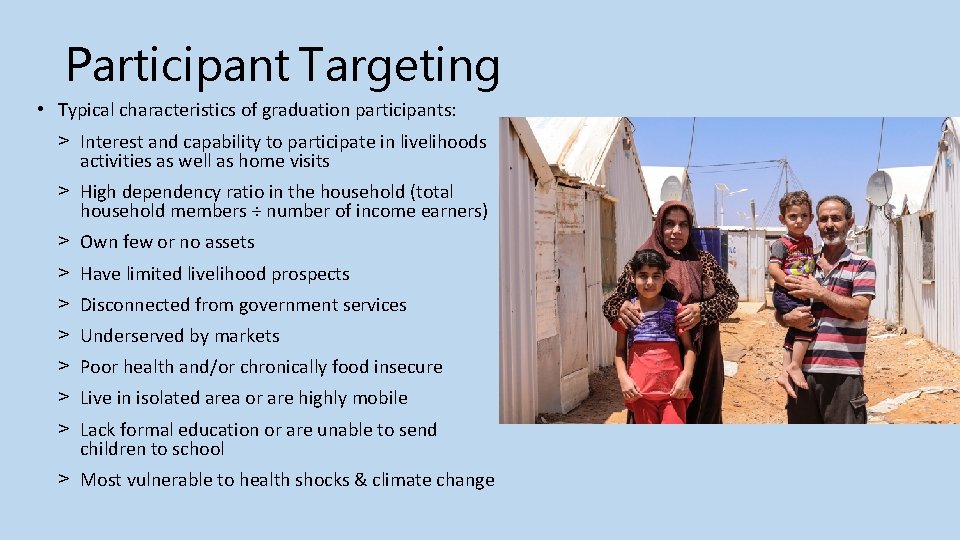
Participant Targeting • Typical characteristics of graduation participants: > Interest and capability to participate in livelihoods activities as well as home visits > High dependency ratio in the household (total household members ÷ number of income earners) > Own few or no assets > Have limited livelihood prospects > Disconnected from government services > Underserved by markets > Poor health and/or chronically food insecure > Live in isolated area or are highly mobile > Lack formal education or are unable to send children to school > Most vulnerable to health shocks & climate change
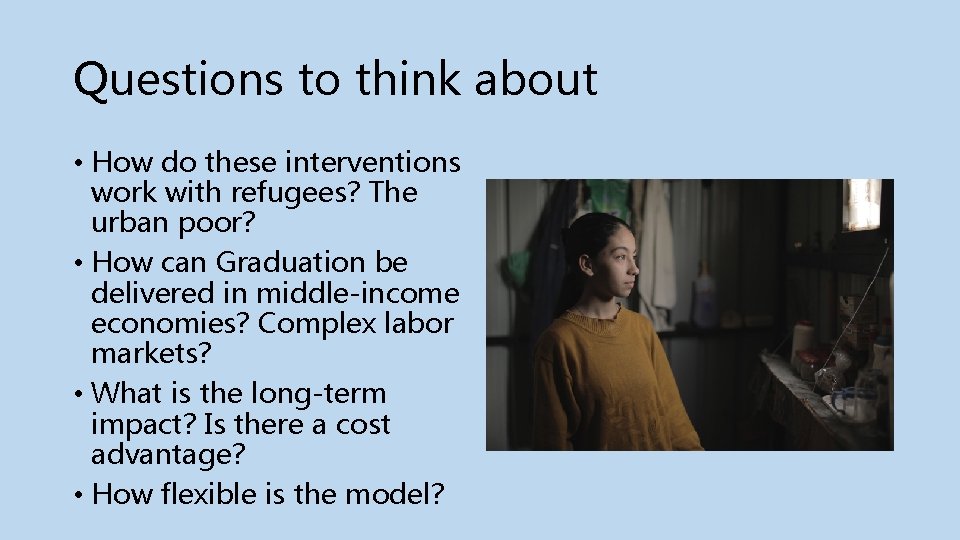
Questions to think about • How do these interventions work with refugees? The urban poor? • How can Graduation be delivered in middle-income economies? Complex labor markets? • What is the long-term impact? Is there a cost advantage? • How flexible is the model?
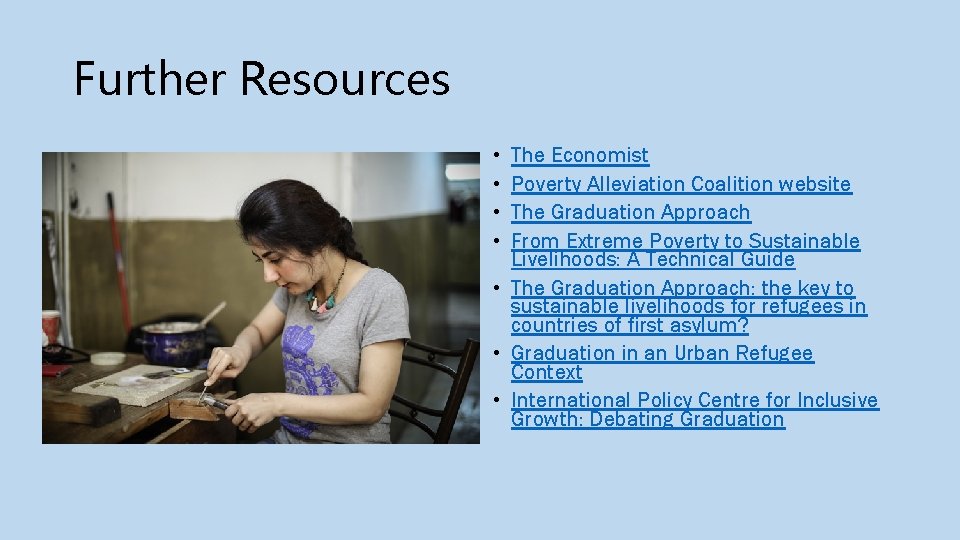
Further Resources • • The Economist Poverty Alleviation Coalition website The Graduation Approach From Extreme Poverty to Sustainable Livelihoods: A Technical Guide • The Graduation Approach: the key to sustainable livelihoods for refugees in countries of first asylum? • Graduation in an Urban Refugee Context • International Policy Centre for Inclusive Growth: Debating Graduation