
Graduating soon Julie Brayshaw Occupational Therapy Board of

Graduating soon? Julie Brayshaw, Occupational Therapy Board of Australia Chair Monday 26 August 2019
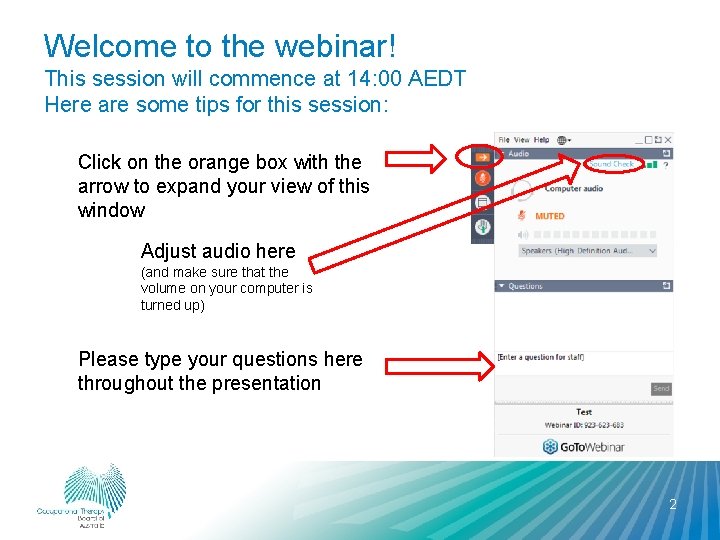
Welcome to the webinar! This session will commence at 14: 00 AEDT Here are some tips for this session: Click on the orange box with the arrow to expand your view of this window Adjust audio here (and make sure that the volume on your computer is turned up) Please type your questions here throughout the presentation 2
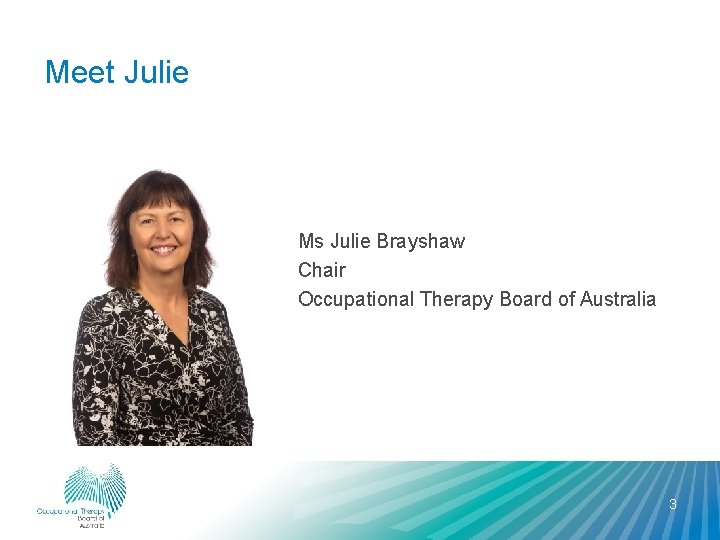
Meet Julie Ms Julie Brayshaw Chair Occupational Therapy Board of Australia 3
Today’s presentation • • • Introduction – the Board and the occupational therapy profession Graduate registration QUESTIONS Overview of registration standards QUESTIONS Complaints or concerns Practitioner audit Australian competency standards for occupational therapists 4
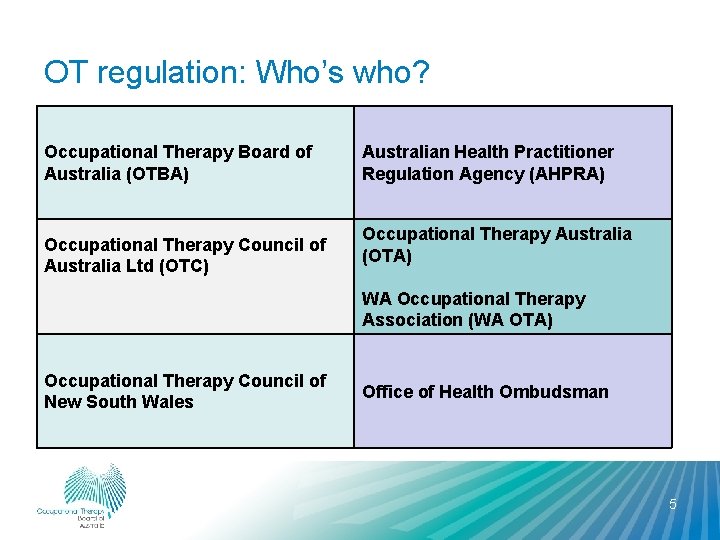
OT regulation: Who’s who? Occupational Therapy Board of Australia (OTBA) Occupational Therapy Council of Australia Ltd (OTC) Australian Health Practitioner Regulation Agency (AHPRA) Occupational Therapy Australia (OTA) WA Occupational Therapy Association (WA OTA) Occupational Therapy Council of New South Wales Office of Health Ombudsman 5
Occupational Therapy Board of Australia The Board regulates the OT profession in order to protect the public: • Registration of occupational therapists and students • Development and review of standards, codes and guidelines for the profession • Considers and makes decisions on complaints about occupational therapists • Approval of accreditation standards • Approval of accredited programs of study 6
AHPRA Supports the Board and 14 other National Boards: • the first point of contact for all enquiries including those about registration and notifications (complaints) • manages the registration and renewal processes for all registered health practitioners • publishes and maintains the national register of health practitioners • manages investigations into the professional conduct, performance or health of registered health practitioners 7

Occupational therapy profession 8

Growth of the profession 9
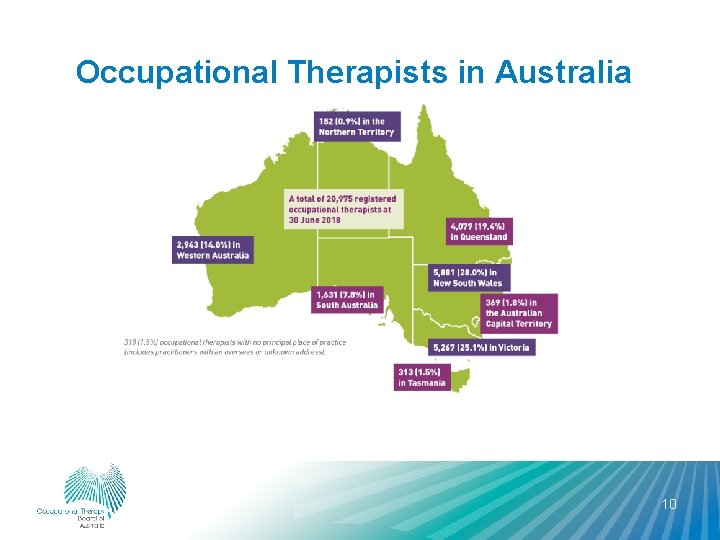
Occupational Therapists in Australia 10
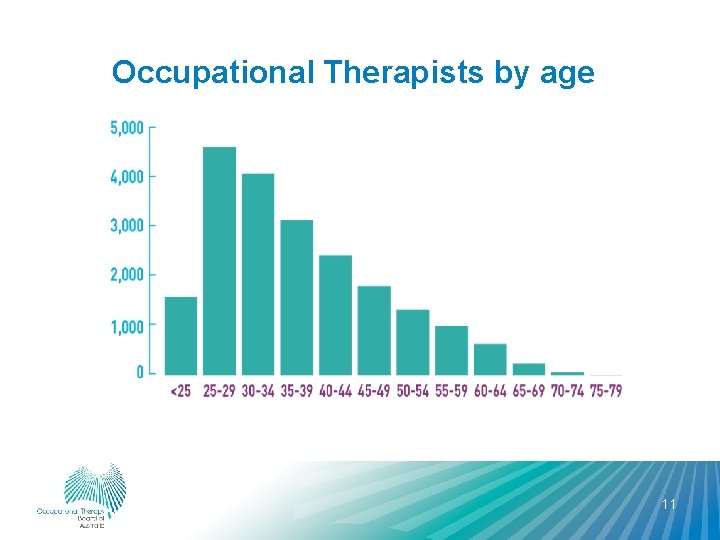
Occupational Therapists by age 11
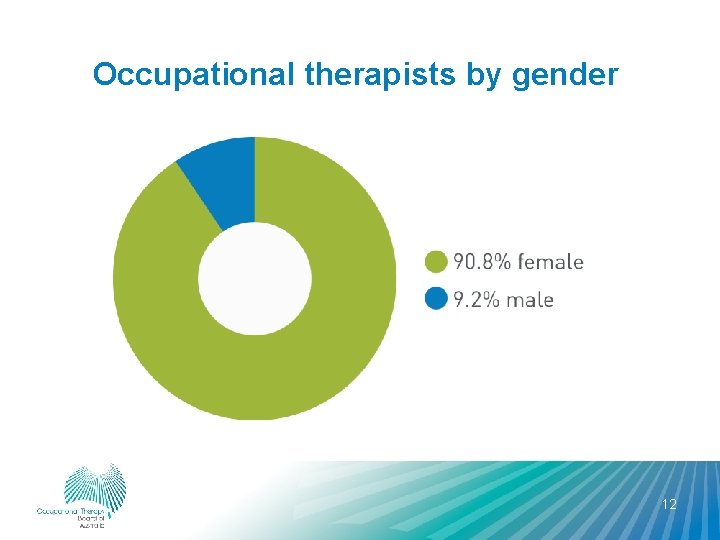
Occupational therapists by gender 12

Graduate registration 13
Graduate registration • Graduates will not automatically be registered as an occupational after completion of their studies • A new graduate is a person who qualified from an approved program of study within two years of graduating • If you are not a new graduate you must apply for general registration using the relevant form and attach a certified copy of your original academic transcript or certificate 14
You must register. . . • prior to practising as an occupational therapists • to use the title ‘occupational therapist’, and • to claim to be qualified to practise as an occupational therapist. It is important to note that practising as an occupational therapist is not limited to providing direct clinical services to clients. Additional guidance about when you must be registered can be found on the Board’s website. 15
Examples of when you must register. . . • You, your employer and your clients refer to your position as ‘occupational therapist’ • Clients or service users are given the impression that you are an occupational therapist • You describe yourself as an occupational therapist on social media • You work in a role not titled ‘occupational therapist’ but have direct clinical contact as an occupational therapist 16
Steps for graduate registration • Apply for registration online 4 -6 weeks before completing your course • Ensure you are familiar with the Board’s registration standards, codes and guidelines • Pay: Application fee $113 and Registration fee $113 • Submit required documents online • AHPRA assesses your application and confirms satisfactory completion of your approved program with your education provider • You’re registered! 17
Supporting documentation • • • Proof of identity Proof of change of name Academic qualifications English language skills Criminal history Impairments 18

Questions 19
The Board’s registration standards, codes and guidelines 20
Standards, codes and guidelines Five mandatory registration standards: • • • English language skills Continuing professional development Recency of practice Professional indemnity insurance Criminal history 21
English Language skills 4 pathways to meet this registration standard: 1. 2. 3. 4. Primary language Combined secondary and tertiary education Extended education, or English language tests 22
English Language skills – Pathway 4 Ø IELTS with a minimum overall score of 7 Ø OET with a minimum score of B in each of the four components Ø PTE Academic with a minimum overall score of 65, or Ø TOEFL i. BT with a minimum score of 94 • Additional requirements regarding the tests 23
Continuing Professional Development Registration Standard • Requires minimum 20 hours of CPD annually to maintain and improve competence • Minimum of 5 hours of CPD activities in interactive settings • Periodic audits • Does not apply to students or to a person granted ‘nonpractising’ registration 24

Continuing Professional Development Your CPD hours should: • seek to improve patient/client outcomes and experiences • draw on the best available evidence, including wellestablished and accepted knowledge that is supported by research (where possible), to inform good practice and decision-making • build on the occupational therapists’ existing knowledge 25
In summary… • Plan your CPD, and set new goals each year • Set aside time each month to plan and track CPD • Set up a folder or online system to help you store evidence quickly and easily • Keep your CPD record somewhere handy so you can record and reflect as you go 26
Professional Indemnity Insurance (PII) Registration Standard • Any occupational therapist must not practise if they do not have appropriate PII arrangements in place • PII must cover all aspects of practice and practice locations, including private practice settings • PII can be provided by a third party e. g. employer • Declaration at application and renewal 27
Recency of Practice (Ro. P) Registration Standard • Minimum requirements to maintain recency of practice to ensure safe and competent practice: • 150 hours of practice in the previous 12 months • 450 hours of practice in the previous 3 years, or • 750 hours of practice in the previous 5 years • Requirements regarding scope of practice • Declaration at initial application and renewal 28
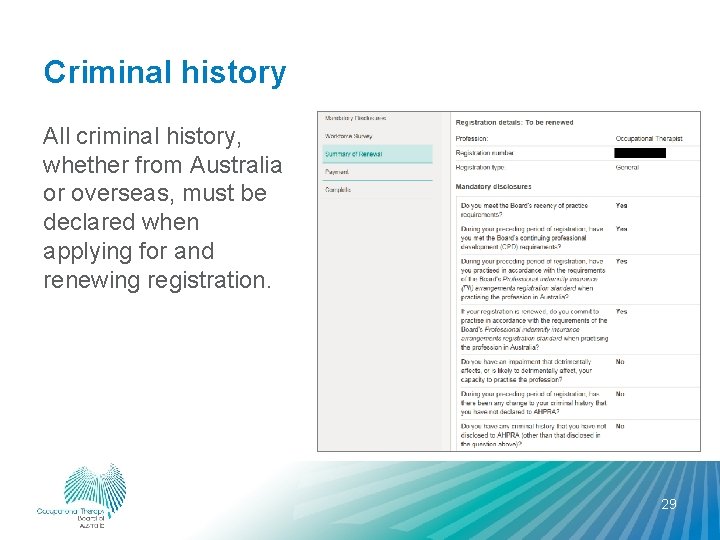
Criminal history All criminal history, whether from Australia or overseas, must be declared when applying for and renewing registration. 29
Criminal history Registration Standard The Board takes into account: • Nature/gravity of offence/alleged offence • Period elapsed since offence • Whether finding of guilt • Any sentence imposed • Age of practitioner and any victim • Behaviour since offence/allegation • Likelihood of future threat to patients • Additional relevant information • Periodic audits 30
Standards, codes and guidelines Codes and Guidelines: • Code of Conduct • CPD guidelines • Guidelines for advertising regulated health services • Guidelines for mandatory notifications • Guidelines about informing the Board about where you practise Standards: • Australian occupational therapy competency standards 31
Code of conduct • All registered occupational therapists are expected to comply with the Board’s Code of Conduct • The Code of Conduct supports occupational therapists in maintaining high-quality level of professional competence and ethical conduct 32
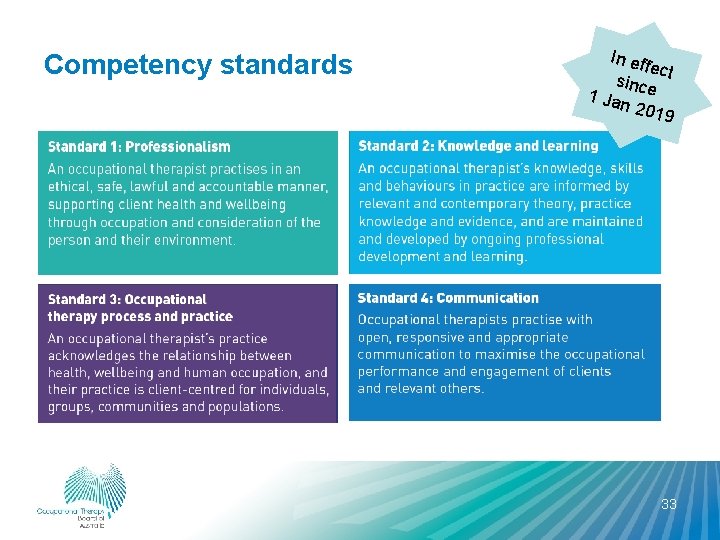
Competency standards In ef fect since 1 Jan 2019 33
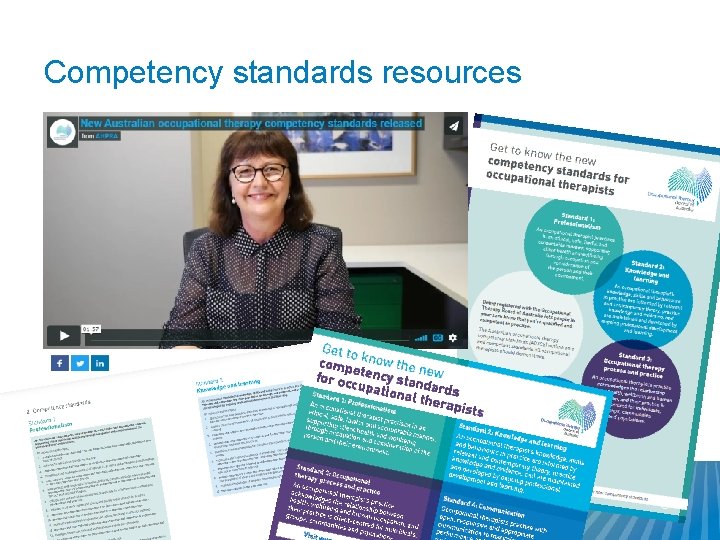
Competency standards resources 34
Other resources on the Board’s website • • More than 100 frequently asked questions Registration standards CPD template (for recording) and guidance material Codes and guidelines – advertising, mandatory notifications, code of conduct • Social media policy • A dedicated audit webpage 35

Questions 36
Notifications about registered health practitioners • What is a notification (concern) under the National Law ? • What can concerns be about? – Health, conduct, performance. • Mandatory vs. voluntary notifications 37
Mandatory notification ‘Notifiable conduct’ is defined under the National Law as: • Intoxicated by alcohol or drugs. • Engaged in sexual misconduct in connection with professional practise. • Impairment that would place the public at substantial risk of harm. • Significant departure from accepted professional standards. 38
Voluntary notification A member of the public can make a notification (raise a concern) with AHPRA about the conduct, health and/or performance of a practitioner or student. Most notifications are made voluntarily by individuals with concerns about a registered health practitioner. 39
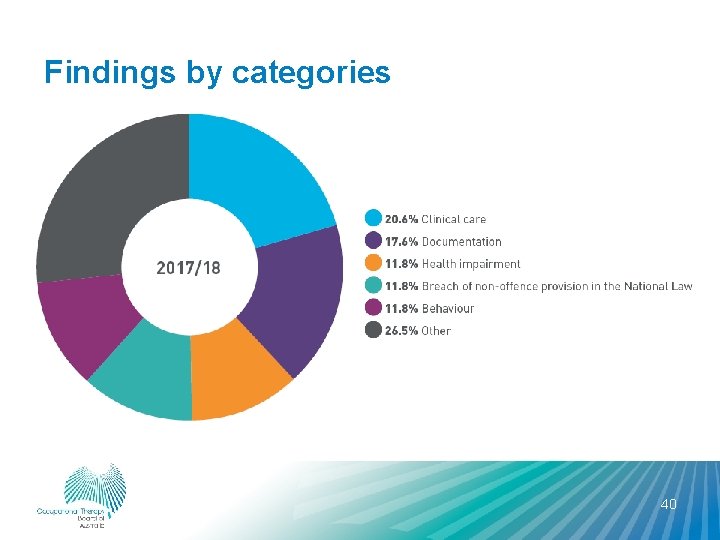
Findings by categories 40

Questions 41
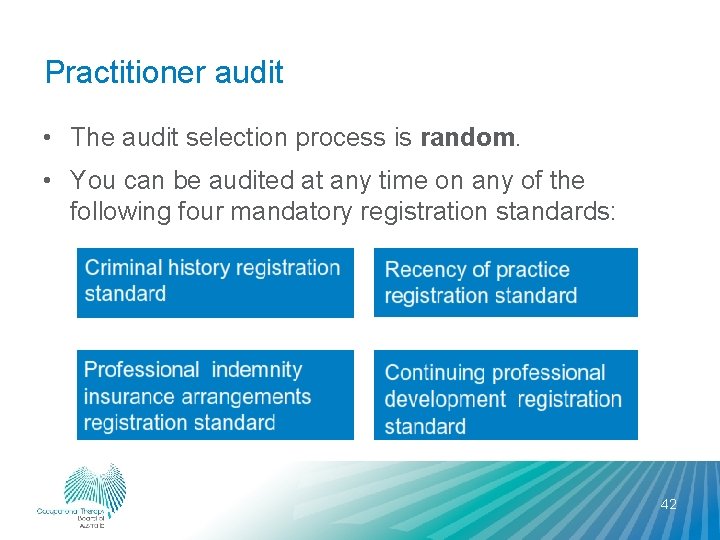
Practitioner audit • The audit selection process is random. • You can be audited at any time on any of the following four mandatory registration standards: 42
Your declarations • Each time you renew your registration, you make a declaration as to whether you have (or have not) met some or all of the registration standards • You will be audited against your self-declarations made at your previous registration renewal • The audit requires you to provide further information to support your declarations for the previous registration period 43

Questions 44
Thank you for participating OTBA website: www. occupationaltherapyboard. gov. au AHPRA website: www. ahpra. gov. au AHPRA: 1300 419 495 / or make a web enquiry A recording of this webinar will be published on the Board’s website in the coming weeks.
- Slides: 45