
Graduate School What to do next Wade Trappe
- Slides: 16
Graduate School: What to do next? Wade Trappe Yanyong Zhang
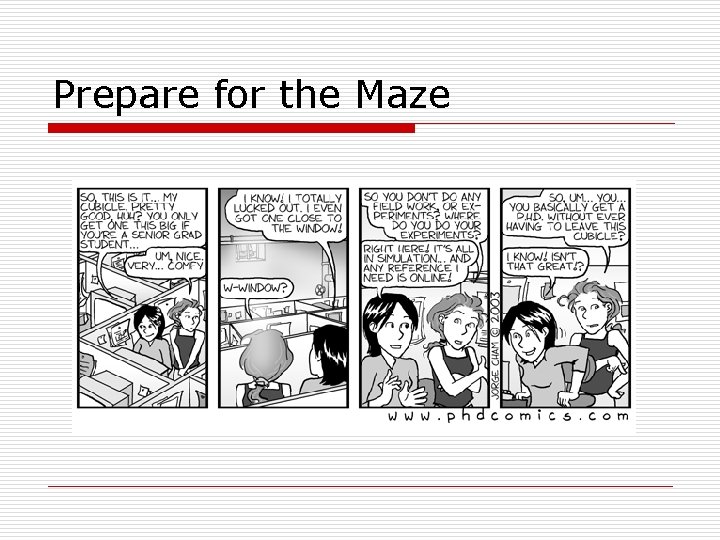
Prepare for the Maze
Overview o o o Why graduate school? What are the options? What must you do to apply? How do you pay for it? How does one do graduate school?
Why Graduate School o In the old days n o Modern reasons n n o Intellectual stimulation Economy: Seek refuge from the ailing job market Lifetime Income: o Master’s Degree: $335 K more than bachelors o Ph. D. : $890 K more than bachelors Caveats n n For jobs: Not all degrees are created equal! Technical skills are desirable
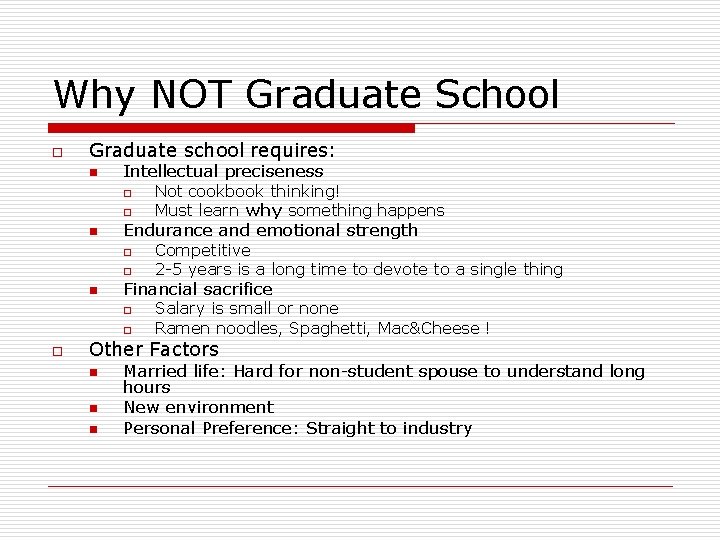
Why NOT Graduate School o Graduate school requires: n Intellectual preciseness o o n Endurance and emotional strength o o n Competitive 2 -5 years is a long time to devote to a single thing Financial sacrifice o o o Not cookbook thinking! Must learn why something happens Salary is small or none Ramen noodles, Spaghetti, Mac&Cheese ! Other Factors n n n Married life: Hard for non-student spouse to understand long hours New environment Personal Preference: Straight to industry
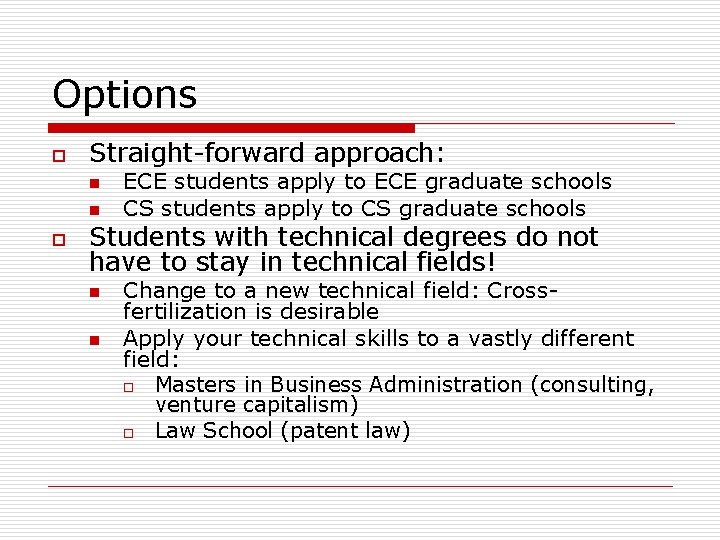
Options o Straight-forward approach: n n o ECE students apply to ECE graduate schools CS students apply to CS graduate schools Students with technical degrees do not have to stay in technical fields! n n Change to a new technical field: Crossfertilization is desirable Apply your technical skills to a vastly different field: o Masters in Business Administration (consulting, venture capitalism) o Law School (patent law)
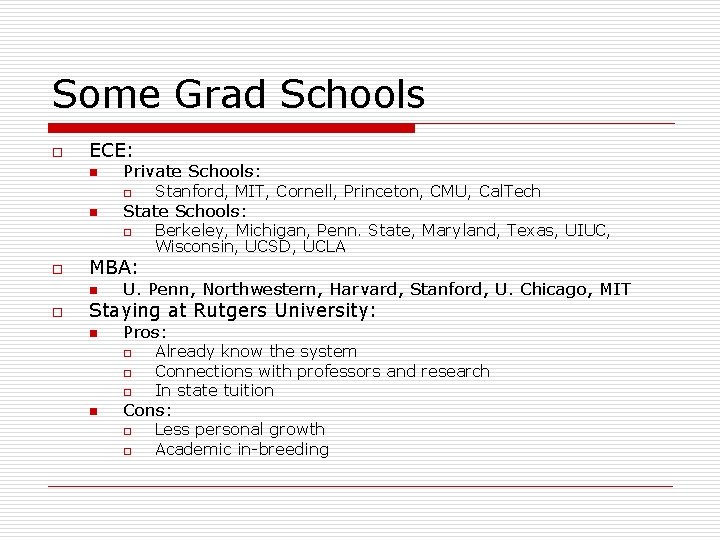
Some Grad Schools o ECE: n Private Schools: o n State Schools: o o MBA: n o Stanford, MIT, Cornell, Princeton, CMU, Cal. Tech Berkeley, Michigan, Penn. State, Maryland, Texas, UIUC, Wisconsin, UCSD, UCLA U. Penn, Northwestern, Harvard, Stanford, U. Chicago, MIT Staying at Rutgers University: n Pros: o o o n Already know the system Connections with professors and research In state tuition Cons: o o Less personal growth Academic in-breeding
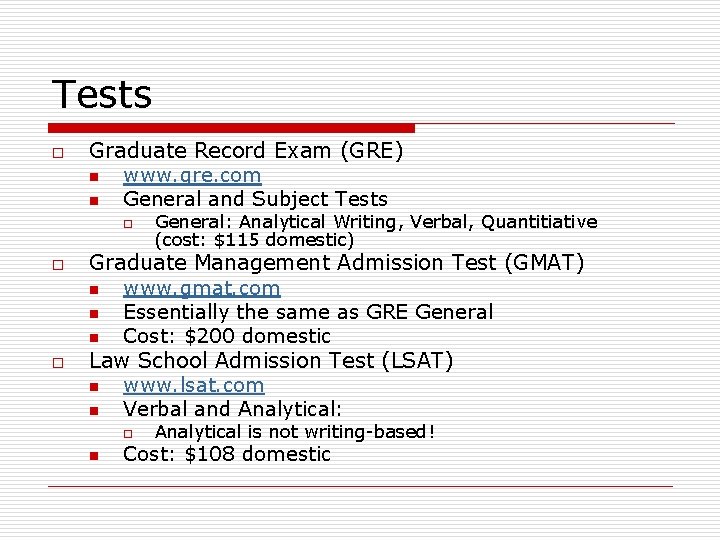
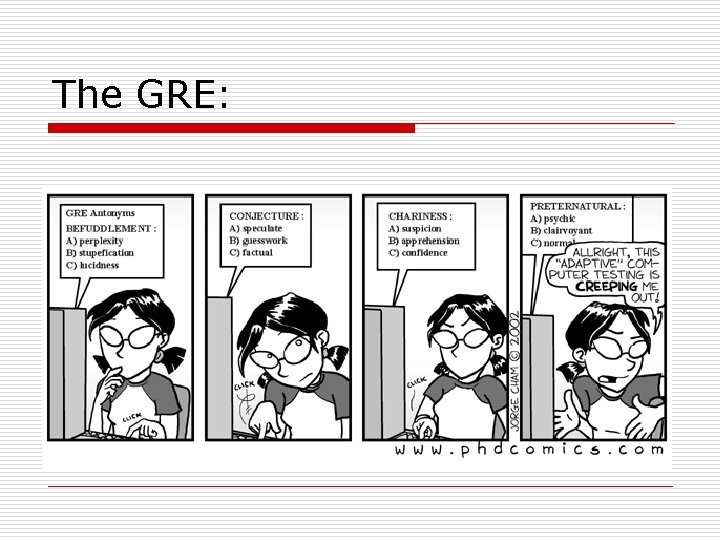
Tests o Graduate Record Exam (GRE) n www. gre. com n General and Subject Tests o o o General: Analytical Writing, Verbal, Quantitiative (cost: $115 domestic) Graduate Management Admission Test (GMAT) n www. gmat. com n Essentially the same as GRE General n Cost: $200 domestic Law School Admission Test (LSAT) n www. lsat. com n Verbal and Analytical: o n Analytical is not writing-based! Cost: $108 domestic
The GRE:
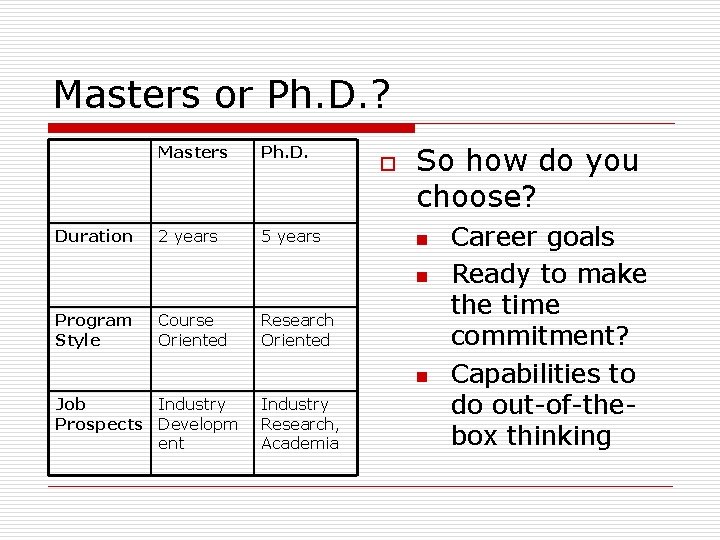
Masters or Ph. D. ? Duration Masters Ph. D. 2 years 5 years o So how do you choose? n n Program Style Course Oriented Research Oriented n Job Industry Prospects Developm ent Industry Research, Academia Career goals Ready to make the time commitment? Capabilities to do out-of-thebox thinking
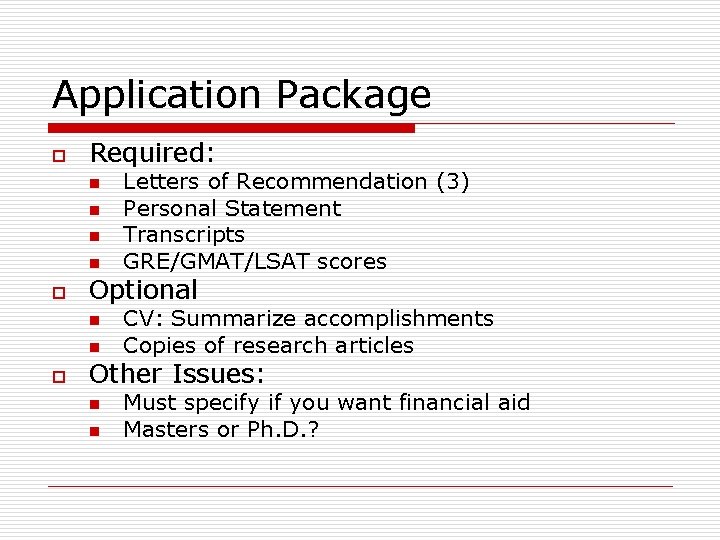
Application Package o Required: n n o Optional n n o Letters of Recommendation (3) Personal Statement Transcripts GRE/GMAT/LSAT scores CV: Summarize accomplishments Copies of research articles Other Issues: n n Must specify if you want financial aid Masters or Ph. D. ?
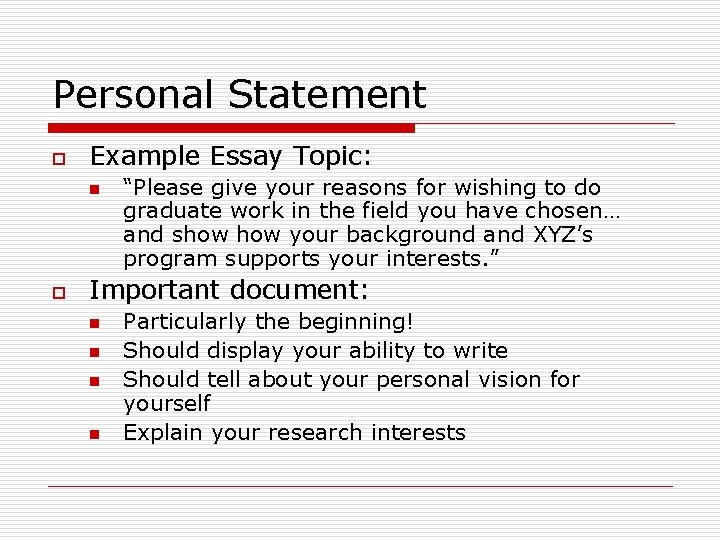
Personal Statement o Example Essay Topic: n o “Please give your reasons for wishing to do graduate work in the field you have chosen… and show your background and XYZ’s program supports your interests. ” Important document: n n Particularly the beginning! Should display your ability to write Should tell about your personal vision for yourself Explain your research interests
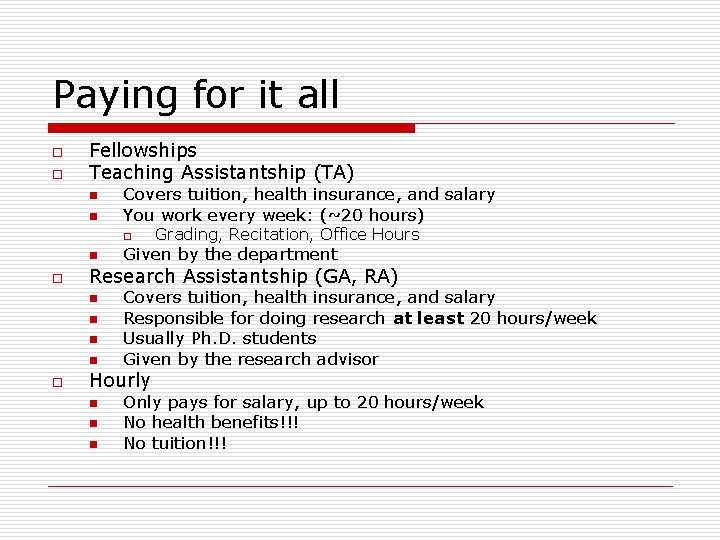
Paying for it all o o Fellowships Teaching Assistantship (TA) n n Covers tuition, health insurance, and salary You work every week: (~20 hours) o n o Given by the department Research Assistantship (GA, RA) n n o Grading, Recitation, Office Hours Covers tuition, health insurance, and salary Responsible for doing research at least 20 hours/week Usually Ph. D. students Given by the research advisor Hourly n n n Only pays for salary, up to 20 hours/week No health benefits!!! No tuition!!!
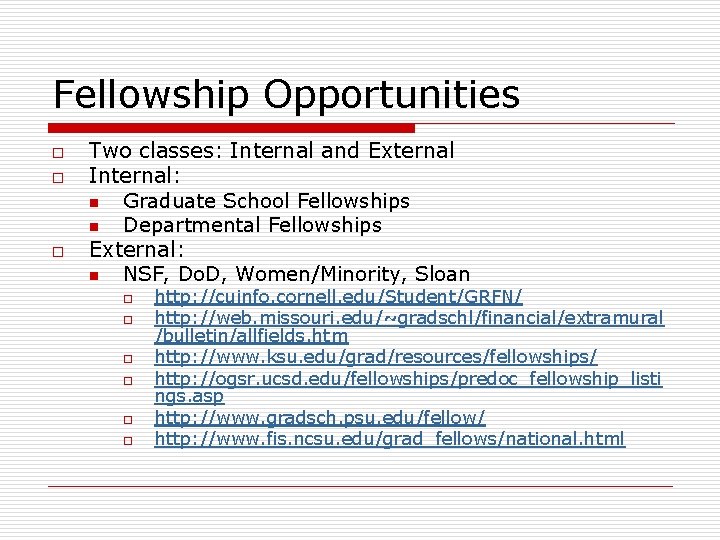
Fellowship Opportunities o o o Two classes: Internal and External Internal: n Graduate School Fellowships n Departmental Fellowships External: n NSF, Do. D, Women/Minority, Sloan o o o http: //cuinfo. cornell. edu/Student/GRFN/ http: //web. missouri. edu/~gradschl/financial/extramural /bulletin/allfields. htm http: //www. ksu. edu/grad/resources/fellowships/ http: //ogsr. ucsd. edu/fellowships/predoc_fellowship_listi ngs. asp http: //www. gradsch. psu. edu/fellow/ http: //www. fis. ncsu. edu/grad_fellows/national. html
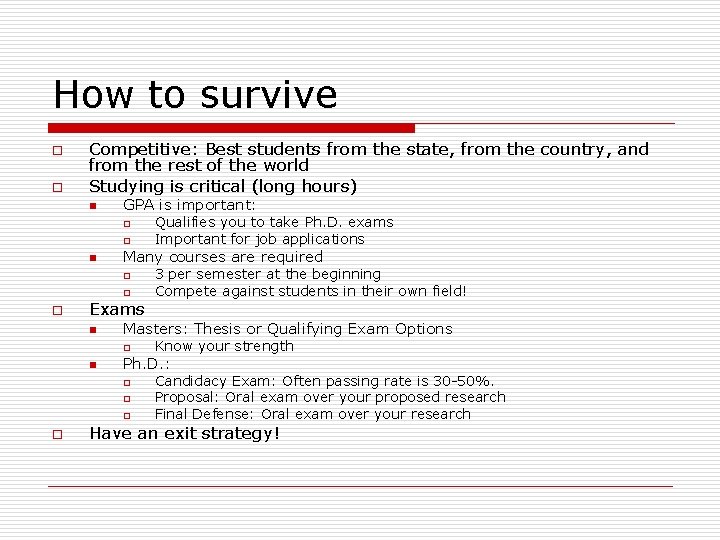
How to survive o o Competitive: Best students from the state, from the country, and from the rest of the world Studying is critical (long hours) n GPA is important: o o n Many courses are required o o o Exams n Know your strength Ph. D. : o o 3 per semester at the beginning Compete against students in their own field! Masters: Thesis or Qualifying Exam Options o n Qualifies you to take Ph. D. exams Important for job applications Candidacy Exam: Often passing rate is 30 -50%. Proposal: Oral exam over your proposed research Final Defense: Oral exam over your research Have an exit strategy!
Research Life o o o How to read a paper? How to identify problems? How to solve to problem? How to evaluate your solutions? Where to present your results?