
Graduate Program in Sustainability Science GPSS Global Leadership
Graduate Program in Sustainability Science (GPSS) Global Leadership Initiative (GLI) Graduate School of Frontier Sciences The University of Tokyo
Why study at GPSS-Global Leadership Initiative? p The first comprehensive 5 years graduate program for sustainability science in Japan and Asia p “Tailorable” study plan according to each student’s academic interests p Various field seminars, studios and internships to practically learn contemporary issues in sustainability in the world p Various partner institutions on the campus, in Japan, and in the world 2
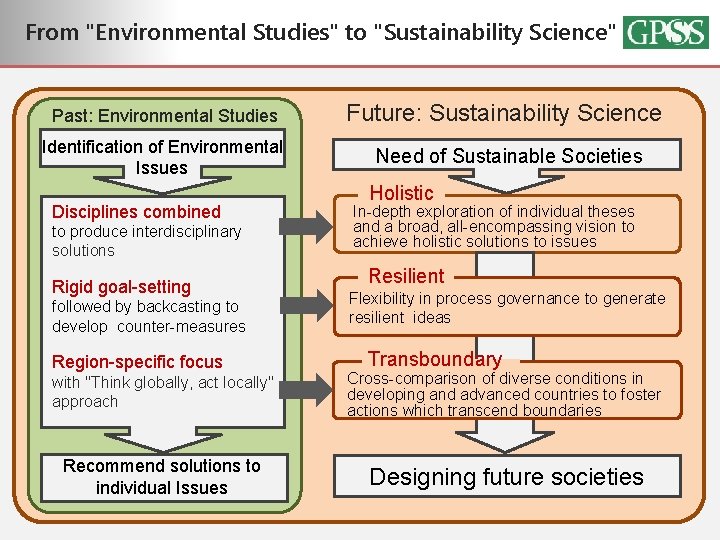
From "Environmental Studies" to "Sustainability Science" Past: Environmental Studies Future: Sustainability Science Identification of Environmental Issues Need of Sustainable Societies Disciplines combined to produce interdisciplinary solutions Rigid goal-setting followed by backcasting to develop counter-measures Region-specific focus Holistic In-depth exploration of individual theses and a broad, all-encompassing vision to achieve holistic solutions to issues Resilient Flexibility in process governance to generate resilient ideas Transboundary with "Think globally, act locally" approach Cross-comparison of diverse conditions in developing and advanced countries to foster actions which transcend boundaries Recommend solutions to individual Issues Designing future societies
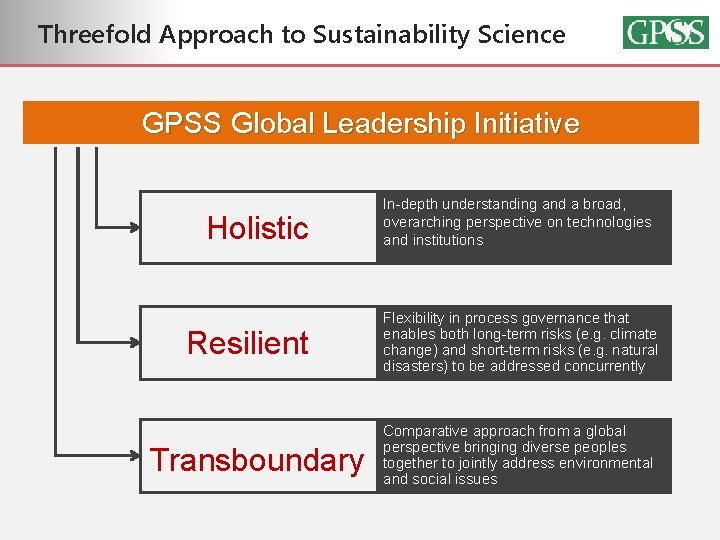
Threefold Approach to Sustainability Science GPSS Global Leadership Initiative Holistic Resilient Transboundary In-depth understanding and a broad, overarching perspective on technologies and institutions Flexibility in process governance that enables both long-term risks (e. g. climate change) and short-term risks (e. g. natural disasters) to be addressed concurrently Comparative approach from a global perspective bringing diverse peoples together to jointly address environmental and social issues
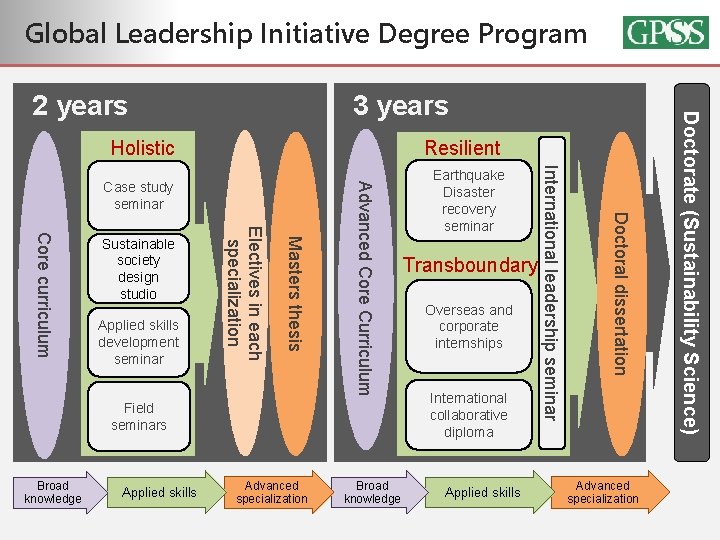
Global Leadership Initiative Degree Program 3 years Applied skills development seminar Masters thesis Sustainable society design studio Field seminars Broad knowledge Applied skills Advanced specialization Broad knowledge Transboundary Overseas and corporate internships International collaborative diploma Applied skills Doctoral dissertation Earthquake Disaster recovery seminar International leadership seminar Case study seminar Advanced Core Curriculum Resilient Electives in each specialization Core curriculum Holistic Advanced specialization Doctorate (Sustainability Science) 2 years
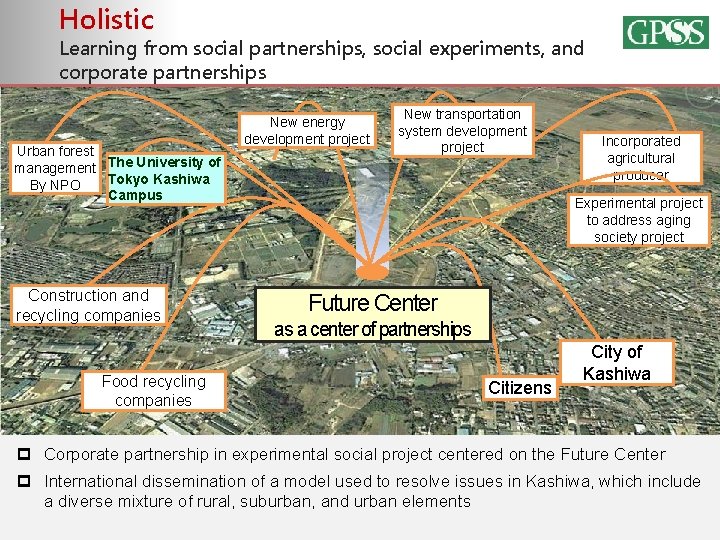
Holistic Learning from social partnerships, social experiments, and corporate partnerships Urban forest management The University of Tokyo Kashiwa By NPO Campus Construction and recycling companies Food recycling companies New energy development project New transportation system development project Incorporated agricultural producer Experimental project to address aging society project Future Center as a center of partnerships Citizens City of Kashiwa p Corporate partnership in experimental social project centered on the Future Center p International dissemination of a model used to resolve issues in Kashiwa, which include a diverse mixture of rural, suburban, and urban elements
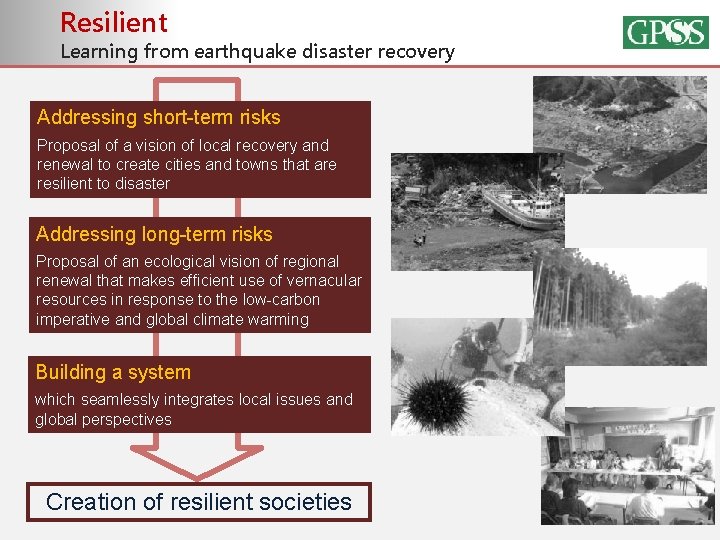
Resilient Learning from earthquake disaster recovery Addressing short-term risks Proposal of a vision of local recovery and renewal to create cities and towns that are resilient to disaster Addressing long-term risks Proposal of an ecological vision of regional renewal that makes efficient use of vernacular resources in response to the low-carbon imperative and global climate warming Building a system which seamlessly integrates local issues and global perspectives Creation of resilient societies
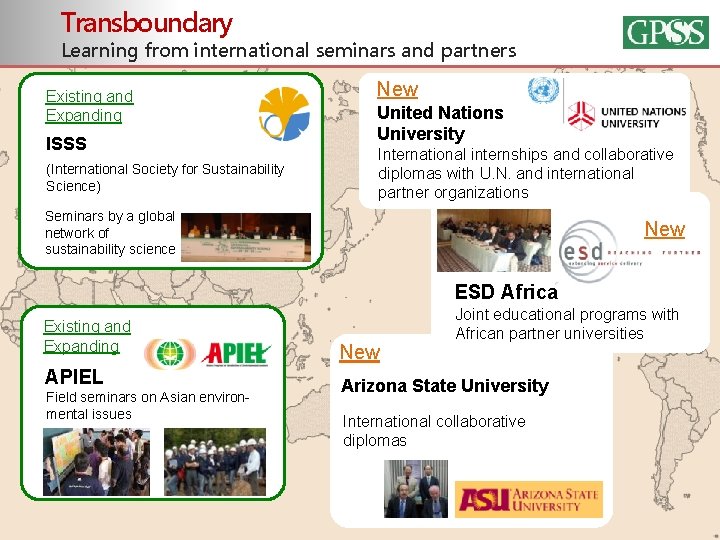
Transboundary Learning from international seminars and partners Existing and Expanding ISSS (International Society for Sustainability Science) New United Nations University International internships and collaborative diplomas with U. N. and international partner organizations Seminars by a global network of sustainability science New ESD Africa Existing and Expanding APIEL Field seminars on Asian environmental issues New Joint educational programs with African partner universities Arizona State University International collaborative diplomas
Scholarships MEXT (Ministry of Education, The Japanese Government) scholarship for international students a) Apply to Japanese Embassy b) Apply to GPSS-GLI scholarship for international students 9
Welcome to Kashiwa Campus
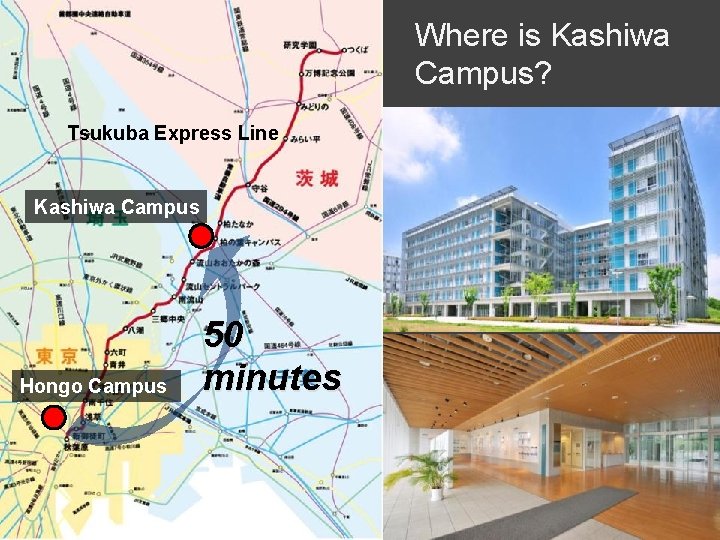
Where is Kashiwa Campus? Tsukuba Express Line Kashiwa Campus Hongo Campus 50 minutes
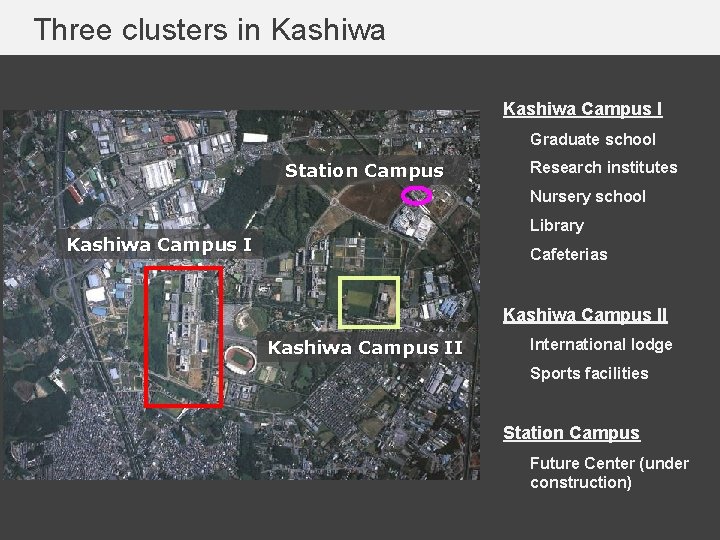
Three clusters in Kashiwa Campus I Graduate school Station Campus Research institutes Nursery school Library Kashiwa Campus I Cafeterias Kashiwa Campus II International lodge Sports facilities Station Campus Future Center (under construction)
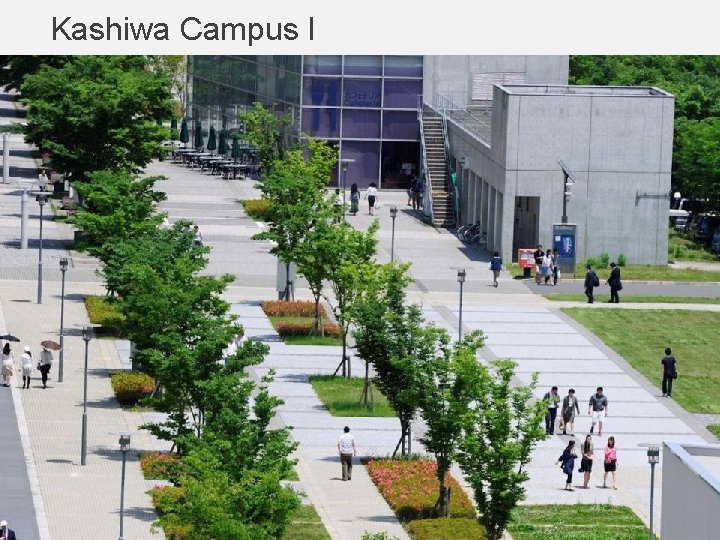
Kashiwa Campus I
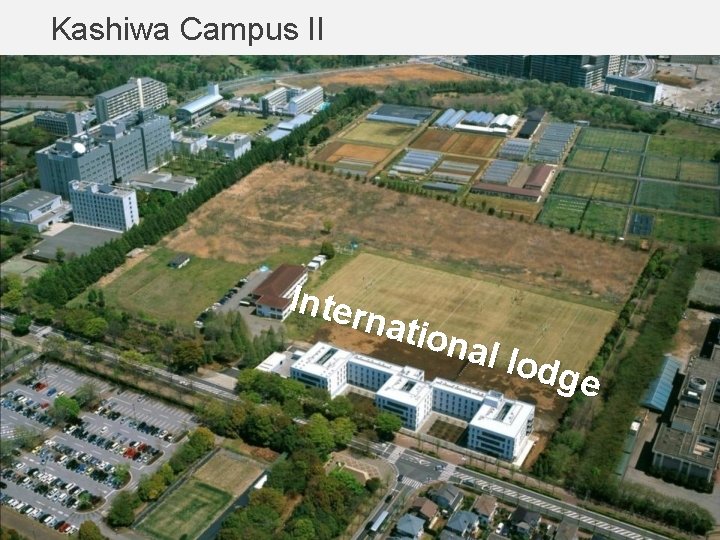
Kashiwa Campus II Inter natio nal l odg e
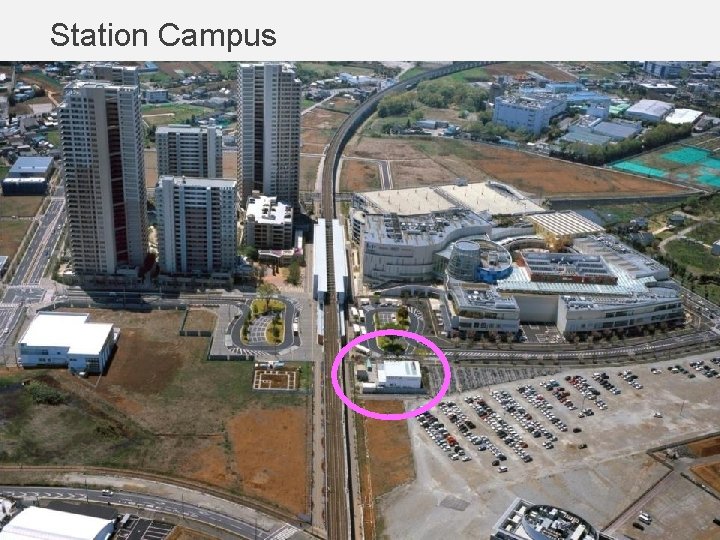
Station Campus
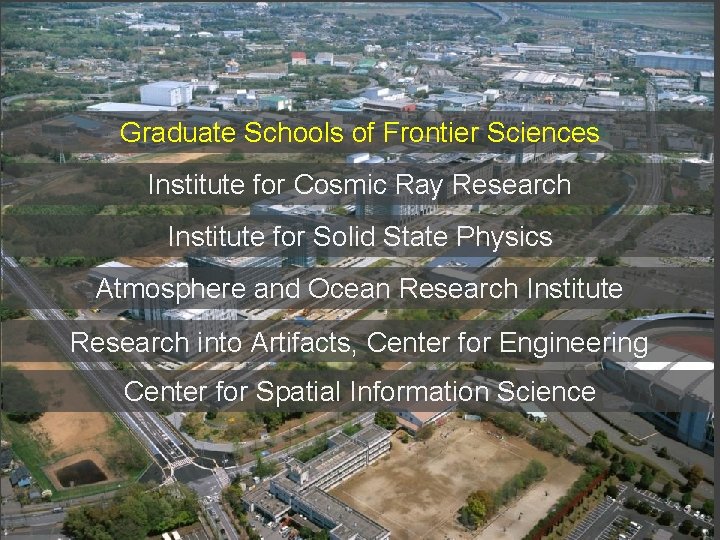
Graduate Schools of Frontier Sciences Institute for Cosmic Ray Research Institute for Solid State Physics Atmosphere and Ocean Research Institute Research into Artifacts, Center for Engineering Center for Spatial Information Science 16 16
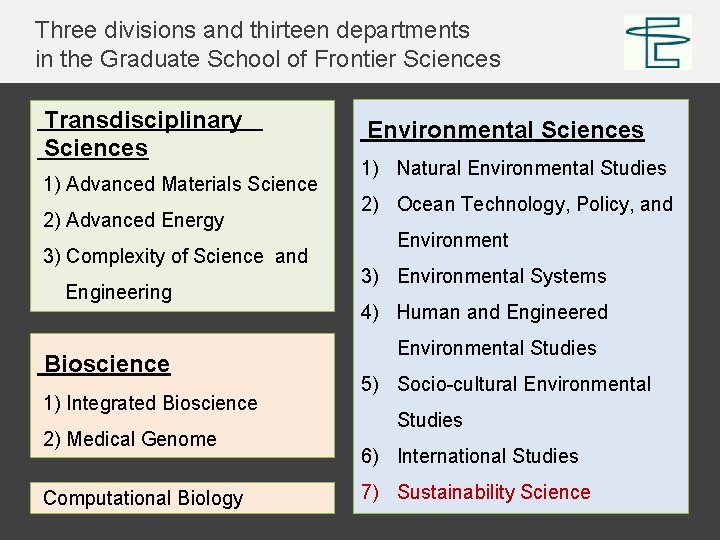
Three divisions and thirteen departments in the Graduate School of Frontier Sciences Transdisciplinary Sciences 1) Advanced Materials Science 2) Advanced Energy 3) Complexity of Science and Engineering Bioscience 1) Integrated Bioscience 2) Medical Genome Computational Biology Environmental Sciences 1) Natural Environmental Studies 2) Ocean Technology, Policy, and Environment 3) Environmental Systems 4) Human and Engineered Environmental Studies 5) Socio-cultural Environmental Studies 6) International Studies 7) Sustainability Science
Graduate Program in Sustainability Science (GPSS)
Characteristics of GPSS: Internationality • English as the official language • More than a half of the students are international
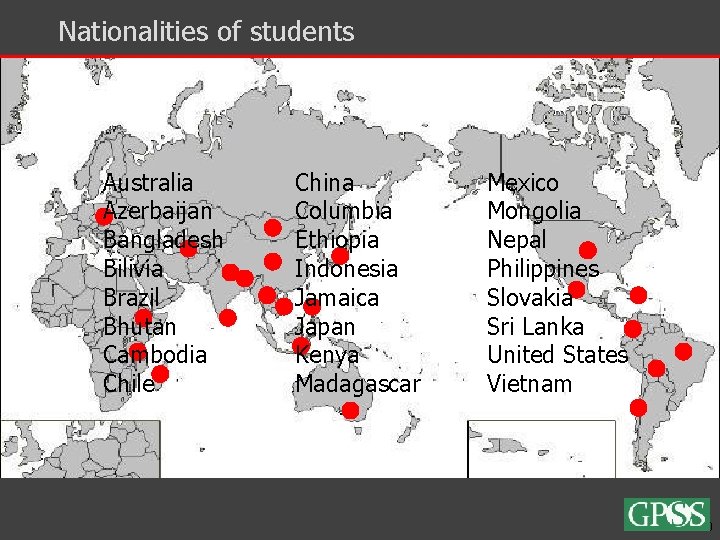
Nationalities of students Australia Azerbaijan Bangladesh Bilivia Brazil Bhutan Cambodia Chile China Columbia Ethiopia Indonesia Jamaica Japan Kenya Madagascar Mexico Mongolia Nepal Philippines Slovakia Sri Lanka United States Vietnam About 40 students from over 20 nations 20
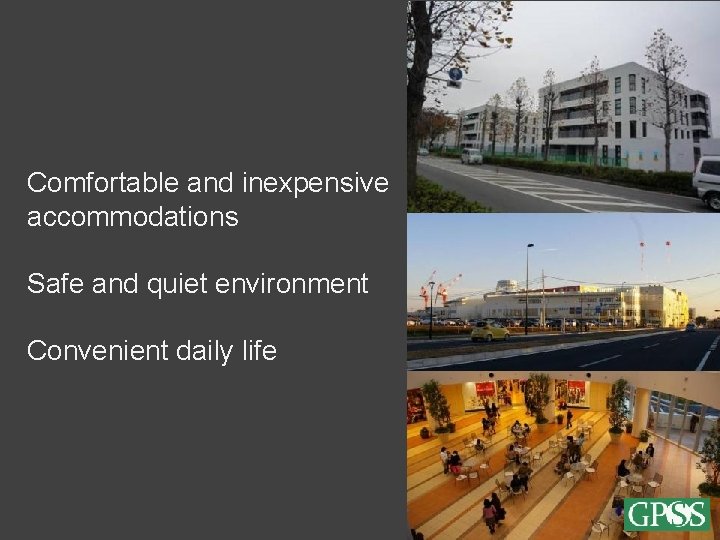
Comfortable and inexpensive accommodations Safe and quiet environment Convenient daily life
For further information… http: //www. sustainability. k. u-tokyo. ac. jp/gpss_gli_e. htm 22
Integrated Research System for Sustainability Science 23
Rise of Sustainability Science in around 21 st century Global: Alliance for Global Sustainability (AGS) : research alliance of MIT, ETH, Chalmers and UT (since 1996) US: National Academy of Science, Harvard Univ. , SOS at ASU Europe: Stockholm Environment Institute, IIASA, etc Asia: Integrated Research System for Sustainability Science (IR 3 S) forming a nationwide research networking toward sustainability from a global perspective, particularly in Asia, which holds a key for global sustainability foundation and evolution of sustainability science ultimately launching an international research base for sustainability science (World “hub”) New education program on Sustainability Science (Master: 2007, Doctor: 2009) 24
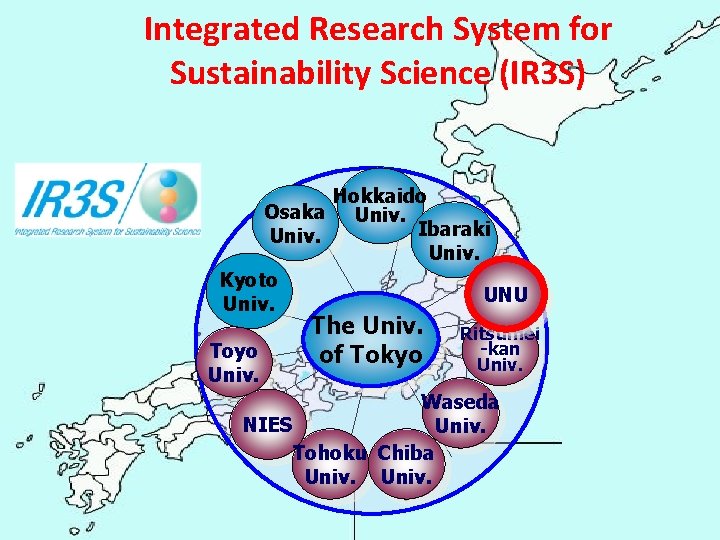
Integrated Research System for Sustainability Science (IR 3 S) Hokkaido Osaka Univ. Ibaraki Univ. Kyoto UNU Univ. Toyo Univ. The Univ. of Tokyo Ritsumei -kan Univ. Waseda NIES Univ. Tohoku Chiba Univ. 25
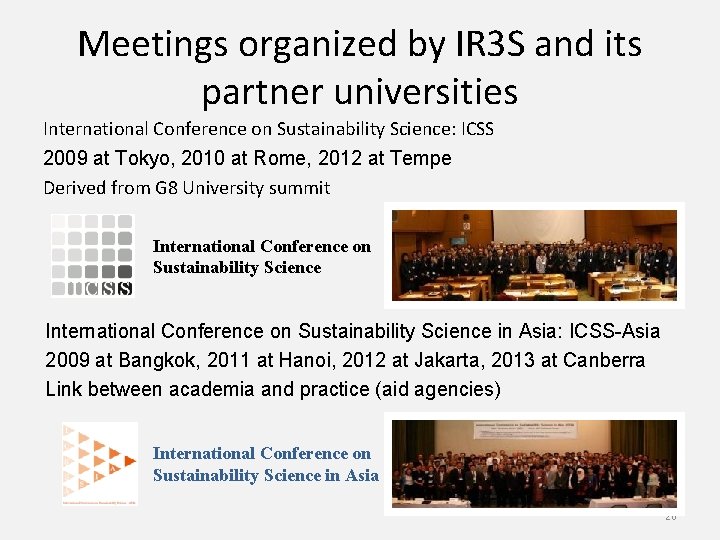
Meetings organized by IR 3 S and its partner universities International Conference on Sustainability Science: ICSS 2009 at Tokyo, 2010 at Rome, 2012 at Tempe Derived from G 8 University summit International Conference on Sustainability Science in Asia: ICSS-Asia 2009 at Bangkok, 2011 at Hanoi, 2012 at Jakarta, 2013 at Canberra Link between academia and practice (aid agencies) International Conference on Sustainability Science in Asia 26
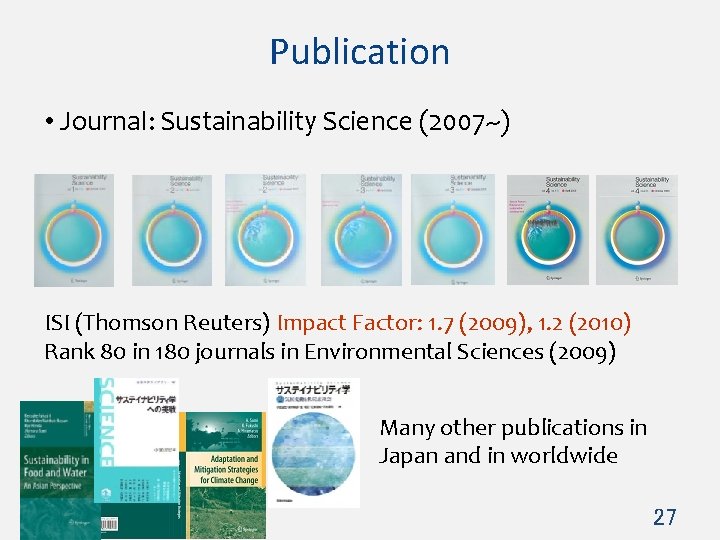
Publication • Journal: Sustainability Science (2007~) ISI (Thomson Reuters) Impact Factor: 1. 7 (2009), 1. 2 (2010) Rank 80 in 180 journals in Environmental Sciences (2009) Many other publications in Japan and in worldwide 27
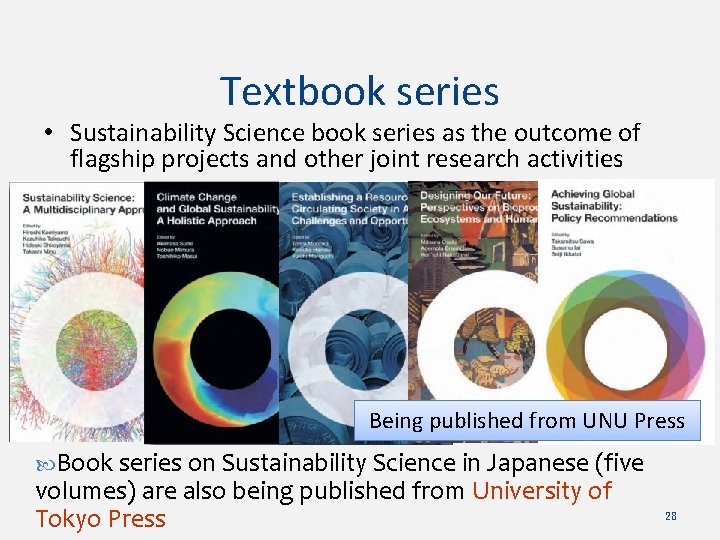
Textbook series • Sustainability Science book series as the outcome of flagship projects and other joint research activities Being published from UNU Press Book series on Sustainability Science in Japanese (five volumes) are also being published from University of Tokyo Press 28
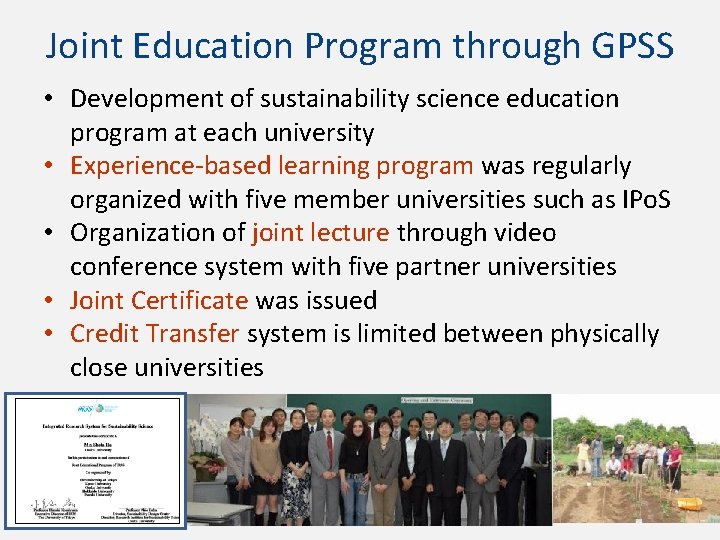
Joint Education Program through GPSS • Development of sustainability science education program at each university • Experience-based learning program was regularly organized with five member universities such as IPo. S • Organization of joint lecture through video conference system with five partner universities • Joint Certificate was issued • Credit Transfer system is limited between physically close universities 29
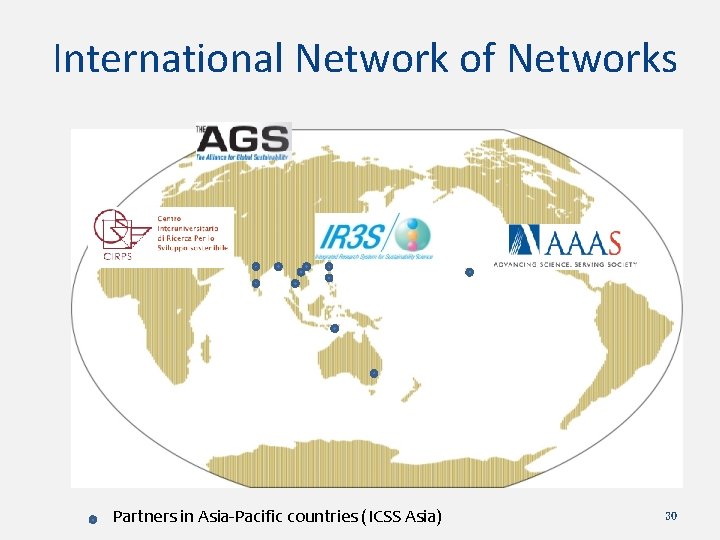
International Network of Networks Partners in Asia-Pacific countries (ICSS Asia) 30
GPSS AND IR 3 S WELCOME STUDENTS WORLDWIDE
- Slides: 31