
GRADES Moon Project To give you a chance




- Slides: 48
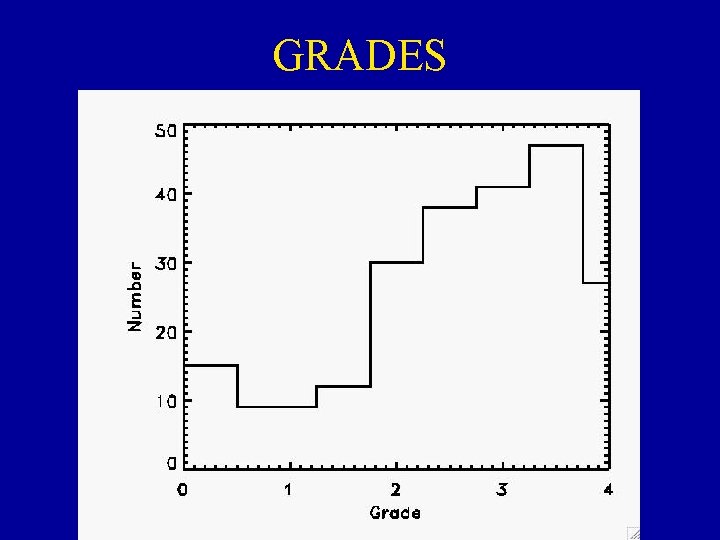
GRADES
Moon Project To give you a chance to do a good Moon project I have changed the due date to Wednesday, March 3. I have put a new sky map for this period on the course web page and Angel. Download and print it to use for this part of the project.
Announcements • Planet Assignment 2, due Monday Feb 23, is on Angel (later tonight). First view the movie “Formation of the Solar System” on Astronomy Place to help you answer the questions. • Planet Assignment 3, due Wednesday Feb 25, is Astronomy Place tutorial “Formation of the Solar System”
Exam Answers • Will be posted on the course web page with links from Angel Syllabus page tomorrow. • Tonight we will go over some of the more confusing questions.
What is a FACT & what is a THEORY? A FACT is a statement about an observation - e. g. planets move on elliptical orbits. A THEORY is an explanation - e. g. a = F/m This is an explanation of why things move the way they do. It needs to be verified by tests.
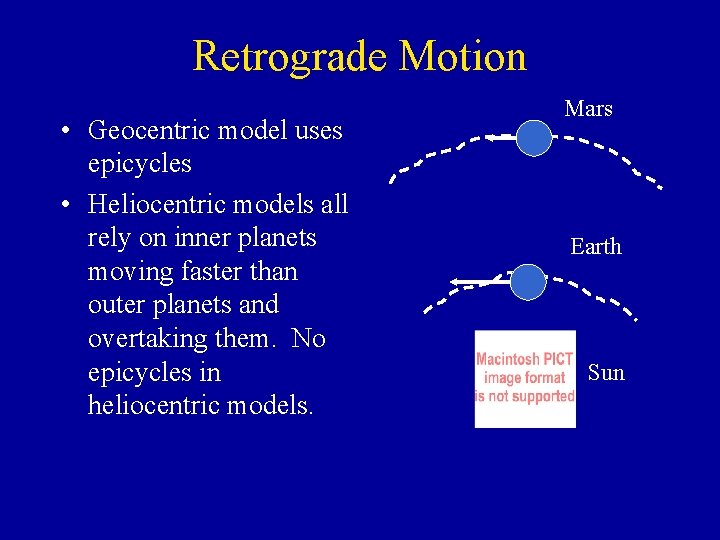
Retrograde Motion • Geocentric model uses epicycles • Heliocentric models all rely on inner planets moving faster than outer planets and overtaking them. No epicycles in heliocentric models. Mars Earth Sun
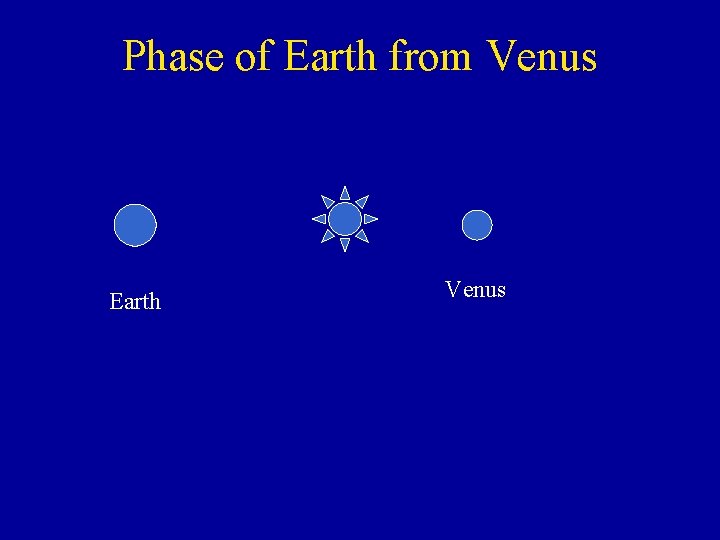
Phase of Earth from Venus Earth Venus
Model Sun = grapefruit • Recall map you made for homework Model Milky Way = Earth-Sun • Recall in this model distance to nearest star is Washington DC to San Francisco
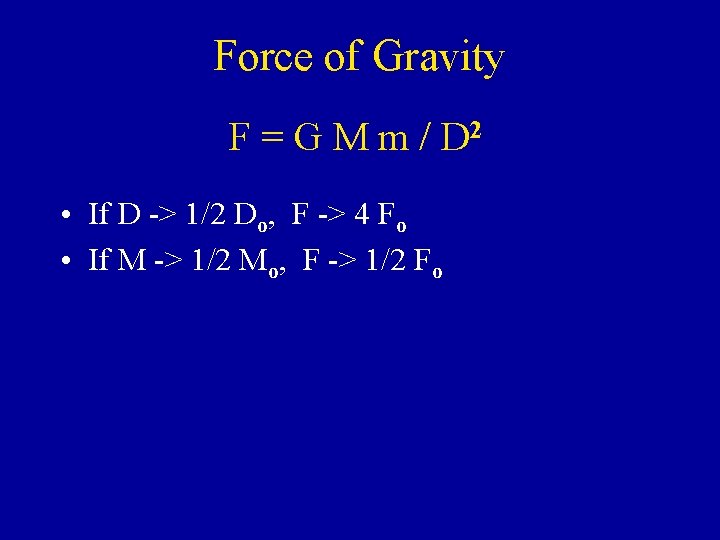
Force of Gravity F = G M m / D 2 • If D -> 1/2 Do, F -> 4 Fo • If M -> 1/2 Mo, F -> 1/2 Fo
You see First Quarter Moon in the WEST • Moon must be setting • 1 Q Moon sets at midnight
Which has the most total Energy, 2 E=mc • When you are high and fast have lots of both gravitational PE and KE • When plummeting to Earth, have converted gravitational PE to KE • If sitting in a hanger have least energy
Spaceship Earth What are the motions of spaceship Eearth? • Earth SPINS on its axis towards the EAST once every 24 hours • Earth ORBITS around the Sun once every 365. 25 days. Speed ~ 1 x 10⁵ km/hr. • Earth, the Sun & the Solar System all orbit around the center of the Milky Way galaxy once every 2. 3 x 10⁸ years. Speed ~ 8 x 10⁵ km/hr. • The Milky Way is moving toward the Andromeda galaxy, speed ~ 3 x 10⁵ km/hr • The Milky Way (along with the local group) partakes in the expansion of the universe.
Simplest Model of Solar System • Which is simplest depends on your taste, but the most complicated is the Geocentric model. Any of the other three got credit. • We didn’t discuss the geocentric model in detail so I dropped this question.
Spectrum in terms of Wavelength • Increasing Energy = Decreasing Wavelength • Highest energy = shortest wavelength = x-rays or gamma-rays. Lowest energy = longest wavelength = radio waves
Solar System(s)
Trivia Patterns
What does the solar system look like?
Sun Over 99. 9% of solar system’s mass
Mercury A hot rock
Venus The cloudy planet
Venus The cloudy planet Surface is hotter and smoother than Mercury’s
Venus The cloudy planet Surface is hotter and smoother than Mercury’s It’s another rock
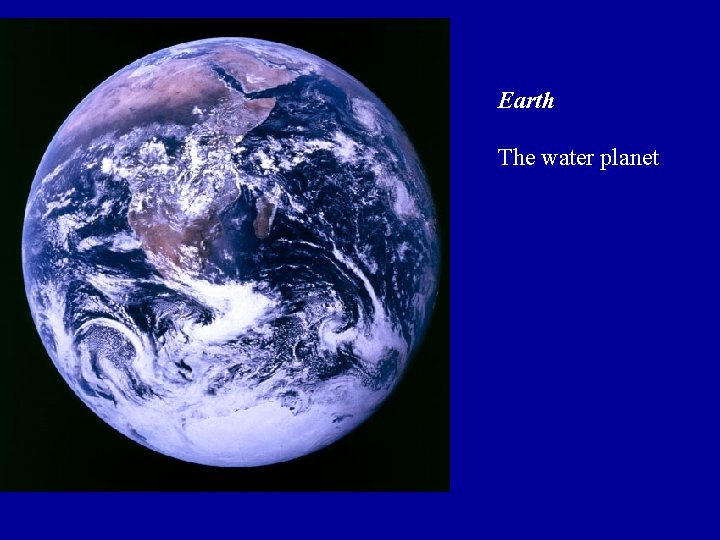
Earth The water planet
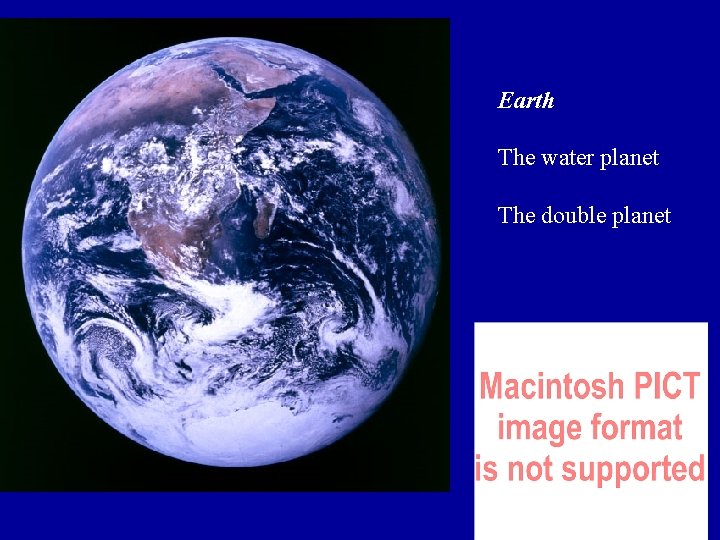
Earth The water planet The double planet
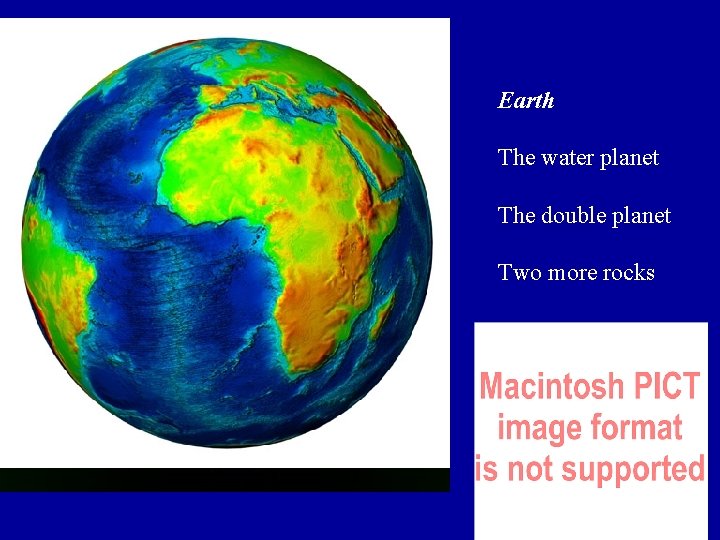
Earth The water planet The double planet Two more rocks
Mars A frozen planet
Mars A frozen planet Also a rock
Mars A frozen planet Also a rock
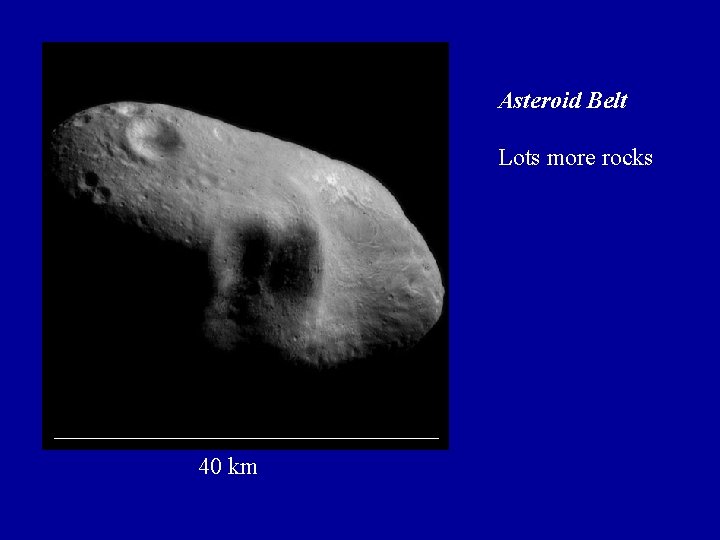
Asteroid Belt Lots more rocks 40 km
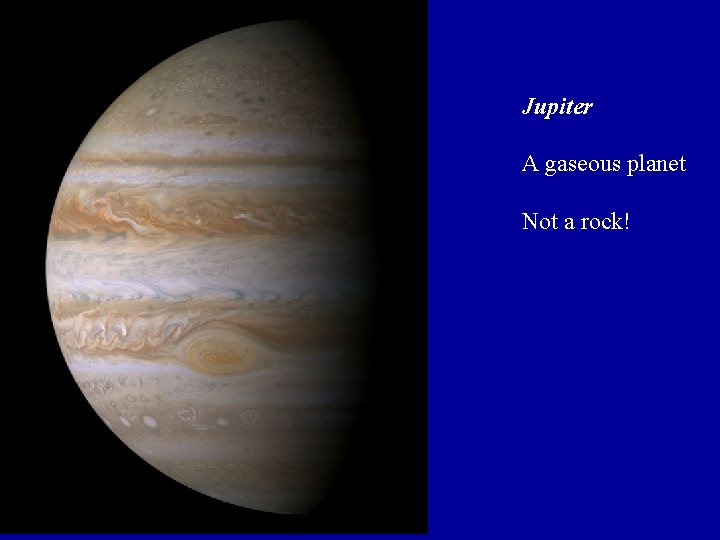
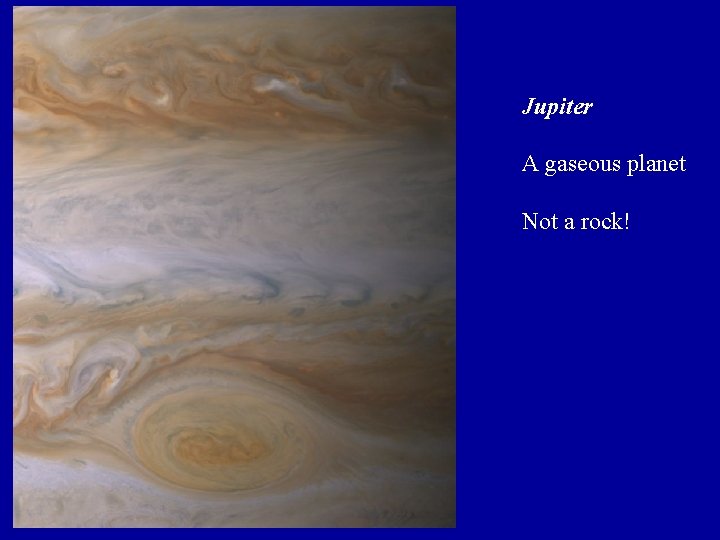
Jupiter A gaseous planet Not a rock!
Jupiter A gaseous planet Not a rock!
Jupiter A gaseous planet Not a rock!
Jupiter’s Moons Io Europa Four largest discovered by Galileo Worlds of ice and rock Ganymede Callisto
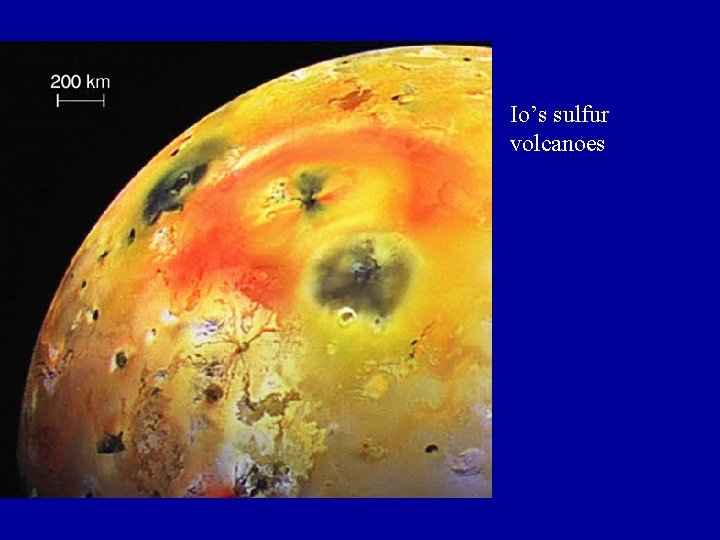
Io’s sulfur volcanoes
Europa’s Icy Surface
Saturn Giant and gaseous like Jupiter
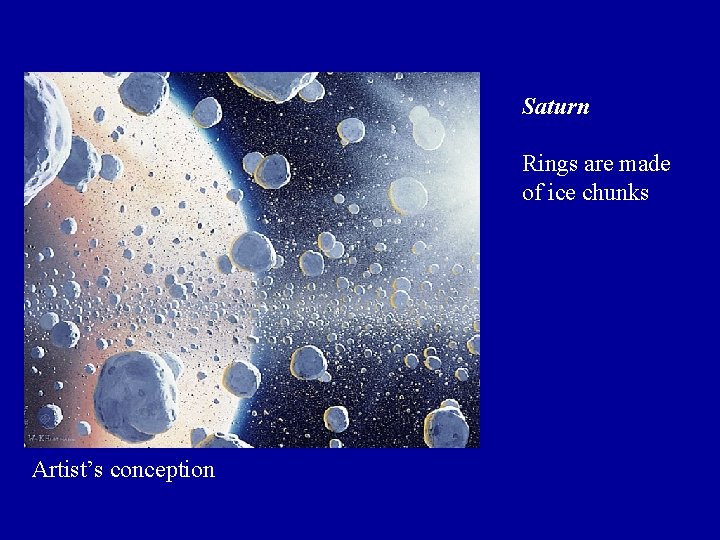
Saturn Rings are made of ice chunks Artist’s conception
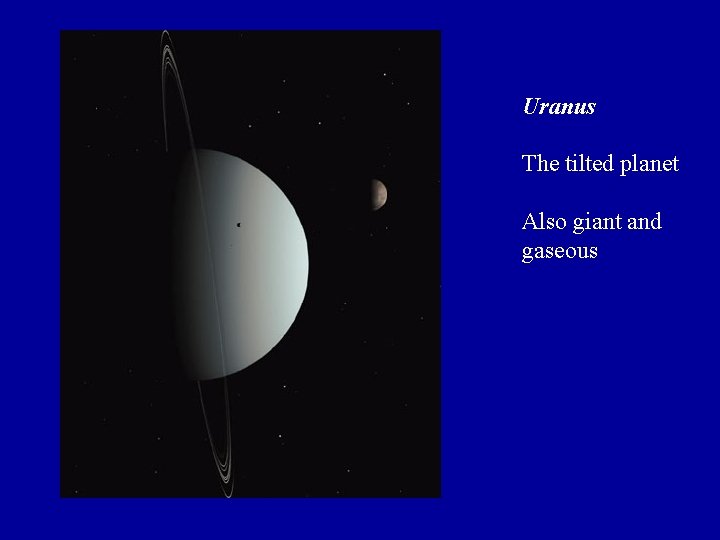
Uranus The tilted planet Also giant and gaseous
Uranus The tilted planet Also giant and gaseous Has many moons
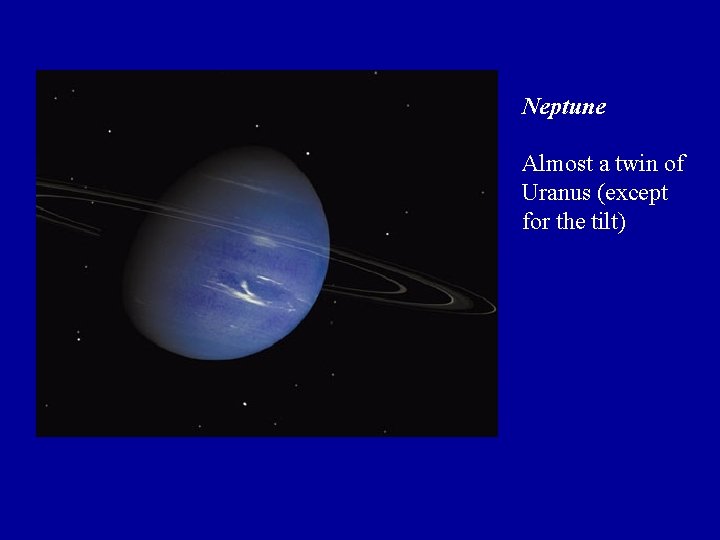
Neptune Almost a twin of Uranus (except for the tilt)
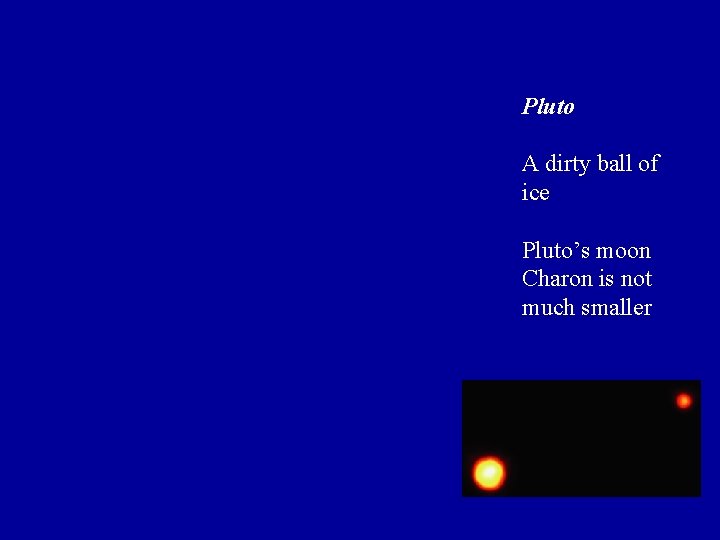
Pluto A dirty ball of ice Pluto’s moon Charon is not much smaller
Comets Also dirty balls of ice Comet Hale-Bopp Spend most of their time in solar system’s outer reaches Have elongated orbits Comet Wild 2
What features of our solar system provide clues to how it formed?
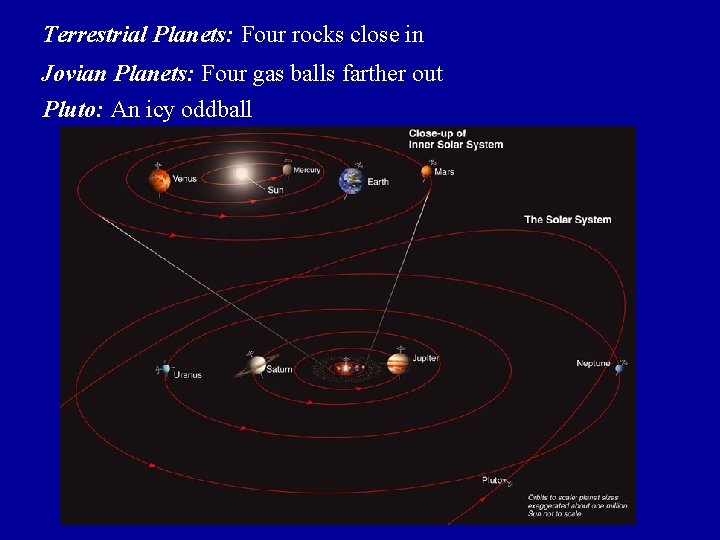
Terrestrial Planets: Four rocks close in Jovian Planets: Four gas balls farther out Pluto: An icy oddball
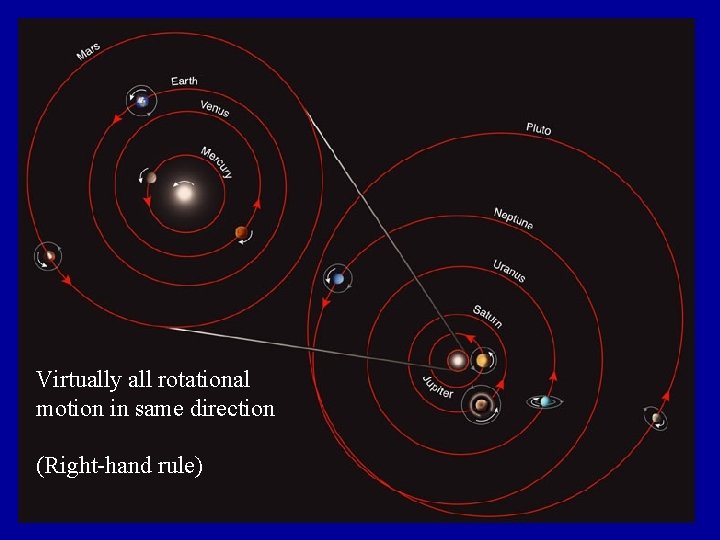
Virtually all rotational motion in same direction (Right-hand rule)
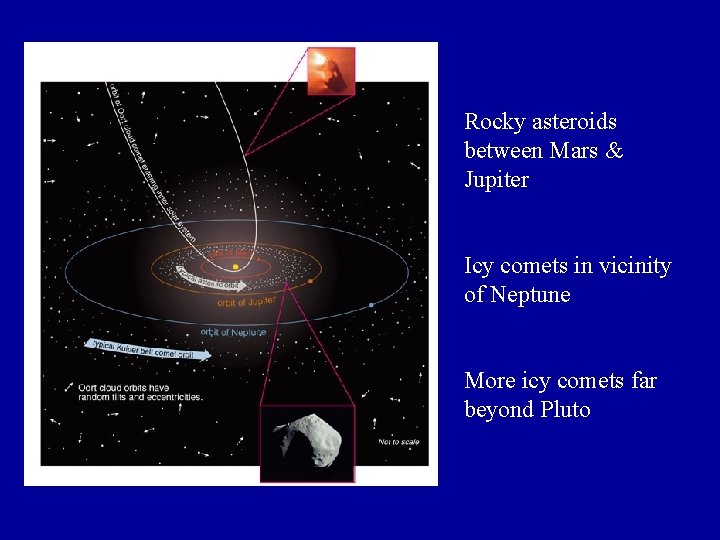
Rocky asteroids between Mars & Jupiter Icy comets in vicinity of Neptune More icy comets far beyond Pluto
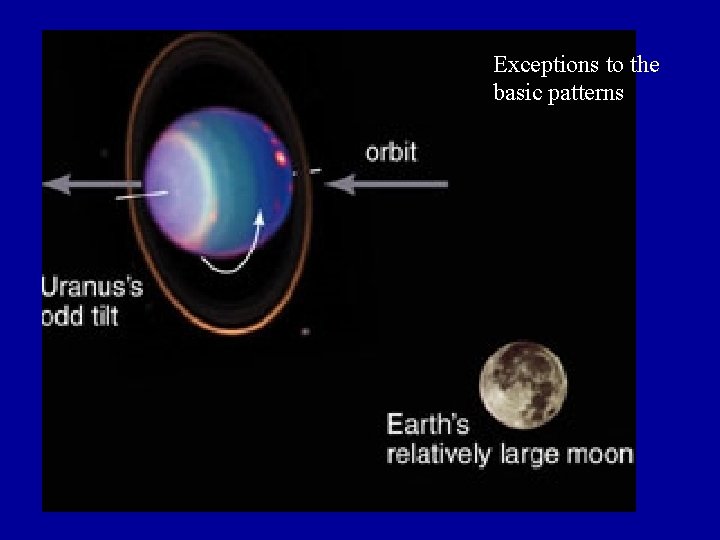
Exceptions to the basic patterns
Four Big Questions 1) Why does virtually everything in the solar system rotate in the same direction? 2) Why are the inner worlds rocky and the outer ones gaseous or icy? 3) Where did the comets and asteroids come from? 4) How can we explain the exceptions?