
Grades 6 8 Implementing a Comprehensive Literacy Framework
![Mini-Lesson: The Writer’s Notebook “I would have to say it [my Writer’s Notebook] was](https://slidetodoc.com/presentation_image_h/10ff05b44d1e73aab480db09267001c3/image-49.jpg "Mini-Lesson: The Writer’s Notebook “I would have to say it [my Writer’s Notebook] was")
![References Allen, K. & Marquez, A. (2011). Teaching vocabulary with visual aids [PDF]. Journal](https://slidetodoc.com/presentation_image_h/10ff05b44d1e73aab480db09267001c3/image-67.jpg "References Allen, K. & Marquez, A. (2011). Teaching vocabulary with visual aids [PDF]. Journal")
![References Madland, J. (2012). Walker Middle School Socratic seminar [Video file]. Retrieved from https:](https://slidetodoc.com/presentation_image_h/10ff05b44d1e73aab480db09267001c3/image-68.jpg "References Madland, J. (2012). Walker Middle School Socratic seminar [Video file]. Retrieved from https:")
- Slides: 68
Grades 6 -8 Implementing a Comprehensive Literacy Framework Module Four Reading Literature/Writing Narratives
Day 1 Objectives • Examine the Comprehensive Literacy Framework for Essential Elements & Coherent Instructional Design • Experience ways to implement reading workshop in the middle school classroom • Discuss how to select appropriate texts • Closely read a text for a specific purpose • Enhance comprehension through active discussion • Identify words for vocabulary instruction
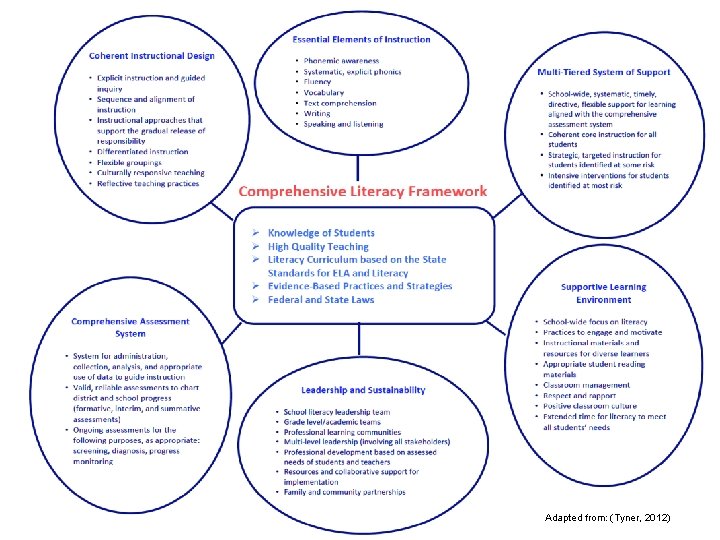
Adapted from: (Tyner, 2012)
Reader’s/Writer’s Notebook (Bennett, 2007; Reif, 2014)
1. What questions do you have about studying literature? 2. What does literacy instruction currently look like in your classroom?
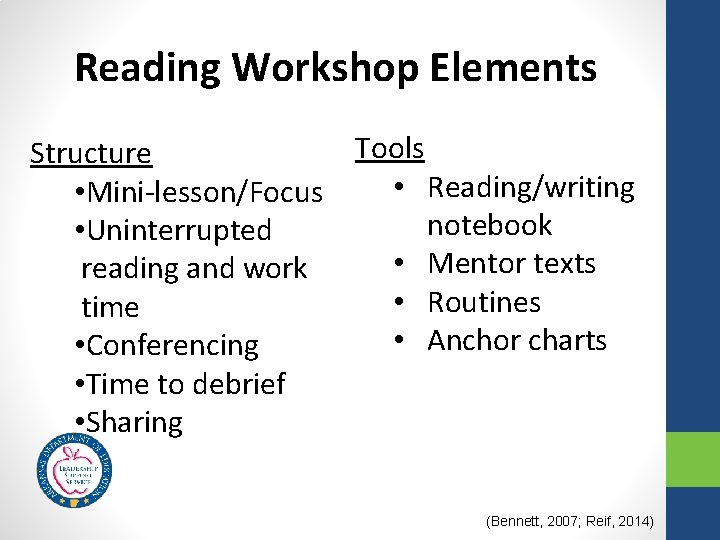
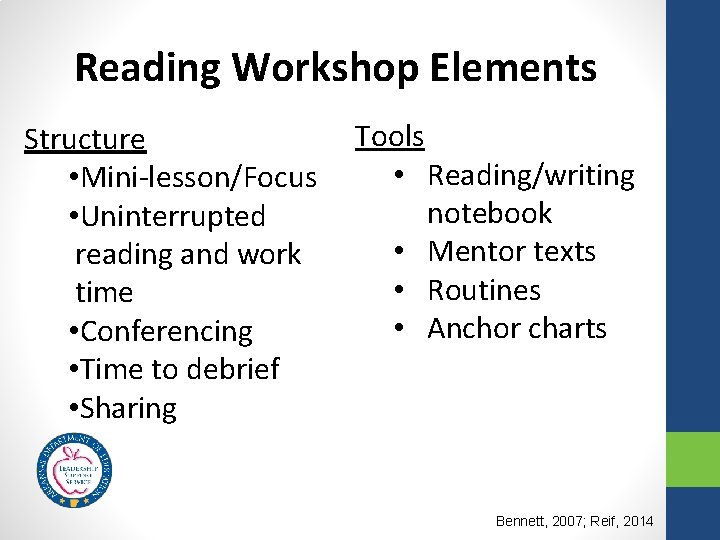
Reading Workshop Elements Structure • Mini-lesson/Focus • Uninterrupted reading and work time • Conferencing • Time to debrief • Sharing Tools • Reading/writing notebook • Mentor texts • Routines • Anchor charts (Bennett, 2007; Reif, 2014)
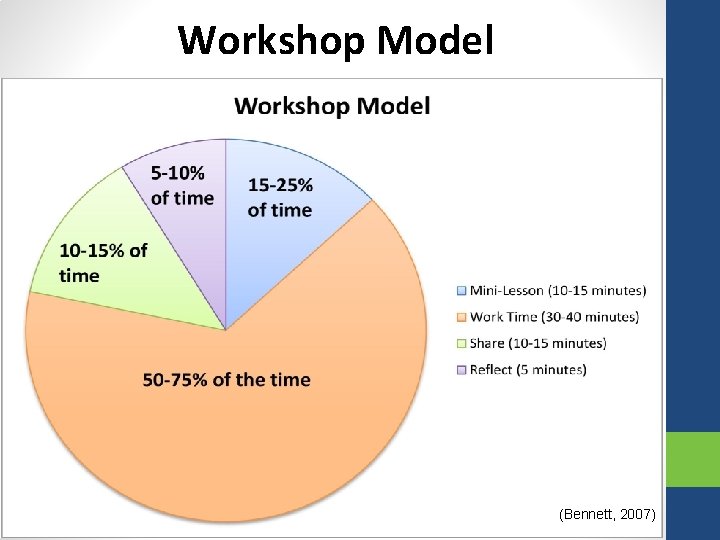
Workshop Model (Bennett, 2007)
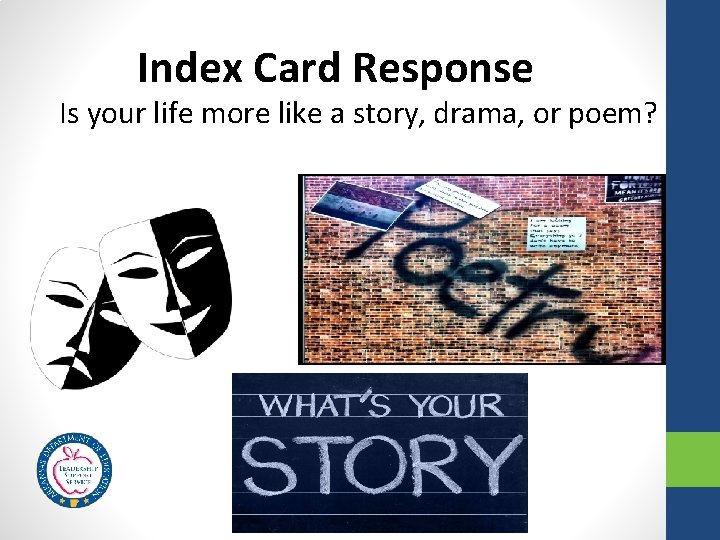
Index Card Response Is your life more like a story, drama, or poem?
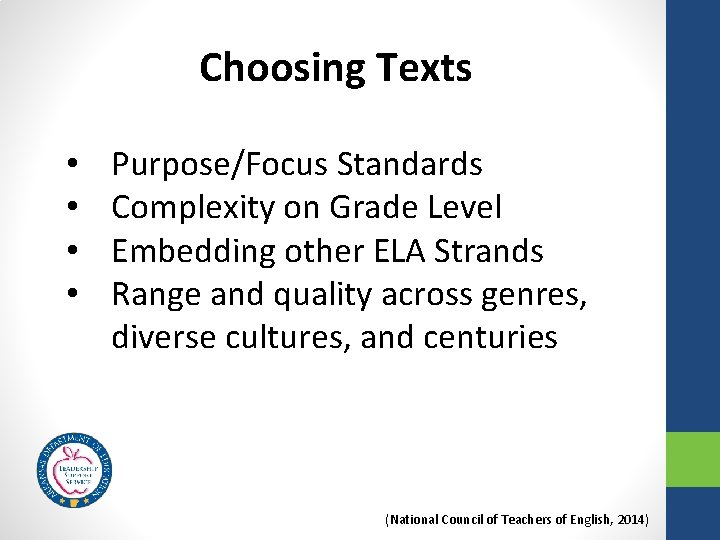
Choosing Texts • • Purpose/Focus Standards Complexity on Grade Level Embedding other ELA Strands Range and quality across genres, diverse cultures, and centuries (National Council of Teachers of English, 2014)
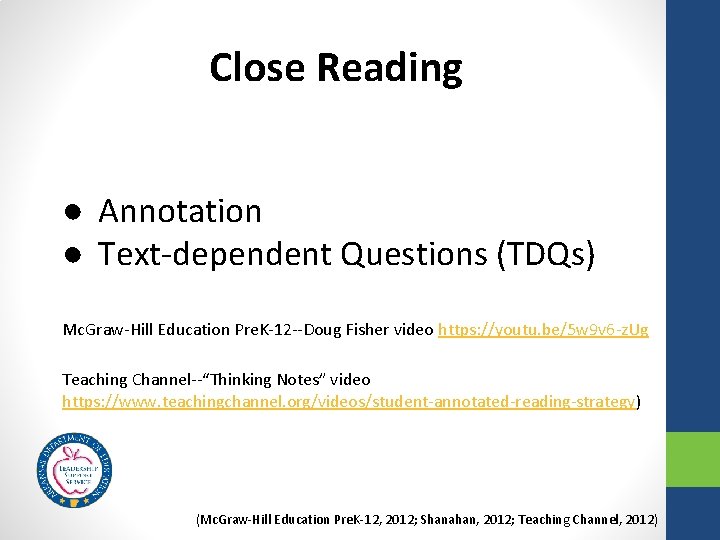
Close Reading ● Annotation ● Text-dependent Questions (TDQs) Mc. Graw-Hill Education Pre. K-12 --Doug Fisher video https: //youtu. be/5 w 9 v 6 -z. Ug Teaching Channel--“Thinking Notes” video https: //www. teachingchannel. org/videos/student-annotated-reading-strategy) (Mc. Graw-Hill Education Pre. K-12, 2012; Shanahan, 2012; Teaching Channel, 2012)
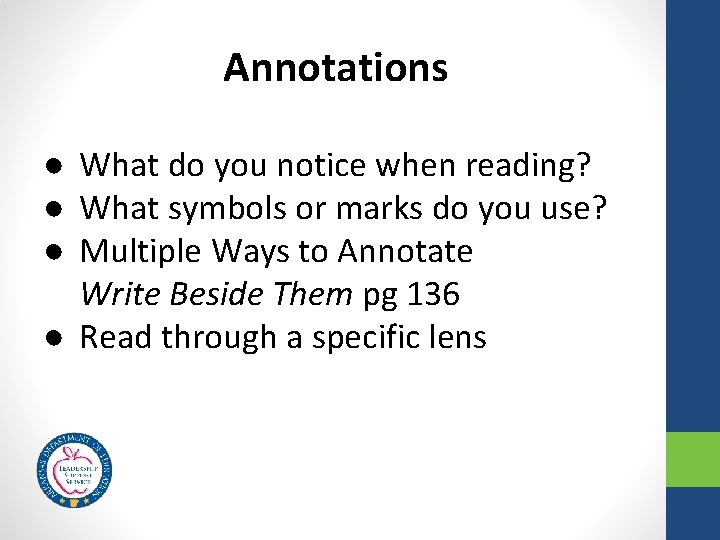
Annotations ● What do you notice when reading? ● What symbols or marks do you use? ● Multiple Ways to Annotate Write Beside Them pg 136 ● Read through a specific lens
Modeling Close Reading and Annotation “To Build A Fire” Paragraphs 1 -3 Focus: Setting Text adapted from London, J. (1908)
Text-Dependent Questions 1. After reading the first three paragraphs, how would you describe the setting of the story? 1. What specific words does London use to develop the setting? 1. Based on the setting, what does the author want the reader to infer about the man?
TDQs 1. In paragraph 11, why does the author stop the action and point out the changes in the creek? 2. In paragraph 18, why did the author use the word imperative and not the word important? 3. In paragraph 23, how does the setting affect the tone that the author uses? 4. In paragraph 40, how does the author use setting to parallel the resolution?
Modeling and Guided Practice: “To Build a Fire” Continue to read annotate paragraphs 11, 18, 23, and 40 in order to answer text-dependent questions. Focus: Setting and how the author uses setting as an integral part of the story
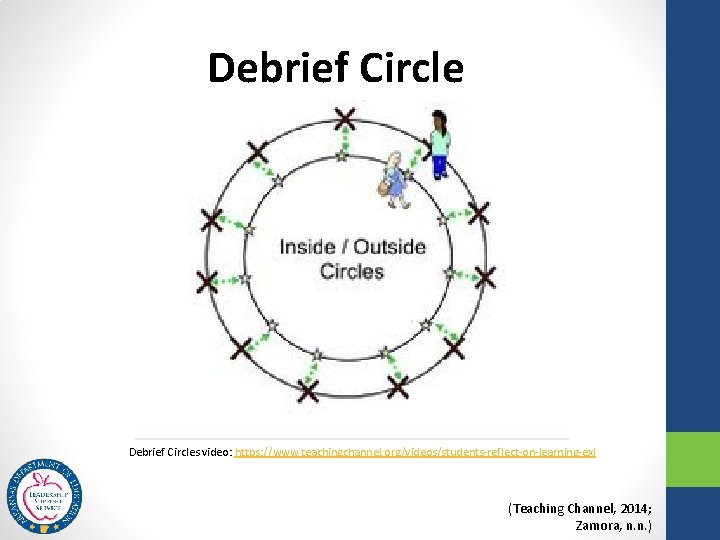
Debrief Circles video: https: //www. teachingchannel. org/videos/students-reflect-on-learning-exl (Teaching Channel, 2014; Zamora, n. n. )
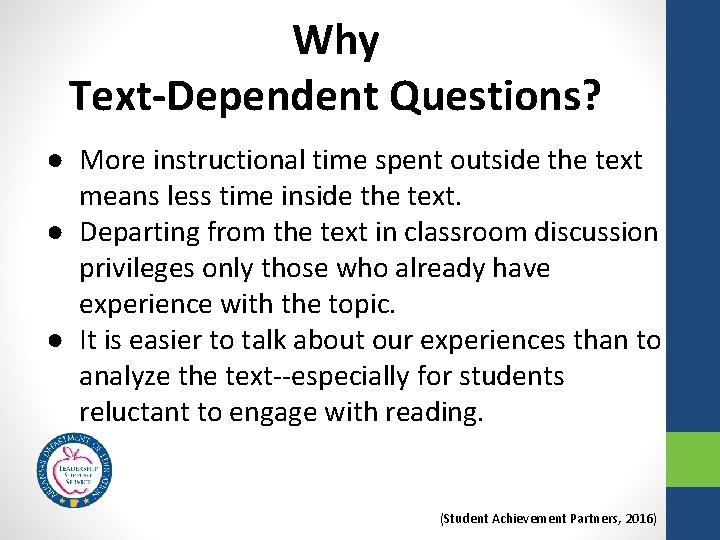
Why Text-Dependent Questions? ● More instructional time spent outside the text means less time inside the text. ● Departing from the text in classroom discussion privileges only those who already have experience with the topic. ● It is easier to talk about our experiences than to analyze the text--especially for students reluctant to engage with reading. (Student Achievement Partners, 2016)
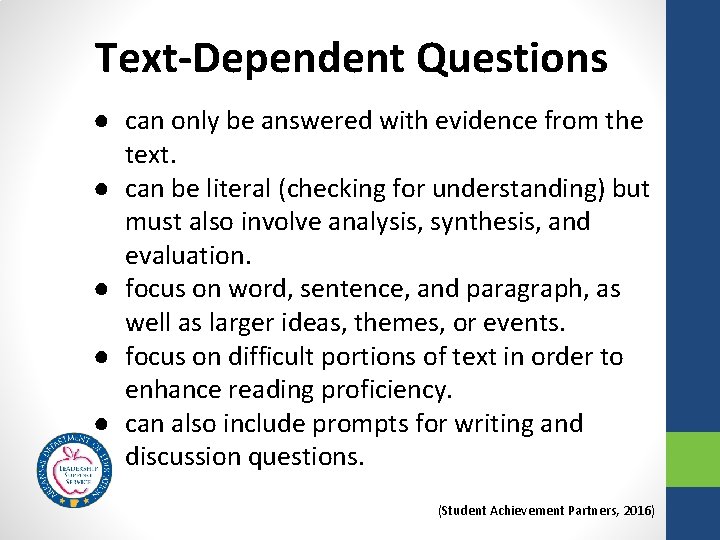
Text-Dependent Questions ● can only be answered with evidence from the text. ● can be literal (checking for understanding) but must also involve analysis, synthesis, and evaluation. ● focus on word, sentence, and paragraph, as well as larger ideas, themes, or events. ● focus on difficult portions of text in order to enhance reading proficiency. ● can also include prompts for writing and discussion questions. (Student Achievement Partners, 2016)
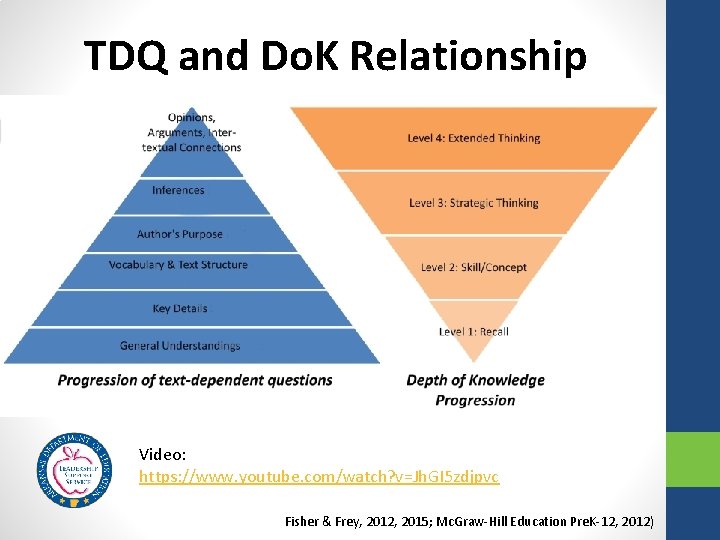
TDQ and Do. K Relationship Video: https: //www. youtube. com/watch? v=Jh. GI 5 zdjpvc Fisher & Frey, 2012, 2015; Mc. Graw-Hill Education Pre. K-12, 2012)
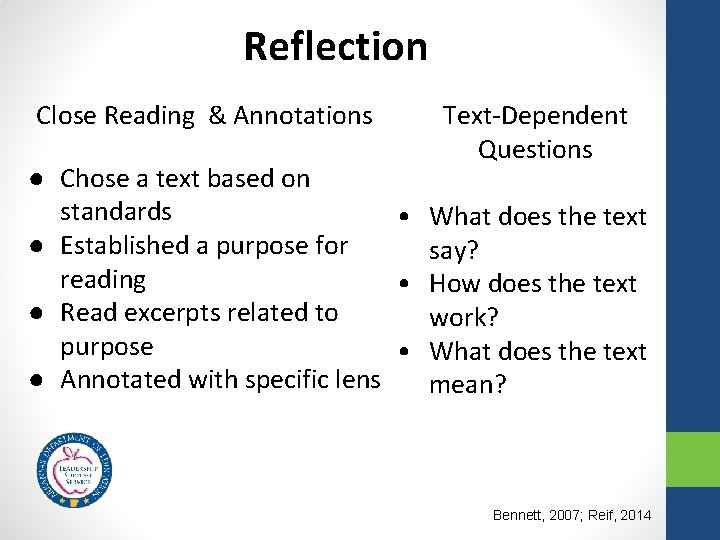
Reflection Close Reading & Annotations Text-Dependent Questions ● Chose a text based on standards • What does the text ● Established a purpose for say? reading • How does the text ● Read excerpts related to work? purpose • What does the text ● Annotated with specific lens mean? Bennett, 2007; Reif, 2014
Reading of the Texts “All Summer in a Day” “The Landlady”
Application of the Process 1. Text Selection: when considering “All Summer in a Day” and “The Landlady” which of the two texts do you feel best lends itself to the focus standard and purpose? 2. Using your chosen text, read closely and annotate the sections of the text that relate to the focus/purpose. 3. Create Text-dependent questions that could help your students read closely and comprehend the text more fully.
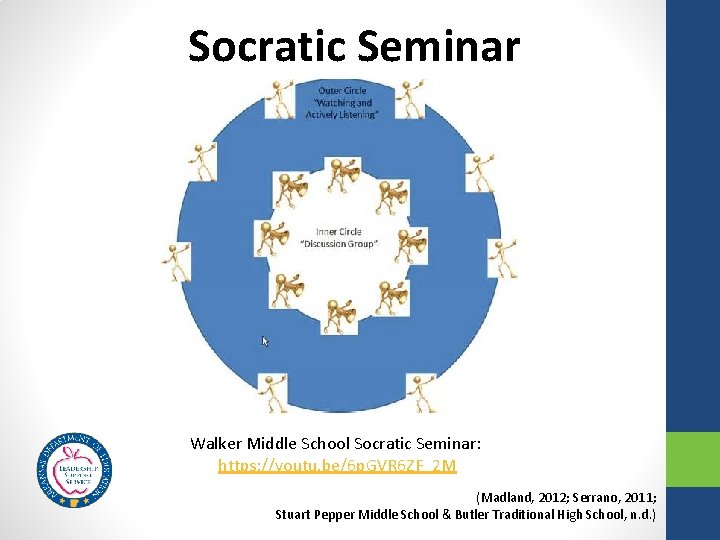
Socratic Seminar Walker Middle School Socratic Seminar: https: //youtu. be/6 p. GVR 6 ZF_2 M (Madland, 2012; Serrano, 2011; Stuart Pepper Middle School & Butler Traditional High School, n. d. )
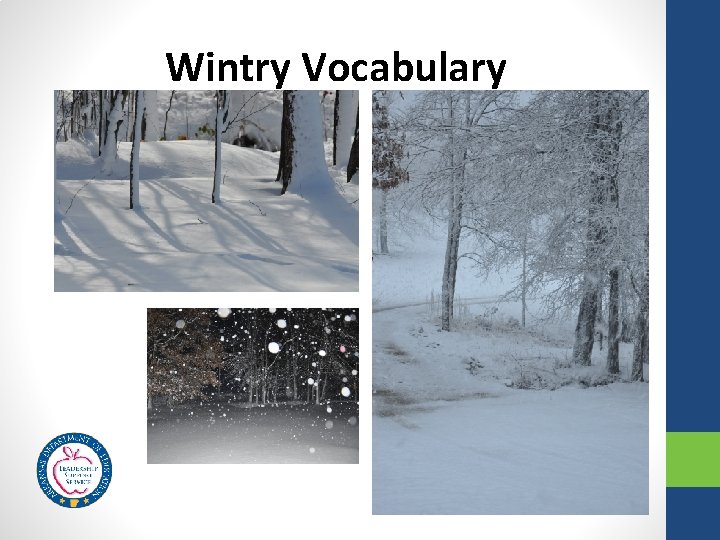
Wintry Vocabulary
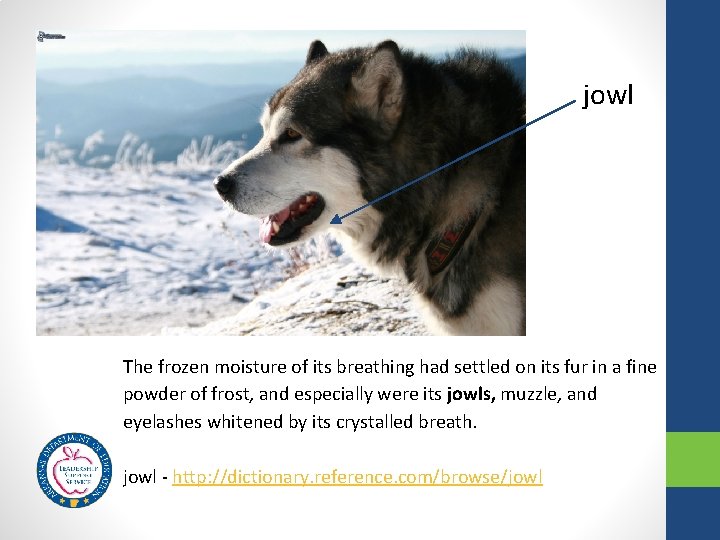
jowl The frozen moisture of its breathing had settled on its fur in a fine powder of frost, and especially were its jowls, muzzle, and eyelashes whitened by its crystalled breath. jowl - http: //dictionary. reference. com/browse/jowl
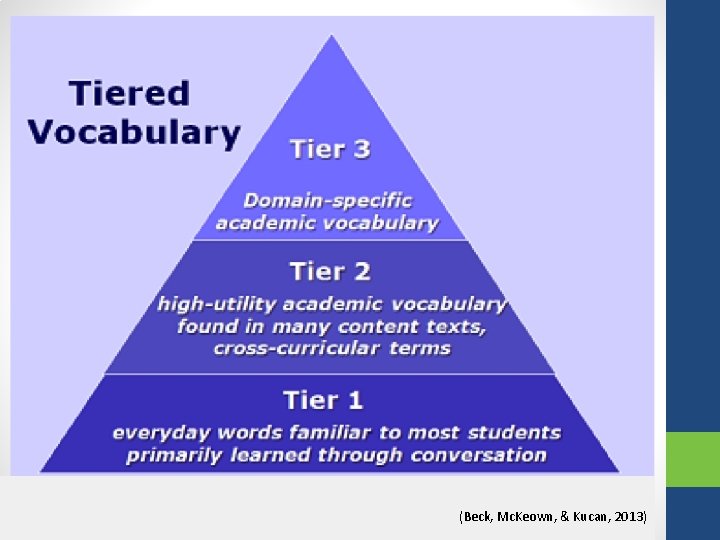
(Beck, Mc. Keown, & Kucan, 2013)
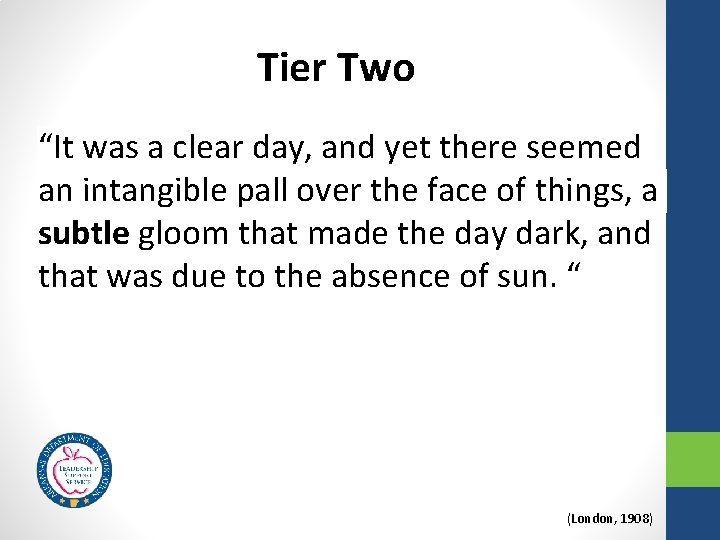
Tier Two “It was a clear day, and yet there seemed an intangible pall over the face of things, a subtle gloom that made the day dark, and that was due to the absence of sun. “ (London, 1908)
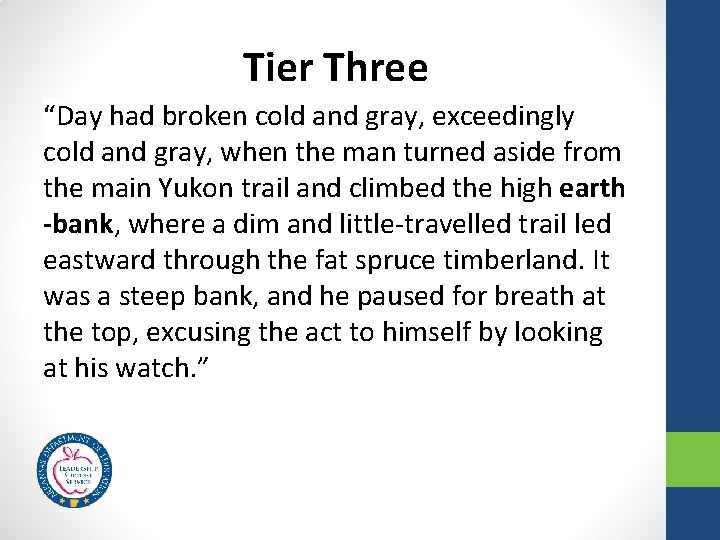
Tier Three “Day had broken cold and gray, exceedingly cold and gray, when the man turned aside from the main Yukon trail and climbed the high earth -bank, where a dim and little-travelled trail led eastward through the fat spruce timberland. It was a steep bank, and he paused for breath at the top, excusing the act to himself by looking at his watch. ”
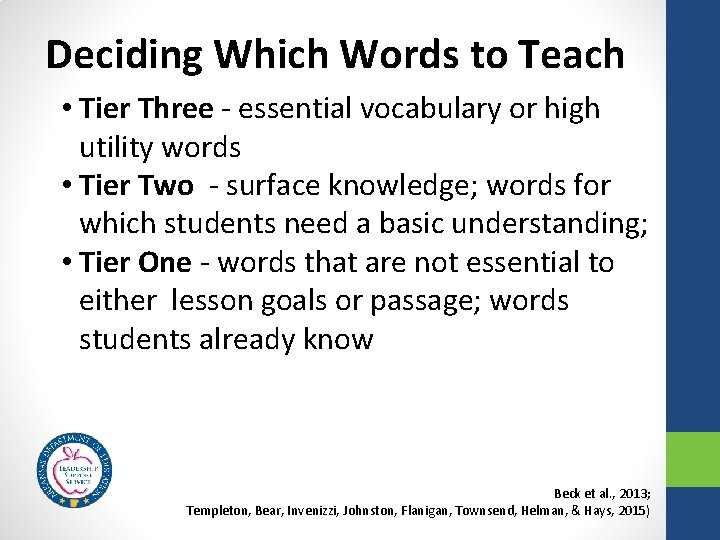
Deciding Which Words to Teach • Tier Three - essential vocabulary or high utility words • Tier Two - surface knowledge; words for which students need a basic understanding; • Tier One - words that are not essential to either lesson goals or passage; words students already know Beck et al. , 2013; Templeton, Bear, Invenizzi, Johnston, Flanigan, Townsend, Helman, & Hays, 2015)
Reading Workshop Elements Structure • Mini-lesson/Focus • Uninterrupted reading and work time • Conferencing • Time to debrief • Sharing Tools • Reading/writing notebook • Mentor texts • Routines • Anchor charts Bennett, 2007; Reif, 2014
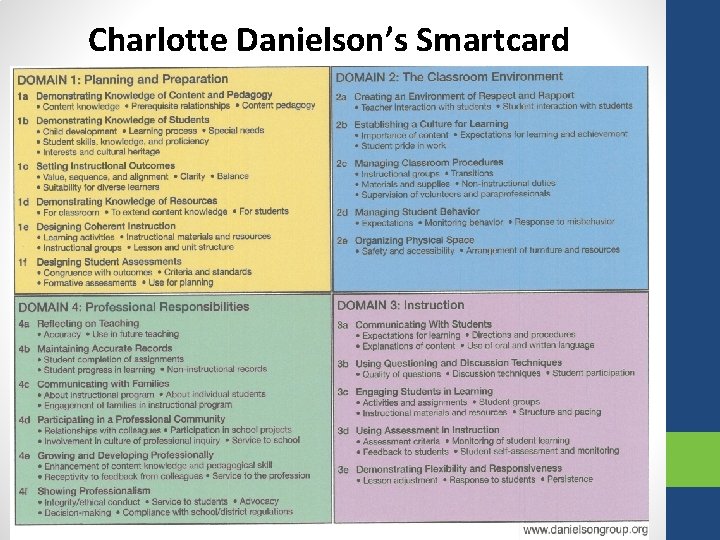
Charlotte Danielson’s Smartcard
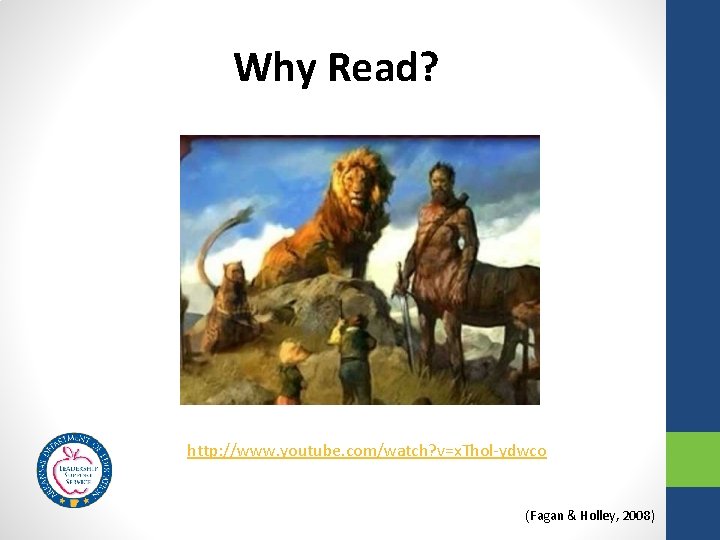
Why Read? http: //www. youtube. com/watch? v=x. Thol-ydwco (Fagan & Holley, 2008)
Narrative Writing ICLF Module 4
Day 2 Objectives 1. Critically analyze works from other authors to develop a writing style. 2. Identify the “conditions” writers need in order to be productive. 3. Examine the processes that writers use during production and distribution of writing. 4. Apply the characteristics of narrative writing to your own writing.
Reader’s/Writer’s Notebook
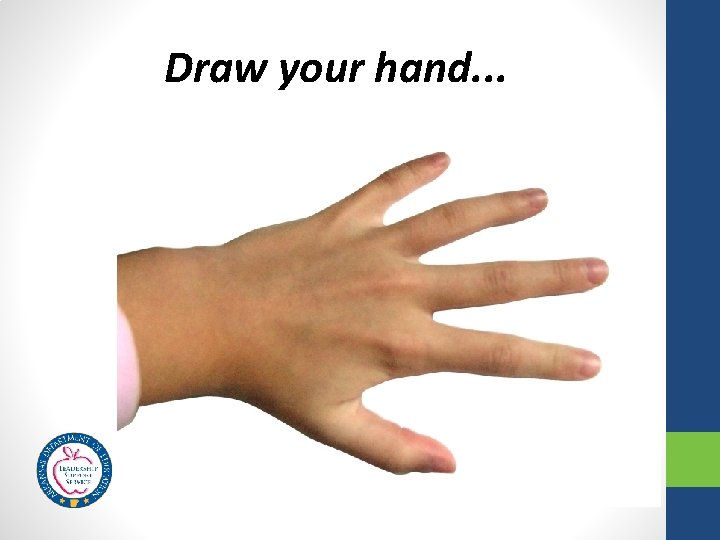
Draw your hand. . .
From your perspective as a writer, answer the questions for each finger. • Thumb - What is the most integral aspect of your writing process? • Index finger - In your opinion, what aspect of writing best leads to readers’ understanding (points out meaning)? • Middle finger - What frustrates you as a writer? • Ring finger - As a writer, what are you ‘married’ to? • Pinky - How do you find play in writing?
“If you want better writers, all the power lies within you. ” Write Beside Them, pg. 2
Three Questions to Consider. . . 1. Do you consider yourself to be a writer? 2. Do you think you should write alongside your students? 3. Do you think it is important to model writing with your students? Write Beside Them, pp. 8 -10
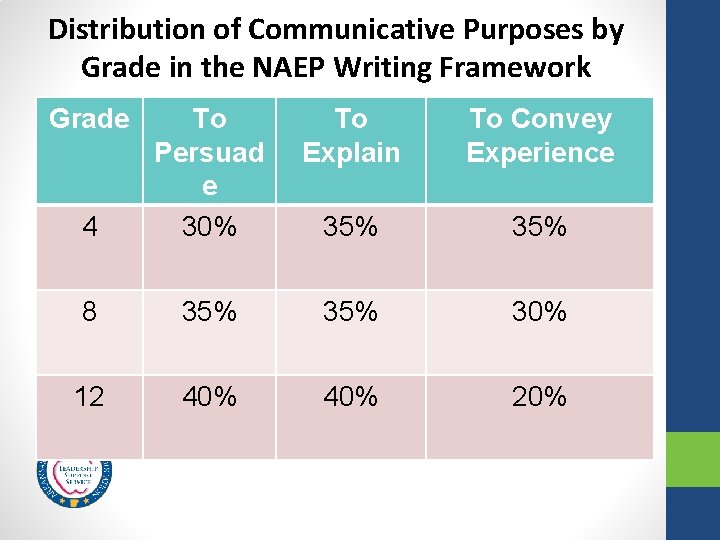
Distribution of Communicative Purposes by Grade in the NAEP Writing Framework Grade To Explain To Convey Experience 4 To Persuad e 30% 35% 8 35% 30% 12 40% 20%
Standards • Identify standards Draft of ELA Standards http: //tinyurl. com/h 3 w 6 ze 3
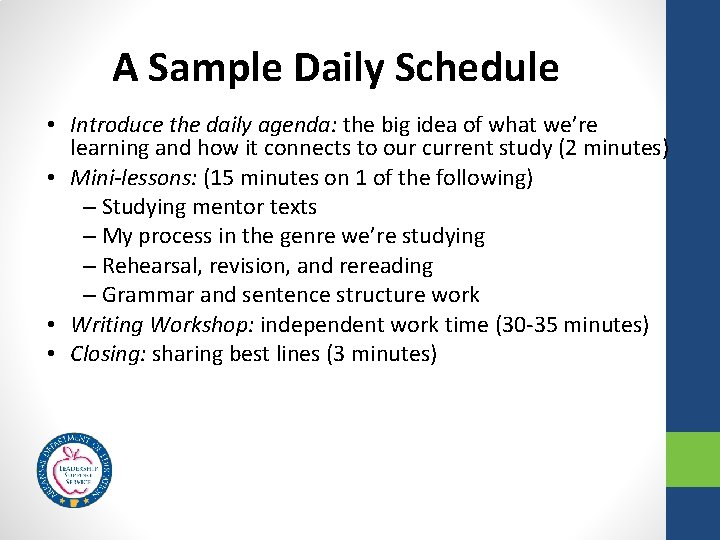
A Sample Daily Schedule • Introduce the daily agenda: the big idea of what we’re learning and how it connects to our current study (2 minutes) • Mini-lessons: (15 minutes on 1 of the following) – Studying mentor texts – My process in the genre we’re studying – Rehearsal, revision, and rereading – Grammar and sentence structure work • Writing Workshop: independent work time (30 -35 minutes) • Closing: sharing best lines (3 minutes)
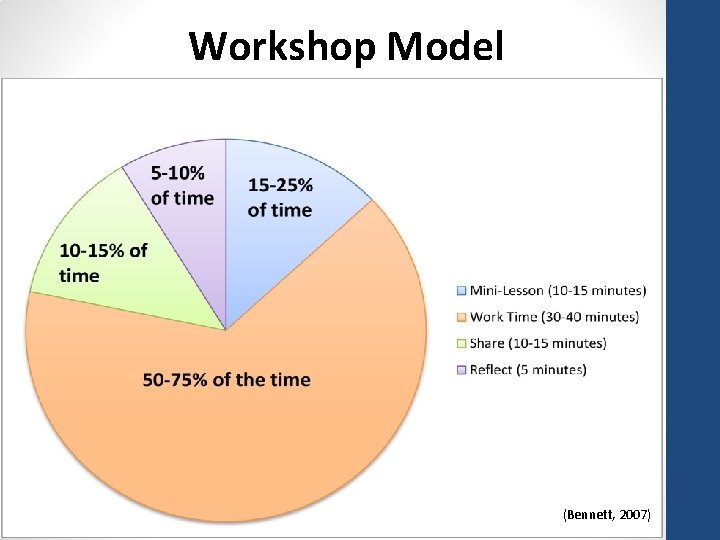
Workshop Model (Bennett, 2007)
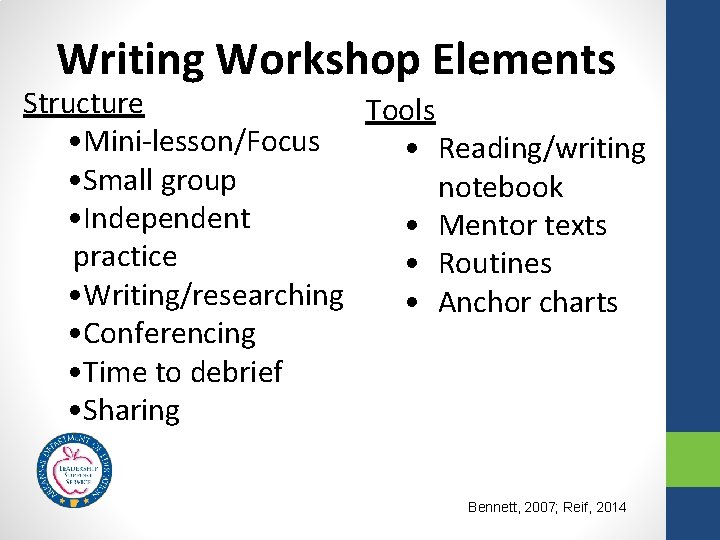
Writing Workshop Elements Structure Tools • Mini-lesson/Focus • Reading/writing • Small group notebook • Independent • Mentor texts practice • Routines • Writing/researching • Anchor charts • Conferencing • Time to debrief • Sharing Bennett, 2007; Reif, 2014
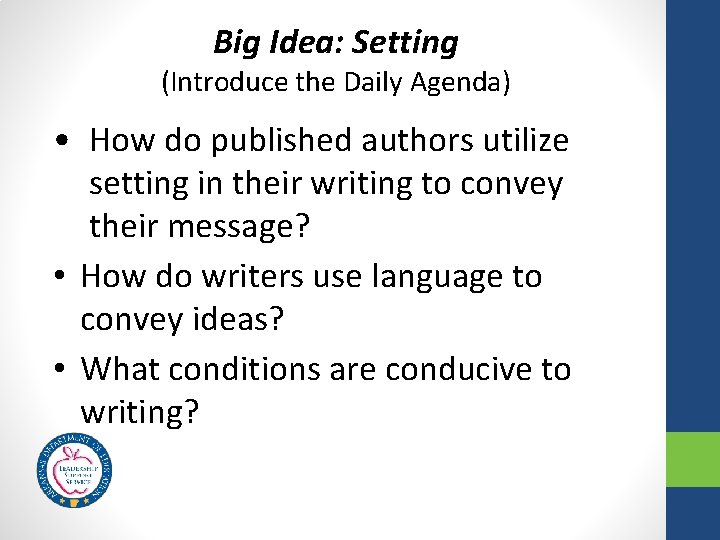
Big Idea: Setting (Introduce the Daily Agenda) • How do published authors utilize setting in their writing to convey their message? • How do writers use language to convey ideas? • What conditions are conducive to writing?
Mini-Lesson: Awakening the Heart (Kittle, 2008)
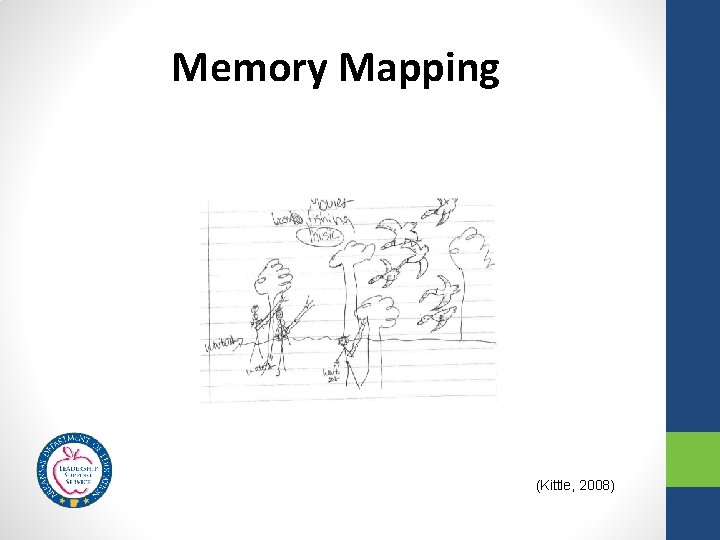
Memory Mapping (Kittle, 2008)
Mini-Lesson: The Writer’s Notebook “I would have to say it [my Writer’s Notebook] was most useful in the fact that it had me writing almost every day. If it was not for this notebook I most likely only would have written when I needed to for a piece because writing has never really been something I enjoyed until now. ” --Zach (as cited in Kittle, 2008, p. 22 ) -
Writing Workshop
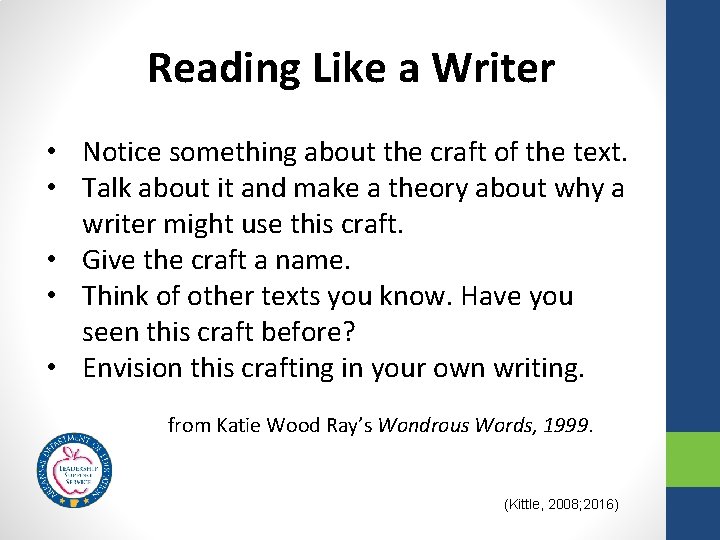
Reading Like a Writer • Notice something about the craft of the text. • Talk about it and make a theory about why a writer might use this craft. • Give the craft a name. • Think of other texts you know. Have you seen this craft before? • Envision this crafting in your own writing. from Katie Wood Ray’s Wondrous Words, 1999. (Kittle, 2008; 2016)
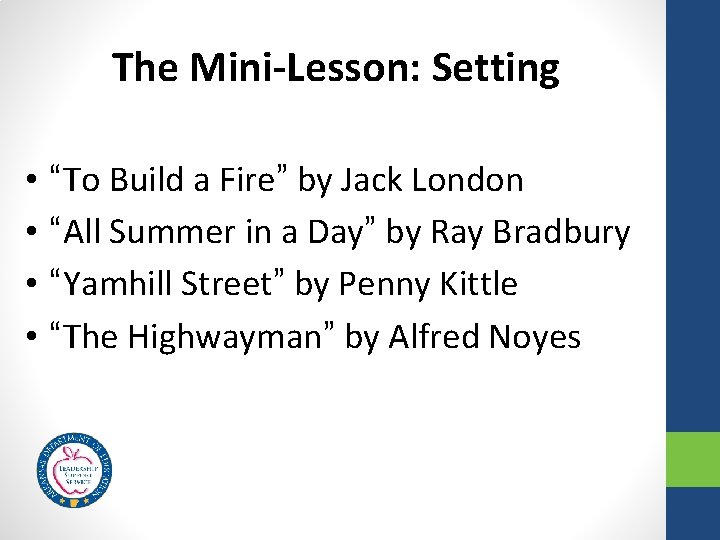
The Mini-Lesson: Setting • • “To Build a Fire” by Jack London “All Summer in a Day” by Ray Bradbury “Yamhill Street” by Penny Kittle “The Highwayman” by Alfred Noyes
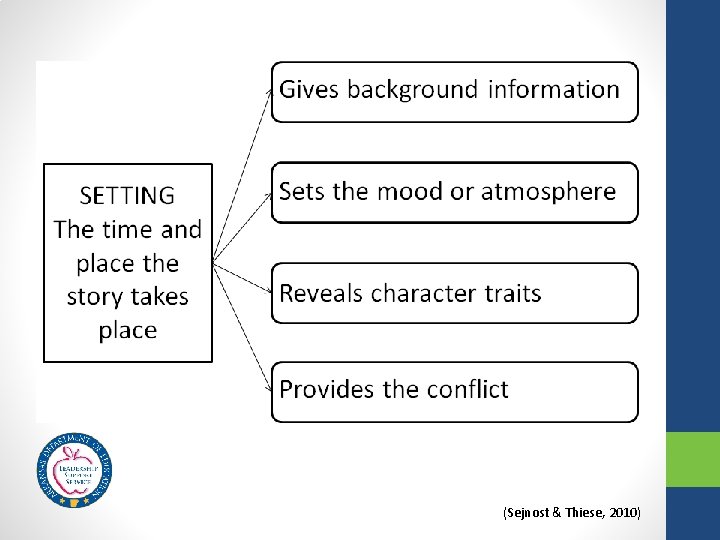
(Sejnost & Thiese, 2010)
Writing Workshop
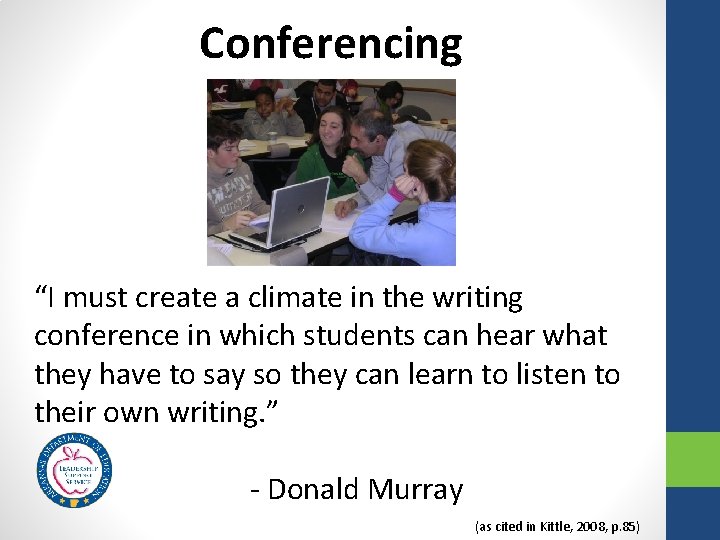
Conferencing “I must create a climate in the writing conference in which students can hear what they have to say so they can learn to listen to their own writing. ” - Donald Murray (as cited in Kittle, 2008, p. 85)
Process to Assess/Reflect Identify standard Determine a list of qualities for success Make two stacks: Got it/Didn’t Plan intervention groups for common strengths and weaknesses (Knight, 2013)
Assessment “There is an hour when the work, at last, must be passed in and the writer revealed. Writing is never completed: the process of revision, reconsideration and editing goes on until the final deadline is met. ” (As cited by Kittle, 2008, p. 208)
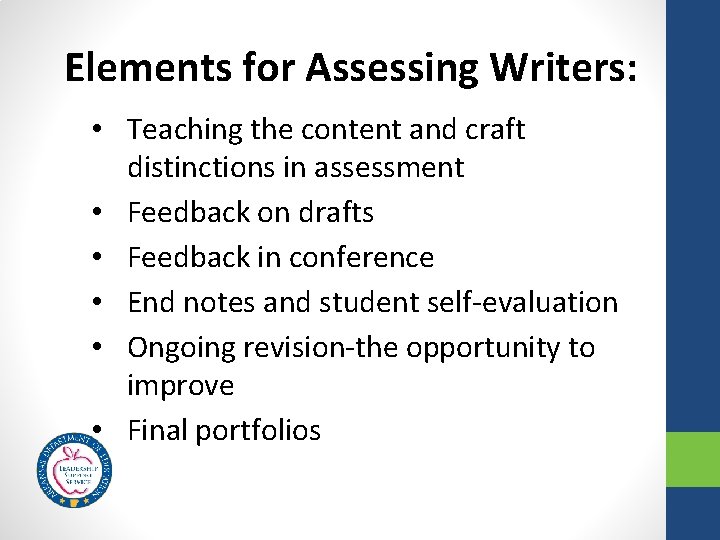
Elements for Assessing Writers: • Teaching the content and craft distinctions in assessment • Feedback on drafts • Feedback in conference • End notes and student self-evaluation • Ongoing revision-the opportunity to improve • Final portfolios
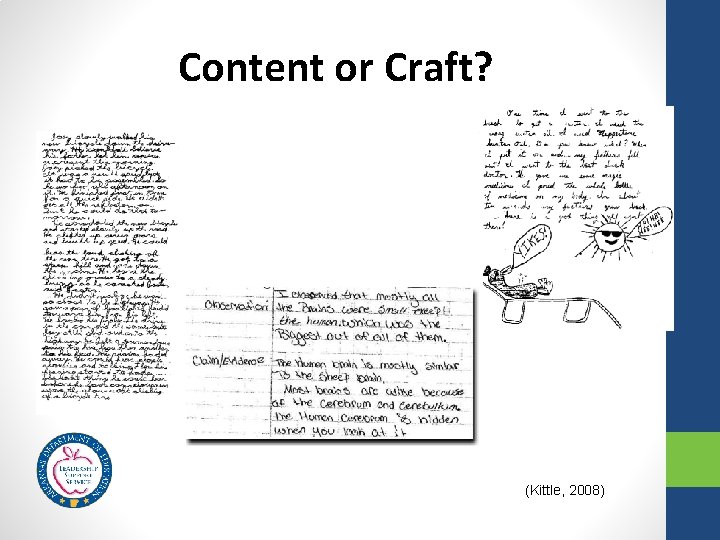
Content or Craft? (Kittle, 2008)
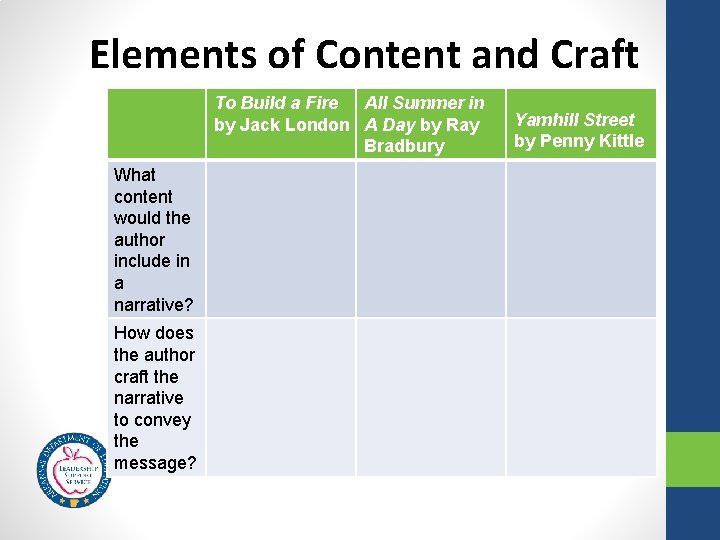
Elements of Content and Craft To Build a Fire All Summer in by Jack London A Day by Ray Bradbury What content would the author include in a narrative? How does the author craft the narrative to convey the message? Yamhill Street by Penny Kittle
Feedback
End Notes and Student Self-Evaluation • Tell me about your process- how did you get from beginning to end in writing this piece? • Which mentor texts used in class had the biggest impact on your thinking and writing? • What did you learn about narrative writing that is evident in this piece? • What did you learn from someone else in writing this piece? • Where does this piece still fall short? If you had months ahead of you to work on the piece, what would you go after first? • Grade the piece and explain your evaluation. Use the qualities of narrative that we have discussed, and address each of these in your evaluation. (Kittle, 2008)
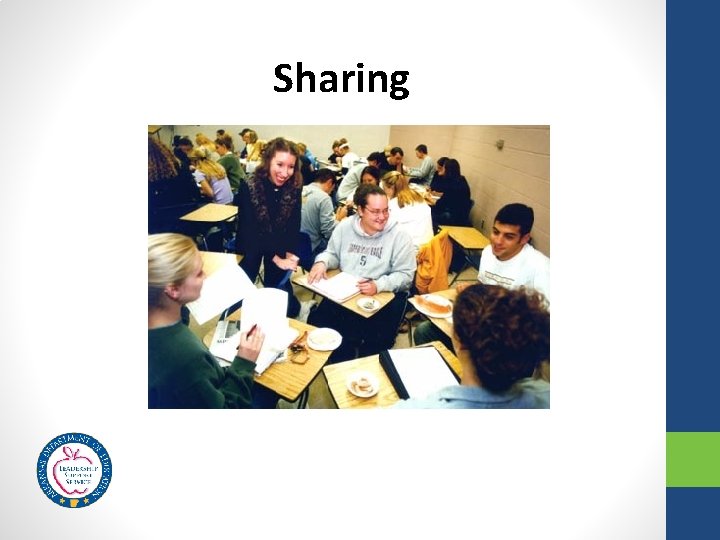
Sharing
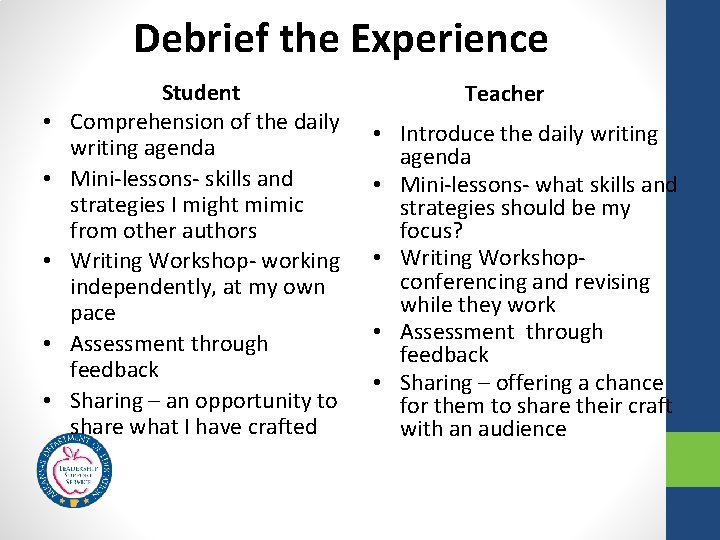
Debrief the Experience • • • Student Comprehension of the daily writing agenda Mini-lessons- skills and strategies I might mimic from other authors Writing Workshop- working independently, at my own pace Assessment through feedback Sharing – an opportunity to share what I have crafted Teacher • Introduce the daily writing agenda • Mini-lessons- what skills and strategies should be my focus? • Writing Workshopconferencing and revising while they work • Assessment through feedback • Sharing – offering a chance for them to share their craft with an audience
“What is the purpose of writing? What do we teach and why? ” “What power—what importance—lies in the blank lines of an open notebook. Go and fill yours. Then share. ” (Kittle, 2008, p. 236)
“Believe any kid can learn, no matter how far behind and resistant; try in as many ways as possible to connect and teach; love each student unconditionally with the patience and faith it takes to see it through. ” (Kittle, 2008, p. 205)
References Allen, K. & Marquez, A. (2011). Teaching vocabulary with visual aids [PDF]. Journal of Kao Ying Industrial & Commercial Vocational High School. 15. Retrieved from http: //210. 60. 11/reading/wp-content/uploads/2012/10/10022007. pdf Beck, I. L. , Mc. Keown, M. G. , & Kucan, L. (2013). Bringing words to life: Robust vocabulary instruction (2 nd ed. ). New York, NY: The Guilford Press. Bennett, S. (2007). That workshop book. Portsmouth, NH: Heinemann. Boston Public Schools Science Department. (n. d. ). CCSS-aligned question stems [PDF]. Retrieved from http: //bpsscience. weebly. com/uploads/2/2/1/3/2213712/8. 3_ccss_aligned_question_stems_-_final. pdf Bradbury, R. (1954). All summer in a day [PDF]. Retrieved from http: //www. btboces. org/Downloads/6_All%20 Summer%20 in%20 a%20 Day%20 by%20 Ray%20 Bradbury. pdf Copeland, M. (2005). Socratic circles: Fostering critical and creative thinking in middle and high schools. Portland, ME: Steinhouse Publishers. Dahl, R. (1959). The landlady [PDF]. Retrieved from https: //www. teachingenglish. org. uk/sites/teacheng/files/landlady_text. pdf Fagan, T. & Holley, N. (2008) The importance of reading [Video file]. Retrieved from http: //www. youtube. com/watch? v=x. Thol-ydwco Fairfield Suison Unified School District (n. d. ). Close and critical reading [PDF]. Retrieved from http: //www. fsusd. org/site/Default. aspx? Page. Type=6&Site. ID=4&Search. String=close%20 and%20 critical%20 reading Finkle, D. L. (2010). Teaching students to make writing visual & vivid: Lessons and strategies for helping students elaborate using imagery, anecdotes, dialogue, figurative language, cinematic techniques, scenarios, and sensory details. New York, NY: Scholastic, Inc. Fisher, D. & Frey, N. (2012). Text-dependent questions: Effective questions about literature and nonfiction texts require students to delve into a text to find answers. Principal Leadership 13(1). 70 -73. Retrieved from http: //fisherandfrey. com/uploads/posts/Text_Dependent. pdf Fisher, D. & Frey, N. (2015). Text-dependent questions: Pathways to close and critical reading grades 6 -12. Thousand Oaks, CA: Corwin Literacy. Fountas, I. & Pinnell, G. S. (2012). Genre study: Teaching with fiction and nonfiction books K-8. Portsmouth, NH: Heinemann. Kittle, P. (2008). Write beside them. Portsmouth, NH: Heinemann. Kittle, P. (2008). Yamhill street [PDF]. Retrieved from http: //www. heinemann. com/shared/companion. Resources/Docs/E 07817/pdfs/26_Yamhill. Street. pdf Kittle, P. (2016). Reading like a writer from Kate Wood Ray’s Wondrous Words, 1999 [PDF]. Retrieved from http: //pennykittle. net/uploads/images/PDFs/Workshop_Handouts/Read-LIke-a-Writer-Analysis-of-Craft-acrobat 4. pdf Knight, J. (2013). High-impact instruction: A framework for great teaching. Thousand Oaks, CA: Corwin. London, J. (1908). To build a fire [e. Book]. Retrieved from https: //americanliterature. com/author/jack-london/short-story/to-build-a-fire
References Madland, J. (2012). Walker Middle School Socratic seminar [Video file]. Retrieved from https: //www. youtube. com/watch? v=6 p. GVR 6 ZF_2 M&feature=youtu. be Mc. Graw-Hill Education Pre. K-12. (2012, April 3). Douglas Fisher: Close reading and the CCSS, part 1 [Video file]. Retrieved from https: //www. youtube. com/watch? v=5 w 9 v 6 -z. Ug 3 Y&feature=youtu. be Mc. Graw-Hill Education Pre. K-12. (2012, April 18). Douglas Fisher: Close reading and the CCSS, part 2 [Video file]. Retrieved from https: //www. youtube. com/watch? v=Jh. GI 5 zdjpvc National Council of Teachers of English. (2014). NCTE guideline: Guidelines for selection of materials in English language arts programs [Webpage]. Retrieved from http: //www. ncte. org/positions/statements/material-selection-ela National Assessment Governing Board. (2007). Writing framework for the 2011 National Assessment of Educational Progress, pre-publication edition. Iowa City, IA: ACT, Inc. Nichols, W. D. , & Rupley, W. H. (2004). Matching instructional design with vocabulary instruction. Reading Horizons, 45(1), 54 -71. Noyes, A. (1947). The highwayman (Webpage). Retrieved from http: //www. poetryfoundation. org/poems-and-poets/poems/detail/43187 Reif, L. (2014). Read, write, teach: Choice and challenge in the reading-writing workshop. Portsmouth, NH: Heinemann. Sejnost, R. L. & Thiese, S. M. (2010). Building content literacy: Strategies for the adolescent learner. Thousand Oaks, CA: Corwin Press. Serrano, M. (2011). Soc sem observation assessment tools [1]. pdf [PDF]. Retrieved from http: //tinyurl. com/jyvw 7 ml Shanahan, T. (2012, June 18). What is close reading? [Blog]. Retrieved from http: //www. shanahanonliteracy. com/2012/06/what-is-close-reading. html Stuart Pepper Middle School & Butler Traditional High School. (n. d. ). Socratic seminar [Webpage]. Retrieved from https: //coretools. ldc. org/minitasks/6274 cf 61 -4756 -4873 -b 87 e-0 bcb 163 fd 230 Student Achievement Partners (2016, February 29). Understanding text-dependent questions [Power. Point presentation]. Retrieved from http: //achievethecore. org/page/396/understanding-text-dependent-questions Teaching Channel. (2012, May 30). Thinking notes: A strategy to encourage close reading [Video file]. Retrieved from https: //www. teachingchannel. org/videos/student-annotated-reading-strategy Teaching Channel (2014). Debrief circle [Video file]. Retrieved from https: //www. teachingchannel. org/videos/students-reflect-on-learning-exl Templeton, S. , Bear, D. B. , Invernizzi, M. , Johnston, F. , Flanigan, K. , Townsend, D. R. , Helman, L. , & Hayes, L. (2015). Vocabulary their way: Word study with middle secondary students (2 nd Ed. ). Boston, MA: Pearson. Tyner, B. (2012). The literacy jigsaw puzzle: Assembling the critical pieces of literacy instruction. Newark, DE: International Reading Association. Zamora, I. (n. d. ). Inside outside circle [Illustration]. Retrieved from http: //isaaczamora. weebly. com/insideoutside-circle. html